



α-synuclein Inhibitor
-
Syn-516
 0 ImagesCat. No.: HY-125984CAS No.: 695209-67-7
Syn-516 is an inhibitor of α-synuclein (α-Syn). Syn-516 targets the 5' untranslated region (5'UTR) of α-Syn mRNA, with an IC50 value of 1.8 μM, thereby inhibiting the translation process of α-Syn. Syn-516 improves motor dysfunction and colonic motility abnormalities associated with α-Syn overexpression in mouse models. α-Syn can be used to study diseases such as Parkinson's disease and Lewy body dementia.
-
MNP2
 0 ImagesCat. No.: HY-P11581
MNP2 is a NLRP3-ASC interaction inhibitor. MNP2 selectively binds to the PYD domain of ASC (Ka=149 nM) and blocks ASC-PYM binding (Ka=58 nM), thereby inhibiting the interaction between ASC and NLRP3 and suppressing the formation of the NLRP3 inflammasome. MNP2 inhibits IL-1β release and caspase-1 maturation, and reduces the efflux of potassium and chloride ions. MNP2 prevents mitochondrial damage and reactive oxygen species production, and significantly decreases NLRP3 inflammasome formation in neurodegenerative pathologies induced by β-amyloid, Tau protein and α-synuclein. MNP2 is applicable for the research of neurodegenerative diseases.
-
α-Synuclein inhibitor 15
 0 ImagesCat. No.: HY-175308CAS No.: 414880-30-1
α-Synuclein inhibitor 15 (Compound 1) is an inhibitor targeting the fibrillation growth of α-synuclein (IC50=18 μM). α-Synuclein inhibitor 15 is promising for research of neurodegenerative diseases, such as Parkinson's disease (PD) and Lewy body dementia (LBD).
-
α-Synuclein inhibitor 12
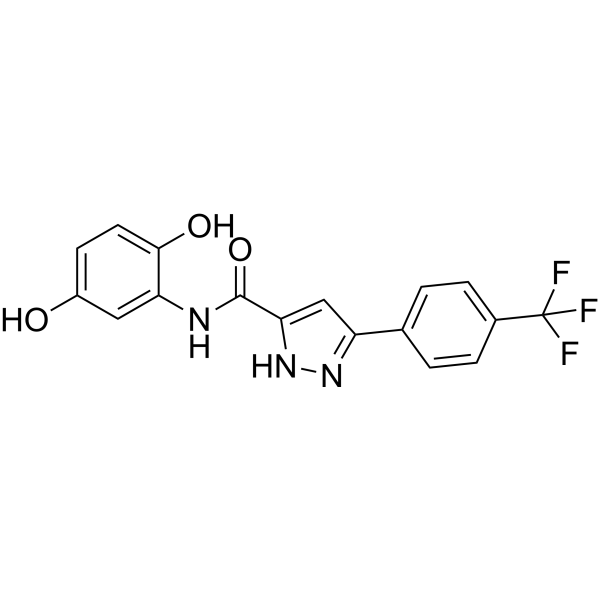 0 ImagesCat. No.: HY-157806
α-Synuclein inhibitor 12 (compound 4ce) is an inhibitor of α-Syn (α-synuclein) aggregation and can be used in the study of neurological diseases.
-
Squalamine phosphate
 0 ImagesCat. No.: HY-16468ACAS No.: 1309370-82-8Synonyms: ENT 01; MSI-1256 phosphate
Squalamine phosphate (Compound ENT-01) is an orally active neuroprotective agent. Squalamine phosphate can displace α-Syn that is bound electrostatically to nerve cell membranes and prevent aggregation of α-Syn. Squalamine phosphate can be used for the research of neurological disease, such as Parkinson’s disease.
-
SMER10
 0 ImagesCat. No.: HY-165539CAS No.: 221238-83-1
SMER10 is a small-molecule enhancer that can induce autophagy. SMER10 can increase the number of EGFP-LC3 positive autophagosoms in COS-7 and HeLa cells, promoting the conversion of LC3-I to autophagosome-associated LC3-II. SMER10 can efficiently promote the degradation of autophagy substrates, including the mutant huntingtin protein (EGFP-HDQ74) associated with Huntington's disease and the A53T α-synuclein protein associated with Parkinson's disease. SMER10 exerts neuroprotective effect.
-
Hordenine sulfate
 0 ImagesCat. No.: HY-N0113ACAS No.: 62493-39-4Synonyms: Ordenina sulfate; Peyocactine sulfate
Hordenine sulfate (Ordenina sulfate; Peyocactine sulfate) is a multifunctional alkaloid with oral activity and blood-brain barrier penetration. Hordenine sulfate inhibits LPS-induced phosphorylation of p38, JNK, ERK1/2, p65, IκB, and AKT, prevents p65 nuclear translocation, and suppresses inflammatory cytokines and mediators. Hordenine sulfate promotes M2 macrophage polarization, restores blood-milk barrier integrity, alleviates oxidative stress by reducing ROS and MDA, and attenuates LPS-induced lung injury and pulmonary edema. Hordenine sulfate inhibits cAMP production, CREB phosphorylation, and MITF expression, thereby suppressing melanin synthesis in melanocytes and reconstructed epidermis. Hordenine sulfate activates the Wnt/β-catenin signaling pathway, promotes dermal papilla cell proliferation and hair shaft elongation, and accelerates hair regeneration. Hordenine sulfate activates DRD2, acts as a D3R partial agonist, α2A-AR full agonist, and 5-HT2A-R antagonist, and inhibits SERT and DAT. Hordenine sulfate inhibits α-synuclein accumulation and ameliorates motor deficits in Parkinson's disease models. Hordenine sulfate limits alcohol intake, reduces relapse drinking behavior, and modulates alcohol-induced conditioned place preference. Hordenine sulfate can be used for research on mastitis, skin pigmentation, acute lung injury, foodborne diseases, hair loss, Parkinson's disease, bacterial infections, and alcohol use disorder.
-
α-Synuclein-IN-17
 0 Images
α-Synuclein-IN-17 (Compound 10) is an α-Synuclein inhibitor, with an IC50 value of 9 μM. α-Synuclein-IN-17 exhibits potent inhibitory activity against both in-vitro assembled asyn fibrils and LBD brain tissue-amplified asyn fibrils. α-Synuclein-IN-17 can be used for the study of Parkinson's disease (PD) and Lewy Body Disease (LBD).
-
α-Synuclein-IN-18
 0 ImagesCat. No.: HY-178276CAS No.: 1394328-54-1
α-Synuclein-IN-18 (Compound Mol D) is an inhibitor of the autocatalytic proliferation of α-Synuclein aggregate. α-Synuclein-IN-18 can specifically bind to the conserved binding pocket on the surface of α-synuclein fibrils. α-Synuclein-IN-18 can delay the aggregation process of α-synuclein, extend the aggregation T1/2 by three times. α-Synuclein-IN-18 can reduce the generation flux of α-synuclein toxic oligomers, thereby alleviating the neurotoxicity. α-Synuclein-IN-18 can be used for research of Parkinson’sdisease.
-
α-Synuclein inhibitor 7
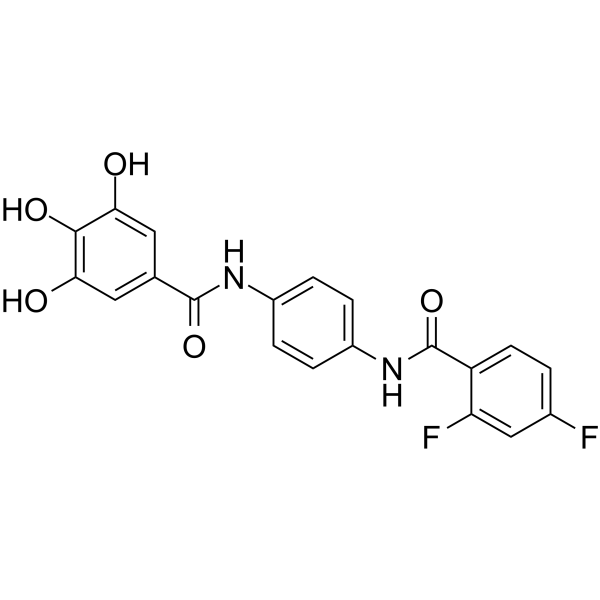 0 ImagesCat. No.: HY-147669CAS No.: 2489813-04-7
α-Synuclein inhibitor 7 (compound 3gf) is a potent and BBB-penetrated inhibitor of α-Synuclein (α-Syn) aggregation, with an IC50 of 1.95 μM and inhibition ratio at 30 μM of 85.8%.
-
α-Synuclein inhibitor 3
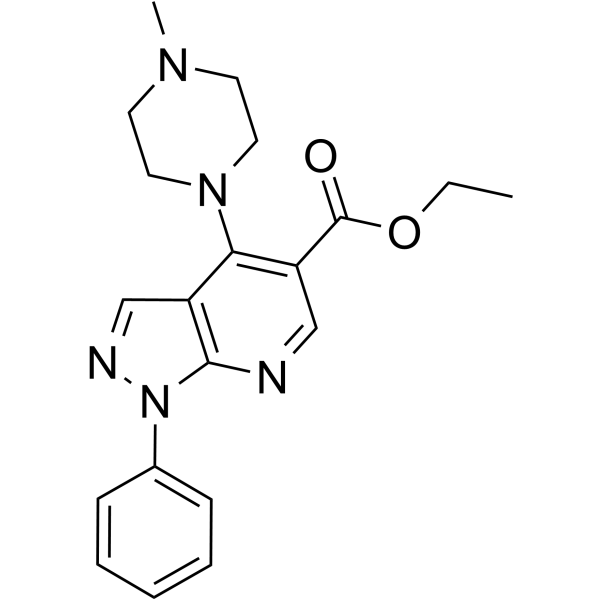 0 ImagesCat. No.: HY-147644CAS No.: 2687831-18-9
α-Synuclein inhibitor 3 (Compound 7g) is a α-synuclein (α -Syn) aggregation inhibitor. α-Synuclein inhibitor 3 can be used for Parkinson’s disease research.
-
Hupehenine (Standard)
 0 ImagesCat. No.: HY-N0413RCAS No.: 98243-57-3
Hupehenine (Standard) is the analytical standard of Hupehenine (HY-N0413). This product is intended for research and analytical applications. Hupehenine is an orally active isosteroidal alkaloid that can be extracted from F. hupehensis. Hupehenine exhibits activities such as antitussive, expectorant, anticancer, and antiparasitic. In vitro, Hupehenine can also inhibit α-synuclein seeded fibril formation, making it applicable for the research of Parkinson's disease and other related disorders.
-
α-Synuclein inhibitor 13
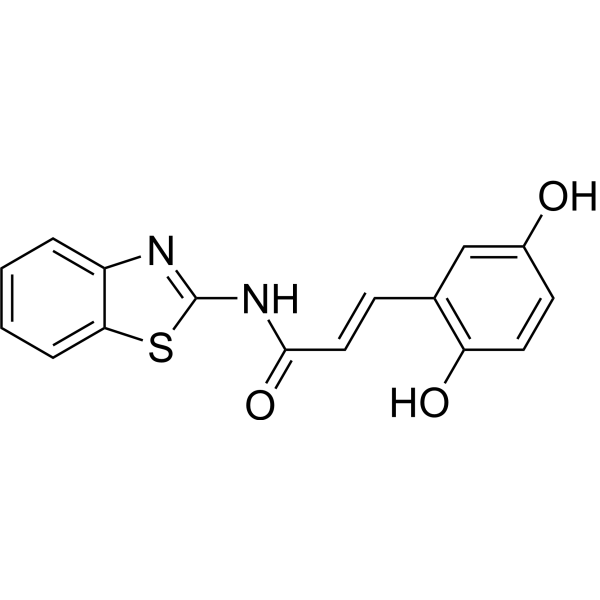 0 ImagesCat. No.: HY-163519
α-Synuclein inhibitor 13 is an inhibitor of α-synuclein (α-Syn). α-Synuclein inhibitor 13 inhibits the aggregation of α-Syn proteins and is able to break down formed fibers. It is mainly used in Parkinson's disease research.
-
α-Synuclein inhibitor 5
 0 ImagesCat. No.: HY-147667CAS No.: 2489813-11-6
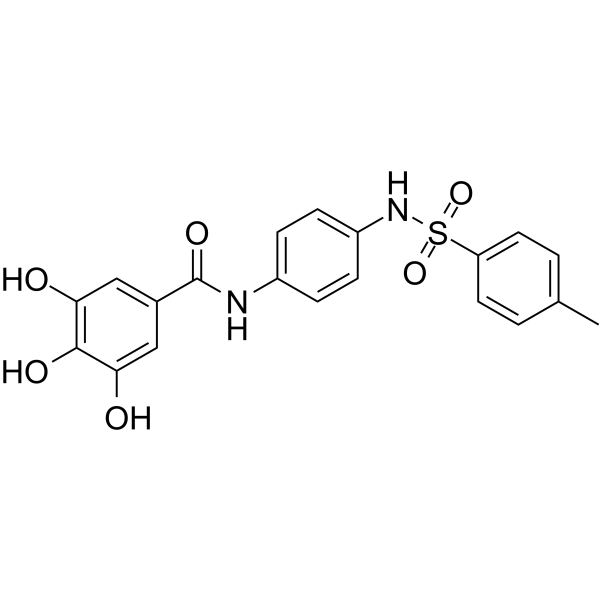
α-Synuclein inhibitor 5 (compound 4aa) is a potent and BBB-penetrated inhibitor of α-Synuclein (α-Syn) aggregation, with an IC50 of 1.22 μM and inhibition ratio at 30 μM of 94.3%.
-
PQM-164
 0 ImagesCat. No.: HY-159152CAS No.: 2226535-25-5
PQM-164 (Compound 3e) has antioxidant activity (IC50: 0.93 μM for DPPH radical). PQM-164 shows anti-inflammatory activity against 6-OHDA (HY-B1081A)-induced neuronal damage in activated microglial cells. PQM-164 decreases the accumulation of α-synuclein. PQM-164 promotes nuclear translocation of Nrf2 and its transcriptional activity. PQM-164 can be used for research of Parkinson’s disease.
-
DA5-CH
 0 ImagesCat. No.: HY-P12141CAS No.: 2227651-65-0Synonyms: KP405
DA5-CH (KP405) is a blood-brain barrier-permeable GLP-1/GIP receptor agonist. DA5-CH activates GLP-1 and GIP receptors, inhibits the NF-κB inflammatory pathway, reduces α-synuclein (α-synuclein) levels, restores the expression of tyrosine hydroxylase and neurotrophic factors, improves motor function, decreases amyloid plaques and phosphorylated tau protein levels in the hippocampus, restores synaptic plasticity, regulates the PI3K/AKT/GSK3β and CREB signaling pathways, and alleviates mitochondrial stress. DA5-CH can be used for research on Parkinson's disease and Alzheimer's disease.
-
6PPD-Q (Standard)
 0 ImagesCat. No.: HY-153169RCAS No.: 2754428-18-5
6PPD-Q (Standard) is the analytical standard of 6PPD-Q (HY-153169). This product is intended for research and analytical applications. 6PPD-Q (6PPD-Quinone) is an environmental pollutant that can be detected in human urine and is widely present in the environment. 6PPD-Q targets and binds to CNR2, CNR1, AA2AR, LCAT, and TRPA1, with CNR2 exhibiting the highest binding affinity, potentially acting as a CNR2 receptor agonist to activate cannabinoid receptors. 6PPD-Q induces intestinal inflammation and barrier damage by disrupting mitochondrial function, reducing neuronal glycolysis metabolites and TCA cycle intermediates, and exacerbating α-synuclein (α-syn) aggregation. 6PPD-Q is applicable in research on environmental toxicology, neurodegenerative diseases, and inflammation-related disorders.
-
Semaglutide, Cy5 labeled
 0 ImagesCat. No.: HY-114118F5Synonyms: Semaglutide-Cys(Cy5)
Semaglutide, Cy5-labeled (Semaglutide-Cys(Cy5)) is a CY5 (HY-D0821) -labeled version of Semaglutide (HY-114118) (Ex/Em = 633/670 nm). Semaglutide, Cy5-labeled can be used for studies on Semaglutide receptor binding (GLP-1R), cellular uptake and endocytosis, in vivo tissue distribution, and the targeting efficiency of delivery systems.
-
Alpinin A
 0 ImagesCat. No.: HY-N16524CAS No.: 2151847-03-7
Alpinin A is a diarylheptanoid found in the rhizomes of Alpinia officinarum. Alpinin A can strongly inhibit the aggregation of α-synuclein with inhibition rate of 66% at 10 μM. Alpinin A can be used for the research of neurological disease, such as Parkinson’s disease.
-
D-685
 0 ImagesCat. No.: HY-149065CAS No.: 2893801-00-6
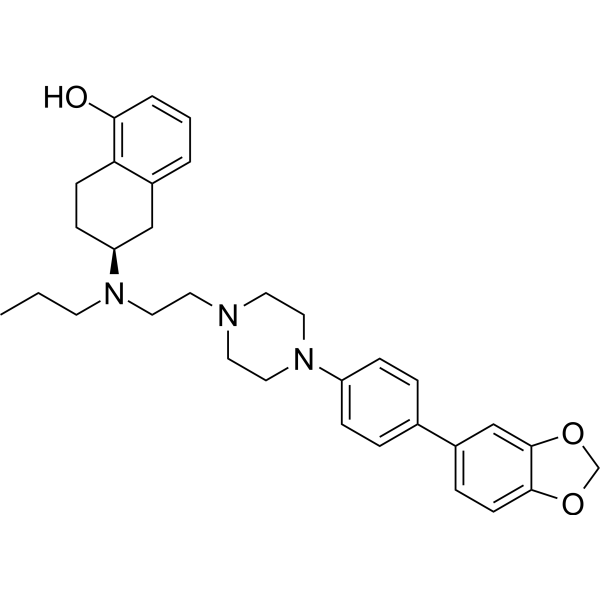
D-685, a prodrug of D-520, exhibits higher in vivo anti-Parkinsonian efficacy in a reserpinized Parkinson's disease (PD) animal model than the parent D-520. D-685 reduces accumulation of human α-synuclein (α-syn) protein. D-685 exhibits facile brain penetration.



