



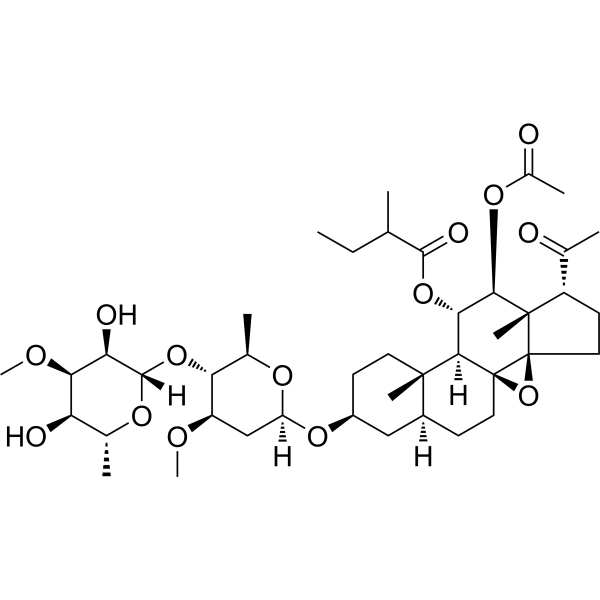
Tenacissoside H
Based on 1 publication(s) in Google Scholar
Tenacissoside H (Tenacissimoside C) is a compound found in Caulis Marsdeniae Tenacissimae. Tenacissoside H shows anti-inflammation, anti-tumor and neuroprotective effects. Tenacissoside H inhibits PI3K/Akt and NF-κB signaling pathway. Tenacissoside H inhibits cancer cells proliferation, S phase arrest, and inhibits tumor growyh in mice. Tenacissoside H promotes neurological recovery of ischemia-reperfusion injury in mice by inhibiting inflammation and apoptosis. Tenacissoside H can be used for the research of cancer, inflammation and neurological diseases, such as esophageal cancer and cerebral ischemia.
연구목적의 판매만을 진행합니다. 환자를 대상으로 한 판매는 하지 않습니다.
- Purity : 99.89%
- CAS No.: 191729-45-0
- 화학식: C42H66O14
- 분자량:794.97
-
보관:
4°C, sealed storage, away from moisture and light
* In solvent : -80°C, 6 months; -20°C, 1 month (sealed storage, away from moisture and light)

To place orders, for customer services and technical support, please contact: MedChemExpress USA
Tel: 609-228-6898 E-mail: [email protected] [email protected]


-
 Biological Activity
-
Chemical Information
-
용액&용해도
- Protocol
- 순도&문서
- References
-
 Help & FAQs


Publications Citing Use of MedChemExpress (MCE) Tenacissoside H
More

Biological Activity
제품 설명
In Vitro
Tenacissoside H (2-10 mg/mL; 24-48 h) potently inhibits human esophageal carcinoma EC9706 cell proliferation in a time- and dose-dependent manner, with IC50 values of 9.81 mg/mL at 24 h and 6.45 mg/mL at 48 h[1].
Tenacissoside H (10 mg/mL; 24 h) blocks human esophageal carcinoma EC9706 cells from entering the S phase from the G1 phase, significantly reducing the percentage of cells in the S phase to 12.82% relative to the blank control group[1].
Tenacissoside H (10 mg/mL; 1-7 days) downregulates PI3K and NF-κB p65 mRNA expression in human esophageal carcinoma EC9706 cells[1].
MedChemExpress (MCE) has not independently confirmed the accuracy of these methods. They are for reference only.
-
Cell Line:human esophageal carcinoma EC9706 cells
-
Concentration:2, 4, 6, 8, 10 mg/mL
-
Incubation Time:24 h; 48 h
-
Result:Significantly inhibited EC9706 cell proliferation in a time- and dose-dependent manner.
Reduced cell proliferation by 52.65% at 10 mg⋅mL-1 after 24 h incubation.
Reduced cell proliferation by 64.79% at 10 mg⋅mL-1 after 48 h incubation.
Exhibited an IC50 of 9.81 mg/mL for 24 h incubation.
Exhibited an IC50 of 6.45 mg/mL for 48 h incubation.
-
Cell Line:human esophageal carcinoma EC9706 cells
-
Concentration:10 mg/mL
-
Incubation Time:24 h
-
Result:Significantly reduced the percentage of EC9706 cells in the S phase to 12.82%.
-
Cell Line:human esophageal carcinoma EC9706 cells
-
Concentration:10 mg/mL
-
Incubation Time:1, 3, 5, 7 day
-
Result:Reduced PI3K mRNA expression over time, with significant differences relative to the blank control group at day 5 and day 7.
Decreased NF-κB p65 mRNA expression from day 3 onward, with significant differences relative to the blank control group at day 5 and day 7.
In Vivo
Tenacissoside H (20-80 mg/kg; i.p.; daily; 5 consecutive days 30 minutes before operation) dose-dependently protects male C57BL/6 mice against cerebral ischemia-reperfusion injury, with the 80 mg/kg dose producing the most significant improvements in neurological function, reduction in brain damage, and modulation of inflammatory and oxidative stress pathways via the TrkB signaling axis[2].
MedChemExpress (MCE) has not independently confirmed the accuracy of these methods. They are for reference only.
-
Animal Model:Balb/c nude mice (male and female, 6 weeks old, 18-22 g, subcutaneous inoculation of EC9706 cells)[1]
-
Dosage:100 mg/kg
-
Administration:i.p.; twice weekly; 14 days
-
Result:Reduced tumor volume.
Reduced PCNA positive cell ratio to 53.02%.
Downregulated PI3K, Akt, p-Akt and NF-κB protein expression.
Induced large areas of tumor necrosis.
-
Animal Model:C57BL/6 (male, 22-25 g, cerebral ischemia-reperfusion injury model via middle cerebral artery occlusion thread embolization with 2h ischemia followed by reperfusion)[2]
-
Dosage:20 mg/kg; 40 mg/kg; 80 mg/kg
-
Administration:i.p.; daily; 5 consecutive days
-
Result:Reduced modified Neurological Severity Score (mNSS).
Reduced apoptotic cell and Caspase3-positive cells.
Reduced cerebral MDA, SOD, GSH-PX, BDNF levels.
Reduced TNF-α, IL-1β, IL-6 levels, increased IL-4, IL-10, TGF-β levels.
Reduced iNOS relative expression, increased Arg1 relative expression, reduced Iba1-positive microglia.
Increased Nrf2 relative expression, reduced p-NF-κB relative expression, increased TrkB relative expression, increased PPARγ relative expression.
- EdU Incorporation Assay (Click Chemistry-Based DNA Synthesis Measurement)
- Detection of Apoptosis
- TUNEL staining for apoptotic DNA fragmentation
- Flow cytometric DNA-content cell-cycle staining
- Annexin V plus membrane-impermeant dye apoptosis staining
- BrdU Incorporation Assay
- Apoptosis Solutions
- Protocol for Cell Cycle
- Research Protocol for Inflammation-related Diseases
- Cell Viability Determination by MTT Colorimetric Assay


Chemical Information
-
CAS No. 191729-45-0
-
Appearance Solid
-
분자량 794.97
-
화학식 C42H66O14
-
Color White to off-white
-
SMILES
C[C@@]([C@@H]([C@@H](OC(C(C)CC)=O)[C@]1([H])[C@]23C)OC(C)=O)([C@@H]4C(C)=O)[C@]5(CC4)[C@@]1(CC[C@@]2([H])C[C@@H](O[C@@](O[C@H](C)[C@H]6O[C@@](O[C@H](C)[C@@H](O)[C@H]7OC)([H])[C@@H]7O)([H])C[C@H]6OC)CC3)O5
-
Synonyms
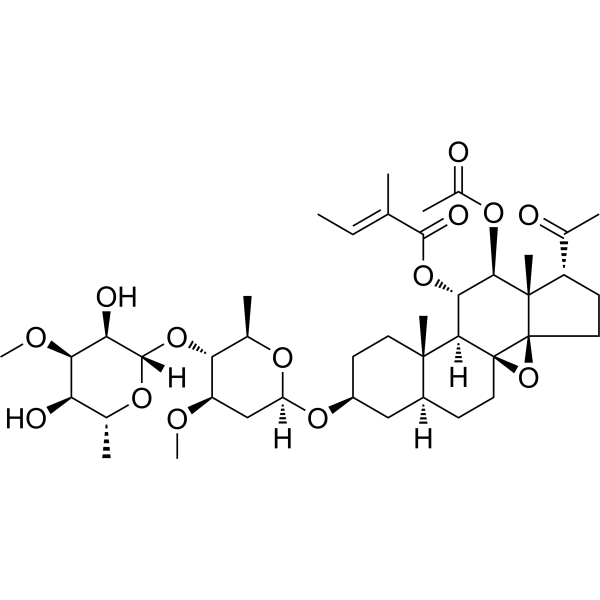
Tenacissimoside C
-
Structure Classification
-
Initial Source
-
선적
Room temperature in continental US; may vary elsewhere.
-
보관
4°C, sealed storage, away from moisture and light
* In solvent : -80°C, 6 months; -20°C, 1 month (sealed storage, away from moisture and light)


Publications (1)
-
Journal Impact Factor
-
Most Recent
-
Clin Exp Pharmacol Physiol
Tenacissoside H promotes neurological recovery of cerebral ischaemia/reperfusion injury in mice by modulating inflammation and oxidative stress via TrkB pathway. [Abstract]2021 May;48(5):757-769. PMID: 32799328


용액&용해도
In Vitro:
DMSO : 100 mg/mL (125.79 mM; Need ultrasonic; Hygroscopic DMSO has a significant impact on the solubility of product, please use newly opened DMSO)
Please refer to the solubility information to select the appropriate solvent. Once prepared, please aliquot and store the solution to prevent product inactivation from repeated freeze-thaw cycles.
Storage method and period of stock solution: -80°C, 6 months; -20°C, 1 month (sealed storage, away from moisture and light). When stored at -80°C, please use it within 6 months. When stored at -20°C, please use it within 1 month.
Please refer to the solubility information to select the appropriate solvent. Once prepared, please aliquot and store the solution to prevent product inactivation from repeated freeze-thaw cycles.
Storage method and period of stock solution: -80°C, 6 months; -20°C, 1 month (sealed storage, away from moisture and light). When stored at -80°C, please use it within 6 months. When stored at -20°C, please use it within 1 month.
Concentration (start) × Volume (start) = Concentration (final) × Volume (final)
In Vivo:
Select the appropriate dissolution method based on your experimental animal and administration route.
- For the following dissolution methods, please ensure to first prepare a clear stock solution using an In Vitro approach and then sequentially add co-solvents:
- To ensure reliable experimental results, the clarified stock solution can be appropriately stored based on storage conditions. As for the working solution for In Vivo experiments, it is recommended to prepare freshly and use it on the same day.
- The percentages shown for the solvents indicate their volumetric ratio in the final prepared solution. If precipitation or phase separation occurs during preparation, heat and/or sonication can be used to aid dissolution.
Add each solvent one by one: 10% DMSO 40% PEG300 5% Tween-80 45% Saline
Solubility: 5 mg/mL (6.29 mM); Suspended solution; Need ultrasonic
This protocol yields a suspended solution of 5 mg/mL. Suspended solution can be used for oral and intraperitoneal injection.
Taking 1 mL working solution as an example, add 100 μL DMSO stock solution (50.0 mg/mL) to 400 μL PEG300, and mix evenly; then add 50 μL Tween-80 and mix evenly; then add 450 μL Saline to adjust the volume to 1 mL.
Preparation of Saline: Dissolve 0.9 g sodium chloride in ddH₂O and dilute to 100 mL to obtain a clear Saline solution.
Add each solvent one by one: 10% DMSO 90% (20% SBE-β-CD in Saline)
Solubility: ≥ 2.5 mg/mL (3.14 mM); Clear solution
This protocol yields a clear solution of ≥ 2.5 mg/mL (saturation unknown).
Taking 1 mL working solution as an example, add 100 μL DMSO stock solution (25.0 mg/mL) to 900 μL 20% SBE-β-CD in Saline, and mix evenly.
Preparation of 20% SBE-β-CD in Saline (4°C, storage for one week): 2 g SBE-β-CD powder is dissolved in 10 mL Saline, completely dissolve until clear.
In Vivo Dissolution Calculator
Please enter the basic information of animal experiments:
-
-
-
-
Recommended: Prepare an additional quantity of animals to account for potential losses during experiments.
Please enter your animal formula composition:
-
%DMSO +
Recommended: Keep the proportion of DMSO in working solution below 2% if your animal is weak.
-
%+
-
+%Tween-80 + +
-
%Saline +
The co-solvents required include: DMSO, . All of co-solvents are available by MedChemExpress (MCE). , Tween 80. All of co-solvents are available by MedChemExpress (MCE).
Working solution concentration: 0.22 mg/mL
Method for preparing stock solution: mg drug dissolved in μL DMSO. Stock solution concentration: mg/mL. * In solvent : -80°C, 6 months; -20°C, 1 month (sealed storage, away from moisture and light)
1. Take μL DMSO stock solution;
2. Add μL .
μL , mix evenly;
3. Then add μL Tween 80, mix evenly;
4. Then add μL
Please ensure that the stock solution in the first step is dissolved to a clear state, and add co-solvents in sequence. You can use ultrasonic heating (ultrasonic cleaner, recommended frequency 20-40 kHz), vortexing, etc. to assist dissolution.


순도&문서
-
Data Sheet (285 KB)
-
SDS (252 KB)
- English - EN (252 KB)
- Français - FR (252 KB)
- Deutsch - DE (252 KB)
- Norwegian - NO (252 KB)
- Español - ES (252 KB)
- Swedish - SV (252 KB)
- Italian - IT (252 KB)
- Korean - KR (252 KB)
- Portuguese - PT (252 KB)
-
Handling Instructions (2659 KB)
References
[1]. Jia YS, et al. Antitumor Activity of Tenacissoside H on Esophageal Cancer through Arresting Cell Cycle and Regulating PI3K/Akt-NF-κB Transduction Cascade. Evid Based Complement Alternat Med. 2015;2015:464937. [Content Brief]
[2]. Zhang R, et al. Tenacissoside H promotes neurological recovery of cerebral ischaemia/reperfusion injury in mice by modulating inflammation and oxidative stress via TrkB pathway. Clin Exp Pharmacol Physiol. 2021 May;48(5):757-769. [Content Brief]


Complete Stock Solution Preparation Table
Please refer to the solubility information to select the appropriate solvent. Once prepared, please aliquot and store the solution to prevent product inactivation from repeated freeze-thaw cycles.
Storage method and period of stock solution: -80°C, 6 months; -20°C, 1 month (sealed storage, away from moisture and light). When stored at -80°C, please use it within 6 months. When stored at -20°C, please use it within 1 month.
| Optional Solvent | Concentration Solvent Mass | 1 mg | 5 mg | 10 mg | 25 mg |
|---|---|---|---|---|---|
| DMSO | 1 mM | 1.2579 mL | 6.2895 mL | 12.5791 mL | 31.4477 mL |
| 5 mM | 0.2516 mL | 1.2579 mL | 2.5158 mL | 6.2895 mL | |
| 10 mM | 0.1258 mL | 0.6290 mL | 1.2579 mL | 3.1448 mL | |
| 15 mM | 0.0839 mL | 0.4193 mL | 0.8386 mL | 2.0965 mL | |
| 20 mM | 0.0629 mL | 0.3145 mL | 0.6290 mL | 1.5724 mL | |
| 25 mM | 0.0503 mL | 0.2516 mL | 0.5032 mL | 1.2579 mL | |
| 30 mM | 0.0419 mL | 0.2097 mL | 0.4193 mL | 1.0483 mL | |
| 40 mM | 0.0314 mL | 0.1572 mL | 0.3145 mL | 0.7862 mL | |
| 50 mM | 0.0252 mL | 0.1258 mL | 0.2516 mL | 0.6290 mL | |
| 60 mM | 0.0210 mL | 0.1048 mL | 0.2097 mL | 0.5241 mL | |
| 80 mM | 0.0157 mL | 0.0786 mL | 0.1572 mL | 0.3931 mL | |
| 100 mM | 0.0126 mL | 0.0629 mL | 0.1258 mL | 0.3145 mL |


Tenacissoside H Related Classifications
HY-N0670 Related Classifications
 Powered by Bioz
Keywords
- Tenacissoside H
- 191729-45-0
- Tenacissimoside C
- PI3K
- Akt
- NF-κB
- Apoptosis
- male C57BL/6 mice
- necrosis
- apoptosis
- nude mice
- TrkB signaling pathway
- esophageal cancer
- human esophageal carcinoma EC9706 cell
- cerebral ischemia/reperfusion-induced acute brain injury
- cell cycle arrest
- PI3K/Akt-NF-κB cascade
- Inhibitor
- inhibitor
- inhibit