



Catestatin

Based on 1 Customer Validation
Catestatin (Catestatin (cattle)) is a non-competitive nicotinic acetylcholine receptor antagonist. Catestatin blocks acetylcholine-evoked currents at α3β4, α7, α3β2, and α4β2 subtype nAChRs and selectively inhibits catecholamine release triggered by nicotinic cholinergic stimulation. Catestatin acts as an autocrine homeostatic negative feedback inhibitor, accelerating the decline of intracellular calcium signaling following acetylcholine stimulation; it also promotes histamine (Histamine) (HY-B1204) release, mediates hypotension via H1 receptors, promotes epinephrine release, and antagonizes neuropeptide Y- or Y1 receptor-mediated pressor effects. Catestatin can be used in research on nicotinic cholinergic signaling and cardiovascular-related studies.
Nur für Forschungszwecke. Wir verkaufen nicht an Patienten.
- Reinheit : 98.17%
- CAS. Nr.: 142211-96-9
- Formel: C107H173N37O26S
- Molecular Weight:2425.82
-
Speicherung:
Sealed storage, away from moisture and light.
Powder -80°C, 2 years , -20°C, 1 year* In solvent : -80°C, 6 months; -20°C, 1 month (sealed storage, away from moisture and light)

To place orders, for customer services and technical support, please contact: MedChemExpress USA
Tel: 609-228-6898 E-mail: [email protected] [email protected]


-
 Biologische Aktivität
-
Chemical Information
-
Lösungsmittel & Löslichkeit
- Protokoll
- Reinheit & Dokumentation
- Verweise
-
 Help & FAQs


-
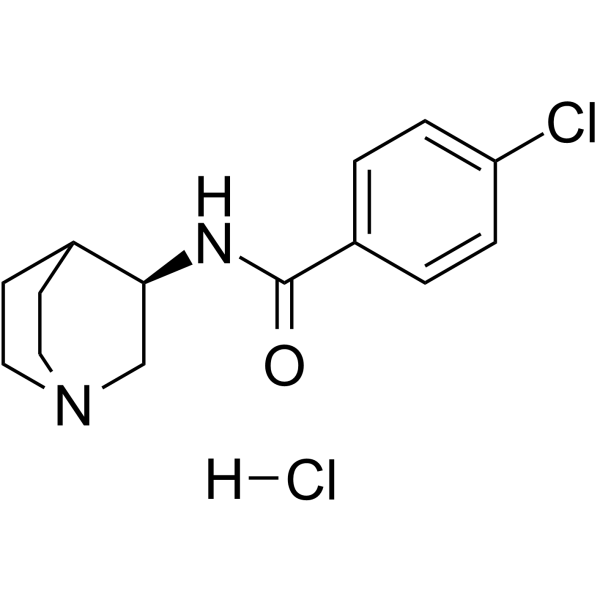
HY-12560A
PNU-282987α7 nAChR Agonist/5-HT3 antagonist -
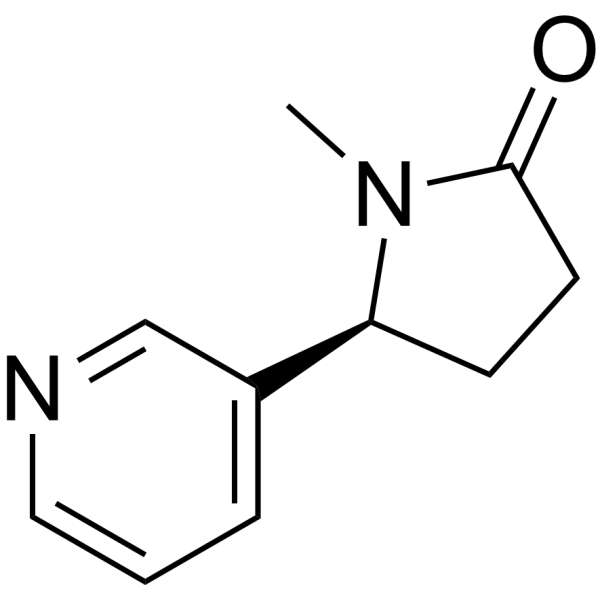
HY-B1178
CotinineEndogenous Metabolite -
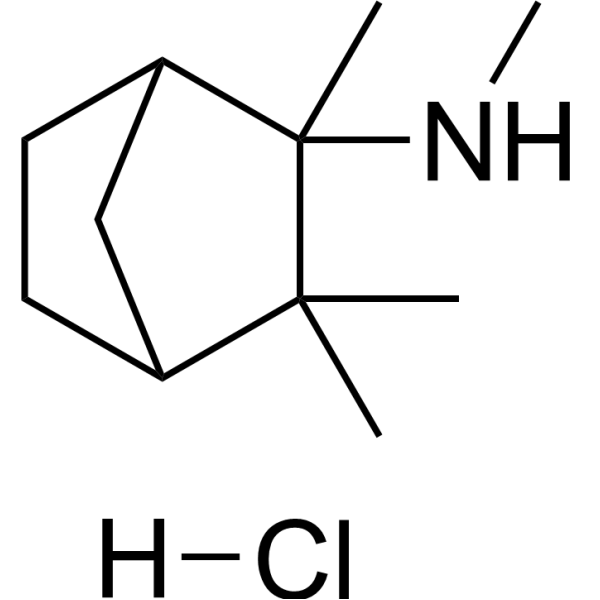
HY-B1395
Mecamylamine hydrochloridenAChR Antagonist -
HY-10019
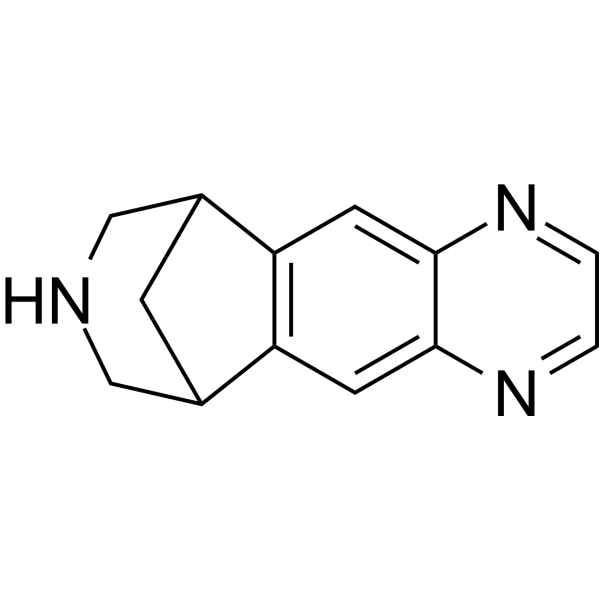
Vareniclineα4β2 nAChR Agonist -
HY-14564A
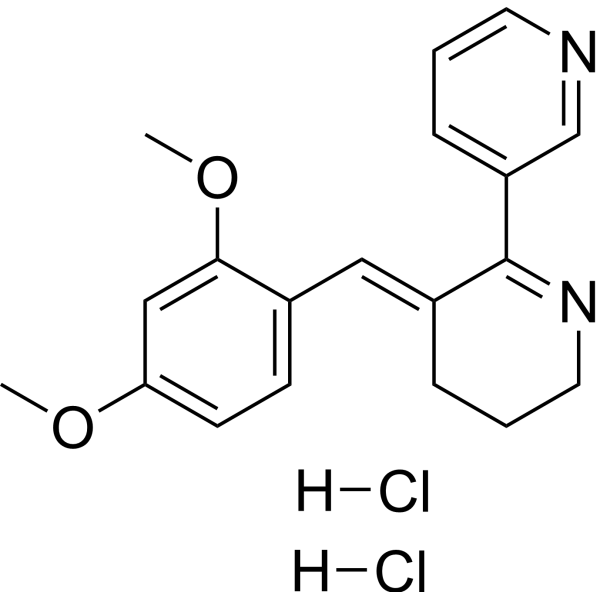
GTS-21 dihydrochlorideα7-nAChR Agonist -
HY-P1264
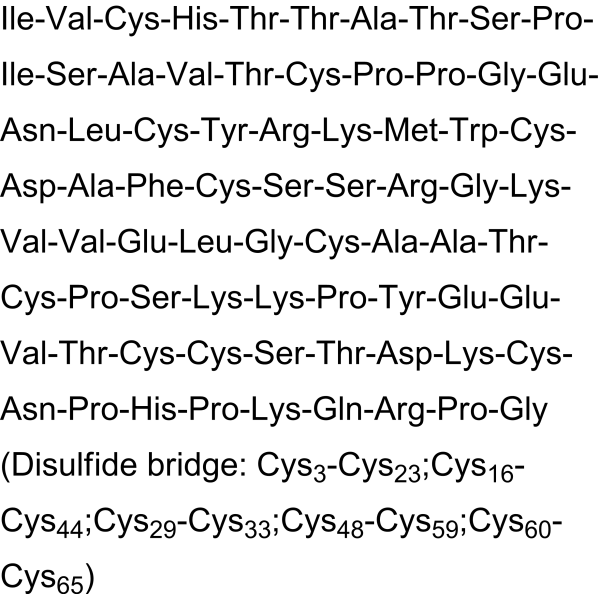
α-BungarotoxinnAChRs Antagonist -
HY-107670
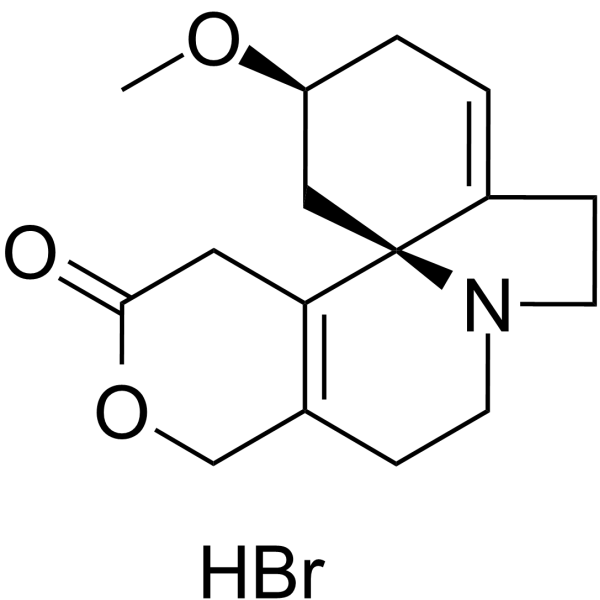
Dihydro-β-erythroidine hydrobromidenAChRs Antagonist -
HY-B0979
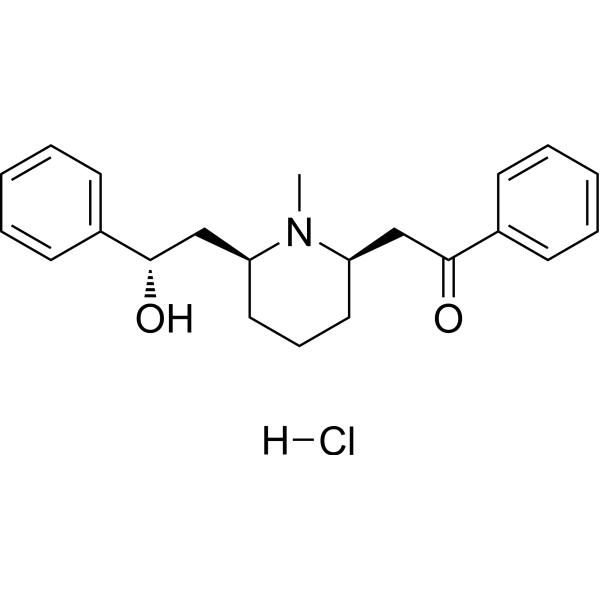
Lobeline hydrochlorideNicotinic Receptor Agonist -
HY-13041
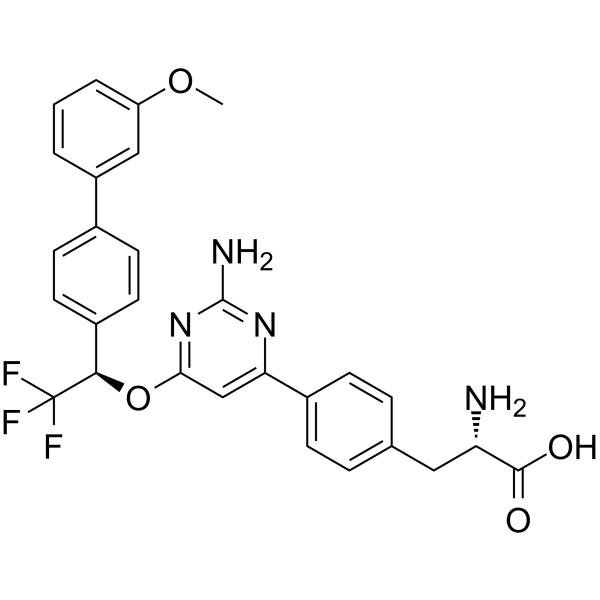
LX-1031Tryptophan Hydroxylase Inhibitor


Biologische Aktivität
Beschreibung
Cellular Effect
|
Cell Line

|
Type | Value | Description | References |
|---|---|---|---|---|
| PC-12 | IC50 |
200 nM
|
Inhibition of nicotine-induced [3H]-norepinephrine secretion from rat PC12 pheochromocytoma cells.
Inhibition of nicotine-induced [3H]-norepinephrine secretion from rat PC12 pheochromocytoma cells.
|
9327894 |
| PC-12 | IC50 |
250 nM
|
Blockade of nicotine-induced 22Na+ uptake in rat PC12 cells.
Blockade of nicotine-induced 22Na+ uptake in rat PC12 cells.
|
9327894 |
| PC-12 | IC50 |
2.01 μM
|
Inhibition of nicotine-stimulated catecholamine release in [3H]norepinephrine-prelabeled PC12 pheochromocytoma cells by catestatin A332-364 incubated 30 mins.
Inhibition of nicotine-stimulated catecholamine release in [3H]norepinephrine-prelabeled PC12 pheochromocytoma cells by catestatin A332-364 incubated 30 mins.
|
10781584 |
| PC-12 | IC50 |
0.35 μM
|
Inhibition of nicotine-stimulated catecholamine release in [3H]norepinephrine-prelabeled PC12 pheochromocytoma cells by catestatin A344-364 incubated 30 mins.
Inhibition of nicotine-stimulated catecholamine release in [3H]norepinephrine-prelabeled PC12 pheochromocytoma cells by catestatin A344-364 incubated 30 mins.
|
10781584 |
| PC-12 | IC50 |
0.2 μM
|
Inhibition of nicotine-stimulated [3H]norepinephrine secretion from rat PC12 cells by bovine catestatin incubated 30 min with 60 μM nicotine.
Inhibition of nicotine-stimulated [3H]norepinephrine secretion from rat PC12 cells by bovine catestatin incubated 30 min with 60 μM nicotine.
|
9294131 |
| PC-12 | IC50 |
0.25 μM
|
Inhibition of nicotine-stimulated 22Na+ uptake in rat PC12 cells by bovine catestatin incubated 5 min at 22°C with 60 μM nicotine and 5 mM ouabain.
Inhibition of nicotine-stimulated 22Na+ uptake in rat PC12 cells by bovine catestatin incubated 5 min at 22°C with 60 μM nicotine and 5 mM ouabain.
|
9294131 |
| PC-12 | IC50 |
0.5 μM
|
Inhibition of nicotine-stimulated [3H]norepinephrine release from rat PC12 cells by bovine catestatin incubated 30 min with 60 μM nicotine.
Inhibition of nicotine-stimulated [3H]norepinephrine release from rat PC12 cells by bovine catestatin incubated 30 min with 60 μM nicotine.
|
9294131 |
| PC-12 | IC50 |
0.3 μM
|
Inhibition of nicotine-stimulated [3H]norepinephrine release from rat PC12 cells by bovine catestatin incubated 30 min with 60 μM nicotine.
Inhibition of nicotine-stimulated [3H]norepinephrine release from rat PC12 cells by bovine catestatin incubated 30 min with 60 μM nicotine.
|
9294131 |
| PC-12 | IC50 |
0.6 μM
|
Inhibition of nicotine-stimulated [3H]norepinephrine release from rat PC12 cells by human catestatin incubated 30 min with 60 μM nicotine.
Inhibition of nicotine-stimulated [3H]norepinephrine release from rat PC12 cells by human catestatin incubated 30 min with 60 μM nicotine.
|
9294131 |
| PC-12 | IC50 |
1.2 μM
|
Inhibition of nicotine-stimulated [3H]norepinephrine release from rat PC12 cells by rat catestatin incubated 30 min with 60 μM nicotine.
Inhibition of nicotine-stimulated [3H]norepinephrine release from rat PC12 cells by rat catestatin incubated 30 min with 60 μM nicotine.
|
9294131 |
| PC-12 | IC50 |
0.15 μM
|
Inhibition of nicotine-stimulated [3H]norepinephrine release from rat PC12 cells by bovine catestatin incubated 30 min with 1 mM nicotine.
Inhibition of nicotine-stimulated [3H]norepinephrine release from rat PC12 cells by bovine catestatin incubated 30 min with 1 mM nicotine.
|
9294131 |
In Vitro
Catestatin eliminates nicotine-induced 45Ca2+ uptake in PC12 cells[1].
Catestatin strongly inhibits nicotine-induced cytosolic Ca2+ elevation in single bovine chromaffin cells[1].
Catestatin (0.1-10 μM) protects PC12 cells from nicotine-induced desensitization of catecholamine release[1].
Catestatin (1 µM; administered 1 min before and during 20 s ACh) blocks α3β4 nAChR expressed in Xenopus oocytes, with an IC50 of 4.9 µM upon co-administration and 0.4 µM upon preincubation (peak current)[2].
Catestatin (1 µM; administered 1 min before and during the 20 s ACh application) non-competitively reduces α3β4 nAChR responses in Xenopus oocytes, decreasing the ACh EC50 to 66 µM and reducing Imax[2].
Catestatin (0.3 µM; 60 s perfusion) blocks α3β4 nAChR in Xenopus oocytes in a voltage-dependent manner, increasing from 54% at -40 mV to 92% at -100 mV[2].
Catestatin (1 µM; continuous perfusion) blocks α3β4 nAChR in Xenopus oocytes in a use-dependent manner, reducing the current to 36% of the initial value at 5 s ACh intervals[2].
Catestatin (1 µM; administered 1 min before and during ACh) blocks α7, α3β2, and α4β2 nAChRs expressed in Xenopus oocytes, with IC50 values of 0.3 µM, 0.4 µM, and 1.7 µM, respectively[2].
Catestatin (10 µM) does not block native Ca2+-activated chloride currents in Xenopus oocytes[2].
Catestatin (3 µM; administered 1 min before and during 5 s ACh) reduces ACh-evoked [Ca2+]c and catecholamine secretion by approximately 30% in single mouse chromaffin cells without altering exocytotic efficacy[2].
Catestatin (3 µM; administered during the second 30 s ACh pulse) accelerates [Ca2+]c decay and reduces cumulative catecholamine secretion in mouse chromaffin cells without altering normalized secretion kinetics[2].
Catestatin (3 µM; administered during 30 s ACh) does not change the quantal charge or kinetic parameters of individual amperometric spikes in mouse chromaffin cells[2].
Catestatin (2.5-5000 pg; 24 h) immunoreactivity in bovine chromaffin granules resolves into four size peaks, including an approximately 8% peak that co-elutes with bovine chromogranin A344-364, and is detectable in fetal bovine serum and adult horse serum[3].
Catestatin in bovine chromaffin granules is mainly bovine chromogranin A332-364, identified by MALDI mass spectrometry and characteristic Met346 oxidation[3].
Catestatin (10 µM; 30 min) selectively inhibits nicotine-stimulated catecholamine secretion in PC12 cells, with no substantial inhibitory effect on secretion evoked downstream of nicotinic receptors[4].
Catestatin (0.1-10 µM; 5 min) blocks nicotine-stimulated 22Na+ entry into PC12 cells with an IC50 of approximately 0.25 µM[4].
Catestatin (10 µM; 30 min) selectively prevents nicotine-evoked 45Ca2+ influx in PC12 cells without blocking depolarization-evoked Ca2+ entry[4].
Catestatin (0.1-10 µM; 30 min) inhibits nicotine-stimulated norepinephrine release in rat PC12 cells and bovine adrenal chromaffin cells, with IC50 values of approximately 0.5 µM and 3 µM, respectively[4].
Catestatin (0.1-10 µM; 30 min) inhibits nicotine-stimulated norepinephrine release from NGF-differentiated PC12 cells, with an IC50 of approximately 2 µM[4].
Catestatin (0.1-10 µM; 30 min) inhibits nicotine-stimulated norepinephrine release from PC12 cells, with bovine catestatin exhibiting the strongest effect (IC50 approximately 0.3 µM)[4].
Catestatin (10 µM) acts as a reversible noncompetitive nicotinic antagonist in PC12 cells, and its inhibitory effect cannot be overcome by nicotine at concentrations up to 1000 µM[4].
Catestatin (0.1-10 µM; 30 min) inhibits 1 mM nicotine-stimulated norepinephrine release from PC12 cells with an IC50 of approximately 0.15 µM[4].
Catestatin (10-50 µM; 10 min) attenuates nicotine-evoked cytosolic Ca2+ transients in bovine adrenal chromaffin cells, reducing peak amplitude and AUC at 10 and 50 µM[4].
MedChemExpress (MCE) has not independently confirmed the accuracy of these methods. They are for reference only.
In Vivo
Catestatin (0.3 mmol/rat; intravenous bolus; single dose; 10 min after the first electrical stimulation train under α/β adrenergic blockade) attenuates the sustained pressor response induced by sympathetic nerve stimulation even after α/β adrenergic blockade[5].
The vasodepressor effect and increase in plasma epinephrine exhibited by Catestatin (0.3 mmol/rat; intravenous bolus; single dose; after Hydroxyzine (HY-B0548) administration) are abolished by pretreatment with Hydroxyzine[5].
Catestatin (0.3 mmol/rat; intravenous bolus; single dose; between two neuropeptide Y or Y1 agonist injections) attenuates the pressor response induced by exogenous neuropeptide Y and Y1 receptor agonists[5].
MedChemExpress (MCE) has not independently confirmed the accuracy of these methods. They are for reference only.
-
Animal Model:Sprague-Dawley (male, 350-400 g, Harlan Laboratories)[5]
-
Dosage:0.3 mmol/rat
-
Administration:i.v.; single dose
-
Result:Reduced the acute pressor response during 7.5 V, 20 Hz stimulation by 31%.
Reduced the prolonged post-stimulation pressor response by 19% compared with vehicle.
Plasma norepinephrine after 20 Hz stimulation was 7844 pg/mL, and plasma norepinephrine did not change.
Increased plasma epinephrine 11-fold (to approximately 2000 pg/mL) even without electrical stimulation.
Increased plasma histamine 21-fold within 2 min.
-
Animal Model:Sprague-Dawley (male, 350-400 g, Harlan Laboratories)[5]
-
Dosage:0.3 mmol/rat
-
Administration:i.v.; single dose
-
Result:Reduced the magnitude of the prolonged pressor response by 43% in adrenergically blocked rats.
-
Animal Model:Sprague-Dawley (male, 350-400 g, Harlan Laboratories)[5]
-
Dosage:0.3 mmol/rat
-
Administration:i.v.; single dose
-
Result:Hydroxyzine abolished the vasodepressor action.
The mean acute pressor response during 20 Hz, 7.5 V stimulation in H1 receptor-blocked rats was 114 mmHg.
The post-stimulation prolonged pressor response was 231 mmHg·min.
Plasma epinephrine was 15 pg/mL before and 6 pg/mL 2 min after administration.
-
Animal Model:Sprague-Dawley (male, 350-400 g, Harlan Laboratories)[5]
-
Dosage:0.3 mmol/rat
-
Administration:i.v.; single dose
-
Result:Markedly reduced the pressor response to human neuropeptide Y and to the Y1 receptor agonist [Leu31,Pro34]-neuropeptide Y.


Chemical Information
-
CAS. Nr. 142211-96-9
-
Appearance Solid
-
Molecular Weight 2425.82
-
Formel C107H173N37O26S
-
Color White to off-white
-
Synonyms
Catestatin (cattle)
-
Sequence
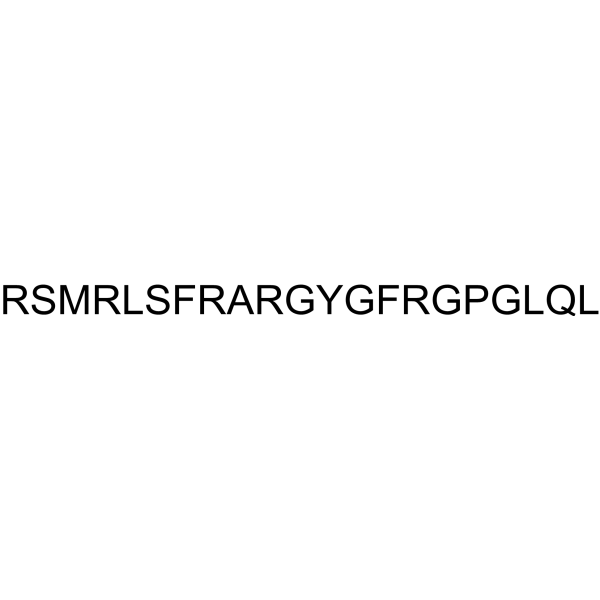
Arg-Ser-Met-Arg-Leu-Ser-Phe-Arg-Ala-Arg-Gly-Tyr-Gly-Phe-Arg-Gly-Pro-Gly-Leu-Gln-Leu
-
Sequence Shortening
RSMRLSFRARGYGFRGPGLQL
-
Versand
Room temperature in continental US; may vary elsewhere.
-
Speicherung
Sealed storage, away from moisture and light
Powder -80°C 2 years -20°C 1 year * In solvent : -80°C, 6 months; -20°C, 1 month (sealed storage, away from moisture and light)


Lösungsmittel & Löslichkeit
In Vitro:
DMSO : 100 mg/mL (41.22 mM; Need ultrasonic; Hygroscopic DMSO has a significant impact on the solubility of product, please use newly opened DMSO)
Please refer to the solubility information to select the appropriate solvent. Once prepared, please aliquot and store the solution to prevent product inactivation from repeated freeze-thaw cycles.
Storage method and period of stock solution: -80°C, 6 months; -20°C, 1 month (sealed storage, away from moisture and light). When stored at -80°C, please use it within 6 months. When stored at -20°C, please use it within 1 month.
Konzentration (Stammlösung) × Volumen (Stammlösung) = Konzentration (Ziellösung) × Volumen (Ziellösung)
In Vivo Dissolution Calculator
Please enter the basic information of animal experiments:
-
-
-
-
Recommended: Prepare an additional quantity of animals to account for potential losses during experiments.
Working solution concentration: 0.22 mg/mL


Reinheit & Dokumentation


Verweise

Complete Stock Solution Preparation Table
Please refer to the solubility information to select the appropriate solvent. Once prepared, please aliquot and store the solution to prevent product inactivation from repeated freeze-thaw cycles.
Storage method and period of stock solution: -80°C, 6 months; -20°C, 1 month (sealed storage, away from moisture and light). When stored at -80°C, please use it within 6 months. When stored at -20°C, please use it within 1 month.
| Optional Solvent | Concentration Solvent Mass | 1 mg | 5 mg | 10 mg | 25 mg |
|---|---|---|---|---|---|
| DMSO | 1 mM | 0.4122 mL | 2.0612 mL | 4.1223 mL | 10.3058 mL |
| 5 mM | 0.0824 mL | 0.4122 mL | 0.8245 mL | 2.0612 mL | |
| 10 mM | 0.0412 mL | 0.2061 mL | 0.4122 mL | 1.0306 mL | |
| 15 mM | 0.0275 mL | 0.1374 mL | 0.2748 mL | 0.6871 mL | |
| 20 mM | 0.0206 mL | 0.1031 mL | 0.2061 mL | 0.5153 mL | |
| 25 mM | 0.0165 mL | 0.0824 mL | 0.1649 mL | 0.4122 mL | |
| 30 mM | 0.0137 mL | 0.0687 mL | 0.1374 mL | 0.3435 mL | |
| 40 mM | 0.0103 mL | 0.0515 mL | 0.1031 mL | 0.2576 mL |


Catestatin Related Classifications
HY-P1271 Related Classifications
 Powered by Bioz