



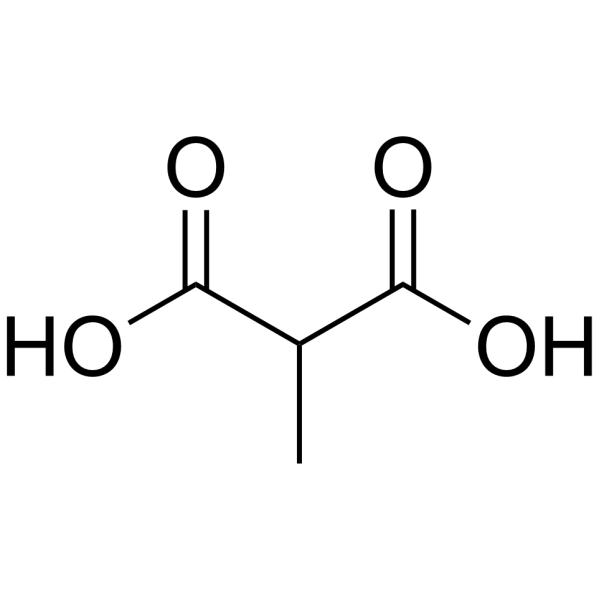
Methylmalonic acid
Based on 4 publication(s) in Google Scholar
Methylmalonic acid (Methylmalonate) is an indicator of Vitamin B-12 deficiency in cancer.
For research use only. We do not sell to patients.
- Purity : 98.0%
- CAS No.: 516-05-2
- Formula: C4H6O4
- Molecular Weight:118.09
-
Storage:Powder -20°C, 3 years , 4°C, 2 years ; In solvent -80°C, 6 months , -20°C, 1 month

To place orders, for customer services and technical support, please contact: MedChemExpress USA
Tel: 609-228-6898 E-mail: [email protected] [email protected]


-
 Biological Activity
-
Chemical Information
-
Solvent & Solubility
- Purity & Documentation
- References
-
 Help & FAQs


-
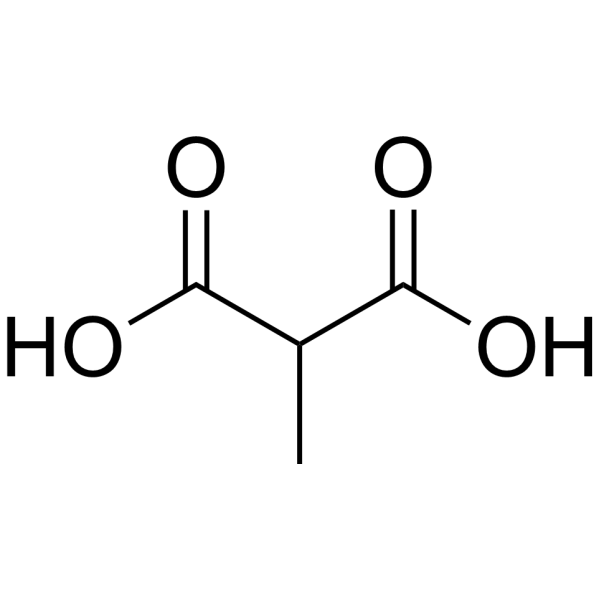
HY-103395R
Methylmalonic acid (Standard)Vitamin B12 Indicator -
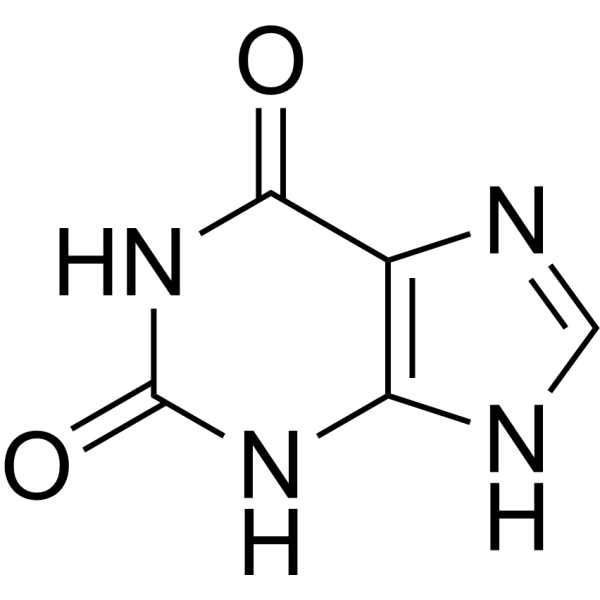
HY-W017389
Xanthine -
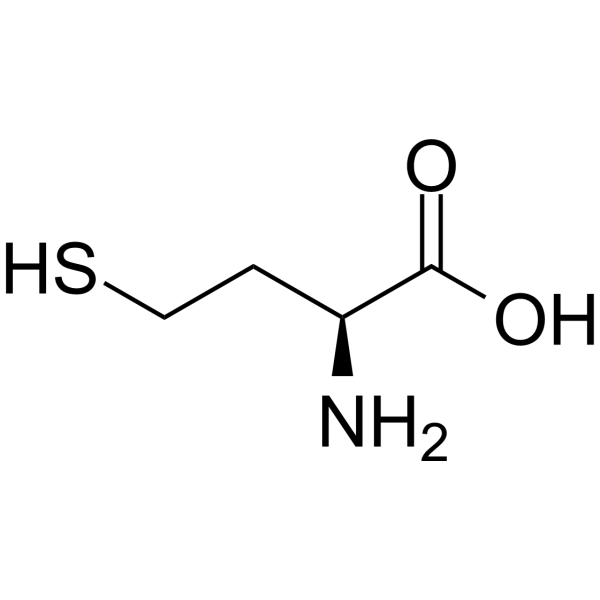
HY-W010347
L-HomocysteineAmino Acid -
HY-113294
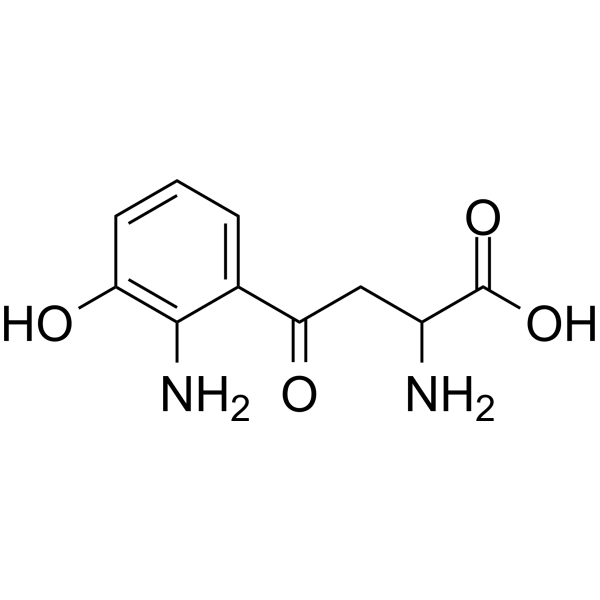
3-HydroxykynurenineEndogenous Neurotoxin -
HY-B2130
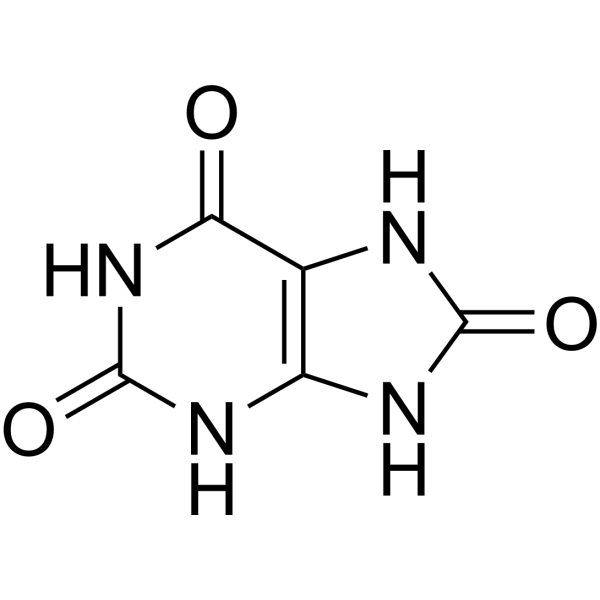
Uric acidOxygen Radical Scavenger -
HY-10820
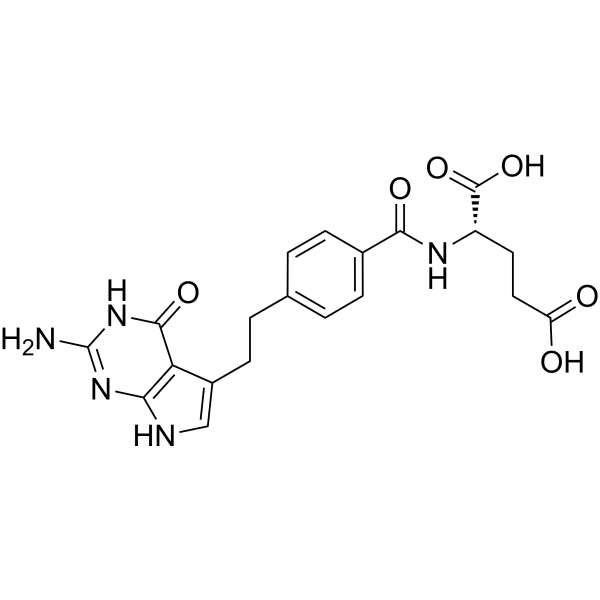
Pemetrexed -
HY-112005
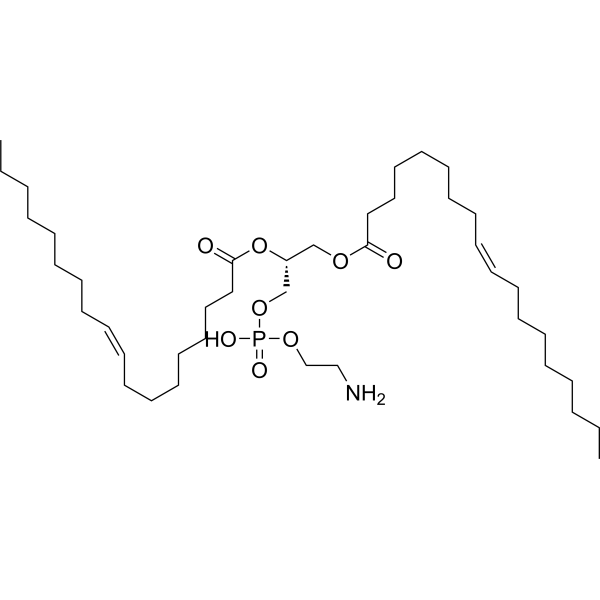
DOPEFerroptosis Inhibitor -
HY-113056A
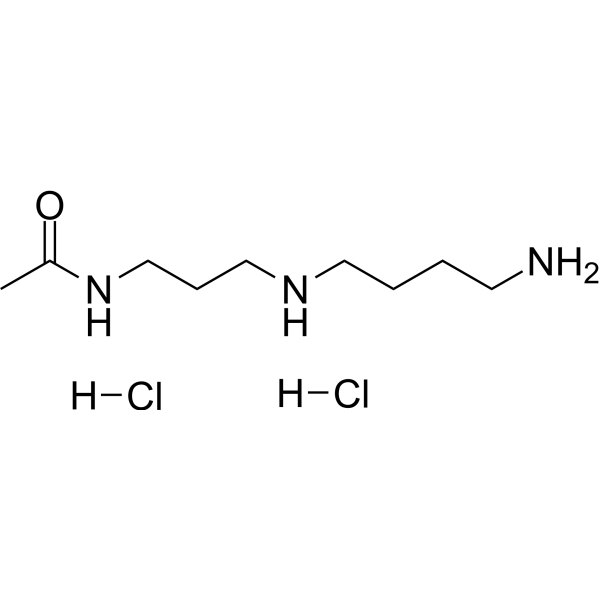
N1-Acetylspermidine hydrochlorideEndogenous Metabolite -
HY-N1482
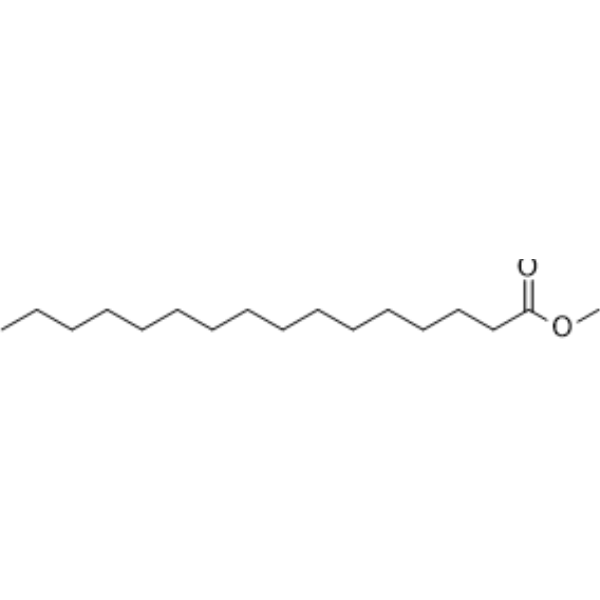
Methyl palmitateAnti-inflammatory Agent -
HY-W028393
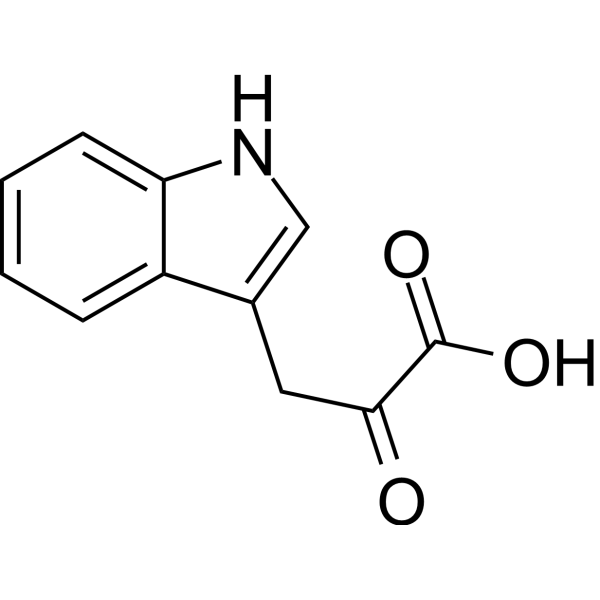
Indole-3-pyruvic acidAHR Agonist -
HY-113253A
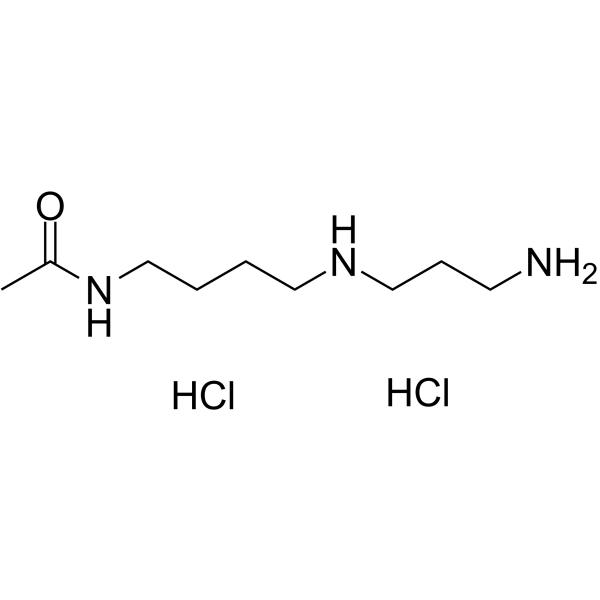
N8-Acetylspermidine dihydrochlorideEndogenous Metabolite -
HY-B0199
Mycophenolate MofetilIMPDH Inhibitor
Publications Citing Use of MedChemExpress (MCE) Methylmalonic acid
More Customer Validation & Images

-
Bio/Physico-chemical Assay
-
Bio/Physico-chemical Assay
-
Bio/Physico-chemical Assay
-
Cell Imaging/Staining
-
Cell Proliferation/Viability Assay
All Endogenous Metabolite Isoforms
More

Biological Activity
Description
IC50 & Target
|
Human Endogenous Metabolite |
In Vitro
Vitamin B-12 is required for Methylmalonate (Methylmalonic acid; MMA) to be converted to succinyl-CoA, and in combination with folic acid, for homocysteine (HC) to be converted to methionine. Therefore, Methylmalonate is clearly more specific to vitamin B-12 deficiency compared to HC[1].
MedChemExpress (MCE) has not independently confirmed the accuracy of these methods. They are for reference only.
Clinical Trial
| NCT Number | Sponsor | Condition | Start Date |
Phase

|
|---|---|---|---|---|
| NCT01329991 | Plexxikon| | 2011-05 | PHASE1 |


Chemical Information
-
CAS No. 516-05-2
-
Appearance Solid
-
Molecular Weight 118.09
-
Formula C4H6O4
-
Color White to off-white
-
SMILES
O=C(O)C(C)C(O)=O
-
Synonyms
Methylpropanedioic acid; Methylmalonate
-
Structure Classification
-
Shipping
Room temperature in continental US; may vary elsewhere.
-
Storage
Powder -20°C 3 years 4°C 2 years In solvent -80°C 6 months -20°C 1 month


Publications (4)
-
Journal Impact Factor
-
Most Recent
-
Cell Commun Signal
Mitochondria-derived methylmalonic acid aggravates ischemia-reperfusion injury by activating reactive oxygen species-dependent ferroptosis. [Abstract]2024 Jan 18;22(1):53. PMID: 38238728
Methylmalonic acid purchased from MedChemExpress. Usage Cited in: Cell Commun Signal. 2024 Jan 18;22(1):53. [Abstract]
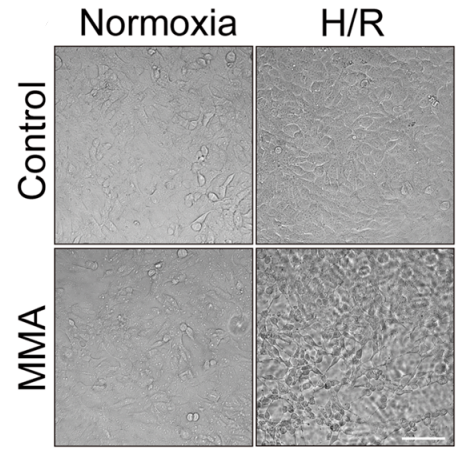
In vitro, AC16 cells were treated with Methylmalonic acid (MMA, 17.5 mM) for 3 h and employed for further analyses. Morphology was evaluated by light microscopy after AC16 cells were treated with MMA.
Methylmalonic acid purchased from MedChemExpress. Usage Cited in: Cell Commun Signal. 2024 Jan 18;22(1):53. [Abstract]
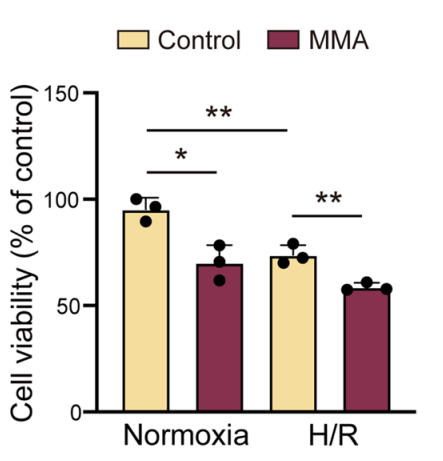
In vitro, AC16 cells were treated with Methylmalonic acid (MMA, 17.5 mM) for 3 h and employed for further analyses. AC16 cells were treated with/without MMA in Normoxia or hypoxia-reoxygenation (H/R) condition. Cell viability was detected by 3-(4,5-dimthyl-2-thiazolyl)-2,5-diphenyl-2-H-tetrazoliumbromide (MTT) assay.
Methylmalonic acid purchased from MedChemExpress. Usage Cited in: Cell Commun Signal. 2024 Jan 18;22(1):53. [Abstract]
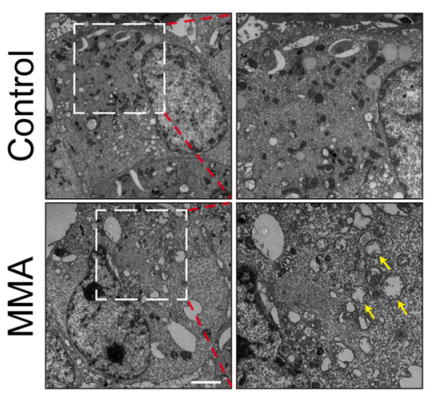
In vitro, AC16 cells were treated with Methylmalonic acid (MMA, 17.5 mM) for 3 h and employed for further analyses. Representative TEM images of AC16 cells treated with/without MMA. Yellow arrows indicate mitochondria.
Methylmalonic acid purchased from MedChemExpress. Usage Cited in: Cell Commun Signal. 2024 Jan 18;22(1):53. [Abstract]
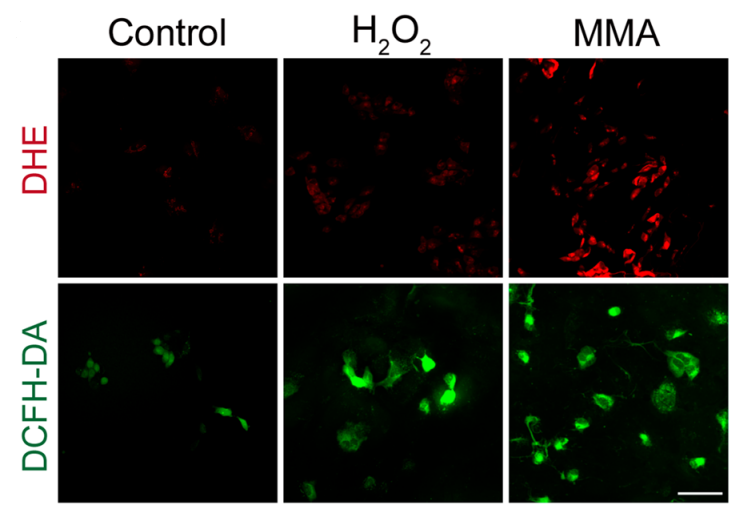
Methylmalonic acid (MMA)-mediated ROS contributes to cardiomyocytes injury. In vitro, AC16 cells were treated with MMA (17.5 mM) for 3 h or H2O2 (600 μM) for 6 h and then used for further analyses. ROS production was observed by DHE and DCFH-DA staining.
-
Cell Genom
An ancient regulatory variant of ACSF3 influences the coevolution of increased human height and basal metabolic rate via metabolic homeostasis. [Abstract]2025 Jun 11;5(6):100855. PMID: 40403731
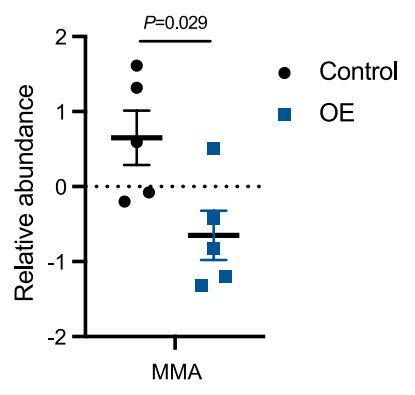
Methylmalonic acid purchased from MedChemExpress. Usage Cited in: Cell Genom. 2025 Jun 11;5(6):100855. [Abstract]
Relative abundance of methylmalonate in hepatocytes. CON, control; OE, adenovirus-based Acsf3 overexpression; MMA, methylmalonic acid.
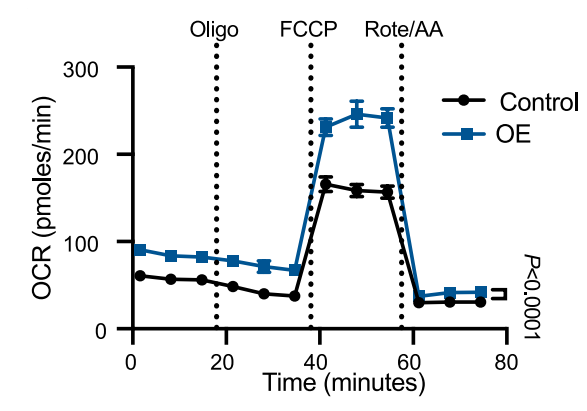
Methylmalonic acid purchased from MedChemExpress. Usage Cited in: Cell Genom. 2025 Jun 11;5(6):100855. [Abstract]
Respiratory rate of methylmalonic acid in hepatocytes. CON, control group; OE, adenovirus-based Acsf3 overexpression group; MMA, methylmalonic acid.
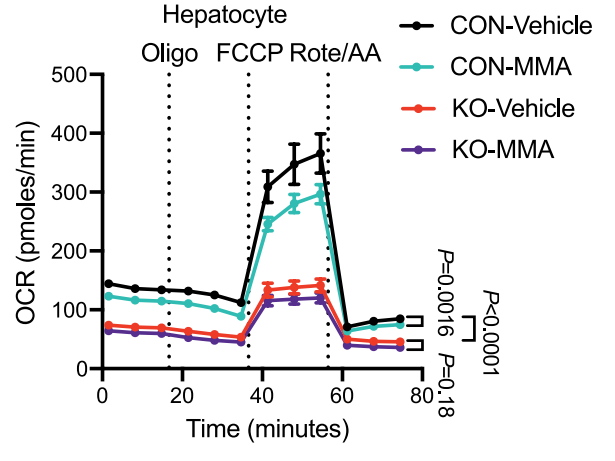
Methylmalonic acid purchased from MedChemExpress. Usage Cited in: Cell Genom. 2025 Jun 11;5(6):100855. [Abstract]
Respiratory rates in hepatocytes. MMA, 5 mM methylmalonate. N = 3. CON, control mice (Acsf3+/−); KO, knockout mice (Acsf3−/−).
-
Mol Med
The mechanism of enterogenous toxin methylmalonic acid aggravating calcium-phosphorus metabolic disorder in uremic rats by regulating the Wnt/β-catenin pathway. [Abstract]2025 Jan 22;31(1):19. PMID: 39844078 -
Inflamm Res
Methylmalonic acid as a ferroptosis-derived danger signal: activation of the PI3K-NF-κB pathway drives M1 macrophage polarization in renal ischemia-reperfusion injury. [Abstract]2026 Jun 22;75(1):153. PMID: 42329408


Solvent & Solubility
In Vitro:
DMSO : 100 mg/mL (846.81 mM; Need ultrasonic; Hygroscopic DMSO has a significant impact on the solubility of product, please use newly opened DMSO)
H2O : 100 mg/mL (846.81 mM; Need ultrasonic)
Please refer to the solubility information to select the appropriate solvent. Once prepared, please aliquot and store the solution to prevent product inactivation from repeated freeze-thaw cycles.
Storage method and period of stock solution: -80°C, 6 months; -20°C, 1 month. When stored at -80°C, please use it within 6 months. When stored at -20°C, please use it within 1 month.
* Note: If you choose water as the stock solution, please dilute it to the working solution, then filter and sterilize it with a 0.22 μm filter before use.
Please refer to the solubility information to select the appropriate solvent. Once prepared, please aliquot and store the solution to prevent product inactivation from repeated freeze-thaw cycles.
Storage method and period of stock solution: -80°C, 6 months; -20°C, 1 month. When stored at -80°C, please use it within 6 months. When stored at -20°C, please use it within 1 month.
* Note: If you choose water as the stock solution, please dilute it to the working solution, then filter and sterilize it with a 0.22 μm filter before use.
Concentration (start) × Volume (start) = Concentration (final) × Volume (final)
In Vivo:
Select the appropriate dissolution method based on your experimental animal and administration route.
- For the following dissolution methods, please ensure to first prepare a clear stock solution using an In Vitro approach and then sequentially add co-solvents:
- To ensure reliable experimental results, the clarified stock solution can be appropriately stored based on storage conditions. As for the working solution for In Vivo experiments, it is recommended to prepare freshly and use it on the same day.
- The percentages shown for the solvents indicate their volumetric ratio in the final prepared solution. If precipitation or phase separation occurs during preparation, heat and/or sonication can be used to aid dissolution.
Add each solvent one by one: 10% DMSO 40% PEG300 5% Tween-80 45% Saline
Solubility: ≥ 2.5 mg/mL (21.17 mM); Clear solution
This protocol yields a clear solution of ≥ 2.5 mg/mL (saturation unknown).
Taking 1 mL working solution as an example, add 100 μL DMSO stock solution (25.0 mg/mL) to 400 μL PEG300, and mix evenly; then add 50 μL Tween-80 and mix evenly; then add 450 μL Saline to adjust the volume to 1 mL.
Preparation of Saline: Dissolve 0.9 g sodium chloride in ddH₂O and dilute to 100 mL to obtain a clear Saline solution.
Add each solvent one by one: 10% DMSO 90% (20% SBE-β-CD in Saline)
Solubility: ≥ 2.5 mg/mL (21.17 mM); Clear solution
This protocol yields a clear solution of ≥ 2.5 mg/mL (saturation unknown).
Taking 1 mL working solution as an example, add 100 μL DMSO stock solution (25.0 mg/mL) to 900 μL 20% SBE-β-CD in Saline, and mix evenly.
Preparation of 20% SBE-β-CD in Saline (4°C, storage for one week): 2 g SBE-β-CD powder is dissolved in 10 mL Saline, completely dissolve until clear.
For the following dissolution methods, please prepare the working solution directly:
It is recommended to prepare fresh solutions and use them promptly within a short period of time.
The percentages shown for the solvents indicate their volumetric ratio in the final prepared solution. If precipitation or phase separation occurs during preparation, heat and/or sonication can be used to aid dissolution.
Add each solvent one by one: PBS
Solubility: 100 mg/mL (846.81 mM); Clear solution; Need ultrasonic
In Vivo Dissolution Calculator
Please enter the basic information of animal experiments:
-
-
-
-
Recommended: Prepare an additional quantity of animals to account for potential losses during experiments.
Working solution concentration: 0.22 mg/mL
This product has good water solubility, please refer to the measured solubility data in water/PBS/Saline for details.


Purity & Documentation
-
Data Sheet (278 KB)
-
SDS (394 KB)
- English - EN (394 KB)
- Français - FR (394 KB)
- Deutsch - DE (394 KB)
- Norwegian - NO (394 KB)
- Español - ES (394 KB)
- Swedish - SV (394 KB)
- Italian - IT (394 KB)
- Korean - KR (394 KB)
- Portuguese - PT (394 KB)
-
Handling Instructions (2659 KB)
References


Complete Stock Solution Preparation Table
Please refer to the solubility information to select the appropriate solvent. Once prepared, please aliquot and store the solution to prevent product inactivation from repeated freeze-thaw cycles.
Storage method and period of stock solution: -80°C, 6 months; -20°C, 1 month. When stored at -80°C, please use it within 6 months. When stored at -20°C, please use it within 1 month.
| Optional Solvent | Concentration Solvent Mass | 1 mg | 5 mg | 10 mg | 25 mg |
|---|---|---|---|---|---|
| DMSO / H2O | 1 mM | 8.4681 mL | 42.3406 mL | 84.6812 mL | 211.7029 mL |
| 5 mM | 1.6936 mL | 8.4681 mL | 16.9362 mL | 42.3406 mL | |
| 10 mM | 0.8468 mL | 4.2341 mL | 8.4681 mL | 21.1703 mL | |
| 15 mM | 0.5645 mL | 2.8227 mL | 5.6454 mL | 14.1135 mL | |
| 20 mM | 0.4234 mL | 2.1170 mL | 4.2341 mL | 10.5851 mL | |
| 25 mM | 0.3387 mL | 1.6936 mL | 3.3872 mL | 8.4681 mL | |
| 30 mM | 0.2823 mL | 1.4114 mL | 2.8227 mL | 7.0568 mL | |
| 40 mM | 0.2117 mL | 1.0585 mL | 2.1170 mL | 5.2926 mL | |
| 50 mM | 0.1694 mL | 0.8468 mL | 1.6936 mL | 4.2341 mL | |
| 60 mM | 0.1411 mL | 0.7057 mL | 1.4114 mL | 3.5284 mL | |
| 80 mM | 0.1059 mL | 0.5293 mL | 1.0585 mL | 2.6463 mL | |
| 100 mM | 0.0847 mL | 0.4234 mL | 0.8468 mL | 2.1170 mL |
* Note: If you choose water as the stock solution, please dilute it to the working solution, then filter and sterilize it with a 0.22 μm filter before use.


Methylmalonic acid Related Classifications
HY-103395 Related Classifications
 Powered by Bioz