



Chlorpheniramine
Based on 4 publication(s) in Google Scholar
Chlorpheniramine is a H1 antihistamines commonly used in allergic diseases research.
For research use only. We do not sell to patients.
- Purity : 99.86%
- CAS No.: 132-22-9
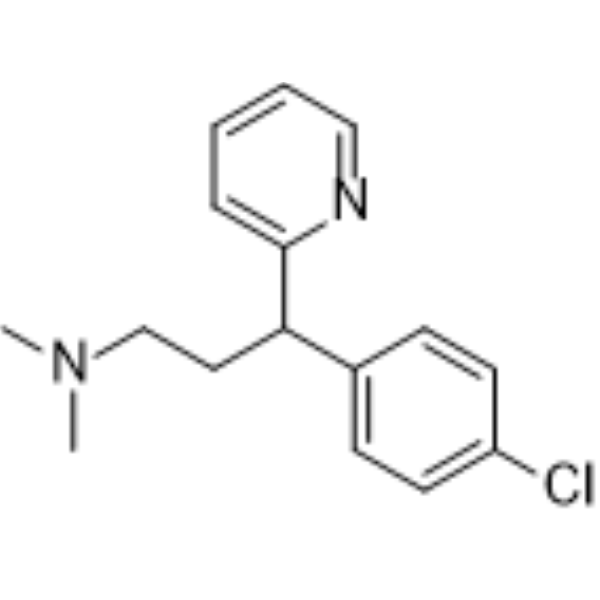
- Formula: C16H19ClN2
- Molecular Weight:274.79
-
Storage:Pure form -20°C, 3 years , 4°C, 2 years ; In solvent -80°C, 6 months , -20°C, 1 month

To place orders, for customer services and technical support, please contact: MedChemExpress USA
Tel: 609-228-6898 E-mail: [email protected] [email protected]


-
 Biological Activity
-
Chemical Information
-
Solvent & Solubility
- Purity & Documentation
- References
-
 Help & FAQs


-
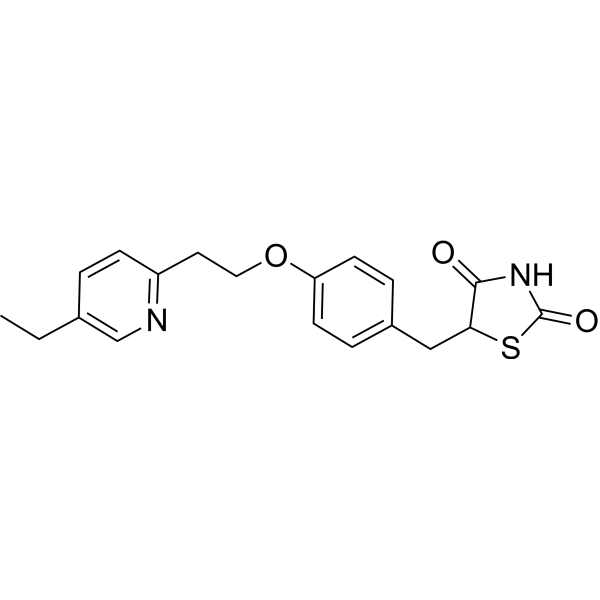
HY-13956
PioglitazonePPARγ Agonist -
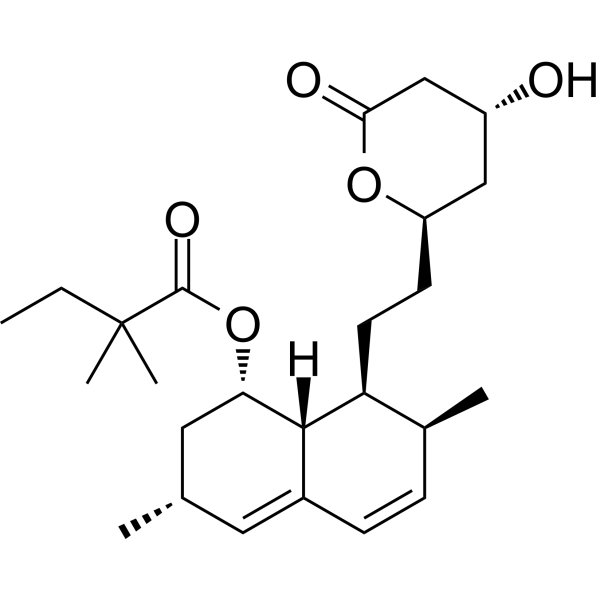
HY-17502
SimvastatinHMGCR Inhibitor -
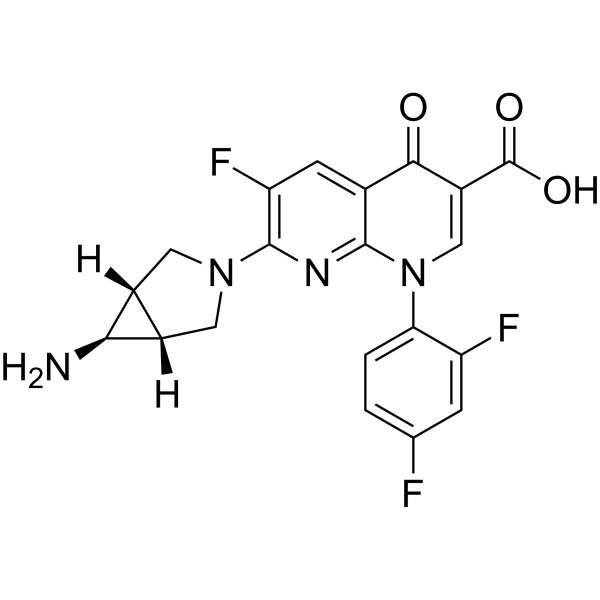
HY-A0170
TrovafloxacinAntibiotic Agent -
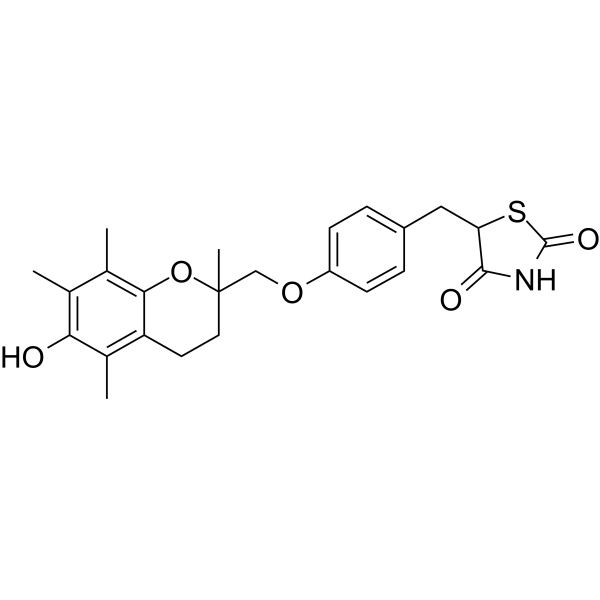
HY-50935
TroglitazonePPARγ Agonist -
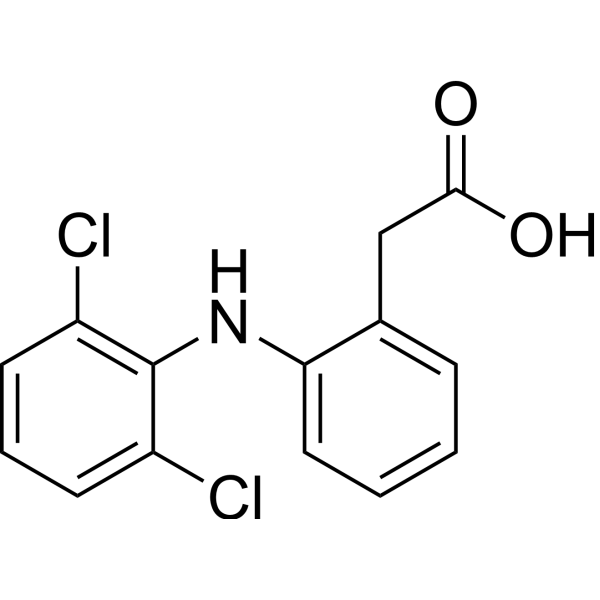
HY-15036
DiclofenacCOX Inhibitor -
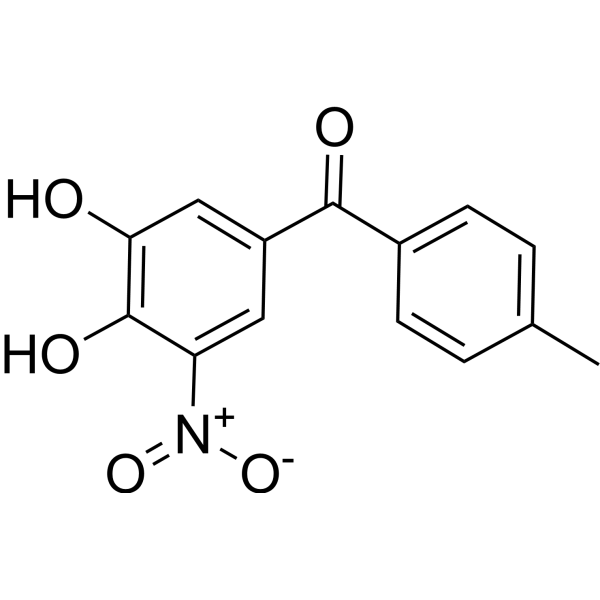
HY-17406
TolcaponeCOMT Inhibitor -
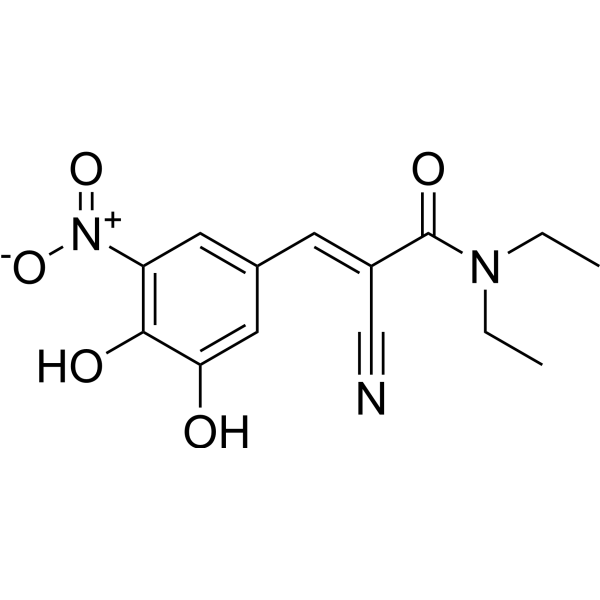
HY-14280
EntacaponeCOMT Inhibitor -
HY-B1115A
BuspironeAnxiolytic Agent -
HY-119209
NefazodonePhenylpiperazine Antidepressant -
HY-B0627
MetforminAntihyperglycemic Agent -
HY-B0589
AtorvastatinHMG-CoA Reductase Inhibitor -
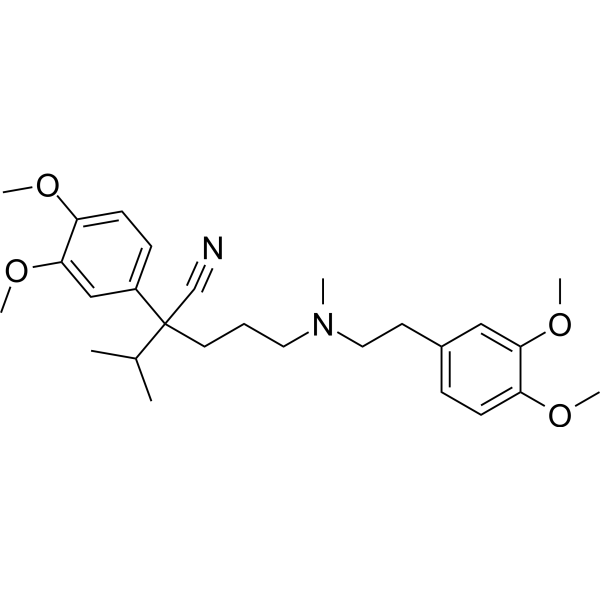
HY-14275
VerapamilCalcium Channel Blocker
Publications Citing Use of MedChemExpress (MCE) Chlorpheniramine
MoreAll Histamine Receptor Isoforms
More

Biological Activity
Description
IC50 & Target
IC50: 43μM in BV2 microglial cells
Cellular Effect
|
Cell Line

|
Type | Value | Description | References |
|---|---|---|---|---|
| CHO | IC50 |
0.066 μM
Compound: Chlorpheniramine
|
Displacement of [3H]pyrilamine from human histamine receptor subtype 1 expressed in CHO cells
Displacement of [3H]pyrilamine from human histamine receptor subtype 1 expressed in CHO cells
|
[PMID: 17846138] |
| MDCK | IC50 |
14 μM
Compound: Chlorpheniramine
|
TP_TRANSPORTER: inhibition of TEA uptake (TEA: 50 uM) in OCT1-expressing MDCK cells
TP_TRANSPORTER: inhibition of TEA uptake (TEA: 50 uM) in OCT1-expressing MDCK cells
|
[PMID: 11758759] |
| MDCK | IC50 |
26 μM
Compound: Chlorpheniramine
|
TP_TRANSPORTER: inhibition of TEA uptake (TEA: 50 uM) in OCT2-expressing MDCK cells
TP_TRANSPORTER: inhibition of TEA uptake (TEA: 50 uM) in OCT2-expressing MDCK cells
|
[PMID: 11758759] |
| RBL-2H3 | IC50 |
0.0318 μM
Compound: Chlorpheniramine
|
Antiallergic activity in rat RBL2H3 cells assessed as inhibition of C48/80-induced mast cell degranulation preincubated with compound for 30 mins and then treated with C48/80 for 1 hr by neutral red dye based method
Antiallergic activity in rat RBL2H3 cells assessed as inhibition of C48/80-induced mast cell degranulation preincubated with compound for 30 mins and then treated with C48/80 for 1 hr by neutral red dye based method
|
[PMID: 31703894] |
| RBL-2H3 | IC50 |
0.0536 μM
Compound: Chlorpheniramine
|
Antiallergic activity in rat RBL2H3 cells assessed as inhibition of C48/80-induced histamine release preincubated with compound for 30 mins followed by C48/80 stimulation for 1 hr
Antiallergic activity in rat RBL2H3 cells assessed as inhibition of C48/80-induced histamine release preincubated with compound for 30 mins followed by C48/80 stimulation for 1 hr
|
[PMID: 31703894] |
| RBL-2H3 | IC50 |
0.121 μM
Compound: Chlorpheniramine
|
Antiallergic activity in IgE/Ag-stimulated rat RBL2H3 cells assessed as inhibition of HSA-induced beta-hexosaminidase release preincubated with compound for 30 mins and then stimulated with HSA for 15 mins followed by incubation with P-nitrophenyl-N-acety
Antiallergic activity in IgE/Ag-stimulated rat RBL2H3 cells assessed as inhibition of HSA-induced beta-hexosaminidase release preincubated with compound for 30 mins and then stimulated with HSA for 15 mins followed by incubation with P-nitrophenyl-N-acety
|
[PMID: 31703894] |
| Splenocyte | IC50 |
33.4 μM
Compound: Chlorpheniramine
|
Cytotoxicity against C57BL/6J mouse splenocytes after 72 hrs by alamar blue assay
Cytotoxicity against C57BL/6J mouse splenocytes after 72 hrs by alamar blue assay
|
[PMID: 17846138] |
In Vitro
Chlorpheniramine shows antimalarial activity against P. falciparum (IC50: 61.2 and 3.9 μM for D6 and Dd2 strain)[4].
Chlorpheniramine reduces the proton currents (IC50: 43 μM) in BV2 microglial cells[1].
MedChemExpress (MCE) has not independently confirmed the accuracy of these methods. They are for reference only. .
-
Cell Line:Murine microglial BV2 cells[1].
-
Concentration:100 μM
-
Incubation Time:5 min
-
Result:Inhibited proton currents with moderate potency.
In Vivo
MedChemExpress (MCE) has not independently confirmed the accuracy of these methods. They are for reference only.
-
Animal Model:Sprague-Dawley (SD) rats[2].
-
Dosage:50, 100 and 200 μg/kg
-
Administration:Chlorpheniramine (50, 100 and 200 μg/kg; IM; 3 times, at intervals of 1 week)
-
Result:Enhanced white blood cells in the peripheral blood, mostly due to the increases of B cells and monocytes, but not T cells and NK cells.
Clinical Trial
| NCT Number | Sponsor | Condition | Start Date |
Phase
|
|---|---|---|---|---|
| NCT01329991 | Plexxikon| | 2011-05 | PHASE1 |


Chemical Information
-
CAS No. 132-22-9
-
Appearance Liquid (Density: 1.108±0.06 g/cm3)
-
Molecular Weight 274.79
-
Formula C16H19ClN2
-
Color Colorless to light yellow
-
SMILES
CN(C)CCC(C1=CC=C(Cl)C=C1)C2=CC=CC=N2
-
Synonyms
Chlorphenamine
-
Shipping
Room temperature in continental US; may vary elsewhere.
-
Storage
Pure form -20°C 3 years 4°C 2 years In solvent -80°C 6 months -20°C 1 month


Publications (4)
-
Journal Impact Factor
-
Most Recent
-
Neuropharmacology
2025 Nov 1:278:110593. PMID: 40683349 -
J Inflamm Res
Neural-Inflammation Mechanism of Spinal Palmitic Acid Promoting Atopic Dermatitis in Mice. [Abstract]2025 Jun 17:18:7907-7919. PMID: 40546406 -
J Pharm Sci
Effects of Processing on a Sustained Release Formulation Prepared by Twin-Screw Dry Granulation. [Abstract]2019 Sep;108(9):2895-2904. PMID: 30965041 -
Chemosphere
Mass-balance-model-based evaluation of sewage treatment plant contribution to residual pharmaceuticals in environmental waters. [Abstract]2019 Jun:225:378-387. PMID: 30884299


Solvent & Solubility
In Vitro:
DMSO : 200 mg/mL (727.83 mM; Need ultrasonic; Hygroscopic DMSO has a significant impact on the solubility of product, please use newly opened DMSO)
Please refer to the solubility information to select the appropriate solvent. Once prepared, please aliquot and store the solution to prevent product inactivation from repeated freeze-thaw cycles.
Storage method and period of stock solution: -80°C, 6 months; -20°C, 1 month. When stored at -80°C, please use it within 6 months. When stored at -20°C, please use it within 1 month.
Please refer to the solubility information to select the appropriate solvent. Once prepared, please aliquot and store the solution to prevent product inactivation from repeated freeze-thaw cycles.
Storage method and period of stock solution: -80°C, 6 months; -20°C, 1 month. When stored at -80°C, please use it within 6 months. When stored at -20°C, please use it within 1 month.
Concentration (start) × Volume (start) = Concentration (final) × Volume (final)
In Vivo:
Select the appropriate dissolution method based on your experimental animal and administration route.
- For the following dissolution methods, please ensure to first prepare a clear stock solution using an In Vitro approach and then sequentially add co-solvents:
- To ensure reliable experimental results, the clarified stock solution can be appropriately stored based on storage conditions. As for the working solution for In Vivo experiments, it is recommended to prepare freshly and use it on the same day.
- The percentages shown for the solvents indicate their volumetric ratio in the final prepared solution. If precipitation or phase separation occurs during preparation, heat and/or sonication can be used to aid dissolution.
Add each solvent one by one: 10% DMSO 40% PEG300 5% Tween-80 45% Saline
Solubility: ≥ 5 mg/mL (18.20 mM); Clear solution
This protocol yields a clear solution of ≥ 5 mg/mL (saturation unknown).
Taking 1 mL working solution as an example, add 100 μL DMSO stock solution (50.0 mg/mL) to 400 μL PEG300, and mix evenly; then add 50 μL Tween-80 and mix evenly; then add 450 μL Saline to adjust the volume to 1 mL.
Preparation of Saline: Dissolve 0.9 g sodium chloride in ddH₂O and dilute to 100 mL to obtain a clear Saline solution.
Add each solvent one by one: 10% DMSO 90% (20% SBE-β-CD in Saline)
Solubility: ≥ 5 mg/mL (18.20 mM); Clear solution
This protocol yields a clear solution of ≥ 5 mg/mL (saturation unknown).
Taking 1 mL working solution as an example, add 100 μL DMSO stock solution (50.0 mg/mL) to 900 μL 20% SBE-β-CD in Saline, and mix evenly.
Preparation of 20% SBE-β-CD in Saline (4°C, storage for one week): 2 g SBE-β-CD powder is dissolved in 10 mL Saline, completely dissolve until clear.
In Vivo Dissolution Calculator
Please enter the basic information of animal experiments:
-
-
-
-
Recommended: Prepare an additional quantity of animals to account for potential losses during experiments.
Please enter your animal formula composition:
-
%DMSO +
Recommended: Keep the proportion of DMSO in working solution below 2% if your animal is weak.
-
%+
-
+%Tween-80 + +
-
%Saline +
The co-solvents required include: DMSO, . All of co-solvents are available by MedChemExpress (MCE). , Tween 80. All of co-solvents are available by MedChemExpress (MCE).
Working solution concentration: 0.22 mg/mL
Method for preparing stock solution: mg drug dissolved in μL DMSO. Stock solution concentration: mg/mL.
1. Take μL DMSO stock solution;
2. Add μL .
μL , mix evenly;
3. Then add μL Tween 80, mix evenly;
4. Then add μL
Please ensure that the stock solution in the first step is dissolved to a clear state, and add co-solvents in sequence. You can use ultrasonic heating (ultrasonic cleaner, recommended frequency 20-40 kHz), vortexing, etc. to assist dissolution.


Purity & Documentation
-
Data Sheet (275 KB)
-
SDS (392 KB)
- English - EN (392 KB)
- Français - FR (392 KB)
- Deutsch - DE (392 KB)
- Norwegian - NO (392 KB)
- Español - ES (392 KB)
- Swedish - SV (392 KB)
- Italian - IT (392 KB)
- Korean - KR (392 KB)
- Portuguese - PT (392 KB)
-
Handling Instructions (2659 KB)
References
[1]. Jiwon Kim, etal. Inhibitory effects of antihistamines, diphenhydramine and chlorpheniramine, on proton currents in BV2 microglial cells. Eur J Pharmacol. 2017 Mar 5;798:122-128. [Content Brief]
[2]. Kyung-Jin Jung, etal. Enhancement of B cell and monocyte populations in rats exposed to chlorpheniramine. Arch Pharm Res. 2012 Dec;35(12):2183-9. [Content Brief]
[3]. Takano, N., I. Arai, and M. Kurachi, Analysis of the spontaneous scratching behavior by NC/Nga mice: a possible approach to evaluate antipruritics for subjects with atopic dermatitis. Eur J Pharmacol, 2003. 471(3): p. 223-8. [Content Brief]
[4]. Kelly, J.X., et al., Design, synthesis, and evaluation of 10-N-substituted acridones as novel chemosensitizers in Plasmodium falciparum. Antimicrob Agents Chemother, 2007. 51(11): p. 4133-40. [Content Brief]


Complete Stock Solution Preparation Table
Please refer to the solubility information to select the appropriate solvent. Once prepared, please aliquot and store the solution to prevent product inactivation from repeated freeze-thaw cycles.
Storage method and period of stock solution: -80°C, 6 months; -20°C, 1 month. When stored at -80°C, please use it within 6 months. When stored at -20°C, please use it within 1 month.
| Optional Solvent | Concentration Solvent Mass | 1 mg | 5 mg | 10 mg | 25 mg |
|---|---|---|---|---|---|
| DMSO | 1 mM | 3.6391 mL | 18.1957 mL | 36.3914 mL | 90.9786 mL |
| 5 mM | 0.7278 mL | 3.6391 mL | 7.2783 mL | 18.1957 mL | |
| 10 mM | 0.3639 mL | 1.8196 mL | 3.6391 mL | 9.0979 mL | |
| 15 mM | 0.2426 mL | 1.2130 mL | 2.4261 mL | 6.0652 mL | |
| 20 mM | 0.1820 mL | 0.9098 mL | 1.8196 mL | 4.5489 mL | |
| 25 mM | 0.1456 mL | 0.7278 mL | 1.4557 mL | 3.6391 mL | |
| 30 mM | 0.1213 mL | 0.6065 mL | 1.2130 mL | 3.0326 mL | |
| 40 mM | 0.0910 mL | 0.4549 mL | 0.9098 mL | 2.2745 mL | |
| 50 mM | 0.0728 mL | 0.3639 mL | 0.7278 mL | 1.8196 mL | |
| 60 mM | 0.0607 mL | 0.3033 mL | 0.6065 mL | 1.5163 mL | |
| 80 mM | 0.0455 mL | 0.2274 mL | 0.4549 mL | 1.1372 mL | |
| 100 mM | 0.0364 mL | 0.1820 mL | 0.3639 mL | 0.9098 mL |


Chlorpheniramine Related Classifications
HY-B0286 Related Classifications
 Powered by Bioz