



OL-135
OL-135 is a blood-brain barrier-permeable α-ketoheterocyclic FAAH and Carboxylesterase inhibitor (mouse FAAH IC50 = 2.1 nM; human FAAH IC50 = 14 nM). OL-135 selectively forms a hemiketal with the catalytic Ser241, increasing Anandamide (HY-10863) and fatty acid ethanolamide levels, thereby promoting the acquisition and extinction of spatial memory and producing CB1/CB2/opioid receptor-dependent analgesia. OL-135 can be used in the research of neuropathic pain, inflammatory pain, post-traumatic stress disorder, and obsessive-compulsive disorder.
For research use only. We do not sell to patients.
- CAS No.: 681135-77-3
- Formula: C21H22N2O2
- Molecular Weight:334.41
-
Storage:
Please store the product under the recommended conditions in the Certificate of Analysis.


To place orders, for customer services and technical support, please contact: MedChemExpress USA
Tel: 609-228-6898 E-mail: [email protected] [email protected]


-
 Biological Activity
-
Chemical Information
- Protocols
- Purity & Documentation
- References
-
 Help & FAQs


-
HY-18544
AA38-3Serine Hydrolase Inhibitor -
HY-103462
TC-F2FAAH Inhibitor -
HY-N7062
JNJ-1661010FAAH Inhibitor -
HY-118158
FAAH/MAGL-IN-4FAAH/MGL Inhibitor -
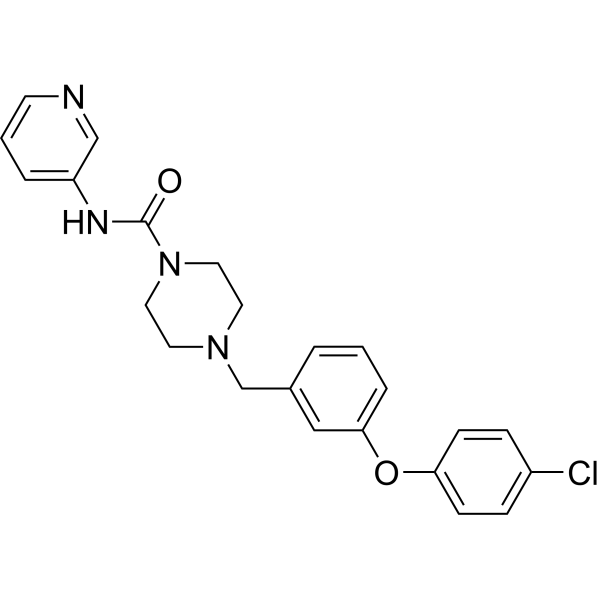
HY-18013
JNJ-40355003FAAH Inhibitor -
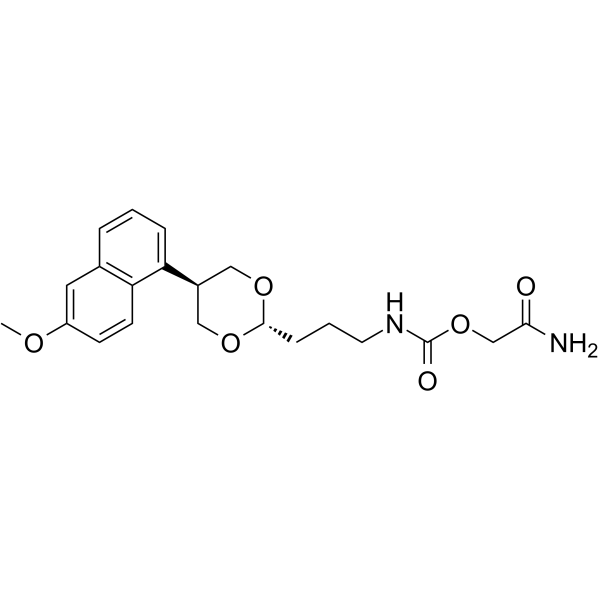
HY-123863
SSR411298FAAH Inhibitor -
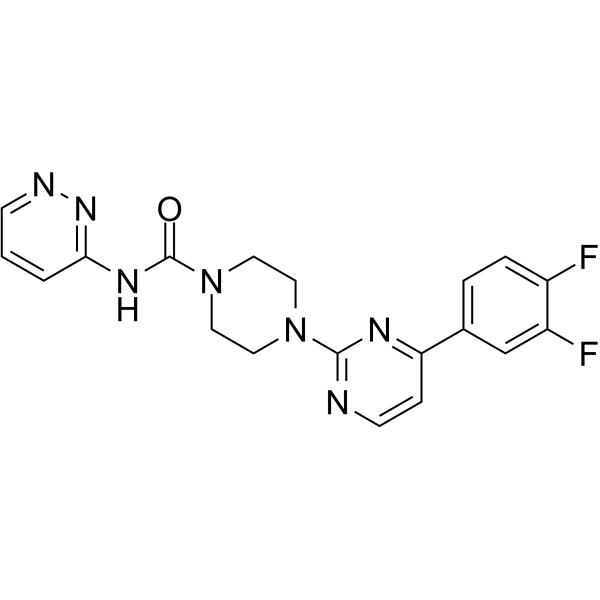
HY-103461
FAAH-IN-6FAAH Inhibitor -
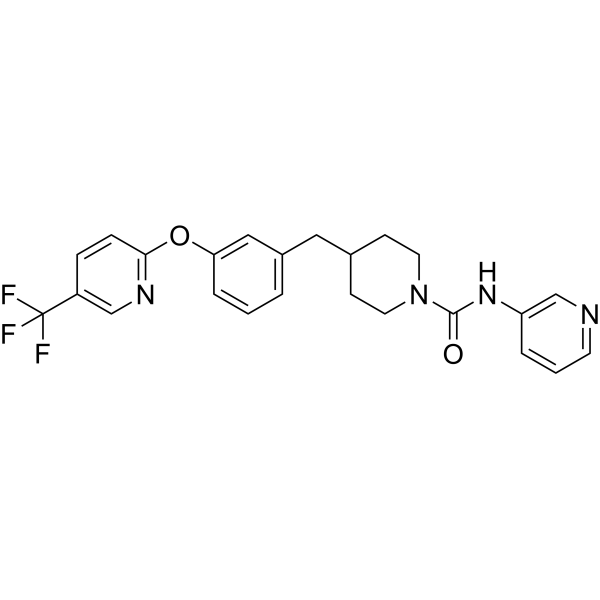
HY-14380
PF-3845FAAH Inhibitor -
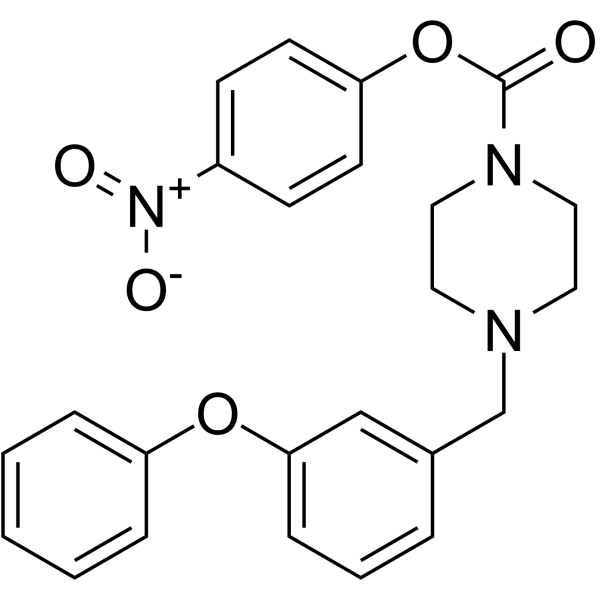
HY-15250
JZL195Dual FAAH/MAGL Inhibitor -
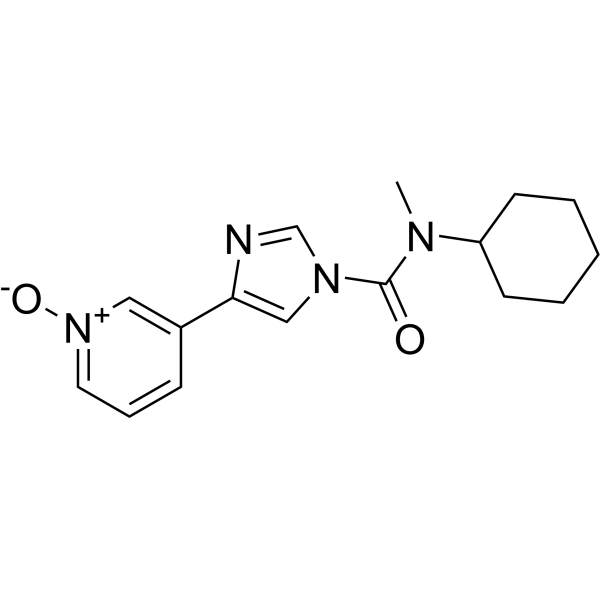
HY-19740
BIA 10-2474FAAH Inhibitor -
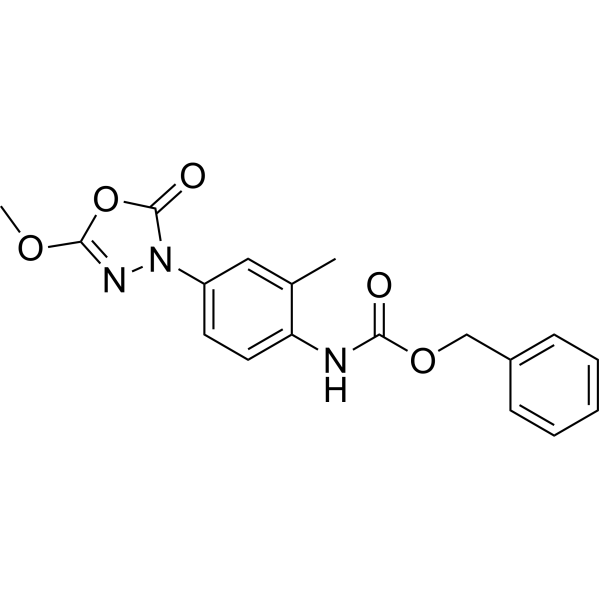
HY-119283
CAY10499Lipase Inhibitor -
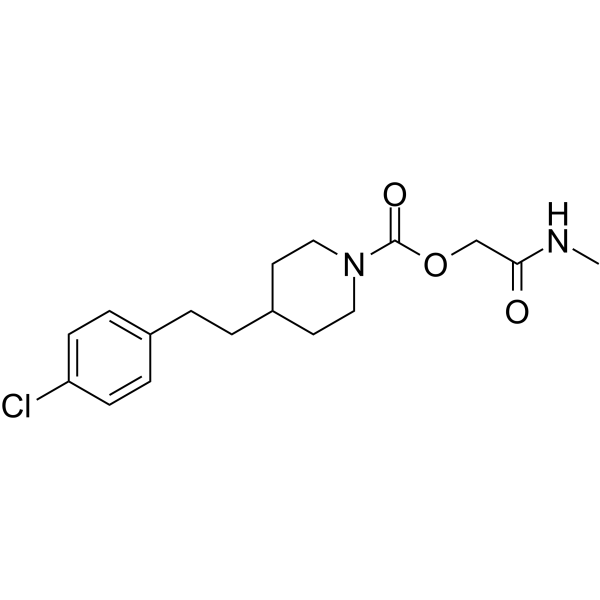
HY-103463
SA57FAAH Inhibitor


Biological Activity
Description
|
FAAH 2.1 nM (IC50, mouse) |
FAAH 14 nM (IC50, human) |
Cellular Effect
|
Cell Line

|
Type | Value | Description | References |
|---|---|---|---|---|
| HEK293 | IC50 |
1.1 μM
|
Inhibition of [3H]anandamide hydrolysis in HEK293 cells stably expressing human FAAH after 30 min preincubation with OL-135 followed by 30 min incubation with 50 nM [3H]anandamide.
Inhibition of [3H]anandamide hydrolysis in HEK293 cells stably expressing human FAAH after 30 min preincubation with OL-135 followed by 30 min incubation with 50 nM [3H]anandamide.
|
21645511 |
In Vitro
OL-135 (10 μM; 30 min) inhibits FAAH and other serine hydrolase bands in rat and human tissue proteomes, primarily around 60 kDa, and affected bands are also observed at 130 kDa and 50-60 kDa in human liver[2].
OL-135 (10 mM; 30 min) inhibits TGH, ES2, ES4, and NM_001024365 in the proteome of HEK293T cells expressing cloned rat carboxylesterase, but does not inhibit ES3, NM_144743, or NM_017004[2].
OL-135 (10 mM; 30 min) reduces carboxylesterase activity to 70% of the control in rat liver microsomes and exhibits comparable inhibitory effects in rat liver cytosol[2].
OL-135 (pre-incubation for 30 min; incubation at 22 °C for 4 h) inhibits hFAAH in the D-AMC assay with an IC50 of 14 nM and a Ki of 21 nM[4].
OL-135 (IC100 concentration; preincubation for 45 min; 100-fold dilution; wash incubation for 30 min; incubation with D-AMC at 22°C for 4 h) inhibition of hFAAH in FAAH-CHO membranes is fully reversible after 100-fold dilution and washing[4].
OL-135 (80 μM; 1 h at room temperature) does not form a covalent adduct with h/rFAAH; only the apoenzyme is observed by ESI-MS[4].
OL-135 (pre-incubation for 30 min; incubation with 50 nM anandamide for 30 min) inhibits [3H]anandamide hydrolysis in hFAAH-HEK cells with an IC50 of 1.1 μM[4].
OL-135 inhibits EPSCs in adult rat lumbar spinal cord slices, consistent with inhibition of endogenous FAAH and enhancement of endogenous cannabinoid tone[4].
OL-135 (compound 1) (0.5 mM) binds to humanized/rat FAAH through covalent addition of Ser241 to its electrophilic carbonyl, forming a deprotonated hemiketal that mimics the tetrahedral intermediate and is captured in a 2.55 Å co-crystal structure[6].
OL-135 (Ki = 4.7 nM; preincubation 0-6 h) is a reversible competitive inhibitor of purified recombinant rat FAAH, exhibiting no time-dependent or irreversible inhibition[9].
OL-135 is a potent reversible competitive inhibitor of purified recombinant rat FAAH, with a Ki of 4.7 nM[10].
OL-135 exhibits much higher selectivity for FAAH than for KIAA1363 and TGH in proteome-wide serine hydrolase screening[10].
MedChemExpress (MCE) has not independently confirmed the accuracy of these methods. They are for reference only.
In Vivo
OL-135 (30 mg/kg; i.p.; once daily 30 minutes before each acquisition training and each extinction trial) promotes acquisition and accelerates extinction in the fixed-platform Morris water maze in mice[1].
OL-135 (30 mg/kg; i.p.; administered before each weekly 60-second extinction probe, repeated after one week) promotes the extinction of spatial memory in mice and has no significant effect on forgetting[1].
OL-135 (1-10 mg/kg i.p.; single injection) enhances Anandamide-induced thermal antinociception and hypothermia in a CB1-dependent manner[3].
OL-135 (10 mg/kg i.p.; single injection; 60 min post-injection) produces CB1-dependent thermal analgesia and elevates brain and spinal cord fatty acid amide levels in C57BL/6 mice, without motor impairment[3].
OL-135 (i.p.; single injection; 60 min before formalin) produces CB1-dependent analgesia in the formalin chemical pain model[3].
OL-135 (10 mg/kg; i.p.; single acute injection) alleviates mechanical and cold allodynia in mice with chronic constriction injury through CB1 and CB2 receptor mechanisms[5].
OL-135 (10 mg/kg; i.p.; single acute injection) produces an antiallodynic effect in FAAH (+/+) mice but not in FAAH (-/-) mice, indicating that its efficacy in the CCI model requires FAAH[5].
OL-135 (30 mg/kg; intraperitoneal injection; 3 hours post-administration) elevates brain AEA, OEA, and PEA levels in healthy male C57Bl/6J mice at 3 hours post-administration[9].
MedChemExpress (MCE) has not independently confirmed the accuracy of these methods. They are for reference only.
-
Animal Model:C57BL/6 (male; 7-12 weeks of age at start)[1]
-
Dosage:30 mg/kg
-
Administration:i.p.; once daily 30 min before each acquisition session and each extinction trial
-
Result:Path length to target was shortened in acquisition on the second and sixth acquisition sessions relative to vehicle.
There was no effect on escape latency or swim speed.
Latency to target increased in extinction on the second extinction trial relative to vehicle.
Path length to target increased in extinction on the second extinction trial relative to vehicle.
Latencies and path lengths were longer on extinction trials 2-6 than on trial 1.
Percent time spent in the target quadrant was lower on extinction trials 4-6 than on trial 1.
There was no significant main effect on percent time spent in the target quadrant.
-
Animal Model:C57BL/6 (male; 7-12 weeks of age at start)[1]
-
Dosage:30 mg/kg
-
Administration:i.p.; before each weekly 60-s extinction probe, repeated a week later; in a separate group, in the home cage the day after acquisition without a probe trial, then again the following week before the probe trial
-
Result:Escape latency, path length, and time spent in the correct quadrant were affected.
Latencies and path lengths were longer on the third probe (second extinction trial) than the vehicle group.
Quadrant data did not achieve significance on this second extinction probe.
Time spent in the target quadrant decreased between the first and second extinction trial, whereas the vehicle group did not change.
Direct comparison between the group that received a previous extinction session and the group that received only a single probe trial 1 week after acquisition revealed differences in latency to target and path length, but not time spent in the target quadrant.
-
Animal Model:C57BL/6 (male, 20-30 g)[3]
-
Dosage:10 mg/kg i.p.; 10 and 30 mg/kg i.p.
-
Administration:i.p.; single injection; 60 min postinjection
-
Result:Produced significant antinociception in both the tail-immersion and hot-plate tests measured 60 min postinjection.
Time-course experiments showed that significant analgesic activity occurred within 15 min and was completely reversed by 240 min.
SR141716 (3 mg/kg i.p.) completely blocked the analgesic effects in both tests.
Significantly elevated endogenous levels of anandamide, OEA, and PEA in brains and spinal cords of mice measured 60 min postinjection.
At doses of 10 and 30 mg/kg i.p., failed to affect motility or cause motor impairment compared with vehicle controls.
-
Animal Model:C57BL/6J (male, approximately 8 weeks of age, approximately 25 g)[5]
-
Dosage:10 mg/kg
-
Administration:i.p.; single acute injection; 60 min before von Frey and acetone testing
-
Result:Attenuated both mechanical allodynia and cold allodynia in mice subjected to CCI.
The antiallodynic effects were completely blocked by pretreatment with either rimonabant (3 mg/kg) or SR144528 (3 mg/kg).
Capsazepine did not significantly affect the antiallodynic effects.
Naltrexone (1 mg/kg) did not block the antiallodynic effects; mechanical and cold allodynia were still attenuated in the presence of naltrexone.
-
Animal Model:FAAH(-/-) and age-matched FAAH(+/+) backcrossed onto C57BL/6J (13 generations) (male, approximately 8 weeks of age, approximately 25 g)[5]
-
Dosage:10 mg/kg
-
Administration:i.p.; single acute injection; 60 min before von Frey and acetone testing
-
Result:Elicited antiallodynic effects in FAAH(+/+) mice in both mechanical and cold allodynia tests.
Had no effect in FAAH(-/-) mice in either mechanical or cold allodynia tests.
-
Animal Model:C57Bl/6J (Male, < 6 months old, 20−28 g)[9]
-
Dosage:30 mg/kg
-
Administration:intraperitoneal; 3 h post-dose
-
Result:At 3 h after intraperitoneal administration, brain anandamide (AEA) level was 9.1 pmol/g (1.7-fold over vehicle).
At 3 h after intraperitoneal administration, brain oleoyl ethanolamide (OEA) level was 300 pmol/g (2.1-fold over vehicle).
At 3 h after intraperitoneal administration, brain palmitoyl ethanolamide (PEA) level was 660 pmol/g (3.3-fold over vehicle).


Chemical Information
-
CAS No. 681135-77-3
-
Molecular Weight 334.41
-
Formula C21H22N2O2
-
SMILES
O=C(CCCCCCC1=CC=CC=C1)C2=NC=C(C3=CC=CC=N3)O2
-
Shipping
Room temperature in continental US; may vary elsewhere.
-
Storage
Please store the product under the recommended conditions in the Certificate of Analysis.


Purity & Documentation
References
[2]. Zhang D, et al. Fatty acid amide hydrolase inhibitors display broad selectivity and inhibit multiple carboxylesterases as off-targets. Neuropharmacology. 2007 Mar;52(4):1095-105. [Content Brief]
[4]. Scott CW, et al. Biochemical characterization and in vitro activity of AZ513, a noncovalent, reversible, and noncompetitive inhibitor of fatty acid amide hydrolase. European journal of pharmacology. 2011 Sep 30;667(1-3):74-9. [Content Brief]
[8]. Booker L, et al. The fatty acid amide hydrolase (FAAH) inhibitor PF-3845 acts in the nervous system to reverse LPS-induced tactile allodynia in mice. British journal of pharmacology. 2012 Apr;165(8):2485-96. [Content Brief]

Calculators
Concentration (start) × Volume (start) = Concentration (final) × Volume (final)


OL-135 Related Classifications
HY-10869 Related Classifications
 Powered by Bioz