



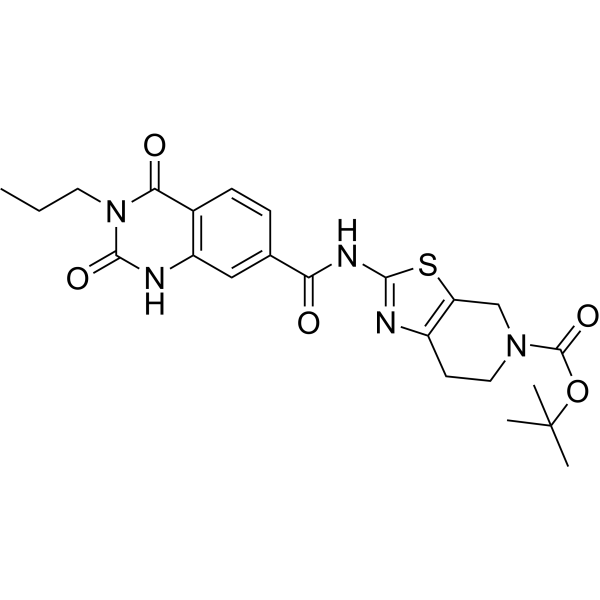
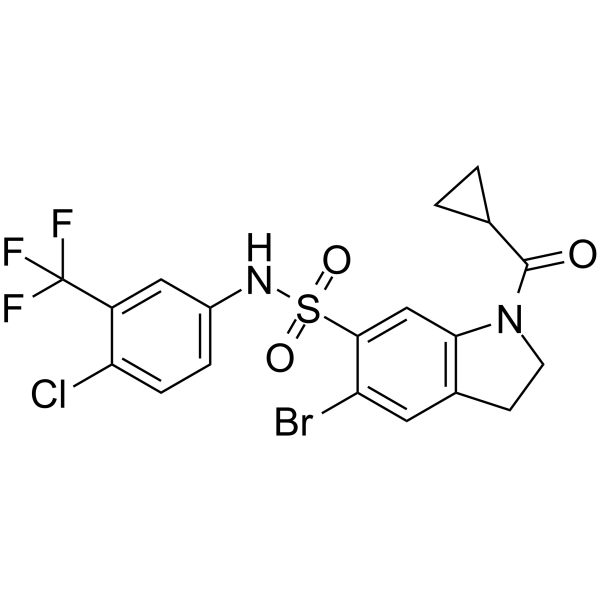
Autogramin-1

Based on 1 Customer Validation
Autogramin-1 potently inhibits autophagy induced by either starvation (IC50=0.17 μM) or mTORC1 inhibition (Rapamycin; IC50=0.44 μM).
For research use only. We do not sell to patients.
- Purity : 99.79%
- CAS No.: 2375541-73-2
- Formula: C23H27N5O5S
- Molecular Weight:485.56
-
Storage:Powder -20°C, 3 years ; In solvent -80°C, 6 months , -20°C, 1 month

To place orders, for customer services and technical support, please contact: MedChemExpress USA
Tel: 609-228-6898 E-mail: [email protected] [email protected]


-
 Biological Activity
-
Chemical Information
-
Solvent & Solubility
- Protocols
- Purity & Documentation
- References
-
 Help & FAQs


-
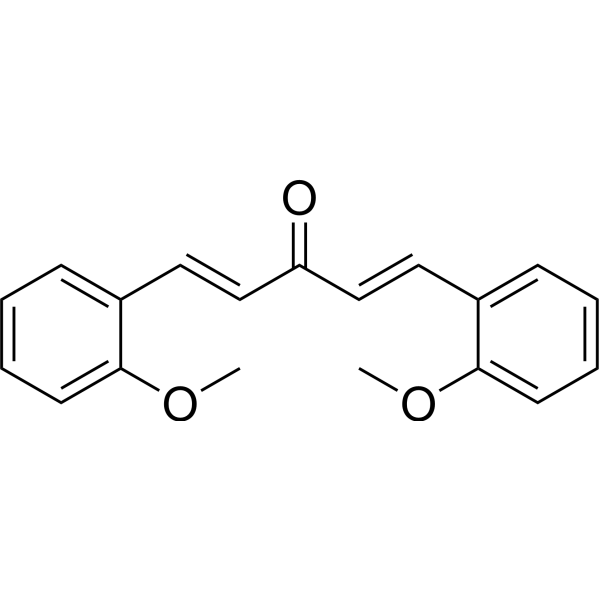
HY-135825
TFEB activator 1TFEB Activator -
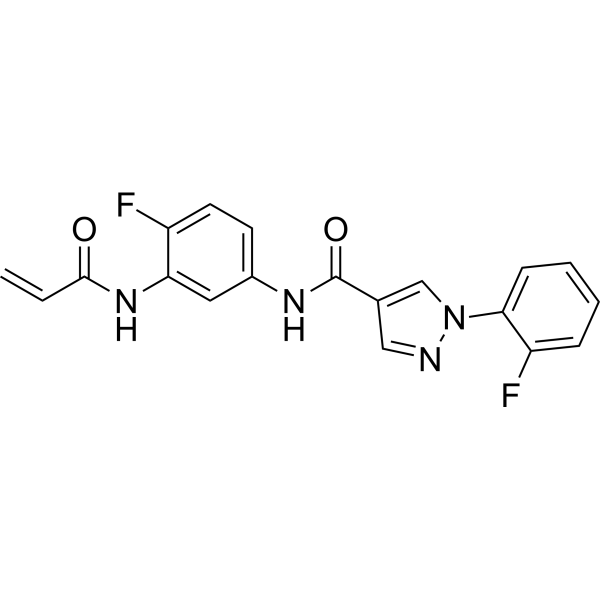
HY-128892
EN6Autophagy Activator -
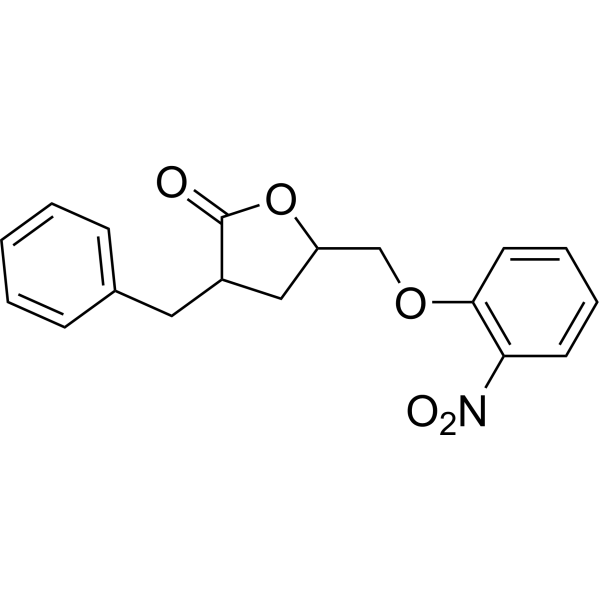
HY-U00434
3BDOIFITM3 Modulator -
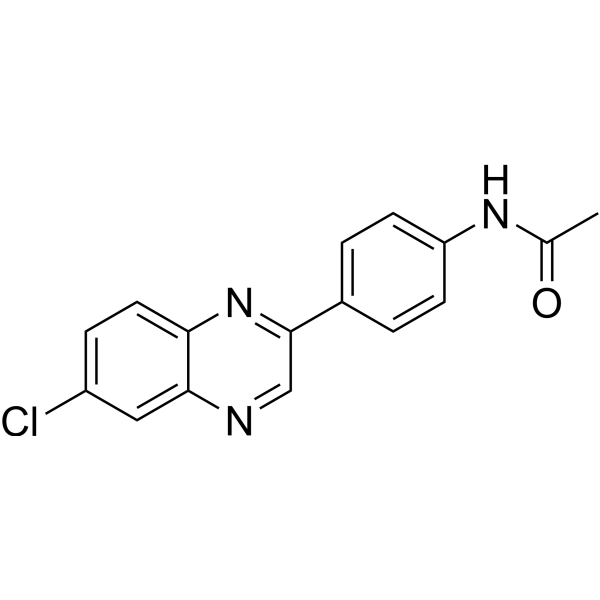
HY-134923
CA77.1CMA Activator -
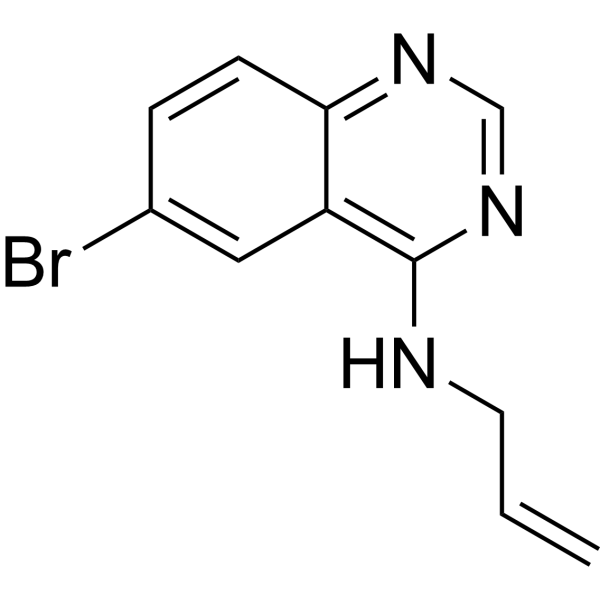
HY-100200
SMER28Autophagy Positive Regulator -
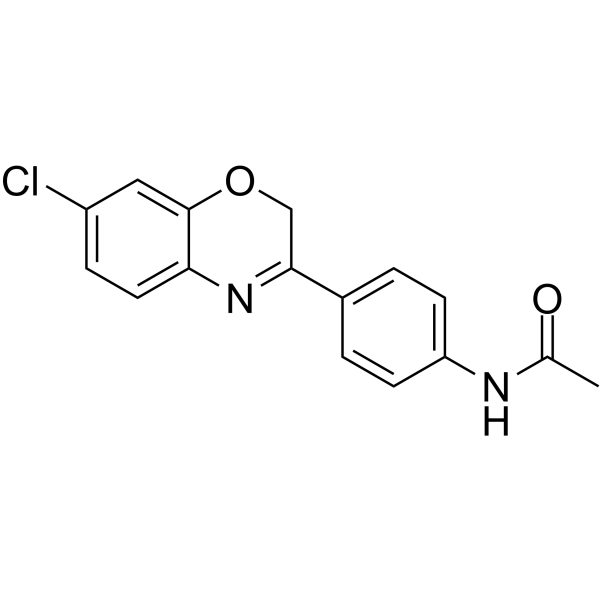
HY-112483
QX77CMA activator -
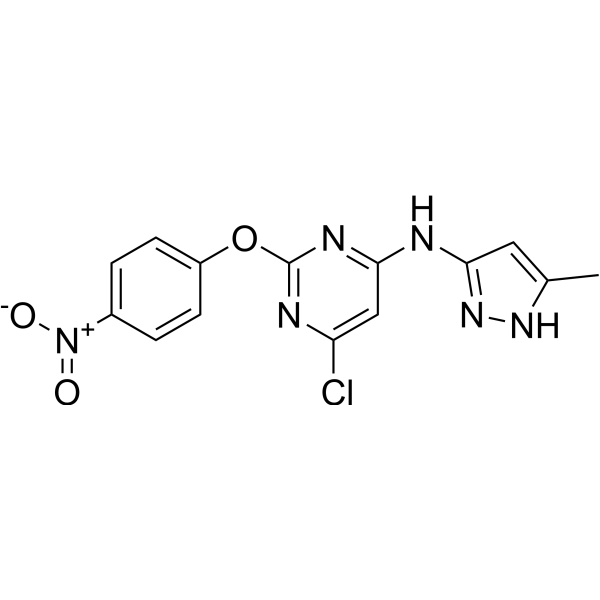
HY-101920
AutophinibVPS34 Inhibitor -
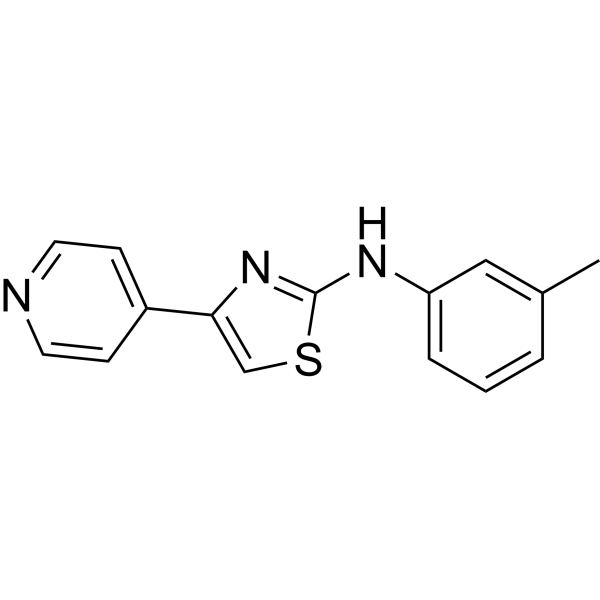
HY-100746
STF-62247Autophagy Inducer -
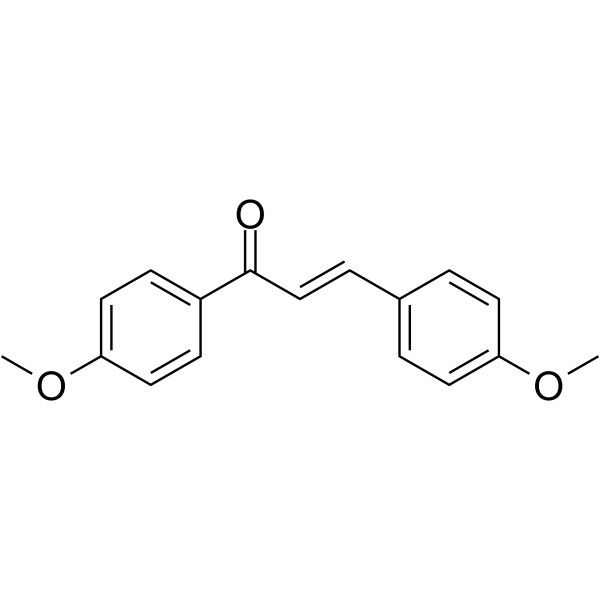
HY-136064
4,4'-DimethoxychalconeAnti-ageing Agent -
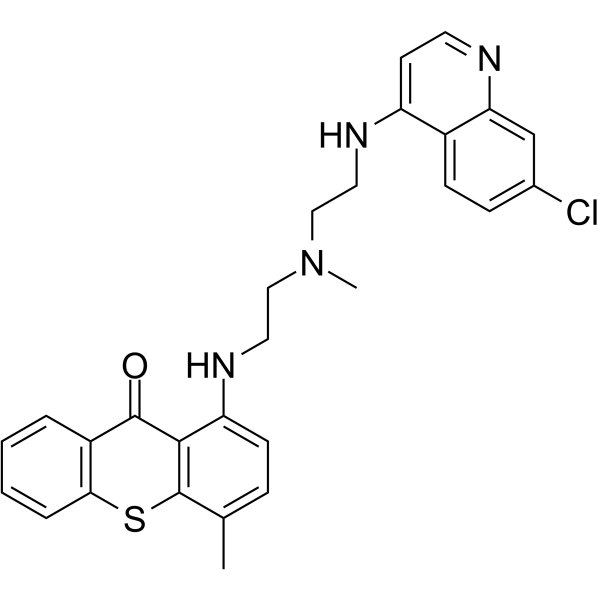
HY-103706
ROC-325Autophagy Inhibitor -
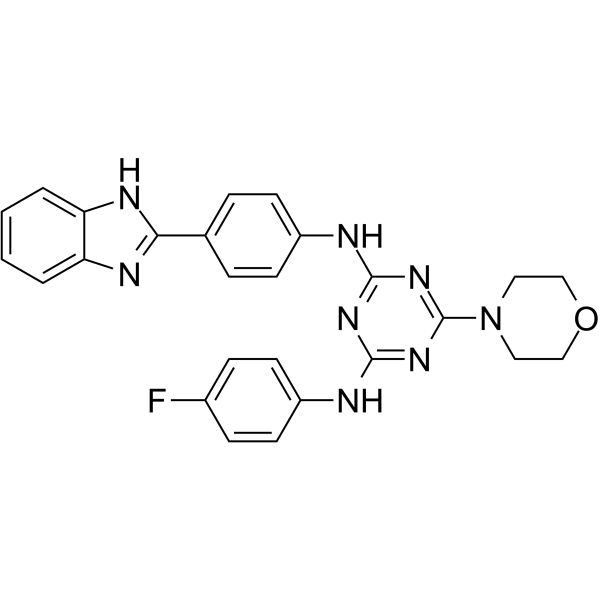
HY-112897
IITZ-01PI3K Inhibitor -
HY-134807
IndophagolinAutophagy Inhibitor/Purinergic Receptors Antagonist


Biological Activity
Description


Chemical Information
-
CAS No. 2375541-73-2
-
Appearance Solid
-
Molecular Weight 485.56
-
Formula C23H27N5O5S
-
Color White to off-white
-
SMILES
O=C(N1)N(CCC)C(C2=C1C=C(C(NC3=NC(CCN(C(OC(C)(C)C)=O)C4)=C4S3)=O)C=C2)=O
-
Shipping
Room temperature in continental US; may vary elsewhere.
-
Storage
Powder -20°C 3 years In solvent -80°C 6 months -20°C 1 month


Solvent & Solubility
In Vitro:
DMSO : 6.94 mg/mL (14.29 mM; Need ultrasonic; Hygroscopic DMSO has a significant impact on the solubility of product, please use newly opened DMSO)
Please refer to the solubility information to select the appropriate solvent. Once prepared, please aliquot and store the solution to prevent product inactivation from repeated freeze-thaw cycles.
Storage method and period of stock solution: -80°C, 6 months; -20°C, 1 month. When stored at -80°C, please use it within 6 months. When stored at -20°C, please use it within 1 month.
Please refer to the solubility information to select the appropriate solvent. Once prepared, please aliquot and store the solution to prevent product inactivation from repeated freeze-thaw cycles.
Storage method and period of stock solution: -80°C, 6 months; -20°C, 1 month. When stored at -80°C, please use it within 6 months. When stored at -20°C, please use it within 1 month.
Concentration (start) × Volume (start) = Concentration (final) × Volume (final)


Purity & Documentation
-
Data Sheet (268 KB)
-
SDS (393 KB)
- English - EN (393 KB)
- Français - FR (393 KB)
- Deutsch - DE (393 KB)
- Norwegian - NO (393 KB)
- Español - ES (393 KB)
- Swedish - SV (393 KB)
- Italian - IT (393 KB)
- Korean - KR (393 KB)
- Portuguese - PT (393 KB)
-
Handling Instructions (2659 KB)
References


Complete Stock Solution Preparation Table
Please refer to the solubility information to select the appropriate solvent. Once prepared, please aliquot and store the solution to prevent product inactivation from repeated freeze-thaw cycles.
Storage method and period of stock solution: -80°C, 6 months; -20°C, 1 month. When stored at -80°C, please use it within 6 months. When stored at -20°C, please use it within 1 month.
| Optional Solvent | Concentration Solvent Mass | 1 mg | 5 mg | 10 mg | 25 mg |
|---|---|---|---|---|---|
| DMSO | 1 mM | 2.0595 mL | 10.2974 mL | 20.5948 mL | 51.4869 mL |
| 5 mM | 0.4119 mL | 2.0595 mL | 4.1190 mL | 10.2974 mL | |
| 10 mM | 0.2059 mL | 1.0297 mL | 2.0595 mL | 5.1487 mL |


Autogramin-1 Related Classifications
HY-128339 Related Classifications
 Powered by Bioz