



Biocytin (Standard)
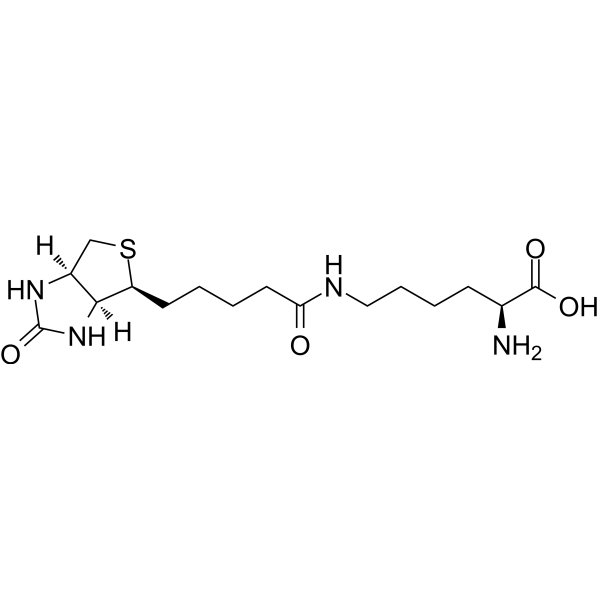
Biocytin (Standard) is the analytical standard of Biocytin. This product is intended for research and analytical applications. Biocytin is a conjugate of D-biotin and L-lysine, where the carboxylate of D-biotin is coupled with the -amine of L-lysine via a secondary amide bond. Biocytin is a classical neuroanatomical tracer commonly used to map brain connectivity. Biocytin is used as a versatile marker in anterograde, retrograde and intracellular neuroanatomical investigations and in biotinidase assays[1][2].
商品は「研究用試薬」です。人や動物の医療用・臨床診断用・食品用の製品ではありません。
研究用途以外に使用した場合、当社は一切の責任を負いかねます。
- 純度 : 98%
- CAS 番号: 576-19-2
- 分子式: C16H28N4O4S
- 分子量:372.48
-
保管条件:
Please store the product under the recommended conditions in the Certificate of Analysis.


To place orders, for customer services and technical support, please contact: MedChemExpress USA
Tel: 609-228-6898 E-mail: [email protected] [email protected]


-
 Product Information
-
化学情報
- 純度とドキュメンテーション
-
 Help & FAQs


-
HY-101884
BiocytinNeuroanatomical Tracer -
HY-101899
MonochlorobimaneGSH Fluorescent Dye -
HY-12489
Ponceau SProtein Staining Agent -
HY-101878
Texas RedRed Fluorescent Dye -
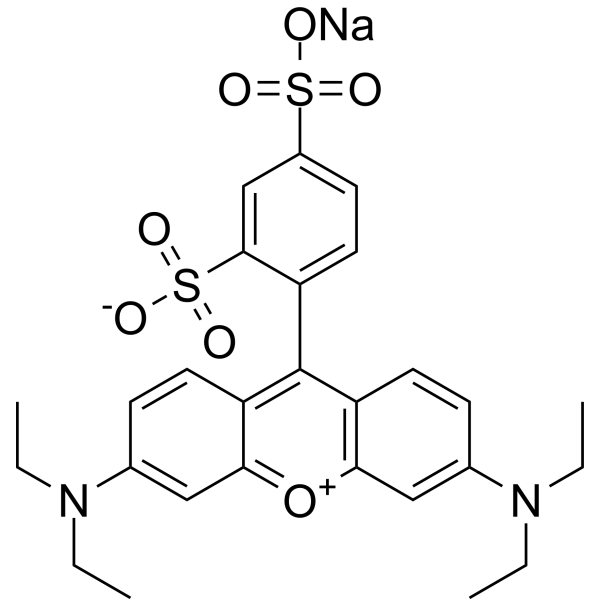
HY-D0974
Sulforhodamine B sodium saltFluorescent Dye -
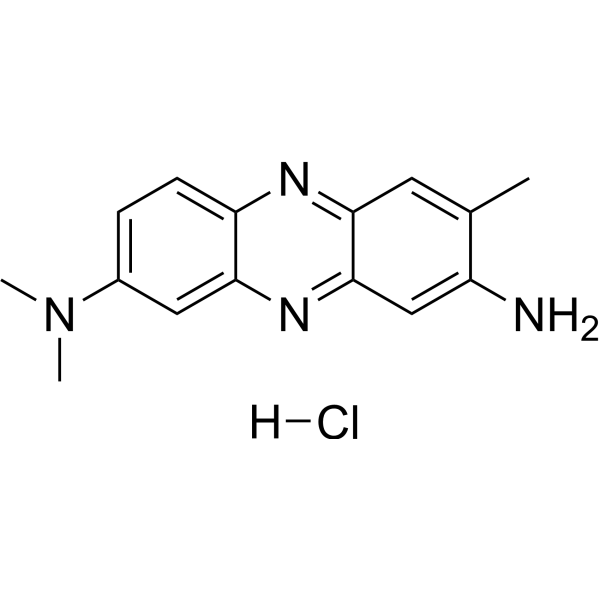
HY-D0166
Neutral RedBiochemical Assay Reagent -
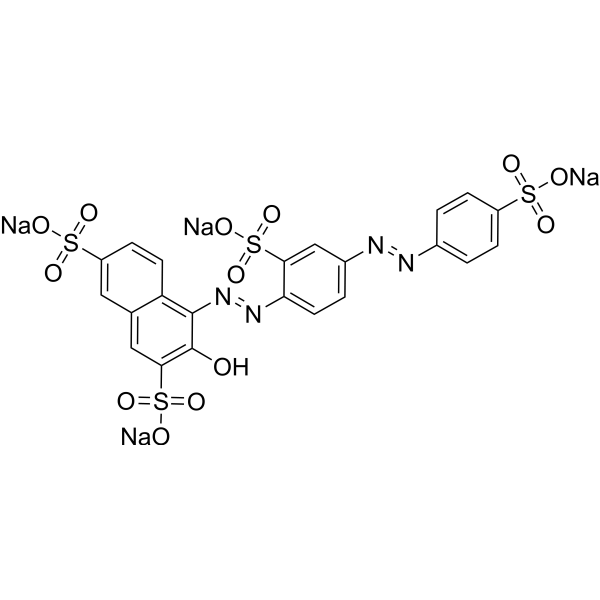
HY-12489A
Ponceau S, BSBiochemical Assay Reagent -
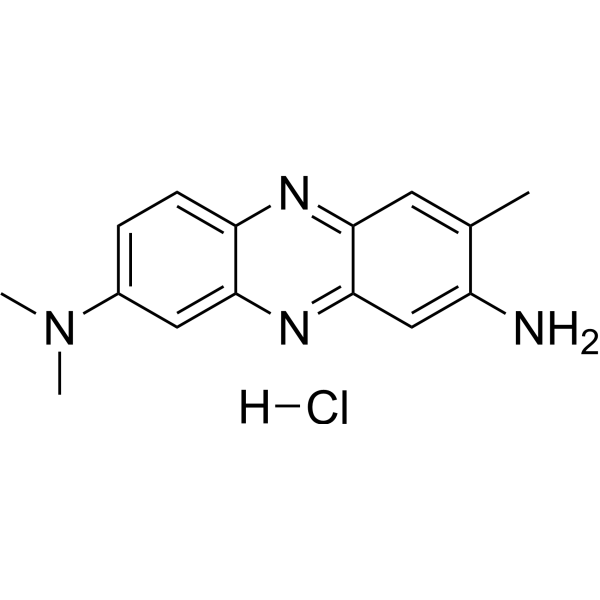
HY-D0166A
Neutral Red (IND)Biochemical Assay Reagent -

HY-W286613
N-Boc-BiocytinBiochemical Assay Reagent -

HY-101899R
Monochlorobimane (Standard)Reference Standard -

HY-DY1052
Monochlorobimane (solution)GSH Fluorescent Dye -

HY-101878R
Texas Red (Standard)Reference Standard


Product Information
説明
アプリケーション
The compound is the grade of analytical standard, which is the reference standard supplied assay. It is commonly used in qualitative, quantitative and methodological research experiments in HPLC, GC and MS.


化学情報
-
CAS 番号 576-19-2
-
分子量 372.48
-
分子式 C16H28N4O4S
-
SMILES
N[C@@H](CCCCNC(CCCC[C@@H]1SC[C@]([C@]1([H])N2)([H])NC2=O)=O)C(O)=O
-
別名
(+)-Biocytin (Standard)
-
Structure Classification
-
Initial Source
-
輸送条件
Room temperature in continental US; may vary elsewhere.
-
保管条件
Please store the product under the recommended conditions in the Certificate of Analysis.


純度とドキュメンテーション
-
SDS (252 KB)
- Français - FR (252 KB)
- Deutsch - DE (252 KB)
- Norwegian - NO (252 KB)
- Español - ES (252 KB)
- Swedish - SV (252 KB)
- Italian - IT (252 KB)
- Korean - KR (252 KB)
- Portuguese - PT (252 KB)
-
取扱説明書 (2659 KB)
参考文献
[1]. Mishra A, et al. Improved neuronal tract tracing with stable biocytin-derived neuroimaging agents. ACS Chem Neurosci. 2010 Feb 17;1(2):129-38. [Content Brief]
[2]. Roth G, et al. Morphology and axonal projection pattern of neurons in the telencephalon of the fire-bellied toad Bombina orientalis: an anterograde, retrograde, and intracellular biocytin labeling study. J Comp Neurol. 2004 Oct 4;478(1):35-61. [Content Brief]
[3]. MacNeil MA, et al. Biocytin wide-field bipolar cells in rabbit retina selectively contact blue cones. J Comp Neurol. 2008 Jan 1;506(1):6-15. [Content Brief]

Calculators
濃度 (開始) × 体積 (開始) = 濃度 (終了) × 体積 (終了)


Biocytin (Standard) 関連分類
HY-101884R 関連分類
 Powered by Bioz