



AZ1495
Based on 1 publication(s) in Google Scholar
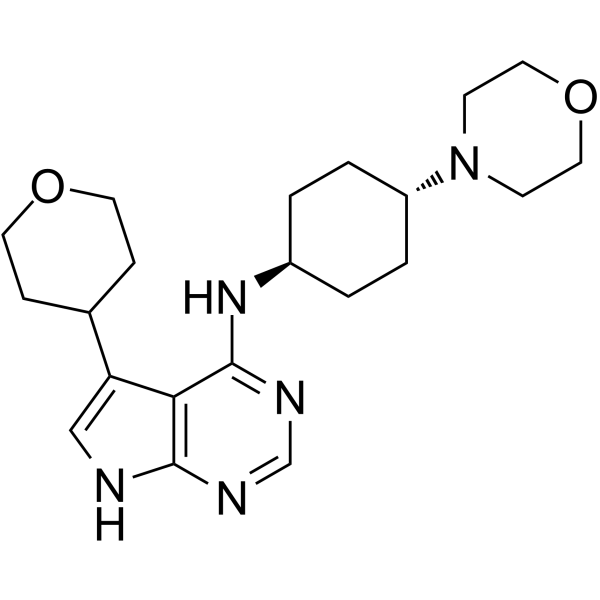
AZ1495, a weak base, is a potent orally active interleukin-1 receptor associated kinase 4 (IRAK4) inhibitor. AZ1495 has a favorable physicochemical and kinase selectivity for IRAK4 and IRAK1 with IC50 values of 0.005 μM and 0.023 μM, respectively. AZ1495 has IRAK4 inhibition with a Kd value of 0.0007 μM. AZ1495 can be used for the research of diffuse large B-cell lymphoma (DLBCL).
For research use only. We do not sell to patients.
- Purity : 98.07%
- CAS No.: 2196204-23-4
- Formula: C21H31N5O2
- Molecular Weight:385.50
-
Storage:Powder -20°C, 3 years , 4°C, 2 years ; In solvent -80°C, 2 years , -20°C, 1 year

To place orders, for customer services and technical support, please contact: MedChemExpress USA
Tel: 609-228-6898 E-mail: [email protected] [email protected]


-
 Biological Activity
-
Chemical Information
-
Solvent & Solubility
- Purity & Documentation
- References
-
 Help & FAQs


-
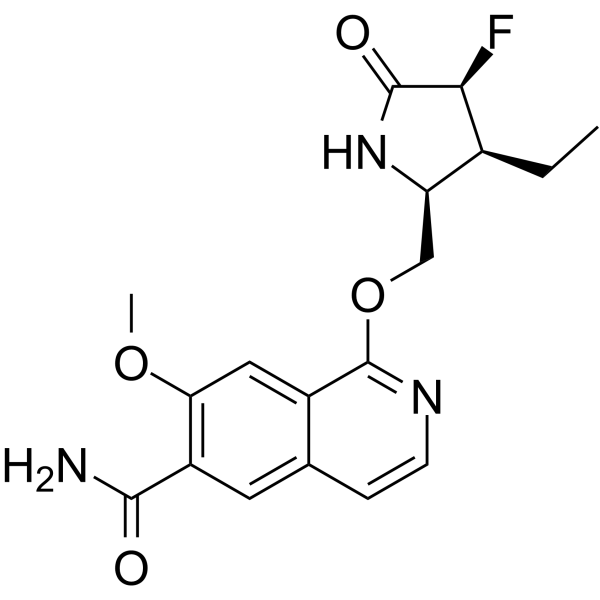
HY-19836
ZimlovisertibIRAK4 Inhibitor -
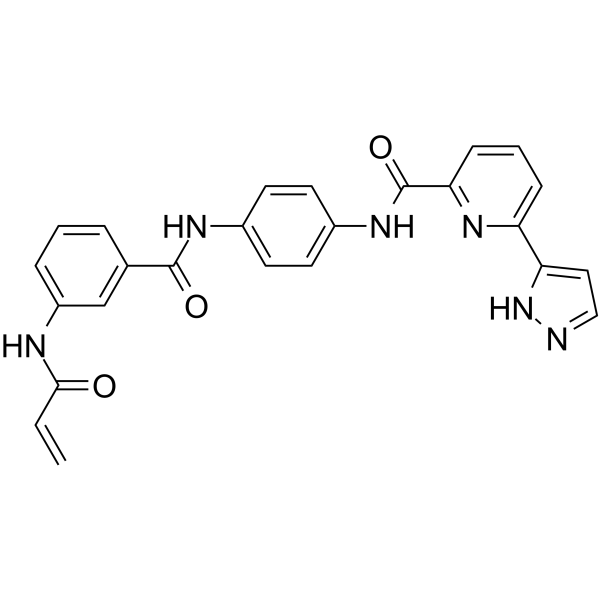
HY-103017A
JH-X-119-01IRAK1 Inhibitor -
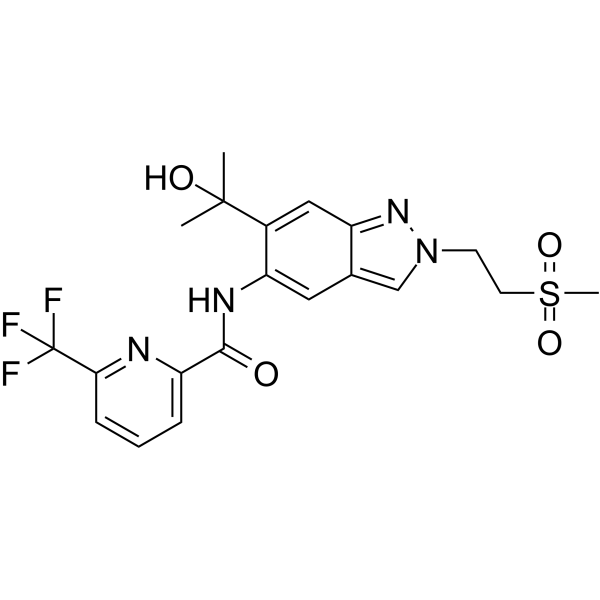
HY-139374
ZabedosertibIRAK4 Inhibitor -
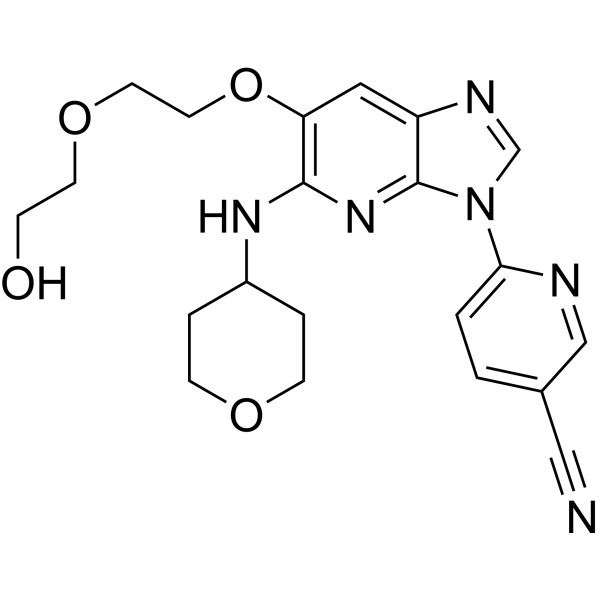
HY-153224
GLPG2534IRAK4 Inhibitor -
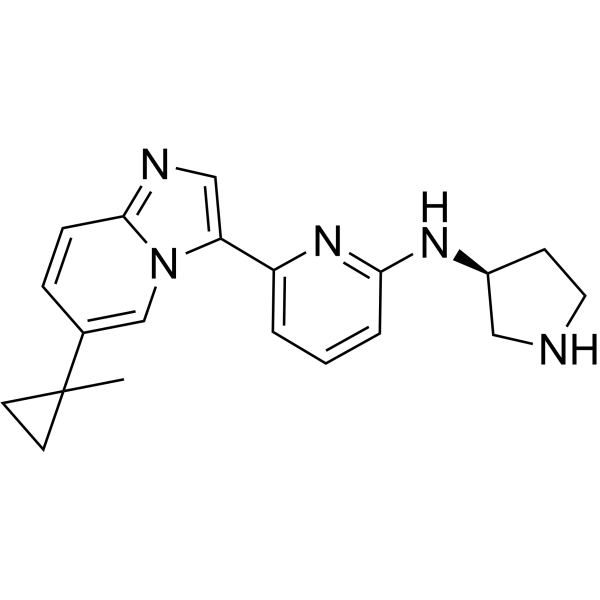
HY-160487
KME-2780IRAK Inhibitor -
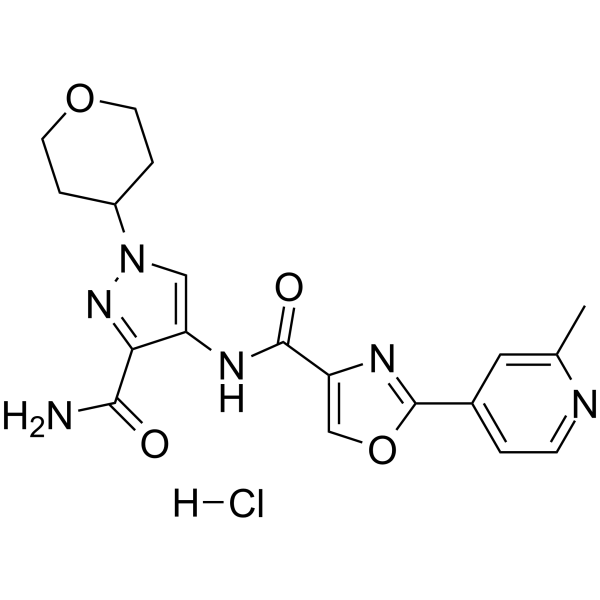
HY-18992
AS2444697IRAK-4 Inhibitor -
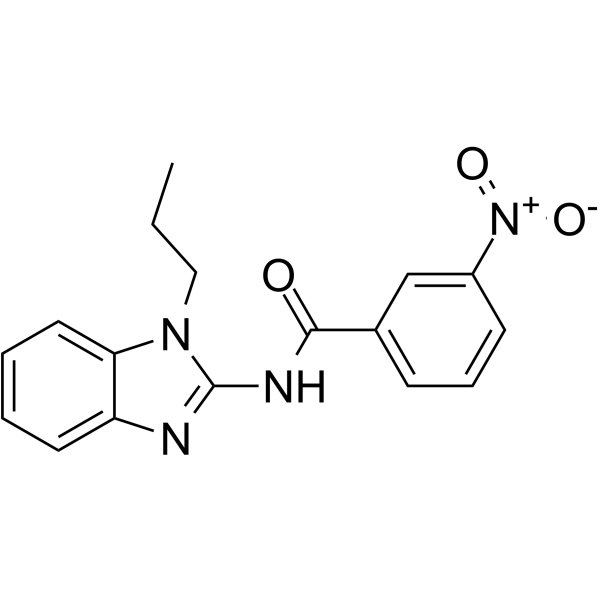
HY-134911
HS-243IRAK-1/4 Inhibitor -
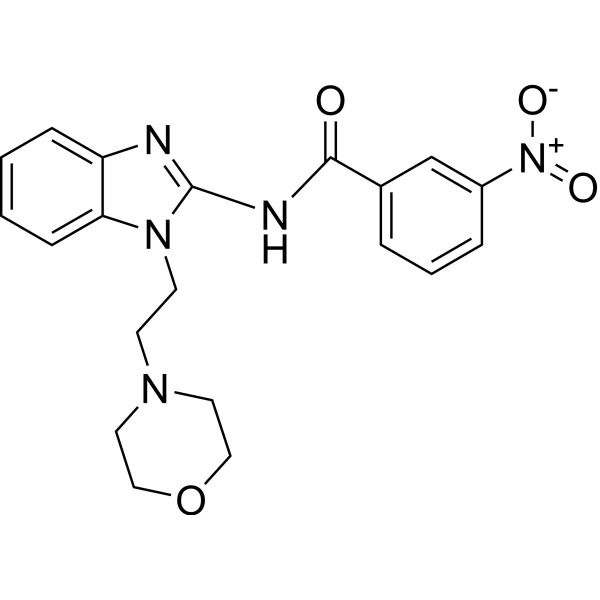
HY-13329
IRAK-1-4 Inhibitor IIRAK Inhibitor -
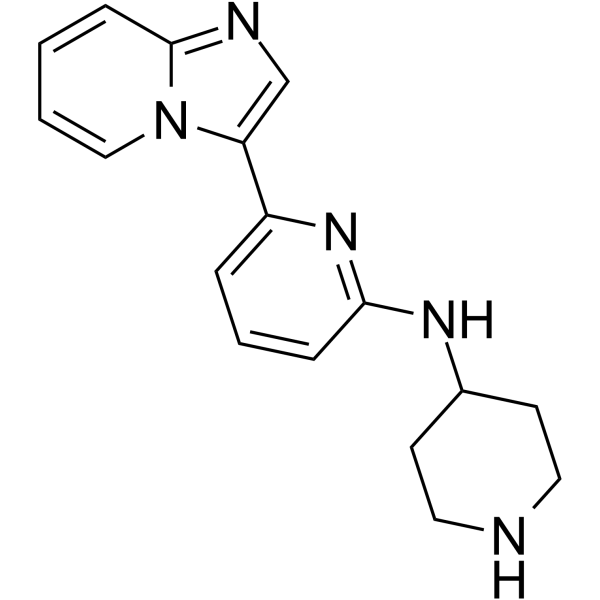
HY-13275
IRAK inhibitor 1IRAK Inhibitor -
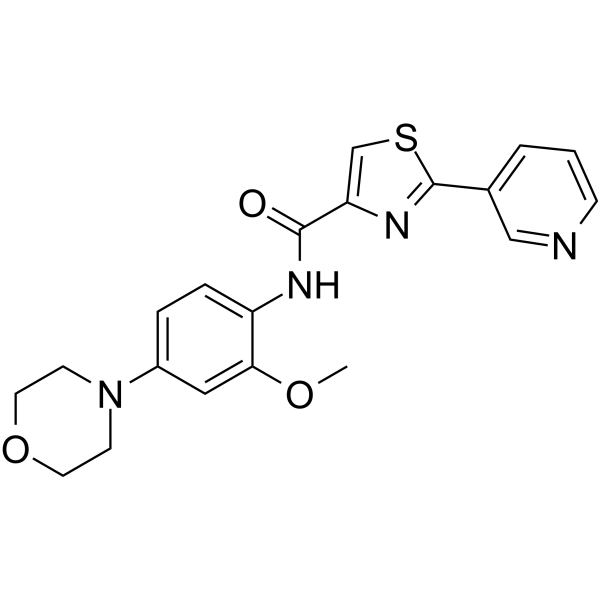
HY-13280
IRAK inhibitor 6IRAK Inhibitor -
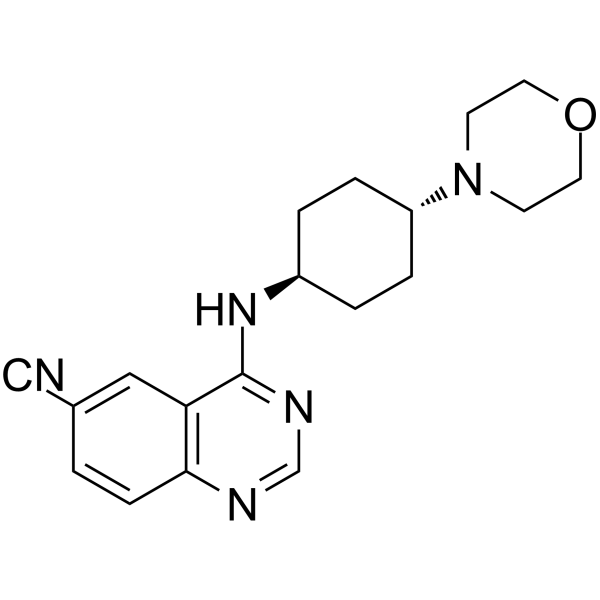
HY-101922
IRAK4-IN-1IRAK4 Inhibitor -
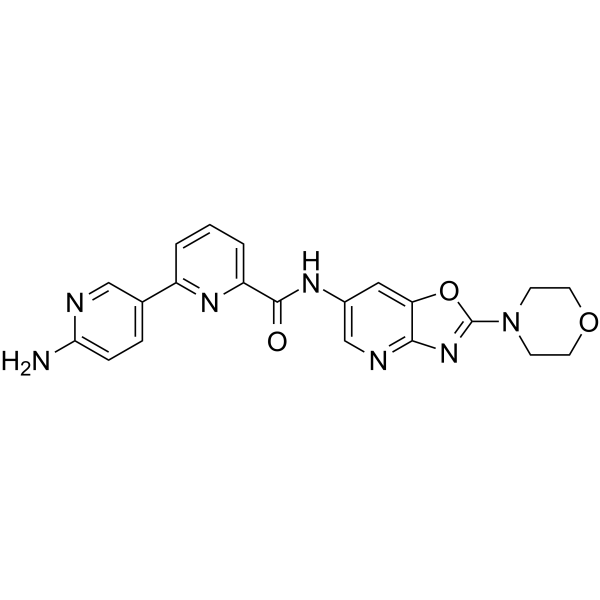
HY-109585
IRAK4-IN-7IRAK4 Inhibitor
Publications Citing Use of MedChemExpress (MCE) AZ1495
More

Biological Activity
Description
IC50 & Target
[1]|
IRAK4 5 nM (IC50) |
IRAK1 23 nM (IC50) |
CLK1 50 nM (IC50) |
CLK2 5 nM (IC50) |
CLK4 8 nM (IC50) |
haspin 4 nM (IC50) |
Cellular Effect
|
Cell Line

|
Type | Value | Description | References |
|---|---|---|---|---|
| OCI-Ly10 | GI50 |
0.3 μM
Compound: 28
|
Growth inhibition of human OCI-LY10 cells harboring CD79 deletion/MYD88 L265P mutant after 3 days by AlamarBlue assay
Growth inhibition of human OCI-LY10 cells harboring CD79 deletion/MYD88 L265P mutant after 3 days by AlamarBlue assay
|
[PMID: 29172502] |
| SU-DHL-2 | GI50 |
11.8 μM
Compound: 28
|
Growth inhibition of human SUDHL2 cells harboring S222R mutation after 3 days by AlamarBlue assay
Growth inhibition of human SUDHL2 cells harboring S222R mutation after 3 days by AlamarBlue assay
|
[PMID: 29172502] |
In Vitro
AZ1495 (compound 28) (10 μM,1 h) has kinase selectivity for IRAK4 with IC50 values of 0.005 μM (enzyme assay) and 0.052 μM (cellular assay), respectively[1].
AZ1495 (10 μM,1 h) has kinase inhibition for IRAK4 with an IC50 value of 0.005 μM and Kd value of 0.0007 μM[1].
AZ1495 (0.001-100 μM, 72 h) inhibits NF-κB activation and growth of ABC-DLBCL cell lines in a dosedependent manner[1].
AZ1495 (0-3.3 μM, 14 h) completely inhibits NF-κB signaling and induces cell death at lower concentration in combination with a BTK inhibitor in OCI-LY10 cells[1].
MedChemExpress (MCE) has not independently confirmed the accuracy of these methods. They are for reference only. .
-
Cell Line:OCI-LY10 and SUDHL2 cells
-
Concentration:0.001-100 μM
-
Incubation Time:72 h
-
Result:Inhibited growth of OCI-LY10 cells in a dosedependent manner, whereas SUDHL2, a GCB-cell line was not sensitive and no increased cell killing to IRAK4 inhibitor.
Increased the cell death in OCI-LY10 cells upon increasing concentrations of compound 28 and BTK ibrutinib.
-
Cell Line:OCI-LY10 cells
-
Concentration:0-3.3 μM
-
Incubation Time:14 h
-
Result:Inhibited IκBα phosphorylation with dose-dependentence in OCI-LY10 cells.
Showed induction of apoptosis combination with 10 nM ibrutinib by cleavage of caspase 3 in OCI-LY10 cells.
In Vivo
AZ1495 (iv., 2 mg/kg and oral, 5mg/kg) is characterized by high clearance (Cl) in rat (75 mL/min/kg) and moderate predictions based on hepatocyte data (Clint 15 μl/min/106 cells, predicted clearance 42 mL/min/kg) with low bioavailability consistent with a high first pass effect[1].
AZ1495 (iv., 1 mg/kg) has low the amount of active renal secretion occurring in the dog[1].
MedChemExpress (MCE) has not independently confirmed the accuracy of these methods. They are for reference only.
-
Animal Model:CB.17 SCID mice[1]
-
Dosage:12.5 mg/kg
-
Administration:oral, daily, 12.5 mg/kg
-
Result:Had modest anti-tumor activity as single agents but a combination ofibrutinib led to tumor regression and is well tolerated.
-
Animal Model:rat[1]
-
Dosage:2 mg/kg, 5mg/kg
-
Administration:iv., 2 mg/kg and oral, 5mg/kg
-
Result:
Species Dose (mg/kg) Cl (mL/min/kg) Vss(L/kg) PO halflife (h) IV halflife (h) Fabs (%) F (%) Rat 2,5 75 2.1 2.0 0.8 100 28 Dog 1 29 3.0 - 3.3 - -
-
Animal Model:dog[1]
-
Dosage:1 mg/kg
-
Administration:iv., 1 mg/kg
-
Result:
Species Dose (mg/kg) Cl (mL/min/kg) Vss(L/kg) PO halflife (h) IV halflife (h) Fabs (%) F (%) Rat 2,5 75 2.1 2.0 0.8 100 28 Dog 1 29 3.0 - 3.3 - -


Chemical Information
-
CAS No. 2196204-23-4
-
Appearance Solid
-
Molecular Weight 385.50
-
Formula C21H31N5O2
-
Color White to off-white
-
SMILES
C1(C(C2CCOCC2)=CN3)=C3N=CN=C1N[C@@H]4CC[C@@H](N5CCOCC5)CC4
-
Shipping
Room temperature in continental US; may vary elsewhere.
-
Storage
Powder -20°C 3 years 4°C 2 years In solvent -80°C 2 years -20°C 1 year


Publications (1)
-
Journal Impact Factor
-
Most Recent
-
Cancer Discov
SPEN loss drives extra-follicular diffuse large B cell lymphoma with female-specific lethality and therapeutic vulnerabilities. [Abstract]2026 Apr 21:10.1158/2159-8290.CD-25-1458. PMID: 42013317


Solvent & Solubility
In Vitro:
DMSO : 10 mg/mL (25.94 mM; Need ultrasonic; Hygroscopic DMSO has a significant impact on the solubility of product, please use newly opened DMSO)
Please refer to the solubility information to select the appropriate solvent. Once prepared, please aliquot and store the solution to prevent product inactivation from repeated freeze-thaw cycles.
Storage method and period of stock solution: -80°C, 2 years; -20°C, 1 year. When stored at -80°C, please use it within 2 years. When stored at -20°C, please use it within 1 year.
Please refer to the solubility information to select the appropriate solvent. Once prepared, please aliquot and store the solution to prevent product inactivation from repeated freeze-thaw cycles.
Storage method and period of stock solution: -80°C, 2 years; -20°C, 1 year. When stored at -80°C, please use it within 2 years. When stored at -20°C, please use it within 1 year.
Concentration (start) × Volume (start) = Concentration (final) × Volume (final)
In Vivo:
Select the appropriate dissolution method based on your experimental animal and administration route.
- For the following dissolution methods, please ensure to first prepare a clear stock solution using an In Vitro approach and then sequentially add co-solvents:
- To ensure reliable experimental results, the clarified stock solution can be appropriately stored based on storage conditions. As for the working solution for In Vivo experiments, it is recommended to prepare freshly and use it on the same day.
- The percentages shown for the solvents indicate their volumetric ratio in the final prepared solution. If precipitation or phase separation occurs during preparation, heat and/or sonication can be used to aid dissolution.
Add each solvent one by one: 10% DMSO 40% PEG300 5% Tween-80 45% Saline
Solubility: ≥ 1 mg/mL (2.59 mM); Clear solution
This protocol yields a clear solution of ≥ 1 mg/mL (saturation unknown).
Taking 1 mL working solution as an example, add 100 μL DMSO stock solution (10.0 mg/mL) to 400 μL PEG300, and mix evenly; then add 50 μL Tween-80 and mix evenly; then add 450 μL Saline to adjust the volume to 1 mL.
Preparation of Saline: Dissolve 0.9 g sodium chloride in ddH₂O and dilute to 100 mL to obtain a clear Saline solution.
Add each solvent one by one: 10% DMSO 90% (20% SBE-β-CD in Saline)
Solubility: ≥ 1 mg/mL (2.59 mM); Clear solution
This protocol yields a clear solution of ≥ 1 mg/mL (saturation unknown).
Taking 1 mL working solution as an example, add 100 μL DMSO stock solution (10.0 mg/mL) to 900 μL 20% SBE-β-CD in Saline, and mix evenly.
Preparation of 20% SBE-β-CD in Saline (4°C, storage for one week): 2 g SBE-β-CD powder is dissolved in 10 mL Saline, completely dissolve until clear.
In Vivo Dissolution Calculator
Please enter the basic information of animal experiments:
-
-
-
-
Recommended: Prepare an additional quantity of animals to account for potential losses during experiments.
Please enter your animal formula composition:
-
%DMSO +
Recommended: Keep the proportion of DMSO in working solution below 2% if your animal is weak.
-
%+
-
+%Tween-80 + +
-
%Saline +
The co-solvents required include: DMSO, . All of co-solvents are available by MedChemExpress (MCE). , Tween 80. All of co-solvents are available by MedChemExpress (MCE).
Working solution concentration: 0.22 mg/mL
Method for preparing stock solution: mg drug dissolved in μL DMSO. Stock solution concentration: mg/mL.
1. Take μL DMSO stock solution;
2. Add μL .
μL , mix evenly;
3. Then add μL Tween 80, mix evenly;
4. Then add μL
Please ensure that the stock solution in the first step is dissolved to a clear state, and add co-solvents in sequence. You can use ultrasonic heating (ultrasonic cleaner, recommended frequency 20-40 kHz), vortexing, etc. to assist dissolution.


Purity & Documentation
-
Data Sheet (285 KB)
-
SDS (254 KB)
- English - EN (254 KB)
- Français - FR (254 KB)
- Deutsch - DE (254 KB)
- Norwegian - NO (254 KB)
- Español - ES (254 KB)
- Swedish - SV (254 KB)
- Italian - IT (254 KB)
- Korean - KR (254 KB)
- Portuguese - PT (254 KB)
-
Handling Instructions (2659 KB)
References


Complete Stock Solution Preparation Table
Please refer to the solubility information to select the appropriate solvent. Once prepared, please aliquot and store the solution to prevent product inactivation from repeated freeze-thaw cycles.
Storage method and period of stock solution: -80°C, 2 years; -20°C, 1 year. When stored at -80°C, please use it within 2 years. When stored at -20°C, please use it within 1 year.
| Optional Solvent | Concentration Solvent Mass | 1 mg | 5 mg | 10 mg | 25 mg |
|---|---|---|---|---|---|
| DMSO | 1 mM | 2.5940 mL | 12.9702 mL | 25.9403 mL | 64.8508 mL |
| 5 mM | 0.5188 mL | 2.5940 mL | 5.1881 mL | 12.9702 mL | |
| 10 mM | 0.2594 mL | 1.2970 mL | 2.5940 mL | 6.4851 mL | |
| 15 mM | 0.1729 mL | 0.8647 mL | 1.7294 mL | 4.3234 mL | |
| 20 mM | 0.1297 mL | 0.6485 mL | 1.2970 mL | 3.2425 mL | |
| 25 mM | 0.1038 mL | 0.5188 mL | 1.0376 mL | 2.5940 mL |


AZ1495 Related Classifications
HY-111101 Related Classifications
 Powered by Bioz