



PFI-3
Based on 5 publication(s) in Google Scholar
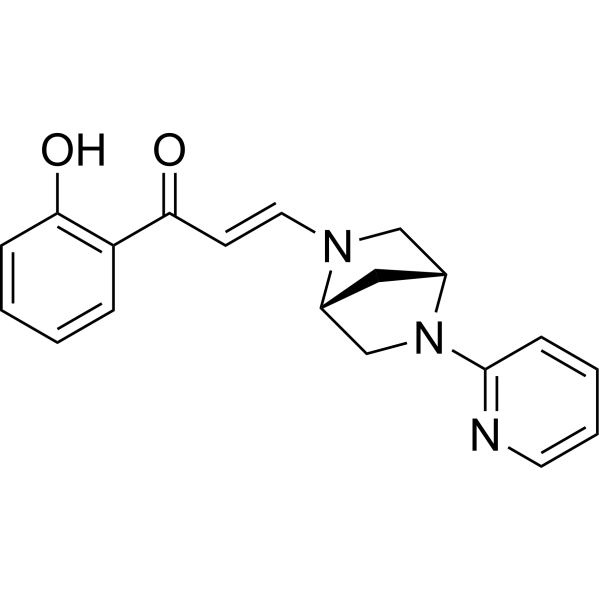
PFI-3, a chemical probe, is a selective, potent and cell-permeable SMARCA2/4 bromodomain inhibitor with a Kd of 89 nM.
For research use only. We do not sell to patients.
- Purity : 99.63%
- CAS No.: 1819363-80-8
- Formula: C19H19N3O2
- Molecular Weight:321.37
-
Storage:Powder -20°C, 3 years , 4°C, 2 years ; In solvent -80°C, 2 years , -20°C, 1 year

To place orders, for customer services and technical support, please contact: MedChemExpress USA
Tel: 609-228-6898 E-mail: [email protected] [email protected]


-
 Biological Activity
-
Chemical Information
-
Solvent & Solubility
- Purity & Documentation
- References
-
 Help & FAQs


-
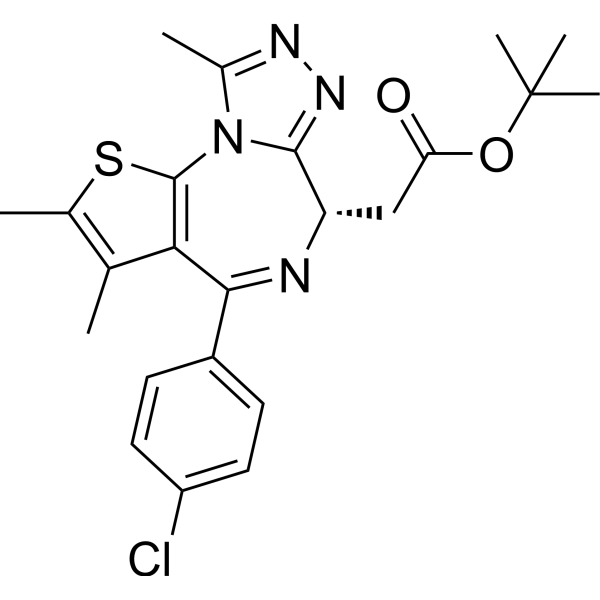
HY-13030
(+)-JQ-1BET Inhibitor -
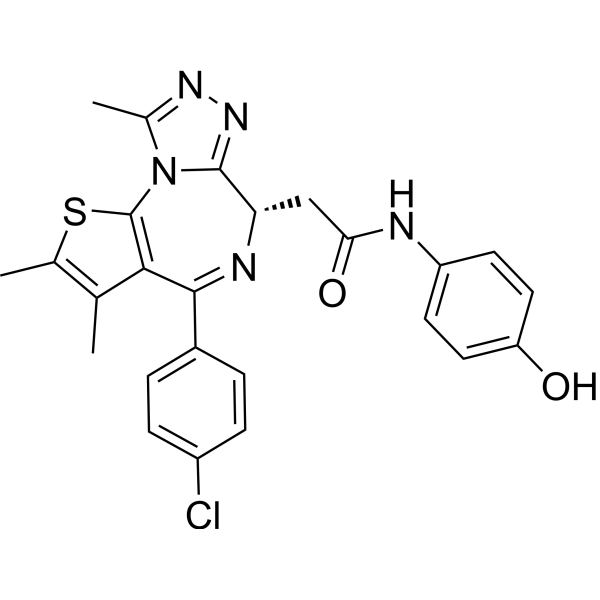
HY-15743
BirabresibBRD2/3/4 Inhibitor -
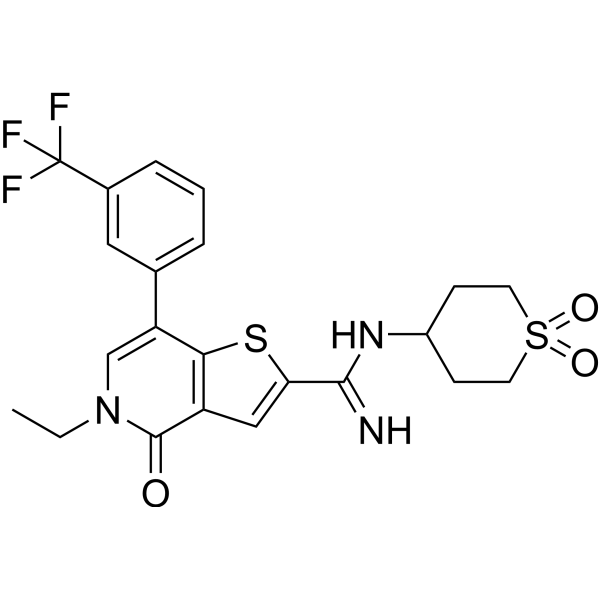
HY-18975
I-BRD9Chemical Probe -
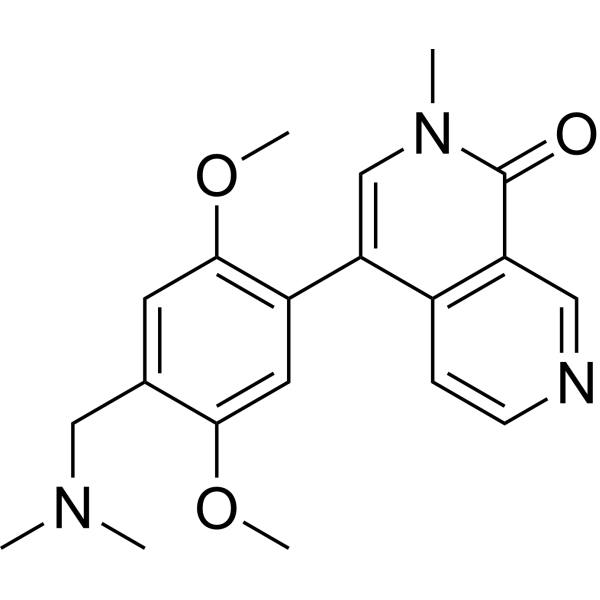
HY-100352
BI-9564BRD9/BRD7 Bromodomains Inhibitor -
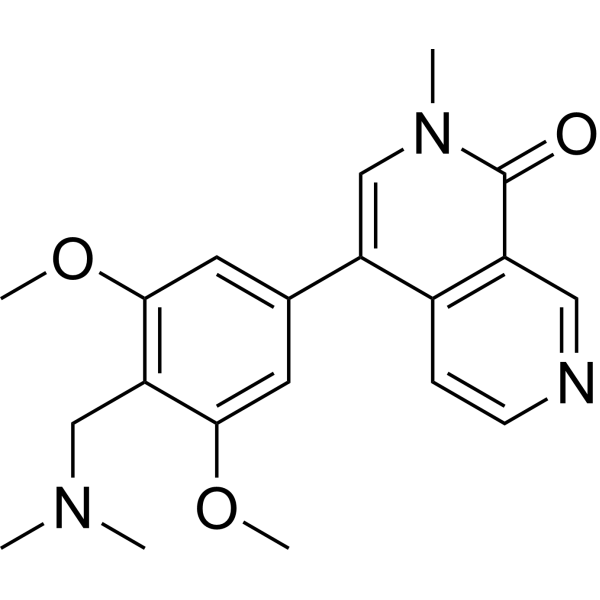
HY-100351
BI-7273BRD9 Inhibitor -
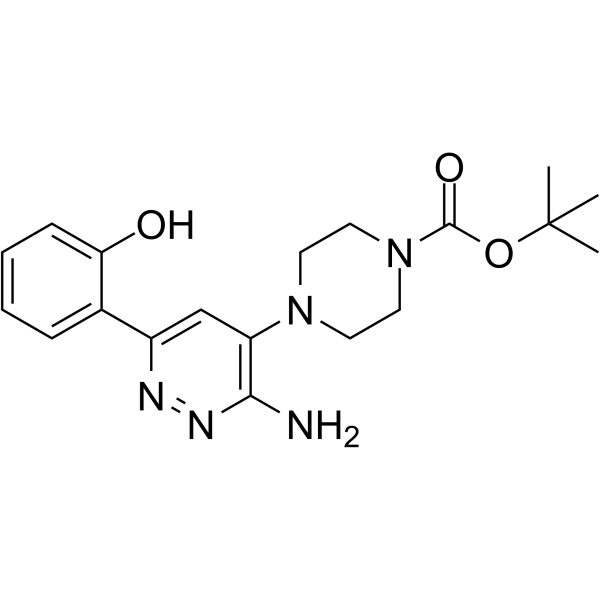
HY-145446
SGC-SMARCA-BRDVIIIPB1(5)/SMARCA2/4 Inhibitor -
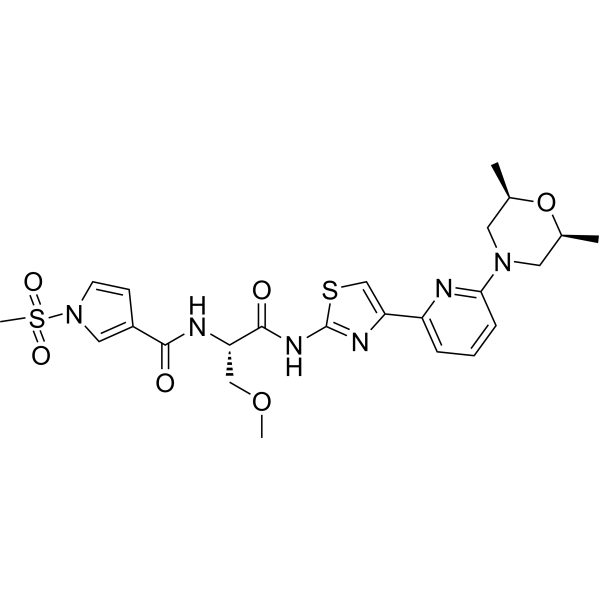
HY-144835
CamibirstatBRG1/BRM ATPase Inhibitor -
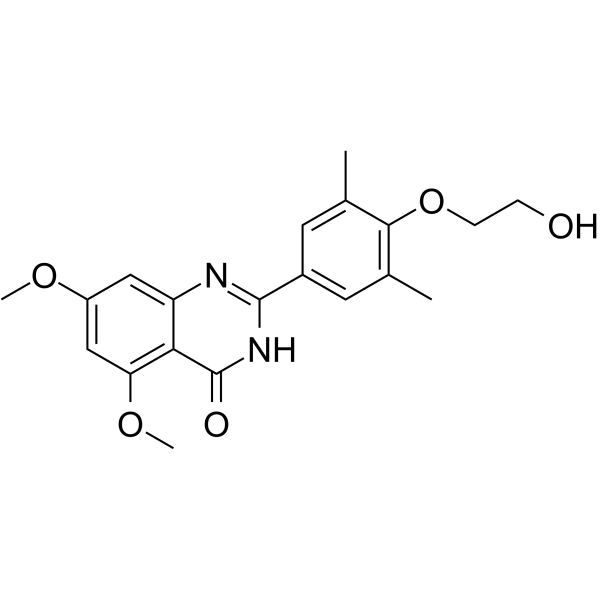
HY-16652
ApabetaloneBET Inhibitor -
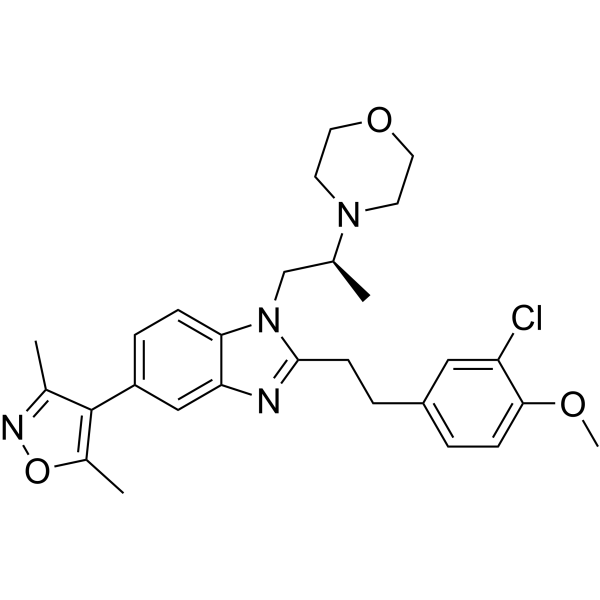
HY-15826
SGC-CBP30CBP/p300 Inhibitor -
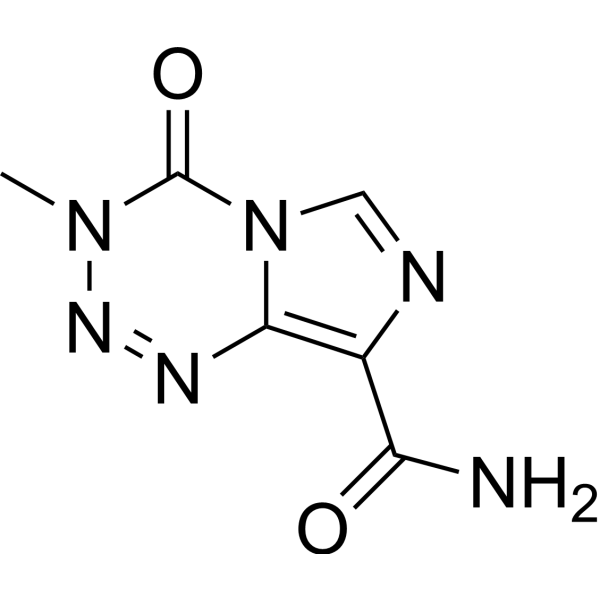
HY-17364
TemozolomideDNA Alkylator -
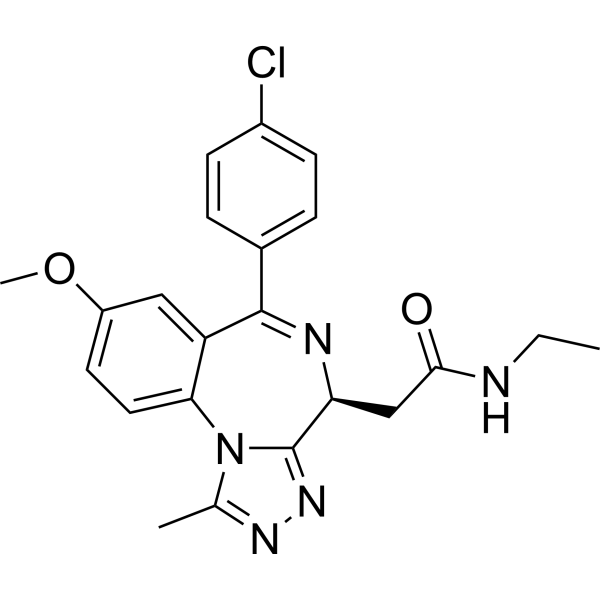
HY-13032
MolibresibBET Inhibitor -
HY-15815
BromosporineBET Inhibitor
Publications Citing Use of MedChemExpress (MCE) PFI-3
MoreAll SWI/SNF Complex Isoforms
More

Biological Activity
Description
IC50 & Target
Kd: 89 nM (SMARCA2/4)[1]
In Vitro
PFI-3 is a potent, cell-permeable probe capable of displacing ectopically expressed, GFP-tagged SMARCA2-bromodomain from chromatin. PFI-3 binds avidly to both SMARCA2 and SMARCA4 bromodomains (BROMOScan Kd's between 55 and 110 nM) consistent with the binding constant (Kd=89 nM) measured by isothermal titration calorimetry. PFI-3 does not phenocopy the growth inhibitory effects of SMARCA2 knockdown in lung cancer[1]. Exposure of embryonic stem cells to PFI-3 leads to deprivation of stemness and deregulates lineage specification. Furthermore, differentiation of trophoblast stem cells in the presence of PFI-3 is markedly enhanced[2]. PFI-3 binds to certain family VIII bromodomains while displaying significant, broader bromodomain family selectivity. The high specificity of PFI-3 for family VIII is achieved through a novel bromodomain binding mode of a phenolic headgroup that leads to the unusual displacement of water molecules that are generally retained by most other bromodomain inhibitors reported to date[3].
MedChemExpress (MCE) has not independently confirmed the accuracy of these methods. They are for reference only.


Chemical Information
-
CAS No. 1819363-80-8
-
Appearance Solid
-
Molecular Weight 321.37
-
Formula C19H19N3O2
-
Color Light yellow to green yellow
-
SMILES
OC1=C(C(/C=C/N2[C@H](C3)CN(C4=NC=CC=C4)[C@H]3C2)=O)C=CC=C1
-
Shipping
Room temperature in continental US; may vary elsewhere.
-
Storage
Powder -20°C 3 years 4°C 2 years In solvent -80°C 2 years -20°C 1 year


Publications (5)
-
Journal Impact Factor
-
Most Recent
-
Nat Commun
Human iPSC-based Modeling of Pulmonary Fibrosis Reveals p300/CBP Inhibition Suppresses Alveolar Transitional Cell State. [Abstract]2026 Feb 12;17(1):1214. PMID: 41680175 -
Nat Chem Biol
2022 Aug;18(8):821-830. PMID: 35578032 -
Mol Carcinog
PRMT1 inhibition promotes ferroptosis sensitivity via ACSL1 upregulation in acute myeloid leukemia. [Abstract]2023 Aug;62(8):1119-1135. PMID: 37144835 -
bioRxiv
2025 May 4:2025.04.29.651320. PMID: 40654780 -


Solvent & Solubility
In Vitro:
DMSO : 100 mg/mL (311.17 mM; Need ultrasonic; Hygroscopic DMSO has a significant impact on the solubility of product, please use newly opened DMSO)
Please refer to the solubility information to select the appropriate solvent. Once prepared, please aliquot and store the solution to prevent product inactivation from repeated freeze-thaw cycles.
Storage method and period of stock solution: -80°C, 2 years; -20°C, 1 year. When stored at -80°C, please use it within 2 years. When stored at -20°C, please use it within 1 year.
Please refer to the solubility information to select the appropriate solvent. Once prepared, please aliquot and store the solution to prevent product inactivation from repeated freeze-thaw cycles.
Storage method and period of stock solution: -80°C, 2 years; -20°C, 1 year. When stored at -80°C, please use it within 2 years. When stored at -20°C, please use it within 1 year.
Concentration (start) × Volume (start) = Concentration (final) × Volume (final)
In Vivo:
Select the appropriate dissolution method based on your experimental animal and administration route.
- For the following dissolution methods, please ensure to first prepare a clear stock solution using an In Vitro approach and then sequentially add co-solvents:
- To ensure reliable experimental results, the clarified stock solution can be appropriately stored based on storage conditions. As for the working solution for In Vivo experiments, it is recommended to prepare freshly and use it on the same day.
- The percentages shown for the solvents indicate their volumetric ratio in the final prepared solution. If precipitation or phase separation occurs during preparation, heat and/or sonication can be used to aid dissolution.
Add each solvent one by one: 10% DMSO 40% PEG300 5% Tween-80 45% Saline
Solubility: ≥ 2.25 mg/mL (7.00 mM); Clear solution
This protocol yields a clear solution of ≥ 2.25 mg/mL (saturation unknown).
Taking 1 mL working solution as an example, add 100 μL DMSO stock solution (22.5 mg/mL) to 400 μL PEG300, and mix evenly; then add 50 μL Tween-80 and mix evenly; then add 450 μL Saline to adjust the volume to 1 mL.
Preparation of Saline: Dissolve 0.9 g sodium chloride in ddH₂O and dilute to 100 mL to obtain a clear Saline solution.
Add each solvent one by one: 10% DMSO 90% (20% SBE-β-CD in Saline)
Solubility: ≥ 2.25 mg/mL (7.00 mM); Clear solution
This protocol yields a clear solution of ≥ 2.25 mg/mL (saturation unknown).
Taking 1 mL working solution as an example, add 100 μL DMSO stock solution (22.5 mg/mL) to 900 μL 20% SBE-β-CD in Saline, and mix evenly.
Preparation of 20% SBE-β-CD in Saline (4°C, storage for one week): 2 g SBE-β-CD powder is dissolved in 10 mL Saline, completely dissolve until clear.
In Vivo Dissolution Calculator
Please enter the basic information of animal experiments:
-
-
-
-
Recommended: Prepare an additional quantity of animals to account for potential losses during experiments.
Please enter your animal formula composition:
-
%DMSO +
Recommended: Keep the proportion of DMSO in working solution below 2% if your animal is weak.
-
%+
-
+%Tween-80 + +
-
%Saline +
The co-solvents required include: DMSO, . All of co-solvents are available by MedChemExpress (MCE). , Tween 80. All of co-solvents are available by MedChemExpress (MCE).
Working solution concentration: 0.22 mg/mL
Method for preparing stock solution: mg drug dissolved in μL DMSO. Stock solution concentration: mg/mL.
1. Take μL DMSO stock solution;
2. Add μL .
μL , mix evenly;
3. Then add μL Tween 80, mix evenly;
4. Then add μL
Please ensure that the stock solution in the first step is dissolved to a clear state, and add co-solvents in sequence. You can use ultrasonic heating (ultrasonic cleaner, recommended frequency 20-40 kHz), vortexing, etc. to assist dissolution.


Purity & Documentation
-
Data Sheet (277 KB)
-
SDS (396 KB)
- English - EN (396 KB)
- Français - FR (396 KB)
- Deutsch - DE (396 KB)
- Norwegian - NO (396 KB)
- Español - ES (396 KB)
- Swedish - SV (396 KB)
- Italian - IT (396 KB)
- Korean - KR (396 KB)
- Portuguese - PT (396 KB)
-
Handling Instructions (2659 KB)
References
[1]. Vangamudi B, et al. The SMARCA2/4 ATPase Domain Surpasses the Bromodomain as a Drug Target in SWI/SNF-Mutant Cancers: Insights from cDNA Rescue and PFI-3 Inhibitor Studies. Cancer Res. 2015 Sep 15;75(18):3865-78. [Content Brief]
[2]. Fedorov O, et al. Selective targeting of the BRG/PB1 bromodomains impairs embryonic and trophoblast stem cell maintenance. Sci Adv. 2015 Nov 13;1(10):e1500723. [Content Brief]
[3]. Gerstenberger BS, et al. Identification of a Chemical Probe for Family VIII Bromodomains through Optimization of a Fragment Hit. J Med Chem. 2016 May 26;59(10):4800-11. [Content Brief]


Complete Stock Solution Preparation Table
Please refer to the solubility information to select the appropriate solvent. Once prepared, please aliquot and store the solution to prevent product inactivation from repeated freeze-thaw cycles.
Storage method and period of stock solution: -80°C, 2 years; -20°C, 1 year. When stored at -80°C, please use it within 2 years. When stored at -20°C, please use it within 1 year.
| Optional Solvent | Concentration Solvent Mass | 1 mg | 5 mg | 10 mg | 25 mg |
|---|---|---|---|---|---|
| DMSO | 1 mM | 3.1117 mL | 15.5584 mL | 31.1168 mL | 77.7920 mL |
| 5 mM | 0.6223 mL | 3.1117 mL | 6.2234 mL | 15.5584 mL | |
| 10 mM | 0.3112 mL | 1.5558 mL | 3.1117 mL | 7.7792 mL | |
| 15 mM | 0.2074 mL | 1.0372 mL | 2.0745 mL | 5.1861 mL | |
| 20 mM | 0.1556 mL | 0.7779 mL | 1.5558 mL | 3.8896 mL | |
| 25 mM | 0.1245 mL | 0.6223 mL | 1.2447 mL | 3.1117 mL | |
| 30 mM | 0.1037 mL | 0.5186 mL | 1.0372 mL | 2.5931 mL | |
| 40 mM | 0.0778 mL | 0.3890 mL | 0.7779 mL | 1.9448 mL | |
| 50 mM | 0.0622 mL | 0.3112 mL | 0.6223 mL | 1.5558 mL | |
| 60 mM | 0.0519 mL | 0.2593 mL | 0.5186 mL | 1.2965 mL | |
| 80 mM | 0.0389 mL | 0.1945 mL | 0.3890 mL | 0.9724 mL | |
| 100 mM | 0.0311 mL | 0.1556 mL | 0.3112 mL | 0.7779 mL |


PFI-3 Related Classifications
HY-12409 Related Classifications
 Powered by Bioz