



PI4K
PI4K enzymes catalyze conversion of phosphatidylinositol to phosphatidylinositol 4-phosphate (PI4P), and mammalian PI4KA, PI4KB, PI4K2A, and PI4K2B support intracellular lipid and protein trafficking[1]. Mechanistically, PI4P marks organelle identity and membrane trafficking pathways, while PI4KA and PI4KB regulate signaling, Golgi function, and viral replication through PI4P-enriched membrane systems[2]. In disease models, PI4KA supports hepatitis C virus membranous-web formation, whereas PI4KB supports positive-sense RNA virus replication and severe acute respiratory syndrome coronavirus spike-mediated entry[3][4][5]. Compared with related isoforms, PI4KA maintains plasma-membrane PI4P and phosphatidylinositol 4,5-bisphosphate under receptor stimulation, while PI4KB maintains Golgi and trans-Golgi network PI4P pools through ACBD3-dependent membrane recruitment[6][7]. For experimental applications, PI4K assays enable high-throughput inhibitor screening, and UCB9608 provides a potent, selective, orally bioavailable PI4KIIIβ inhibitor for probing PI4KB biology in vivo[1][8].
Références:
- [1]. Tai AW, et al. A homogeneous and nonisotopic assay for phosphatidylinositol 4-kinases. Anal Biochem. 2011 Oct 1;417(1):97-102. [Content Brief]
- [2]. McPhail JA, et al. Molecular mechanisms of PI4K regulation and their involvement in viral replication. Traffic. 2023 Mar;24(3):131-145. [Content Brief]
- [3]. Tai AW, et al. The role of the phosphatidylinositol 4-kinase PI4KA in hepatitis C virus-induced host membrane rearrangement. PLoS One. 2011;6(10):e26300. [Content Brief]
- [4]. Dorobantu CM, et al. Mutations in Encephalomyocarditis Virus 3A Protein Uncouple the Dependency of Genome Replication on Host Factors Phosphatidylinositol 4-Kinase IIIα and Oxysterol-Binding Protein. mSphere. 2016 May 11;1(3):e00068-16. [Content Brief]
- [5]. Yang N, et al. Phosphatidylinositol 4-kinase IIIβ is required for severe acute respiratory syndrome coronavirus spike-mediated cell entry. J Biol Chem. 2012 Mar 9;287(11):8457-67. [Content Brief]
- [6]. Bojjireddy N, et al. Pharmacological and genetic targeting of the PI4KA enzyme reveals its important role in maintaining plasma membrane phosphatidylinositol 4-phosphate and phosphatidylinositol 4,5-bisphosphate levels. J Biol Chem. 2014 Feb 28;289(9):6120-32. [Content Brief]
- [7]. Klima M, et al. Structural insights and in vitro reconstitution of membrane targeting and activation of human PI4KB by the ACBD3 protein. Sci Rep. 2016 Mar 24;6:23641. [Content Brief]
- [8]. Reuberson J, et al. Discovery of a Potent, Orally Bioavailable PI4KIIIβ Inhibitor (UCB9608) Able To Significantly Prolong Allogeneic Organ Engraftment in Vivo. J Med Chem. 2018 Aug 9;61(15):6705-6723. [Content Brief]
All Product Categories
-
PI4K Produits associés (31)
Produits associés (31)

- 1
- 2
-
GSK-A1
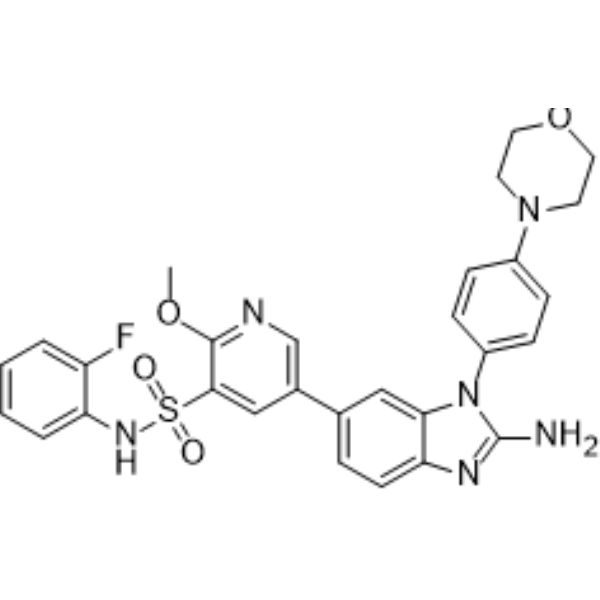 0 ImagesGSK-A1 is a selective type III phosphatidylinositol 4-kinase PI4KA (PI4KIIIα) inhibitor with a pIC50 of 8.5-9.8. GSK-A1 inhibits PtdIns(4,5)P2 resynthesis with an IC50 of about 3 nM. GSK-A1 potently decreases the levels of PtdIns(4)P with a negligible effect on PtdIns(4,5)P2. GSK-A1 has the potential for anti-hepatitis C virus (HCV) research.
-
GSK-F1
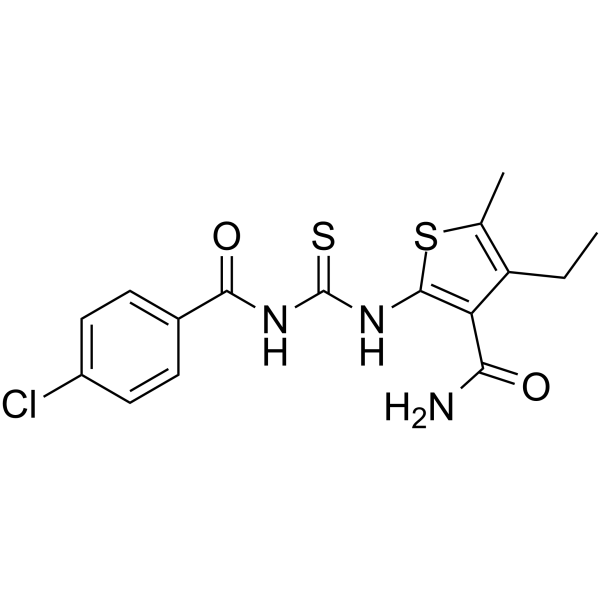
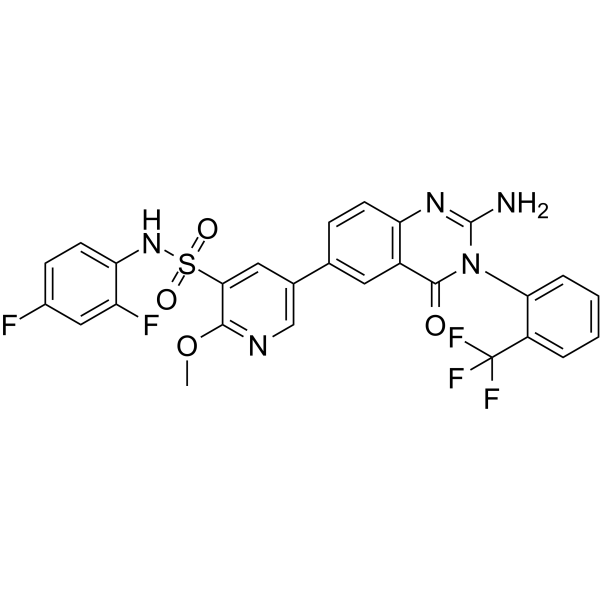 0 ImagesCat. No.: HY-100603CAS No.: 1402345-92-9
-
EDI048
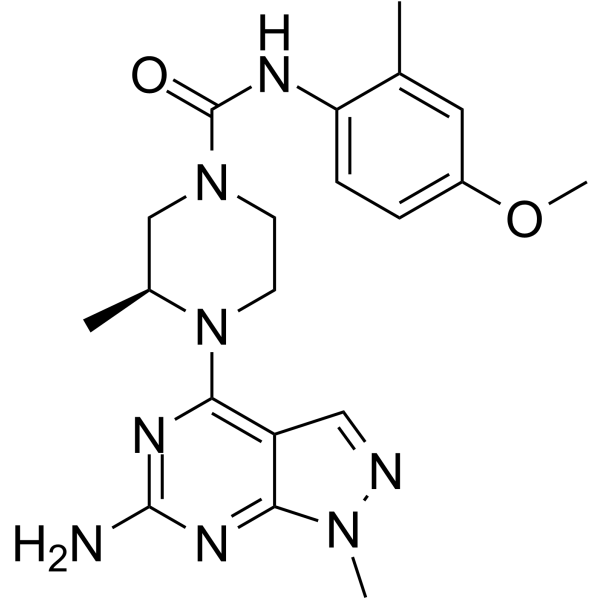
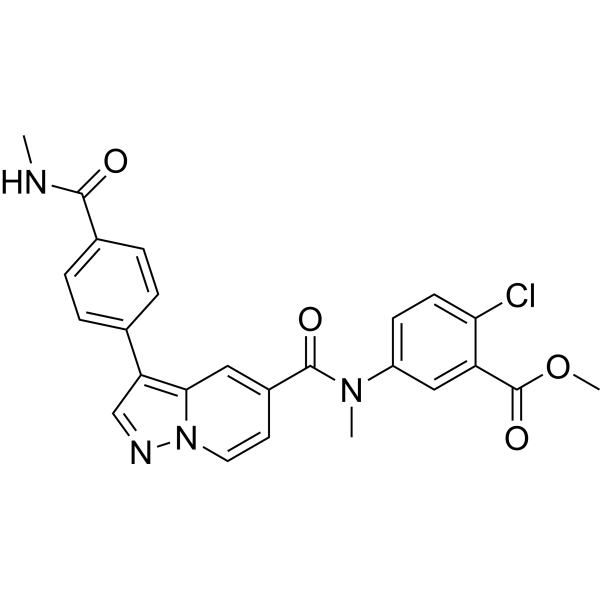 0 ImagesEDI048 is an orally active, gut-restricted parasiticidal agent. EDI048 specifically binds to the ATP-binding site of Cryptosporidium phosphatidylinositol 4-kinase (CpPI (4) K), blocks parasite membrane biogenesis, arrests the pathogen at the schizont stage, and thus irreversibly clears the infection. EDI048 is rapidly converted to an inactive carboxylic acid metabolite via hepatic first-pass metabolism, with extremely low systemic exposure, good safety profile, and no cardiotoxicity, genotoxicity or off-target effects. EDI048 is used in studies of intestinal cryptosporidiosis in children.
-
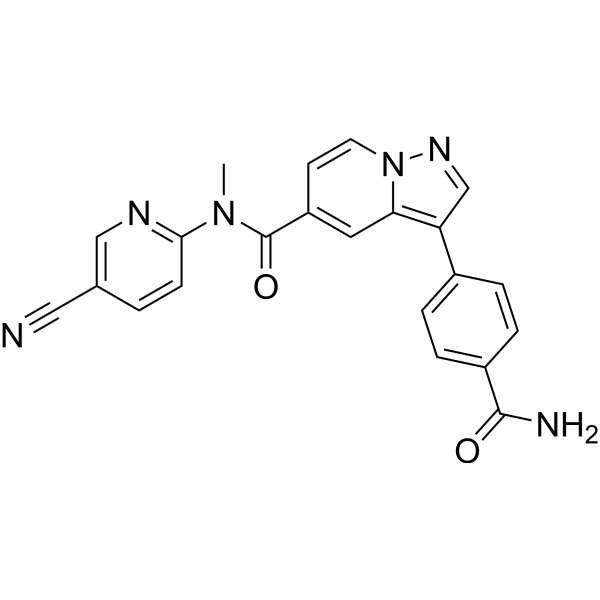
PI4Kβ/PKG-IN-2
 0 ImagesPI4Kβ/PKG-IN-2 (Compound 20) is an orally active dual inhibitor of Plasmodium phosphatidylinositol 4-kinase beta (PI4Kβ) and cGMP-dependent protein kinase (PKG). PI4Kβ/PKG-IN-2 has potent inhibitory effects on Plasmodium. PI4Kβ/PKG-IN-2 is promising for research of malaria.
-
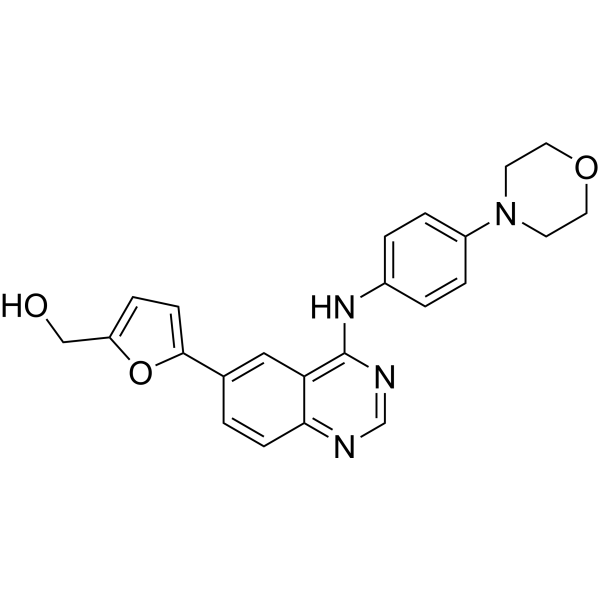
UCT943
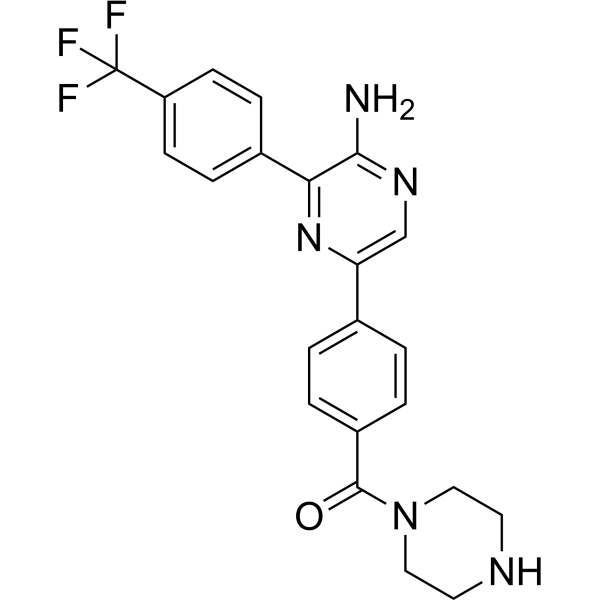 0 ImagesUCT943 is a next-generation Plasmodium falciparum PI4K inhibitor. UCT943 inhibits the P. vivax PI4K (PvPI4K) enzyme with an IC50 of 23 nM.
-
CHMFL-PI4K-127
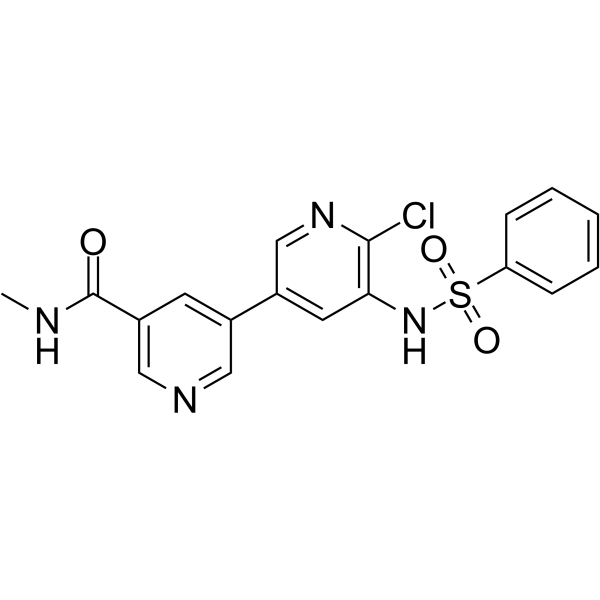 0 ImagesCHMFL-PI4K-127 (compound 15g) is an orally active, potent and high selective PfPI4K (Plasmodium falciparum PI4K kinase) inhibitor, with an IC50 of 0.9 nM. CHMFL-PI4K-127 exhibits potent activity against 3D7 Plasmodium falciparum, with an EC50 of 25.1 nM. CHMFL-PI4K-127 shows antimalaria efficacy.

-
PI4KA Human Pre-designed siRNA Set A
 0 ImagesCat. No.: HY-RS10466
PI4KA Human Pre-designed siRNA Set A contains three designed siRNAs for PI4KA gene (Human), as well as a negative control, a positive control, and a FAM-labeled negative control.
-
Antimalarial agent 41
 0 ImagesCat. No.: HY-163765Antimalarial agent 41 (Compound 17) exhibits antimalarial activity, which inhibits Plasmodium falciparum with an IC50 of 40 nM (NF54 strain) and 76 nM (K1 strain). Antimalarial agent 41 is an inhibitor for P. falciparum phosphatidylinositol-4-kinase β (Pf PI4K) and hERG channel, with an IC50 of 53 nM and 3 μM. Antimalarial agent 41 exhibits cytotoxicity to CHO cells with an IC50 of 34 μM. Antimalarial agent 41 ameliorates the malaria infection and exhibits good pharmacokinetic characters in mouse models.
-
Echiguanine B
 0 ImagesCat. No.: HY-N19772CAS No.: 137319-26-7
-
KAI-407
 0 ImagesCat. No.: HY-18746CAS No.: 1513879-18-9KAI-407 is an orally active inhibitor of Plasmodium PI4K kinase, which can broadly inhibit multiple stages of the parasite lifecycle. KAI-407 exhibits EC50s of for the blood stage of malignant Plasmodium of 81 nM; for the liver schizonts of P. yoelii of 88 nM; and IC50s for the liver schizonts and dormant bodies of P. cynomolgi of 0.64 μM and 0.69 μM respectively. KAI-407 can prevent Plasmodium berghei infection 100%. KAI-407 can be used for the study of vivax malaria.
-
PI4KIII beta inhibitor 5
 0 ImagesCat. No.: HY-172256CAS No.: 3029506-23-5PI4KIII beta inhibitor 5 is a PI4KIIIβ inhibitor with an IC50 of 19 nM. PI4KIII beta inhibitor 5 can induce cancer cell apoptosis (Apoptosis), cell cycle arrest at the G2/M phase, and autophagy (Autophagy) by inhibiting the PI3K/AKT pathway. PI4KIII beta inhibitor 5 has also demonstrated significant antitumor activity in the H446 xenograft model of small cell lung cancer. PI4KIII beta inhibitor 5 can be used for research in the field of cancer therapy.
-
Pi4ka Rat Pre-designed siRNA Set A
 0 ImagesCat. No.: HY-RS10468
Pi4ka Rat Pre-designed siRNA Set A contains three designed siRNAs for Pi4ka gene (Rat), as well as a negative control, a positive control, and a FAM-labeled negative control.

-
MG degrader 2
 0 ImagesCat. No.: HY-177725CAS No.: 2413733-33-0MG degrader 2 (Compound CM-2) is a CRBN-dependent molecular glue degrader. MG degrader 2 induces ZFP91, FIZ1 and PI4KB degradation. MG degrader 2 has anti-proliferative activity against MM.1S cells (IC50 = 162 nM). MG degrader 2 can be used for the research of cancer, such as multiple myeloma.
-
Pi4ka Mouse Pre-designed siRNA Set A
 0 ImagesCat. No.: HY-RS10467
Pi4ka Mouse Pre-designed siRNA Set A contains three designed siRNAs for Pi4ka gene (Mouse), as well as a negative control, a positive control, and a FAM-labeled negative control.
- 1
- 2



