



Muraglitazar

Based on 1 Customer Validation
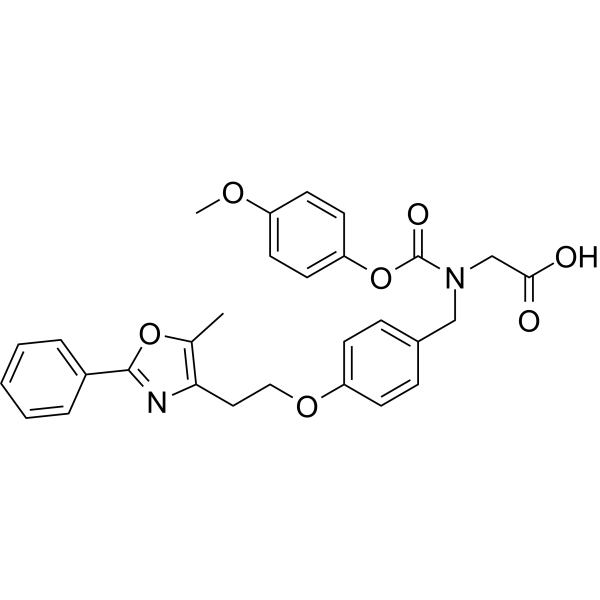
Muraglitazar (BMS-298585) is an orally active non-thiazolidinedione oxybenzylglycine dual-target PPARα/PPARγ agonist, with an IC50 of 0.25 μM and an EC50 of 0.32 μM against human PPARα, and an IC50 of 0.19 μM and an EC50 of 0.11 μM against human PPARγ. Muraglitazar regulates lipid homeostasis, enhances peripheral insulin sensitivity, and improves β-cell function. Muraglitazar reduces levels of blood glucose, insulin, triglycerides and free fatty acids, normalizes adiponectin and corticosterone levels, promotes cholesterol efflux, reduces hepatic lipid content, regulates body weight, prevents hyperglycemia, and improves glucose tolerance. Muraglitazar can be used in research related to type 2 diabetes and dyslipidemia.
Nos produits utilisent uniquement pour la recherche. Nous ne vendons pas aux patients.
- Pureté : 98.38%
- CAS No.: 331741-94-7
- Formule: C29H28N2O7
- Masse moléculaire:516.54
-
Stockage:Powder -20°C, 3 years , 4°C, 2 years ; In solvent -80°C, 6 months , -20°C, 1 month

To place orders, for customer services and technical support, please contact: MedChemExpress USA
Tel: 609-228-6898 E-mail: [email protected] [email protected]


-
 Activité biologique
-
Chemical Information
-
Solvant et solubilité
- Protocole
- Pureté et documentation
- Références
-
 Help & FAQs


-
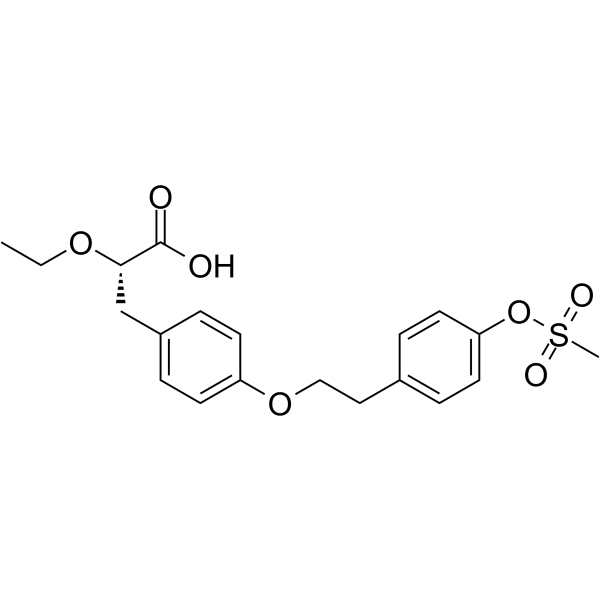
HY-17444
TesaglitazarPPARα/γ Agonist -
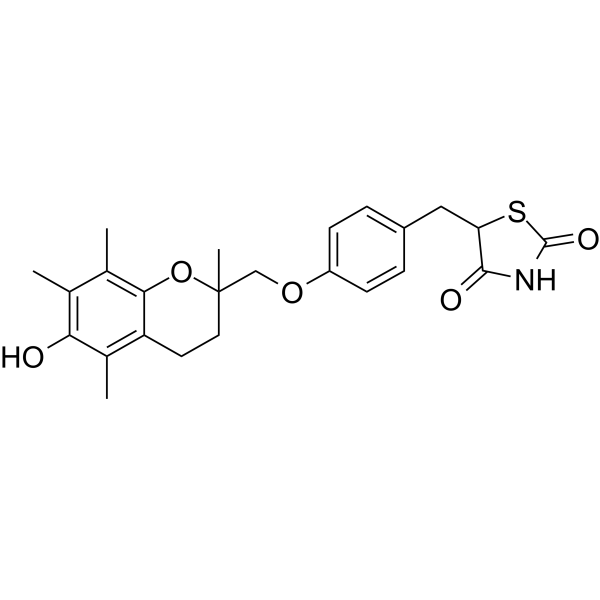
HY-50935
TroglitazonePPARγ Agonist -
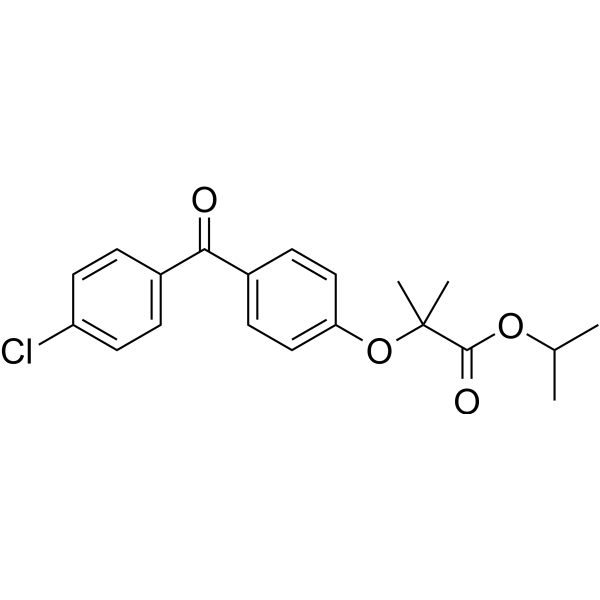
HY-17356
Fenofibrate -
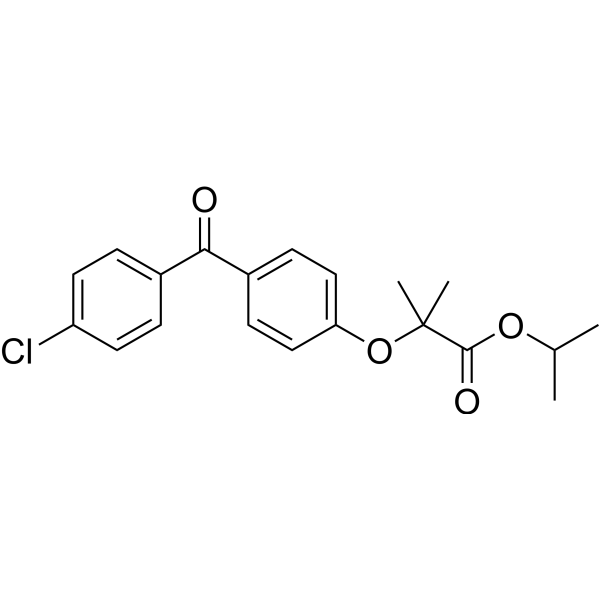
HY-17356R
Fenofibrate (Standard) -
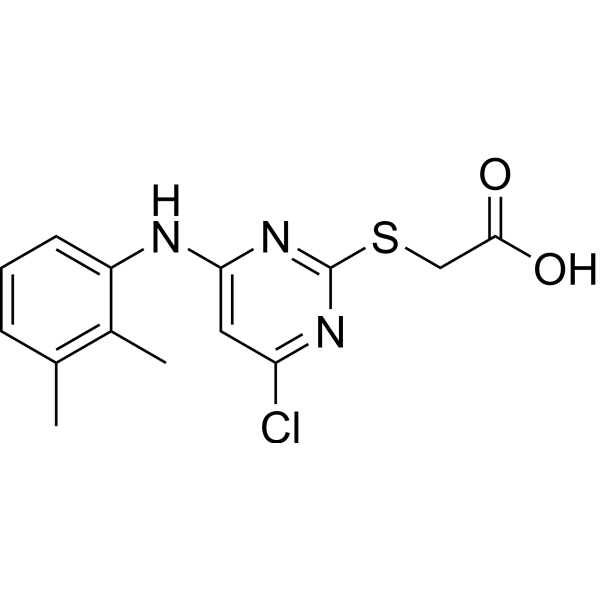
HY-16995
Pirinixic acidPPAR Agonist -
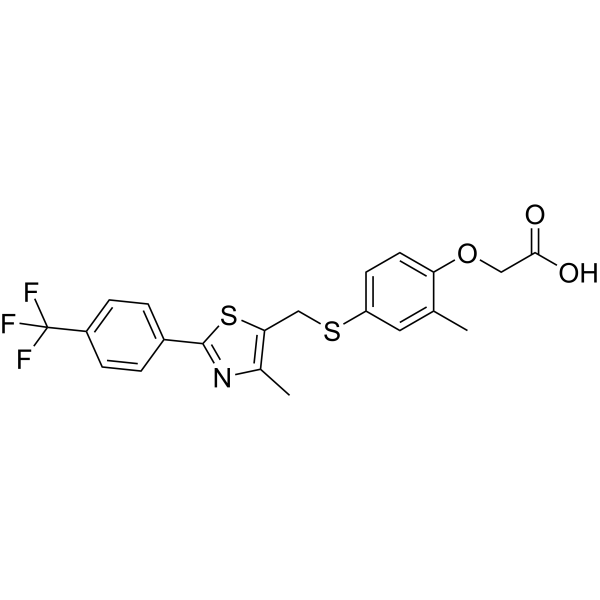
HY-10838
GW 501516PPARδ Agonist -
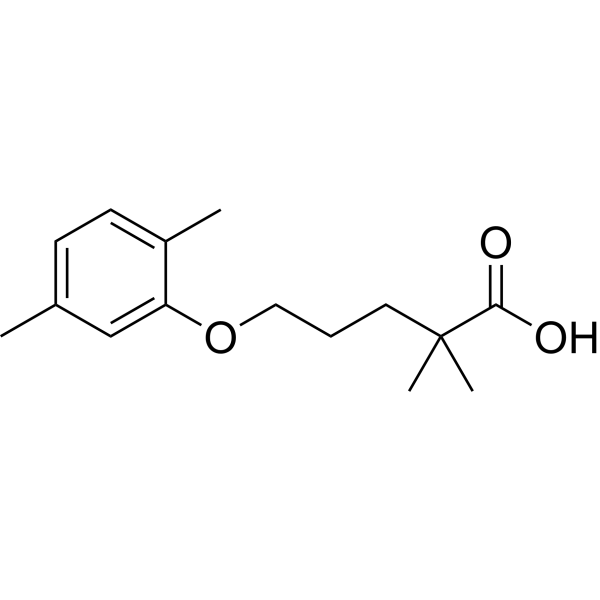
HY-B0258
GemfibrozilCytochrome P450 Inhibitor -
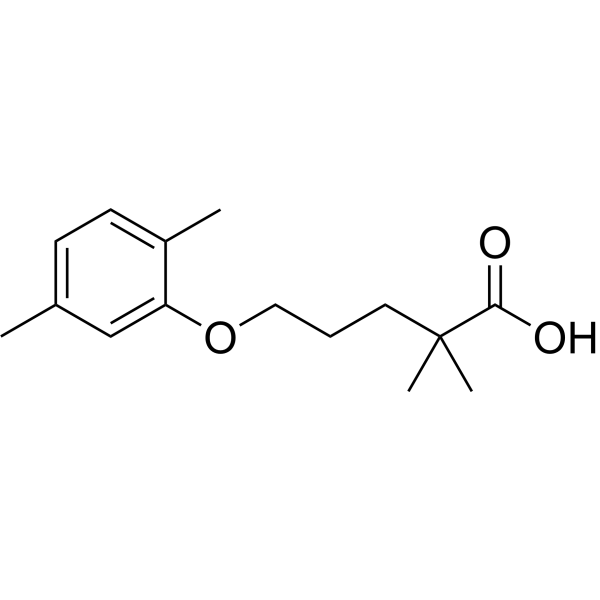
HY-B0258R
Gemfibrozil (Standard) -
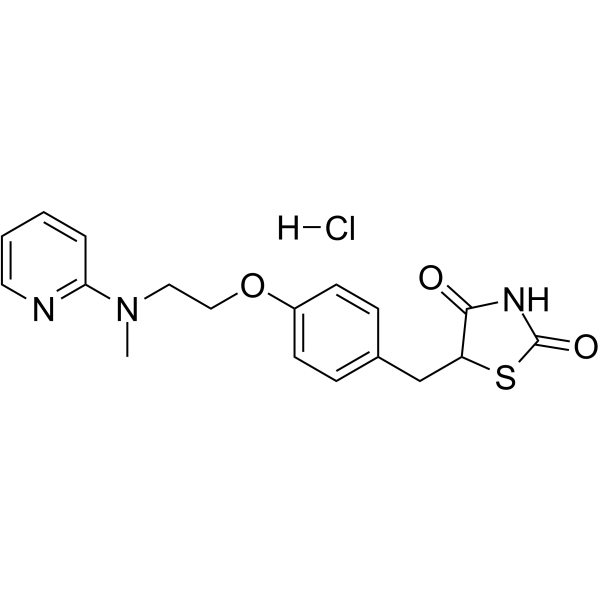
HY-17386A
Rosiglitazone hydrochloridePPARγ Agonist -

HY-50935R
Troglitazone (Standard)PPARγ Agonist -
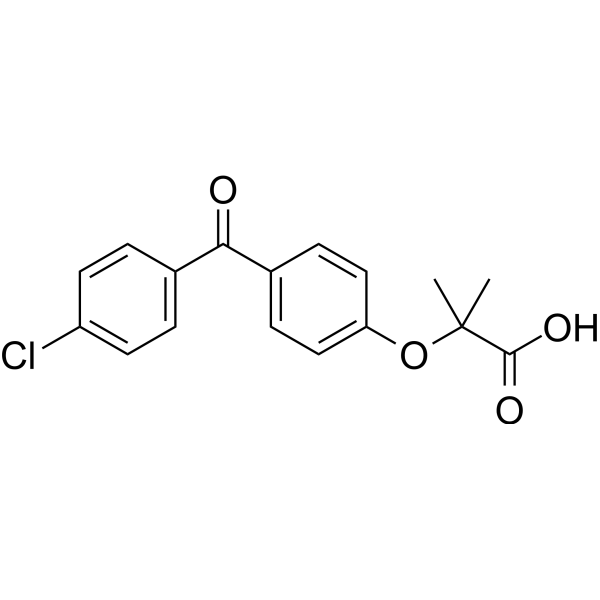
HY-B0760
Fenofibric acid -
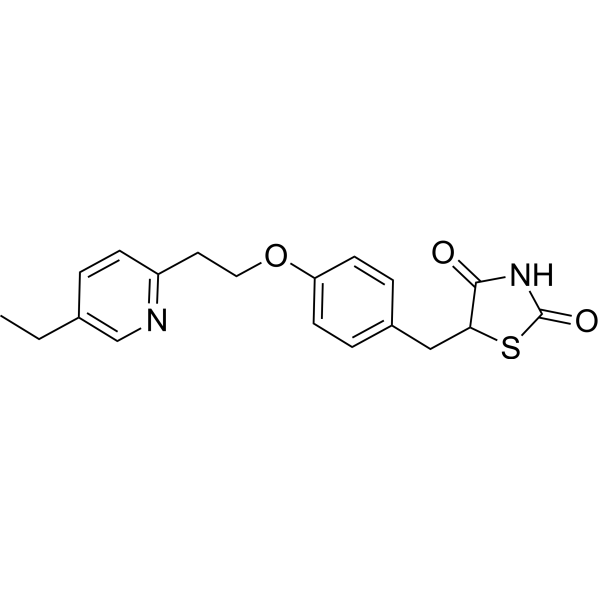
HY-13956
PioglitazonePPARγ Agonist


Activité biologique
Description
IC50 & Target
[1]|
hPPARα 0.25 μM (IC50) |
hPPARγ 0.19 μM (EC50) |
hPPARα 0.32 μM (IC50) |
hPPARγ 0.11 μM (EC50) |
Cellular Effect
|
Cell Line

|
Type | Value | Description | References |
|---|---|---|---|---|
| HEK293 | EC50 |
0.035 μM
Compound: I
|
Agonist activity at GAL4 tagged human PPARgamma ligand binding domain expressed in HEK293 cells by luciferase reporter gene assay
Agonist activity at GAL4 tagged human PPARgamma ligand binding domain expressed in HEK293 cells by luciferase reporter gene assay
|
[PMID: 25686852] |
| HEK293 | EC50 |
0.04 μM
Compound: 1, muraglitazar
|
Agonist activity at human PPARgamma expressed in HEK293 cells assessed as luciferase activity by GAL4 transactivation assay
Agonist activity at human PPARgamma expressed in HEK293 cells assessed as luciferase activity by GAL4 transactivation assay
|
[PMID: 18511276] |
| HEK293 | EC50 |
1.41 μM
Compound: 1, muraglitazar
|
Agonist activity at human PPARalpha expressed in HEK293 cells assessed as luciferase activity by GAL4 transactivation assay
Agonist activity at human PPARalpha expressed in HEK293 cells assessed as luciferase activity by GAL4 transactivation assay
|
[PMID: 18511276] |
| HEK293 | EC50 |
1.41 μM
Compound: I
|
Agonist activity at GAL4 tagged human PPARalpha ligand binding domain expressed in HEK293 cells by luciferase reporter gene assay
Agonist activity at GAL4 tagged human PPARalpha ligand binding domain expressed in HEK293 cells by luciferase reporter gene assay
|
[PMID: 25686852] |
| HepG2 | EC50 |
0.09 μM
Compound: muraglitazar
|
Agonist activity at human PPARgamma transactivation expressed in human HePG2 cells
Agonist activity at human PPARgamma transactivation expressed in human HePG2 cells
|
[PMID: 18976908] |
| HepG2 | EC50 |
0.15 μM
Compound: muraglitazar
|
Agonist activity at human PPARalpha transactivation expressed in human HePG2 cells
Agonist activity at human PPARalpha transactivation expressed in human HePG2 cells
|
[PMID: 18976908] |
In Vitro
Muraglitazar (1.0 μM) induces potent PPARγ-mediated differentiation of 3T3L-1 preadipocytes, resulting in triglyceride accumulation comparable to the selective PPARγ agonist rosiglitazone[1].
Muraglitazar (10 µM) increases reverse cholesterol transport gene expression and stimulates 78% cholesterol efflux in differentiating THP1 macrophage cells[2].
MedChemExpress (MCE) has not independently confirmed the accuracy of these methods. They are for reference only.
Parmacokinetics
In Vivo
Muraglitazar (0.1-30 mg/kg; p.o.; daily; 2-4 weeks) produces dose-dependent, persistent improvements in blood glucose, blood lipid and hormone parameters in severely diabetic db/db mice, with the dose of 10 mg/kg/day reducing fasting blood glucose by 51% within 2 weeks[2].
Muraglitazar (1-10 mg/kg; p.o.; daily; 12 weeks) reduces the risk of hyperglycemia in prediabetic db/db mice by up to 72%, and restores the pancreatic insulin content of mice to normal within 12 weeks[2].
Muraglitazar (10 mg/kg; p.o.; daily) reduces hepatic triglyceride content by 39% and decreases cholesterol content by up to 63% in mice and hamsters with diabetes complicated by hyperlipidemia induced by a high-fat diet[2].
MedChemExpress (MCE) has not independently confirmed the accuracy of these methods. They are for reference only.
-
Animal Model:db/db (male)[1]
-
Dosage:10 mg/kg
-
Administration:p.o.; daily; 14 days
-
Result:Reduced plasma glucose by 54%.
Reduced triglycerides by 33%.
Reduced free fatty acids by 62%.
Reduced insulin by 48%.
-
Animal Model:db/db (severely diabetic)[2]
-
Dosage:10 mg/kg/day (2-week treatment); 0.1-30 mg/kg/day (4-week treatment); ≥1 mg/kg/day (4-week treatment)
-
Administration:p.o.; daily; 2 weeks or 4 weeks
-
Result:Reduced fasting glucose by 51% and postoral glucose by 30%.
Dose-dependently reduced plasma triglycerides, free fatty acids, glucose, and insulin.
Normalized abnormally low plasma adiponectin and elevated corticosterone levels.
Reduced urine output from 12 mL to 1.9 mL.
Produced sustained glucose lowering.
Normalized adiponectin levels to lean mouse levels.
Increased both fat mass and lean mass without altering bone mineral content.
Did not increase food consumption.
-
Animal Model:db/db (prediabetic, normoglycemic, 5-week-old)[2]
-
Dosage:1 mg/kg/day; 3 mg/kg/day; 10 mg/kg/day
-
Administration:p.o.; daily; 12 weeks
-
Result:Prevented the onset of hyperglycemia by 51-72%.
Reduced glycosylated hemoglobin by 34-55%.
Reduced insulin levels by 23-54% and C-peptide levels by 19-51%.
Improved glucose tolerance.
Normalized pancreatic insulin content to lean mouse levels.
-
Animal Model:high-fat diet-induced diabetic/hyperlipidemic[2]
-
Dosage:10 mg/kg/day
-
Administration:p.o.; daily
-
Result:Reduced liver triglyceride content by 39% and cholesterol content by 49% in mice.
Reduced liver triglyceride content by 39% and cholesterol content by 63% in hamsters.
Did not increase liver weight.
Essai clinique
| NCT Number | Sponsor | Condition | Start Date |
Phase
|
|---|---|---|---|---|
| NCT01329991 | Plexxikon| | 2011-05 | PHASE1 |


Chemical Information
-
CAS No. 331741-94-7
-
Appearance Solid
-
Masse moléculaire 516.54
-
Formule C29H28N2O7
-
Color White to off-white
-
SMILES
O=C(O)CN(C(OC1=CC=C(OC)C=C1)=O)CC2=CC=C(OCCC3=C(C)OC(C4=CC=CC=C4)=N3)C=C2
-
Synonyms
BMS-298585
-
Livraison
Room temperature in continental US; may vary elsewhere.
-
Stockage
Powder -20°C 3 years 4°C 2 years In solvent -80°C 6 months -20°C 1 month


Solvant et solubilité
In Vitro:
DMSO : 50 mg/mL (96.80 mM; Need ultrasonic; Hygroscopic DMSO has a significant impact on the solubility of product, please use newly opened DMSO)
Please refer to the solubility information to select the appropriate solvent. Once prepared, please aliquot and store the solution to prevent product inactivation from repeated freeze-thaw cycles.
Storage method and period of stock solution: -80°C, 6 months; -20°C, 1 month. When stored at -80°C, please use it within 6 months. When stored at -20°C, please use it within 1 month.
Please refer to the solubility information to select the appropriate solvent. Once prepared, please aliquot and store the solution to prevent product inactivation from repeated freeze-thaw cycles.
Storage method and period of stock solution: -80°C, 6 months; -20°C, 1 month. When stored at -80°C, please use it within 6 months. When stored at -20°C, please use it within 1 month.
Concentration (start) × Volume (start) = Concentration (final) × Volume (final)
In Vivo:
Select the appropriate dissolution method based on your experimental animal and administration route.
- For the following dissolution methods, please ensure to first prepare a clear stock solution using an In Vitro approach and then sequentially add co-solvents:
- To ensure reliable experimental results, the clarified stock solution can be appropriately stored based on storage conditions. As for the working solution for In Vivo experiments, it is recommended to prepare freshly and use it on the same day.
- The percentages shown for the solvents indicate their volumetric ratio in the final prepared solution. If precipitation or phase separation occurs during preparation, heat and/or sonication can be used to aid dissolution.
Add each solvent one by one: 10% DMSO 40% PEG300 5% Tween-80 45% Saline
Solubility: ≥ 2.5 mg/mL (4.84 mM); Clear solution
This protocol yields a clear solution of ≥ 2.5 mg/mL (saturation unknown).
Taking 1 mL working solution as an example, add 100 μL DMSO stock solution (25.0 mg/mL) to 400 μL PEG300, and mix evenly; then add 50 μL Tween-80 and mix evenly; then add 450 μL Saline to adjust the volume to 1 mL.
Preparation of Saline: Dissolve 0.9 g sodium chloride in ddH₂O and dilute to 100 mL to obtain a clear Saline solution.
In Vivo Dissolution Calculator
Please enter the basic information of animal experiments:
-
-
-
-
Recommended: Prepare an additional quantity of animals to account for potential losses during experiments.
Please enter your animal formula composition:
-
%DMSO +
Recommended: Keep the proportion of DMSO in working solution below 2% if your animal is weak.
-
%+
-
+%Tween-80 + +
-
%Saline +
The co-solvents required include: DMSO, . All of co-solvents are available by MedChemExpress (MCE). , Tween 80. All of co-solvents are available by MedChemExpress (MCE).
Working solution concentration: 0.22 mg/mL
Method for preparing stock solution: mg drug dissolved in μL DMSO. Stock solution concentration: mg/mL.
1. Take μL DMSO stock solution;
2. Add μL .
μL , mix evenly;
3. Then add μL Tween 80, mix evenly;
4. Then add μL
Please ensure that the stock solution in the first step is dissolved to a clear state, and add co-solvents in sequence. You can use ultrasonic heating (ultrasonic cleaner, recommended frequency 20-40 kHz), vortexing, etc. to assist dissolution.


Pureté et documentation
-
Fiche technique (280 KB)
-
SDS (394 KB)
- English - EN (394 KB)
- Français - FR (394 KB)
- Deutsch - DE (394 KB)
- Norwegian - NO (394 KB)
- Español - ES (394 KB)
- Swedish - SV (394 KB)
- Italian - IT (394 KB)
- Korean - KR (394 KB)
- Portuguese - PT (394 KB)
-
Instruction de manipulation (2659 KB)
Références


Complete Stock Solution Preparation Table
Please refer to the solubility information to select the appropriate solvent. Once prepared, please aliquot and store the solution to prevent product inactivation from repeated freeze-thaw cycles.
Storage method and period of stock solution: -80°C, 6 months; -20°C, 1 month. When stored at -80°C, please use it within 6 months. When stored at -20°C, please use it within 1 month.
| Optional Solvent | Concentration Solvent Mass | 1 mg | 5 mg | 10 mg | 25 mg |
|---|---|---|---|---|---|
| DMSO | 1 mM | 1.9360 mL | 9.6798 mL | 19.3596 mL | 48.3990 mL |
| 5 mM | 0.3872 mL | 1.9360 mL | 3.8719 mL | 9.6798 mL | |
| 10 mM | 0.1936 mL | 0.9680 mL | 1.9360 mL | 4.8399 mL | |
| 15 mM | 0.1291 mL | 0.6453 mL | 1.2906 mL | 3.2266 mL | |
| 20 mM | 0.0968 mL | 0.4840 mL | 0.9680 mL | 2.4199 mL | |
| 25 mM | 0.0774 mL | 0.3872 mL | 0.7744 mL | 1.9360 mL | |
| 30 mM | 0.0645 mL | 0.3227 mL | 0.6453 mL | 1.6133 mL | |
| 40 mM | 0.0484 mL | 0.2420 mL | 0.4840 mL | 1.2100 mL | |
| 50 mM | 0.0387 mL | 0.1936 mL | 0.3872 mL | 0.9680 mL | |
| 60 mM | 0.0323 mL | 0.1613 mL | 0.3227 mL | 0.8066 mL | |
| 80 mM | 0.0242 mL | 0.1210 mL | 0.2420 mL | 0.6050 mL |


Muraglitazar Related Classifications
HY-17445 Related Classifications
 Powered by Bioz