



Camstatin
Camstatin, a functionally active 25-residue fragment of PEP-19's IQ motif, binds calmodulin and inhibits neuronal nitric oxide (NO) synthase.
Nur für Forschungszwecke. Wir verkaufen nicht an Patienten.
- CAS. Nr.: 1002295-95-5
- Formel: C122H203N39O34
- Molecular Weight:2760.16
-
Speicherung:
Please store the product under the recommended conditions in the Certificate of Analysis.

To place orders, for customer services and technical support, please contact: MedChemExpress USA
Tel: 609-228-6898 E-mail: [email protected] [email protected]


-
 Biologische Aktivität
-
Chemical Information
-
Lösungsmittel & Löslichkeit
- Reinheit & Dokumentation
- Verweise
-
 Help & FAQs


-
HY-P1074
SNX-482CaV2.3 Channel Blocker -
HY-P1080
ω-Agatoxin IVAP/Q Type Ca2+ Channel Blocker -
HY-P1075
CALP3Ca2+ Channel Blocker -
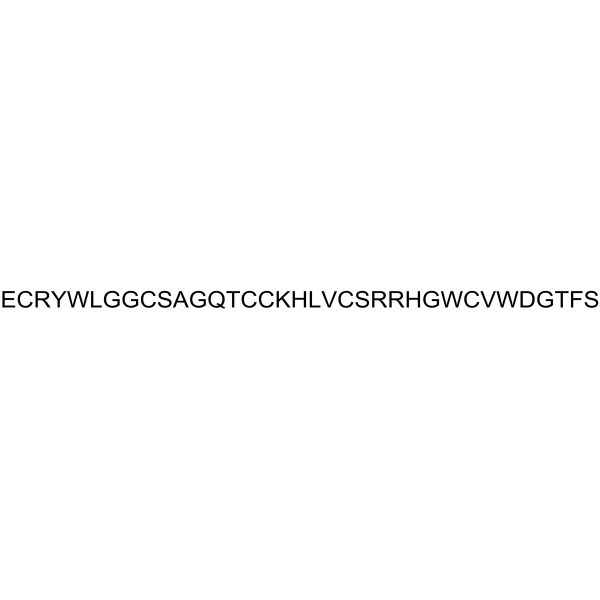
HY-P1073
ProTx-INaV/Cav Inhibitor -
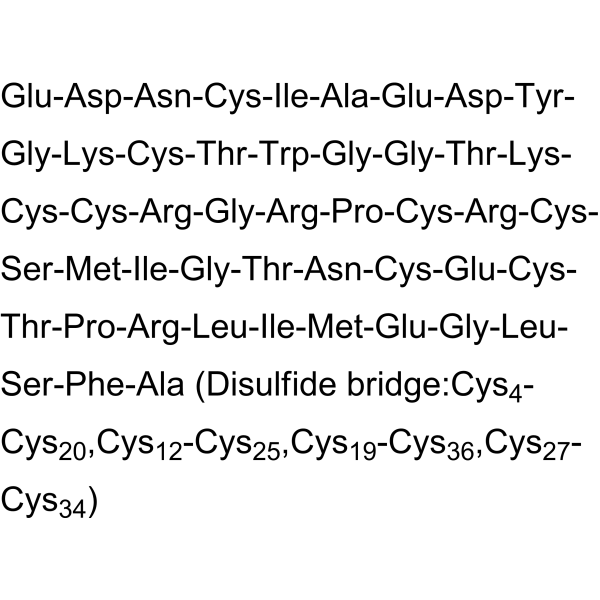
HY-P1079
ω-Agatoxin TKP/Q Type Ca2+ Channel Blocker -
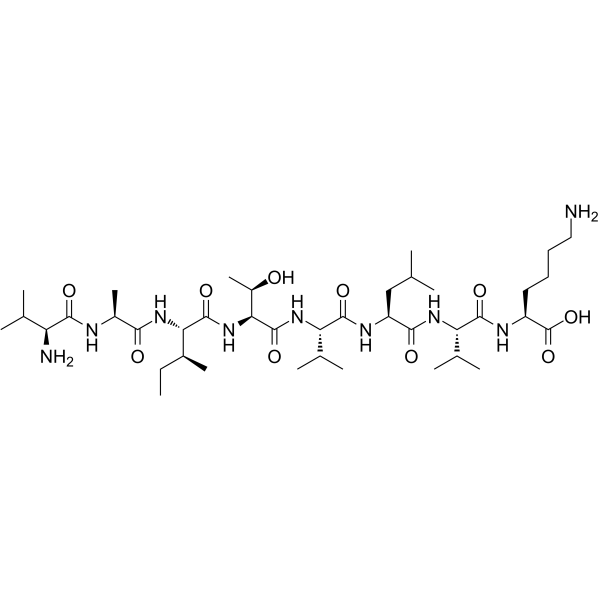
HY-P1077
CALP1Calmodulin Agonist -
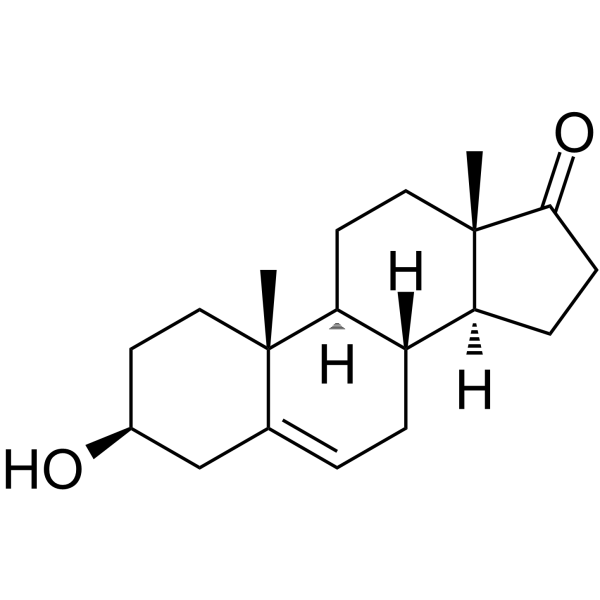
HY-14650
DHEASteroid Hormone -
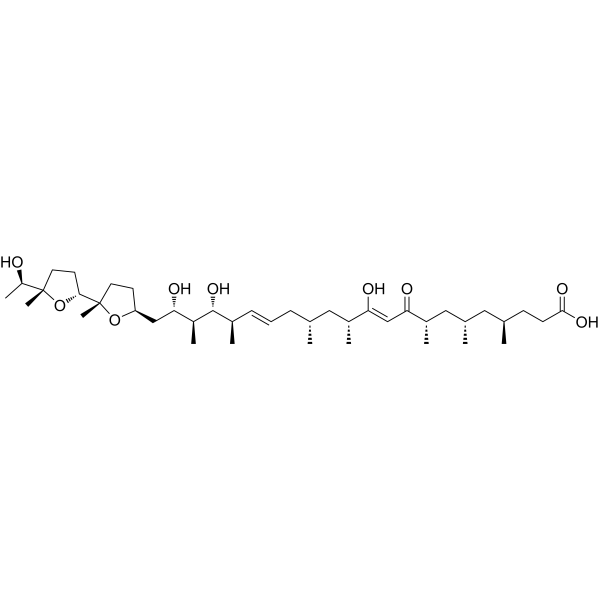
HY-13434
IonomycinCalcium Ionophore -
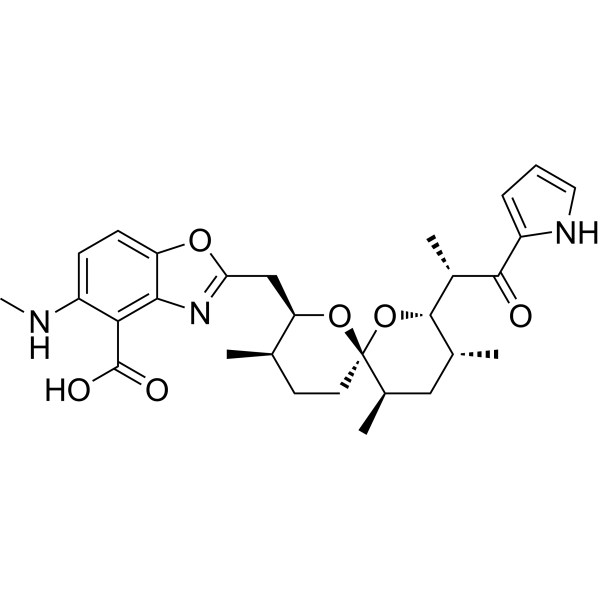
HY-N6687
CalcimycinCation Ionophore -
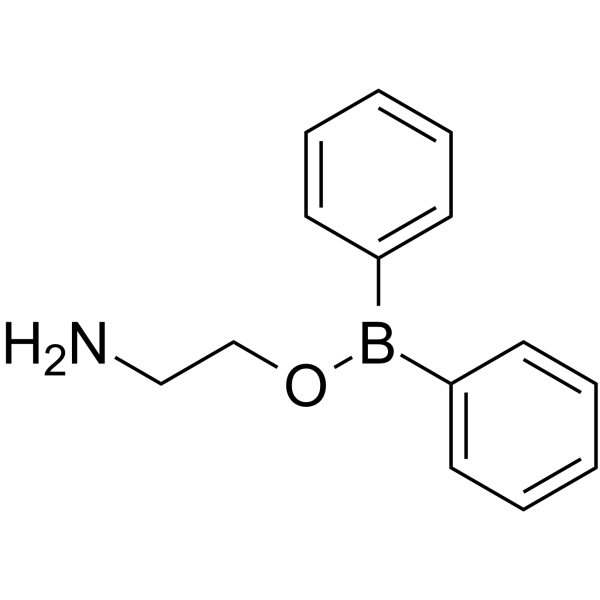
HY-W009724
2-Aminoethyl diphenylborinateIP3R Inhibitor -
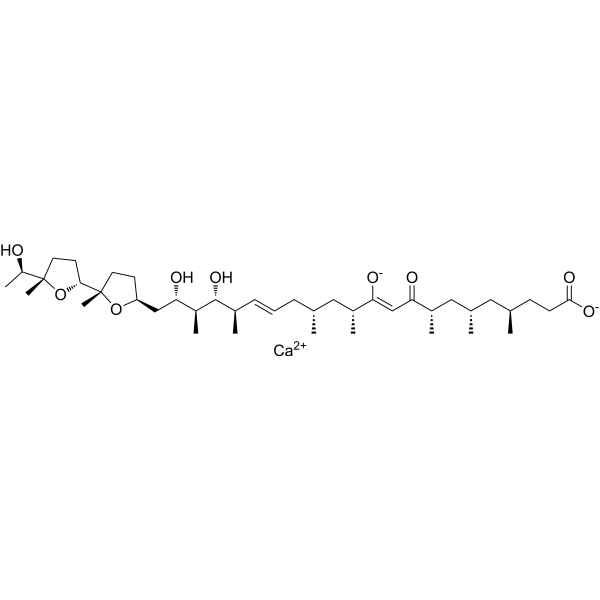
HY-13434A
Ionomycin calciumCalcium Ionophore


Biologische Aktivität
Beschreibung
IC50 & Target
|
nNOS |
In Vitro
Camstatin is a synthetic peptide encompassing the minimal IQ motif of PEP-19 that binds apoCaM and inhibits the activities of the CaM-dependent enzymes neuronal nitric oxide synthase (nNOS) and CaM-kinase II[1].
MedChemExpress (MCE) has not independently confirmed the accuracy of these methods. They are for reference only.


Chemical Information
-
CAS. Nr. 1002295-95-5
-
Molecular Weight 2760.16
-
Formel C122H203N39O34
-
Sequence
Ala-Pro-Glu-Thr-Glu-Arg-Ala-Ala-Val-Ala-Ile-Gln-Ala-Gln-Phe-Arg-Lys-Phe-Gln-Lys-Lys-Lys-Ala-Gly-Ser-NH2
-
Sequence Shortening
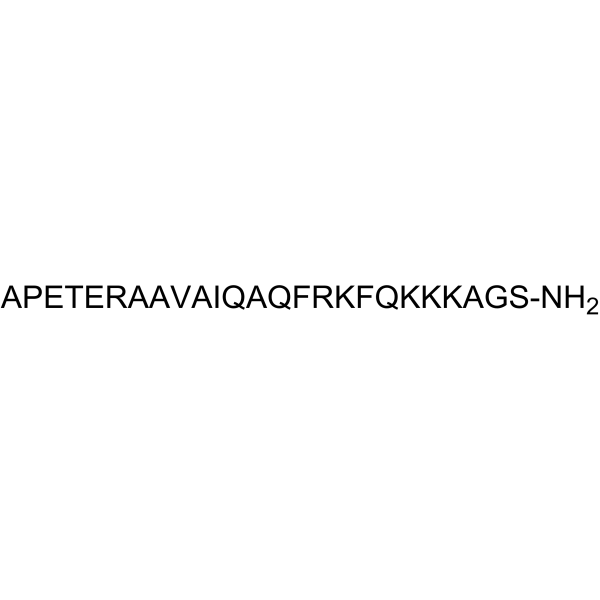
APETERAAVAIQAQFRKFQKKKAGS-NH2
-
Versand
Room temperature in continental US; may vary elsewhere.
-
Speicherung
Please store the product under the recommended conditions in the Certificate of Analysis.


Lösungsmittel & Löslichkeit
In Vitro
H2O
Peptide Solubility and Storage Guidelines:
1. Calculate the length of the peptide.
2. Calculate the overall charge of the entire peptide according to the following table:
| Contents | Assign value | |
|---|---|---|
| Acidic amino acid | Asp (D), Glu (E), and the C-terminal -COOH. | -1 |
| Basic amino acid | Arg (R), Lys (K), His (H), and the N-terminal -NH2 | +1 |
| Neutral amino acid | Gly (G), Ala (A), Leu (L), Ile (I), Val (V), Cys (C), Met (M), Thr (T), Ser (S), Phe (F), Tyr (Y), Trp (W), Pro (P), Asn (N), Gln (Q) | 0 |
3. Recommended solution:
| Overall charge of peptide | Details |
|---|---|
| Negative (<0) |
1. Try to dissolve the peptide in water first. 2. If water fails, add NH4OH (<50 μL). 3. If the peptide still does not dissolve, add DMSO (50-100 μL) to solubilize the peptide. |
| Positive (>0) |
1. Try to dissolve the peptide in water first. 2. If water fails, try dissolving the peptide in a 10%-30% acetic acid solution. 3. If the peptide still does not dissolve, try dissolving the peptide in a small amount of DMSO. |
| Zero (=0) |
1. Try to dissolve the peptide in organic solvent (acetonitrile, methanol, etc.) first. 2. For very hydrophobic peptides, try dissolving the peptide in a small amount of DMSO, and then dilute the solution with water to the desired concentration. |


Reinheit & Dokumentation
Verweise

Calculators
Konzentration (Stammlösung) × Volumen (Stammlösung) = Konzentration (Ziellösung) × Volumen (Ziellösung)


Camstatin Related Classifications
HY-P0184 Related Classifications
 Powered by Bioz