



514-65-8
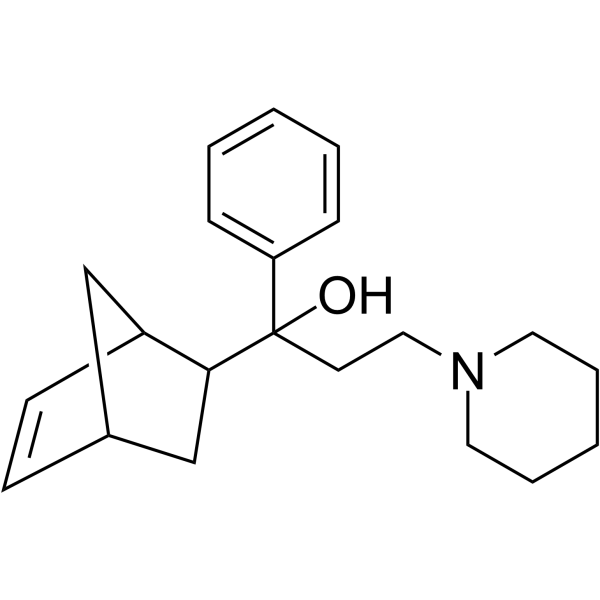
Chemical Structure
Biperiden
Synonym(s): KL 373
- CAS No.: 514-65-8
- Formula:C21H29NO
- Molecular Weight:311.46
IUPAC Name: 1-((1R,2S,4R)-bicyclo[2.2.1]hept-5-en-2-yl)-1-phenyl-3-(piperidin-1-yl)propan-1-ol
InChIKey: YSXKPIUOCJLQIE-FDGGOGDCSA-N
SMILES: OC([C@H]1C[C@@H]2C=C[C@H]1C2)(CCN3CCCCC3)C4=CC=CC=C4
Biological Activity: Biperiden (KL 373) is a non-selective muscarinic receptor antagonist that competitively binds to M1 muscarinic receptors, thereby inhibiting acetylcholine and enhancing dopamine signaling in the central nervous system. Biperiden has the potential for the research of Parkinson's disease and other related psychiatric disorders[1][2].
| Cat. No. | 상품명 | Purity | 제품 설명 | Pricing | |||||||||||||||||||
|---|---|---|---|---|---|---|---|---|---|---|---|---|---|---|---|---|---|---|---|---|---|---|---|
|
|
Biperiden | 99.11% | Biperiden (KL 373) is a non-selective muscarinic receptor antagonist that competitively binds to M1 muscarinic receptors, thereby inhibiting acetylcholine and enhancing dopamine signaling in the central nervous system. Biperiden has the potential for the research of Parkinson's disease and other related psychiatric disorders. | ||||||||||||||||||||
|
loading...
/
|
|||||||||||||||||||||||
|
|
Biperiden (Standard) | ≥98% | Biperiden (Standard) is the analytical standard of Biperiden. This product is intended for research and analytical applications. Biperiden (KL 373) is a non-selective muscarinic receptor antagonist that competitively binds to M1 muscarinic receptors, thereby inhibiting acetylcholine and enhancing dopamine signaling in the central nervous system. Biperiden has the potential for the research of Parkinson's disease and other related psychiatric disorders. | ||||||||||||||||||||
|
loading...
/
|
|||||||||||||||||||||||
|
|
Biperiden-d5 | Biperiden-d5 (KL 373-d5) is deuterium labeled Biperiden. Biperiden (KL 373) is a non-selective muscarinic receptor antagonist that competitively binds to M1 muscarinic receptors, thereby inhibiting acetylcholine and enhancing dopamine signaling in the central nervous system. Biperiden has the potential for the research of Parkinson's disease and other related psychiatric disorders. | |||||||||||||||||||||
|
loading...
/
|
|||||||||||||||||||||||
-
Similarity Score 0.98
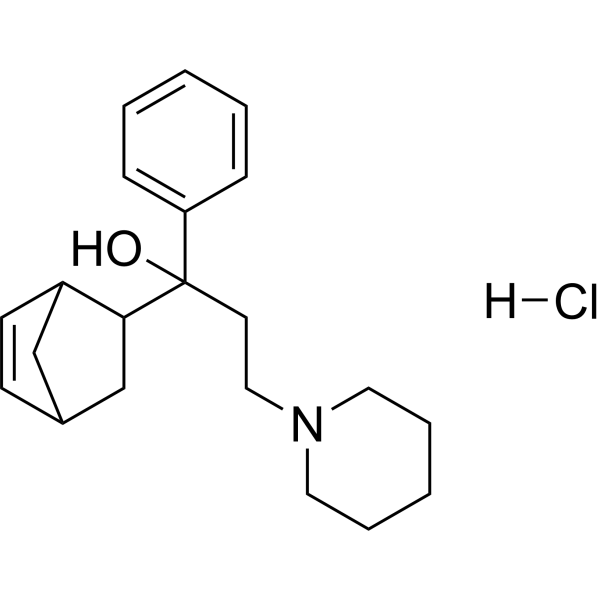 HY-13204RBiperiden hydrochloride (Standard)
-
Similarity Score 0.89
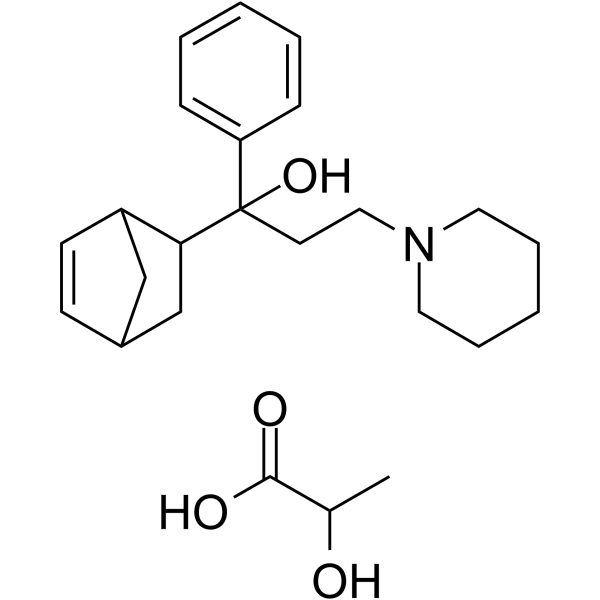 HY-13204BBiperiden lactate
-
Similarity Score 0.73
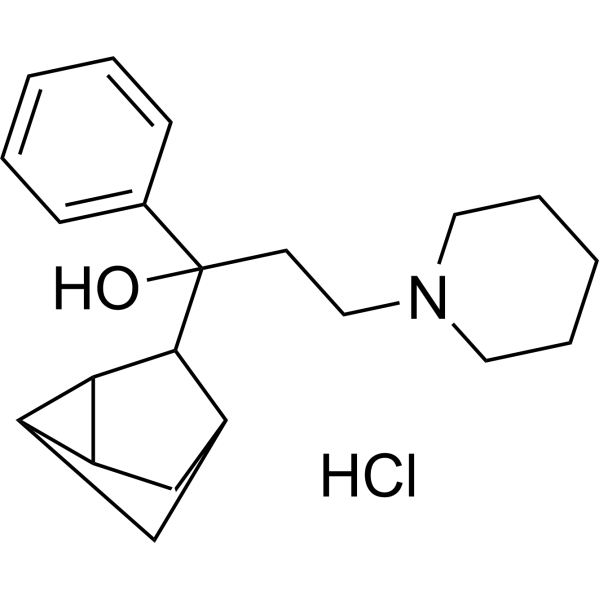 HY-145391Triperiden
-
Similarity Score 0.71
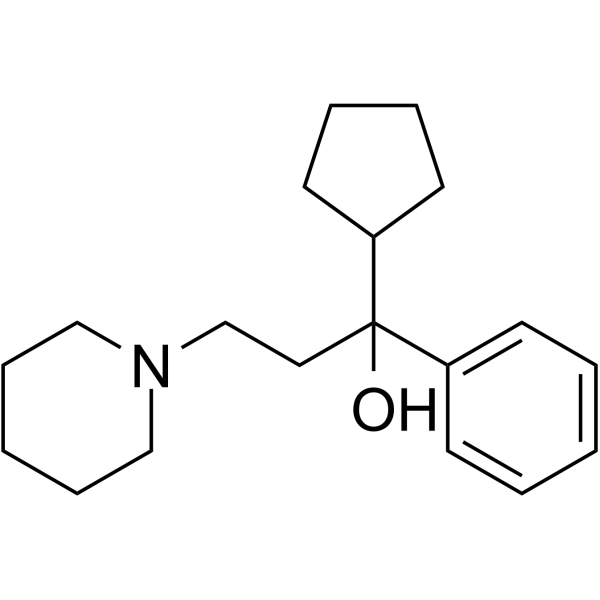 HY-119918Cycrimine
-
Similarity Score 0.70
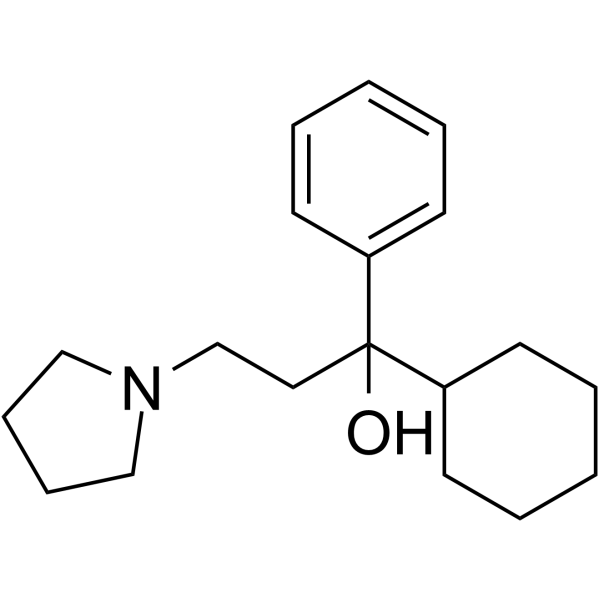 HY-B1487AProcyclidine
-
Similarity Score 0.70
 HY-B1277ATrihexyphenidyl
-
Similarity Score 0.69
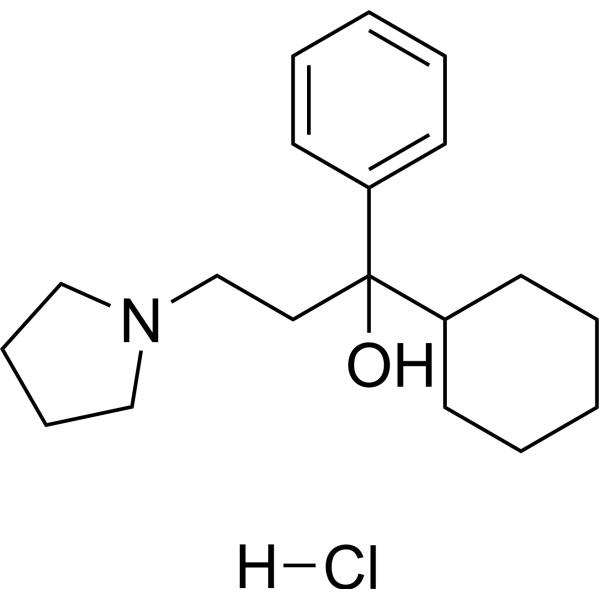 HY-B1487Procyclidine hydrochloride
-
Similarity Score 0.69
 HY-B1277RTrihexyphenidyl hydrochloride (Standard)
-
Similarity Score 0.57
 HY-B1343APridinol
-

Explore the MedChemAI to find more analogs


References
- [1]. Leonie Konczalla,et al. Biperiden and mepazine effectively inhibit MALT1 activity and tumor growth in pancreatic cancer. Int J Cancer. 2020 Mar 15;146(6):1618-1630. [Content Brief]
- [2]. Simone Bittencourt, et al. Modification of the natural progression of epileptogenesis by means of biperiden in the pilocarpine model of epilepsy. Epilepsy Res. 2017 Dec;138:88-97. doi: 10.1016/j.eplepsyres.2017.10.019. Epub 2017 Oct 29. [Content Brief]



