



864863-72-9
864863-72-9
Chemical Structure
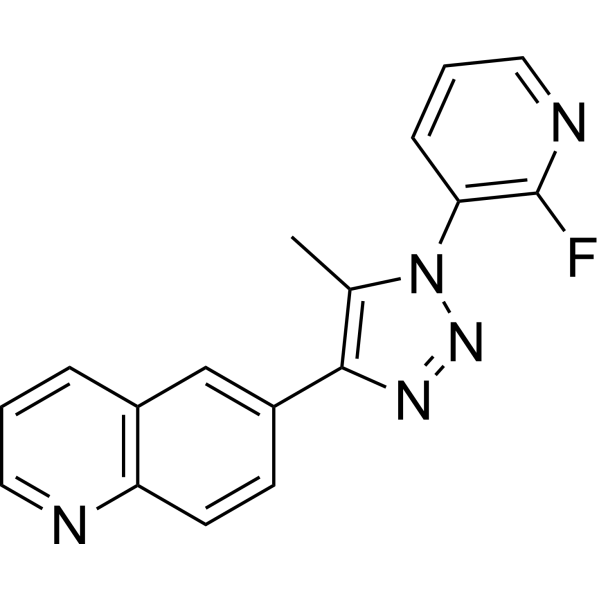
FPTQ
- CAS No.: 864863-72-9
- Formula:C17H12FN5
- Molecular Weight:305.31
IUPAC Name: 6-(1-(2-fluoropyridin-3-yl)-5-methyl-1H-1,2,3-triazol-4-yl)quinoline
InChIKey: RTUBNVSZHGWRCV-UHFFFAOYSA-N
SMILES: FC(N=CC=C1)=C1N2N=NC(C3=CC4=C(C=C3)N=CC=C4)=C2C
Biological Activity: FPTQ is potent mGluR1 antagonist with IC50 values of 6 nM and 1.4 nM for human and mouse mGluR1 respectively[1]. FPTQ has anti-oxidant and anti-inflammatory effects in vitro and in vivo[2].
| Cat. No. | Product Name | Purity | Description | Pricing | |||||||||||||||||||
|---|---|---|---|---|---|---|---|---|---|---|---|---|---|---|---|---|---|---|---|---|---|---|---|
|
|
FPTQ | 99.92% | FPTQ is potent mGluR1 antagonist with IC50 values of 6 nM and 1.4 nM for human and mouse mGluR1 respectively. FPTQ has anti-oxidant and anti-inflammatory effects in vitro and in vivo. | ||||||||||||||||||||
|
loading...
/
|
|||||||||||||||||||||||
|
|
FPTQ (Standard) | ≥98% | FPTQ (Standard) is the analytical standard of FPTQ (HY-100382). This product is intended for research and analytical applications. FPTQ is potent mGluR1 antagonist with IC50 values of 6 nM and 1.4 nM for human and mouse mGluR1 respectively. FPTQ has anti-oxidant and anti-inflammatory effects in vitro and in vivo. | ||||||||||||||||||||
|
loading...
/
|
|||||||||||||||||||||||
Structural Analogs
-
Similarity Score 0.62
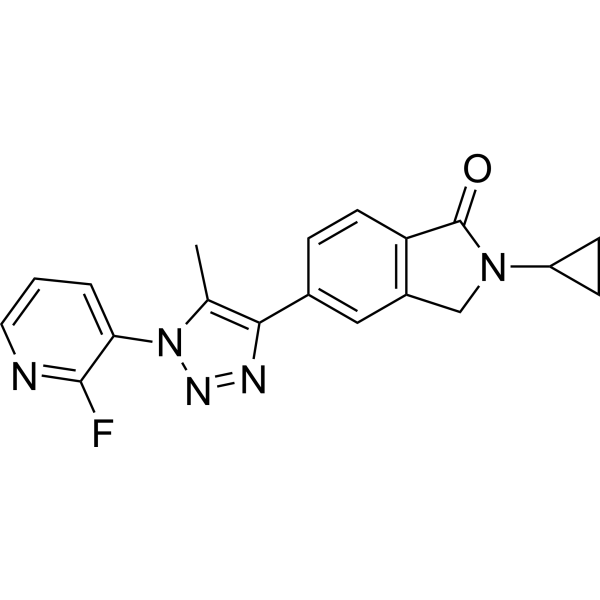 HY-100402CFMTI
-
Similarity Score 0.51
 HY-100404RDFMTI (Standard)
-
Similarity Score 0.51
 HY-133179Wnt/β-catenin-IN-4
-
Similarity Score 0.50
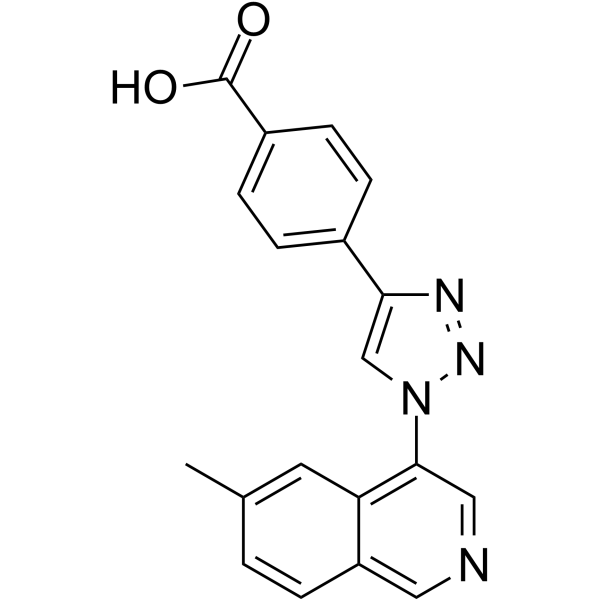 HY-151380LANA-DNA-IN-1
-
Similarity Score 0.49
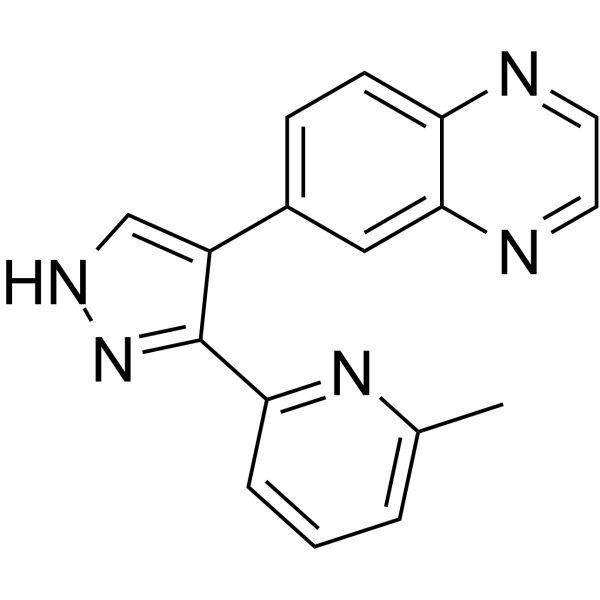 HY-118810BIO-013077-01
-
Similarity Score 0.49
 HY-133180YW1128
-
Similarity Score 0.49
 HY-W1125004-(1,10-Phenanthrolin-5-yl)benzoic acid
-
Similarity Score 0.48
 HY-W707119RepSox hydrochloride
-
Similarity Score 0.48
 HY-105418WIN-63291
-

Explore the MedChemAI to find more analogs


References
- [1]. Fujinaga M et al. Synthesis and evaluation of 6-[1-(2-[(18)F]fluoro-3-pyridyl)-5-methyl-1H-1,2,3-triazol-4-yl]quinoline for positron emission tomography imaging of the metabotropic glutamate receptor type 1 in brain. Bioorg Med Chem, 2011 Jan 1, 19(1):102-10. [Content Brief]
- [2]. Geum Ran Kim, et al. Anti-inflammatory effect of a novel synthetic compound 1-((4-fluorophenyl)thio)isoquinoline in RAW264.7 macrophages and a zebrafish model. Fish Shellfish Immunol. 2019 Apr;87:395-400. [Content Brief]



