



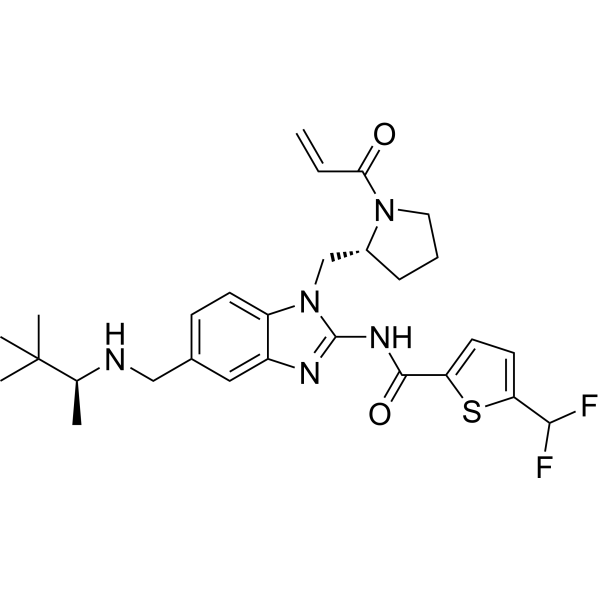
PRN694
Based on 3 publication(s) in Google Scholar
PRN694 is an irreversible, highly selective and potent covalent interleukin-2-inducible T-cell kinase (ITK) and resting lymphocyte kinase (RLK) dual inhibitor with IC50s of 0.3 nM and 1.4 nM, respectively. PRN694 exhibits extended target residence time on ITK and RLK, enabling durable attenuation of effector cells in vitro and in vivo.
Nur für Forschungszwecke. Wir verkaufen nicht an Patienten.
- Reinheit : ≥99.0%
- CAS. Nr.: 1575818-46-0
- Formel: C28H35F2N5O2S
- Molecular Weight:543.67
-
Speicherung:Powder -20°C, 3 years , 4°C, 2 years ; In solvent -80°C, 2 years , -20°C, 1 year

To place orders, for customer services and technical support, please contact: MedChemExpress USA
Tel: 609-228-6898 E-mail: [email protected] [email protected]


-
 Biologische Aktivität
-
Chemical Information
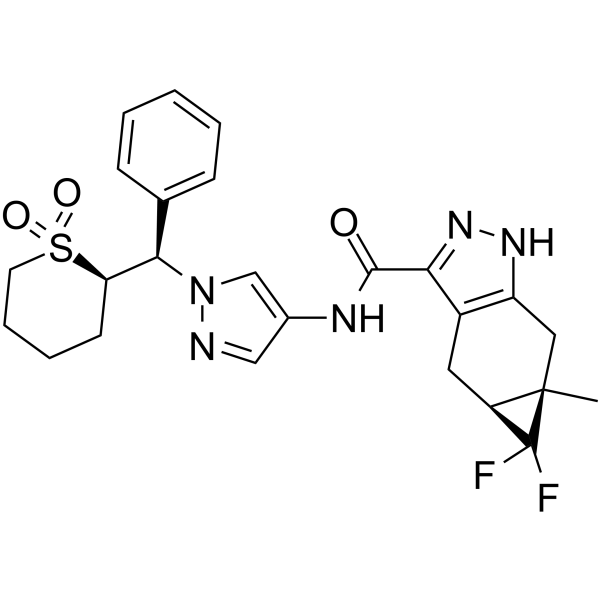
-
Lösungsmittel & Löslichkeit
- Reinheit & Dokumentation
- Verweise
-
 Help & FAQs


-
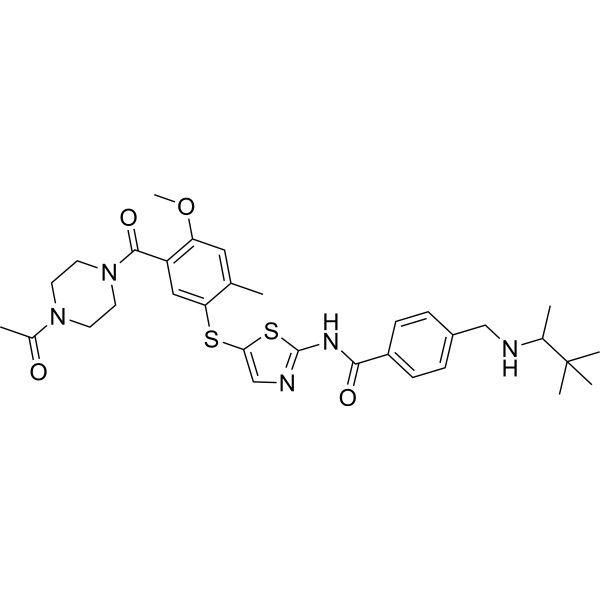
HY-11092
BMS-509744ITK Inhibitor -
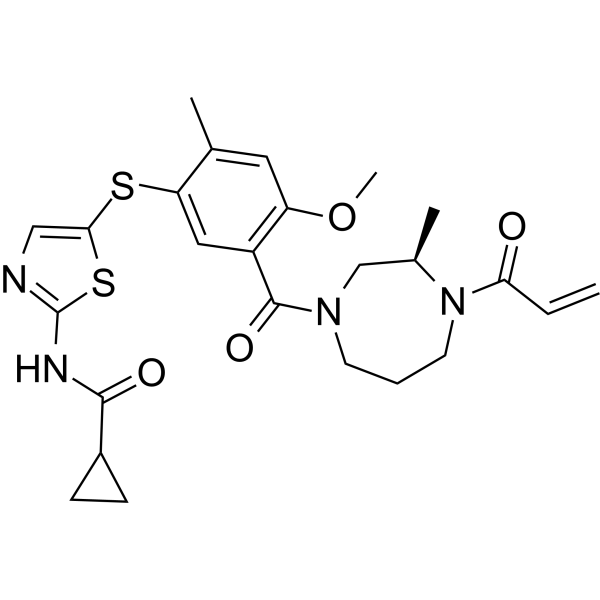
HY-150298
SoquelitinibITK Inhibitor -
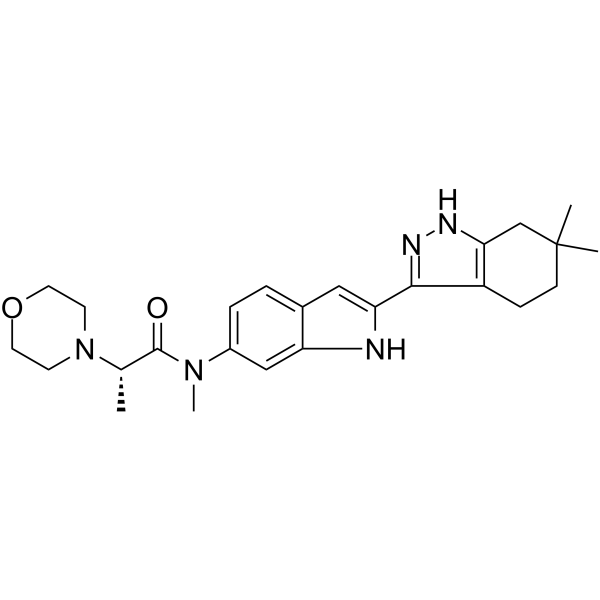
HY-128726
ITK inhibitor 2ITK Inhibitor -
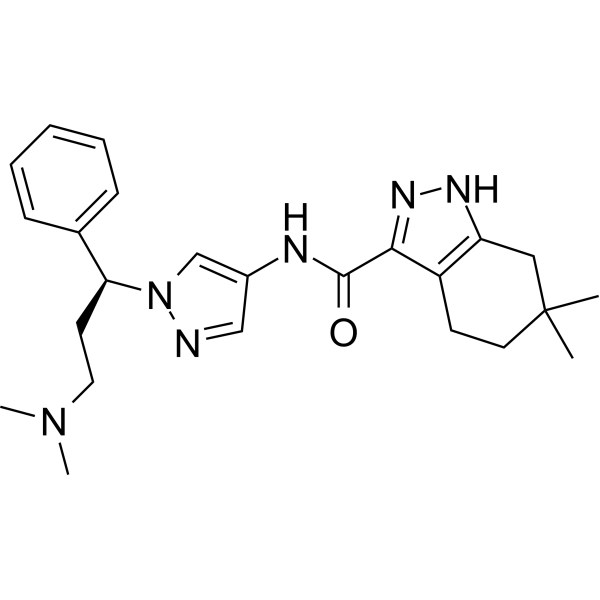
HY-12410
GNE-9822ITK Inhibitor -
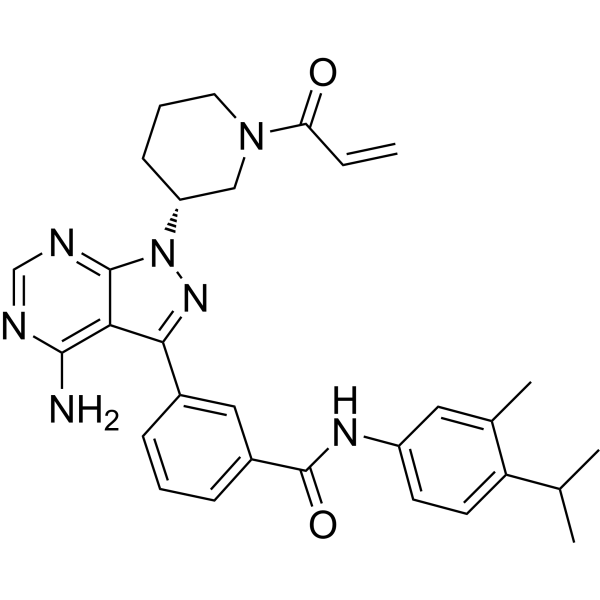
HY-108691
PF-06465469ITK Inhibitor -
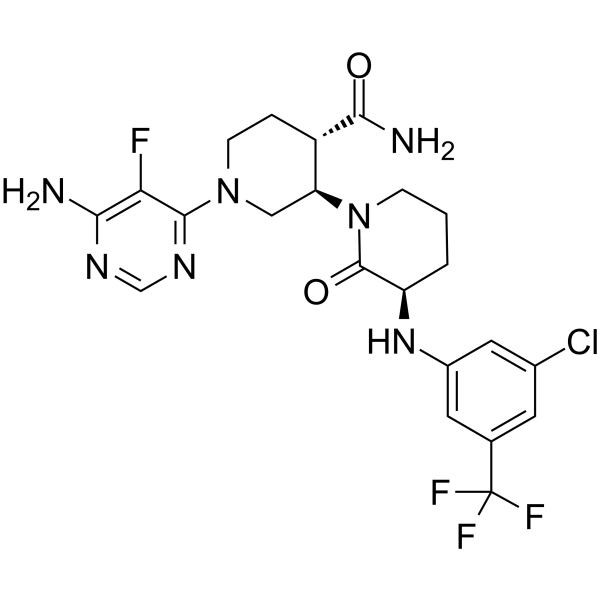
HY-109078
VecabrutinibBTK/ITK Inhibitor -
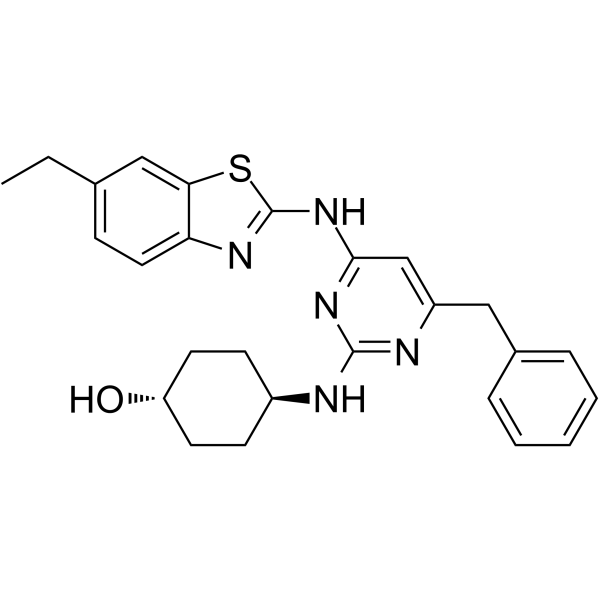
HY-120559
GSK-2250665AItk Inhibitor -
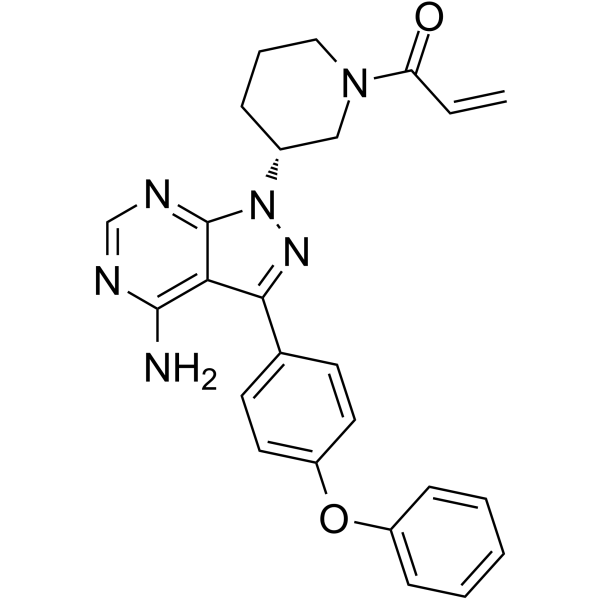
HY-10997
IbrutinibBtk Inhibitor -
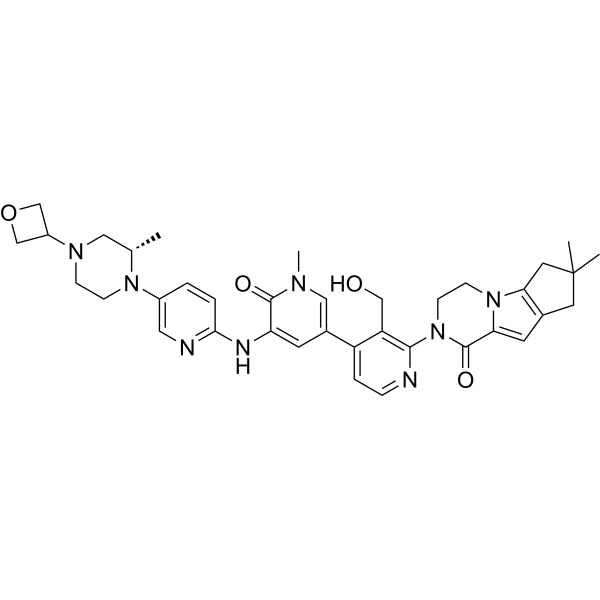
HY-19834
FenebrutinibBtk Inhibitor -
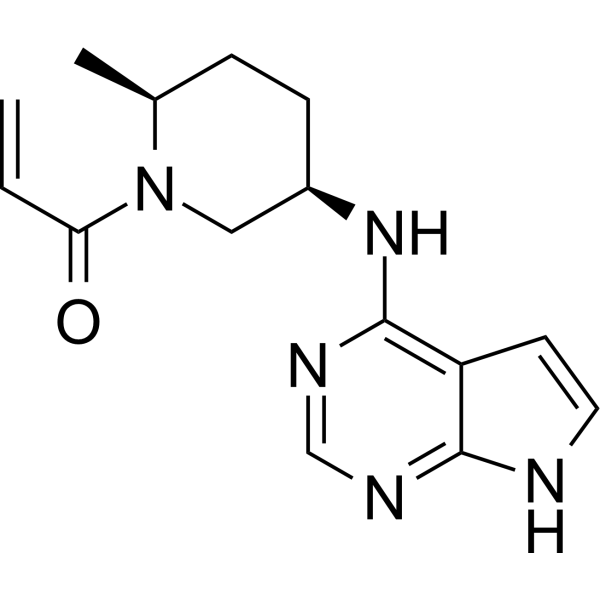
HY-100754
RitlecitinibJAK3 Inhibitor -
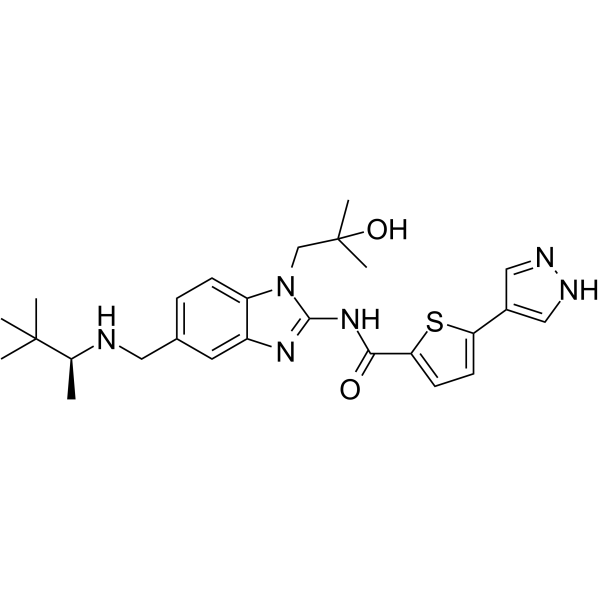
HY-13232
ITK antagonistITK Antagonist -
HY-16984
GNE-4997ITK Inhibitor
Publications Citing Use of MedChemExpress (MCE) PRN694
More

Biologische Aktivität
Beschreibung
IC50 & Target
IC50: 0.3 nM (ITK), 1.4 nM (RLK), 3.3 nM (TEC), 17 nM (BTK), 17 nM (BMX), 30 nM (JAK3), 125 nM (BLK)[1]
Cellular Effect
|
Cell Line

|
Type | Value | Description | References |
|---|---|---|---|---|
| Jurkat | EC50 |
157 nM
Compound: 9; PRN694
|
Inhibition of ITK in anti-CD3/CD28 beads-stimulated human Jurkat cells assessed as reduction in Plcgamma1 phosphorylation incubated for 2 hrs followed by stimulation with anti-CD3/CD28 beads by Western blot analysis
Inhibition of ITK in anti-CD3/CD28 beads-stimulated human Jurkat cells assessed as reduction in Plcgamma1 phosphorylation incubated for 2 hrs followed by stimulation with anti-CD3/CD28 beads by Western blot analysis
|
[PMID: 31830635] |
In Vitro
PRN694 inhibits TEC, BTK, BMX, BLK, JAK3 with IC50s of 3.3, 17, 17, 125, 30 nM, respectively[1].
Immunoblot analysis of TCR activation pathways reveales that PRN694 blocks activation or nuclear translocation of NFAT1, JunB, pIκBα, and pERK. Results reveal inhibition of Ca2+ signaling with PRN694 at all concentrations above 1 nM. PRN694 significantly attenuates NK cell FcR-induced killing at concentrations exceeding 0.37 μM[1].
Day 6 flow cytometry analysis reveals that PRN694 significantly inhibits the anti-CD3/CD28-induced proliferation of both CD4 and CD8 T-cells (p<0.01)[1].
MedChemExpress (MCE) has not independently confirmed the accuracy of these methods. They are for reference only.
In Vivo
Colitis studies show reduced numbers of CD4+ T cells present in the colonic epithelium of PRN694-treated mice compare with controls[2].
MedChemExpress (MCE) has not independently confirmed the accuracy of these methods. They are for reference only.


Chemical Information
-
CAS. Nr. 1575818-46-0
-
Appearance Solid
-
Molecular Weight 543.67
-
Formel C28H35F2N5O2S
-
Color Off-white to light brown
-
SMILES
O=C(C1=CC=C(C(F)F)S1)NC2=NC3=CC(CN[C@@H](C)C(C)(C)C)=CC=C3N2C[C@@H]4N(C(C=C)=O)CCC4
-
Versand
Room temperature in continental US; may vary elsewhere.
-
Speicherung
Powder -20°C 3 years 4°C 2 years In solvent -80°C 2 years -20°C 1 year


Publications (3)
-
Journal Impact Factor
-
Most Recent
-
Sci Signal
TNF-α signals through ITK-Akt-mTOR to drive CD4+ T cell metabolic reprogramming, which is dysregulated in rheumatoid arthritis. [Abstract]2024 Apr 23;17(833):eadg5678. PMID: 38652761 -
-


Lösungsmittel & Löslichkeit
In Vitro:
DMSO : 125 mg/mL (229.92 mM; Need ultrasonic and warming; Hygroscopic DMSO has a significant impact on the solubility of product, please use newly opened DMSO)
Please refer to the solubility information to select the appropriate solvent. Once prepared, please aliquot and store the solution to prevent product inactivation from repeated freeze-thaw cycles.
Storage method and period of stock solution: -80°C, 2 years; -20°C, 1 year. When stored at -80°C, please use it within 2 years. When stored at -20°C, please use it within 1 year.
Please refer to the solubility information to select the appropriate solvent. Once prepared, please aliquot and store the solution to prevent product inactivation from repeated freeze-thaw cycles.
Storage method and period of stock solution: -80°C, 2 years; -20°C, 1 year. When stored at -80°C, please use it within 2 years. When stored at -20°C, please use it within 1 year.
Konzentration (Stammlösung) × Volumen (Stammlösung) = Konzentration (Ziellösung) × Volumen (Ziellösung)
In Vivo:
Select the appropriate dissolution method based on your experimental animal and administration route.
- For the following dissolution methods, please ensure to first prepare a clear stock solution using an In Vitro approach and then sequentially add co-solvents:
- To ensure reliable experimental results, the clarified stock solution can be appropriately stored based on storage conditions. As for the working solution for In Vivo experiments, it is recommended to prepare freshly and use it on the same day.
- The percentages shown for the solvents indicate their volumetric ratio in the final prepared solution. If precipitation or phase separation occurs during preparation, heat and/or sonication can be used to aid dissolution.
Add each solvent one by one: 10% DMSO 40% PEG300 5% Tween-80 45% Saline
Solubility: ≥ 2.08 mg/mL (3.83 mM); Clear solution
This protocol yields a clear solution of ≥ 2.08 mg/mL (saturation unknown).
Taking 1 mL working solution as an example, add 100 μL DMSO stock solution (20.8 mg/mL) to 400 μL PEG300, and mix evenly; then add 50 μL Tween-80 and mix evenly; then add 450 μL Saline to adjust the volume to 1 mL.
Preparation of Saline: Dissolve 0.9 g sodium chloride in ddH₂O and dilute to 100 mL to obtain a clear Saline solution.
Add each solvent one by one: 10% DMSO 90% (20% SBE-β-CD in Saline)
Solubility: ≥ 2.08 mg/mL (3.83 mM); Clear solution
This protocol yields a clear solution of ≥ 2.08 mg/mL (saturation unknown).
Taking 1 mL working solution as an example, add 100 μL DMSO stock solution (20.8 mg/mL) to 900 μL 20% SBE-β-CD in Saline, and mix evenly.
Preparation of 20% SBE-β-CD in Saline (4°C, storage for one week): 2 g SBE-β-CD powder is dissolved in 10 mL Saline, completely dissolve until clear.
In Vivo Dissolution Calculator
Please enter the basic information of animal experiments:
-
-
-
-
Recommended: Prepare an additional quantity of animals to account for potential losses during experiments.
Please enter your animal formula composition:
-
%DMSO +
Recommended: Keep the proportion of DMSO in working solution below 2% if your animal is weak.
-
%+
-
+%Tween-80 + +
-
%Saline +
The co-solvents required include: DMSO, . All of co-solvents are available by MedChemExpress (MCE). , Tween 80. All of co-solvents are available by MedChemExpress (MCE).
Working solution concentration: 0.22 mg/mL
Method for preparing stock solution: mg drug dissolved in μL DMSO. Stock solution concentration: mg/mL.
1. Take μL DMSO stock solution;
2. Add μL .
μL , mix evenly;
3. Then add μL Tween 80, mix evenly;
4. Then add μL
Please ensure that the stock solution in the first step is dissolved to a clear state, and add co-solvents in sequence. You can use ultrasonic heating (ultrasonic cleaner, recommended frequency 20-40 kHz), vortexing, etc. to assist dissolution.


Reinheit & Dokumentation
-
Data Sheet (280 KB)
-
SDS (393 KB)
- English - EN (393 KB)
- Français - FR (393 KB)
- Deutsch - DE (393 KB)
- Norwegian - NO (393 KB)
- Español - ES (393 KB)
- Swedish - SV (393 KB)
- Italian - IT (393 KB)
- Korean - KR (393 KB)
- Portuguese - PT (393 KB)
-
Handling Instructions (2659 KB)
Verweise
[1]. Zhong Y, et al. Targeting interleukin-2-inducible T-cell kinase (ITK) and resting lymphocyte kinase (RLK) using a novel covalent inhibitor PRN694. J Biol Chem. 2015 Mar 6;290(10):5960-78. [Content Brief]
[2]. Cho HS, et al. A Small Molecule Inhibitor of ITK and RLK Impairs Th1 Differentiation and Prevents Colitis Disease Progression. J Immunol. 2015 Nov 15;195(10):4822-31. [Content Brief]


Complete Stock Solution Preparation Table
Please refer to the solubility information to select the appropriate solvent. Once prepared, please aliquot and store the solution to prevent product inactivation from repeated freeze-thaw cycles.
Storage method and period of stock solution: -80°C, 2 years; -20°C, 1 year. When stored at -80°C, please use it within 2 years. When stored at -20°C, please use it within 1 year.
| Optional Solvent | Concentration Solvent Mass | 1 mg | 5 mg | 10 mg | 25 mg |
|---|---|---|---|---|---|
| DMSO | 1 mM | 1.8394 mL | 9.1968 mL | 18.3935 mL | 45.9838 mL |
| 5 mM | 0.3679 mL | 1.8394 mL | 3.6787 mL | 9.1968 mL | |
| 10 mM | 0.1839 mL | 0.9197 mL | 1.8394 mL | 4.5984 mL | |
| 15 mM | 0.1226 mL | 0.6131 mL | 1.2262 mL | 3.0656 mL | |
| 20 mM | 0.0920 mL | 0.4598 mL | 0.9197 mL | 2.2992 mL | |
| 25 mM | 0.0736 mL | 0.3679 mL | 0.7357 mL | 1.8394 mL | |
| 30 mM | 0.0613 mL | 0.3066 mL | 0.6131 mL | 1.5328 mL | |
| 40 mM | 0.0460 mL | 0.2299 mL | 0.4598 mL | 1.1496 mL | |
| 50 mM | 0.0368 mL | 0.1839 mL | 0.3679 mL | 0.9197 mL | |
| 60 mM | 0.0307 mL | 0.1533 mL | 0.3066 mL | 0.7664 mL | |
| 80 mM | 0.0230 mL | 0.1150 mL | 0.2299 mL | 0.5748 mL | |
| 100 mM | 0.0184 mL | 0.0920 mL | 0.1839 mL | 0.4598 mL |


PRN694 Related Classifications
HY-12680 Related Classifications
 Powered by Bioz