



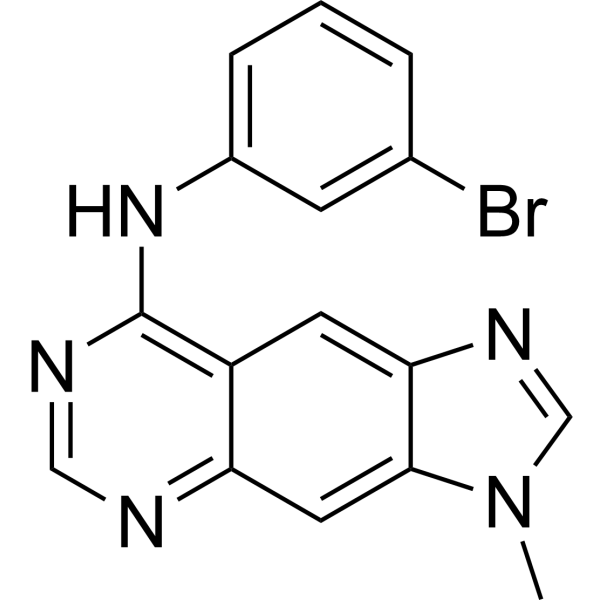
BPIQ-I
BPIQ-I (PD 159121) is a potent and ATP-competitive EGFR tyrosine kinase inhibitor.. BPIQ-I shows anti-proliferative actively.
Nur für Forschungszwecke. Wir verkaufen nicht an Patienten.
- CAS. Nr.: 174709-30-9
- Formel: C16H12BrN5
- Molecular Weight:354.20
-
Speicherung:
Please store the product under the recommended conditions in the Certificate of Analysis.

To place orders, for customer services and technical support, please contact: MedChemExpress USA
Tel: 609-228-6898 E-mail: [email protected] [email protected]


-
 Biologische Aktivität
-
Chemical Information
- Protokoll
- Reinheit & Dokumentation
- Verweise
-
 Help & FAQs


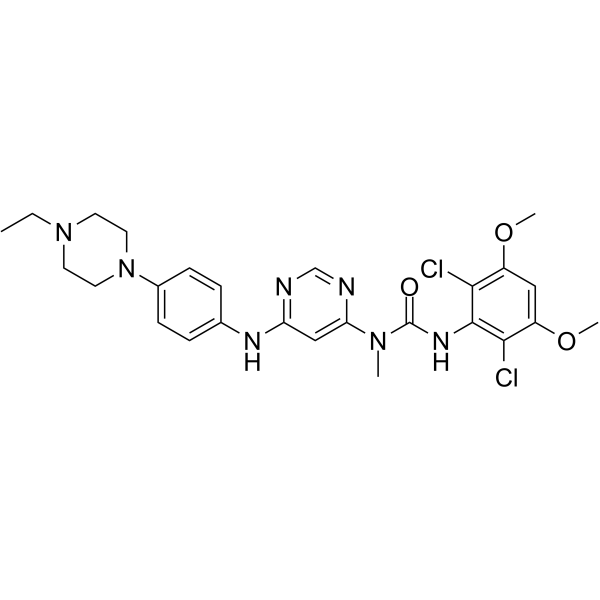

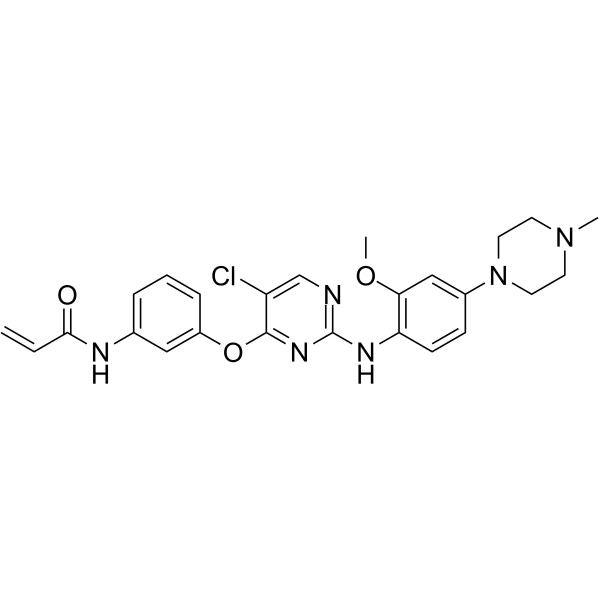
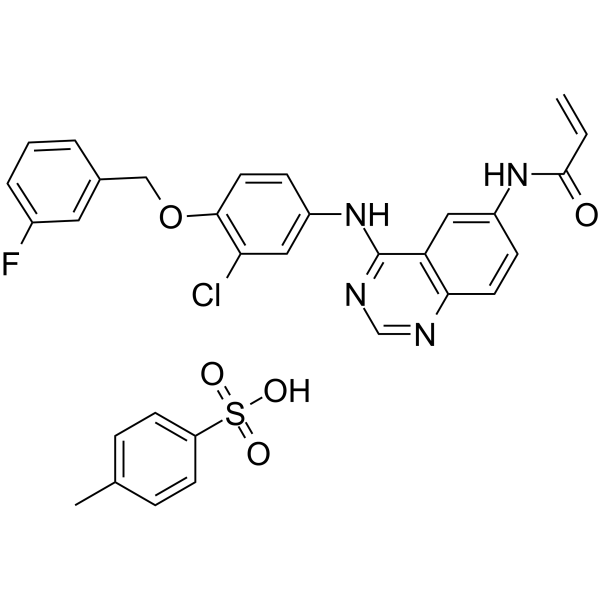

Alle EGFR Isoform-spezifische Produkte anzeigen
More

Biologische Aktivität
Beschreibung
Cellular Effect
|
Cell Line

|
Type | Value | Description | References |
|---|---|---|---|---|
| A-431 | IC50 |
0.025 nM
Compound: 12
|
Inhibition of tyrosine kinase activity of Epidermal growth factor receptor from human A431 carcinoma cells
Inhibition of tyrosine kinase activity of Epidermal growth factor receptor from human A431 carcinoma cells
|
[PMID: 8632415] |
In Vitro
BPIQ-I (0-50 µM; 3 days) shows antiproliferative activity with EC50s of >50, 30, >50, 6.5, >50 µM for A-431, MDA-MB-468, U-87, SKOV-3, MDAMB-231 cells, respectively[1].
BPIQ-I (10 nM) blocks erbB RTKs by competing with ATP, eliminating the CO2 sensitivity[2].
MedChemExpress (MCE) has not independently confirmed the accuracy of these methods. They are for reference only. Further protocols information, click here.
-
Cell Line:A-431, MDA-MB-468, U-87, SKOV-3, MDAMB-231 cells
-
Concentration:0-50 µM
-
Incubation Time:3 days
-
Result:Inhibited cells growth with EC50s of >50, 30, >50, 6.5, >50 µM for A-431, MDA-MB-468, U-87, SKOV-3, MDAMB-231 cells, respectively.


Chemical Information
-
CAS. Nr. 174709-30-9
-
Molecular Weight 354.20
-
Formel C16H12BrN5
-
SMILES
CN1C=NC2=CC3=C(NC4=CC=CC(Br)=C4)N=CN=C3C=C21
-
Synonyms
PD 159121
-
Versand
Room temperature in continental US; may vary elsewhere.
-
Speicherung
Please store the product under the recommended conditions in the Certificate of Analysis.

Protokoll
-
Cell Viability Determination by MTT Colorimetric Assay
The following protocol uses the MTT colorimetric assay as a classic literature-established method for assessing cell viability/metabolic activity in cultured mammalian cells. MTT[3-(4,5-dimethylthiazol-2-yl)-2,5-diphenyltetrazolium bromide] is reduced by metabolically active cells to a colored formazan product; the amount of formazan is quantified spectrophotometrically and provides an indirect measure of metabolically active viable cells. Importantly, MTT reduction reflects cellular oxidoreductase/metabolic activity rather than an absolute direct count of living cells, so changes in cellular metabolism can alter the signal independently of cell number.


Reinheit & Dokumentation
Verweise
[1]. Rae JM, et al. Evaluation of novel epidermal growth factor receptor tyrosine kinase inhibitors. Breast Cancer Res Treat. 2004 Jan;83(2):99-107. [Content Brief]
[2]. Zhou Y, et al. Role of a tyrosine kinase in the CO2-induced stimulation of HCO3- reabsorption by rabbit S2 proximal tubules. Am J Physiol Renal Physiol. 2006 Aug;291(2):F358-67. [Content Brief]

Calculators
Konzentration (Stammlösung) × Volumen (Stammlösung) = Konzentration (Ziellösung) × Volumen (Ziellösung)


BPIQ-I Related Classifications
HY-112405 Related Classifications
 Powered by Bioz