



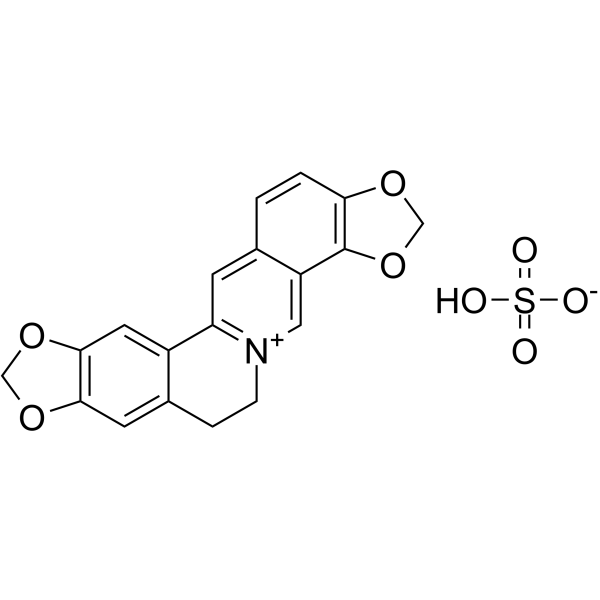
Coptisine Sulfate
Based on 5 publication(s) in Google Scholar
Coptisine Sulfate is an orally active and brain-penetrant alkaloid found in Coptis chinensis. Coptisine Sulfate is a reversible, uncompetitive IDO inhibitor with a Ki of 5.8 μM and an IC50 of 6.3 μM. Coptisine Sulfate suppresses neuroinflammation, reduces Aβ plaque burden and shows neuroprotective activity. Coptisine Sulfate shows anti-inflammation activity by blocking NF-κB, MAPK, and PI3K/Akt activation. Coptisine Sulfate inhibits cancer cells proliferation, induces DNA damage, G2/M phase cell cycle arrest, apoptosis, ROS production and mitochondrial dysfunction. Coptisine Sulfate inhibits Rho/ROCK pathway activation, reduces arrhythmia, limits cardiac injury marker release, reduces infarct size, and preserves cardiac function in rat myocardial ischemia/reperfusion models. Coptisine Sulfate downregulates HMGCR and upregulates LDLR and CYP7A1 to modulate cholesterol metabolism, reduces abnormal serum lipid levels, and promotes fecal bile acid excretion. Coptisine Sulfate be used for the research of cancer, hypercholesterolemia, Alzheimer’s disease, inflammatory disorders and cardiovascular disease.
Nur für Forschungszwecke. Wir verkaufen nicht an Patienten.
- Reinheit: 99.37%
- CAS. Nr.: 1198398-71-8
- Formel: C19H15NO8S
- Molecular Weight:417.39
-
Speicherung:
4°C, sealed storage, away from moisture and light
* In solvent : -80°C, 6 months; -20°C, 1 month (sealed storage, away from moisture and light)

To place orders, for customer services and technical support, please contact: MedChemExpress USA
Tel: 609-228-6898 E-mail: [email protected] [email protected]


-
 Biologische Aktivität
-
Chemical Information
-
Lösungsmittel & Löslichkeit
- Reinheit & Dokumentation
- Verweise
-
 Help & FAQs
-

Apoptosis Compound Library
HY-L003
-
Cell Cycle/DNA Damage Compound Library
HY-L004
-
Immunology/Inflammation Compound Library
HY-L007
-
Kinase Inhibitor Library
HY-L009
-
MAPK Compound Library
HY-L010
-
Metabolism/Protease Compound Library
HY-L012
-
NF-κB Signaling Compound Library
HY-L014
-
PI3K/Akt/mTOR Compound Library
HY-L015
-
Stem Cell Signaling Compound Library
HY-L017
-
TGF-beta/Smad Compound Library
HY-L018
-
Natural Product Library
HY-L021
-
Anti-Cancer Compound Library
HY-L025
-
CNS-Penetrant Compound Library
HY-L028
-
Autophagy Compound Library
HY-L029
-
Small Molecule Immuno-Oncology Compound Library
HY-L031
-
Anti-Aging Compound Library
HY-L034
-
Antioxidant Compound Library
HY-L037
-
Differentiation Inducing Compound Library
HY-L038
-
Reprogramming Compound Library
HY-L039
-
Oxygen Sensing Compound Library
HY-L045
-
Anti-Cardiovascular Disease Compound Library
HY-L046
-
Medicine Food Homology Compound Library
HY-L055
-
Glycolysis Compound Library
HY-L058
-
Pyroptosis Compound Library
HY-L059
-
Cytoskeleton Compound Library
HY-L060
-
Orally Active Compound Library
HY-L061
-
Glutamine Metabolism Compound Library
HY-L064
-
Traditional Chinese Medicine Active Compound Library
HY-L065
-
Anti-Alzheimer's Disease Compound Library
HY-L069
-
Neuroprotective Compound Library
HY-L070
-
Alkaloids Library
HY-L071
-
Anti-Breast Cancer Compound Library
HY-L074
-
Anti-Lung Cancer Compound Library
HY-L075
-
Anti-Pancreatic Cancer Compound Library
HY-L077
-
Anti-Blood Cancer Compound Library
HY-L079
-
Anti-Cancer Metabolism Compound Library
HY-L083
-
Neurodegenerative Disease-related Compound Library
HY-L086
-
Anti-Obesity Compound Library
HY-L087
-
Angiogenesis-Related Compound Library
HY-L088
-
Mitochondria-Targeted Compound Library
HY-L089
-
Transcription Factor-Targeted Library
HY-L090
-
Glucose Metabolism Compound Library
HY-L092
-
Anti-Liver Cancer Compound Library
HY-L101
-
Anti-Colorectal Cancer Compound Library
HY-L103
-
Anti-Cancer Natural Product Library
HY-L107
-
Antidepressant Compound Library
HY-L108
-
Anti-inflammatory Traditional Chinese Medicine Active Compound Library
HY-L114
-
Plant-Sourced Natural Product Library
HY-L115
-
Anti-Prostate Cancer Compound Library
HY-L124
-
Anti-Pulmonary Fibrosis Compound Library
HY-L125
-
Cuproptosis Compound Library
HY-L133
-
Cancer Stem Cells Compound Library
HY-L135
-
Pain-Related Compound Library
HY-L139
-
Metabolic Enzyme Compound Library
HY-L146
-
Membrane Protein-targeted Compound Library
HY-L149
-
Cell Death Library
HY-L162
-
Serine/Threonine Kinase Inhibitor Library
HY-L164
-
Extracellular Vesicles (EVs) Compound Library
HY-L168
-
Anti-Hematopathy Compound Library
HY-L171
-
Anti-Ovarian Cancer Compound Library
HY-L173
-
Multi-Target Compound Library
HY-L176
-
Radioprotector Library
HY-L178
-
Bioactive Compound Library Max
HY-L181
-
MCE Bioactive Compound Library
HY-L001V
-
Natural Product Library Plus
HY-L021P
-
Natural Product and Natural Product-Like Compound Library
HY-L021M
-
Bioactive Compound Library
HY-L001
-
Anti-Gastric Cancer Compound Library
HY-L184
-
Anti-Fibrosis Compound Library
HY-L185
-
Anti-Brain Cancer Compound Library
HY-L188
-
Miao Ethnicity Medicine Compound Library
HY-L190
-
Tibetan Medicine Compound Library
HY-L191
-
PBCRBS Traditional Chinese Medicine Compound Library
HY-L193
-
Heat-Clearing and Detoxification Traditional Chinese Medicine Compound Library
HY-L194
-
Protein Kinase Compound Library
HY-L196
-
Non-Alcoholic Fatty Liver Disease (NAFLD) Compound Library
HY-L199
-
RO5 Drug-like Natural Product Library
HY-L200
-
Cell Proliferation Compound Library
HY-L201
-
High-Throughput Bioactive Compound Library
HY-L205
-
High-Throughput Natural Product Library
HY-L206
-
Ancient Chinese Classical Formulas Traditional Chinese Medicine Active Compound Library
HY-L209
-
Anti-Rheumatic Arthritis Compound Library
HY-L210
-
Antitussive and Antiasthmatic Traditional Chinese Medicine Active Compound Library
HY-L223
-
Diarrhea-Related Traditional Chinese Medicine Active Compound Library
HY-L224
-
Mongolian Medicine Compound Library
HY-L238
-
Natural Product Diversity Scaffold Library
HY-L245
-
Tonifying Traditional Chinese Medicine Monomer Compound Library
HY-L246
-
RNA Binding Bioactive Compound Library
HY-L248
-
Lactylation Compound Library
HY-L249
-
Mass Spectrometry Natural Product Library
HY-L262


Publications Citing Use of MedChemExpress (MCE) Coptisine Sulfate
MoreAlle DNA/RNA Synthesis Isoform-spezifische Produkte anzeigen
More

Biologische Aktivität
IC50: 6.3 μM (IDO)[1]
Ki: 5.8 μM (IDO)[1]
Coptisine (0.1-100 μM; 48 h) Sulfate potently inhibits proliferation of human lung adenocarcinoma A5499, H460,
and H2170 cells (IC50 = 18.09, 29.50, and 21.60 μM) Sulfate and other tested human cancer cell lines, with moderate selectivity relative to normal human umbilical vein endothelial cells[1].
Coptisine (12.5-50 μM; 48 h) Sulfate induces concentration-dependent DNA damage in human lung adenocarcinoma A549 cells, as shown by increased γH2AX expression[1].
Coptisine (12.5-50 μM; 48 h) Sulfate induces concentration-dependent G2/M phase cell cycle arrest in human lung adenocarcinoma A549 cells, mediated by downregulated cyclin B1, cdc2, and cdc25C expression and upregulated p21 expression[1].
Coptisine (12.5-50 μM; 48 h) Sulfate induces concentration-dependent apoptosis in human lung adenocarcinoma A549 cells, inducing concentration-dependent activation of caspase 3/7, caspase 8, caspase 9, and cleavage of PARP[1].
Coptisine (12.5-50 μM; 0.5-24 h) Sulfate induces time- and concentration-dependent reactive oxygen species generation in human lung adenocarcinoma A549 cells[1].
Coptisine (12.5-50 μM; 24 h) Sulfate induces concentration-dependent mitochondrial dysfunction in human lung adenocarcinoma A549 cells, including loss of mitochondrial membrane potential and altered Bax, Bcl-2, and cytochrome c expression[1].
Coptisine Sulfate potently inhibits recombinant human IDO as a reversible, uncompetitive inhibitor with a Ki of 5.8 μM and an IC50 of 6.3 μM[4].
Coptisine Sulfate inhibits IDO activity in HEK 293 cells with an IC50 of 7.1 μM[4].
Coptisine (10 μM; 5 h pre-incubation) Sulfate reverses amyloid-β peptide 1-42 and interferon-γ-induced IDO activation and restores cell viability in PC12 cells[4].
Coptisine Sulfate inhibits LPS (HY-D1056)-stimulated inflammation by blocking NF-κB, MAPK, and PI3K/Akt activation in
macrophages[5].
MedChemExpress (MCE) has not independently confirmed the accuracy of these methods. They are for reference only.
-
Cell Line:human lung adenocarcinoma A549
-
Concentration:12.5, 25, 50 μM
-
Incubation Time:48 h
-
Result:Caused a concentration-dependent upregulation of pH2AX, a marker of DNA double-strand breaks, relative to untreated control cells.
Coptisine (23.35-70.05 mg/kg/day; i.g.; daily; 4 weeks) Sulfate dose-dependently improves hypercholesterolemia in HFHC-fed Syrian golden hamsters[3].
Coptisine (482.5-1728 mg/kg; p.o.; single dose) has low acute toxicity in Kunming mice, with an LD50 of 880.18 mg/kg following a single oral dose[3].
Coptisine (154 mg/kg/day; p.o.; daily; 90 days) Sulfate is well-tolerated in SD rats with no observable toxicity via daily oral administration for 90 days[3].
Coptisine (50 mg/kg; p.o.; once daily; 1 month) normalizes serum IDO activity, suppresses neuroinflammation, reduces Aβ plaque burden, restores neuronal integrity, and completely reverses cognitive impairment in A-PPswe/PS1ΔE9 transgenic Alzheimer's disease mice[4].
Coptisine Sulfate attenuates obesity-related inflammation through LPS/TLR-4-mediated signaling pathway in Syrian golden hamsters[5].
MedChemExpress (MCE) has not independently confirmed the accuracy of these methods. They are for reference only.
-
Animal Model:Sprague-Dawley (male, 280±20 g, left anterior descending coronary artery occlusion for 30 min followed by reperfusion)[2]
-
Dosage:3 mg/kg; 10 mg/kg; 30 mg/kg
-
Administration:p.o.; single dose 10 min before ischemia, plus an additional dose 4 h after reperfusion (24 h reperfusion studies); single dose 10 min before ischemia (3 h reperfusion studies)
-
Result:Significantly decreased I/R-induced arrhythmia score and reduced incidence of premature ventricular complexes and ventricular tachycardia.
Significantly reduced infarct size compared with I/R controls.
Significantly reduced serum levels of aspartate transaminase, lactate dehydrogenase, and creatine kinase-MB compared with I/R controls.
Significantly attenuated I/R-induced reductions in left ventricular ejection fraction and fractional shortening at 24 h post-reperfusion.
Significantly reduced the percentage of TUNEL-positive apoptotic cardiomyocytes, dose-dependently decreased cleaved caspase-3 expression, and upregulated Bcl-2 protein expression compared with I/R controls.
Reduced DNA fragmentation indicative of apoptosis.
Significantly decreased heart tissue levels of proinflammatory cytokines IL-1β, IL-6, and TNF-α, inhibited NF-κB p65 translocation from cytoplasm to nucleus, reduced Rho, ROCK1, and ROCK2 protein expression, and attenuated phosphorylation of myosin phosphatase targeting subunit-1 compared with I/R controls.
-
Animal Model:Syrian golden hamsters (male, 4-week-old, 100±5 g, HFHC diet-induced hypercholesterolemia)[3]
-
Dosage:23.35 mg/kg/day; 46.7 mg/kg/day; 70.05 mg/kg/day
-
Administration:I.g.; daily; 4 weeks
-
Result:Reduced serum total cholesterol (TC) by 10.9% and increased fecal cholesterol by 29% at 23.35 mg/kg.
Reduced serum TC by 24.3% and low-density lipoprotein cholesterol (LDL-c) by 20.0%, increased high-density lipoprotein cholesterol (HDL-c) by 24.8%, increased fecal cholesterol by 44% and fecal total bile acids (TBA) by 31.6% at 46.7 mg/kg.
Reduced serum TC by 26.7%, LDL-c by 22.2%, and triglycerides (TG) by 15.4%, increased HDL-c by 41.7%, increased fecal cholesterol by 51.5% and fecal TBA by 61.4% at 70.05 mg/kg.
Reduced body weight by 9.2% at 70.05 mg/kg/day after 33 days of treatment versus HFHC group.
Suppressed liver Hmgcr mRNA expression, increased liver Ldlr mRNA expression by 8.5-fold, 9.78-fold, and 11-fold, increased liver Cyp7a1 mRNA expression (21% increase at 70.05 mg/kg), and increased liver Srebp-2 mRNA expression across all doses versus HFHC group.
Reduced liver HMGCR protein expression by 16.4%, increased liver SREBP-2, LDLR, and CYP7A1 protein expression by 46.0%, 51.9%, and 107% at 70.05 mg/kg versus HFHC group.
Increased liver LDLR protein expression by 30.7% and CYP7A1 protein expression at 46.7 mg/kg versus HFHC group.
-
Animal Model:B6C3-Tg (APPswe, PSEN1dE9)85Dbo/J (A-PPswe/PS1ΔE9) (8-month-old male)[4]
-
Dosage:50 mg/kg
-
Administration:p.o.; once daily; 1 month
-
Result:Reduced escape latency to levels indistinguishable from wild-type mice.
Showed significantly shorter latency to first target crossing, increased number of target platform crossings, and increased time spent in the target quadrant, with performance matching wild-type mice.
Normalized serum IDO activity (measured by kynurenine/tryptophan ratio) to wild-type levels, without altering IDO mRNA or protein expression in brain tissue.
Reduced brain expression of GFAP (astrocytic activation marker) and CD11b (microglial activation marker) to wild-type levels.
Restored hippocampal MAP2 (neuronal marker) immunoreactivity in the CA1 region, which was reduced in AD control mice.
Significantly reduced hippocampal Aβ1-42 plaque burden to near wild-type levels.


Chemical Information
-
CAS. Nr. 1198398-71-8
-
Appearance Solid
-
Molecular Weight 417.39
-
Formel C19H15NO8S
-
Color Yellow to orange
-
SMILES
O=S(O)([O-])=O.C1(C(CC[N+]2=C1C=C(C=C3)C(C4=C3OCO4)=C2)=C5)=CC6=C5OCO6
-
Structure Classification
-
Initial Source
-
Versand
Room temperature in continental US; may vary elsewhere.
-
Speicherung
4°C, sealed storage, away from moisture and light
* In solvent : -80°C, 6 months; -20°C, 1 month (sealed storage, away from moisture and light)


Publications (5)
-
Journal Impact Factor
-
Most Recent
-
-
DNA Cell Biol
Coptisine Blocks Secretion of Exosomal circCCT3 from Cancer-Associated Fibroblasts to Reprogram Glucose Metabolism in Hepatocellular Carcinoma. [Abstract]2020 Oct 2. PMID: 33001706 -
Biochem Biophys Res Commun
2026 Mar 26:806:153415. PMID: 41662796 -
-
J Oncol
Pseudogene MSTO2P Interacts with miR-128-3p to Regulate Coptisine Sensitivity of Non-Small-Cell Lung Cancer (NSCLC) through TGF- β Signaling and VEGFC. [Abstract]2022 Jun 26:2022:9864411. PMID: 35794983


Lösungsmittel & Löslichkeit
H2O : 2 mg/mL (4.79 mM; ultrasonic and warming and heat to 60°C)
DMSO : 1 mg/mL (2.40 mM; ultrasonic and warming and heat to 60°C; Hygroscopic DMSO has a significant impact on the solubility of product, please use newly opened DMSO)
Please refer to the solubility information to select the appropriate solvent. Once prepared, please aliquot and store the solution to prevent product inactivation from repeated freeze-thaw cycles.
Storage method and period of stock solution: -80°C, 6 months; -20°C, 1 month (sealed storage, away from moisture and light). When stored at -80°C, please use it within 6 months. When stored at -20°C, please use it within 1 month.
* Note: If you choose water as the stock solution, please dilute it to the working solution, then filter and sterilize it with a 0.22 μm filter before use.
Please refer to the solubility information to select the appropriate solvent. Once prepared, please aliquot and store the solution to prevent product inactivation from repeated freeze-thaw cycles.
Storage method and period of stock solution: -80°C, 6 months; -20°C, 1 month (sealed storage, away from moisture and light). When stored at -80°C, please use it within 6 months. When stored at -20°C, please use it within 1 month.
* Note: If you choose water as the stock solution, please dilute it to the working solution, then filter and sterilize it with a 0.22 μm filter before use.
Konzentration (Stammlösung) × Volumen (Stammlösung) = Konzentration (Ziellösung) × Volumen (Ziellösung)


Reinheit & Dokumentation
-
Data Sheet (288 KB)
-
SDS (252 KB)
- English - EN (252 KB)
- Français - FR (252 KB)
- Deutsch - DE (252 KB)
- Norwegian - NO (252 KB)
- Español - ES (252 KB)
- Swedish - SV (252 KB)
- Italian - IT (252 KB)
- Korean - KR (252 KB)
- Portuguese - PT (252 KB)
-
Handling Instructions (2659 KB)
Verweise
[1]. Rao PC, et al. Coptisine-induced cell cycle arrest at G2/M phase and reactive oxygen species-dependent mitochondria-mediated apoptosis in non-small-cell lung cancer A549 cells. Tumour Biol. 2017;39(3):1010428317694565. [Content Brief]
[2]. Guo J, et al. Coptisine protects rat heart against myocardial ischemia/reperfusion injury by suppressing myocardial apoptosis and inflammation. Atherosclerosis. 2013;231(2):384-391. [Content Brief]
[3]. He K, et al. The safety and anti-hypercholesterolemic effect of coptisine in Syrian golden hamsters. Lipids. 2015;50(2):185-194. [Content Brief]
[4]. Yu D, et al. The IDO inhibitor coptisine ameliorates cognitive impairment in a mouse model of Alzheimer's disease. J Alzheimers Dis. 2015;43(1):291-302. [Content Brief]
[5]. Chen HB, et al. Anti-inflammatory activity of coptisine free base in mice through inhibition of NF-κB and MAPK signaling pathways. Eur J Pharmacol. 2017;811:222-231. [Content Brief]


Complete Stock Solution Preparation Table
Please refer to the solubility information to select the appropriate solvent. Once prepared, please aliquot and store the solution to prevent product inactivation from repeated freeze-thaw cycles.
Storage method and period of stock solution: -80°C, 6 months; -20°C, 1 month (sealed storage, away from moisture and light). When stored at -80°C, please use it within 6 months. When stored at -20°C, please use it within 1 month.
| Optional Solvent | Concentration Solvent Mass | 1 mg | 5 mg | 10 mg | 25 mg |
|---|---|---|---|---|---|
| DMSO / H2O | 1 mM | 2.3958 mL | 11.9792 mL | 23.9584 mL | 59.8960 mL |
* Note: If you choose water as the stock solution, please dilute it to the working solution, then filter and sterilize it with a 0.22 μm filter before use.


Coptisine Sulfate Related Classifications
HY-N0430A Related Classifications
 Powered by Bioz