



Semustine
Based on 1 publication(s) in Google Scholar
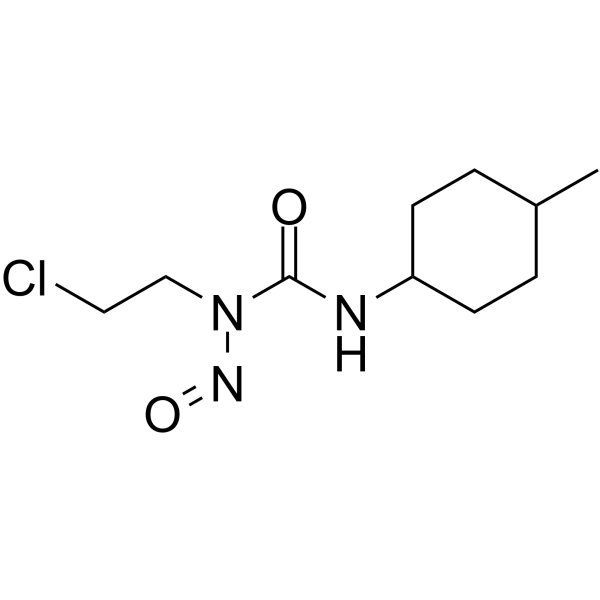
Semustine is an orally active, blood-brain barrier permeable antitumor alkylating agent with a binding affinity of 1.53 × 10³ M-1 for guanine and thymine residues in bovine DNA. Semustine undergoes major groove-directed alkylation at guanine residues to form O6-chloroethylguanine and N1-O6-ethanoguanine adducts, and generates dG-dC interstrand crosslinks. Semustine induces partial B- to C-type transition of DNA, base stacking and helical structure distortion, mild dehydration, as well as partial DNA double-strand unwinding. Semustine can be used in research related to Lewis lung cancer, leukemia, Hodgkin's lymphoma, malignant melanoma, glioma, and diffuse large B-cell lymphoma.
Nur für Forschungszwecke. Wir verkaufen nicht an Patienten.
- Reinheit : 98.0%
- CAS. Nr.: 13909-09-6
- Formel: C10H18ClN3O2
- Molecular Weight:247.72
-
Speicherung:Powder -20°C, 3 years , 4°C, 2 years
* The compound is unstable in solutions, freshly prepared is recommended.

To place orders, for customer services and technical support, please contact: MedChemExpress USA
Tel: 609-228-6898 E-mail: [email protected] [email protected]


-
 Biologische Aktivität
-
Chemical Information
-
Lösungsmittel & Löslichkeit
- Reinheit & Dokumentation
- Verweise
-
 Help & FAQs


-
HY-13585
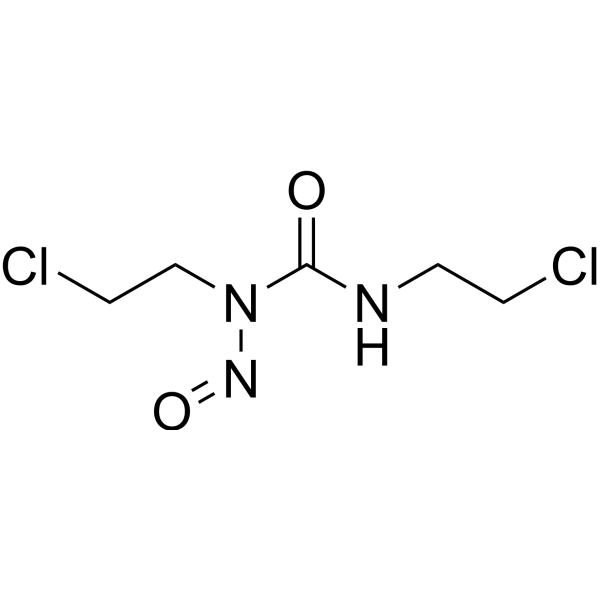
CarmustineDNA/RNA Alkylator -

HY-164789
Sacituzumab tirumotecanTROP2 ADC -
HY-14798
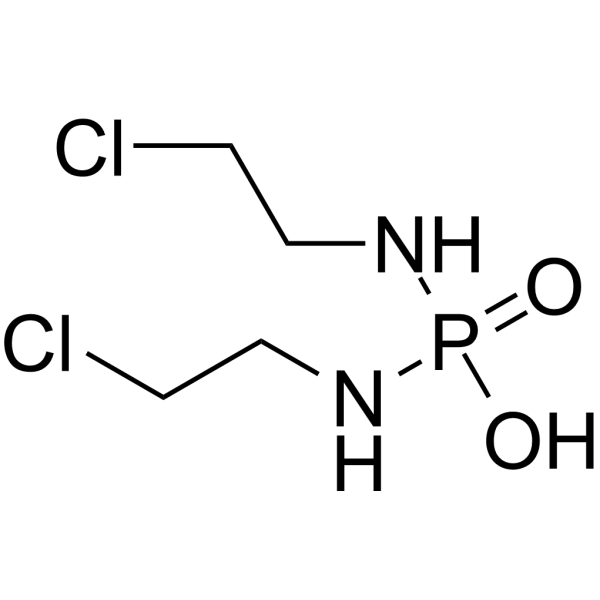
Palifosfamide -
HY-B0181
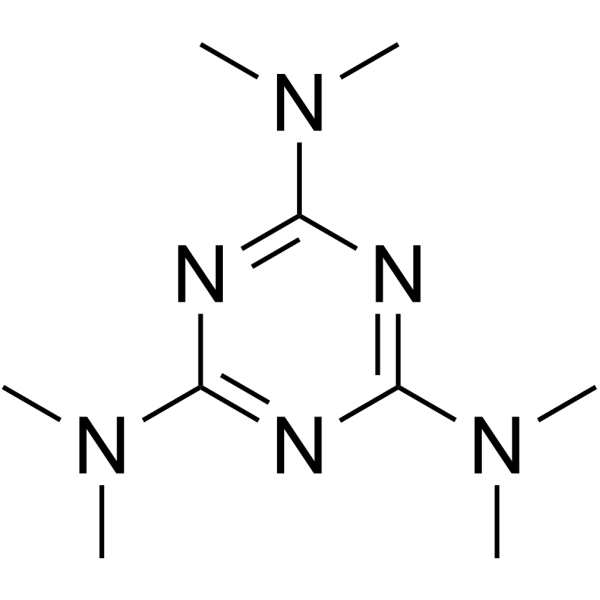
AltretamineDNA Alkylator/Crosslinker -
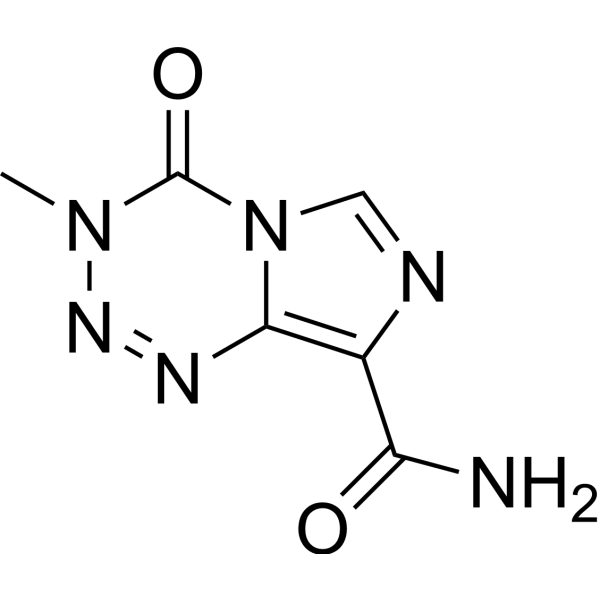
HY-17364
TemozolomideDNA Alkylator -
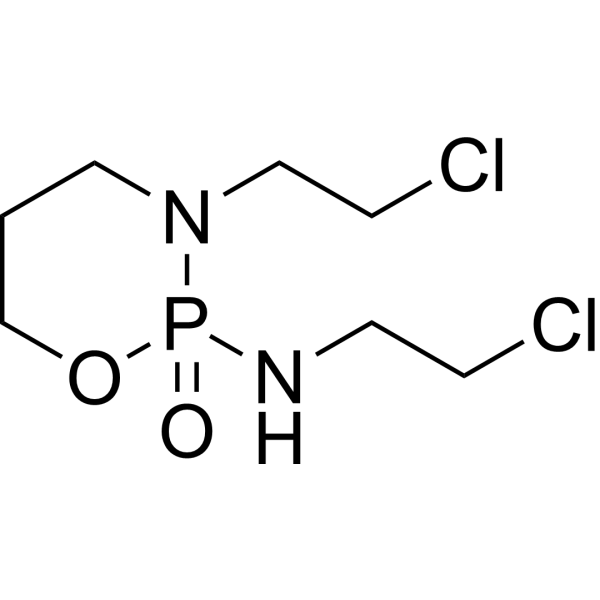
HY-17419
IfosfamideDNA Alkylator/Crosslinker -
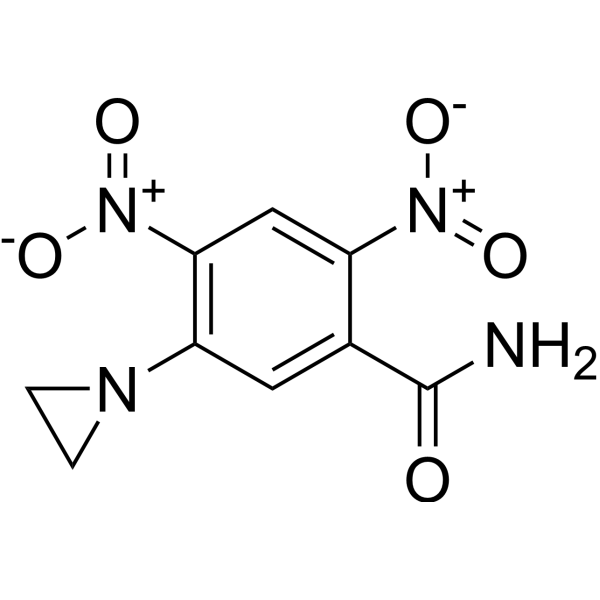
HY-13543
TretazicarDNA Cross-linking Agent -
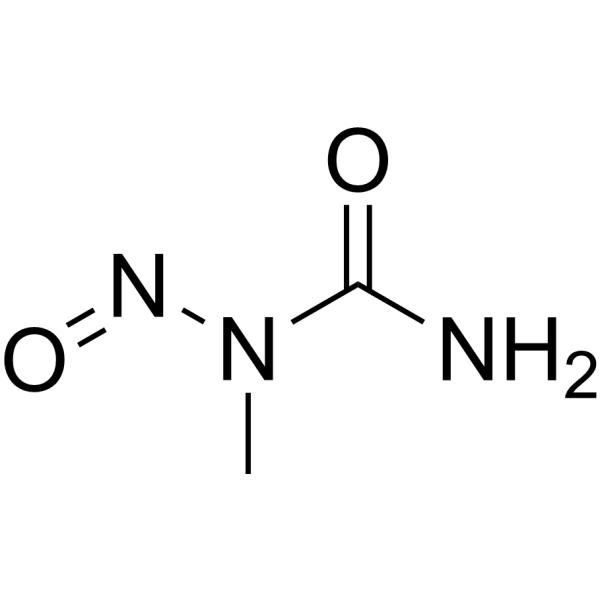
HY-34758
N-Nitroso-N-methylureaCarcinogen Agent -
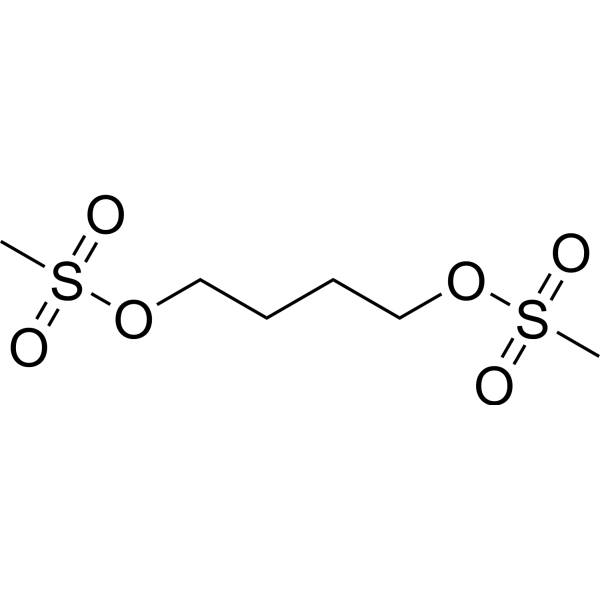
HY-B0245
BusulfanAlkylating Antineoplastic Agent -
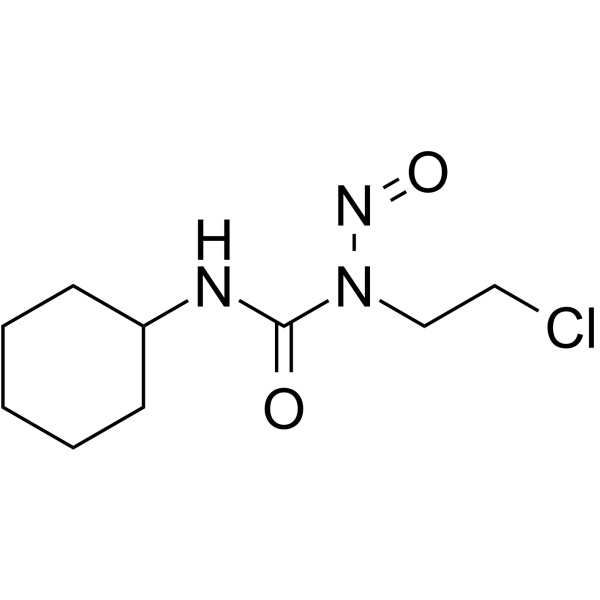
HY-13669
LomustineDNA Alkylator -
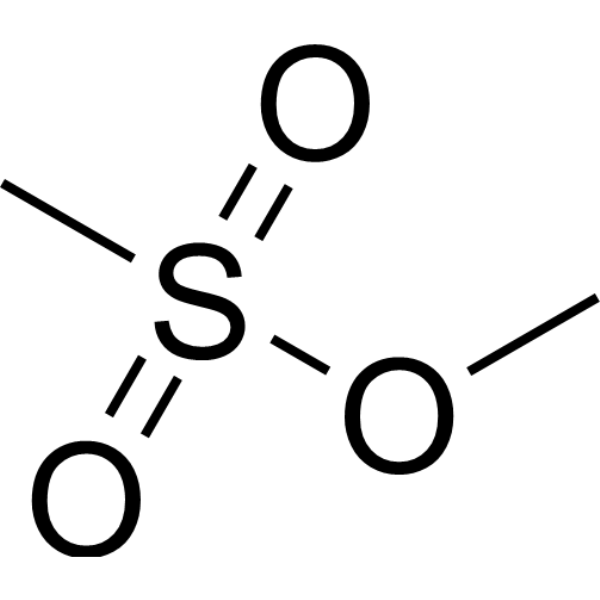
HY-W004702
Methyl methanesulfonateDNA Alkylator -
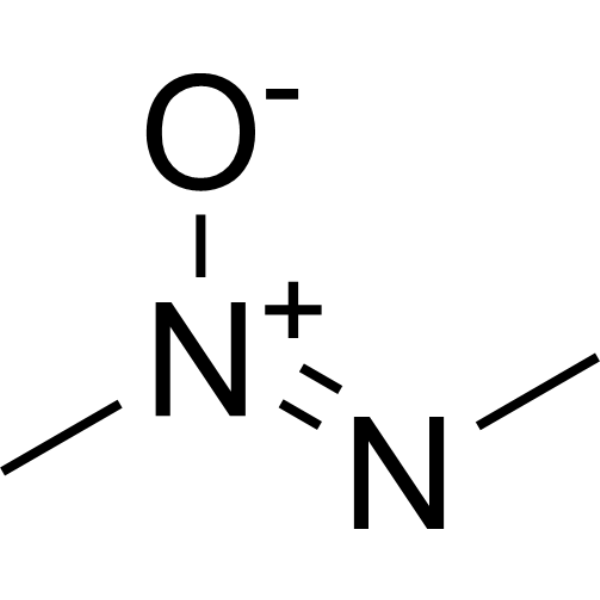
HY-111375
AzoxymethaneGenotoxic Carcinogen
Publications Citing Use of MedChemExpress (MCE) Semustine
MoreAlle DNA/RNA Synthesis Isoform-spezifische Produkte anzeigen
More

Biologische Aktivität
Beschreibung
In Vitro
Semustine (0.525-4.2 mM; 2-24 h) binds to calf thymus DNA via major-groove-directed alkylation, initially interacting with thymine residues before forming dG-dC interstrand cross-links in a concentration- and time-dependent manner, and induces partial transition of DNA from native B-conformation to C-form[1].
Semustine binds to calf thymus DNA with moderate affinity, having a binding constant of 1.53 × 10³ M-1, and induces DNA base alkylation leading to localized duplex denaturation[1].
MedChemExpress (MCE) has not independently confirmed the accuracy of these methods. They are for reference only. .
Clinical Trial
| NCT Number | Sponsor | Condition | Start Date |
Phase

|
|---|---|---|---|---|
| NCT01329991 | Plexxikon| | 2011-05 | PHASE1 |


Chemical Information
-
CAS. Nr. 13909-09-6
-
Appearance Solid
-
Molecular Weight 247.72
-
Formel C10H18ClN3O2
-
Color Light yellow to yellow
-
SMILES
O=C(NC1CCC(C)CC1)N(CCCl)N=O
-
Versand
Room temperature in continental US; may vary elsewhere.
-
Speicherung
Powder -20°C 3 years 4°C 2 years * The compound is unstable in solutions, freshly prepared is recommended.


Publications (1)
-
Journal Impact Factor
-
Most Recent
-
Biomed Pharmacother
Patient-derived organoid culture of gastric cancer for disease modeling and drug sensitivity testing. [Abstract]2023 Jul:163:114751. PMID: 37105073


Lösungsmittel & Löslichkeit
In Vitro:
DMSO : 100 mg/mL (403.68 mM; Need ultrasonic; Hygroscopic DMSO has a significant impact on the solubility of product, please use newly opened DMSO)
Ethanol : 50 mg/mL (201.84 mM; Need ultrasonic)
Please refer to the solubility information to select the appropriate solvent. The compound is unstable in solutions, freshly prepared is recommended.
Please refer to the solubility information to select the appropriate solvent. The compound is unstable in solutions, freshly prepared is recommended.
Konzentration (Stammlösung) × Volumen (Stammlösung) = Konzentration (Ziellösung) × Volumen (Ziellösung)
In Vivo:
Select the appropriate dissolution method based on your experimental animal and administration route.
- For the following dissolution methods, please ensure to first prepare a clear stock solution using an In Vitro approach and then sequentially add co-solvents:
- To ensure reliable experimental results, the clarified stock solution can be appropriately stored based on storage conditions. As for the working solution for In Vivo experiments, it is recommended to prepare freshly and use it on the same day.
- The percentages shown for the solvents indicate their volumetric ratio in the final prepared solution. If precipitation or phase separation occurs during preparation, heat and/or sonication can be used to aid dissolution.
Add each solvent one by one: 10% DMSO 40% PEG300 5% Tween-80 45% Saline
Solubility: ≥ 2.5 mg/mL (10.09 mM); Clear solution
This protocol yields a clear solution of ≥ 2.5 mg/mL (saturation unknown).
Taking 1 mL working solution as an example, add 100 μL DMSO stock solution (25.0 mg/mL) to 400 μL PEG300, and mix evenly; then add 50 μL Tween-80 and mix evenly; then add 450 μL Saline to adjust the volume to 1 mL.
Preparation of Saline: Dissolve 0.9 g sodium chloride in ddH₂O and dilute to 100 mL to obtain a clear Saline solution.
Add each solvent one by one: 10% DMSO 90% (20% SBE-β-CD in Saline)
Solubility: ≥ 2.5 mg/mL (10.09 mM); Clear solution
This protocol yields a clear solution of ≥ 2.5 mg/mL (saturation unknown).
Taking 1 mL working solution as an example, add 100 μL DMSO stock solution (25.0 mg/mL) to 900 μL 20% SBE-β-CD in Saline, and mix evenly.
Preparation of 20% SBE-β-CD in Saline (4°C, storage for one week): 2 g SBE-β-CD powder is dissolved in 10 mL Saline, completely dissolve until clear.
In Vivo Dissolution Calculator
Please enter the basic information of animal experiments:
-
-
-
-
Recommended: Prepare an additional quantity of animals to account for potential losses during experiments.
Please enter your animal formula composition:
-
%DMSO +
Recommended: Keep the proportion of DMSO in working solution below 2% if your animal is weak.
-
%+
-
+%Tween-80 + +
-
%Saline +
The co-solvents required include: DMSO, . All of co-solvents are available by MedChemExpress (MCE). , Tween 80. All of co-solvents are available by MedChemExpress (MCE).
Working solution concentration: 0.22 mg/mL
Method for preparing stock solution: mg drug dissolved in μL DMSO. Stock solution concentration: mg/mL. * The compound is unstable in solutions, freshly prepared is recommended.
1. Take μL DMSO stock solution;
2. Add μL .
μL , mix evenly;
3. Then add μL Tween 80, mix evenly;
4. Then add μL
Please ensure that the stock solution in the first step is dissolved to a clear state, and add co-solvents in sequence. You can use ultrasonic heating (ultrasonic cleaner, recommended frequency 20-40 kHz), vortexing, etc. to assist dissolution.


Reinheit & Dokumentation
-
Data Sheet (272 KB)
-
SDS (645 KB)
- English - EN (645 KB)
- Français - FR (645 KB)
- Deutsch - DE (645 KB)
- Norwegian - NO (645 KB)
- Español - ES (645 KB)
- Swedish - SV (645 KB)
- Italian - IT (645 KB)
- Korean - KR (645 KB)
- Portuguese - PT (645 KB)
-
Handling Instructions (2659 KB)
Verweise
[1]. Agarwal S, et al. Molecular modeling and spectroscopic studies of semustine binding with DNA and its comparison with lomustine-DNA adduct formation. J Biomol Struct Dyn. 2015;33(8):1653-68. [Content Brief]
[2]. Wang T, et al. CEAC (oral semustine, etoposide, cytarabine and cyclophosphamide) vs BEAM (carmustine, etoposide, cytarabine, and melphalan) conditioning regimen of autologous stem cell transplantation for diffuse large B-cell lymphoma: a post-hoc, propensity score-matched, cohort study in Chinese patients. Ann Hematol. 2024;103(2):575-582. [Content Brief]


Complete Stock Solution Preparation Table
Please refer to the solubility information to select the appropriate solvent. The compound is unstable in solutions, freshly prepared is recommended.
| Optional Solvent | Concentration Solvent Mass | 1 mg | 5 mg | 10 mg | 25 mg |
|---|---|---|---|---|---|
| Ethanol / DMSO | 1 mM | 4.0368 mL | 20.1841 mL | 40.3682 mL | 100.9204 mL |
| 5 mM | 0.8074 mL | 4.0368 mL | 8.0736 mL | 20.1841 mL | |
| 10 mM | 0.4037 mL | 2.0184 mL | 4.0368 mL | 10.0920 mL | |
| 15 mM | 0.2691 mL | 1.3456 mL | 2.6912 mL | 6.7280 mL | |
| 20 mM | 0.2018 mL | 1.0092 mL | 2.0184 mL | 5.0460 mL | |
| 25 mM | 0.1615 mL | 0.8074 mL | 1.6147 mL | 4.0368 mL | |
| 30 mM | 0.1346 mL | 0.6728 mL | 1.3456 mL | 3.3640 mL | |
| 40 mM | 0.1009 mL | 0.5046 mL | 1.0092 mL | 2.5230 mL | |
| 50 mM | 0.0807 mL | 0.4037 mL | 0.8074 mL | 2.0184 mL | |
| 60 mM | 0.0673 mL | 0.3364 mL | 0.6728 mL | 1.6820 mL | |
| 80 mM | 0.0505 mL | 0.2523 mL | 0.5046 mL | 1.2615 mL | |
| 100 mM | 0.0404 mL | 0.2018 mL | 0.4037 mL | 1.0092 mL |


Semustine Related Classifications
HY-13747 Related Classifications
 Powered by Bioz