



Cinacalcet
Based on 17 publication(s) in Google Scholar
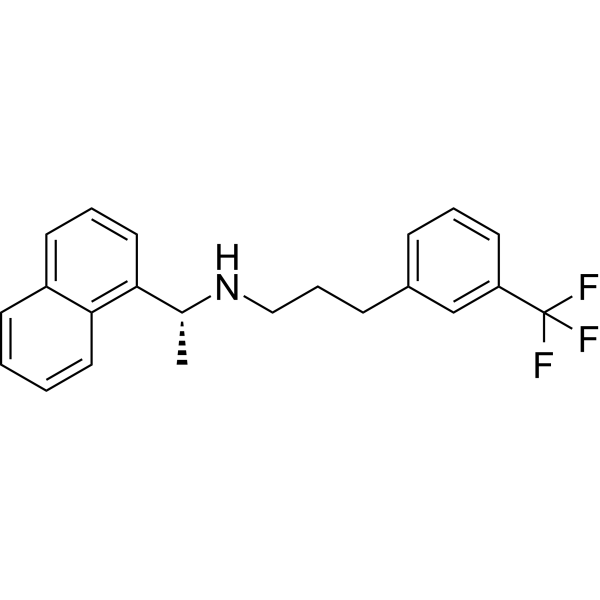
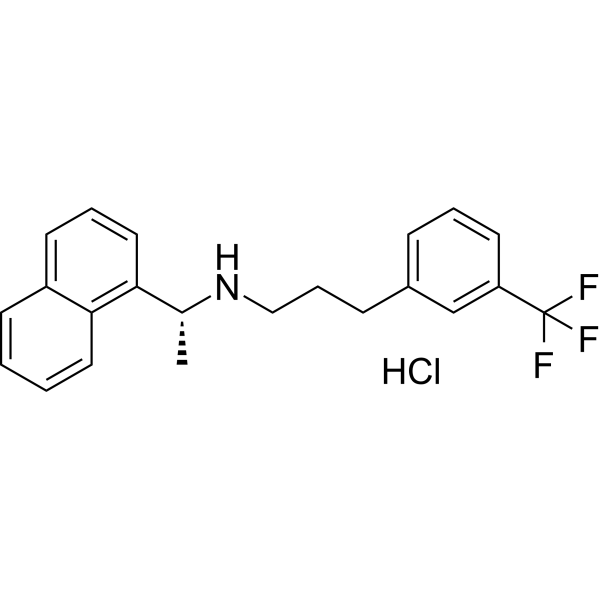
Cinacalcet (AMG 073) is an orally active, allosteric agonist of Ca receptor (CaR), used for cardiovascular disease research.
Nos produits utilisent uniquement pour la recherche. Nous ne vendons pas aux patients.
- Pureté: 99.93%
- CAS No.: 226256-56-0
- Formule: C22H22F3N
- Masse moléculaire:357.41
-
Stockage:Powder -20°C, 3 years , 4°C, 2 years ; In solvent -80°C, 2 years , -20°C, 1 year

To place orders, for customer services and technical support, please contact: MedChemExpress USA
Tel: 609-228-6898 E-mail: [email protected] [email protected]


-
 Activité biologique
-
Chemical Information
-
Solvant et solubilité
- Protocole
- Pureté et documentation
- Références
-
 Help & FAQs


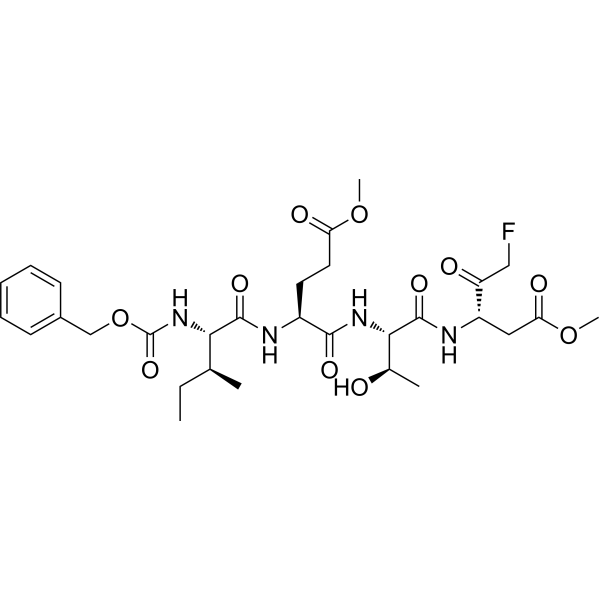
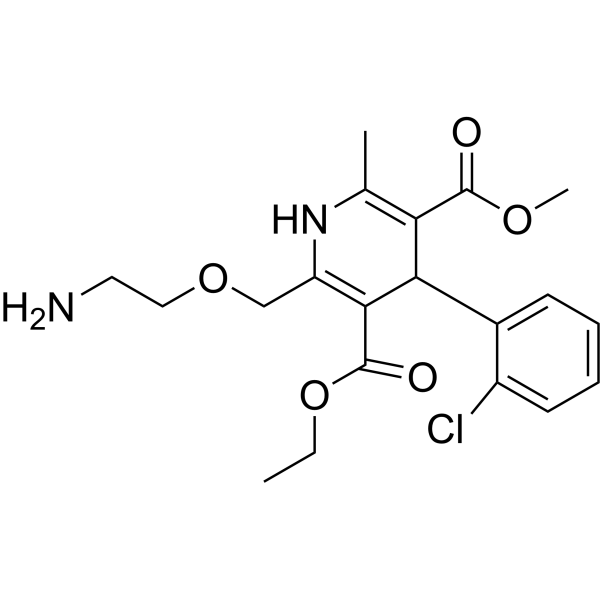
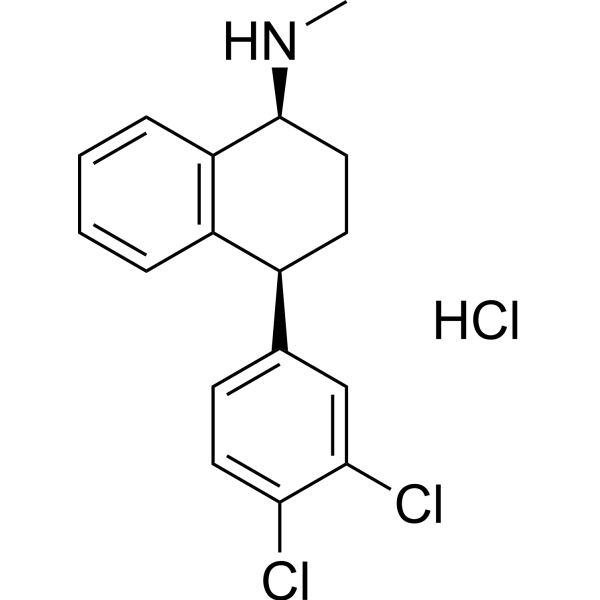

Publications Citing Use of MedChemExpress (MCE) Cinacalcet
More- Adv Mater. 2024 Jun;36(24):e2311760. [Abstract]
- J Med Chem. 2015 Apr 9;58(7):2958-2966. [Abstract]
- J Agric Food Chem. 2021 Nov 17;69(45):13460-13473. [Abstract]
- Cell Rep Methods. 2023 Oct 23;3(10):100599. [Abstract]
- Cell Biol Toxicol. 2023 Oct;39(5):1-17. [Abstract]
- Acta Physiol. 2023 Apr;237(4):e13926. [Abstract]
- J Clin Endocrinol Metab. 2025 Jun 17;110(7):1865-1880. [Abstract]
- iScience. 2023 Mar 11;26(4):106378. [Abstract]
- J Food Sci. 2018 Sep;83(9):2394-2401. [Abstract]
- J Biol Chem. 2016 Oct 28;291(44):23126-23135. [Abstract]
- J Funct Foods. 2025 Apr.
- Calcif Tissue Int. 2023 Apr;112(4):452-462. [Abstract]
- Gen Comp Endocrinol. 2018 Oct 1:267:1-8. [Abstract]
- bioRxiv. 2025 Sep 21.
- Patent. US20230147129A1.
- Oxid Med Cell Longev. 2021 Jan 12:2021:3010548. [Abstract]
- Oxid Med Cell Longev. 2017:2017:3869561. [Abstract]
 Customer Validation & Images

-
WB
-
WB


Activité biologique
Description
Cellular Effect
|
Cell Line

|
Type | Value | Description | References |
|---|---|---|---|---|
| CHO | EC50 |
80 nM
Compound: AMG-073, Sensipar
|
Positive allosteric modulation of human CaSR transfected in CHO cells after 5 hrs by luciferase reporter gene assay
Positive allosteric modulation of human CaSR transfected in CHO cells after 5 hrs by luciferase reporter gene assay
|
[PMID: 23465611] |
| Vero | CC50 |
4.25 μM
Compound: Cinacalcet
|
Cytotoxicity against African green monkey Vero cells assessed as reduction in cell growth measured after 72 hrs by MTT assay
Cytotoxicity against African green monkey Vero cells assessed as reduction in cell growth measured after 72 hrs by MTT assay
|
[PMID: 37659195] |
In Vivo
MedChemExpress (MCE) has not independently confirmed the accuracy of these methods. They are for reference only.


Chemical Information
-
CAS No. 226256-56-0
-
Appearance Solid
-
Masse moléculaire 357.41
-
Formule C22H22F3N
-
Color White to off-white
-
SMILES
FC(F)(C1=CC(CCCN[C@@H](C2=C3C=CC=CC3=CC=C2)C)=CC=C1)F
-
Synonyms
AMG 073
-
Livraison
Room temperature in continental US; may vary elsewhere.
-
Stockage
Powder -20°C 3 years 4°C 2 years In solvent -80°C 2 years -20°C 1 year


Publications (17)
-
Journal Impact Factor
-
Most Recent
-
Adv Mater
Efficient Delivery of Lomitapide using Hybrid Membrane-Coated Tetrahedral DNA Nanostructures for Glioblastoma Therapy. [Abstract]2024 Jun;36(24):e2311760. PMID: 38569065 -
J Med Chem
Ensemble-based virtual screening for cannabinoid-like potentiators of the human glycine receptor α1 for the treatment of pain. [Abstract]2015 Apr 9;58(7):2958-2966. PMID: 25790278 -
J Agric Food Chem
Tryptophan Promotes Intestinal Immune Defense through Calcium-Sensing Receptor (CaSR)-Dependent Metabolic Pathways. [Abstract]2021 Nov 17;69(45):13460-13473. PMID: 34748328 -
Cell Rep Methods
RECOVER identifies synergistic drug combinations in vitro through sequential model optimization. [Abstract]2023 Oct 23;3(10):100599. PMID: 37797618 -
Cell Biol Toxicol
Neurorescuing effect of Cinacalcet against hypercalcemia-induced nerve injury in chronic kidney disease via TRAF2/cIAP1/KLF2/SERPINA3 signal axis. [Abstract]2023 Oct;39(5):1-17. PMID: 35635602 -
Acta Physiol
2023 Apr;237(4):e13926. PMID: 36606511 -
J Clin Endocrinol Metab
Heterogenous Origins of Calcium Homeostasis Disorders Arising from Five Heterozygous Calcium-Sensing Receptor Variants. [Abstract]2025 Jun 17;110(7):1865-1880. PMID: 39413244 -
iScience
Cinacalcet exhibits rapid bactericidal and efficient anti-biofilm activities against multidrug-resistant Gram-positive pathogens. [Abstract]2023 Mar 11;26(4):106378. PMID: 37034999 -
J Food Sci
Sensing of L-Arginine by Gut-Expressed Calcium Sensing Receptor Stimulates Gut Satiety Hormones Cholecystokinin and Glucose-Dependent Insulinotropic Peptide Secretion in Pig Model. [Abstract]2018 Sep;83(9):2394-2401. PMID: 30088839 -
J Biol Chem
Positive Allosteric Modulation of the Calcium-sensing Receptor by Physiological Concentrations of Glucose. [Abstract]2016 Oct 28;291(44):23126-23135. PMID: 27613866 -
-
Calcif Tissue Int
Rescue of High Glucose Impairment of Cultured Human Osteoblasts Using Cinacalcet and Parathyroid Hormone. [Abstract]2023 Apr;112(4):452-462. PMID: 36754901
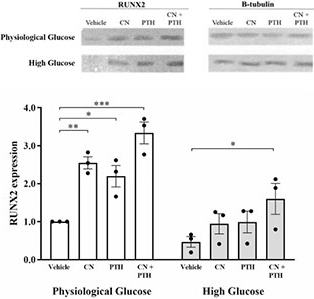
Cinacalcet purchased from MedChemExpress. Usage Cited in: Calcif Tissue Int. 2023 Apr;112(4):452-462. [Abstract]
Cinacalcet (CN) and parathyroid hormone (PTH), used together or separately at physiological glucose levels, produce an increase expression of RUNX2 in HOBs.
-
Gen Comp Endocrinol
Phenylalanine and tryptophan stimulate gastrin and somatostatin secretion and H+-K+-ATPase activity in pigs through calcium-sensing receptor. [Abstract]2018 Oct 1:267:1-8. PMID: 29782837 -
-
-
Oxid Med Cell Longev
2021 Jan 12:2021:3010548. PMID: 33505580 -
Oxid Med Cell Longev
Expression and Role of the Calcium-Sensing Receptor in Rat Peripheral Blood Polymorphonuclear Neutrophils. [Abstract]2017:2017:3869561. PMID: 29081886
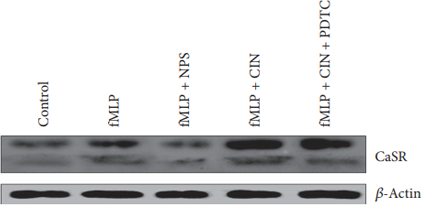
Cinacalcet purchased from MedChemExpress. Usage Cited in: Oxid Med Cell Longev. 2017:2017:3869561. [Abstract]
N-formyl-Met-Leu-Phe (fMLP; 10 nM) are used to stimulate the cells for 2 min, and the polymorphonuclear neutrophils (PMNs) without fMLP serve as the control. NPS-2143 (100 nM), Cinacalcet (100 nM), and PDTC (100 nM) are added and incubated. Protein expression results are representative of three experiments.


Solvant et solubilité
In Vitro:
DMSO : ≥ 100 mg/mL (279.79 mM; Hygroscopic DMSO has a significant impact on the solubility of product, please use newly opened DMSO)
* "≥" means soluble, but saturation unknown.
Please refer to the solubility information to select the appropriate solvent. Once prepared, please aliquot and store the solution to prevent product inactivation from repeated freeze-thaw cycles.
Storage method and period of stock solution: -80°C, 2 years; -20°C, 1 year. When stored at -80°C, please use it within 2 years. When stored at -20°C, please use it within 1 year.
Please refer to the solubility information to select the appropriate solvent. Once prepared, please aliquot and store the solution to prevent product inactivation from repeated freeze-thaw cycles.
Storage method and period of stock solution: -80°C, 2 years; -20°C, 1 year. When stored at -80°C, please use it within 2 years. When stored at -20°C, please use it within 1 year.
Concentration (start) × Volume (start) = Concentration (final) × Volume (final)
In Vivo:
Select the appropriate dissolution method based on your experimental animal and administration route.
- For the following dissolution methods, please ensure to first prepare a clear stock solution using an In Vitro approach and then sequentially add co-solvents:
- To ensure reliable experimental results, the clarified stock solution can be appropriately stored based on storage conditions. As for the working solution for In Vivo experiments, it is recommended to prepare freshly and use it on the same day.
- The percentages shown for the solvents indicate their volumetric ratio in the final prepared solution. If precipitation or phase separation occurs during preparation, heat and/or sonication can be used to aid dissolution.
Add each solvent one by one: 10% DMSO 40% PEG300 5% Tween-80 45% Saline
Solubility: ≥ 2.75 mg/mL (7.69 mM); Clear solution
This protocol yields a clear solution of ≥ 2.75 mg/mL (saturation unknown).
Taking 1 mL working solution as an example, add 100 μL DMSO stock solution (27.5 mg/mL) to 400 μL PEG300, and mix evenly; then add 50 μL Tween-80 and mix evenly; then add 450 μL Saline to adjust the volume to 1 mL.
Preparation of Saline: Dissolve 0.9 g sodium chloride in ddH₂O and dilute to 100 mL to obtain a clear Saline solution.
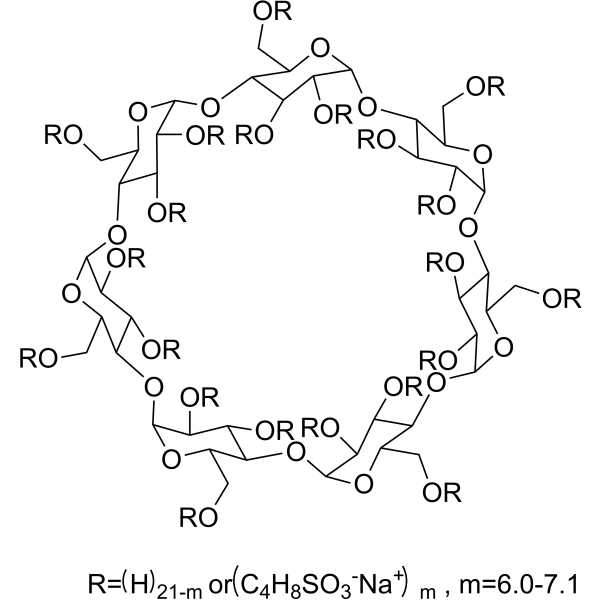
Add each solvent one by one: 10% DMSO 90% (20% SBE-β-CD in Saline)
Solubility: ≥ 2.75 mg/mL (7.69 mM); Clear solution
This protocol yields a clear solution of ≥ 2.75 mg/mL (saturation unknown).
Taking 1 mL working solution as an example, add 100 μL DMSO stock solution (27.5 mg/mL) to 900 μL 20% SBE-β-CD in Saline, and mix evenly.
Preparation of 20% SBE-β-CD in Saline (4°C, storage for one week): 2 g SBE-β-CD powder is dissolved in 10 mL Saline, completely dissolve until clear.
In Vivo Dissolution Calculator
Please enter the basic information of animal experiments:
-
-
-
-
Recommended: Prepare an additional quantity of animals to account for potential losses during experiments.
Please enter your animal formula composition:
-
%DMSO +
Recommended: Keep the proportion of DMSO in working solution below 2% if your animal is weak.
-
%+
-
+%Tween-80 + +
-
%Saline +
The co-solvents required include: DMSO, . All of co-solvents are available by MedChemExpress (MCE). , Tween 80. All of co-solvents are available by MedChemExpress (MCE).
Working solution concentration: 0.22 mg/mL
Method for preparing stock solution: mg drug dissolved in μL DMSO. Stock solution concentration: mg/mL.
1. Take μL DMSO stock solution;
2. Add μL .
μL , mix evenly;
3. Then add μL Tween 80, mix evenly;
4. Then add μL
Please ensure that the stock solution in the first step is dissolved to a clear state, and add co-solvents in sequence. You can use ultrasonic heating (ultrasonic cleaner, recommended frequency 20-40 kHz), vortexing, etc. to assist dissolution.

Protocole
Animal Administration[1]
To identify apoptosis in parathyroid glands from 5/6 nephrectomized or sham rats treated with vehicle [phosphate-buffered saline (PBS)] or cinacalcet HCl (10 mg/kg), nuclear DNA fragmentation is measured in situ using the Apoptag System. Briefly, parathyroid gland sections from animals treated with vehicle or cinacalcet HCl are digested with 20 μg/mL proteinase K in 0.1 mol/L PBS at room temperature for 15 minutes and incubated with 3% hydrogen peroxide/methanol for 5 minutes to block endogenous peroxidase. Sections are incubated for 1 hour at 37°C with terminal deoxynucleotidyl transferase (TdT) to label exposed 3′-OH DNA ends with digoxigenin-tagged nucleotides. Digoxigenin-labeled DNA is detected by the immunoperoxidase method. Sections are developed with 3,3′-diaminobenzidine (DAB), and the nuclei of apoptotic cells are stained brown. The specificity for apoptosis is verified by negative staining when distilled water is substituted for TdT.
MedChemExpress (MCE) has not independently confirmed the accuracy of these methods. They are for reference only.


Pureté et documentation
-
Fiche technique (291 KB)
-
SDS (393 KB)
- English - EN (393 KB)
- Français - FR (393 KB)
- Deutsch - DE (393 KB)
- Norwegian - NO (393 KB)
- Español - ES (393 KB)
- Swedish - SV (393 KB)
- Italian - IT (393 KB)
- Korean - KR (393 KB)
- Portuguese - PT (393 KB)
-
Instruction de manipulation (2659 KB)
Références
[1]. Colloton M, et al. Cinacalcet HCl attenuates parathyroid hyperplasia in a rat model of secondary hyperparathyroidism. Kidney Int. 2005 Feb;67(2):467-76. [Content Brief]
[2]. D.A. Bushinsky, et al. Effect of cinacalcet on urine calcium excretion and supersaturation in genetic hypercalciuric stone-forming rats. Kidney Int. 2006 May;69(9):1586-92. [Content Brief]


Complete Stock Solution Preparation Table
Please refer to the solubility information to select the appropriate solvent. Once prepared, please aliquot and store the solution to prevent product inactivation from repeated freeze-thaw cycles.
Storage method and period of stock solution: -80°C, 2 years; -20°C, 1 year. When stored at -80°C, please use it within 2 years. When stored at -20°C, please use it within 1 year.
| Optional Solvent | Concentration Solvent Mass | 1 mg | 5 mg | 10 mg | 25 mg |
|---|---|---|---|---|---|
| DMSO | 1 mM | 2.7979 mL | 13.9895 mL | 27.9791 mL | 69.9477 mL |
| 5 mM | 0.5596 mL | 2.7979 mL | 5.5958 mL | 13.9895 mL | |
| 10 mM | 0.2798 mL | 1.3990 mL | 2.7979 mL | 6.9948 mL | |
| 15 mM | 0.1865 mL | 0.9326 mL | 1.8653 mL | 4.6632 mL | |
| 20 mM | 0.1399 mL | 0.6995 mL | 1.3990 mL | 3.4974 mL | |
| 25 mM | 0.1119 mL | 0.5596 mL | 1.1192 mL | 2.7979 mL | |
| 30 mM | 0.0933 mL | 0.4663 mL | 0.9326 mL | 2.3316 mL | |
| 40 mM | 0.0699 mL | 0.3497 mL | 0.6995 mL | 1.7487 mL | |
| 50 mM | 0.0560 mL | 0.2798 mL | 0.5596 mL | 1.3990 mL | |
| 60 mM | 0.0466 mL | 0.2332 mL | 0.4663 mL | 1.1658 mL | |
| 80 mM | 0.0350 mL | 0.1749 mL | 0.3497 mL | 0.8743 mL | |
| 100 mM | 0.0280 mL | 0.1399 mL | 0.2798 mL | 0.6995 mL |


Cinacalcet Related Classifications
HY-70037 Related Classifications
 Powered by Bioz