



MF-094
Based on 9 publication(s) in Google Scholar
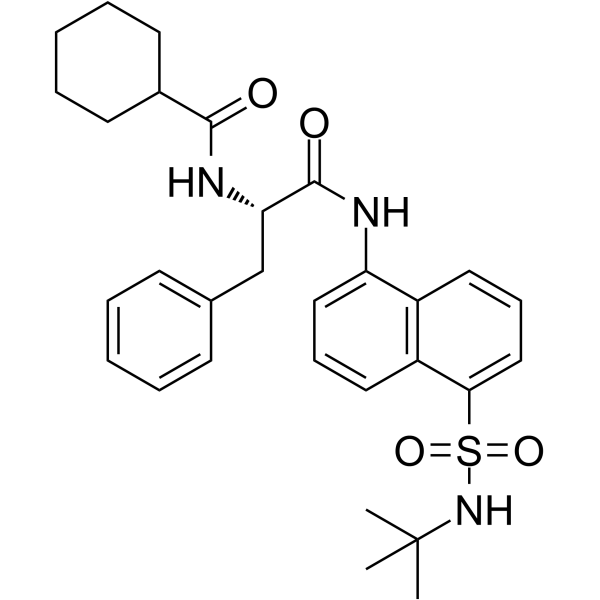
MF-094 is a potent and selective USP30 inhibitor with an IC50 of 120 nM. MF-094 increases protein ubiquitination and accelerates mitophagy.
Nos produits utilisent uniquement pour la recherche. Nous ne vendons pas aux patients.
- Pureté : 99.75%
- CAS No.: 2241025-68-1
- Formule: C30H37N3O4S
- Masse moléculaire:535.70
-
Stockage:Powder -20°C, 3 years , 4°C, 2 years ; In solvent -80°C, 2 years , -20°C, 1 year

To place orders, for customer services and technical support, please contact: MedChemExpress USA
Tel: 609-228-6898 E-mail: [email protected] [email protected]


-
 Activité biologique
-
Chemical Information
-
Solvant et solubilité
- Protocole
- Pureté et documentation
- Références
-
 Help & FAQs


-
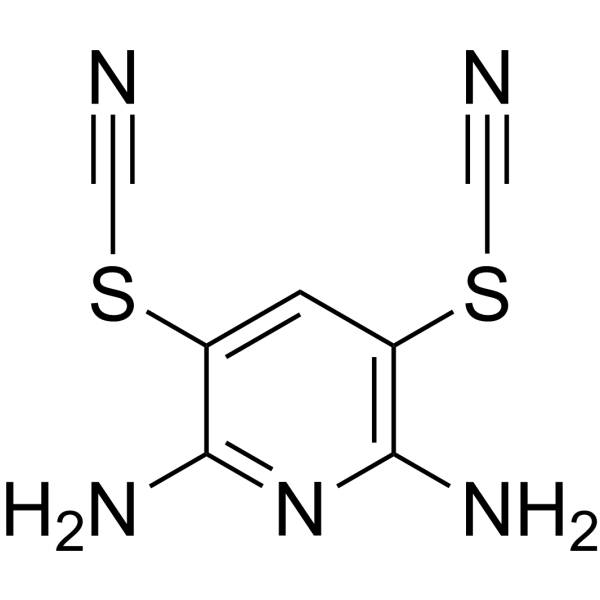
HY-13814
PR-619DUB Inhibitor -
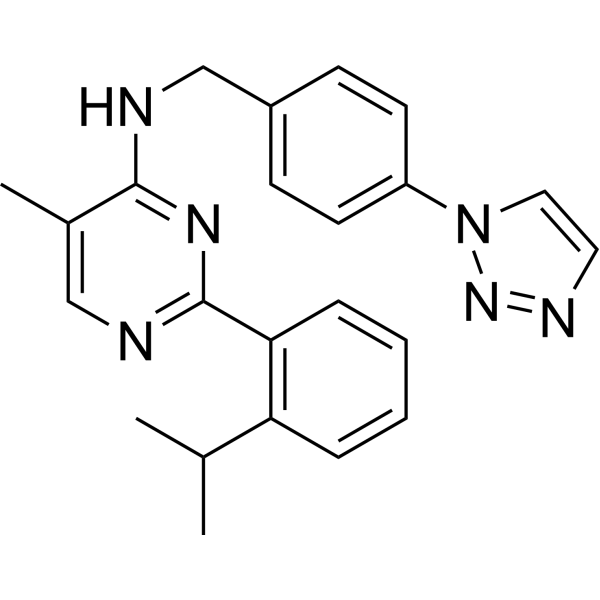
HY-17543
ML-323USP1-UAF1 Inhibitor -
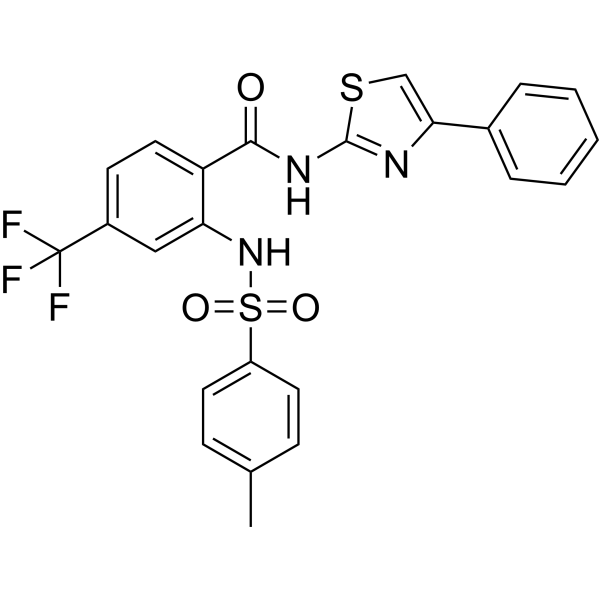
HY-100900
ML364USP2 Inhibitor -
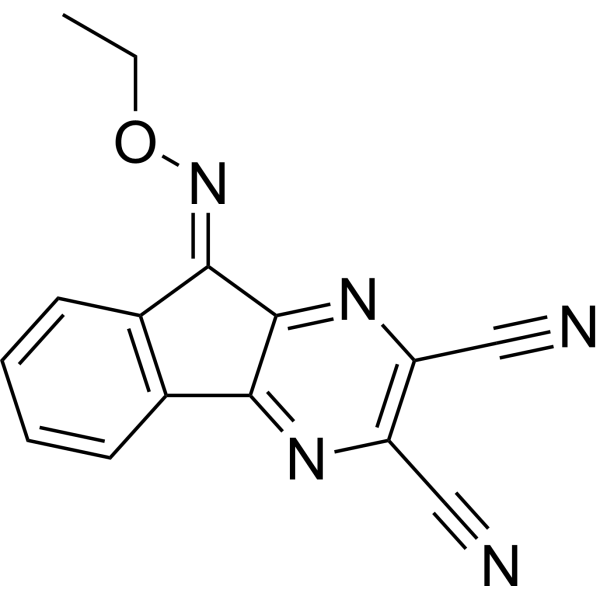
HY-50737A
DUB-IN-2Deubiquitinase Inhibitor -
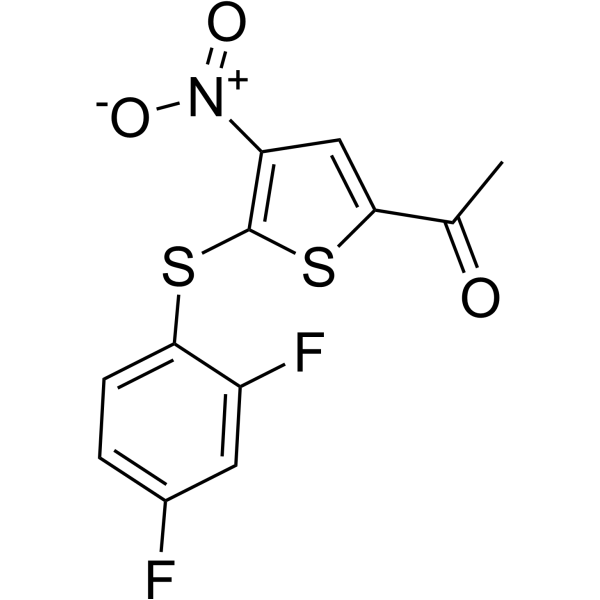
HY-13865
P 22077USP7/47 Inhibitor -
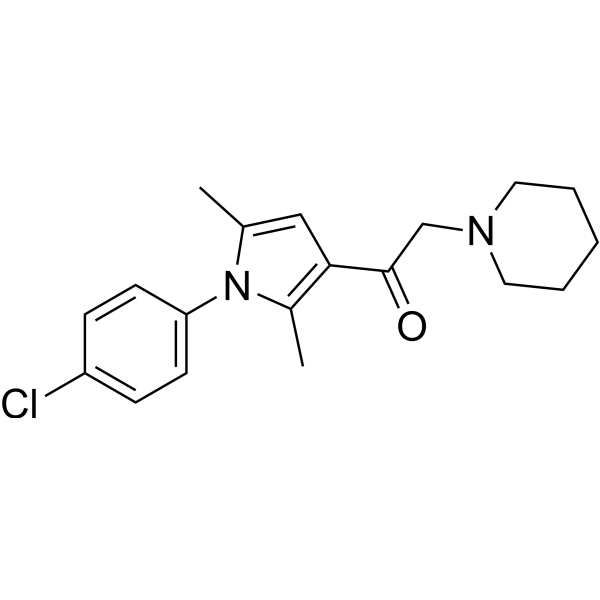
HY-122243
IU1-47USP14 Inhibitor -
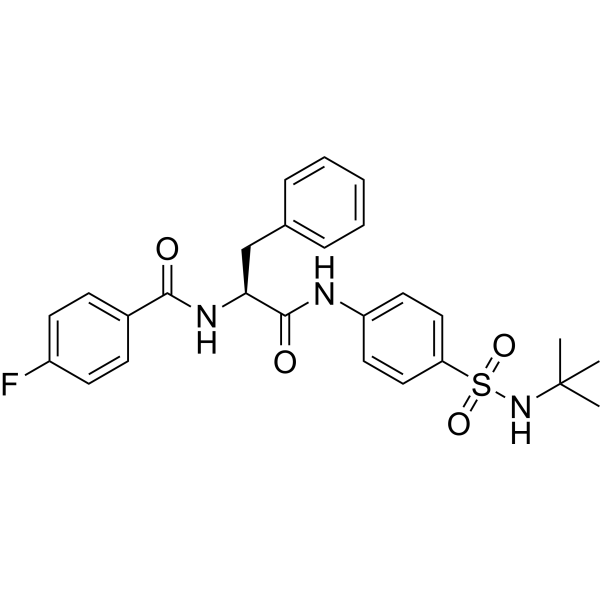
HY-141659
CMPD-39USP30 Inhibitor -
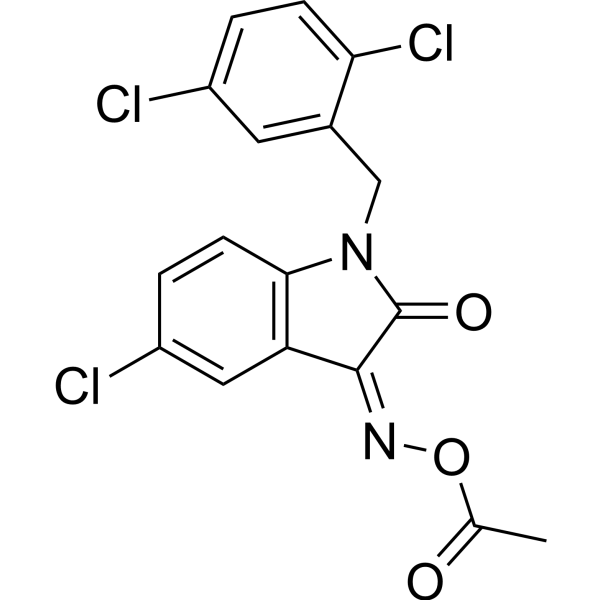
HY-18637
LDN-57444Deubiquitinase Inhibitor -
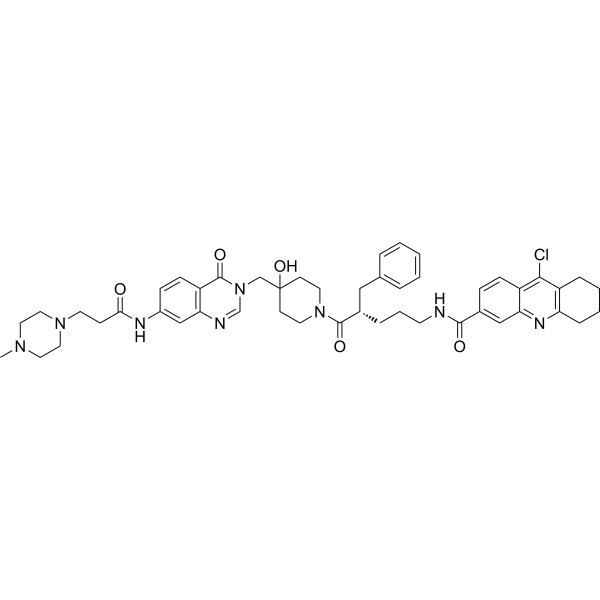
HY-138794
XL177AUSP7 Inhibitor -
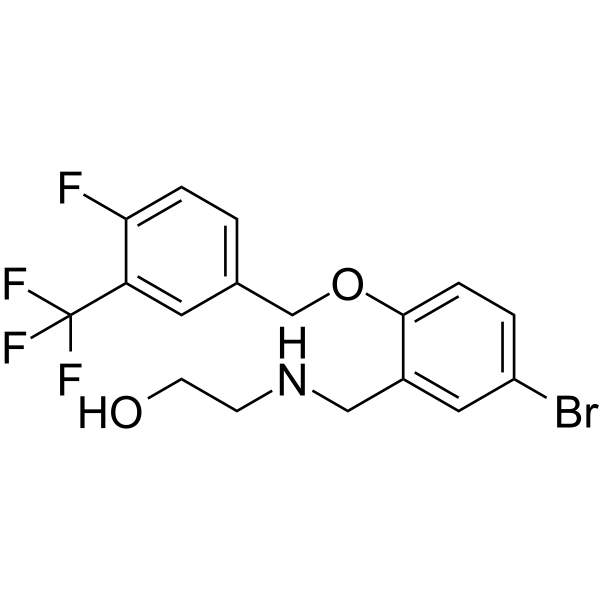
HY-117370
USP25/28 inhibitor AZ1Deubiquitinase Inhibitor -
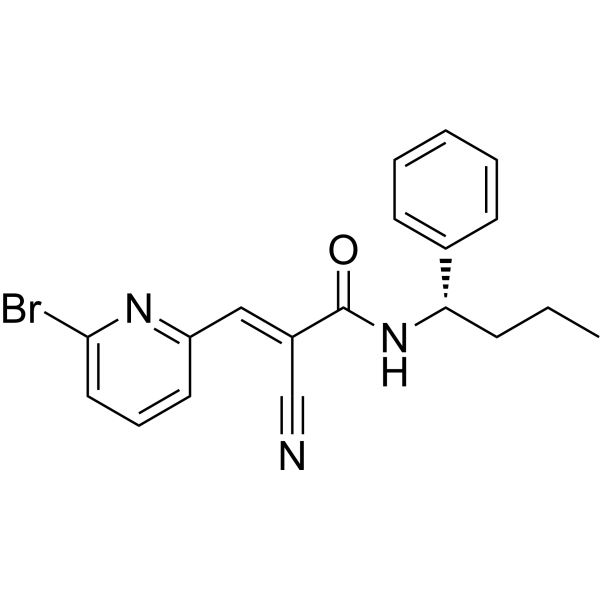
HY-13264
DegrasynDeubiquitinase Inhibitor -
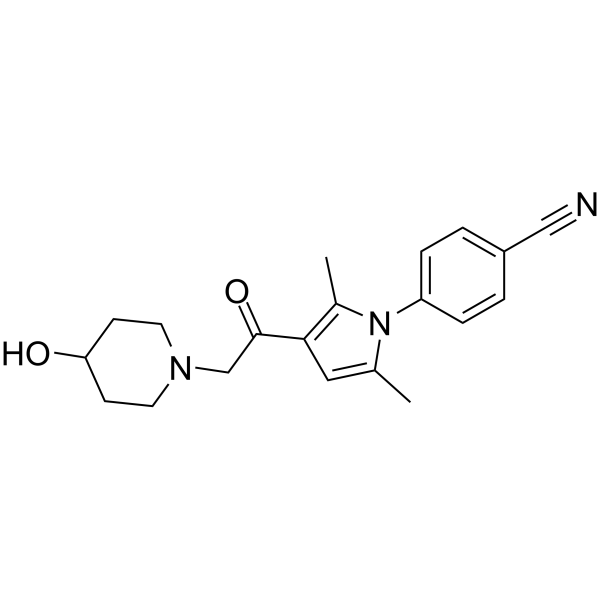
HY-122885
IU1-248USP14 Inhibitor
Publications Citing Use of MedChemExpress (MCE) MF-094
More- Cancer Discov. 2023 Jul 7;13(7):1656-1677. [Abstract]
- Nat Commun. 2025 May 16;16(1):4564. [Abstract]
- Nat Commun. 2022 Mar 31;13(1):1700. [Abstract]
- Redox Biol. 2026 May:92:104086. [Abstract]
- J Immunother Cancer. 2026 Jan 14;14(1):e013498. [Abstract]
- Transl Stroke Res. 2025 Apr;16(2):448-466. [Abstract]
- Anim Cells Syst. 2024 May 11;28(1):237-250. [Abstract]
- Cell Press Blue. 2026 Jul 3.
- Bioengineered. 2022 Feb;13(2):3620-3633. [Abstract]
 Customer Validation & Images

-
WB

-
Cell Proliferation/Viability Assay

-
WB

-
Apoptosis Analysis

-
Bio/Physico-chemical Assay


Activité biologique
Description
IC50 & Target
IC50: 120 nM (USP30)[1]
In Vitro
MF-094 has <30% inhibitory activity for a panel of 22 USPs assays at 10 uM[1].
MedChemExpress (MCE) has not independently confirmed the accuracy of these methods. They are for reference only.


Chemical Information
-
CAS No. 2241025-68-1
-
Appearance Solid
-
Masse moléculaire 535.70
-
Formule C30H37N3O4S
-
Color White to yellow
-
SMILES
O=C(NC1=CC=CC2=C1C=CC=C2S(=O)(NC(C)(C)C)=O)[C@@H](NC(C3CCCCC3)=O)CC4=CC=CC=C4
-
Livraison
Room temperature in continental US; may vary elsewhere.
-
Stockage
Powder -20°C 3 years 4°C 2 years In solvent -80°C 2 years -20°C 1 year


Publications (9)
-
Journal Impact Factor
-
Most Recent
-
Cancer Discov
2023 Jul 7;13(7):1656-1677. PMID: 37088914
MF-094 purchased from MedChemExpress. Usage Cited in: Cancer Discov. 2023 Jul 7;13(7):1656-1677. [Abstract]
MF-094 (10 μM; 29 h) decreased the Caspase 3/7 activaty whitch were induced by AZD5991 (MCL1i, 1 μM, 8 hr) in MOLM-13 parental cells.
-
Nat Commun
2025 May 16;16(1):4564. PMID: 40379682 -
Nat Commun
USP8 inhibition reshapes an inflamed tumor microenvironment that potentiates the immunotherapy. [Abstract]2022 Mar 31;13(1):1700. PMID: 35361799 -
Redox Biol
USP20 governs tyrosine kinase inhibitors resistance through ferroptosis evasion by targeting GPX4 in cancers. [Abstract]2026 May:92:104086. PMID: 41844497
MF-094 purchased from MedChemExpress. Usage Cited in: Redox Biol. 2026 May:92:104086. [Abstract]
MF-094 (10 μM; 24 h) showed no effect on GPX4 protein expression in sorafenib-resistant 769-P and A549 cells.
-
J Immunother Cancer
CD47 destabilization via manipulating the SPOP-USP2 axis augments macrophage phagocytosis and cancer immunotherapy. [Abstract]2026 Jan 14;14(1):e013498. PMID: 41534899 -
Transl Stroke Res
Inhibition of USP30 Promotes Mitophagy by Regulating Ubiquitination of MFN2 by Parkin to Attenuate Early Brain Injury After SAH. [Abstract]2025 Apr;16(2):448-466. PMID: 38147294
MF-094 purchased from MedChemExpress. Usage Cited in: Transl Stroke Res. 2025 Apr;16(2):448-466. [Abstract]
MF-094 (100, 140, 180, 220, 260 nM; 24 h) showed a maximum survival rate at 180 nM on primary neurons.
MF-094 purchased from MedChemExpress. Usage Cited in: Transl Stroke Res. 2025 Apr;16(2):448-466. [Abstract]
MF-094 (180 nM) had a significant inhibitory effect on USP30 after SAH in primary neurons.
MF-094 purchased from MedChemExpress. Usage Cited in: Transl Stroke Res. 2025 Apr;16(2):448-466. [Abstract]
MF-094 (180 nM) significantly reduced apoptosis in neurons after subarachnoid hemorrhage (SAH) in primary neurons.
MF-094 purchased from MedChemExpress. Usage Cited in: Transl Stroke Res. 2025 Apr;16(2):448-466. [Abstract]
MF-094 (180 nM) had a substantial reduction in ROS levels after subarachnoid hemorrhage (SAH) in primary neurons.

MF-094 purchased from MedChemExpress. Usage Cited in: Transl Stroke Res. 2025 Apr;16(2):448-466. [Abstract]
MF-094 (5 mg/kg; i.c.v.; daily) decreased the protein expression ofUSP30, MFN2, which were induced by ASH, and increased the protein expression of PARKIN and PINK1 in the brain tissue of mice with ASH treatment.
-
Anim Cells Syst
Blocking SLC7A11 attenuates the proliferation of esophageal squamous cell carcinoma cells. [Abstract]2024 May 11;28(1):237-250. PMID: 38741950 -
-
Bioengineered
Increased FUN14 domain containing 1 (FUNDC1) ubiquitination level inhibits mitophagy and alleviates the injury in hypoxia-induced trophoblast cells. [Abstract]2022 Feb;13(2):3620-3633. PMID: 34699308


Solvant et solubilité
In Vitro:
DMSO : 125 mg/mL (233.34 mM; Need ultrasonic; Hygroscopic DMSO has a significant impact on the solubility of product, please use newly opened DMSO)
Please refer to the solubility information to select the appropriate solvent. Once prepared, please aliquot and store the solution to prevent product inactivation from repeated freeze-thaw cycles.
Storage method and period of stock solution: -80°C, 2 years; -20°C, 1 year. When stored at -80°C, please use it within 2 years. When stored at -20°C, please use it within 1 year.
Please refer to the solubility information to select the appropriate solvent. Once prepared, please aliquot and store the solution to prevent product inactivation from repeated freeze-thaw cycles.
Storage method and period of stock solution: -80°C, 2 years; -20°C, 1 year. When stored at -80°C, please use it within 2 years. When stored at -20°C, please use it within 1 year.
Concentration (start) × Volume (start) = Concentration (final) × Volume (final)
In Vivo:
Select the appropriate dissolution method based on your experimental animal and administration route.
- For the following dissolution methods, please ensure to first prepare a clear stock solution using an In Vitro approach and then sequentially add co-solvents:
- To ensure reliable experimental results, the clarified stock solution can be appropriately stored based on storage conditions. As for the working solution for In Vivo experiments, it is recommended to prepare freshly and use it on the same day.
- The percentages shown for the solvents indicate their volumetric ratio in the final prepared solution. If precipitation or phase separation occurs during preparation, heat and/or sonication can be used to aid dissolution.
Add each solvent one by one: 10% DMSO 90% (20% SBE-β-CD in Saline)
Solubility: ≥ 5 mg/mL (9.33 mM); Clear solution
This protocol yields a clear solution of ≥ 5 mg/mL (saturation unknown).
Taking 1 mL working solution as an example, add 100 μL DMSO stock solution (50.0 mg/mL) to 900 μL 20% SBE-β-CD in Saline, and mix evenly.
Preparation of 20% SBE-β-CD in Saline (4°C, storage for one week): 2 g SBE-β-CD powder is dissolved in 10 mL Saline, completely dissolve until clear.
Add each solvent one by one: 10% DMSO 40% PEG300 5% Tween-80 45% Saline
Solubility: 2.08 mg/mL (3.88 mM); Suspended solution; Need ultrasonic
This protocol yields a suspended solution of 2.08 mg/mL. Suspended solution can be used for oral and intraperitoneal injection.
Taking 1 mL working solution as an example, add 100 μL DMSO stock solution (20.8 mg/mL) to 400 μL PEG300, and mix evenly; then add 50 μL Tween-80 and mix evenly; then add 450 μL Saline to adjust the volume to 1 mL.
Preparation of Saline: Dissolve 0.9 g sodium chloride in ddH₂O and dilute to 100 mL to obtain a clear Saline solution.
In Vivo Dissolution Calculator
Please enter the basic information of animal experiments:
-
-
-
-
Recommended: Prepare an additional quantity of animals to account for potential losses during experiments.
Please enter your animal formula composition:
-
%DMSO +
Recommended: Keep the proportion of DMSO in working solution below 2% if your animal is weak.
-
%+
-
+%Tween-80 + +
-
%Saline +
The co-solvents required include: DMSO, . All of co-solvents are available by MedChemExpress (MCE). , Tween 80. All of co-solvents are available by MedChemExpress (MCE).
Working solution concentration: 0.22 mg/mL
Method for preparing stock solution: mg drug dissolved in μL DMSO. Stock solution concentration: mg/mL.
1. Take μL DMSO stock solution;
2. Add μL .
μL , mix evenly;
3. Then add μL Tween 80, mix evenly;
4. Then add μL
Please ensure that the stock solution in the first step is dissolved to a clear state, and add co-solvents in sequence. You can use ultrasonic heating (ultrasonic cleaner, recommended frequency 20-40 kHz), vortexing, etc. to assist dissolution.


Pureté et documentation
-
Fiche technique (277 KB)
-
SDS (251 KB)
- English - EN (251 KB)
- Français - FR (251 KB)
- Deutsch - DE (251 KB)
- Norwegian - NO (251 KB)
- Español - ES (251 KB)
- Swedish - SV (251 KB)
- Italian - IT (251 KB)
- Korean - KR (251 KB)
- Portuguese - PT (251 KB)
-
Instruction de manipulation (2659 KB)
Références


Complete Stock Solution Preparation Table
Please refer to the solubility information to select the appropriate solvent. Once prepared, please aliquot and store the solution to prevent product inactivation from repeated freeze-thaw cycles.
Storage method and period of stock solution: -80°C, 2 years; -20°C, 1 year. When stored at -80°C, please use it within 2 years. When stored at -20°C, please use it within 1 year.
| Optional Solvent | Concentration Solvent Mass | 1 mg | 5 mg | 10 mg | 25 mg |
|---|---|---|---|---|---|
| DMSO | 1 mM | 1.8667 mL | 9.3336 mL | 18.6672 mL | 46.6679 mL |
| 5 mM | 0.3733 mL | 1.8667 mL | 3.7334 mL | 9.3336 mL | |
| 10 mM | 0.1867 mL | 0.9334 mL | 1.8667 mL | 4.6668 mL | |
| 15 mM | 0.1244 mL | 0.6222 mL | 1.2445 mL | 3.1112 mL | |
| 20 mM | 0.0933 mL | 0.4667 mL | 0.9334 mL | 2.3334 mL | |
| 25 mM | 0.0747 mL | 0.3733 mL | 0.7467 mL | 1.8667 mL | |
| 30 mM | 0.0622 mL | 0.3111 mL | 0.6222 mL | 1.5556 mL | |
| 40 mM | 0.0467 mL | 0.2333 mL | 0.4667 mL | 1.1667 mL | |
| 50 mM | 0.0373 mL | 0.1867 mL | 0.3733 mL | 0.9334 mL | |
| 60 mM | 0.0311 mL | 0.1556 mL | 0.3111 mL | 0.7778 mL | |
| 80 mM | 0.0233 mL | 0.1167 mL | 0.2333 mL | 0.5833 mL | |
| 100 mM | 0.0187 mL | 0.0933 mL | 0.1867 mL | 0.4667 mL |


MF-094 Related Classifications
HY-112438 Related Classifications
 Powered by Bioz