



Serlopitant
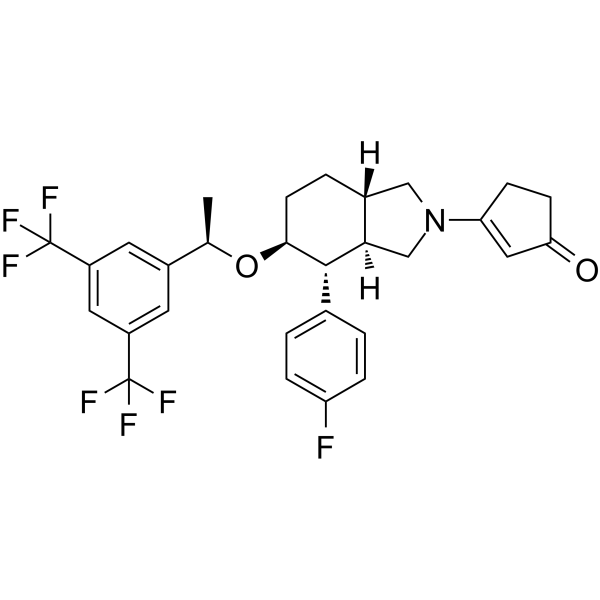
Serlopitant (VPD-737) is an orally active Neurokinin 1 receptor antagonist. Serlopitant inhibits pruritus signal transduction via NK receptors in spinal neurons and brain regions, and blocks the efferent function of substance P in the skin. Serlopitant can be used in research related to chronic pruritus, prurigo nodularis, and pruritus associated with psoriasis.
Nos produits utilisent uniquement pour la recherche. Nous ne vendons pas aux patients.
- CAS No.: 860642-69-9
- Formule: C29H28F7NO2
- Masse moléculaire:555.53
-
Stockage:
Please store the product under the recommended conditions in the Certificate of Analysis.

To place orders, for customer services and technical support, please contact: MedChemExpress USA
Tel: 609-228-6898 E-mail: [email protected] [email protected]


-
 Activité biologique
-
Chemical Information
- Protocole
- Pureté et documentation
- Références
-
 Help & FAQs


-
HY-12143
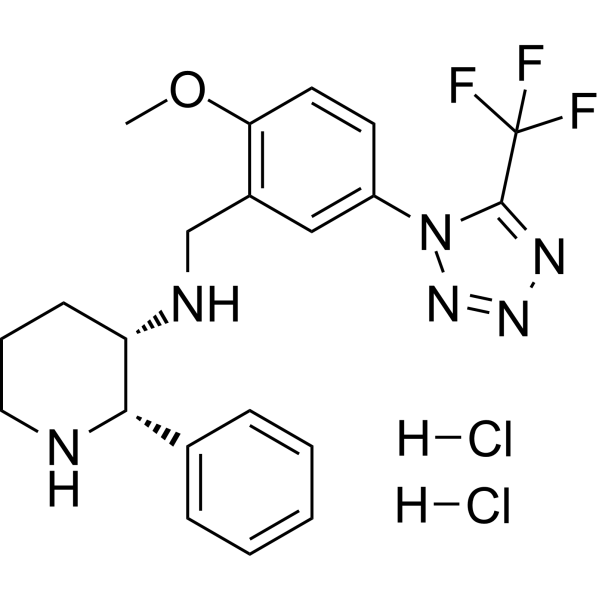
Vofopitant dihydrochlorideNK1 Receptor Inhibitor -
HY-16346
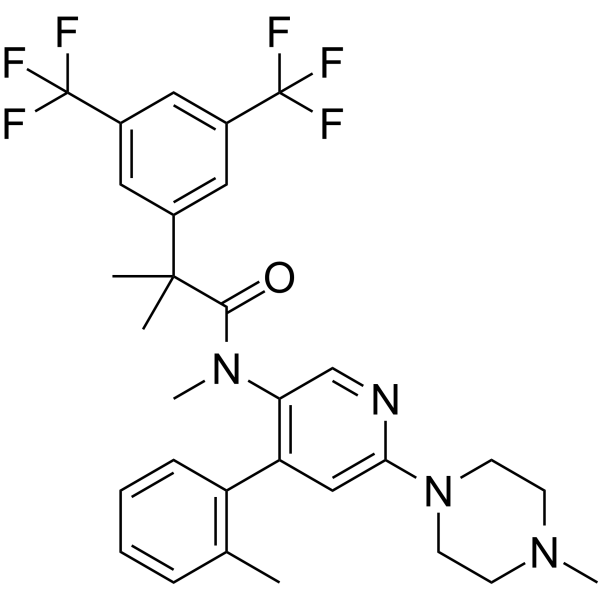
NetupitantNK1 Receptor Inhibitor -
HY-P0187
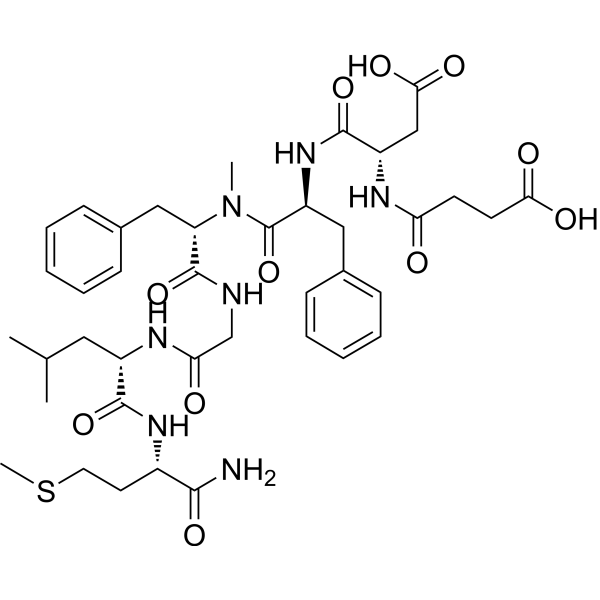
SenktideNK3 Receptor Agonist -
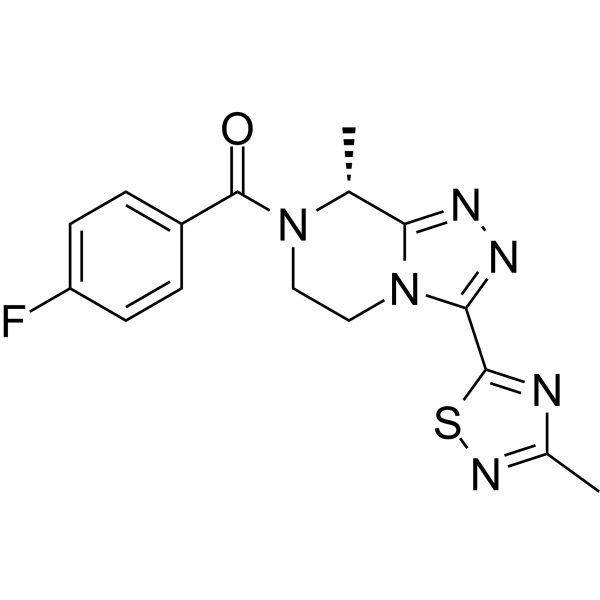
HY-19632
FezolinetantNK3R Antagonist -
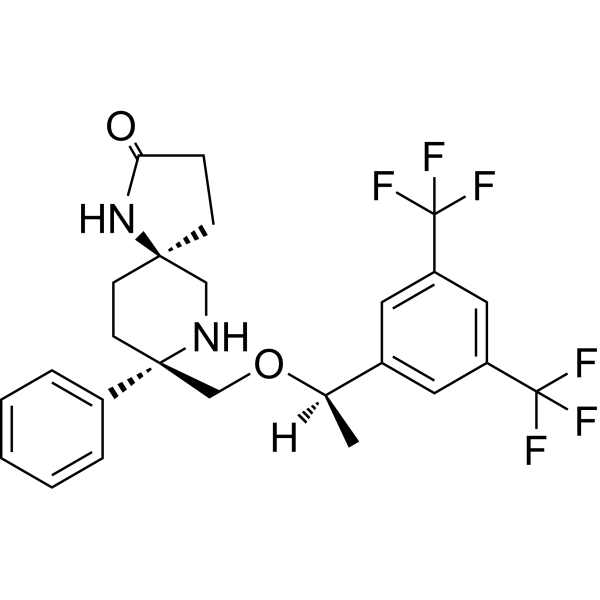
HY-14751
RolapitantNK1 Receptor Antagonist -
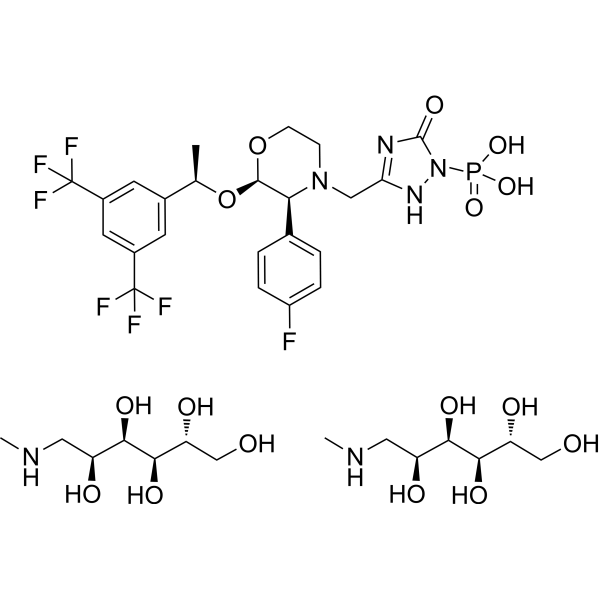
HY-14407A
Fosaprepitant dimeglumineNeurokinin-1 Receptor Antagonist -
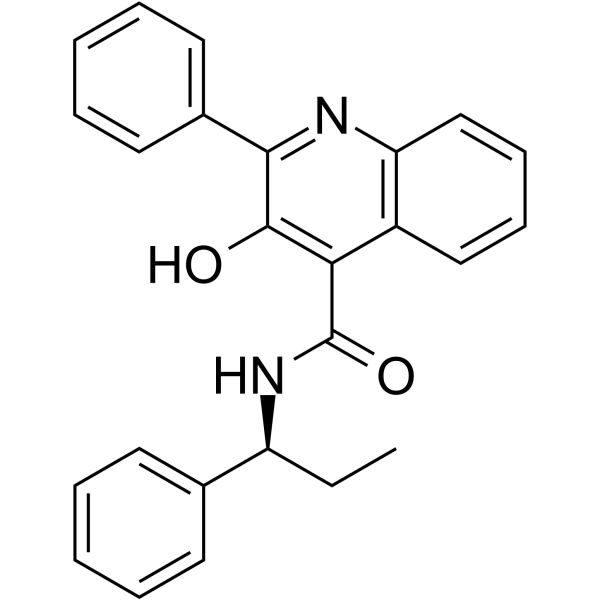
HY-14552
TalnetantNK3 Receptor Antagonist -
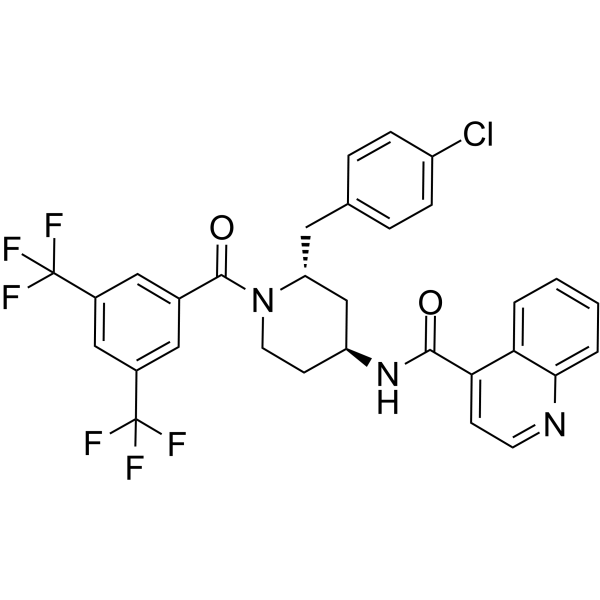
HY-18006
NKP608NK-1 Receptor Antagonist -
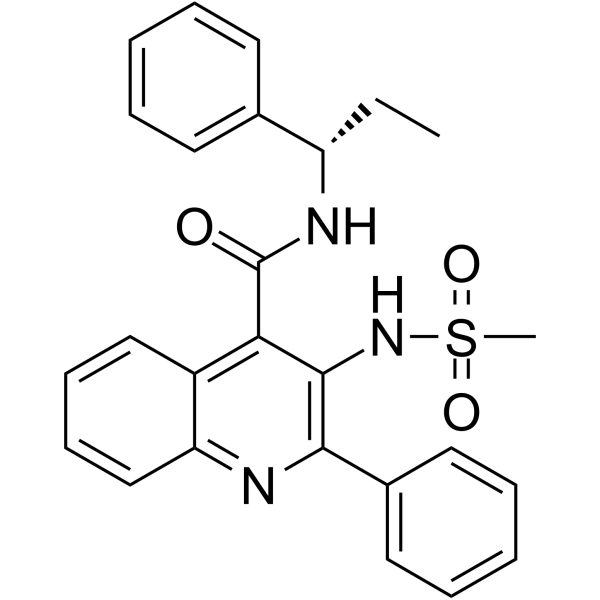
HY-14432
PavinetantNeurokinin Receptor Antagonist -
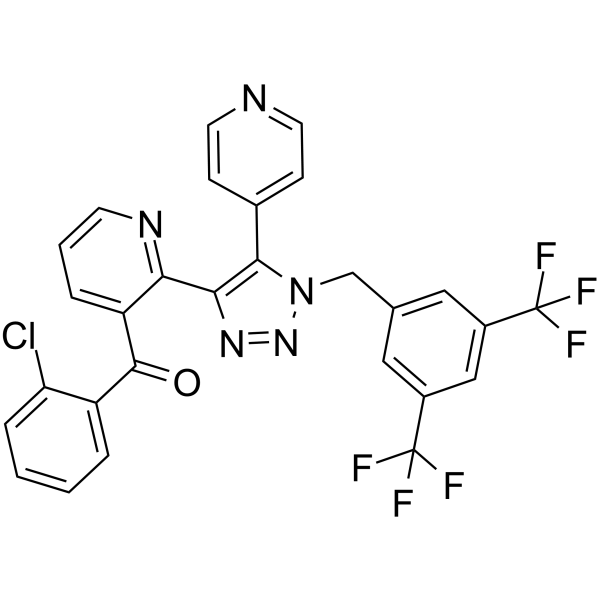
HY-16732
TradipitantNK-1 Receptor Antagonist -
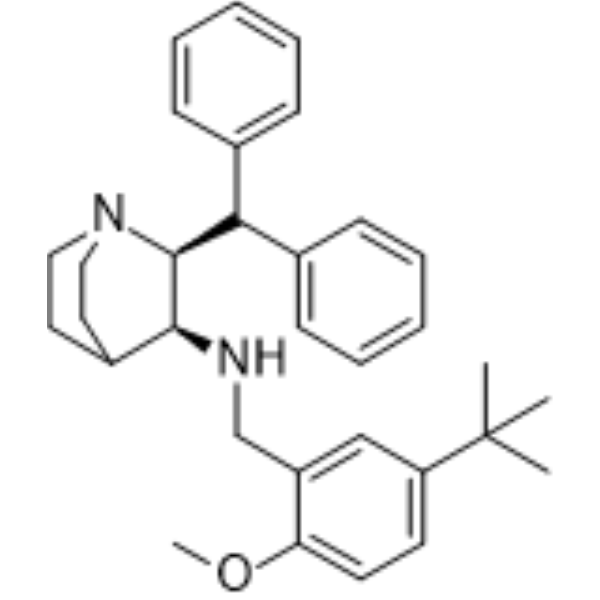
HY-10053
MaropitantNK1 Receptor Antagonist -
HY-14770
IbodutantNeurokinin Receptor Antagonist


Activité biologique
Description
IC50 & Target
[1]|
NK1R |
Cellular Effect
|
Cell Line

|
Type | Value | Description | References |
|---|---|---|---|---|
| CHO | IC50 |
0.06 nM
Compound: 17
|
Displacement of [125I]substance P human recombinant NK1 receptor expressed in CHO cells in absence of human serum albumin
Displacement of [125I]substance P human recombinant NK1 receptor expressed in CHO cells in absence of human serum albumin
|
[PMID: 19354254] |
| CHO | IC50 |
0.06 nM
Compound: 2
|
Displacement of [125I]substance P from human NK1 receptor expressed in CHO cells
Displacement of [125I]substance P from human NK1 receptor expressed in CHO cells
|
[PMID: 23808489] |
| CHO | IC50 |
9.5 nM
Compound: 17
|
Displacement of [125I]substance P human recombinant NK1 receptor expressed in CHO cells in presence of human serum albumin
Displacement of [125I]substance P human recombinant NK1 receptor expressed in CHO cells in presence of human serum albumin
|
[PMID: 19354254] |
| CHO | IC50 |
9.5 nM
Compound: 2
|
Displacement of [125I]substance P from human NK1 receptor expressed in CHO cells in presence of human serum
Displacement of [125I]substance P from human NK1 receptor expressed in CHO cells in presence of human serum
|
[PMID: 23808489] |
In Vitro
Serlopitant induces a dose-dependent reduction in chronic pruritus[1].
MedChemExpress (MCE) has not independently confirmed the accuracy of these methods. They are for reference only. Further protocols information, click here.
Essai clinique
| NCT Number | Sponsor | Condition | Start Date |
Phase
|
|---|---|---|---|---|
| NCT01329991 | Plexxikon| | 2011-05 | PHASE1 |


Chemical Information
-
CAS No. 860642-69-9
-
Masse moléculaire 555.53
-
Formule C29H28F7NO2
-
SMILES
O=C1C=C(N2C[C@@]3([H])CC[C@H](O[C@@H](C4=CC(C(F)(F)F)=CC(C(F)(F)F)=C4)C)[C@@H](C5=CC=C(F)C=C5)[C@]3([H])C2)CC1
-
Synonyms
VPD-737; MK-0594
-
Livraison
Room temperature in continental US; may vary elsewhere.
-
Stockage
Please store the product under the recommended conditions in the Certificate of Analysis.

Protocole
-
Imiquimod-Induced Psoriasiform Dermatitis
Imiquimod (IMQ)-induced psoriasiform dermatitis is a widely used murine model in which topical application of IMQ, a Toll-like receptor 7 (TLR7) agonist, triggers innate immune activation in the skin and induces a psoriasis-like inflammatory cascade characterized by epidermal hyperplasia, immune cell infiltration, and cytokine production dominated by the IL-23/IL-17 axis. This inflammatory response is mediated through activation of dendritic cells and downstream induction of IL-23, IL-17A, IL-22, and related pro-inflammatory mediators, recapitulating key features of human plaque psoriasis and enabling mechanistic and therapeutic studies. The model is commonly induced using Aldara (5% IMQ cream) applied topically to murine skin, resulting in rapid onset of erythema, scaling, and thickening that can be quantified as disease severity indices and validated histologically.


Pureté et documentation
Références

Calculators
Concentration (start) × Volume (start) = Concentration (final) × Volume (final)


Serlopitant Related Classifications
HY-12114 Related Classifications
 Powered by Bioz