



L-Ascorbic acid (Standard)
Based on 2 publication(s) in Google Scholar
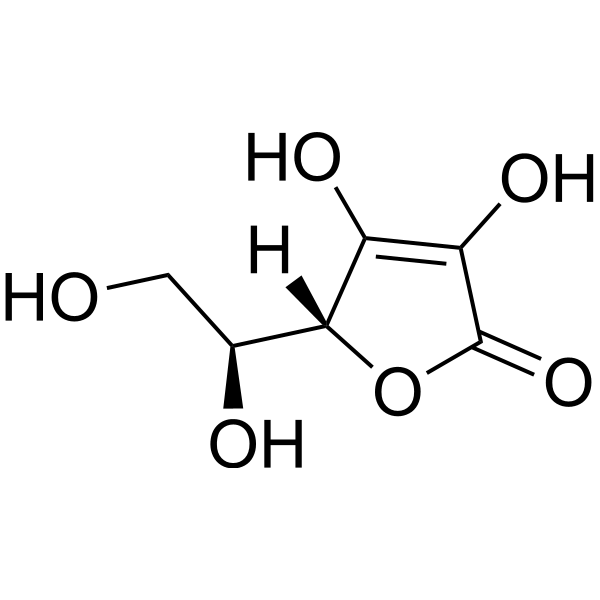
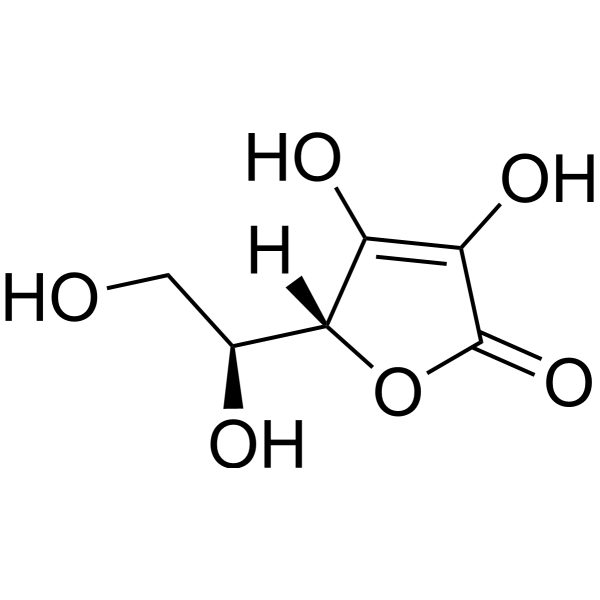
L-Ascorbic acid (Standard) is the analytical standard of L-Ascorbic acid. This product is intended for research and analytical applications. L-Ascorbic acid (L-Ascorbate), an electron donor, is an endogenous antioxidant agent. L-Ascorbic acid inhibits selectively Cav3.2 channels with an IC50 of 6.5 μM. L-Ascorbic acid is also a collagen deposition enhancer and an elastogenesis inhibitor. L-Ascorbic acid exhibits anti-cancer effects through the generation of reactive oxygen species (ROS) and selective damage to cancer cells.
Nos produits utilisent uniquement pour la recherche. Nous ne vendons pas aux patients.
- Pureté : 99.97%
- CAS No.: 50-81-7
- Formule: C6H8O6
- Masse moléculaire:176.12
-
Stockage:
Please store the product under the recommended conditions in the Certificate of Analysis.


To place orders, for customer services and technical support, please contact: MedChemExpress USA
Tel: 609-228-6898 E-mail: [email protected] [email protected]


-
 Product Information
-
Chemical Information
- Pureté et documentation
-
 Help & FAQs


-
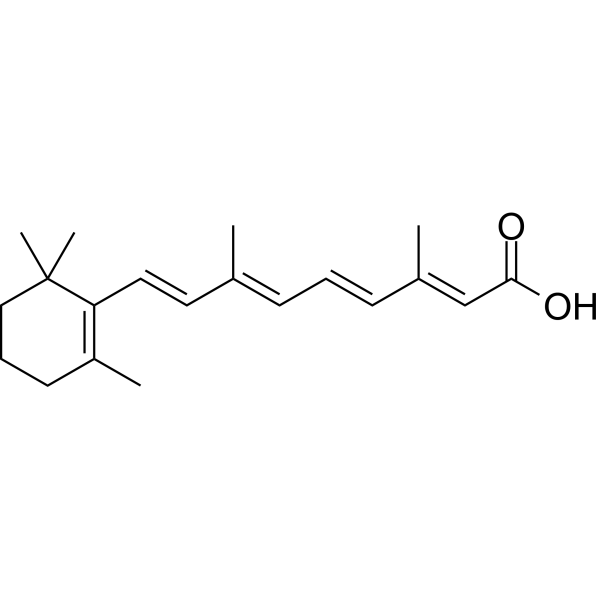
HY-14649
Retinoic acidRAR Agonist -
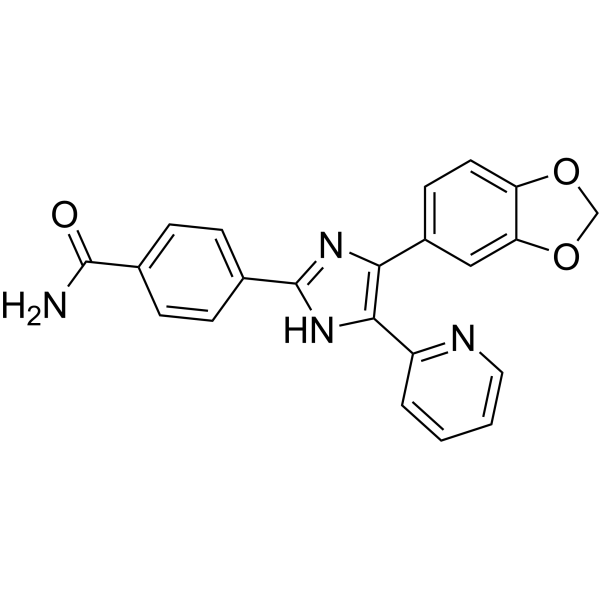
HY-10431
SB-431542TGF-β Receptor Kinase Inhibitor -
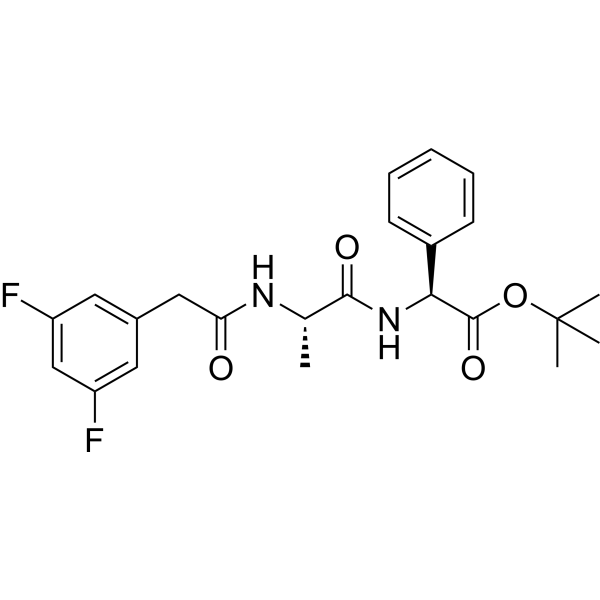
HY-13027
DAPTγ-secretase Inhibitor -
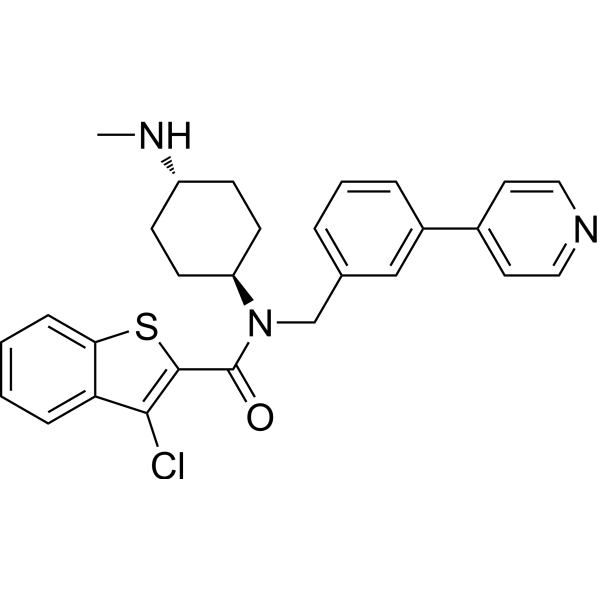
HY-12848
SAGSmoothened Agonist -
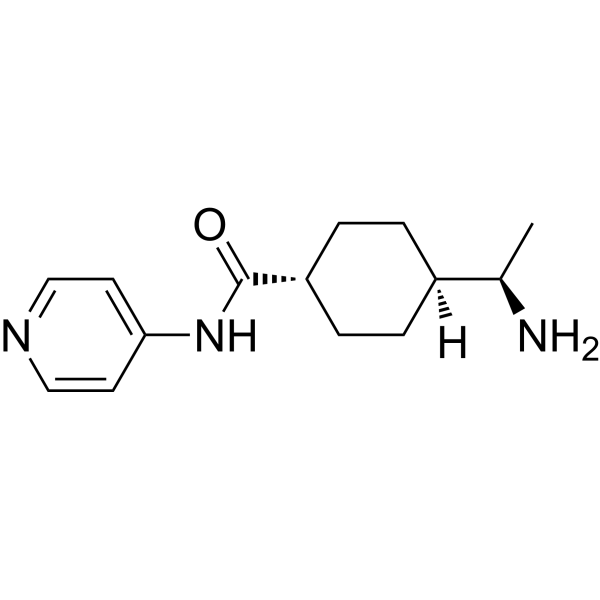
HY-10071
Y-27632ROCK Inhibitor -
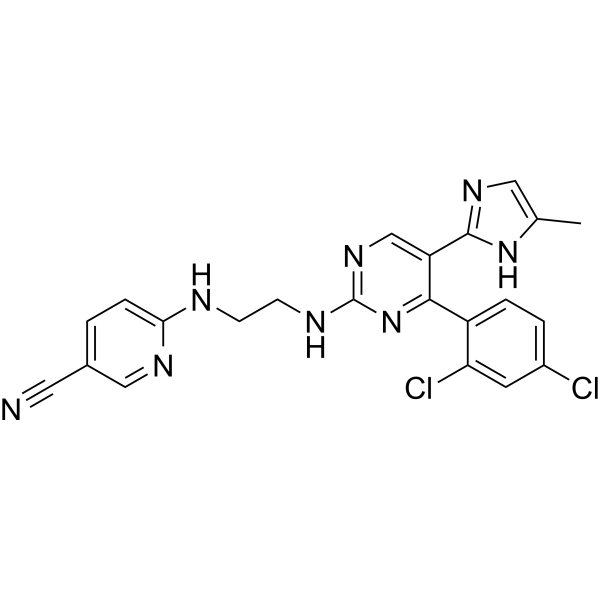
HY-10182
LaduviglusibGSK-3 Inhibitor -
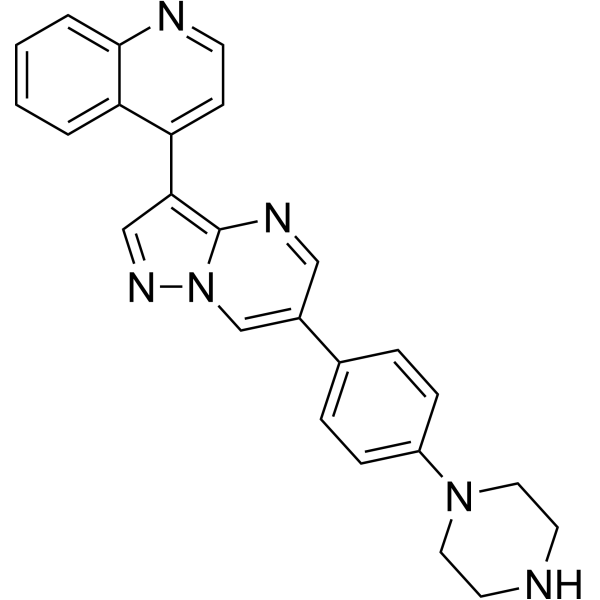
HY-12071
LDN193189ALK2/3 Inhibitor -
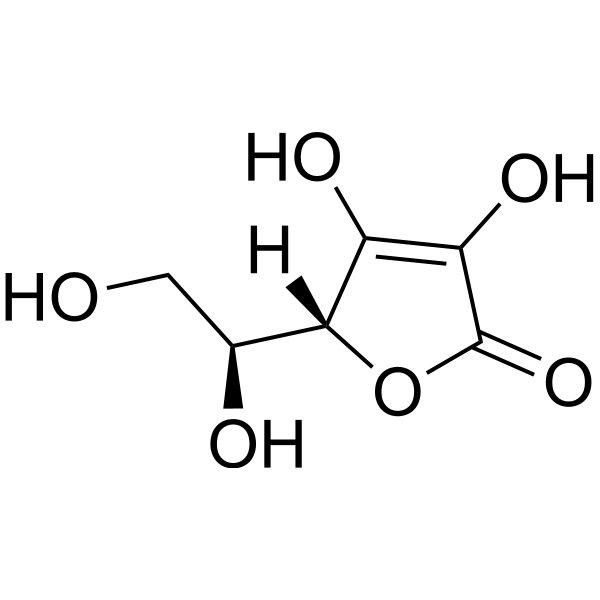
HY-B0166
L-Ascorbic acidAntioxidant -
HY-B0166G
L-Ascorbic acid (GMP)Antioxidant -
HY-B0166GL
L-Ascorbic acid (GMP Like)Antioxidant -
HY-10432
A 83-01ALK4/5/7 Inhibitor -

HY-15398R
Vitamin D3 (Standard)Vitamin
Publications Citing Use of MedChemExpress (MCE) L-Ascorbic acid (Standard)
More

Product Information
Information
Application
The compound is the grade of analytical standard, which is the reference standard supplied assay. It is commonly used in qualitative, quantitative and methodological research experiments in HPLC, GC and MS.


Chemical Information
-
CAS No. 50-81-7
-
Appearance Solid
-
Masse moléculaire 176.12
-
Formule C6H8O6
-
Color White to off-white
-
SMILES
OC([C@@]1([H])[C@H](CO)O)=C(O)C(O1)=O
-
Synonyms
L-Ascorbate (Standard); Vitamin C (Standard)
-
Structure Classification
-
Livraison
Room temperature in continental US; may vary elsewhere.
-
Stockage
Please store the product under the recommended conditions in the Certificate of Analysis.


Publications (2)
-
Journal Impact Factor
-
Most Recent
-
Sci Adv
Sympathetic nerve aggravates autoimmune skin disease via NE-adrenergic receptor axis: Neuroimmune cross-talk insights from vitiligo. [Abstract]2026 Mar 6;12(10):eaea7017. PMID: 41779853 -
Sci Rep
Activation of PI3K-AKT pathway prevents steroid-induced osteonecrosis of the femoral head via inhibiting Cuproptosis. [Abstract]2025 Mar 15;15(1):8950. PMID: 40089548


Pureté et documentation
-
SDS (394 KB)
- English - EN (394 KB)
- Français - FR (394 KB)
- Deutsch - DE (394 KB)
- Norwegian - NO (394 KB)
- Español - ES (394 KB)
- Swedish - SV (394 KB)
- Italian - IT (394 KB)
- Korean - KR (394 KB)
- Portuguese - PT (394 KB)
-
Instruction de manipulation (2659 KB)
Références
[1]. Sebastian J Padayatty, et al. Vitamin C as an antioxidant: evaluation of its role in disease prevention. J Am Coll Nutr. 2003 Feb;22(1):18-35. [Content Brief]
[2]. Michael T Nelson, et al. Molecular mechanisms of subtype-specific inhibition of neuronal T-type calcium channels by ascorbate. J Neurosci. 2007 Nov 14;27(46):12577-83. [Content Brief]
[3]. Aleksander Hinek, et al. Sodium L-ascorbate enhances elastic fibers deposition by fibroblasts from normal and pathologic human skin. J Dermatol Sci. 2014 Sep;75(3):173-82. [Content Brief]
[4]. Sungrae Cho, et al. Hormetic dose response to L-ascorbic acid as an anti-cancer drug in colorectal cancer cell lines according to SVCT-2 expression. Sci Rep. 2018 Jul 27;8(1):11372. [Content Brief]
[5]. Satyanarayana Sreemantula, et al. Influence of antioxidant (L- ascorbic acid) on tolbutamide induced hypoglycaemia/antihyperglycaemia in normal and diabetic rats. BMC Endocr Disord. 2005 Mar 3;5(1):2. [Content Brief]


L-Ascorbic acid (Standard) Related Classifications
HY-B0166R Related Classifications
 Powered by Bioz