



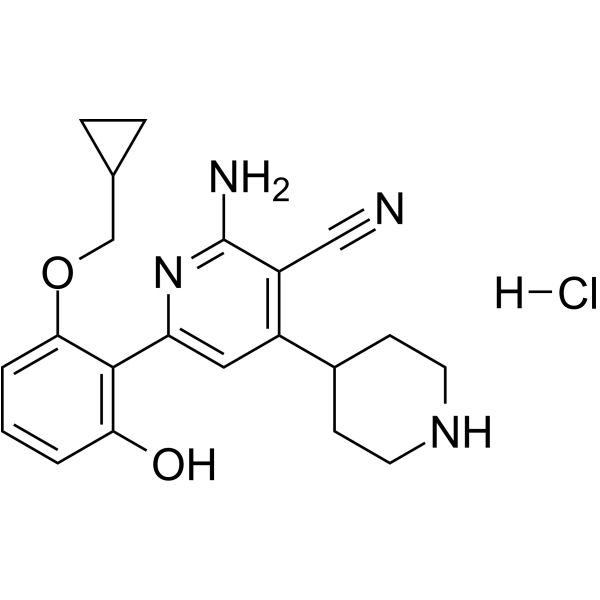
ACHP Hydrochloride
Based on 10 publication(s) in Google Scholar
ACHP Hydrochloride (IKK-2 Inhibitor VIII) is a highly potent and selective IKK-β inhibitor with an IC50 of 8.5 nM.
For research use only. We do not sell to patients.
- Purity : 99.94%
- CAS No.: 406209-26-5
- Formula: C21H25ClN4O2
- Molecular Weight:400.90
-
Storage:
4°C, stored under nitrogen
* In solvent : -80°C, 6 months; -20°C, 1 month (stored under nitrogen)

To place orders, for customer services and technical support, please contact: MedChemExpress USA
Tel: 609-228-6898 E-mail: [email protected] [email protected]


-
 Biological Activity
-
Chemical Information
-
Solvent & Solubility
- Purity & Documentation
- References
-
 Help & FAQs


-
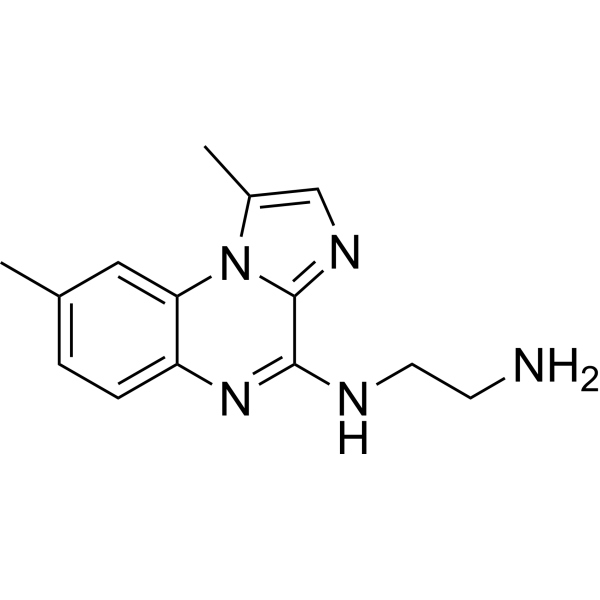
HY-10519
BMS-345541IKK-1/IKK-2 Inhibitor -
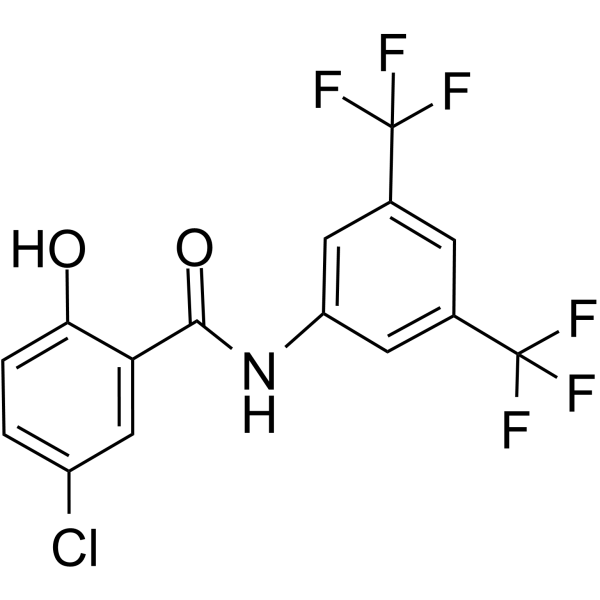
HY-10172
IMD-0354IKKβ Inhibitor -
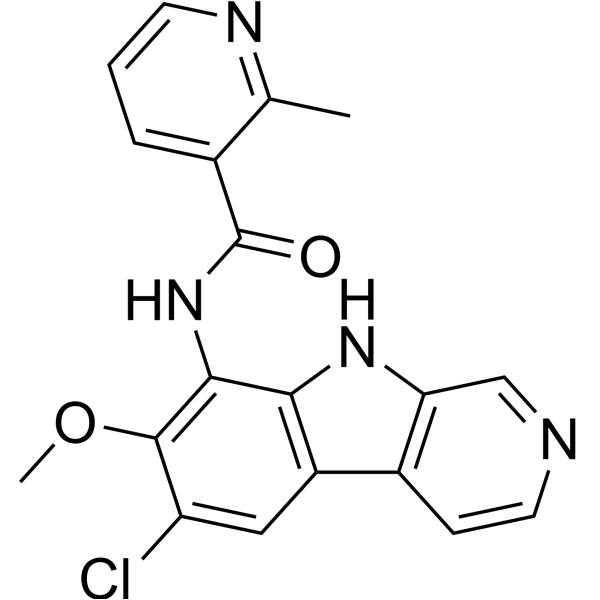
HY-15473
MLN120BIKKβ Inhibitor -
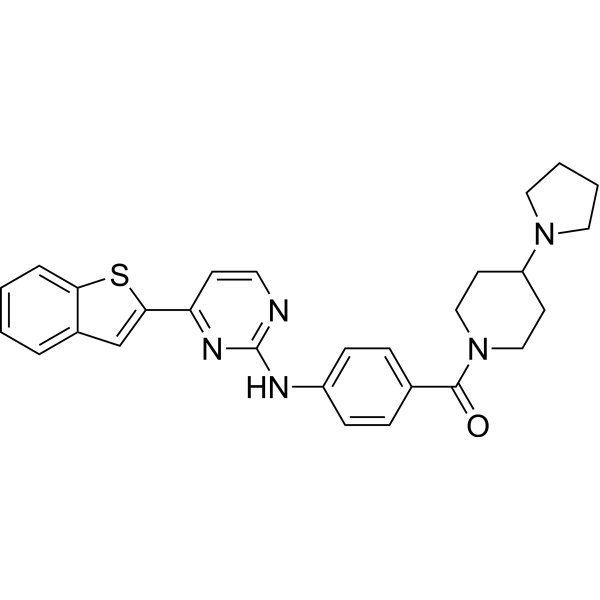
HY-13687
IKK 16IKK Inhibitor -
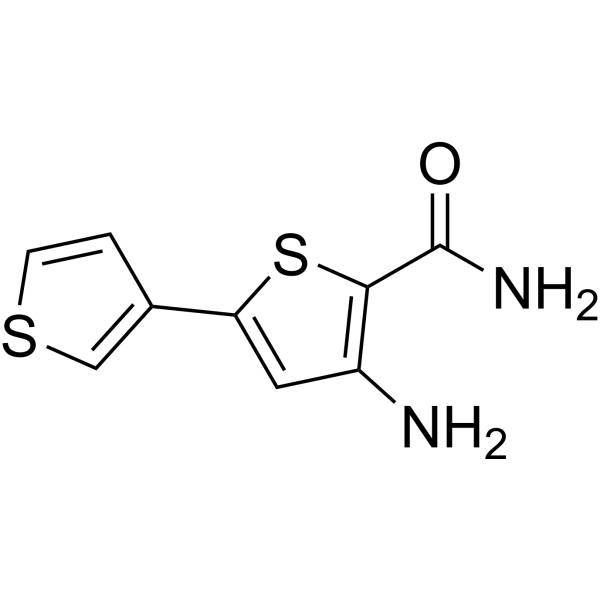
HY-13802
SC-514IKK Inhibitor -
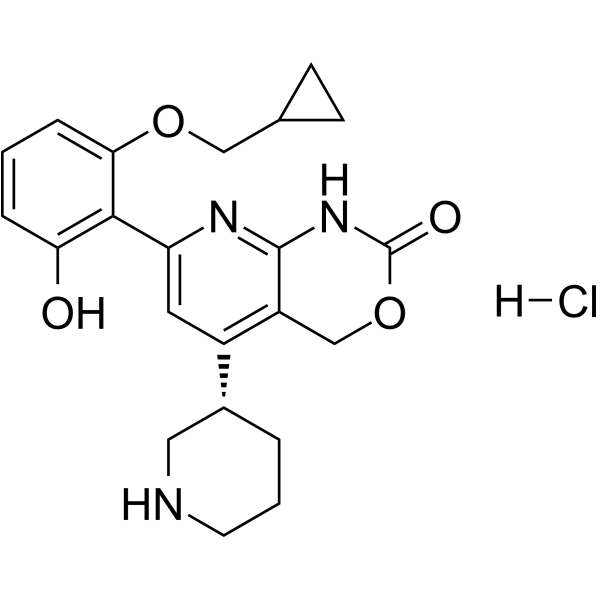
HY-50948
Bay 65-1942 hydrochlorideIKK Inhibitor -
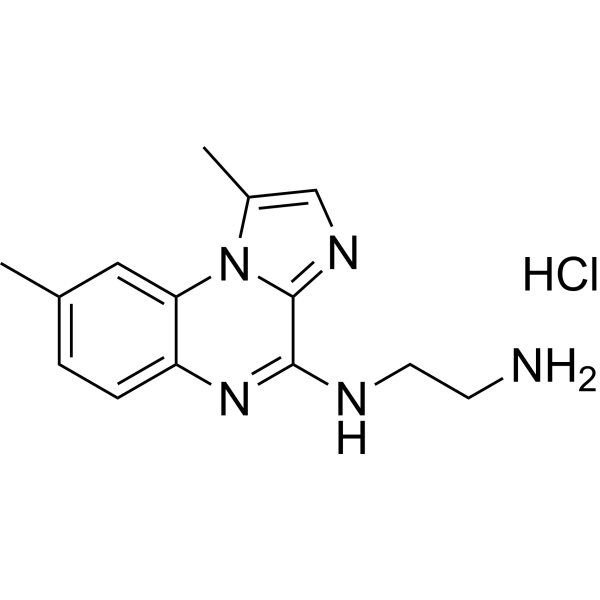
HY-10518
BMS-345541 hydrochlorideIKK-1/IKK-2 Inhibitor -
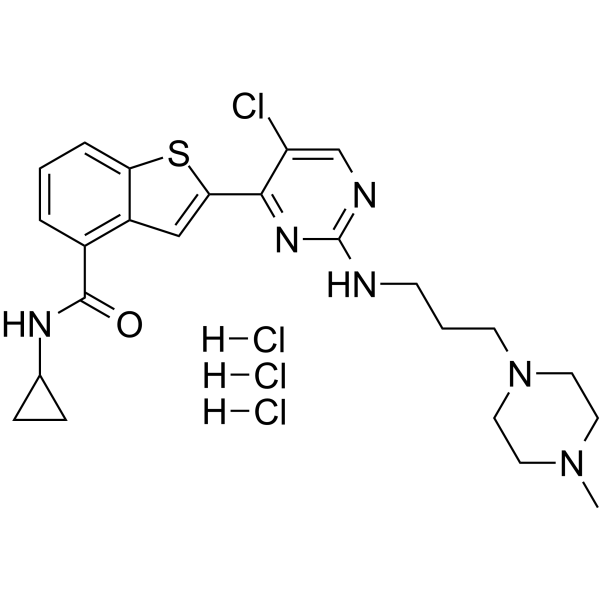
HY-B0788A
LY2409881 trihydrochlorideIKK2 Inhibitor -
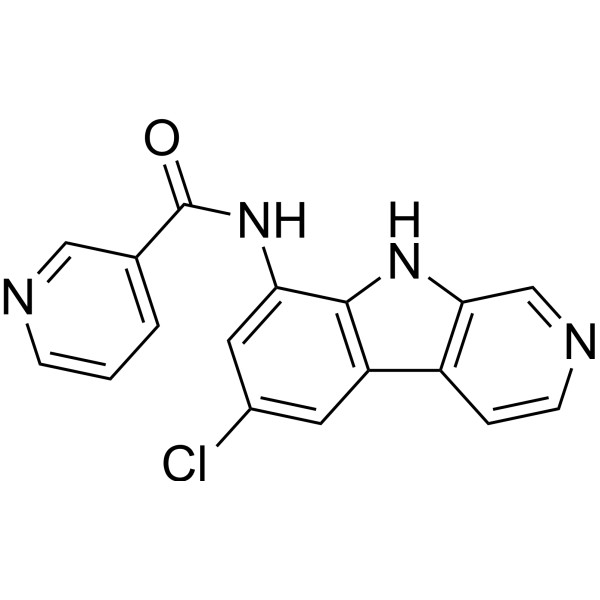
HY-18008
PS-1145Apoptosis Inducer -
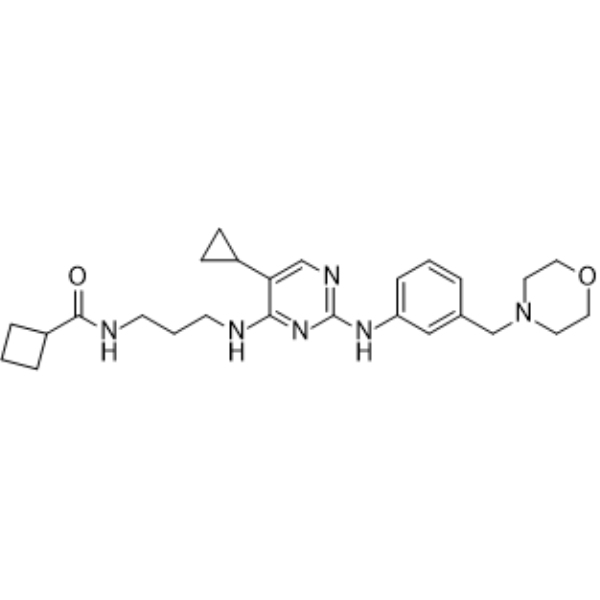
HY-13018
MRT67307IKKε/TBK-1 Inhibitor -
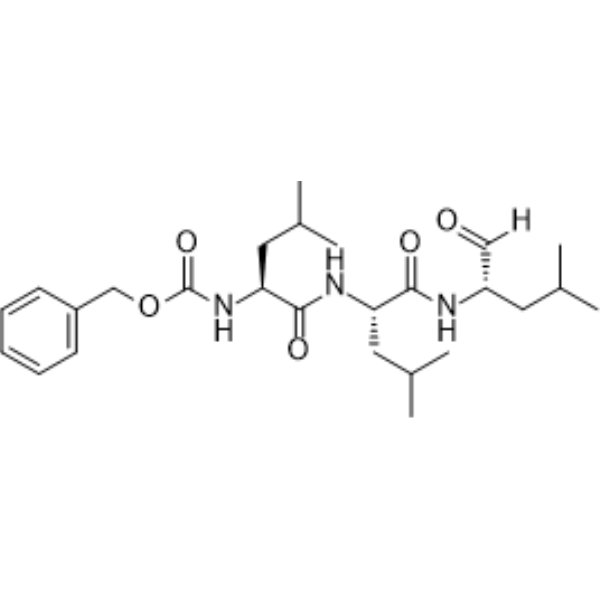
HY-13259
MG-132Proteasome Inhibitor -
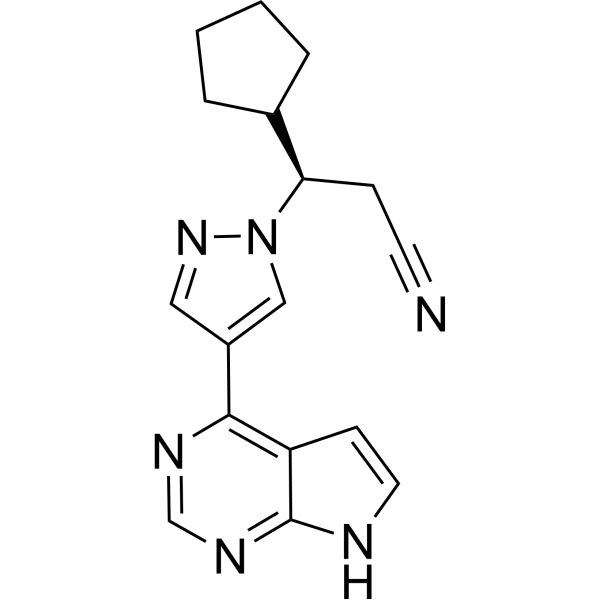
HY-50856
RuxolitinibJAK1/2 Inhibitor
Publications Citing Use of MedChemExpress (MCE) ACHP Hydrochloride
More- Signal Transduct Target Ther. 2025 Dec 15;10(1):406. [Abstract]
- Science. 2026 Feb 26;391(6788):eads4405. [Abstract]
- Nat Commun. 2020 Jul 9;11(1):3427. [Abstract]
- Cell Death Dis. 2020 Oct 15;11(10):863. [Abstract]
- J Bone Miner Res. 2019 Oct;34(10):1880-1893. [Abstract]
- Am J Sports Med. 2021 Mar;49(3):780-789. [Abstract]
- Sci Rep. 2021 Jul 28;11(1):15319. [Abstract]
- J Orthop Res. 2023 Oct;41(10):2295-2304. [Abstract]
- University of Bonn. 2025.
- Patent. US20190248778A1.


Biological Activity
Description
IC50 & Target
[1]|
IKK-β 8.5 nM (IC50) |
IKK-α 250 nM (IC50) |
In Vitro
ACHP Hydrochloride (Compound 4j) exhibits potent IKK-β inhibitory (IC50: 8.5 nM) and cellular activities (IC50=40 nM, in A549 cells). ACHP moderately inhibits IKK-α with an IC50 of 250 nM but exhibits good selectivity towards other kinases, such as IKK3, Syk and MKK4 (IC50>20,000 nM). Moreover, ACHP demonstrates quite potent activity in various cellular assays. ACHP inhibits NF-κB-dependent reporter gene activation in TNFα-activated HEK293 cells and PMA/calcium ionophore-activated Jurkat T cells. ACHP fails to inhibit PMA-induced AP-1 activation in MRC-5 cells and PMA/calcium ionophore induced NF-κB dependent reporter gene transcription in Jurkat cells even at concentrations exceeding 10 μM. ACHP selectively interferes with the NF-κB signaling cascade by inhibition of IKK-β in living cells[1]. ACHP inhibits the growth of these cells in a dose-dependent manner. Tax-active cell lines are more susceptible to ACHP than Tax-inactive cell lines and Jurkat (IC50 values in Tax-active cell lines, Tax-inactive cell lines or Jurkat are 3.1±1.3 μM, 10.7±1.7 μM and 23.6 μM, respectively), suggesting that the growth of Tax-active cells depends on NF-κB more than Tax-inactive cells[2].
MedChemExpress (MCE) has not independently confirmed the accuracy of these methods. They are for reference only. .
In Vivo
MedChemExpress (MCE) has not independently confirmed the accuracy of these methods. They are for reference only.


Chemical Information
-
CAS No. 406209-26-5
-
Appearance Solid
-
Molecular Weight 400.90
-
Formula C21H25ClN4O2
-
Color Off-white to yellow
-
SMILES
N#CC1=C(C=C(N=C1N)C2=C(C=CC=C2OCC3CC3)O)C4CCNCC4.[H]Cl
-
Synonyms
IKK-2 Inhibitor VIII
-
Shipping
Room temperature in continental US; may vary elsewhere.
-
Storage
4°C, stored under nitrogen
* In solvent : -80°C, 6 months; -20°C, 1 month (stored under nitrogen)


Publications (10)
-
Journal Impact Factor
-
Most Recent
-
Signal Transduct Target Ther
Selective depletion of tumor-associated SAMHD1 enhances chemotherapeutic efficacy and antitumor immune responses. [Abstract]2025 Dec 15;10(1):406. PMID: 41392286 -
Science
2026 Feb 26;391(6788):eads4405. PMID: 41747053 -
Nat Commun
LDHA-mediated ROS generation in chondrocytes is a potential therapeutic target for osteoarthritis. [Abstract]2020 Jul 9;11(1):3427. PMID: 32647171 -
Cell Death Dis
Mesenchymal stem cells reverse EMT process through blocking the activation of NF-κB and Hedgehog pathways in LPS-induced acute lung injury. [Abstract]2020 Oct 15;11(10):863. PMID: 33060560 -
J Bone Miner Res
Attenuation of NF-κB in Intestinal Epithelial Cells Is Sufficient to Mitigate the Bone Loss Comorbidity of Experimental Mouse Colitis. [Abstract]2019 Oct;34(10):1880-1893. PMID: 31107556 -
Am J Sports Med
2021 Mar;49(3):780-789. PMID: 33507808 -
Sci Rep
A phenotypic high-content, high-throughput screen identifies inhibitors of NLRP3 inflammasome activation. [Abstract]2021 Jul 28;11(1):15319. PMID: 34321581 -
J Orthop Res
The effects of NF-κB suppression on the early healing response following intrasynovial tendon repair in a canine model. [Abstract]2023 Oct;41(10):2295-2304. PMID: 37094977 -
-


Solvent & Solubility
In Vitro:
DMSO : 100 mg/mL (249.44 mM; Need ultrasonic; Hygroscopic DMSO has a significant impact on the solubility of product, please use newly opened DMSO)
H2O : < 0.1 mg/mL (insoluble)
Please refer to the solubility information to select the appropriate solvent. Once prepared, please aliquot and store the solution to prevent product inactivation from repeated freeze-thaw cycles.
Storage method and period of stock solution: -80°C, 6 months; -20°C, 1 month (stored under nitrogen). When stored at -80°C, please use it within 6 months. When stored at -20°C, please use it within 1 month.
Please refer to the solubility information to select the appropriate solvent. Once prepared, please aliquot and store the solution to prevent product inactivation from repeated freeze-thaw cycles.
Storage method and period of stock solution: -80°C, 6 months; -20°C, 1 month (stored under nitrogen). When stored at -80°C, please use it within 6 months. When stored at -20°C, please use it within 1 month.
Concentration (start) × Volume (start) = Concentration (final) × Volume (final)
In Vivo:
Select the appropriate dissolution method based on your experimental animal and administration route.
- For the following dissolution methods, please ensure to first prepare a clear stock solution using an In Vitro approach and then sequentially add co-solvents:
- To ensure reliable experimental results, the clarified stock solution can be appropriately stored based on storage conditions. As for the working solution for In Vivo experiments, it is recommended to prepare freshly and use it on the same day.
- The percentages shown for the solvents indicate their volumetric ratio in the final prepared solution. If precipitation or phase separation occurs during preparation, heat and/or sonication can be used to aid dissolution.
Add each solvent one by one: 10% DMSO 40% PEG300 5% Tween-80 45% Saline
Solubility: ≥ 2.5 mg/mL (6.24 mM); Clear solution
This protocol yields a clear solution of ≥ 2.5 mg/mL (saturation unknown).
Taking 1 mL working solution as an example, add 100 μL DMSO stock solution (25.0 mg/mL) to 400 μL PEG300, and mix evenly; then add 50 μL Tween-80 and mix evenly; then add 450 μL Saline to adjust the volume to 1 mL.
Preparation of Saline: Dissolve 0.9 g sodium chloride in ddH₂O and dilute to 100 mL to obtain a clear Saline solution.
Add each solvent one by one: 10% DMSO 90% (20% SBE-β-CD in Saline)
Solubility: ≥ 2.5 mg/mL (6.24 mM); Clear solution
This protocol yields a clear solution of ≥ 2.5 mg/mL (saturation unknown).
Taking 1 mL working solution as an example, add 100 μL DMSO stock solution (25.0 mg/mL) to 900 μL 20% SBE-β-CD in Saline, and mix evenly.
Preparation of 20% SBE-β-CD in Saline (4°C, storage for one week): 2 g SBE-β-CD powder is dissolved in 10 mL Saline, completely dissolve until clear.
In Vivo Dissolution Calculator
Please enter the basic information of animal experiments:
-
-
-
-
Recommended: Prepare an additional quantity of animals to account for potential losses during experiments.
Please enter your animal formula composition:
-
%DMSO +
Recommended: Keep the proportion of DMSO in working solution below 2% if your animal is weak.
-
%+
-
+%Tween-80 + +
-
%Saline +
The co-solvents required include: DMSO, . All of co-solvents are available by MedChemExpress (MCE). , Tween 80. All of co-solvents are available by MedChemExpress (MCE).
Working solution concentration: 0.22 mg/mL
Method for preparing stock solution: mg drug dissolved in μL DMSO. Stock solution concentration: mg/mL. * In solvent : -80°C, 6 months; -20°C, 1 month (stored under nitrogen)
1. Take μL DMSO stock solution;
2. Add μL .
μL , mix evenly;
3. Then add μL Tween 80, mix evenly;
4. Then add μL
Please ensure that the stock solution in the first step is dissolved to a clear state, and add co-solvents in sequence. You can use ultrasonic heating (ultrasonic cleaner, recommended frequency 20-40 kHz), vortexing, etc. to assist dissolution.


Purity & Documentation
-
Data Sheet (279 KB)
-
SDS (252 KB)
- English - EN (252 KB)
- Français - FR (252 KB)
- Deutsch - DE (252 KB)
- Norwegian - NO (252 KB)
- Español - ES (252 KB)
- Swedish - SV (252 KB)
- Italian - IT (252 KB)
- Korean - KR (252 KB)
- Portuguese - PT (252 KB)
-
Handling Instructions (2659 KB)
References
[1]. Murata T, et al. Synthesis and structure-activity relationships of novel IKK-beta inhibitors. Part 3: Orally active anti-inflammatory agents. Bioorg Med Chem Lett. 2004 Aug 2;14(15):4019-22. [Content Brief]
[2]. Sanda T, et al. Induction of cell death in adult T-cell leukemia cells by a novel IkappaB kinase inhibitor. Leukemia. 2006 Apr;20(4):590-8. [Content Brief]


Complete Stock Solution Preparation Table
Please refer to the solubility information to select the appropriate solvent. Once prepared, please aliquot and store the solution to prevent product inactivation from repeated freeze-thaw cycles.
Storage method and period of stock solution: -80°C, 6 months; -20°C, 1 month (stored under nitrogen). When stored at -80°C, please use it within 6 months. When stored at -20°C, please use it within 1 month.
| Optional Solvent | Concentration Solvent Mass | 1 mg | 5 mg | 10 mg | 25 mg |
|---|---|---|---|---|---|
| DMSO | 1 mM | 2.4944 mL | 12.4719 mL | 24.9439 mL | 62.3597 mL |
| 5 mM | 0.4989 mL | 2.4944 mL | 4.9888 mL | 12.4719 mL | |
| 10 mM | 0.2494 mL | 1.2472 mL | 2.4944 mL | 6.2360 mL | |
| 15 mM | 0.1663 mL | 0.8315 mL | 1.6629 mL | 4.1573 mL | |
| 20 mM | 0.1247 mL | 0.6236 mL | 1.2472 mL | 3.1180 mL | |
| 25 mM | 0.0998 mL | 0.4989 mL | 0.9978 mL | 2.4944 mL | |
| 30 mM | 0.0831 mL | 0.4157 mL | 0.8315 mL | 2.0787 mL | |
| 40 mM | 0.0624 mL | 0.3118 mL | 0.6236 mL | 1.5590 mL | |
| 50 mM | 0.0499 mL | 0.2494 mL | 0.4989 mL | 1.2472 mL | |
| 60 mM | 0.0416 mL | 0.2079 mL | 0.4157 mL | 1.0393 mL | |
| 80 mM | 0.0312 mL | 0.1559 mL | 0.3118 mL | 0.7795 mL | |
| 100 mM | 0.0249 mL | 0.1247 mL | 0.2494 mL | 0.6236 mL |


ACHP Hydrochloride Related Classifications
HY-13060 Related Classifications
 Powered by Bioz