



Amitraz
Based on 1 publication(s) in Google Scholar
Amitraz is a non-systemic acaricide and insecticide with alpha-adrenergic agonist activity that interacts with octopamine receptors in the central nervous system and inhibits monoamine oxidase and prostaglandin synthesis.
For research use only. We do not sell to patients.
- Purity : 98.75%
- CAS No.: 33089-61-1
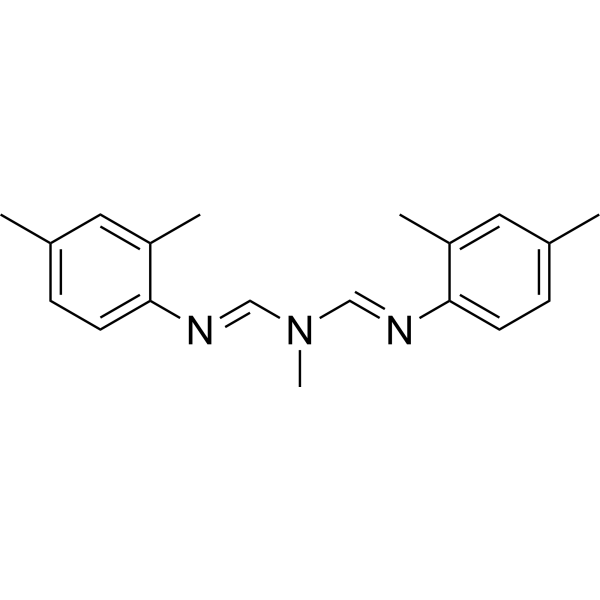
- Formula: C19H23N3
- Molecular Weight:293.41
-
Storage:Powder -20°C, 3 years ; In solvent -80°C, 6 months , -20°C, 1 month

To place orders, for customer services and technical support, please contact: MedChemExpress USA
Tel: 609-228-6898 E-mail: [email protected] [email protected]


-
 Biological Activity
-
Chemical Information
-
Solvent & Solubility
- Purity & Documentation
- References
-
 Help & FAQs


-
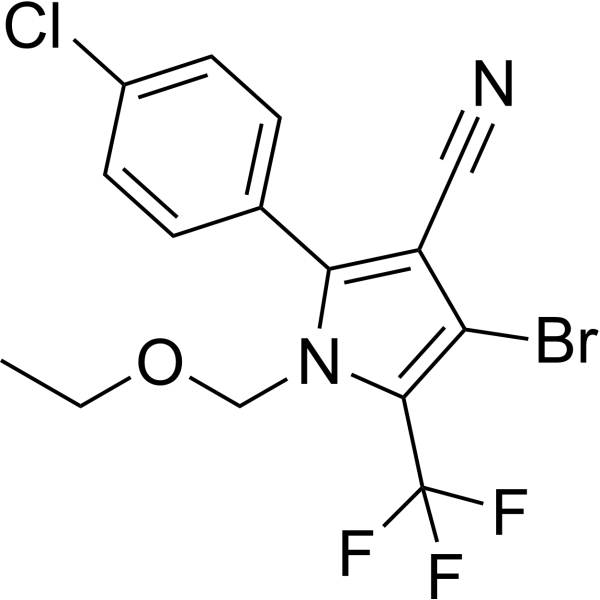
HY-B0840
ChlorfenapyrPyrrole Insecticide -

HY-B1111R
Amitraz (Standard)Parasite Inhibitor -
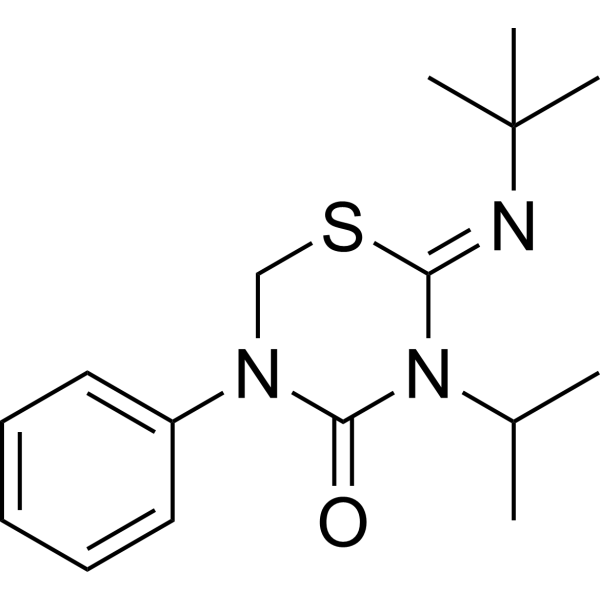
HY-B0831
BuprofezinChitin Synthesis Inhibitor -
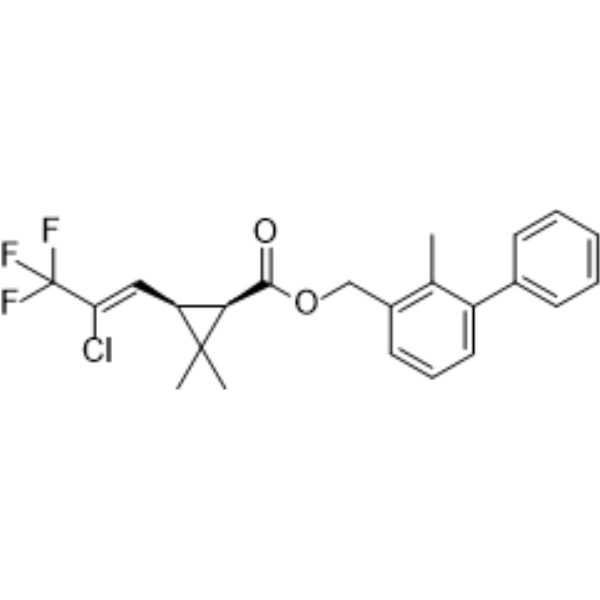
HY-B0824
BifenthrinSodium Channel Activator -
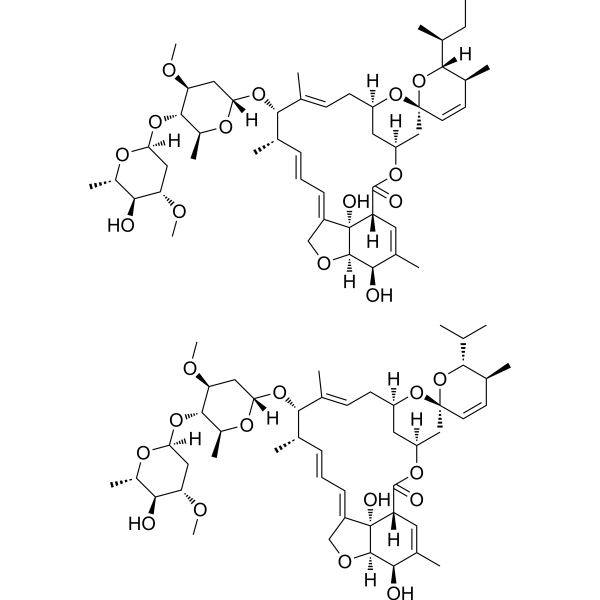
HY-15311
Avermectin B1Anti-infection Agent -
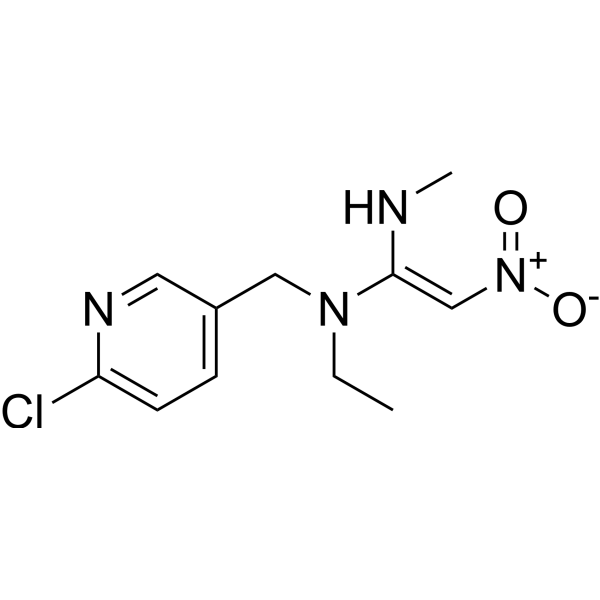
HY-B0820
NitenpyramnAChR Agonist -
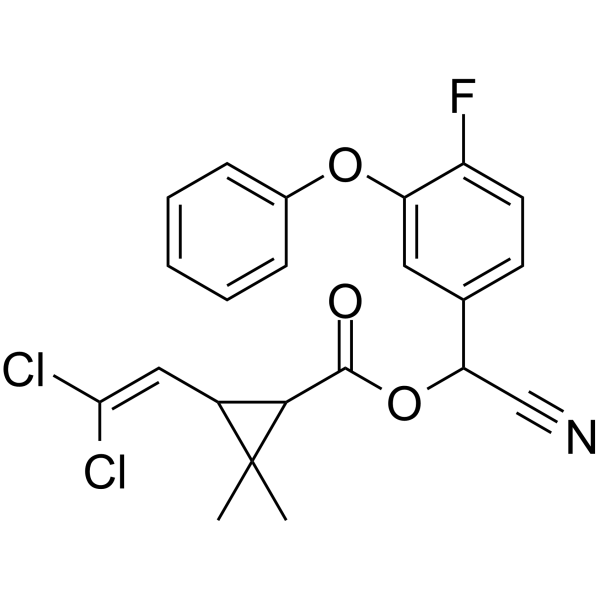
HY-B1837
CyfluthrinPyrethroid -
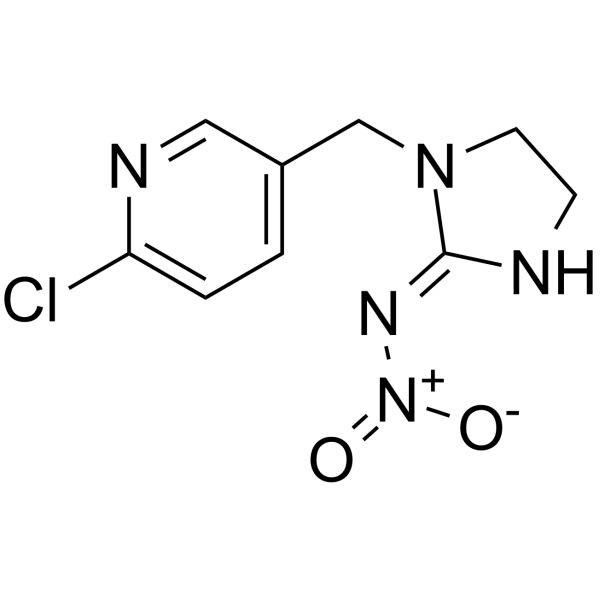
HY-B0838
ImidaclopridInsecticide -
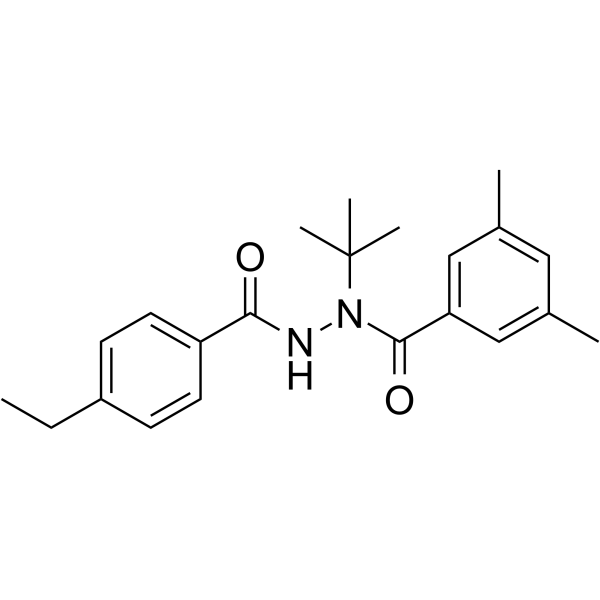
HY-B2054
TebufenozideInsecticide -
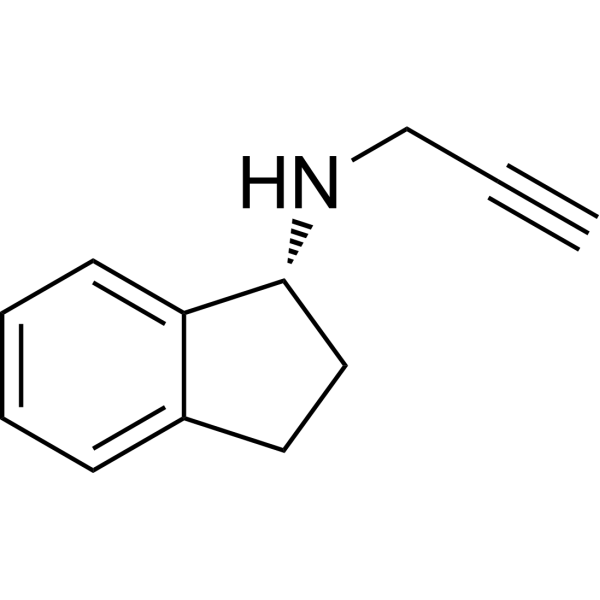
HY-14605A
RasagilineMAO Inhibitor -
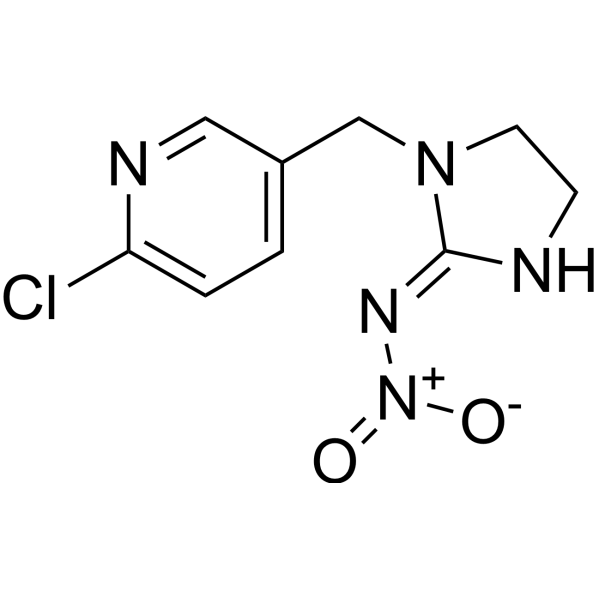
HY-B0838R
Imidacloprid (Standard)Insecticide -
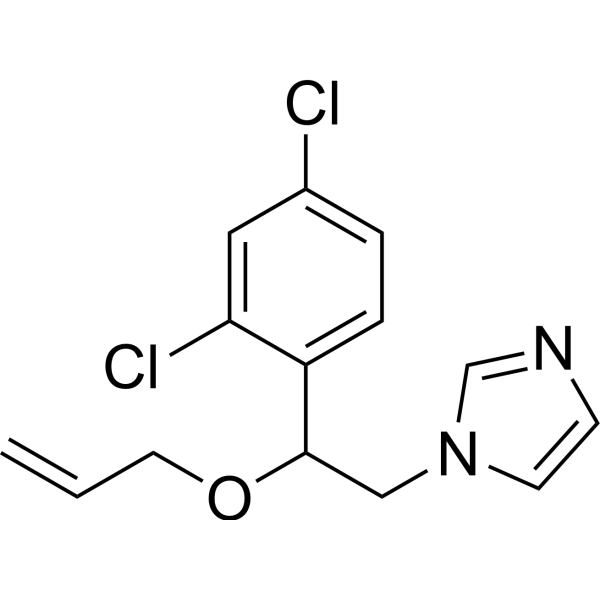
HY-B1134
ImazalilFungicide
Publications Citing Use of MedChemExpress (MCE) Amitraz
MoreAll Parasite Isoforms
MoreAll Adrenergic Receptor Isoforms
More

Biological Activity
Description
IC50 & Target
|
Mite |
In Vitro
Amitraz (25-150 μM, 10 days) inhibits the activity of IRE/CTVM19 cells (from Ixodes ricinus) and modulates the expression of their ABC transporters[1].
MedChemExpress (MCE) has not independently confirmed the accuracy of these methods. They are for reference only.
-
Cell Line:IRE/CTVM19 cells
-
Concentration:25, 50, 100, 150 μM
-
Incubation Time:10 days
-
Result:Resulted in a significant decrease in cell viability of IRE/CTVM19 cells compared to the control group (150 μM).
-
Cell Line:IRE/CTVM19 cells
-
Concentration:25, 50, 100, 150 μM
-
Incubation Time:10 days
-
Result:Induced a dose-dependent downregulation of ABCB1 gene expression and upregulates ABCB10 gene expression at 50 μM.
In Vivo
MedChemExpress (MCE) has not independently confirmed the accuracy of these methods. They are for reference only.
-
Animal Model:Pregnant female sprague-Dawley rats (10 weeks old)[2]
-
Dosage:0, 3, 10, 30 mg/kg
-
Administration:Oral gavage (p.o.), once daily for 19 days
-
Result:Exhibited significant maternal toxicity and developmental toxicity, including increased fetal mortality, reduced fetal weight, and abnormalities in external, visceral, and skeletal development (30 mg/kg/day). Caused mild maternal toxicity and minimal developmental toxicity (10 mg/kg/day). Did not induce maternal or developmental toxicity (3 mg/kg/day).


Chemical Information
-
CAS No. 33089-61-1
-
Appearance Solid
-
Molecular Weight 293.41
-
Formula C19H23N3
-
Color White to light yellow
-
SMILES
CN(/C=N/C1=CC=C(C)C=C1C)/C=N/C2=CC=C(C)C=C2C
-
Synonyms
BTS-27419
-
Shipping
Room temperature in continental US; may vary elsewhere.
-
Storage
Powder -20°C 3 years In solvent -80°C 6 months -20°C 1 month


Publications (1)
-
Journal Impact Factor
-
Most Recent


Solvent & Solubility
In Vitro:
DMSO : 100 mg/mL (340.82 mM; Need ultrasonic; Hygroscopic DMSO has a significant impact on the solubility of product, please use newly opened DMSO)
Please refer to the solubility information to select the appropriate solvent. Once prepared, please aliquot and store the solution to prevent product inactivation from repeated freeze-thaw cycles.
Storage method and period of stock solution: -80°C, 6 months; -20°C, 1 month. When stored at -80°C, please use it within 6 months. When stored at -20°C, please use it within 1 month.
Please refer to the solubility information to select the appropriate solvent. Once prepared, please aliquot and store the solution to prevent product inactivation from repeated freeze-thaw cycles.
Storage method and period of stock solution: -80°C, 6 months; -20°C, 1 month. When stored at -80°C, please use it within 6 months. When stored at -20°C, please use it within 1 month.
Concentration (start) × Volume (start) = Concentration (final) × Volume (final)
In Vivo:
Select the appropriate dissolution method based on your experimental animal and administration route.
- For the following dissolution methods, please ensure to first prepare a clear stock solution using an In Vitro approach and then sequentially add co-solvents:
- To ensure reliable experimental results, the clarified stock solution can be appropriately stored based on storage conditions. As for the working solution for In Vivo experiments, it is recommended to prepare freshly and use it on the same day.
- The percentages shown for the solvents indicate their volumetric ratio in the final prepared solution. If precipitation or phase separation occurs during preparation, heat and/or sonication can be used to aid dissolution.
Add each solvent one by one: 10% DMSO 40% PEG300 5% Tween-80 45% Saline
Solubility: ≥ 2.5 mg/mL (8.52 mM); Clear solution
This protocol yields a clear solution of ≥ 2.5 mg/mL (saturation unknown).
Taking 1 mL working solution as an example, add 100 μL DMSO stock solution (25.0 mg/mL) to 400 μL PEG300, and mix evenly; then add 50 μL Tween-80 and mix evenly; then add 450 μL Saline to adjust the volume to 1 mL.
Preparation of Saline: Dissolve 0.9 g sodium chloride in ddH₂O and dilute to 100 mL to obtain a clear Saline solution.
Add each solvent one by one: 10% DMSO 90% (20% SBE-β-CD in Saline)
Solubility: 2.5 mg/mL (8.52 mM); Suspended solution; Need ultrasonic
This protocol yields a suspended solution of 2.5 mg/mL. Suspended solution can be used for oral and intraperitoneal injection.
Taking 1 mL working solution as an example, add 100 μL DMSO stock solution (25.0 mg/mL) to 900 μL 20% SBE-β-CD in Saline, and mix evenly.
Preparation of 20% SBE-β-CD in Saline (4°C, storage for one week): 2 g SBE-β-CD powder is dissolved in 10 mL Saline, completely dissolve until clear.
In Vivo Dissolution Calculator
Please enter the basic information of animal experiments:
-
-
-
-
Recommended: Prepare an additional quantity of animals to account for potential losses during experiments.
Please enter your animal formula composition:
-
%DMSO +
Recommended: Keep the proportion of DMSO in working solution below 2% if your animal is weak.
-
%+
-
+%Tween-80 + +
-
%Saline +
The co-solvents required include: DMSO, . All of co-solvents are available by MedChemExpress (MCE). , Tween 80. All of co-solvents are available by MedChemExpress (MCE).
Working solution concentration: 0.22 mg/mL
Method for preparing stock solution: mg drug dissolved in μL DMSO. Stock solution concentration: mg/mL.
1. Take μL DMSO stock solution;
2. Add μL .
μL , mix evenly;
3. Then add μL Tween 80, mix evenly;
4. Then add μL
Please ensure that the stock solution in the first step is dissolved to a clear state, and add co-solvents in sequence. You can use ultrasonic heating (ultrasonic cleaner, recommended frequency 20-40 kHz), vortexing, etc. to assist dissolution.


Purity & Documentation
-
Data Sheet (272 KB)
-
SDS (623 KB)
- English - EN (623 KB)
- Français - FR (623 KB)
- Deutsch - DE (623 KB)
- Norwegian - NO (623 KB)
- Español - ES (623 KB)
- Swedish - SV (623 KB)
- Italian - IT (623 KB)
- Korean - KR (623 KB)
- Portuguese - PT (623 KB)
-
Handling Instructions (2659 KB)
References
[1]. Mangia C, et al. Exposure to amitraz, fipronil and permethrin affects cell viability and ABC transporter gene expression in an Ixodes ricinus cell line. Parasit Vectors. 2018 Jul 31;11(1):437. [Content Brief]
[2]. Kim JC, et al. Evaluation of developmental toxicity of amitraz in Sprague-Dawley rats. Arch Environ Contam Toxicol. 2007 Jan;52(1):137-44. [Content Brief]


Complete Stock Solution Preparation Table
Please refer to the solubility information to select the appropriate solvent. Once prepared, please aliquot and store the solution to prevent product inactivation from repeated freeze-thaw cycles.
Storage method and period of stock solution: -80°C, 6 months; -20°C, 1 month. When stored at -80°C, please use it within 6 months. When stored at -20°C, please use it within 1 month.
| Optional Solvent | Concentration Solvent Mass | 1 mg | 5 mg | 10 mg | 25 mg |
|---|---|---|---|---|---|
| DMSO | 1 mM | 3.4082 mL | 17.0410 mL | 34.0820 mL | 85.2050 mL |
| 5 mM | 0.6816 mL | 3.4082 mL | 6.8164 mL | 17.0410 mL | |
| 10 mM | 0.3408 mL | 1.7041 mL | 3.4082 mL | 8.5205 mL | |
| 15 mM | 0.2272 mL | 1.1361 mL | 2.2721 mL | 5.6803 mL | |
| 20 mM | 0.1704 mL | 0.8521 mL | 1.7041 mL | 4.2603 mL | |
| 25 mM | 0.1363 mL | 0.6816 mL | 1.3633 mL | 3.4082 mL | |
| 30 mM | 0.1136 mL | 0.5680 mL | 1.1361 mL | 2.8402 mL | |
| 40 mM | 0.0852 mL | 0.4260 mL | 0.8521 mL | 2.1301 mL | |
| 50 mM | 0.0682 mL | 0.3408 mL | 0.6816 mL | 1.7041 mL | |
| 60 mM | 0.0568 mL | 0.2840 mL | 0.5680 mL | 1.4201 mL | |
| 80 mM | 0.0426 mL | 0.2130 mL | 0.4260 mL | 1.0651 mL | |
| 100 mM | 0.0341 mL | 0.1704 mL | 0.3408 mL | 0.8521 mL |


Amitraz Related Classifications
HY-B1111 Related Classifications
 Powered by Bioz