



RHPS4
Based on 7 publication(s) in Google Scholar
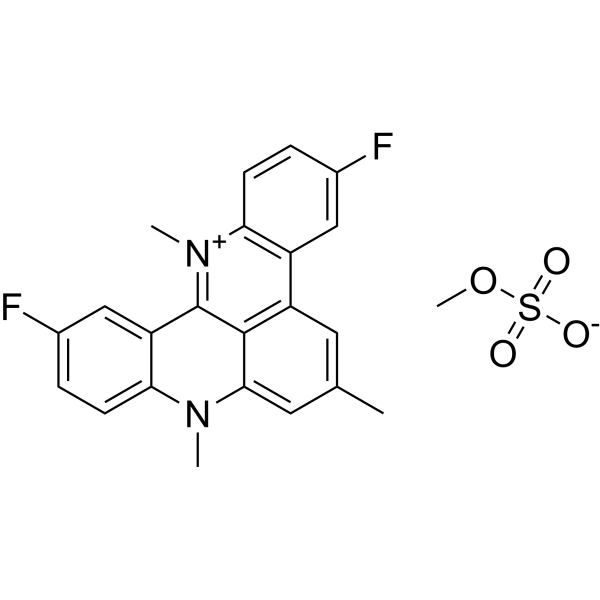
RHPS4 is a potent telomerase inhibitor (IC50 = 0.33 μM). RHPS4 is a DNA damage inducer.
For research use only. We do not sell to patients.
- Purity : 99.88%
- CAS No.: 390362-78-4
- Formula: C23H20F2N2O4S
- Molecular Weight:458.48
-
Storage:
Please store the product under the recommended conditions in the Certificate of Analysis.

To place orders, for customer services and technical support, please contact: MedChemExpress USA
Tel: 609-228-6898 E-mail: [email protected] [email protected]


-
 Biological Activity
-
Chemical Information
-
Solvent & Solubility
- Protocols
- Purity & Documentation
- References
-
 Help & FAQs


-
HY-108477
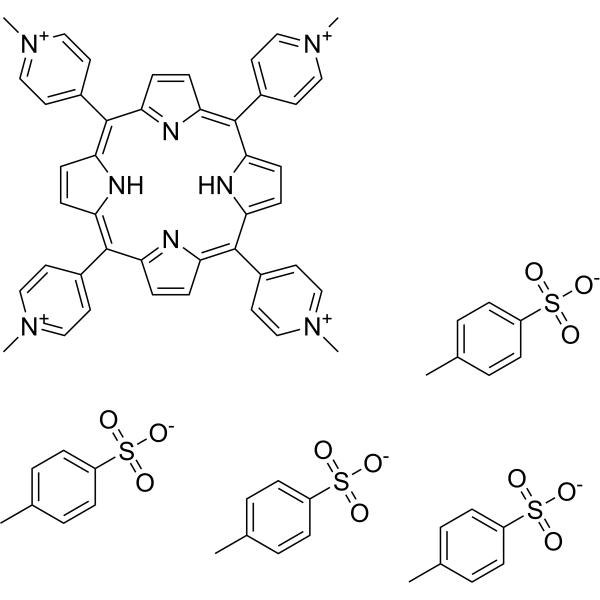
TMPyP4 tosylateTelomerase Inhibitor -
HY-13323
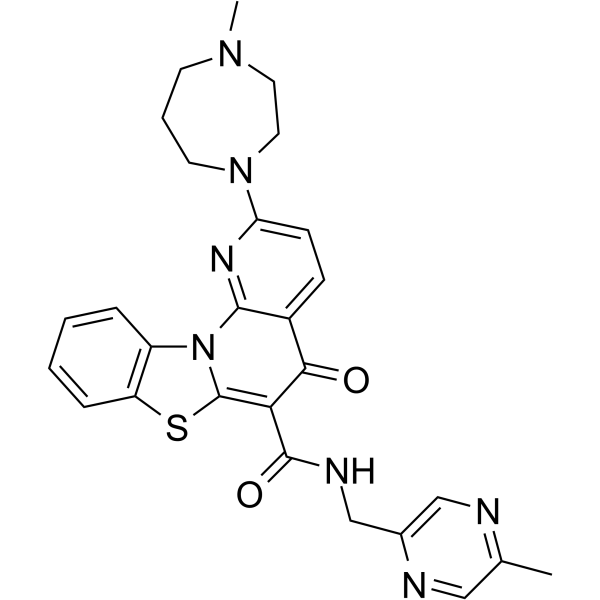
CX-5461RNA Polymerase I Inhibitor -
HY-17353
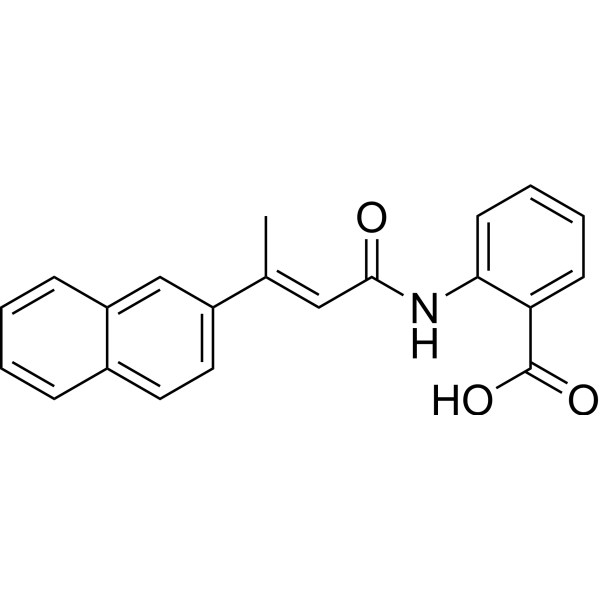
BIBR 1532Apoptosis Inducer -
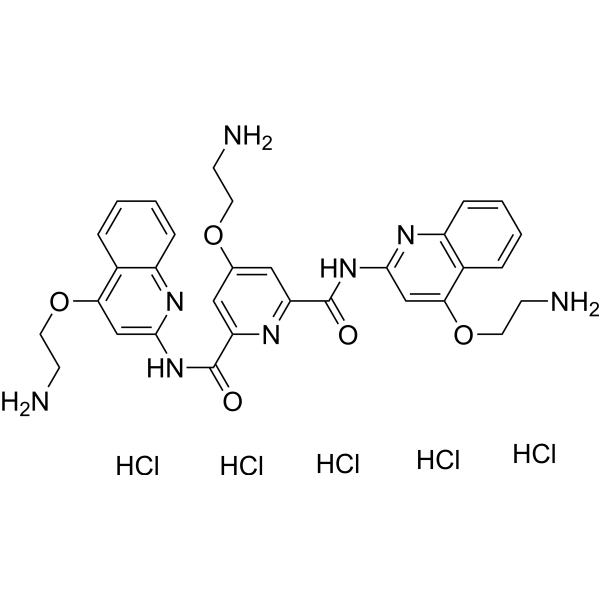
HY-15176A
Pyridostatin hydrochlorideG-quadruplex Inducer/Stabilizer -
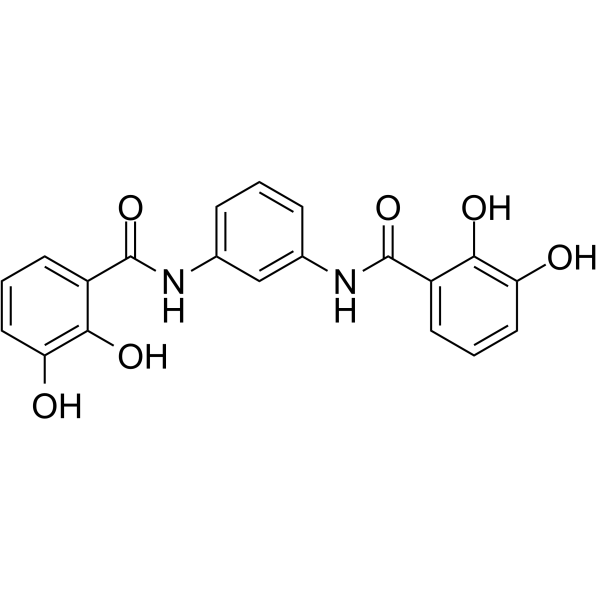
HY-120145
MST-312Telomerase Inhibitor -
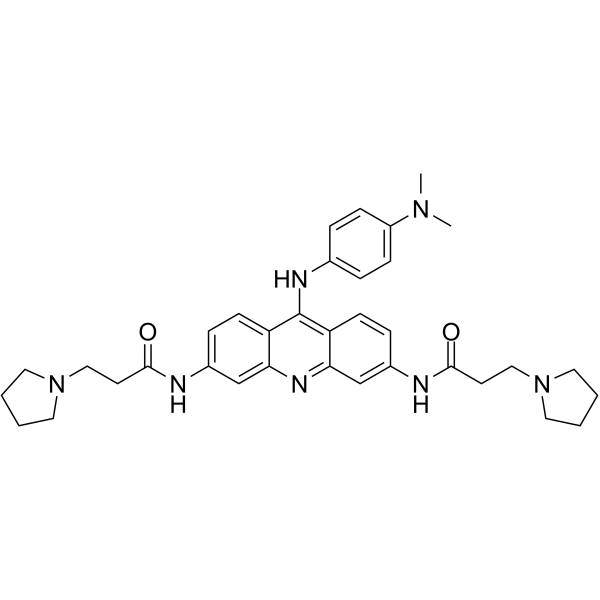
HY-15523
Braco-19Telomerase Inhibitor -
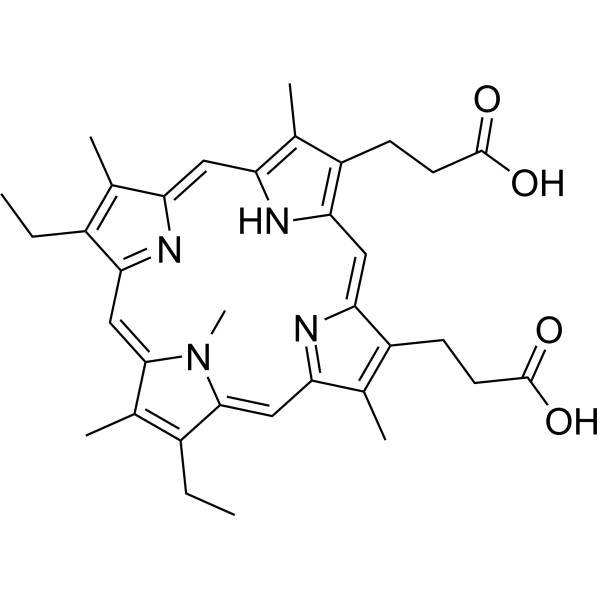
HY-133821
N-Methylmesoporphyrin IXG-quadruplex DNA Fluorescent Binder -
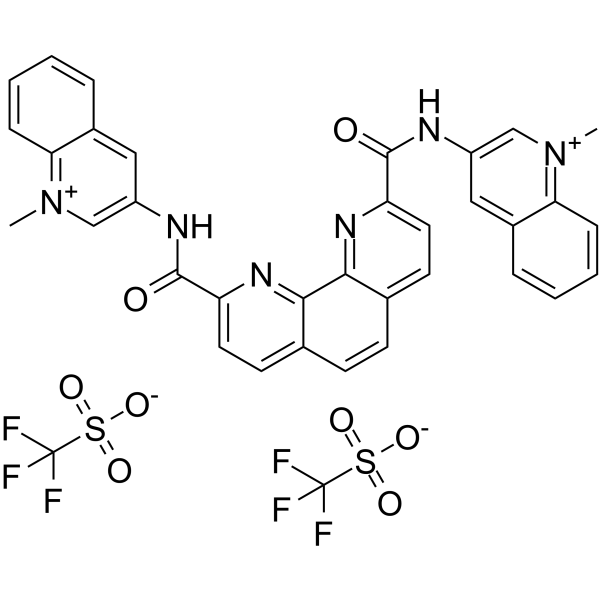
HY-15594A
Phen-DC3 TrifluoromethanesulfonateG4 Ligand -
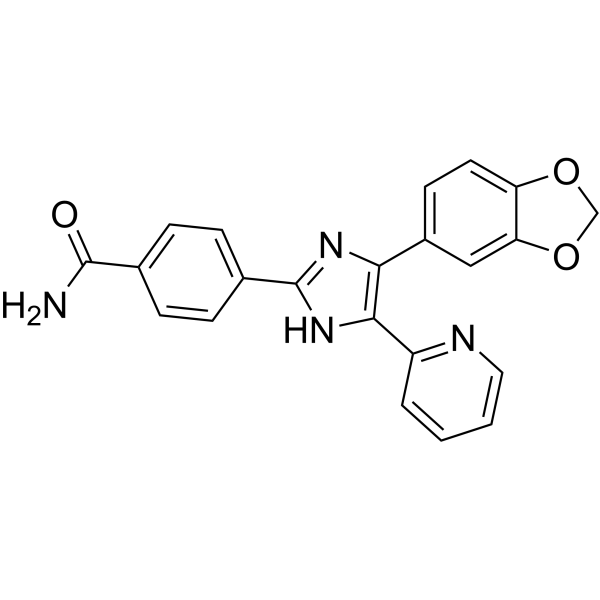
HY-10431
SB-431542TGF-β Receptor Kinase Inhibitor -
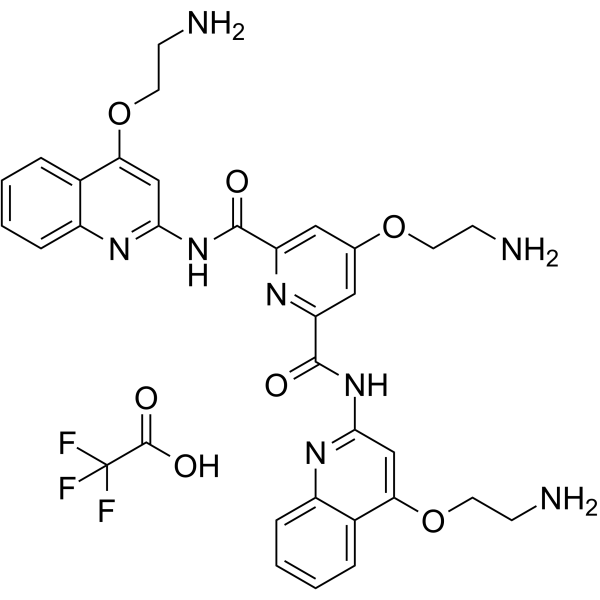
HY-15176B
Pyridostatin TFAG-quadruplex Inducer/Stabilizer -
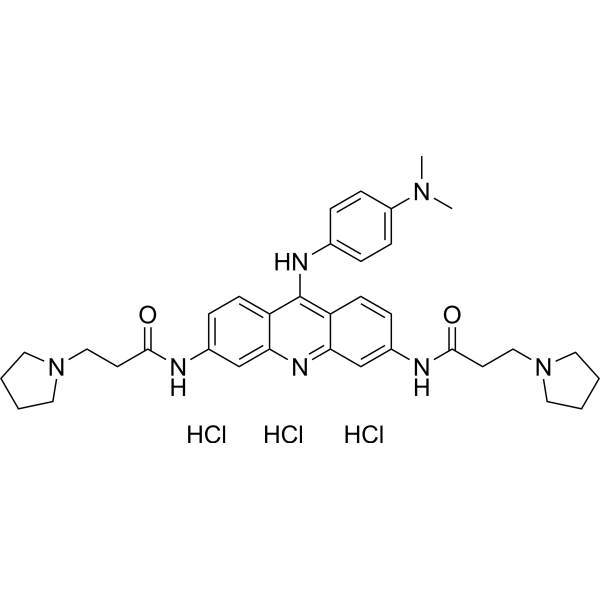
HY-15523A
Braco-19 trihydrochlorideTelomerase Inhibitor -
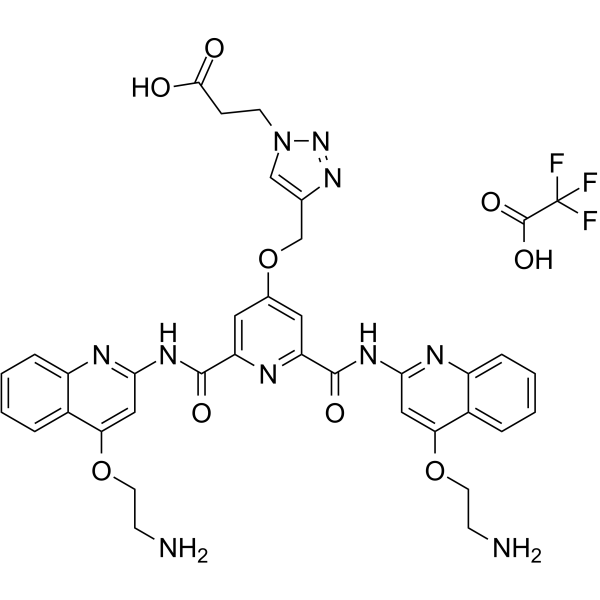
HY-112680A
Carboxy pyridostatin trifluoroacetate saltG-quadruplex Ligand
Publications Citing Use of MedChemExpress (MCE) RHPS4
More- Nucleic Acids Res. 2025 Jan 7;53(1):gkae1259. [Abstract]
- J Exp Med. 2024 Nov 4;221(11):e20240435. [Abstract]
- Br J Pharmacol. 2025 Aug;182(16):3923-3951. [Abstract]
- Mol Cancer Ther. 2026 Jul 15:10.1158/1535-7163.MCT-26-0182.
- J Chem Inf Model. 2025 Jun 9;65(11):5718-5729. [Abstract]
- Antimicrob Agents Chemother. 2026 Oct 1:e0014426.
- bioRxiv. 2026 Jan 7.


Biological Activity
Description
IC50 & Target
IC50: 0.33 μM (telomerase in the TRAP assay)[1].
In Vitro
RHPS4 could sensitize tumor cells to anticancer agents that act via disparate mechanisms[1].
?
RHPS4 (0.5-1 μM, 15 days) induces a senescent-like growth arrest in MCF-7 cells[1].
?
RHPS4 (1 μM, 4 days) induces phosphorylation of H2AX in transformed and tumor cells[2].
MedChemExpress (MCE) has not independently confirmed the accuracy of these methods. They are for reference only.
-
Cell Line:MCF-7, MCF-7 vector control, and MCF-7 c81 cells.
-
Concentration:0, 0.2, 0.5, or 1 μM.
-
Incubation Time:7 days.
-
Result:Inhibited cell proliferation.
In Vivo
? In all the other tumor xenografts, RHPS4 treatment produces about 50% (P < 0.001) TWI at the nadir of the effect and, more important, results in a delay of tumor growth of about 15 (M14 and PC3) and 10 (HT29 and H460) days[2].
MedChemExpress (MCE) has not independently confirmed the accuracy of these methods. They are for reference only.
-
Animal Model:CD-1 male nude (nu/nu) mice, 6–8 weeks old and weighing 22-24 g (H460, CG5 and HT29, PC3 and M14 cancer models)[2].
-
Dosage:15 mg/kg.
-
Administration:IV, daily for 15 consecutive days.
-
Result:Active as a single agent on all the tumors analyzed. CG5 breast xenografts resulted in the most sensitive tumor.


Chemical Information
-
CAS No. 390362-78-4
-
Appearance Solid
-
Molecular Weight 458.48
-
Formula C23H20F2N2O4S
-
Color Brown to reddish brown
-
SMILES
O=S([O-])(OC)=O.FC1=CC=C2C(C3=[N+](C)C4=C(C=C(C=C4)F)C5=C3C(N2C)=CC(C)=C5)=C1
-
Shipping
Room temperature in continental US; may vary elsewhere.
-
Storage
Please store the product under the recommended conditions in the Certificate of Analysis.


Publications (7)
-
Journal Impact Factor
-
Most Recent
-
Nucleic Acids Res
A subcellular selective APEX2-based proximity labeling used for identifying mitochondrial G-quadruplex DNA binding proteins. [Abstract]2025 Jan 7;53(1):gkae1259. PMID: 39718986 -
J Exp Med
Inhibition of hTERT/telomerase/telomere mediates therapeutic efficacy of osimertinib in EGFR mutant lung cancer. [Abstract]2024 Nov 4;221(11):e20240435. PMID: 39297884 -
Br J Pharmacol
A mitochondria-targeting and G-quadruplex structure-binding ligand inducing calcium overload and ferroptosis in human cancer cells. [Abstract]2025 Aug;182(16):3923-3951. PMID: 40344208 -
-
J Chem Inf Model
2025 Jun 9;65(11):5718-5729. PMID: 40366258 -
-


Solvent & Solubility
In Vitro:
DMSO : 1 mg/mL (2.18 mM; ultrasonic and warming and heat to 60°C; Hygroscopic DMSO has a significant impact on the solubility of product, please use newly opened DMSO)
H2O : < 0.1 mg/mL (insoluble)
Concentration (start) × Volume (start) = Concentration (final) × Volume (final)
In Vivo:
For the following dissolution methods, please prepare the working solution directly:
It is recommended to prepare fresh solutions and use them promptly within a short period of time.
The percentages shown for the solvents indicate their volumetric ratio in the final prepared solution. If precipitation or phase separation occurs during preparation, heat and/or sonication can be used to aid dissolution.
Add each solvent one by one: 15% Cremophor EL 85% Saline
Solubility: 5 mg/mL (10.91 mM); Clear solution; Need ultrasonic


Purity & Documentation
-
Data Sheet (277 KB)
-
SDS (252 KB)
- English - EN (252 KB)
- Français - FR (252 KB)
- Deutsch - DE (252 KB)
- Norwegian - NO (252 KB)
- Español - ES (252 KB)
- Swedish - SV (252 KB)
- Italian - IT (252 KB)
- Korean - KR (252 KB)
- Portuguese - PT (252 KB)
-
Handling Instructions (2659 KB)
References
[1]. Jennifer C Cookson, et al. Pharmacodynamics of the G-quadruplex-stabilizing telomerase inhibitor 3,11-difluoro-6,8,13-trimethyl-8H-quino[4,3,2-kl]acridinium methosulfate (RHPS4) in vitro: activity in human tumor cells correlates with telomere length and can be enhanced, or antagonized, with cytotoxic agents. Mol Pharmacol. 2005 Dec;68(6):1551-8. [Content Brief]
[2]. Erica Salvati, et al. Telomere damage induced by the G-quadruplex ligand RHPS4 has an antitumor effect. J Clin Invest. 2007 Nov;117(11):3236-47. [Content Brief]


Complete Stock Solution Preparation Table
| Optional Solvent | Concentration Solvent Mass | 1 mg | 5 mg | 10 mg | 25 mg |
|---|---|---|---|---|---|
| DMSO | 1 mM | 2.1811 mL | 10.9056 mL | 21.8112 mL | 54.5280 mL |


RHPS4 Related Classifications
HY-101089 Related Classifications
 Powered by Bioz