



(E/Z)-DMU2105
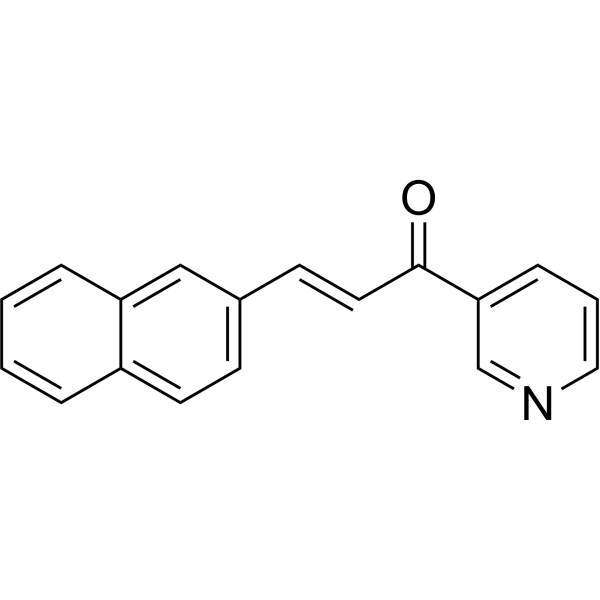
(E/Z)-DMU2105 (Compound 7k) is a potent and highly selective CYP1B1 inhibitor. (E/Z)-DMU2105 inhibits human CYP1B1 enzyme bound to yeast-derived microsomes with an IC50 value of 10 nM. (E/Z)-DMU2105 also potently inhibits CYP1B1 expressed within ‘live’ recombinant yeast and human HEK293 kidney cells with an IC50 value of 63.65 nM. (E/Z)-DMU2105 can be used for the research of cancer, glaucoma, ischemia and obesity.
For research use only. We do not sell to patients.
- CAS No.: 1031063-36-1
- Formula: C18H13NO
- Molecular Weight:259.30
-
Storage:
Please store the product under the recommended conditions in the Certificate of Analysis.

To place orders, for customer services and technical support, please contact: MedChemExpress USA
Tel: 609-228-6898 E-mail: [email protected] [email protected]


-
 Biological Activity
-
Chemical Information
- Protocols
- Purity & Documentation
- References
-
 Help & FAQs


-
HY-N1201
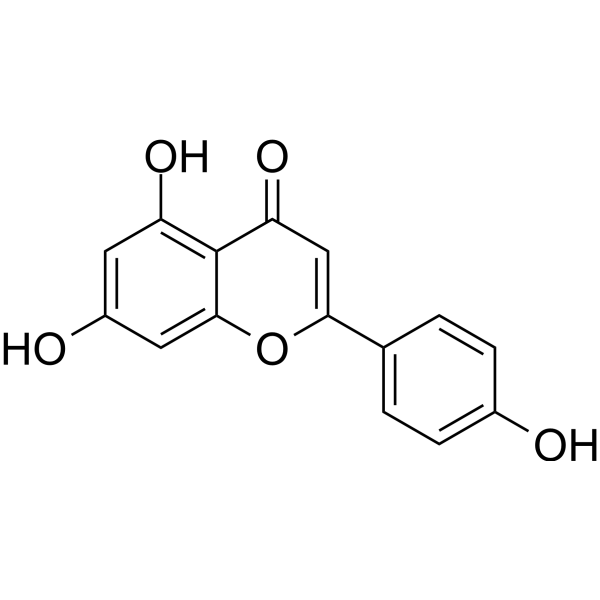
ApigeninCytochrome P450 Inhibitor -
HY-N0196
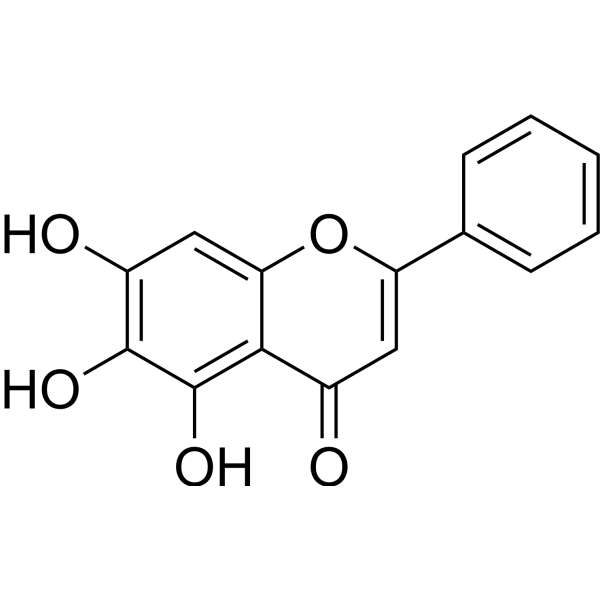
BaicaleinXanthine Oxidase Inhibitor -
HY-B1135
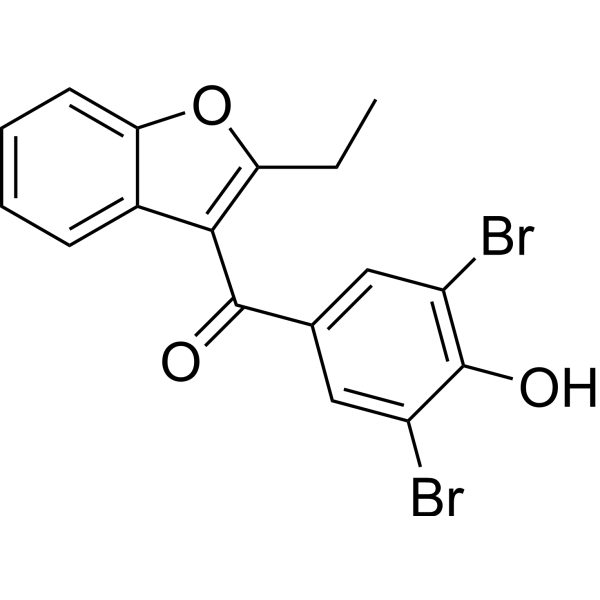
BenzbromaroneApoptosis Inducer -
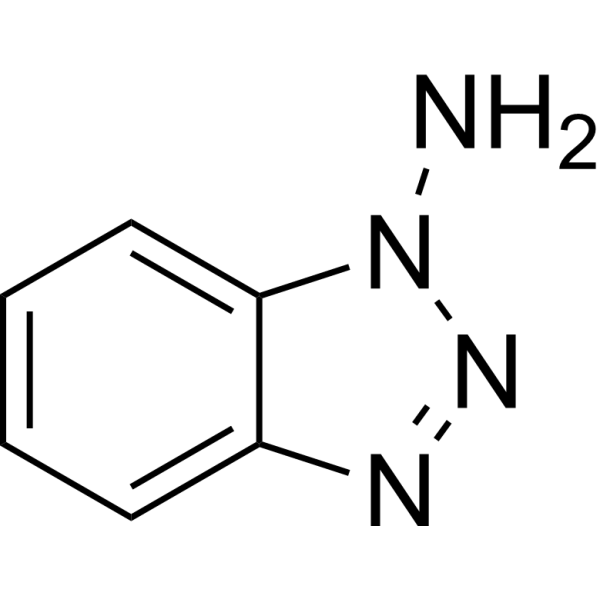
HY-103389
1-AminobenzotriazoleCytochrome P450 Inhibitor -
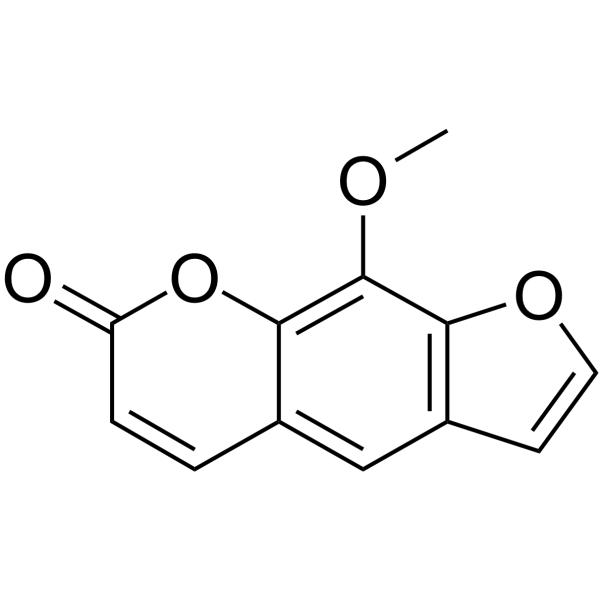
HY-30151
MethoxsalenCytochrome P450 Inhibitor -
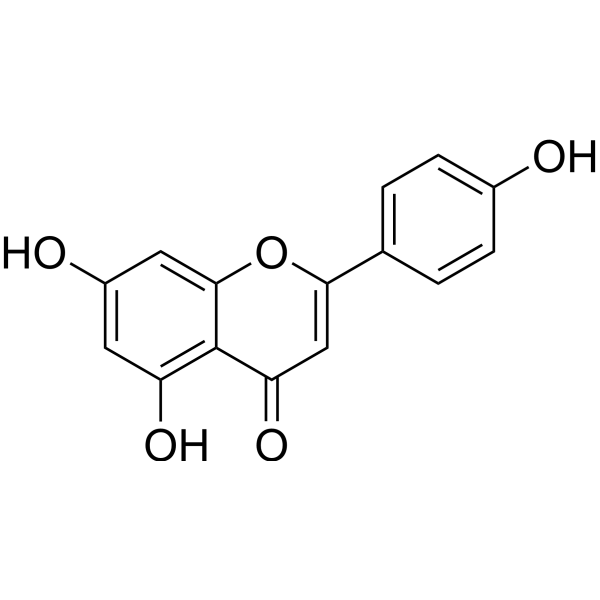
HY-N1201R
Apigenin (Standard) -
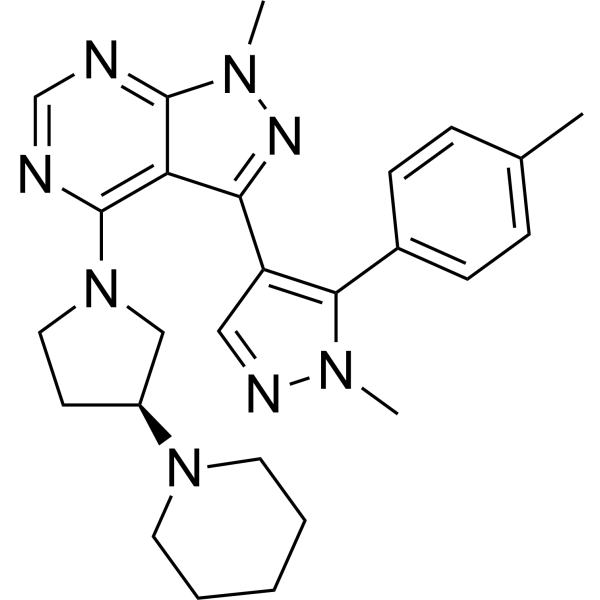
HY-18642
CYP3cideCYP3A4 Inhibitor -

HY-N0196R
Baicalein (Standard)Xanthine Oxidase Inhibitor -
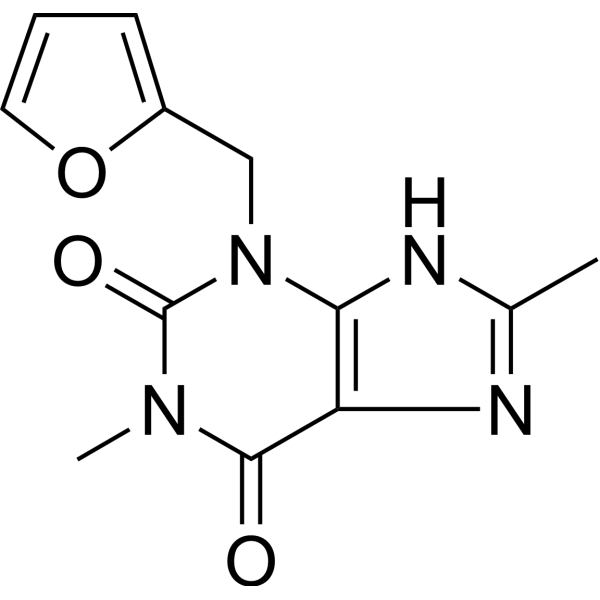
HY-107204
FurafyllineCytochrome P450 Inhibitor -

HY-B1135R
Benzbromarone (Standard)Apoptosis Inducer -
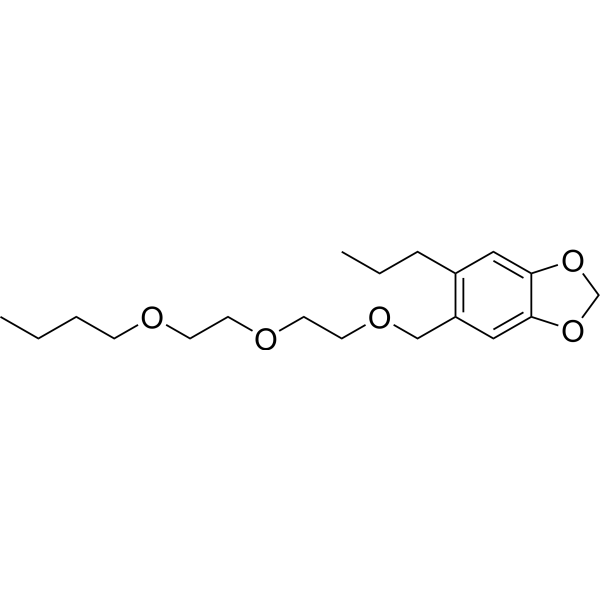
HY-B1198
Piperonyl butoxidePesticide inhibitor -
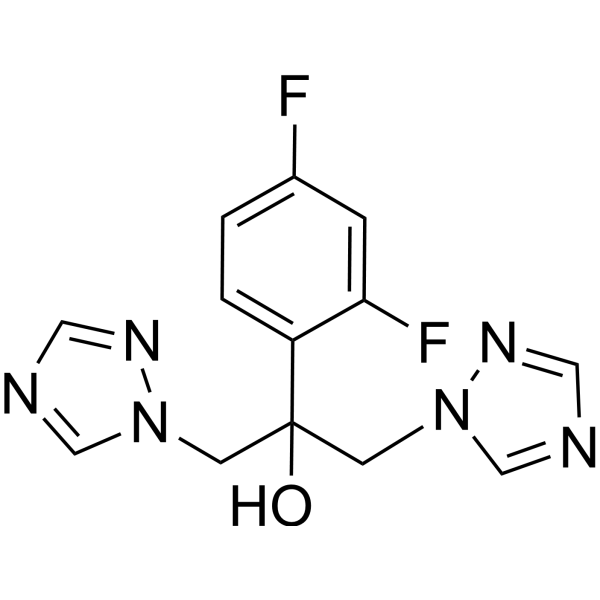
HY-B0101
FluconazoleAntifungal Agent


Biological Activity
Description
IC50 & Target
IC50: 10 nM (CYP1B1); 63.65 nM (human HEK293 kidney cells)[1]
Cellular Effect
|
Cell Line

|
Type | Value | Description | References |
|---|---|---|---|---|
| HEK293 | EC50 |
1 μM
Compound: 7k; DMU2105
|
Inhibition of human CYP1B1 expressed in HEK293 cells assessed as potentiation of cisplatin-induced cytotoxicity by measuring cisplatin EC50 at 0.02 uM by MTT assay (Rvb = 61 +/- 8 uM)
Inhibition of human CYP1B1 expressed in HEK293 cells assessed as potentiation of cisplatin-induced cytotoxicity by measuring cisplatin EC50 at 0.02 uM by MTT assay (Rvb = 61 +/- 8 uM)
|
[PMID: 28222316] |
| HEK293 | EC50 |
8.5 μM
Compound: 7k; DMU2105
|
Potentiation of cisplatin-induced cytotoxicity against HEK293 cells by measuring cisplatin EC50 at 10 times CYP1B1 inhibitory IC50 by MTT assay (Rvb = 8.7 +/- 0.7 uM)
Potentiation of cisplatin-induced cytotoxicity against HEK293 cells by measuring cisplatin EC50 at 10 times CYP1B1 inhibitory IC50 by MTT assay (Rvb = 8.7 +/- 0.7 uM)
|
[PMID: 28222316] |
| HEK293 | IC50 |
0.004 μM
Compound: 7k; DMU2105
|
Inhibition of human liver CYP1B1 expressed in HEK293 cells using CEC as substrate preincubated for 30 mins followed by substrate addition measured after 60 mins by fluorescence assay
Inhibition of human liver CYP1B1 expressed in HEK293 cells using CEC as substrate preincubated for 30 mins followed by substrate addition measured after 60 mins by fluorescence assay
|
[PMID: 28222316] |
| HEK293 | IC50 |
0.053 μM
Compound: 7k; DMU2105
|
Inhibition of human liver CYP1B1 expressed in HEK293 cells using 7-ethoxyresorufin as substrate preincubated for 30 mins followed by substrate addition measured after 60 mins by fluorescence assay
Inhibition of human liver CYP1B1 expressed in HEK293 cells using 7-ethoxyresorufin as substrate preincubated for 30 mins followed by substrate addition measured after 60 mins by fluorescence assay
|
[PMID: 28222316] |


Chemical Information
-
CAS No. 1031063-36-1
-
Molecular Weight 259.30
-
Formula C18H13NO
-
SMILES
O=C(C1=CC=CN=C1)/C=C/C2=CC=C3C=CC=CC3=C2
-
Shipping
Room temperature in continental US; may vary elsewhere.
-
Storage
Please store the product under the recommended conditions in the Certificate of Analysis.

Protocols
-
Cell Cytotoxicity Assay
Cytotoxicity assays are usually based on the assessment of cell membrane damage, which can also be indirectly detected by measuring cell viability. Detection methods include MTT assay, CKK-8 assay, LDH assay and ATP assay, etc.
-
Research Protocol for Metabolic Diseases
AMP-activated protein kinase, AMPK, is a conserved cellular energy sensor that responds to reduced cellular energy status and coordinates metabolism by increasing ATP-generating catabolic pathways while suppressing ATP-consuming anabolic processes. In metabolic disease research, the AMPK pathway is experimentally relevant because it regulates hepatic lipid synthesis, fatty acid oxidation, glucose production, skeletal-muscle glucose disposal, mTORC1-linked biosynthesis, autophagy, mitochondrial homeostasis, and whole-body energy balance. The central pathway logic is that energy stress, metformin, exercise-like stimulation, or direct AMPK activators increase AMPKα Thr172 phosphorylation and downstream substrate phosphorylation, including ACC and RAPTOR. Phosphorylation of ACC suppresses lipogenesis and supports fatty acid oxidation, whereas phosphorylation of RAPTOR suppresses mTORC1 signaling and links cellular energy status to growth and protein synthesis control. The pathway is linked


Purity & Documentation
References

Calculators
Concentration (start) × Volume (start) = Concentration (final) × Volume (final)


(E/Z)-DMU2105 Related Classifications
HY-101284A Related Classifications
 Powered by Bioz