



TML-6

Based on 1 Customer Validation
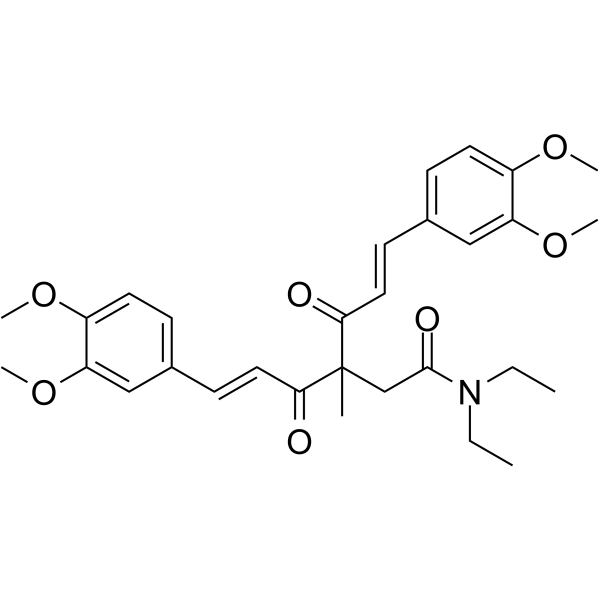
TML-6, an orally active curcumin derivative, inhibits the synthesis of the β-amyloid precursor protein and β-amyloid (Aβ). TML-6 can upregulate Apo E, suppress NF-κB and mTOR, and increase the activity of the anti-oxidative Nrf2 gene. TML-6 has the potential for Alzheimer’s disease (AD) research.
Para uso exclusivo en investigación. No vendemos a pacientes.
- Pureza : 98.08%
- No. CAS: 1462868-88-7
- Fòrmula: C30H37NO7
- Peso molecular:523.62
-
Almacenamiento:
4°C, stored under nitrogen
* In solvent : -80°C, 6 months; -20°C, 1 month (stored under nitrogen)

To place orders, for customer services and technical support, please contact: MedChemExpress USA
Tel: 609-228-6898 E-mail: [email protected] [email protected]


-
 Actividad biológica
-
Chemical Information
-
Solvente y solubilidad
- Protocolo
- Pureza y Documentación
- Referencias
-
 Help & FAQs


-

HY-N6653
LentinanNrf2 Activator -
HY-N0290
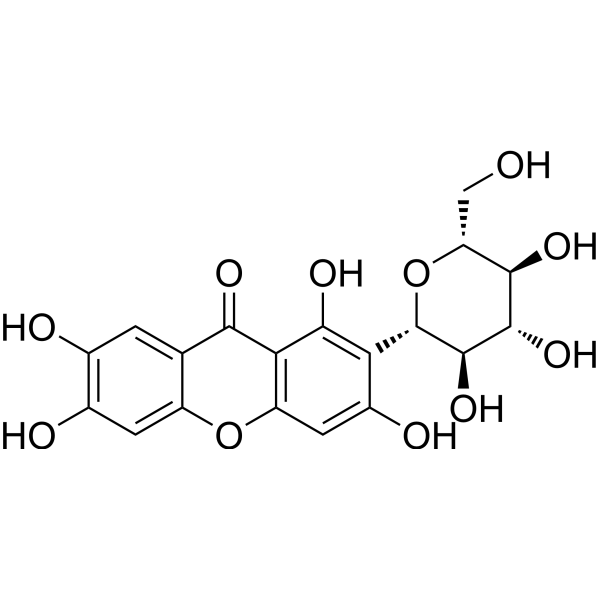
MangiferinNrf2 Activator -
HY-50910
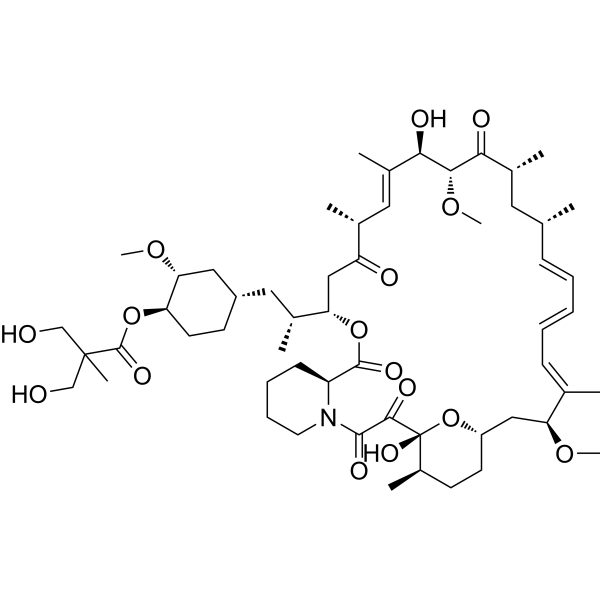
TemsirolimusmTOR Inhibitor -
HY-13328
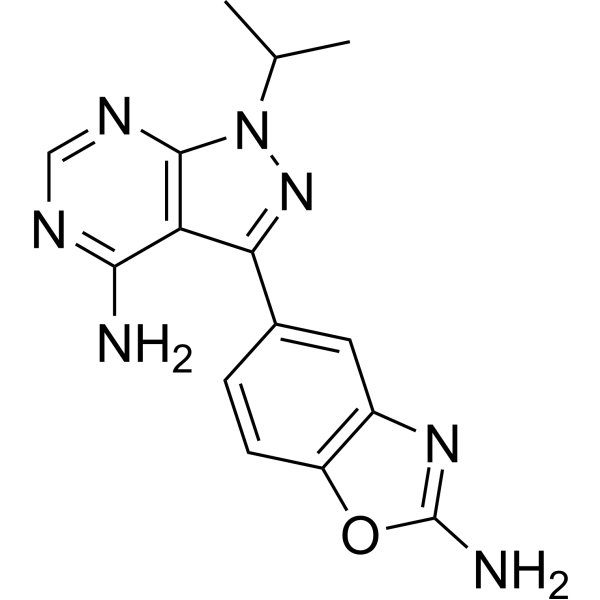
SapanisertibmTORC1/mTORC2 Inhibitor -
HY-N0787
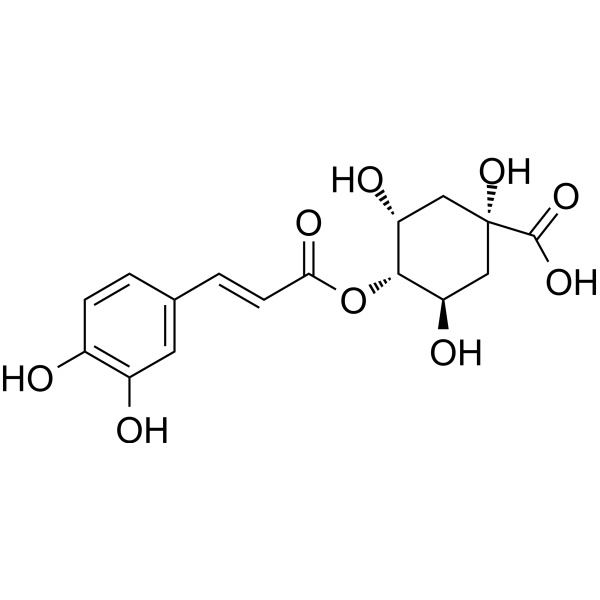
Cryptochlorogenic acidphenolic Acid Compound -
HY-N2995
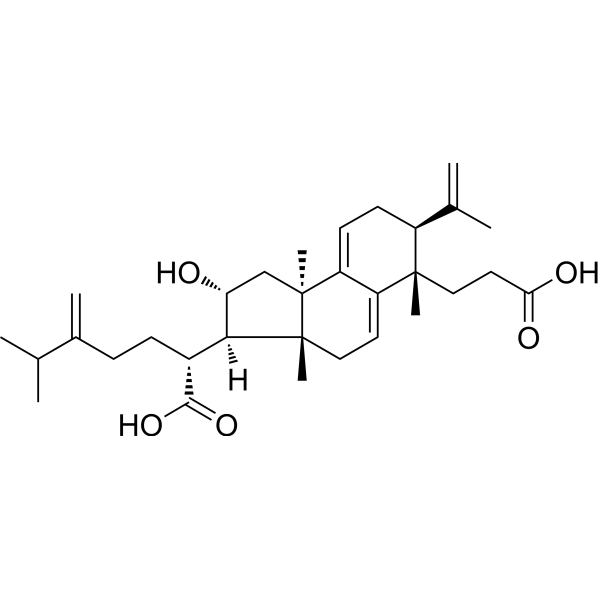
Poricoic acid ANatural Product -
HY-145532
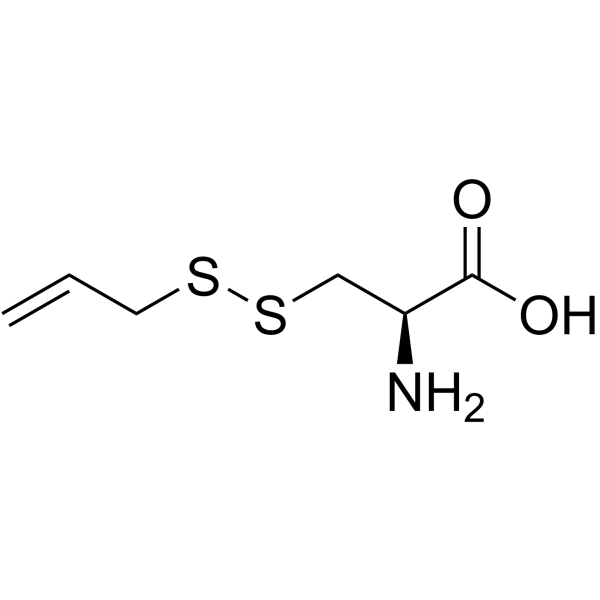
S-AllylmercaptocysteineAntioxidant/Anti-inflammatory Agent -
HY-15247
VistusertibmTORC Inhibitor -
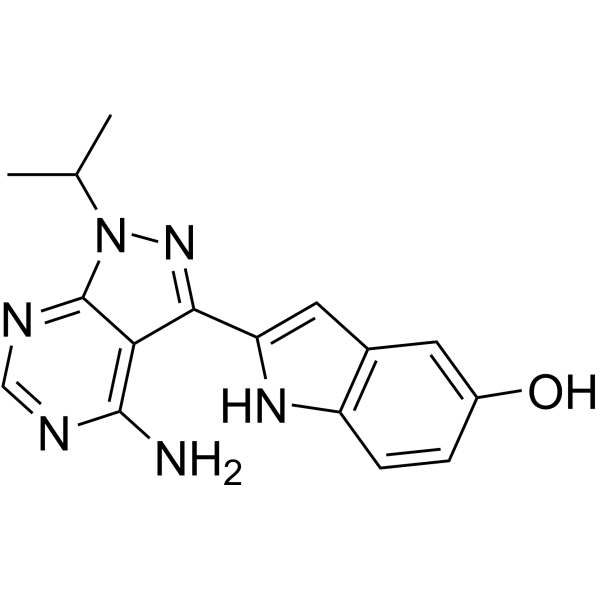
HY-10474
TorkinibmTOR Inhibitor -

HY-N0290R
Mangiferin (Standard)Nrf2 Activator -
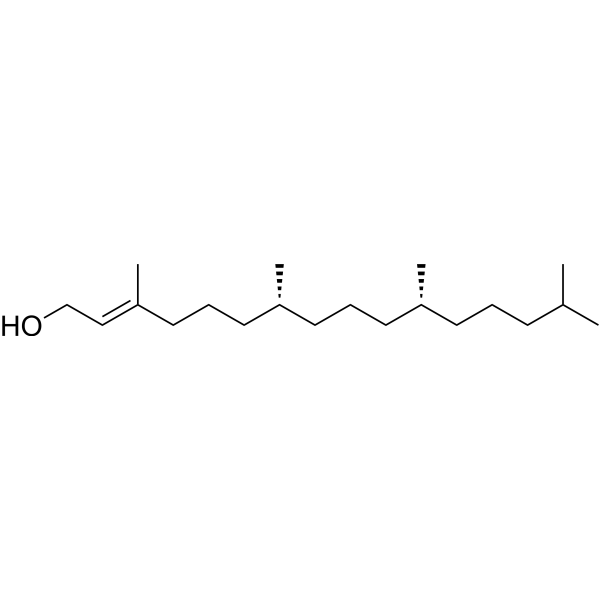
HY-N3075
PhytolDiterpene Alcohol -
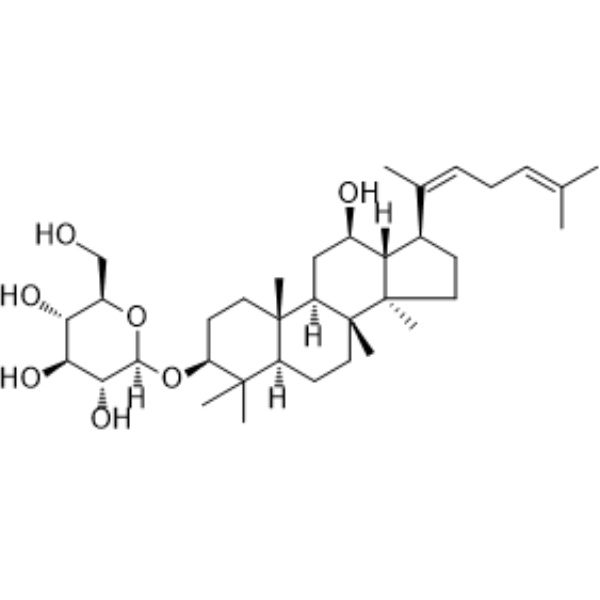
HY-N0606
Ginsenoside Rh3Nrf2 Activator


Actividad biológica
Descripciòn
IC50 & Target
[1]|
NF-κB |
mTOR |
In Vitro
TML-6 (0.65-5.24 µg/mL; for 24 h) reduces the protein expression levels of APP and phospho-NF-κB, and induces the protein expression level of ApoE. TML-6 inhibits the mTOR signaling pathway through the suppression of phospho-mTOR[1].
TML-6 (0.31, 0.63, 2.5, 5, 10, 20 μM; 24 h) reveals no cytotoxicity in Huh-7 cells at concentrations below 5 μM and has an IC50 of 4.19 µg/mL (8 μM)[1].
TML-6 (1.05, 2.09, 3.14, 4.19 μg/mL; 24 h) reduces the production of Aβ40 and Aβ42 between 1.05, 2.09 and 3.14 μg/mL (equal to 2, 4 and 6 μM) in a dose-dependent manner in N2a/APPswe cell[1].
TML-6 can exhibit transcriptional activation of the Nrf2 gene in a dose-dependent manner, with the highest activity at a concentration of 1.32 µg/mL[1].
MedChemExpress (MCE) has not independently confirmed the accuracy of these methods. They are for reference only.
-
Cell Line:Huh-7 cells
-
Concentration:0.65, 1.31, 1.96, 2.61, 3.93, 5.24 µg/mL
-
Incubation Time:For 24 hours
-
Result:Reduced the amyloid precursor protein (APP) protein expression level by 60% and decreased the level of phosphorylated NF-κB by about 50% at a dose of 1.96 µg/mL after 24 h treatment.
Induced the protein expression level of ApoE by approximately 44% at a dose of 2.62 µg/mL.
In Vivo
TML-6 (oral; 150 mg/kg) has a T1/2 of 1.27 hours, a Cmax of 35.9 ng/mL and an AUC of 177 ng•hr/mL[1].
MedChemExpress (MCE) has not independently confirmed the accuracy of these methods. They are for reference only.
-
Animal Model:Six-month-old 3xTg (mutations: APPKM670/671NL, MAPTP301L and PSEN1M146V) AD transgenic mice[1]
-
Dosage:150 mg/kg
-
Administration:Diet; daily; for four months
-
Result:Improved the learning behaviors, significantly suppressed the Aβ levels and Iba-1 expression in the brain of 3xTg AD transgenic mice.
-
Animal Model:SD rats[1]
-
Dosage:150 mg/kg (Pharmacokinetic Analysis)
-
Administration:Oral
-
Result:Had a T1/2 of 1.27 hours, a Cmax of 35.9 ng/mL and an AUC of 177 ng•hr/mL.
Ensayo clínico
| NCT Number | Sponsor | Condition | Start Date |
Phase

|
|---|---|---|---|---|
| NCT01329991 | 2011-05 | PHASE1 |


Chemical Information
-
No. CAS 1462868-88-7
-
Appearance Solid
-
Peso molecular 523.62
-
Fòrmula C30H37NO7
-
Color Off-white to yellow
-
SMILES
O=C(N(CC)CC)CC(C)(C(/C=C/C1=CC=C(OC)C(OC)=C1)=O)C(/C=C/C2=CC=C(OC)C(OC)=C2)=O
-
Envío
Room temperature in continental US; may vary elsewhere.
-
Almacenamiento
4°C, stored under nitrogen
* In solvent : -80°C, 6 months; -20°C, 1 month (stored under nitrogen)


Solvente y solubilidad
In Vitro:
DMSO : 120 mg/mL (229.17 mM; Need ultrasonic; Hygroscopic DMSO has a significant impact on the solubility of product, please use newly opened DMSO)
Please refer to the solubility information to select the appropriate solvent. Once prepared, please aliquot and store the solution to prevent product inactivation from repeated freeze-thaw cycles.
Storage method and period of stock solution: -80°C, 6 months; -20°C, 1 month (stored under nitrogen). When stored at -80°C, please use it within 6 months. When stored at -20°C, please use it within 1 month.
Please refer to the solubility information to select the appropriate solvent. Once prepared, please aliquot and store the solution to prevent product inactivation from repeated freeze-thaw cycles.
Storage method and period of stock solution: -80°C, 6 months; -20°C, 1 month (stored under nitrogen). When stored at -80°C, please use it within 6 months. When stored at -20°C, please use it within 1 month.
Concentration (start) × Volume (start) = Concentration (final) × Volume (final)


Pureza y Documentación
-
Ficha de datos (276 KB)
-
SDS (252 KB)
- English - EN (252 KB)
- Français - FR (252 KB)
- Deutsch - DE (252 KB)
- Norwegian - NO (252 KB)
- Español - ES (252 KB)
- Swedish - SV (252 KB)
- Italian - IT (252 KB)
- Korean - KR (252 KB)
- Portuguese - PT (252 KB)
-
Instrucciones de manejo (2659 KB)
Referencias


Complete Stock Solution Preparation Table
Please refer to the solubility information to select the appropriate solvent. Once prepared, please aliquot and store the solution to prevent product inactivation from repeated freeze-thaw cycles.
Storage method and period of stock solution: -80°C, 6 months; -20°C, 1 month (stored under nitrogen). When stored at -80°C, please use it within 6 months. When stored at -20°C, please use it within 1 month.
| Optional Solvent | Concentration Solvent Mass | 1 mg | 5 mg | 10 mg | 25 mg |
|---|---|---|---|---|---|
| DMSO | 1 mM | 1.9098 mL | 9.5489 mL | 19.0978 mL | 47.7445 mL |
| 5 mM | 0.3820 mL | 1.9098 mL | 3.8196 mL | 9.5489 mL | |
| 10 mM | 0.1910 mL | 0.9549 mL | 1.9098 mL | 4.7745 mL | |
| 15 mM | 0.1273 mL | 0.6366 mL | 1.2732 mL | 3.1830 mL | |
| 20 mM | 0.0955 mL | 0.4774 mL | 0.9549 mL | 2.3872 mL | |
| 25 mM | 0.0764 mL | 0.3820 mL | 0.7639 mL | 1.9098 mL | |
| 30 mM | 0.0637 mL | 0.3183 mL | 0.6366 mL | 1.5915 mL | |
| 40 mM | 0.0477 mL | 0.2387 mL | 0.4774 mL | 1.1936 mL | |
| 50 mM | 0.0382 mL | 0.1910 mL | 0.3820 mL | 0.9549 mL | |
| 60 mM | 0.0318 mL | 0.1591 mL | 0.3183 mL | 0.7957 mL | |
| 80 mM | 0.0239 mL | 0.1194 mL | 0.2387 mL | 0.5968 mL | |
| 100 mM | 0.0191 mL | 0.0955 mL | 0.1910 mL | 0.4774 mL |


TML-6 Related Classifications
HY-137315 Related Classifications
 Powered by Bioz