



Cemiplimab

Based on 1 Customer Validation
Cemiplimab (REGN2810) is a monoclonal IgG4 antibody targeting PD-1. Cemiplimab binds to human PD-1 with a Kd of 0.628-6.11 nM and to cynomolgus monkey PD-1 with a Kd of 0.520-7.43 nM; the IC50 value for human PD-1 is 0.13-0.60 nM, and the IC50 value for cynomolgus monkey PD-1 is 0.22-0.97 nM. Cemiplimab blocks PD-1/PD-L1 and PD-1/PD-L2 signaling, relieves T cell inhibition, and restores activation, proliferation, cytotoxic function, and CD8 T cell cytokine production. Cemiplimab can be used for research on colorectal cancer.
For research use only. We do not sell to patients.
- Purity : 99.89%
- CAS No.: 1801342-60-8
- Molecular Weight:143.57 kDa
-
Storage:Shipping with dry ice
Please store the product under the recommended conditions in the Certificate of Analysis.


To place orders, for customer services and technical support, please contact: MedChemExpress USA
Tel: 609-228-6898 E-mail: [email protected] [email protected]


-
 Biological Activity
-
Chemical Information
- Protocols
- Purity & Documentation
- References
-
 Help & FAQs


-

HY-P9903
NivolumabPD-1 Inhibitor -

HY-P9902
PembrolizumabPD-1 Inhibitor -
HY-P9904
AtezolizumabAnti-PD-L1 Antibody -

HY-P99052
TislelizumabPD-1 Inhibitor -

HY-P9919
DurvalumabPD-L1 Blocking Antibody -

HY-P9971
CamrelizumabPD-1 Neutralizing Antibody -

HY-P99048
SintilimabPD-1/PD-L1 Inhibitor -

HY-108730
AvelumabAnti-PD-L1 Antibody -

HY-P99345
DostarlimabAnti-PD-1 mAb -

HY-P99941
Retifanlimabanti-PD-1 mAb -
HY-108730A
Avelumab (anti-PD-L1)anti-PD-L1 Antibody Inhibitor -
HY-P9919A
Durvalumab (anti-PD-L1)PD-1/PD-L1 Inhibitor


Biological Activity
Description
|
human PD-1 0.628-6.11 nM (Kd) |
human PD-1 0.13-0.60 nM (IC50) |
cynomolgus monkey PD-1 0.520-7.43 nM (Kd) |
cynomolgus monkey PD-1 0.22-0.97 nM (IC50) |
In Vitro
Cemiplimab binds glycosylated PD-1 with low-nanomolar affinity (KD 1.68 nM), and loss of N58 glycosylation reduces binding affinity to 106 nM[2].
Cemiplimab (0-80 μg/mL) blocks the PD-1/PD-L1 interaction on PD-L1-expressing 293T cells in an N58 glycosylation-dependent manner, producing nearly complete blockade of PD-1-WT at 20 μg/mL, but showing no blocking effect on PD-1-N58A even at 80 μg/mL[2].
Cemiplimab inhibits the binding of human PD-1 (hPD-1-mFc) and cynomolgus monkey PD-1 (mfPD-1-mFc) to plate-coated human PD-L1 (hPD-L1-hFc), with corresponding IC50 values of 0.60 nM and 0.97 nM, respectively[3].
Cemiplimab binds cell-surface human and cynomolgus PD-1 with an EC50 value of approximately 0.8-1.8 nM[3].
MedChemExpress (MCE) has not independently confirmed the accuracy of these methods. They are for reference only.
In Vivo
Cemiplimab (1-2 doses) drives intratumoral T cell activation, and in combination with the anti-LAG-3 antibody REGN3767 reduces MC38.Ova tumor growth and prolongs survival in PD-1/LAG-3 humanized mice[6].
Cemiplimab (1-10 mg/kg; i.p.; administered on the day of randomization and twice weekly thereafter; for 2 weeks) delays the growth of established MC38.Ova tumors in a dose-dependent manner in human PD-1 knock-in mice[3].
MedChemExpress (MCE) has not independently confirmed the accuracy of these methods. They are for reference only.
-
Animal Model:human PD-1xLAG-3 knockin on C57BL/6N background (female, 8-10 weeks old)[1]
-
Dosage:10 mg/kg
-
Administration:i.p.; starting on day 3 after implantation, then twice weekly; for 2 weeks
-
Result:Monotherapy was moderately efficacious; at the end of study on day 46, 2 of 12 mice were tumor free.
Combination with REGN3767 prolonged survival compared with isotype control and resulted in 5 of 12 mice tumor free at day 46.
-
Animal Model:human PD-1 knock-in (C57BL/6N[TAC] background, adult)[3]
-
Dosage:10 mg/kg or 25 mg/kg
-
Administration:three doses over 10 days
-
Result:The frequency of stainable cells was 7.0% of CD4+ T cells and 12.4% of CD8+ T cells at 25 mg/kg, and 4.6% of CD4+ T cells and 5.7% of CD8+ T cells at 10 mg/kg.
Occupancy was not increased at 25 mg/kg relative to 10 mg/kg, indicating 10 mg/kg was sufficient to occupy human PD-1 in these mice.
-
Animal Model:human PD-1 knock-in (C57BL/6N[TAC] background, adult)[3]
-
Dosage:0.3, 1, 3, or 10 mg/kg
-
Administration:i.p.; day 3 then twice weekly; 2 weeks
-
Result:Caused dose-dependent tumor growth inhibition.
At the end of the study on day 38, tumor-free mice were 5/8 at 10 mg/kg, 3/8 at 3 mg/kg, 3/8 at 1 mg/kg, and 1/8 at 0.3 mg/kg.
Survival was prolonged in all groups, most evident at 10 mg/kg.
Draining lymph nodes showed increased frequencies of CD4+ and CD8+ T cells, and spleens showed increased transcript levels for CD8, CD3, IFNG, and TNFA.
-
Animal Model:human PD-1 knock-in (C57BL/6N[TAC] background, adult)[3]
-
Dosage:1, 3, or 10 mg/kg
-
Administration:i.p.; randomization day then twice weekly; 2 weeks
-
Result:Caused dose-dependent growth delay of established MC38.Ova tumors.
Day 11 tumor volumes were plotted for each dose in the supplied figure.
Parmacokinetics
Clinical Trial
| NCT Number | Sponsor | Condition | Start Date |
Phase

|
|---|---|---|---|---|
| NCT01329991 | 2011-05 | PHASE1 |
Application
ELISA, FACS, Functional assay
Verified Bioactivity
-
 Immobilized Human PD-1 Protein (ECD, His Tag) can bind Cemiplimab. The EC50 for this effect is 1.73 ng/mL.
-
 Flow cytometric analysis of 1X10⁶ 10 ng/mL PMA and 1 μg/mL Ionomycin co-stimulated Jurkat cells (24h) labeling Cemiplimab (HY-P99203, red). Cells were fixed with 4% paraformaldehyde. Then stained with the primary antibody at 1/200 dilution for an hour at 4℃. Alexa Fluor 488-conjugated AffiniPure Goat Anti-Human IgG H&L (HY-P83776) was used as the secondary antibody at 1/1,000 dilution for 30 minutes at 4℃. Human IgG4 kappa (HY-P99003, blue) was used as the isotype control, cells without incubation with primary antibody were used as the unlabeled control (black).


Product Details
-
CAS No. 1801342-60-8
-
Accession Q15116
-
Synonyms REGN2810; SAR-439684
-
Molecular Weight 143.57 kDa
-
Species Reactivity
Human
-
Conjugated
Unconjugated
-
Isotype
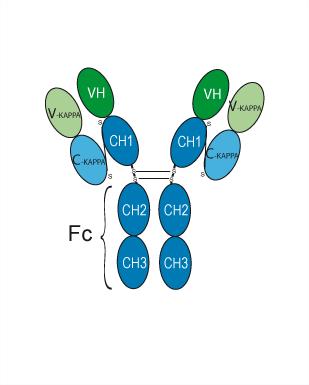
Human IgG4 kappa
-
Recommend Isotype Controls
-
Format
-
Human IgG4 kappa
-
Product Properties
-
Appearance
Liquid
-
Formulation
Please refer to the lot-specific COA for specific buffer information.
-
Purity
99.89%
-
Reconstitution
The product can be reconstituted/diluted with sterile PBS or saline.
-
Storage & Stability
Please store the product under the recommended conditions in the Certificate of Analysis.
-
Shipping
Shipping with dry ice.
Purity & Documentation


References

Calculators
Concentration (start) × Volume (start) = Concentration (final) × Volume (final)


Cemiplimab Related Classifications
HY-P99203 Related Classifications
 Powered by Bioz