



GC7 Sulfate
Based on 9 publication(s) in Google Scholar
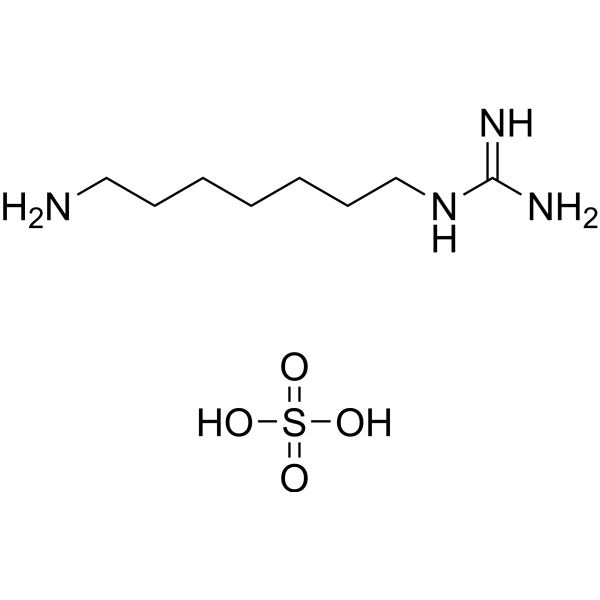
GC7 Sulfate is a deoxyhypusine synthase (DHPS) inhibitor.
For research use only. We do not sell to patients.
- Purity : 99.23%
- CAS No.: 150417-90-6
- Formula: C8H22N4O4S
- Molecular Weight:270.35
-
Storage:
4°C, sealed storage, away from moisture
* In solvent : -80°C, 6 months; -20°C, 1 month (sealed storage, away from moisture)

To place orders, for customer services and technical support, please contact: MedChemExpress USA
Tel: 609-228-6898 E-mail: [email protected] [email protected]


-
 Biological Activity
-
Chemical Information
-
Solvent & Solubility
- Purity & Documentation
- References
-
 Help & FAQs


-
HY-B0744
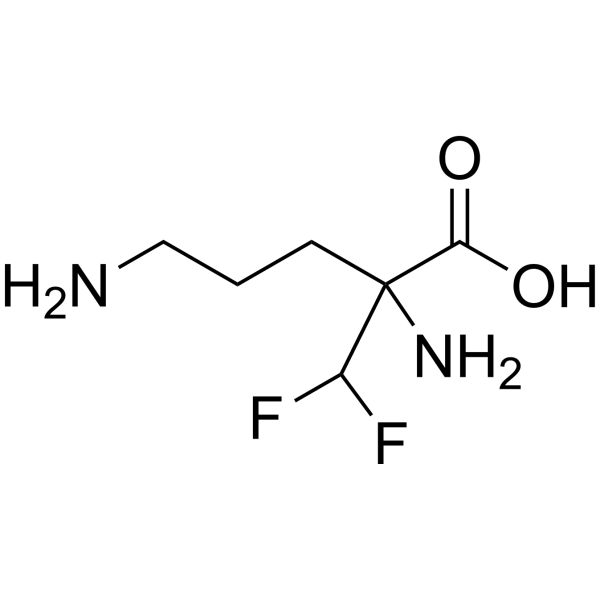
EflornithineOrnithine Decarboxylase Inhibitor -
HY-B0450
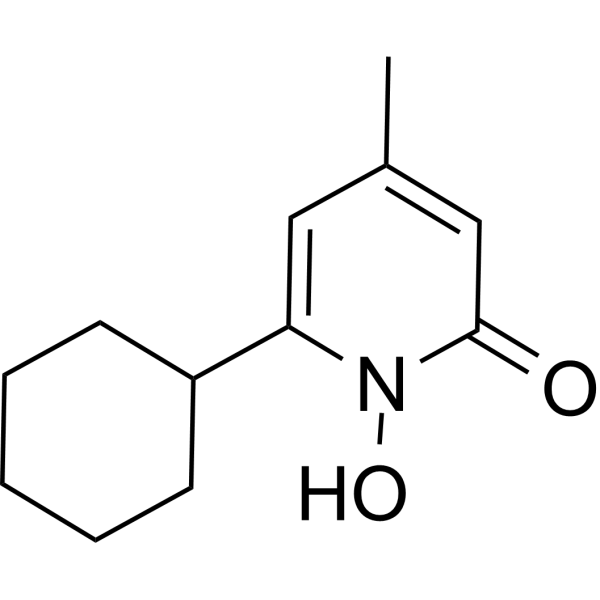
CiclopiroxAntifungal Agent -
HY-13610A
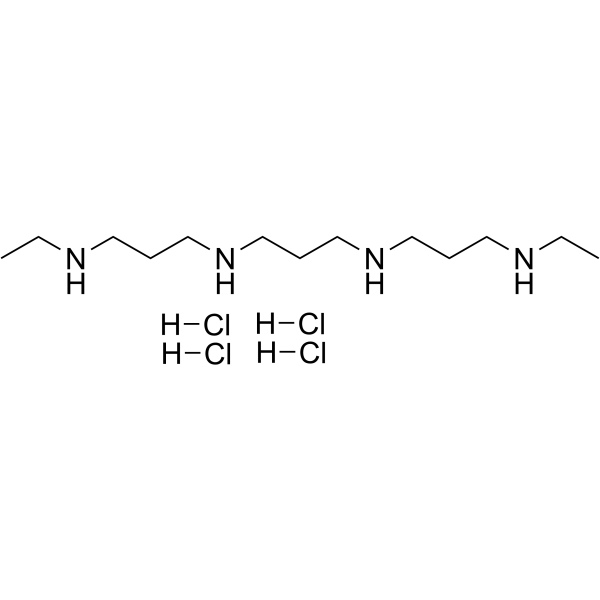
N1,N11-Diethylnorspermine tetrahydrochlorideAnticancer Agent -
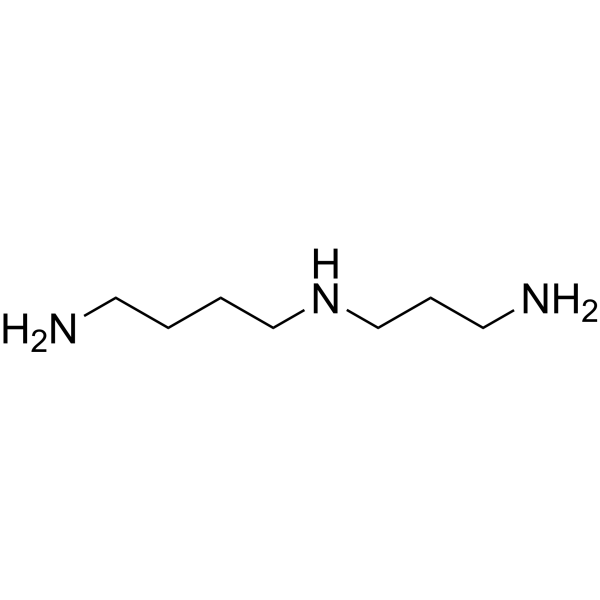
HY-B1776
SpermidinePolyamine Compound -
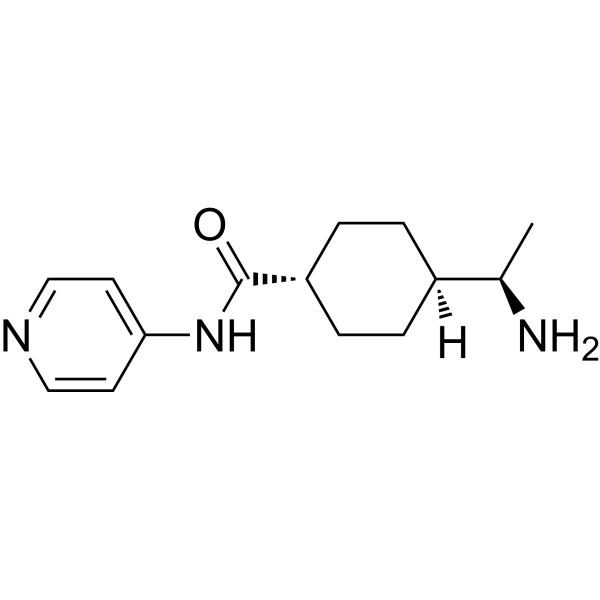
HY-10071
Y-27632ROCK Inhibitor -
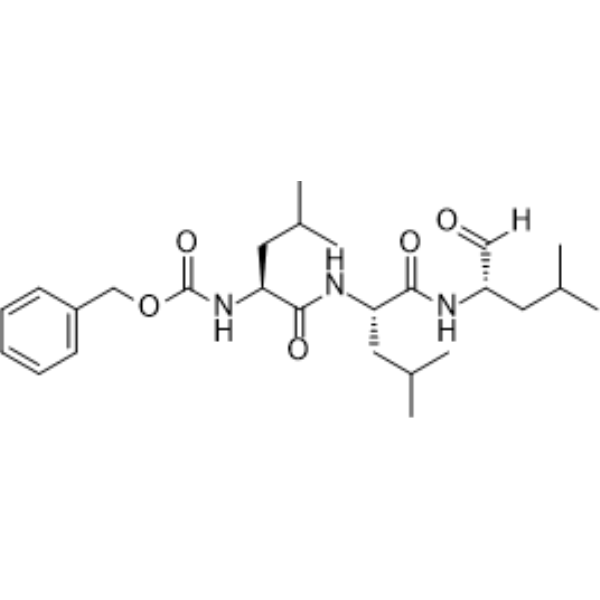
HY-13259
MG-132Proteasome Inhibitor -
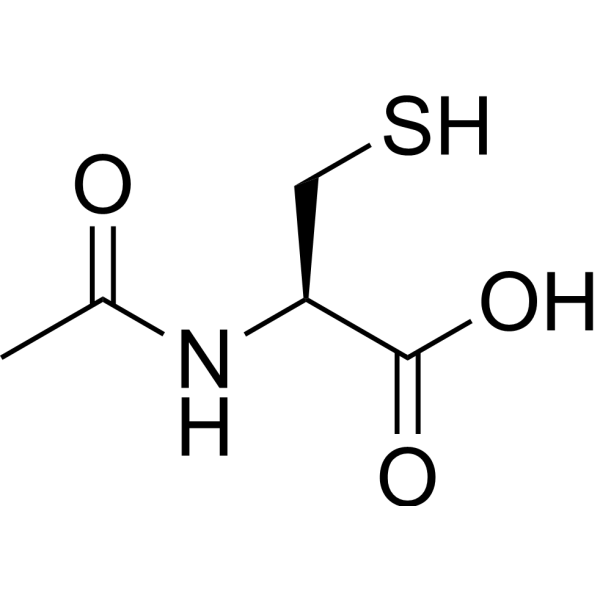
HY-B0215
AcetylcysteineMucolytic Agent -
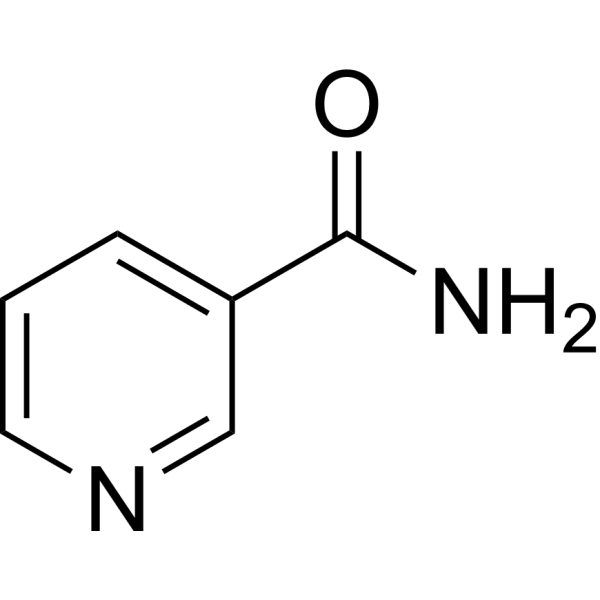
HY-B0150
NicotinamideSIRT Inhibitor -
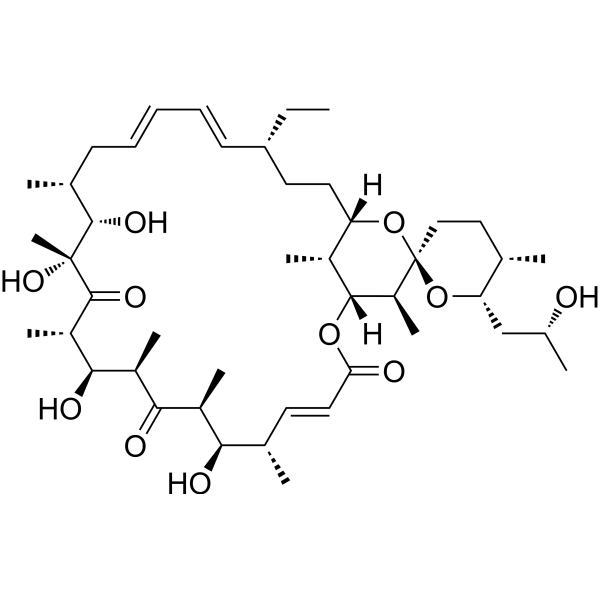
HY-16589
Oligomycin AMitochondrial ATP Synthase Inhibitor -
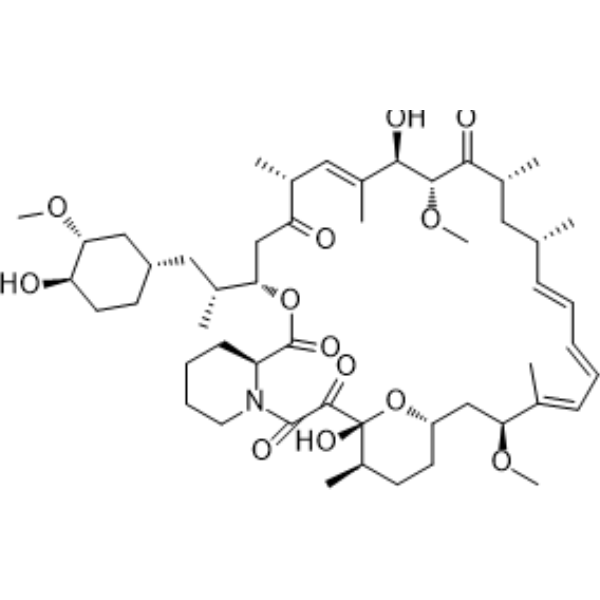
HY-10219
RapamycinmTOR Inhibitor -
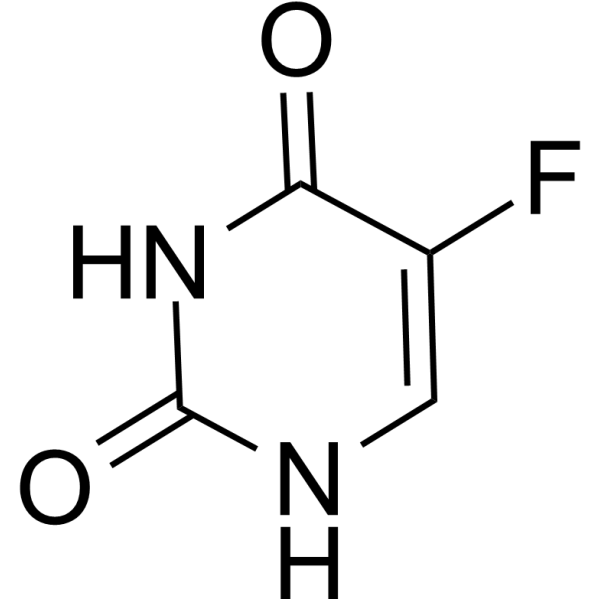
HY-90006
5-FluorouracilThymidylate Synthase Inhibitor -
HY-123033A
Nicotinamide riboside chlorideEndogenous Metabolite
Publications Citing Use of MedChemExpress (MCE) GC7 Sulfate
More- Nature. 2026 Jul;655(8122):516-524. [Abstract]
- Immunity. 2023 Nov 14;56(11):2508-2522.e6. [Abstract]
- Nat Commun. 2024 Mar 19;15(1):2461. [Abstract]
- Acta Pharm Sin B. 2025 Apr;15(4):2095-2113. [Abstract]
- NPJ Biofilms Microbiomes. 2026 Jul 7.
- bioRxiv. 2026 Mar 15.
- SSRN. 2025 Dec 4.
- SSRN. 2025 Nov 6.
- Research Square Preprint. 2021 Nov.
 Customer Validation & Images

-
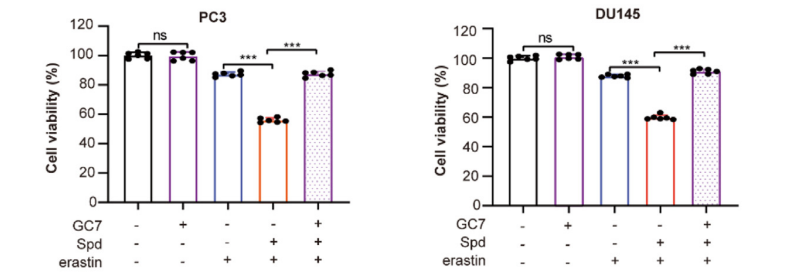
Cell Proliferation/Viability Assay
-
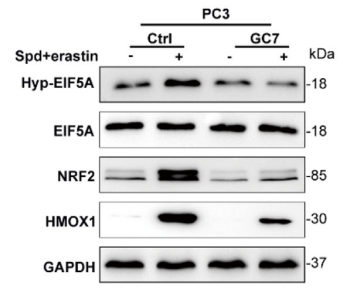
WB
-
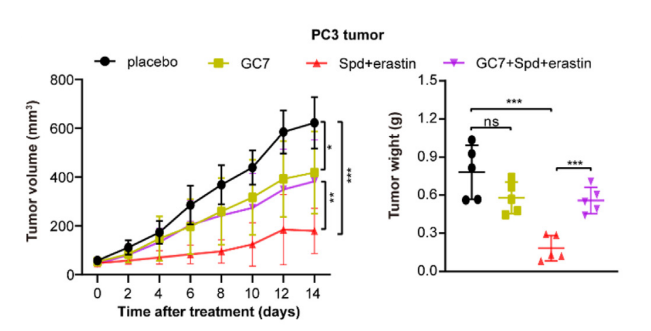
In Vivo Efficacy Study
-
Cell Proliferation/Viability Assay
-
WB
All DNA/RNA Synthesis Isoforms
More

Biological Activity
Description
IC50 & Target
DHPS[1]
In Vitro
The treatment of MYCN2 (±Dox) and BE(2)-C cells with GC7 Sulfate for 72 h at various concentrations (0.1 to 100 μM) significantly reduces the number of viable cells in a dose-dependent manner. In MYCN2 cells, 5 μM of GC7 Sulfate inhibits cell viability by ~40 and ~60 %, respectively, compare to untreated control cells. BE(2)-C cells require 25 μM of GC7 Sulfate to reduce cell viability by ~50 %. Exposure to 10 and 100 μM GC7 for 72 h clearly decreases the levels of total retinoblastoma (Rb) and phosphorylated Rb as well as of Cdk4 protein, and increases the levels of p21 protein[1]. Between 0 and 20 μM, GC7 Sulfate induces little cytotoxicity in HCC cells, while higher concentrations of GC7 Sulfate (50 to 100 μM) significantly inhibit the viability of all five HCC cell lines tested. Newly synthesized 3H-labeled hypusine of eIF5A1/eIF5A2 is rarely detected after 20 μM GC7 Sulfate treatment, compare to untreated control. The activity of [3H]-spermidine incorporated into HCC cells is significantly decreased by 20 μM GC7 Sulfate or higher concentration[2].
MedChemExpress (MCE) has not independently confirmed the accuracy of these methods. They are for reference only.


Chemical Information
-
CAS No. 150417-90-6
-
Appearance Solid
-
Molecular Weight 270.35
-
Formula C8H22N4O4S
-
Color White to off-white
-
SMILES
NC(NCCCCCCCN)=N.O=S(O)(O)=O
-
Shipping
Room temperature in continental US; may vary elsewhere.
-
Storage
4°C, sealed storage, away from moisture
* In solvent : -80°C, 6 months; -20°C, 1 month (sealed storage, away from moisture)


Publications (9)
-
Journal Impact Factor
-
Most Recent
-
Nature
2026 Jul;655(8122):516-524. PMID: 42129552 -
Immunity
Polyamine metabolism controls B-to-Z DNA transition to orchestrate DNA sensor cGAS activity. [Abstract]2023 Nov 14;56(11):2508-2522.e6. PMID: 37848037 -
Nat Commun
Polyamine-mediated ferroptosis amplification acts as a targetable vulnerability in cancer. [Abstract]2024 Mar 19;15(1):2461. PMID: 38504107
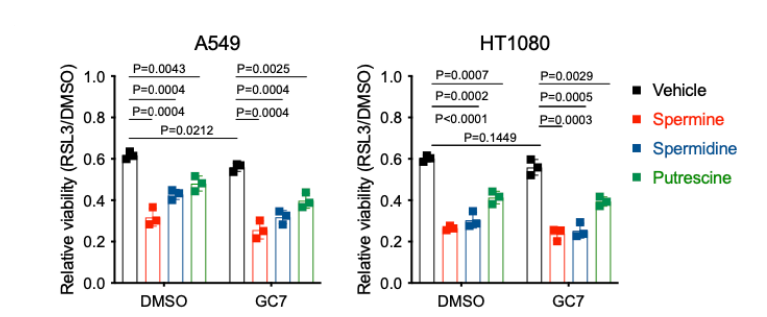
GC7 Sulfate purchased from MedChemExpress. Usage Cited in: Nat Commun. 2024 Mar 19;15(1):2461. [Abstract]
Cell viability in A549 or HT1080 cells treated with RSL3 following pre-treatment with 1 μM GC7 for 16 h and polyamines.
-
Acta Pharm Sin B
2025 Apr;15(4):2095-2113. PMID: 40486852
GC7 Sulfate purchased from MedChemExpress. Usage Cited in: Acta Pharm Sin B. 2025 Apr;15(4):2095-2113. [Abstract]
PC3 and DU145 cells were pretreated with GC7 (2 μmol/L) for 6 hours, then cultured for another 24 hours with the specified reagent, and cell viability was then assessed.
GC7 Sulfate purchased from MedChemExpress. Usage Cited in: Acta Pharm Sin B. 2025 Apr;15(4):2095-2113. [Abstract]
Western blot analysis of Hyp-EIF5A, EIF5A, NRF2, and HMOX1 in PC3 cells. Endogenous polyamines in PC3 cells were depleted by incubation with 1 mmol/L DFMO for 2 days. Polyamine-depleted cells were pretreated with GC7 (2 μmol/L) for 6 hours, followed by treatment with Spd and erastin for 8 hours.
GC7 Sulfate purchased from MedChemExpress. Usage Cited in: Acta Pharm Sin B. 2025 Apr;15(4):2095-2113. [Abstract]
GC 7 (2 mg/kg, intraperitoneal injection). The volume of the PC3 xenograft tumor was monitored every other day, and the tumor weight was divided into 4 groups.
-
-
-
-
-
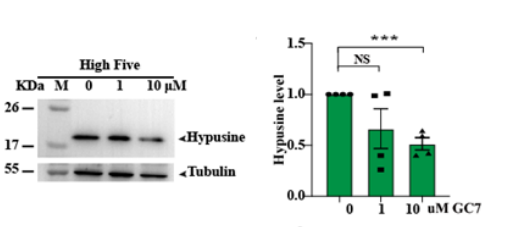
GC7 Sulfate purchased from MedChemExpress. Usage Cited in: Research Square Preprint. 2021 Nov.
Experimental results show that GC7 inhibits hypoxanthine modification of eIF5A in a concentration-dependent manner.


Solvent & Solubility
In Vitro:
H2O : 3 mg/mL (11.10 mM; Need ultrasonic and warming)
Please refer to the solubility information to select the appropriate solvent. Once prepared, please aliquot and store the solution to prevent product inactivation from repeated freeze-thaw cycles.
Storage method and period of stock solution: -80°C, 6 months; -20°C, 1 month (sealed storage, away from moisture). When stored at -80°C, please use it within 6 months. When stored at -20°C, please use it within 1 month.
* Note: If you choose water as the stock solution, please dilute it to the working solution, then filter and sterilize it with a 0.22 μm filter before use.
Please refer to the solubility information to select the appropriate solvent. Once prepared, please aliquot and store the solution to prevent product inactivation from repeated freeze-thaw cycles.
Storage method and period of stock solution: -80°C, 6 months; -20°C, 1 month (sealed storage, away from moisture). When stored at -80°C, please use it within 6 months. When stored at -20°C, please use it within 1 month.
* Note: If you choose water as the stock solution, please dilute it to the working solution, then filter and sterilize it with a 0.22 μm filter before use.
Concentration (start) × Volume (start) = Concentration (final) × Volume (final)
In Vivo:
For the following dissolution methods, please prepare the working solution directly:
It is recommended to prepare fresh solutions and use them promptly within a short period of time.
The percentages shown for the solvents indicate their volumetric ratio in the final prepared solution. If precipitation or phase separation occurs during preparation, heat and/or sonication can be used to aid dissolution.
Add each solvent one by one: PBS
Solubility: 5 mg/mL (18.49 mM); Clear solution; Need ultrasonic and warming and heat to 60°C


Purity & Documentation
-
Data Sheet (273 KB)
-
SDS (477 KB)
- English - EN (477 KB)
- Français - FR (477 KB)
- Deutsch - DE (477 KB)
- Norwegian - NO (477 KB)
- Español - ES (477 KB)
- Swedish - SV (477 KB)
- Italian - IT (477 KB)
- Korean - KR (477 KB)
- Portuguese - PT (477 KB)
-
Handling Instructions (2659 KB)
References
[1]. Bandino A, et al. Deoxyhypusine synthase (DHPS) inhibitor GC7 induces p21/Rb-mediated inhibition of tumor cell growth and DHPS expression correlates with poor prognosis in neuroblastoma patients. Cell Oncol (Dordr). 2014 Dec;37(6):387-98. [Content Brief]
[2]. Lou B, et al. N1-guanyl-1,7-diaminoheptane (GC7) enhances the therapeutic efficacy of doxorubicin by inhibiting activation of eukaryotic translation initiation factor 5A2 (eIF5A2) and preventing the epithelial-mesenchymal transition in hepatocellular carcinoma cells. Exp Cell Res. 2013 Oct 15;319(17):2708-17. [Content Brief]


Complete Stock Solution Preparation Table
Please refer to the solubility information to select the appropriate solvent. Once prepared, please aliquot and store the solution to prevent product inactivation from repeated freeze-thaw cycles.
Storage method and period of stock solution: -80°C, 6 months; -20°C, 1 month (sealed storage, away from moisture). When stored at -80°C, please use it within 6 months. When stored at -20°C, please use it within 1 month.
| Optional Solvent | Concentration Solvent Mass | 1 mg | 5 mg | 10 mg | 25 mg |
|---|---|---|---|---|---|
| H2O | 1 mM | 3.6989 mL | 18.4945 mL | 36.9891 mL | 92.4727 mL |
| 5 mM | 0.7398 mL | 3.6989 mL | 7.3978 mL | 18.4945 mL | |
| 10 mM | 0.3699 mL | 1.8495 mL | 3.6989 mL | 9.2473 mL |
* Note: If you choose water as the stock solution, please dilute it to the working solution, then filter and sterilize it with a 0.22 μm filter before use.


GC7 Sulfate Related Classifications
HY-108314A Related Classifications
 Powered by Bioz