



PIK-93
Based on 6 publication(s) in Google Scholar
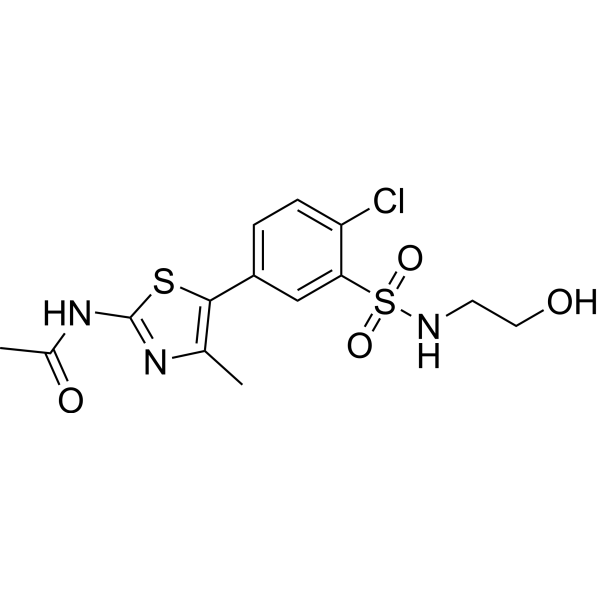
PIK-93 is the first potent, synthetic PI4K (PI4KIIIβ) inhibitor with IC50 of 19 nM, and also inhibits PI3Kγ and PI3Kα with IC50 of 16 nM and 39 nM, respectively.
Para uso exclusivo en investigación. No vendemos a pacientes.
- Pureza : 99.74%
- No. CAS: 593960-11-3
- Fòrmula: C14H16ClN3O4S2
- Peso molecular:389.88
-
Almacenamiento:Powder -20°C, 3 years , 4°C, 2 years ; In solvent -80°C, 2 years , -20°C, 1 year

To place orders, for customer services and technical support, please contact: MedChemExpress USA
Tel: 609-228-6898 E-mail: [email protected] [email protected]


-
 Actividad biológica
-
Chemical Information
-
Solvente y solubilidad
- Pureza y Documentación
- Referencias
-
 Help & FAQs


-
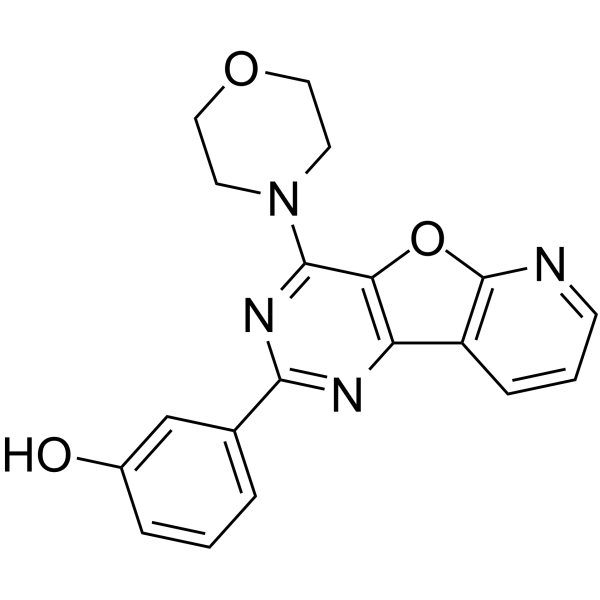
HY-10115
PI-103PI3K/mTOR Inhibitor -
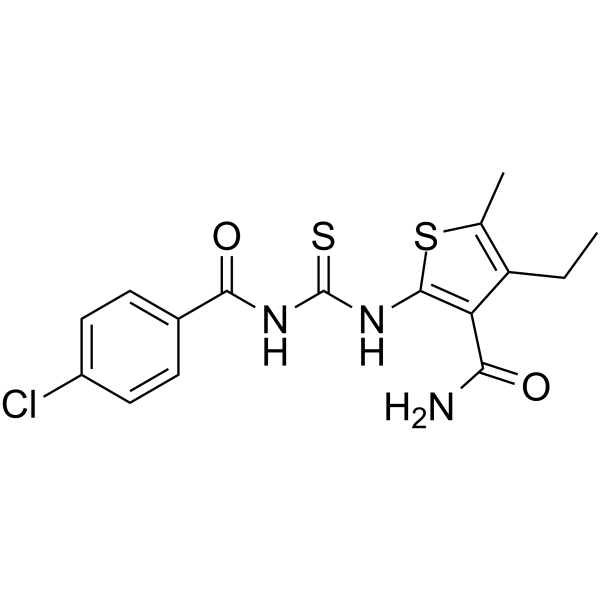
HY-103489
PI-273PI4KIIα Inhibitor -
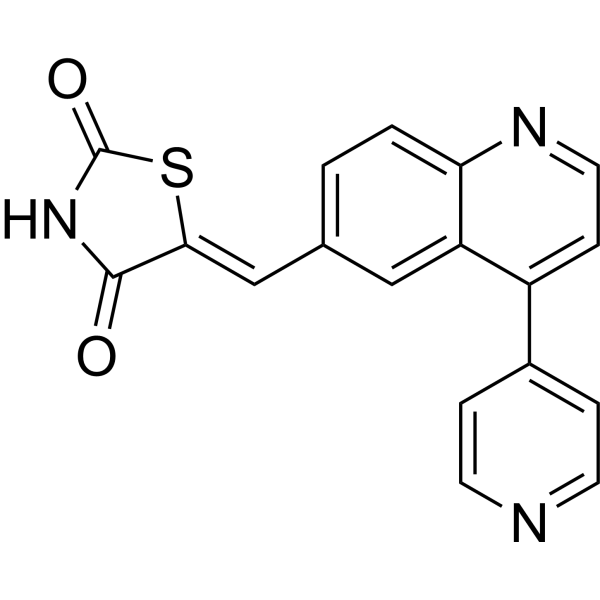
HY-12036
GSK1059615Apoptosis Inducer -
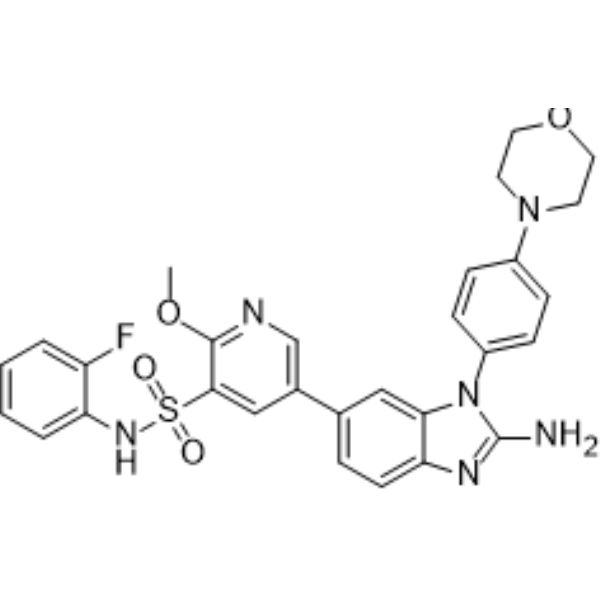
HY-125118
GSK-A1PI4KIIIα Inhibitor -
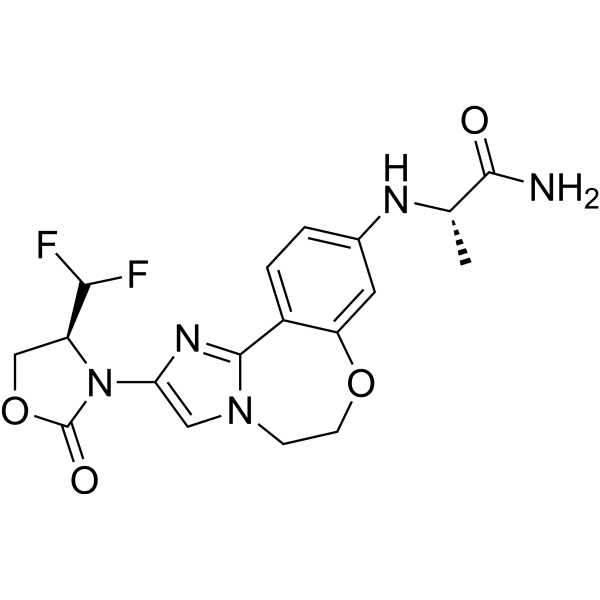
HY-101562
InavolisibPI3Kα Inhibitor -
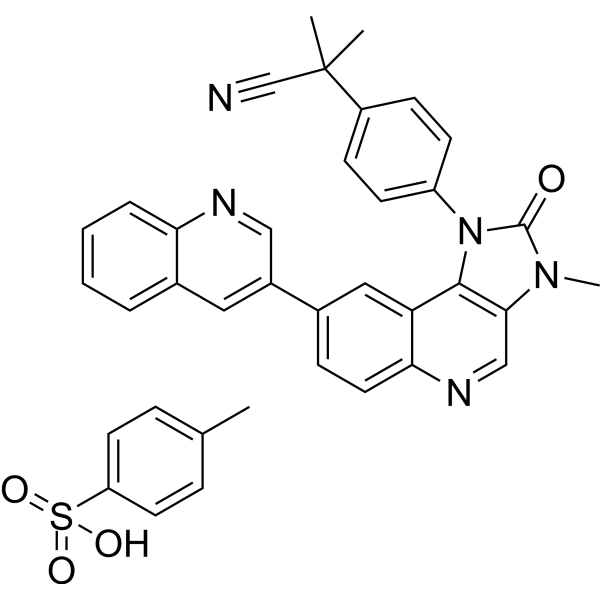
HY-15174
Dactolisib TosylateAutophagy Inducer -
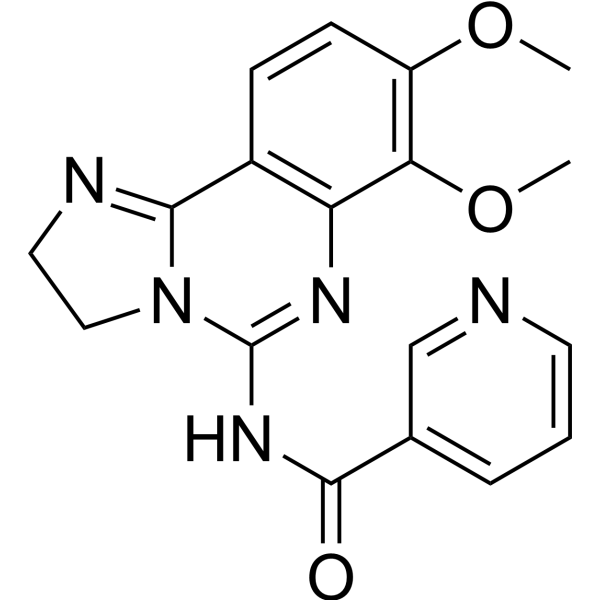
HY-12030
PIK-90PI3K Inhibitor -
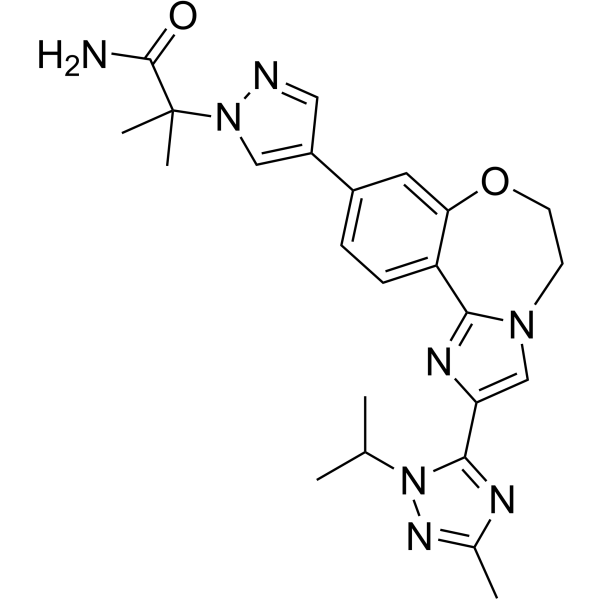
HY-13898
TaselisibPIK3CA Inhibitor -
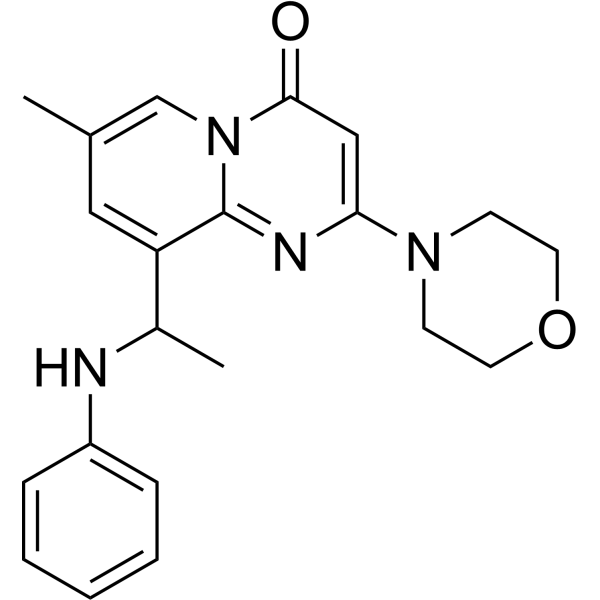
HY-10114
TGX-221Keap1-Nrf2 Interaction Inhibitor -
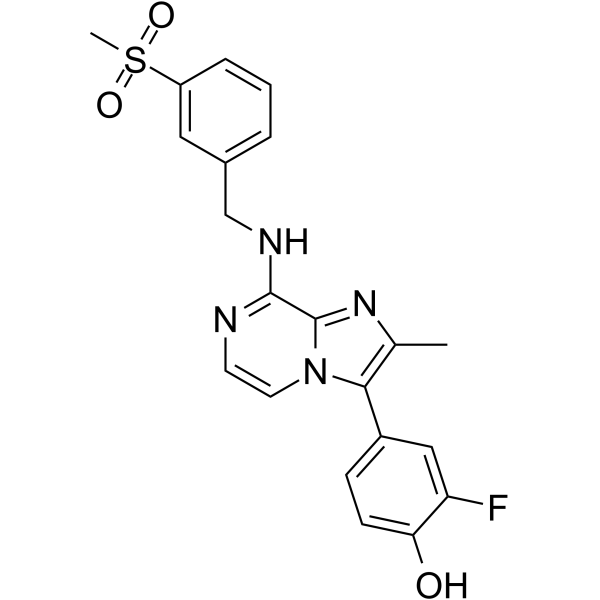
HY-U00426
BF738735 -
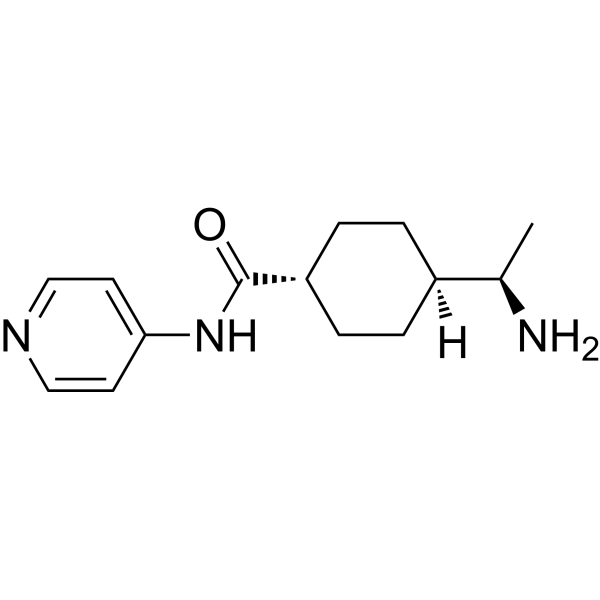
HY-10071
Y-27632ROCK Inhibitor -
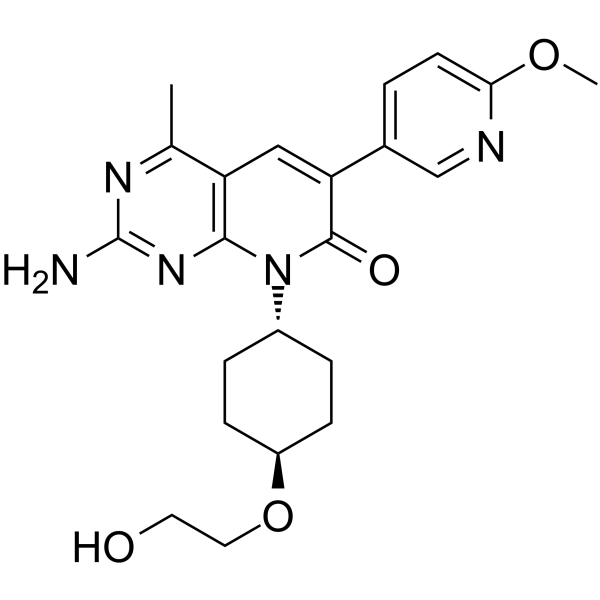
HY-15177
PF-04691502PI3K/mTOR Inhibitor
Publications Citing Use of MedChemExpress (MCE) PIK-93
More

Actividad biológica
Descripciòn
IC50 & Target
[1]|
PI4KIIIβ 19 nM (IC50) |
PI4KIIIα 1.1 μM (IC50) |
p110γ 16 nM (IC50) |
p110α 39 nM (IC50) |
p110δ 120 nM (IC50) |
p110β 590 nM (IC50) |
PI3KC2β 140 nM (IC50) |
PI3KC2α 16 μM (IC50) |
hsVPS34 320 nM (IC50) |
DNA-PK 64 nM (IC50) |
ATM 490 nM (IC50) |
mTORC1 1.38 μM (IC50) |
ATR 17 μM (IC50) |
Cellular Effect
|
Cell Line

|
Type | Value | Description | References |
|---|---|---|---|---|
| H1-HeLa | CC50 |
15.8 μM
Compound: 1i; PIK93
|
Cytotoxicity against human H1-HeLa cells infected with 1 MOI human rhinovirus 14 pretreated with compound for 1 hr followed by viral infection measured by MTT assay
Cytotoxicity against human H1-HeLa cells infected with 1 MOI human rhinovirus 14 pretreated with compound for 1 hr followed by viral infection measured by MTT assay
|
[PMID: 38389877] |
| HEK293 | IC50 |
14 μM
Compound: 18; PIK93
|
Inhibition of PI3KC2beta (unknown origin) expressed in HEK293 cells using phosphatidylinositol and gamma-32P-ATP incubated for 20 mins by TLC assay or high-throughput membrane capture assay
Inhibition of PI3KC2beta (unknown origin) expressed in HEK293 cells using phosphatidylinositol and gamma-32P-ATP incubated for 20 mins by TLC assay or high-throughput membrane capture assay
|
[PMID: 27644332] |
| HEK293 | IC50 |
16 μM
Compound: 18; PIK93
|
Inhibition of PI3KC2alpha (unknown origin) expressed in HEK293 cells using phosphatidylinositol and gamma-32P-ATP incubated for 20 mins by TLC assay or high-throughput membrane capture assay
Inhibition of PI3KC2alpha (unknown origin) expressed in HEK293 cells using phosphatidylinositol and gamma-32P-ATP incubated for 20 mins by TLC assay or high-throughput membrane capture assay
|
[PMID: 27644332] |
| Huh-7 | IC50 |
4800 nM
Compound: 1; PIK93
|
Antiviral activity against HCV genotype 2a J6/JFH1 infected in human Huh7.5 cells after 3 days by gaussia luciferase assay
Antiviral activity against HCV genotype 2a J6/JFH1 infected in human Huh7.5 cells after 3 days by gaussia luciferase assay
|
[PMID: 26885694] |
| Huh-7 | CC50 |
10 μM
Compound: 1; PIK93
|
Cytotoxicity against human Huh7.5 cells after 3 days by presto blue assay
Cytotoxicity against human Huh7.5 cells after 3 days by presto blue assay
|
[PMID: 26885694] |
| Huh-7 | CC50 |
8.1 μM
Compound: 94; PIK93
|
Cytotoxicity against human Huh-7 cells
Cytotoxicity against human Huh-7 cells
|
[PMID: 33539089] |
In Vitro
PIK-93 inhibits PI3Kγ and PI4KIIIβ, with IC50 values of 16 nM and 19 nM, respectively. PIK-93 also inhibits other members of PI3Ks, including PI3Kα, β, and δ, with IC50 values of 39 nM, 0.59 μM, and 0.12 μM, respectively. PIK-93 shows no obvious inhibitory effect against a panel of other kinases, even at a concentration of 10 μM[1]. In differentiated HL60 (dHL60) cells, PIK-93 (0.5 μM-1 μM) impairs consolidation and stability of the leading edge formed after treatment with uniform f-Met-Leu-Phe (fMLP). PIK-93 alters the localization, but not the amount, of the fMLP-dependent accumulation of total F-actin. In fMLP gradients, PIK-93 reduces the chemotactic index and triples the cells' turning frequency[2]. In COS-7 cells, PIK-93 (250 nM) effectively abrogates the accumulation of CERT-PH domain and FL-Cer in Golgi. PIK-93 of the same concentration also significantly inhibits the conversion of [3H]serine-labeled endogenous ceramide to sphingomyelin. These facts indicate a key role of PI4KIIIβ in ceramide transport between the ER and Golgi, as well as in the regulation of spingomyelin synthesis[3]. In T6.11 cells, PIK-93 (300 nM) reduces carbachol-induced translocation of TRPC6 to the plasma membrane and net Ca2+ entry[4]. A recent report shows that PIK-93 has anti-enterovirus effects, as revealed by its inhibition of both poliovirus (PV) and hepatitis C virus (HCV) replication, with EC50 values of 0.14 μM and 1.9 μM, respectively[5].
MedChemExpress (MCE) has not independently confirmed the accuracy of these methods. They are for reference only.


Chemical Information
-
No. CAS 593960-11-3
-
Appearance Solid
-
Peso molecular 389.88
-
Fòrmula C14H16ClN3O4S2
-
Color White to off-white
-
SMILES
CC(NC1=NC(C)=C(S1)C2=CC=C(C(S(=O)(NCCO)=O)=C2)Cl)=O
-
Envío
Room temperature in continental US; may vary elsewhere.
-
Almacenamiento
Powder -20°C 3 years 4°C 2 years In solvent -80°C 2 years -20°C 1 year


Publications (6)
-
Journal Impact Factor
-
Most Recent
-
Sci Immunol
Radiotherapy enhances anticancer CD8 T cell responses by cGAMP transfer through LRRC8A/C volume-regulated anion channels. [Abstract]2025 Jun 27;10(108):eadn1630. PMID: 40577443 -
Sci Adv
Golgi-localized phosphatidylinositol 4-kinase β mediates Rab11a activation and trafficking to promote ciliogenesis. [Abstract]2025 Dec 5;11(49):eadw6910. PMID: 41348894 -
Cell Syst
Torin2 Exploits Replication and Checkpoint Vulnerabilities to Cause Death of PI3K-Activated Triple-Negative Breast Cancer Cells. [Abstract]2020 Jan 22;10(1):66-81.e11. PMID: 31812693 -
Molecules
In Vitro and in Vivo Activity of mTOR Kinase and PI3K Inhibitors Against Leishmania donovani and Trypanosoma brucei. [Abstract]2020 Apr 23;25(8):1980. PMID: 32340370 -
-


Solvente y solubilidad
In Vitro:
DMSO : 100 mg/mL (256.49 mM; Need ultrasonic; Hygroscopic DMSO has a significant impact on the solubility of product, please use newly opened DMSO)
Please refer to the solubility information to select the appropriate solvent. Once prepared, please aliquot and store the solution to prevent product inactivation from repeated freeze-thaw cycles.
Storage method and period of stock solution: -80°C, 2 years; -20°C, 1 year. When stored at -80°C, please use it within 2 years. When stored at -20°C, please use it within 1 year.
Please refer to the solubility information to select the appropriate solvent. Once prepared, please aliquot and store the solution to prevent product inactivation from repeated freeze-thaw cycles.
Storage method and period of stock solution: -80°C, 2 years; -20°C, 1 year. When stored at -80°C, please use it within 2 years. When stored at -20°C, please use it within 1 year.
Concentration (start) × Volume (start) = Concentration (final) × Volume (final)
In Vivo:
Select the appropriate dissolution method based on your experimental animal and administration route.
- For the following dissolution methods, please ensure to first prepare a clear stock solution using an In Vitro approach and then sequentially add co-solvents:
- To ensure reliable experimental results, the clarified stock solution can be appropriately stored based on storage conditions. As for the working solution for In Vivo experiments, it is recommended to prepare freshly and use it on the same day.
- The percentages shown for the solvents indicate their volumetric ratio in the final prepared solution. If precipitation or phase separation occurs during preparation, heat and/or sonication can be used to aid dissolution.
Add each solvent one by one: 10% DMSO 40% PEG300 5% Tween-80 45% Saline
Solubility: ≥ 4.55 mg/mL (11.67 mM); Clear solution
This protocol yields a clear solution of ≥ 4.55 mg/mL (saturation unknown).
Taking 1 mL working solution as an example, add 100 μL DMSO stock solution (45.5 mg/mL) to 400 μL PEG300, and mix evenly; then add 50 μL Tween-80 and mix evenly; then add 450 μL Saline to adjust the volume to 1 mL.
Preparation of Saline: Dissolve 0.9 g sodium chloride in ddH₂O and dilute to 100 mL to obtain a clear Saline solution.
Add each solvent one by one: 10% DMSO 90% (20% SBE-β-CD in Saline)
Solubility: ≥ 2.5 mg/mL (6.41 mM); Clear solution
This protocol yields a clear solution of ≥ 2.5 mg/mL (saturation unknown).
Taking 1 mL working solution as an example, add 100 μL DMSO stock solution (25.0 mg/mL) to 900 μL 20% SBE-β-CD in Saline, and mix evenly.
Preparation of 20% SBE-β-CD in Saline (4°C, storage for one week): 2 g SBE-β-CD powder is dissolved in 10 mL Saline, completely dissolve until clear.
In Vivo Dissolution Calculator
Please enter the basic information of animal experiments:
-
-
-
-
Recommended: Prepare an additional quantity of animals to account for potential losses during experiments.
Please enter your animal formula composition:
-
%DMSO +
Recommended: Keep the proportion of DMSO in working solution below 2% if your animal is weak.
-
%+
-
+%Tween-80 + +
-
%Saline +
The co-solvents required include: DMSO, . All of co-solvents are available by MedChemExpress (MCE). , Tween 80. All of co-solvents are available by MedChemExpress (MCE).
Working solution concentration: 0.22 mg/mL
Method for preparing stock solution: mg drug dissolved in μL DMSO. Stock solution concentration: mg/mL.
1. Take μL DMSO stock solution;
2. Add μL .
μL , mix evenly;
3. Then add μL Tween 80, mix evenly;
4. Then add μL
Please ensure that the stock solution in the first step is dissolved to a clear state, and add co-solvents in sequence. You can use ultrasonic heating (ultrasonic cleaner, recommended frequency 20-40 kHz), vortexing, etc. to assist dissolution.


Pureza y Documentación
-
Ficha de datos (281 KB)
-
SDS (393 KB)
- English - EN (393 KB)
- Français - FR (393 KB)
- Deutsch - DE (393 KB)
- Norwegian - NO (393 KB)
- Español - ES (393 KB)
- Swedish - SV (393 KB)
- Italian - IT (393 KB)
- Korean - KR (393 KB)
- Portuguese - PT (393 KB)
-
Instrucciones de manejo (2659 KB)
Referencias
[1]. Knight ZA, et al. A pharmacological map of the PI3-K family defines a role for p110alpha in insulin signaling. Cell. 2006 May 19;125(4):733-47 [Content Brief]
[2]. Van Keymeulen A, et al. To stabilize neutrophil polarity, PIP3 and Cdc42 augment RhoA activity at the back as well as signals at the front. J Cell Biol. 2006 Jul 31;174(3):437-45 [Content Brief]
[3]. Toth B, et al. Phosphatidylinositol 4-kinase IIIbeta regulates the transport of ceramide between the endoplasmic reticulum and Golgi. J Biol Chem. 2006 Nov 24;281(47):36369-77 [Content Brief]
[4]. Monet M, et al. Involvement of phosphoinositide 3-kinase and PTEN protein in mechanism of activation of TRPC6 protein in vascular smooth muscle cells. J Biol Chem. 2012 May 18;287(21):17672-81 [Content Brief]
[5]. Arita M, et al. Phosphatidylinositol 4-kinase III beta is a target of enviroxime-like compounds for antipoliovirus activity. J Virol. 2011 Mar;85(5):2364-72 [Content Brief]


Complete Stock Solution Preparation Table
Please refer to the solubility information to select the appropriate solvent. Once prepared, please aliquot and store the solution to prevent product inactivation from repeated freeze-thaw cycles.
Storage method and period of stock solution: -80°C, 2 years; -20°C, 1 year. When stored at -80°C, please use it within 2 years. When stored at -20°C, please use it within 1 year.
| Optional Solvent | Concentration Solvent Mass | 1 mg | 5 mg | 10 mg | 25 mg |
|---|---|---|---|---|---|
| DMSO | 1 mM | 2.5649 mL | 12.8245 mL | 25.6489 mL | 64.1223 mL |
| 5 mM | 0.5130 mL | 2.5649 mL | 5.1298 mL | 12.8245 mL | |
| 10 mM | 0.2565 mL | 1.2824 mL | 2.5649 mL | 6.4122 mL | |
| 15 mM | 0.1710 mL | 0.8550 mL | 1.7099 mL | 4.2748 mL | |
| 20 mM | 0.1282 mL | 0.6412 mL | 1.2824 mL | 3.2061 mL | |
| 25 mM | 0.1026 mL | 0.5130 mL | 1.0260 mL | 2.5649 mL | |
| 30 mM | 0.0855 mL | 0.4275 mL | 0.8550 mL | 2.1374 mL | |
| 40 mM | 0.0641 mL | 0.3206 mL | 0.6412 mL | 1.6031 mL | |
| 50 mM | 0.0513 mL | 0.2565 mL | 0.5130 mL | 1.2824 mL | |
| 60 mM | 0.0427 mL | 0.2137 mL | 0.4275 mL | 1.0687 mL | |
| 80 mM | 0.0321 mL | 0.1603 mL | 0.3206 mL | 0.8015 mL | |
| 100 mM | 0.0256 mL | 0.1282 mL | 0.2565 mL | 0.6412 mL |


PIK-93 Related Classifications
HY-12046 Related Classifications
 Powered by Bioz