



Ceramides Mixture
Based on 2 publication(s) in Google Scholar
Ceramides Mixture is an endogenous ceramide and consists of hydroxy and non-hydroxy fatty acid-containing ceramides. Ceramides Mixture is a main lipid component of the permeability barrier in epidermis. Ceramides Mixture is involved in the regulation of growth inhibition, cell cycle arrest, and modulation of telomerase activity.
Para uso exclusivo en investigación. No vendemos a pacientes.
- Pureza : 99.8%
- No. CAS: 100403-19-8
-
Almacenamiento:Powder -20°C, 3 years , 4°C, 2 years ; In solvent -80°C, 6 months , -20°C, 1 month


To place orders, for customer services and technical support, please contact: MedChemExpress USA
Tel: 609-228-6898 E-mail: [email protected] [email protected]


-
 Actividad biológica
-
Chemical Information
-
Solvente y solubilidad
- Protocolo
- Pureza y Documentación
- Referencias
-
 Help & FAQs


-
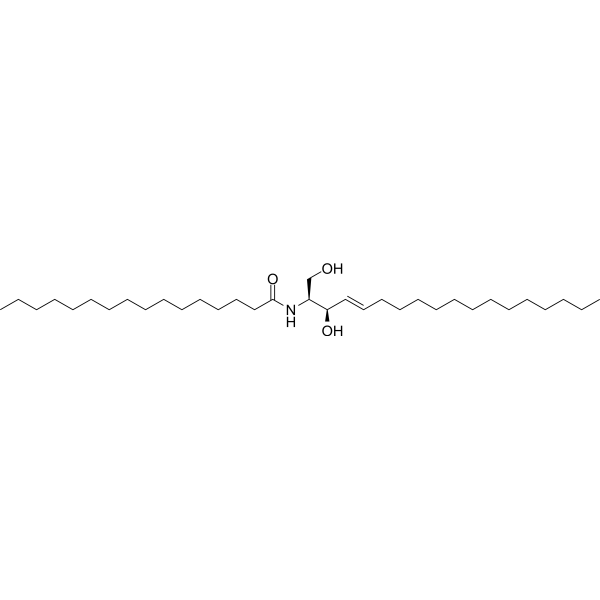
HY-100354
C16-Ceramide (d18:1/16:0)p53 Activator -

HY-113498
SphingomyelinEndogenous Metabolite -
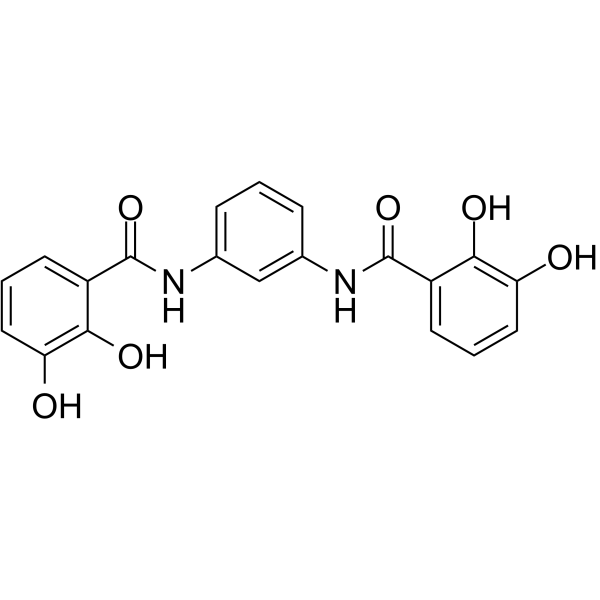
HY-120145
MST-312Telomerase Inhibitor -
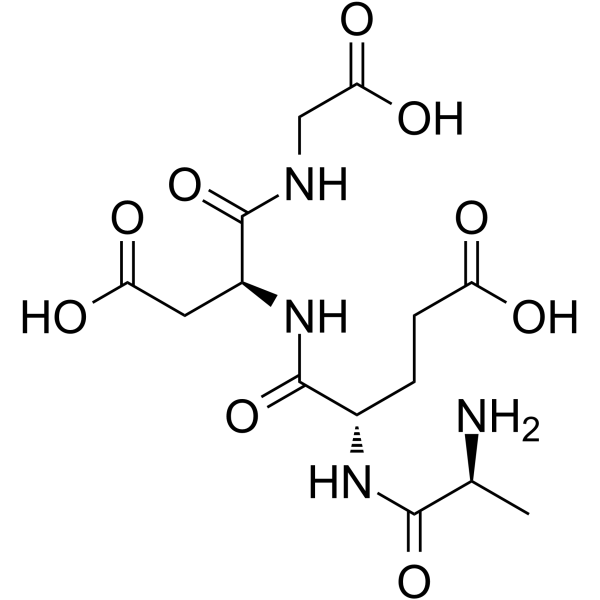
HY-P1149
EpitalonTelomerase Activator -
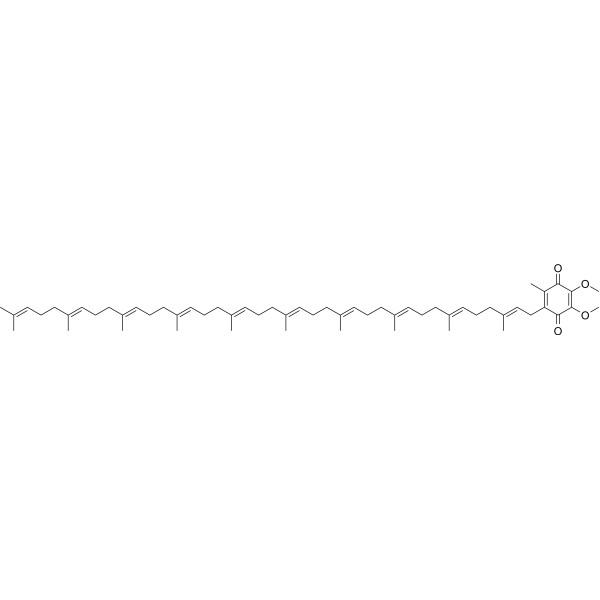
HY-N0111
Coenzyme Q10Antioxidant -
HY-101047
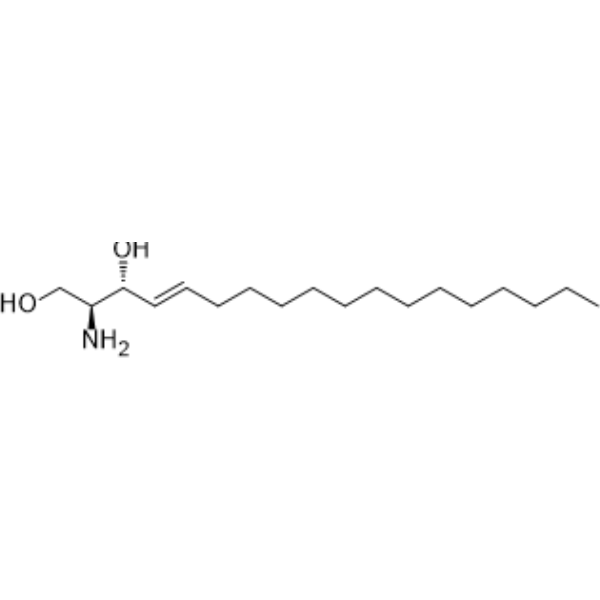
D-erythro-SphingosinePKC Inhibitor -
HY-18085
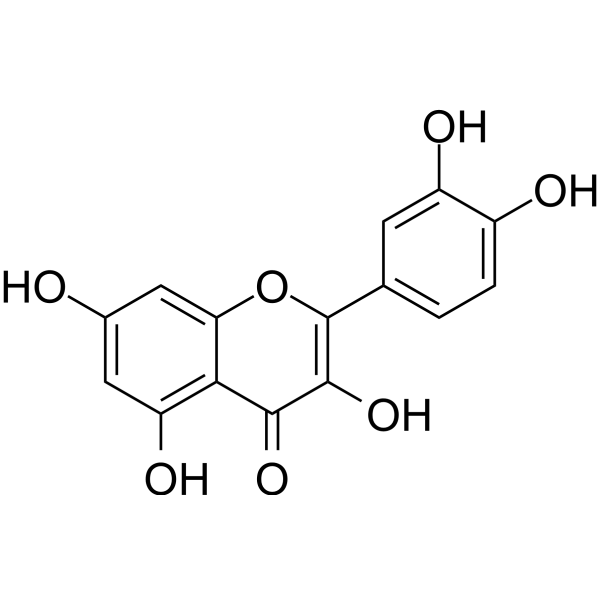
QuercetinFlavonoid Antioxidant -
HY-126483
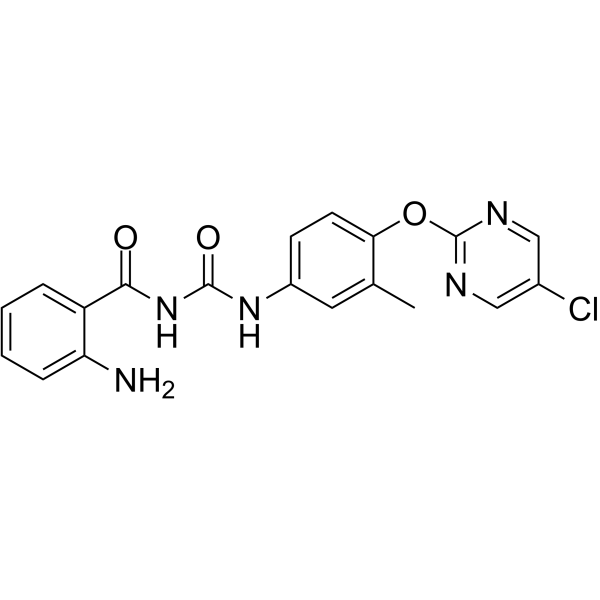
Telomerase-IN-3Telomerase Inhibitor -
HY-19363
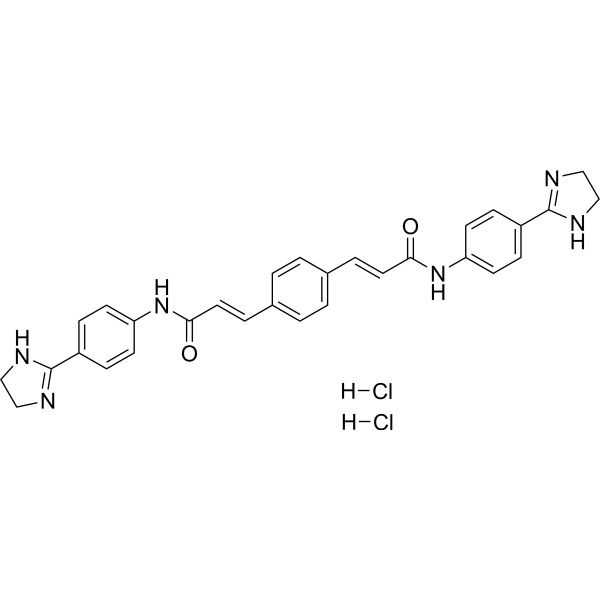
GW4869N-SMase Inhibitor -
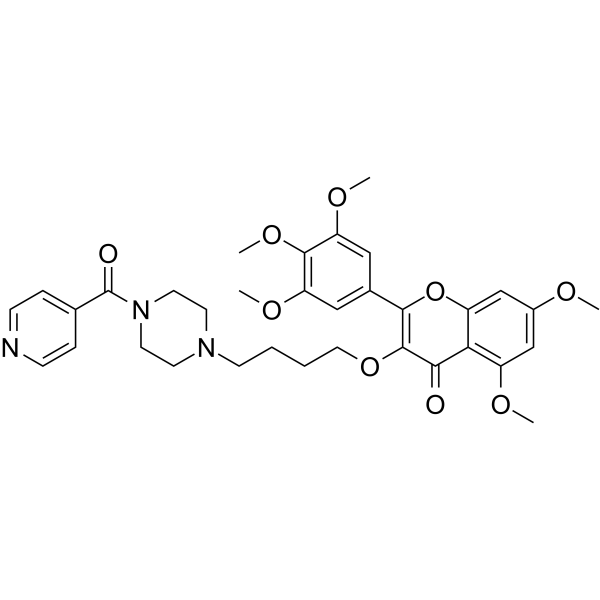
HY-126482
Telomerase-IN-2 -
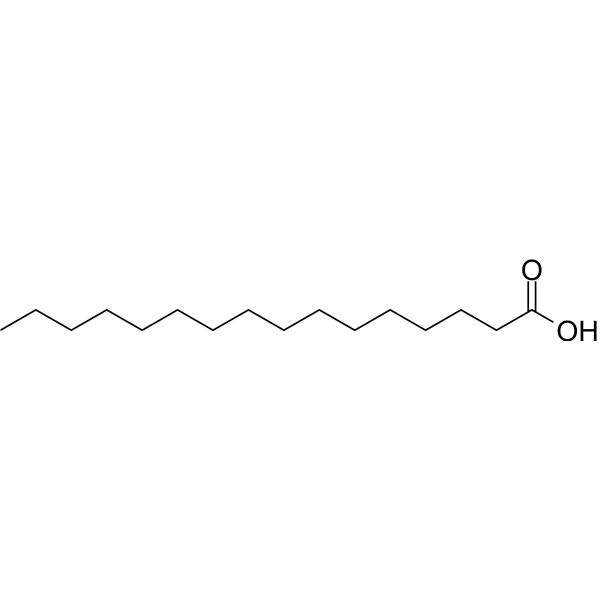
HY-N0830
Palmitic acidEndogenous Metabolite -
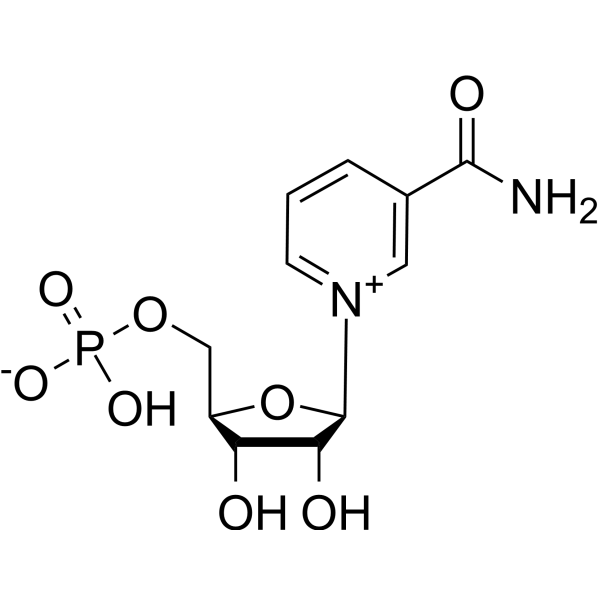
HY-F0004
FosribnicotinamideNAD+ Intermediate
Publications Citing Use of MedChemExpress (MCE) Ceramides Mixture
More Customer Validation & Images

-
IF
-
2D/3D Cell Culture and Differentiation
-
Cell Proliferation/Viability Assay
-
Apoptosis Analysis
-
ELISA


Actividad biológica
Descripciòn
In Vitro
Endogenous Ceramides (generated in response to bacterial sphingomyelinase overexpression or daunorubicin treatment) inhibits mRNA synthesis of telomerase reverse transcriptase and telomerase activity via inactivation of c-Myc transcription factor in the A549 human lung adenocarcinoma cell line[1].
The sustained generation of long chain endogenous ceramide requires the biochemical recycling of the sphingosine backbone of C6-ceramide, which involves deacylation and reacylation of ceramide for the generation of endogenous long chain ceramide (mainly C16:0- and C24:1-Ceramides), most likely by CoA-dependent ceramide synthase, which is inhibited by fumonisin B1. In A549 cells the generation of long chain endogenous ceramide mediates the effects of exogenous C6-ceramide on growth inhibition, cell cycle arrest, and the modulation of telomerase activity[1].
MedChemExpress (MCE) has not independently confirmed the accuracy of these methods. They are for reference only. Further protocols information, click here.


Chemical Information
-
No. CAS 100403-19-8
-
Appearance Solid
-
Color White to light yellow
-
SMILES
[Ceramides Mixture]
-
Envío
Room temperature in continental US; may vary elsewhere.
-
Almacenamiento
Powder -20°C 3 years 4°C 2 years In solvent -80°C 6 months -20°C 1 month


Publications (2)
-
Journal Impact Factor
-
Most Recent
-
ACS Cent Sci
Astragaloside IV Alleviates Fructose-Induced Intestinal Metabolic Senescence by Targeting Ketohexokinase Asn261/Ala226 to Preserve Intestinal Stem Cell Homeostasis. [Abstract]2025 Jul 29;11(9):1682-1699. PMID: 41019116
Ceramides Mixture purchased from MedChemExpress. Usage Cited in: ACS Cent Sci. 2025 Jul 29;11(9):1682-1699. [Abstract]
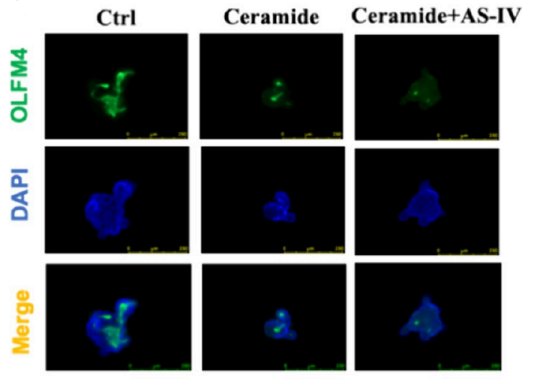
Representative immunofluorescence images of OLFM4 (green) in intestinal organoids under Ceramides Mixture (Ceramide) (10 μg/mL; 48 h) and ceramide+AS-IV (5 μM; 48 h) treatments.
Ceramides Mixture purchased from MedChemExpress. Usage Cited in: ACS Cent Sci. 2025 Jul 29;11(9):1682-1699. [Abstract]
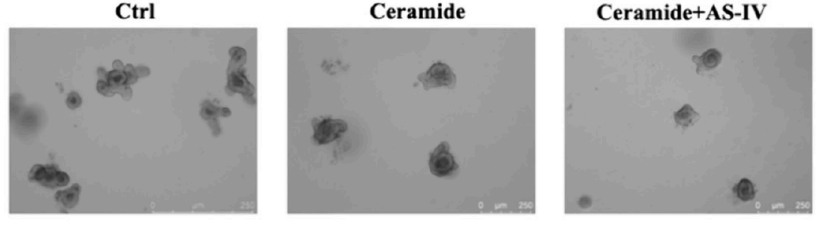
Representative images of intestinal organoids treated with Ceramides Mixture (Ceramide) (10 μg/mL; 48 h) or ceramide with AS-IV (ceramide+AS-IV (5 μM; 48 h)).
-
EMBO Mol Med
BCAA insufficiency leads to premature ovarian insufficiency via ceramide-induced elevation of ROS. [Abstract]2023 Apr 11;15(4):e17450. PMID: 36847712
Ceramides Mixture purchased from MedChemExpress. Usage Cited in: EMBO Mol Med. 2023 Apr 11;15(4):e17450. [Abstract]
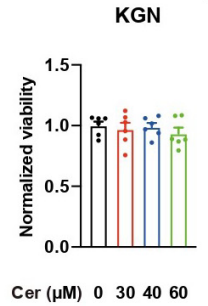
The relative cell viability of KGN cells with Ceramides Mixture (Cer, 30-60 μM; 48 h) treatment. N = 6.
Ceramides Mixture purchased from MedChemExpress. Usage Cited in: EMBO Mol Med. 2023 Apr 11;15(4):e17450. [Abstract]
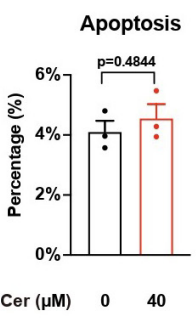
The percentage of Annexin V positive cells of KGN cells with Ceramides Mixture (Cer, 40 μM; 48 h) treatment. N = 3
Ceramides Mixture purchased from MedChemExpress. Usage Cited in: EMBO Mol Med. 2023 Apr 11;15(4):e17450. [Abstract]
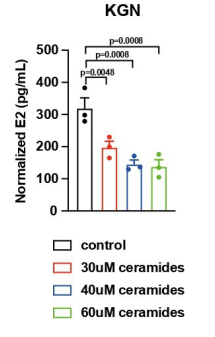
Decreases of E2 secretions from KGN cells treated with Ceramides Mixture (Cer, 30-60 μM; 48 h). N = 3.


Solvente y solubilidad
In Vitro:
DMSO : 1 mg/mL (ultrasonic and warming and heat to 60°C; Hygroscopic DMSO has a significant impact on the solubility of product, please use newly opened DMSO)
H2O : < 0.1 mg/mL (insoluble)
In Vivo:
Select the appropriate dissolution method based on your experimental animal and administration route.
- For the following dissolution methods, please ensure to first prepare a clear stock solution using an In Vitro approach and then sequentially add co-solvents:
- To ensure reliable experimental results, the clarified stock solution can be appropriately stored based on storage conditions. As for the working solution for In Vivo experiments, it is recommended to prepare freshly and use it on the same day.
- The percentages shown for the solvents indicate their volumetric ratio in the final prepared solution. If precipitation or phase separation occurs during preparation, heat and/or sonication can be used to aid dissolution.
Add each solvent one by one: 10% DMSO 40% PEG300 5% Tween-80 45% Saline
Solubility: ≥ 0.1 mg/mL; Clear solution
This protocol yields a clear solution of ≥ 0.1 mg/mL (saturation unknown).
Taking 1 mL working solution as an example, add 100 μL DMSO stock solution (1.0 mg/mL) to 400 μL PEG300, and mix evenly; then add 50 μL Tween-80 and mix evenly; then add 450 μL Saline to adjust the volume to 1 mL.
Preparation of Saline: Dissolve 0.9 g sodium chloride in ddH₂O and dilute to 100 mL to obtain a clear Saline solution.
Add each solvent one by one: 10% DMSO 90% (20% SBE-β-CD in Saline)
Solubility: ≥ 0.1 mg/mL; Clear solution
This protocol yields a clear solution of ≥ 0.1 mg/mL (saturation unknown).
Taking 1 mL working solution as an example, add 100 μL DMSO stock solution (1.0 mg/mL) to 900 μL 20% SBE-β-CD in Saline, and mix evenly.
Preparation of 20% SBE-β-CD in Saline (4°C, storage for one week): 2 g SBE-β-CD powder is dissolved in 10 mL Saline, completely dissolve until clear.
In Vivo Dissolution Calculator
Please enter the basic information of animal experiments:
-
-
-
-
Recommended: Prepare an additional quantity of animals to account for potential losses during experiments.
Please enter your animal formula composition:
-
%DMSO +
Recommended: Keep the proportion of DMSO in working solution below 2% if your animal is weak.
-
%+
-
+%Tween-80 + +
-
%Saline +
The co-solvents required include: DMSO, . All of co-solvents are available by MedChemExpress (MCE). , Tween 80. All of co-solvents are available by MedChemExpress (MCE).
Working solution concentration: 0.22 mg/mL
Method for preparing stock solution: mg drug dissolved in μL DMSO. Stock solution concentration: mg/mL.
1. Take μL DMSO stock solution;
2. Add μL .
μL , mix evenly;
3. Then add μL Tween 80, mix evenly;
4. Then add μL
Please ensure that the stock solution in the first step is dissolved to a clear state, and add co-solvents in sequence. You can use ultrasonic heating (ultrasonic cleaner, recommended frequency 20-40 kHz), vortexing, etc. to assist dissolution.

Protocolo
-
Flow cytometric DNA-content cell-cycle staining
Flow cytometric DNA-content cell-cycle staining measures the fluorescence intensity of DNA-bound fluorochromes in single cells or nuclei to estimate DNA content distributions, allowing assignment of populations to G0/G1, S, and G2/M phases by DNA histogram deconvolution. Propidium iodide (PI) intercalates into DNA, and PI fluorescence is proportional to cellular DNA content when staining is performed under conditions that make DNA accessible and minimize non-DNA signal. Cells with G2/M DNA content are expected to show approximately twice the fluorescence intensity of G0/G1 cells, while S-phase cells occupy intermediate fluorescence values. PI-based DNA-content analysis can also detect cells with fractional DNA content, often reported as sub-G1, when DNA fragmentation and extraction during staining reduce retained DNA signal in apoptotic cells. DAPI is an alternative DNA fluorochrome for univariate DNA-content analysis, while bivariate approaches combining DNA content with proliferation
-
BrdU Incorporation Assay
Bromodeoxyuridine (BrdU) incorporation assay is based on the principle that BrdU, a thymidine analog, is incorporated into newly synthesized DNA during the S phase of the cell cycle, thereby serving as a marker of DNA replication and cellular proliferation. Incorporated BrdU can be detected using anti-BrdU antibodies following DNA denaturation, enabling visualization or quantification of proliferating cells through immunochemical detection methods such as immunofluorescence or immunohistochemistry.
-
Transepithelial/transendothelial electrical resistance assay
TEER measures electrical resistance across epithelial or endothelial monolayers cultured on permeable supports, and the readout reflects ionic conductance through the cell barrier, especially the paracellular pathway regulated by junctional integrity. TEER can be measured without destroying the monolayer and is commonly used before or during transport, permeability, barrier-disruption, and barrier-maturation experiments. TEER values are influenced by biological maturation and technical conditions; reported factors include temperature, medium formulation, passage number, electrode geometry, membrane properties, and junctional length during early monolayer maturation. Therefore, TEER should be interpreted with blank-insert subtraction, area normalization, repeated readings, and, when possible, orthogonal barrier readouts such as FITC-dextran flux or tight-junction staining.
-
Protocol for Cell Cycle
Cell-cycle analysis by flow cytometry measures DNA content in single cells to estimate the fraction of cells in G0/G1, S, and G2/M phases. Propidium iodide intercalates into DNA, and after RNA removal with RNase, fluorescence intensity reflects cellular DNA content: 2N cells are assigned to G0/G1, cells between 2N and 4N to S phase, and 4N cells to G2/M. DNA-content analysis alone cannot reliably separate G0 from G1 or G2 from M. Ki-67 can distinguish quiescent G0 cells from cycling cells, EdU or BrdU incorporation marks active DNA synthesis in S phase, and phospho-histone H3 staining identifies mitotic cells within the 4N population.


Pureza y Documentación
-
Ficha de datos (274 KB)
-
SDS (393 KB)
- English - EN (393 KB)
- Français - FR (393 KB)
- Deutsch - DE (393 KB)
- Norwegian - NO (393 KB)
- Español - ES (393 KB)
- Swedish - SV (393 KB)
- Italian - IT (393 KB)
- Korean - KR (393 KB)
- Portuguese - PT (393 KB)
-
Instrucciones de manejo (2659 KB)
Referencias
[1]. Ogretmen B, et al. Biochemical mechanisms of the generation of endogenous long chain ceramide in response to exogenous short chain ceramide in the A549 human lung adenocarcinoma cell line. Role for endogenous ceramide in mediating the action of exogenous ceramide. J Biol Chem. 2002 Apr 12;277(15):12960-9. [Content Brief]
[2]. Macheleidt O, et al. Deficiency of epidermal protein-bound omega-hydroxyceramides in atopic dermatitis. J Invest Dermatol. 2002 Jul;119(1):166-73. [Content Brief]

Calculators
Concentration (start) × Volume (start) = Concentration (final) × Volume (final)


Ceramides Mixture Related Classifications
HY-113679 Related Classifications
 Powered by Bioz