



Edelinontrine
Based on 4 publication(s) in Google Scholar
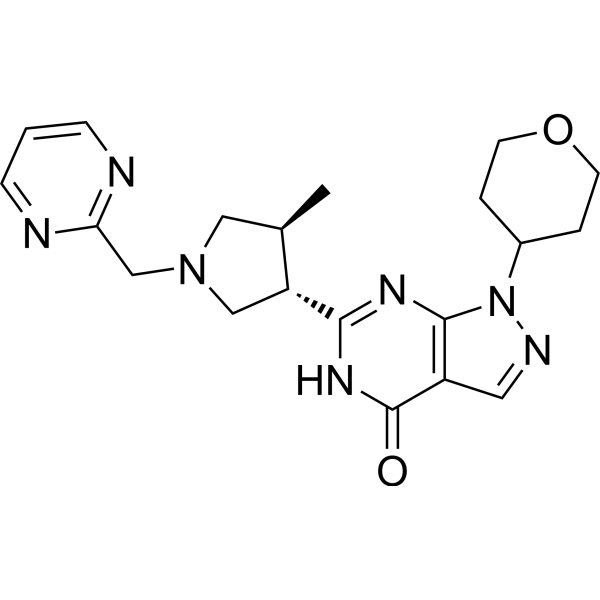
Edelinontrine (PF-04447943) is a potent inhibitor of human recombinant PDE9A (IC50=12 nM) with >78-fold selectivity, respectively, over other PDE family members (IC50>1000 nM).
Para uso exclusivo en investigación. No vendemos a pacientes.
- Pureza : 99.85%
- No. CAS: 1082744-20-4
- Fòrmula: C20H25N7O2
- Peso molecular:395.46
-
Almacenamiento:Powder -20°C, 3 years , 4°C, 2 years ; In solvent -80°C, 2 years , -20°C, 1 year

To place orders, for customer services and technical support, please contact: MedChemExpress USA
Tel: 609-228-6898 E-mail: [email protected] [email protected]


-
 Actividad biológica
-
Chemical Information
-
Solvente y solubilidad
- Protocolo
- Pureza y Documentación
- Referencias
-
 Help & FAQs


-
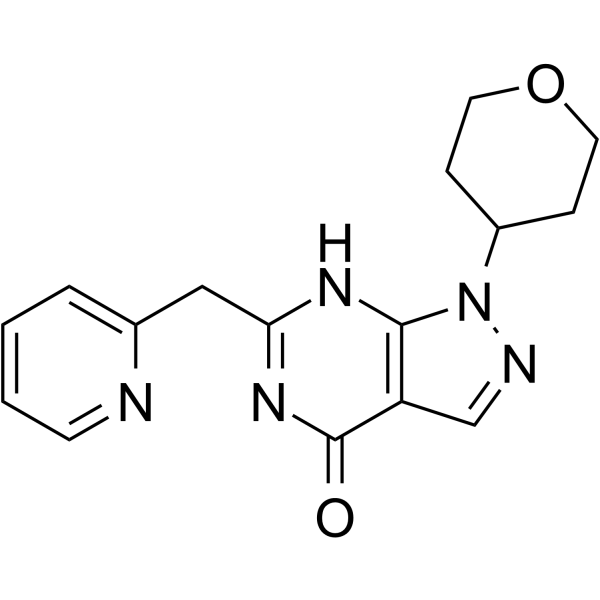
HY-112831
OsoresnontrinePDE9A Inhibitor -
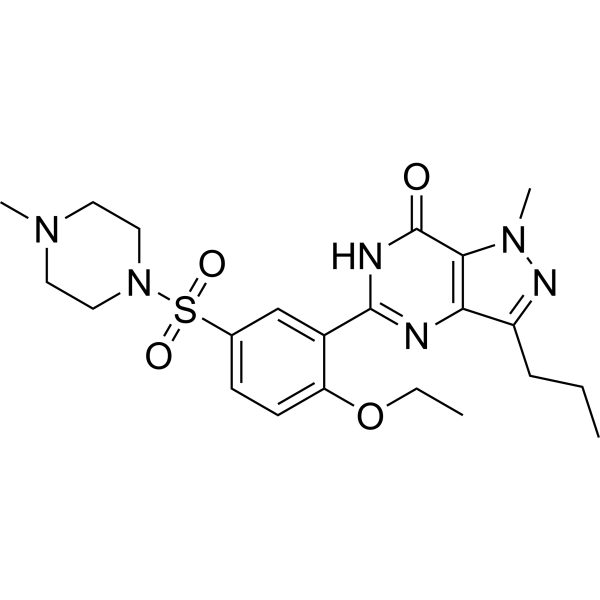
HY-15025
SildenafilPDE5 Inhibitor -
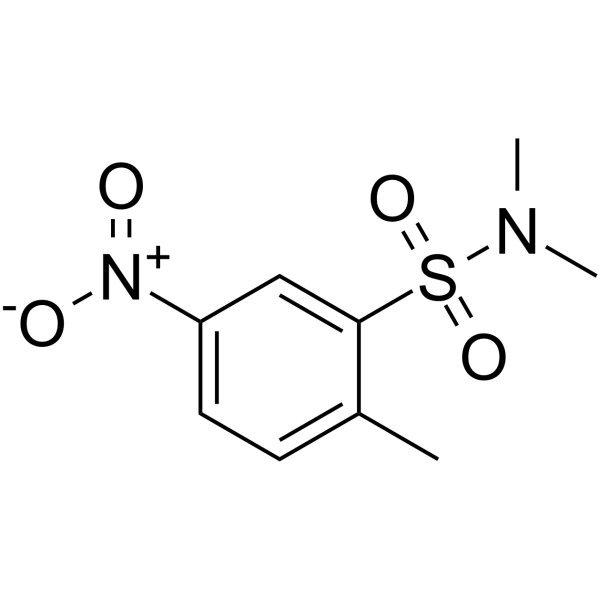
HY-109586
BRL-50481PDE Inhibitor -
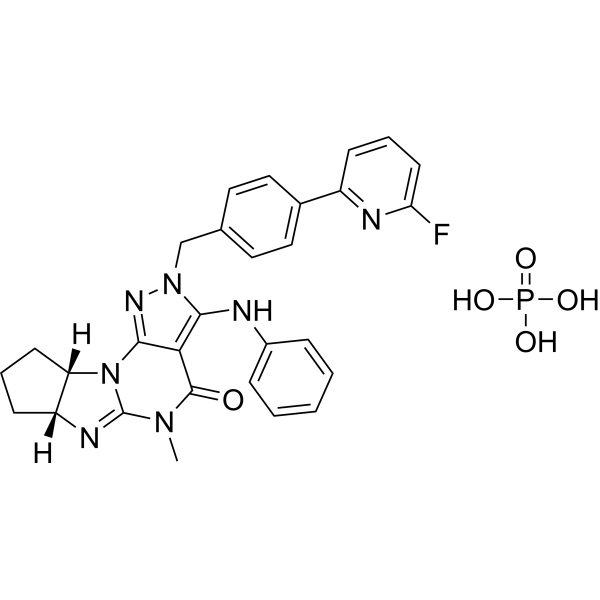
HY-12501A
ITI-214PDE1 Inhibitor -
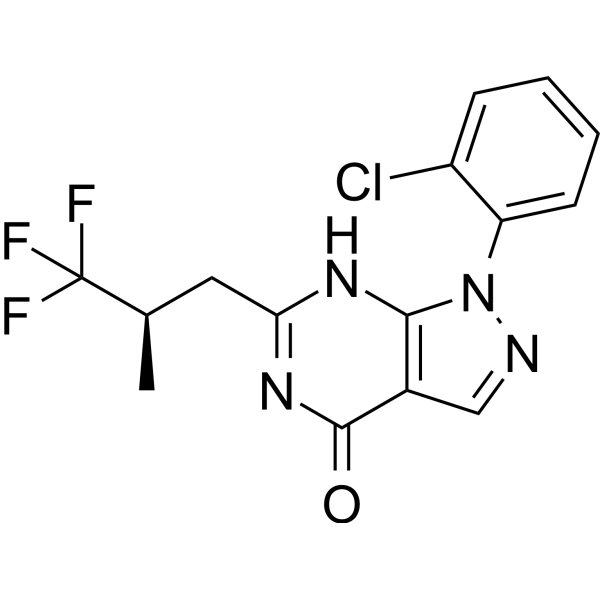
HY-104028
BAY 73-6691PDE9A Inhibitor -
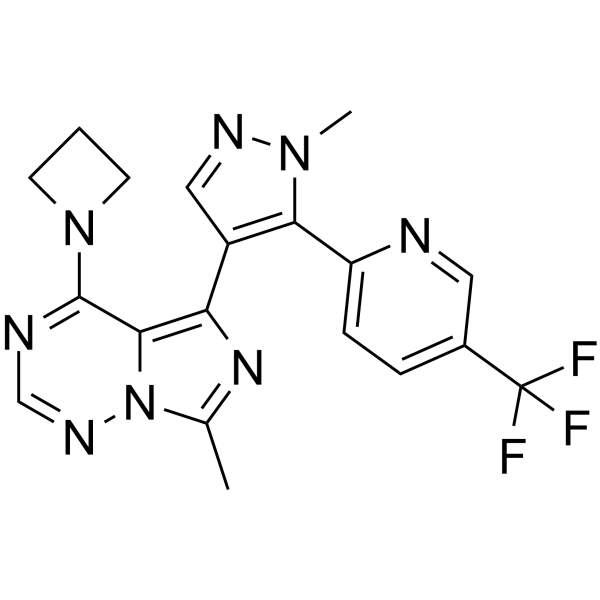
HY-111371
PF-05180999PDE2A Inhibitor -
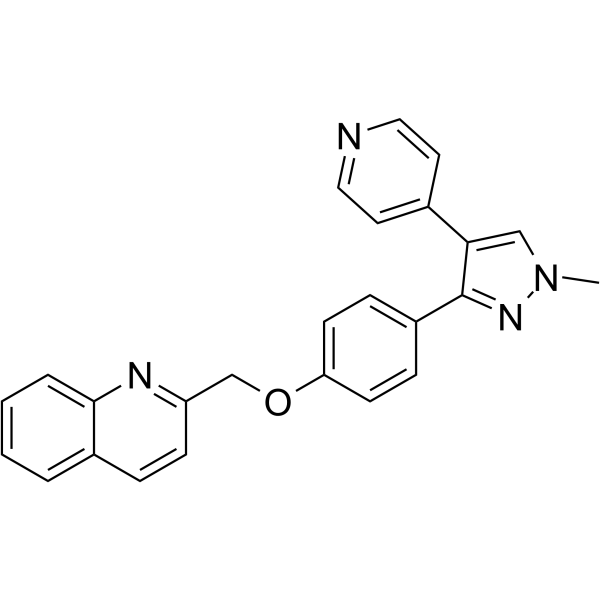
HY-50098
MardepodectPDE10A Inhibitor -
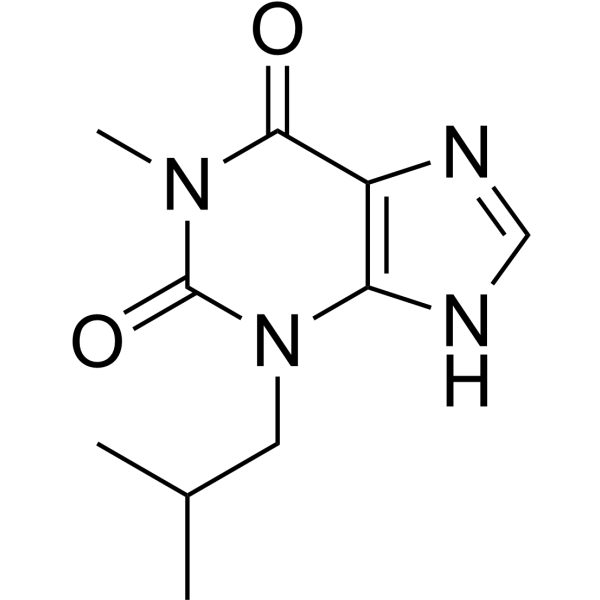
HY-12318
IBMXPDE Inhibitor -
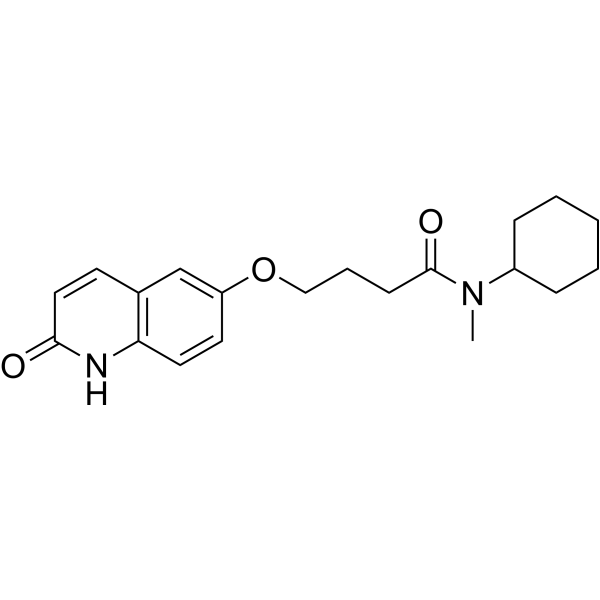
HY-101312
CilostamidePDE3 Inhibitor -

HY-12318R
IBMX (Standard)PDE Inhibitor -
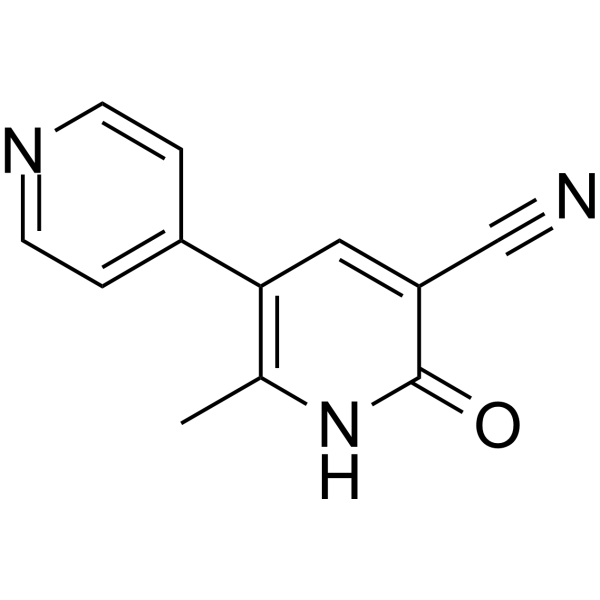
HY-14252
Milrinone -
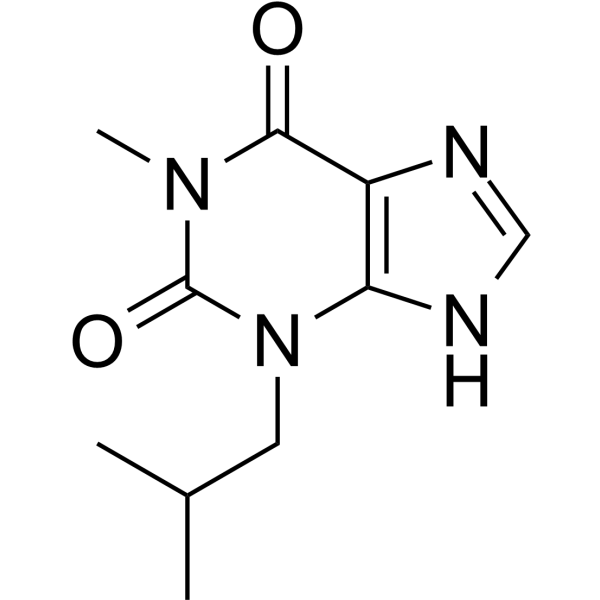
HY-12318G
IBMX (GMP)PDE Inhibitor
Publications Citing Use of MedChemExpress (MCE) Edelinontrine
More Customer Validation & Images

-
WB


Actividad biológica
Descripciòn
IC50 & Target
|
PDE9 |
Cellular Effect
|
Cell Line

|
Type | Value | Description | References |
|---|---|---|---|---|
| Sf9 | IC50 |
1394 nM
Compound: 20, PF-04447943
|
Inhibition of human recombinant PDE1C expressed in Sf9 cells using [3H]cAMP as substrate after 30 mins by scintillation proximity assay
Inhibition of human recombinant PDE1C expressed in Sf9 cells using [3H]cAMP as substrate after 30 mins by scintillation proximity assay
|
[PMID: 22780914] |
| Sf9 | IC50 |
8.3 nM
Compound: 20, PF-04447943
|
Inhibition of human recombinant PDE9A expressed in Sf9 cells using [3H]cGMP as substrate after 30 mins by scintillation proximity assay
Inhibition of human recombinant PDE9A expressed in Sf9 cells using [3H]cGMP as substrate after 30 mins by scintillation proximity assay
|
[PMID: 22780914] |
In Vitro
Using recombinant human, rhesus, and rat PDE9A2 in a cell free assay Edelinontrine is shown to have a Ki of 2.8±0.26, 4.5±0.13, and 18.1±1.9 nM (n=4, 11 and 9 respectively). Edelinontrine is found to be highly selective over other PDE enzymes (PDE1, Ki=8600±2121 nM, n = 5; PDE2A3, Ki>99,000 nM; PDE3A, Ki>50,000 nM; PDE4A, Ki>29,000 nM; PDE5A, Ki=14,980±5025 nM, n=5; PDE6C, Ki=5324±2612 nM, n=4; PDE7A2, Ki>75,000 nM; PDE8A, Ki>50,000 nM; PDE10, Ki>51,250±20,056 nM, n=4; PDE11, Ki>80,000 nM) and no other significant activity at ~60 other receptors/enzymes. In HEK whole cells expressing rhesus PDE9A2, Edelinontrine inhibits ANP (0.3 μM) stimulated cGMP with an IC50 of 375±36.9 nM (n=16)[2].
MedChemExpress (MCE) has not independently confirmed the accuracy of these methods. They are for reference only. Further protocols information, click here.
In Vivo
MedChemExpress (MCE) has not independently confirmed the accuracy of these methods. They are for reference only.
Ensayo clínico
| NCT Number | Sponsor | Condition | Start Date |
Phase
|
|---|---|---|---|---|
| NCT01329991 | Plexxikon| | 2011-05 | PHASE1 |


Chemical Information
-
No. CAS 1082744-20-4
-
Appearance Solid
-
Peso molecular 395.46
-
Fòrmula C20H25N7O2
-
Color Light yellow to yellow
-
SMILES
O=C1C2=C(N(C3CCOCC3)N=C2)N=C([C@@H]4CN(CC5=NC=CC=N5)C[C@H]4C)N1
-
Synonyms
PF-04447943
-
Envío
Room temperature in continental US; may vary elsewhere.
-
Almacenamiento
Powder -20°C 3 years 4°C 2 years In solvent -80°C 2 years -20°C 1 year


Publications (4)
-
Journal Impact Factor
-
Most Recent
-
Acta Pharmacol Sin
C33(S), a novel PDE9A inhibitor, protects against rat cardiac hypertrophy through upregulating cGMP signaling. [Abstract]2017 Sep;38(9):1257-1268. PMID: 28649129
Edelinontrine purchased from MedChemExpress. Usage Cited in: Acta Pharmacol Sin. 2017 Sep;38(9):1257-1268. [Abstract]
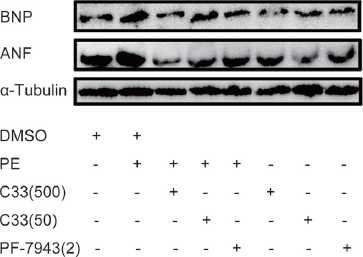
C33(S) can alleviate cardiac hypertrophic responses in vitro. Cardiomyocytes are pre-incubated by C33(S) and PF-7943 for 1 h followed by PE treatment or not. The protein levels of fetal genes are measured. C33(500): C33(S) 500 nM, C33(50): C33(S) 50 nM, PF-7943(2): PF-7943 (2 μM).
-
Neurochem Int
PDE9 inhibition promotes proliferation of neural stem cells via cGMP-PKG pathway following oxygen-glucose deprivation/reoxygenation injury in vitro. [Abstract]2020 Feb:133:104630. PMID: 31821840 -
-


Solvente y solubilidad
In Vitro:
DMSO : ≥ 54.6 mg/mL (138.07 mM; Hygroscopic DMSO has a significant impact on the solubility of product, please use newly opened DMSO)
* "≥" means soluble, but saturation unknown.
Please refer to the solubility information to select the appropriate solvent. Once prepared, please aliquot and store the solution to prevent product inactivation from repeated freeze-thaw cycles.
Storage method and period of stock solution: -80°C, 2 years; -20°C, 1 year. When stored at -80°C, please use it within 2 years. When stored at -20°C, please use it within 1 year.
Please refer to the solubility information to select the appropriate solvent. Once prepared, please aliquot and store the solution to prevent product inactivation from repeated freeze-thaw cycles.
Storage method and period of stock solution: -80°C, 2 years; -20°C, 1 year. When stored at -80°C, please use it within 2 years. When stored at -20°C, please use it within 1 year.
Concentration (start) × Volume (start) = Concentration (final) × Volume (final)
In Vivo:
Select the appropriate dissolution method based on your experimental animal and administration route.
- For the following dissolution methods, please ensure to first prepare a clear stock solution using an In Vitro approach and then sequentially add co-solvents:
- To ensure reliable experimental results, the clarified stock solution can be appropriately stored based on storage conditions. As for the working solution for In Vivo experiments, it is recommended to prepare freshly and use it on the same day.
- The percentages shown for the solvents indicate their volumetric ratio in the final prepared solution. If precipitation or phase separation occurs during preparation, heat and/or sonication can be used to aid dissolution.
Add each solvent one by one: 10% DMSO 40% PEG300 5% Tween-80 45% Saline
Solubility: ≥ 2.5 mg/mL (6.32 mM); Clear solution
This protocol yields a clear solution of ≥ 2.5 mg/mL (saturation unknown).
Taking 1 mL working solution as an example, add 100 μL DMSO stock solution (25.0 mg/mL) to 400 μL PEG300, and mix evenly; then add 50 μL Tween-80 and mix evenly; then add 450 μL Saline to adjust the volume to 1 mL.
Preparation of Saline: Dissolve 0.9 g sodium chloride in ddH₂O and dilute to 100 mL to obtain a clear Saline solution.
Add each solvent one by one: 10% DMSO 90% (20% SBE-β-CD in Saline)
Solubility: ≥ 2.5 mg/mL (6.32 mM); Clear solution
This protocol yields a clear solution of ≥ 2.5 mg/mL (saturation unknown).
Taking 1 mL working solution as an example, add 100 μL DMSO stock solution (25.0 mg/mL) to 900 μL 20% SBE-β-CD in Saline, and mix evenly.
Preparation of 20% SBE-β-CD in Saline (4°C, storage for one week): 2 g SBE-β-CD powder is dissolved in 10 mL Saline, completely dissolve until clear.
In Vivo Dissolution Calculator
Please enter the basic information of animal experiments:
-
-
-
-
Recommended: Prepare an additional quantity of animals to account for potential losses during experiments.
Please enter your animal formula composition:
-
%DMSO +
Recommended: Keep the proportion of DMSO in working solution below 2% if your animal is weak.
-
%+
-
+%Tween-80 + +
-
%Saline +
The co-solvents required include: DMSO, . All of co-solvents are available by MedChemExpress (MCE). , Tween 80. All of co-solvents are available by MedChemExpress (MCE).
Working solution concentration: 0.22 mg/mL
Method for preparing stock solution: mg drug dissolved in μL DMSO. Stock solution concentration: mg/mL.
1. Take μL DMSO stock solution;
2. Add μL .
μL , mix evenly;
3. Then add μL Tween 80, mix evenly;
4. Then add μL
Please ensure that the stock solution in the first step is dissolved to a clear state, and add co-solvents in sequence. You can use ultrasonic heating (ultrasonic cleaner, recommended frequency 20-40 kHz), vortexing, etc. to assist dissolution.

Protocolo
-
Cell Cytotoxicity Assay
Cytotoxicity assays are usually based on the assessment of cell membrane damage, which can also be indirectly detected by measuring cell viability. Detection methods include MTT assay, CKK-8 assay, LDH assay and ATP assay, etc.


Pureza y Documentación
-
Ficha de datos (282 KB)
-
SDS (393 KB)
- English - EN (393 KB)
- Français - FR (393 KB)
- Deutsch - DE (393 KB)
- Norwegian - NO (393 KB)
- Español - ES (393 KB)
- Swedish - SV (393 KB)
- Italian - IT (393 KB)
- Korean - KR (393 KB)
- Portuguese - PT (393 KB)
-
Instrucciones de manejo (2659 KB)
Referencias
[1]. Kleiman RJ, et al. Phosphodiesterase 9A regulates central cGMP and modulates responses to cholinergic and monoaminergic perturbation in vivo. J Pharmacol Exp Ther. 2012 May;341(2):396-409. [Content Brief]
[2]. Hutson, P. H, et al. The selective phosphodiesterase 9 (PDE9) inhibitor PF-04447943 (6-[(3S,4S)-4-methyl-1-(pyrimidin-2-ylmethyl)pyrrolidin-3-yl]-1-(tetrahydro-2H-pyran-4-yl)-1,5-dihydro-4H-pyrazolo[3,4-d]pyrimidin-4-one) enhances synaptic plasticity and [Content Brief]


Complete Stock Solution Preparation Table
Please refer to the solubility information to select the appropriate solvent. Once prepared, please aliquot and store the solution to prevent product inactivation from repeated freeze-thaw cycles.
Storage method and period of stock solution: -80°C, 2 years; -20°C, 1 year. When stored at -80°C, please use it within 2 years. When stored at -20°C, please use it within 1 year.
| Optional Solvent | Concentration Solvent Mass | 1 mg | 5 mg | 10 mg | 25 mg |
|---|---|---|---|---|---|
| DMSO | 1 mM | 2.5287 mL | 12.6435 mL | 25.2870 mL | 63.2175 mL |
| 5 mM | 0.5057 mL | 2.5287 mL | 5.0574 mL | 12.6435 mL | |
| 10 mM | 0.2529 mL | 1.2644 mL | 2.5287 mL | 6.3218 mL | |
| 15 mM | 0.1686 mL | 0.8429 mL | 1.6858 mL | 4.2145 mL | |
| 20 mM | 0.1264 mL | 0.6322 mL | 1.2644 mL | 3.1609 mL | |
| 25 mM | 0.1011 mL | 0.5057 mL | 1.0115 mL | 2.5287 mL | |
| 30 mM | 0.0843 mL | 0.4215 mL | 0.8429 mL | 2.1073 mL | |
| 40 mM | 0.0632 mL | 0.3161 mL | 0.6322 mL | 1.5804 mL | |
| 50 mM | 0.0506 mL | 0.2529 mL | 0.5057 mL | 1.2644 mL | |
| 60 mM | 0.0421 mL | 0.2107 mL | 0.4215 mL | 1.0536 mL | |
| 80 mM | 0.0316 mL | 0.1580 mL | 0.3161 mL | 0.7902 mL | |
| 100 mM | 0.0253 mL | 0.1264 mL | 0.2529 mL | 0.6322 mL |


Edelinontrine Related Classifications
HY-15441 Related Classifications
 Powered by Bioz