2438 Results for "

decrease

" in MedChemExpress (MCE) Product Catalog:
Products (2438)

2438 Results for "decrease" in MCE Product Catalog:

Referencia número: HY-D1005J
No. CAS: 9003-11-6
Áreas de investigación:  

Others

Poloxamer L62 is a nonionic polyoxyethylene-polyoxypropylene block copolymer triblock surfactant. Poloxamer L62 interacts with the surfactant-liposome bilayer, causing minimal membrane disruption. Poloxamer L62 exhibits a decrease in critical micelle temperature, critical micelle concentration, and cloud point in ionic liquids, with minimal effect on micelle morphology. Within the tested surfactant concentration range, Poloxamer L62 has minimal effect on the release of encapsulated ciprofloxacin (Ciprofloxacin) (HY-B0356). Poloxamer L62 does not significantly alter the vesicle size of liposomal ciprofloxacin formulations .
loading...
    loading...
Referencia número: HY-D3160
Target:  

Fluorescent Dye

Áreas de investigación:  

Others

Golgi-hNR is a cell membrane-permeable Golgi-targeted fluorescent probe containing a sulfonamide group. Golgi-hNR selectively accumulates in the Golgi apparatus of living cells, enabling real-time tracking and homeostasis assessment of reversible pH changes in the Golgi apparatus. Golgi-hNR exhibits a pH-dependent "off-on" fluorescence response mechanism within the pH 7.4-3.0 range, and its red fluorescence intensity decreases with increasing pH. The Ex/Em of Golgi-hNR is 560/664 nm and 580/664 nm, with the maximum emission peak located at 615 nm .
loading...
    loading...
Referencia número: HY-D3163
Target:  

Fluorescent Dye

Áreas de investigación:  

Others

Endo-pH is a cell-permeable, pH-responsive fluorescent probe based on BODIPY, with a pKa of 5.08. When pH decreases from 7.32 to 4.97, Endo-pH undergoes protonation under acidic conditions, resulting in a 79-fold increase in fluorescence intensity at 786 nm. The detection wavelengths of its protonated form are Ex/Em=688/786 nm, while the absorption wavelength of its non-protonated form is 745 nm. Endo-pH can be used for staining late endosomes in live cells and determining the fusion time of late endosomes and lysosomes .
loading...
    loading...
Referencia número: HY-E71278
Áreas de investigación:  

Others

β-Carotene 15,15'-dioxygenase (EC 1.13.11.63) requires Fe2+. The enzyme cleaves β-Carotene symmetrically, producing two molecules of all-trans-retinal. Both atoms of the oxygen molecule are incorporated into the products. The enzyme can also process β-cryptoxanthin, 8'-apo-β-carotenal, 4'-apo-β-carotenal, α-carotene and γ-carotene in decreasing order. The presence of at least one unsubstituted β-ionone ring in a substrate greater than C30 is mandatory.
loading...
    loading...
Referencia número: HY-N0136B
No. CAS: 111003-33-9
Synonyms: (-)-Dihydroquercetin
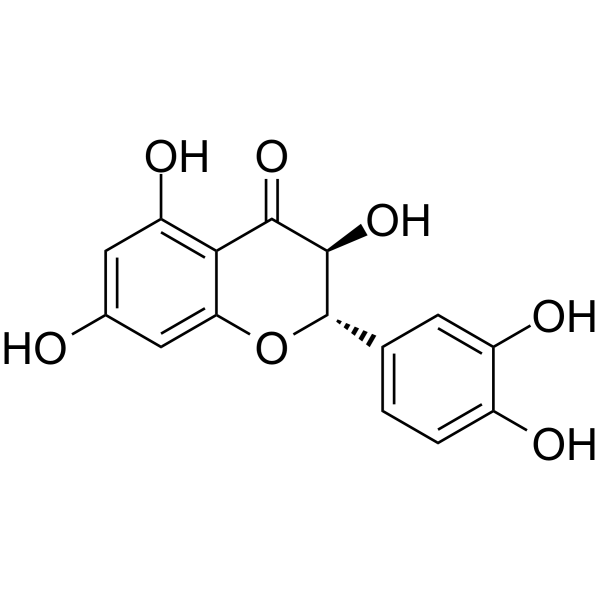
(-)-Taxifolin is the low-activity isomer of Taxifolin. Taxifolin is an orally effective collagenase inhibitor with an IC50 of 193.3 μM. Taxifolin dose-dependently reduces the levels of Smad-2, α-SMA, CTGF, type I collagen, NF-κB and FN in renal tissues, while decreasing serum levels of IL-1β, TNF-α, MDA, Scr and BUN, increasing SOD levels and reversing 27 serum metabolic biomarkers. Taxifolin inhibits the growth of a variety of pathogenic bacteria. Taxifolin can be used in studies related to renal fibrosis .
loading...
    loading...
Referencia número: HY-N12267
No. CAS: 42369-86-8
Synonyms: (E/Z)-Terrestribisamide
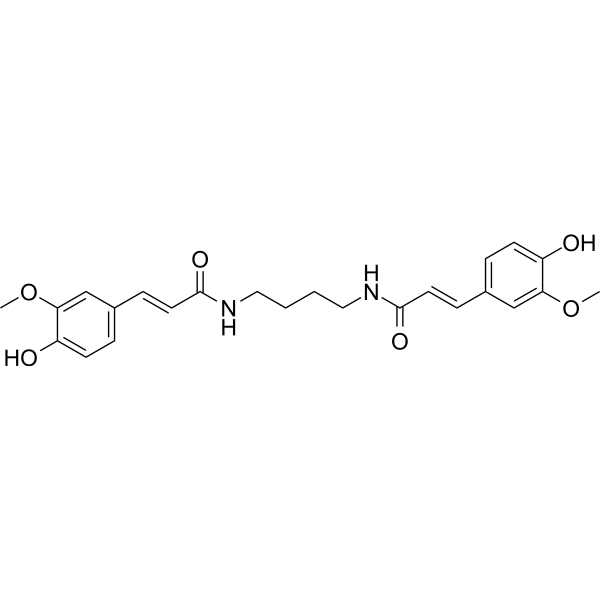
N,N′-Diferuloylputrescine ((E/Z)-Terrestribisamide) is an inhibitor of pigmentation that reduces pigmentation in vivo. N,N′-Diferuloylputrescine exhibits anti-melanogenic, antioxidant, and α-glucosidase (α-glucosidase) inhibitory activities. N,N′-Diferuloylputrescine significantly decreases MITF protein levels and scavenges reactive oxygen species, while protecting neuroblastoma cells, keratinocytes, and erythrocytes from oxidative damage. N,N′-Diferuloylputrescine can be used for research on pigmentation, non-insulin-dependent diabetes mellitus, neurodegenerative diseases, and skin aging .
loading...
    loading...
Referencia número: HY-N1393
No. CAS: 579-75-9
Synonyms: NSC 3778; O-Methylsalicylic acid; Salicylic acid methyl ether
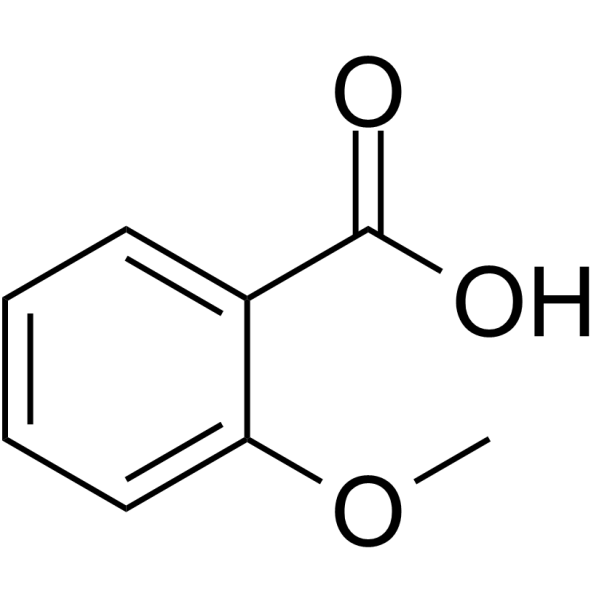
2-Methoxybenzoic acid (NSC 3778; O-Methylsalicylic acid; Salicylic acid methyl ether) is a natural compound with potential salicylate-like effect. 2-Methoxybenzoic acid inhibits carbonic anhydrase activity, elevates intraplatelet cyclic guanosine monophosphate level, and suppresses cytosolic phospholipase A2 phosphorylation. 2-Methoxybenzoic acid suppresses platelet reactivity, including decreased spreading, retraction, and aggregation in platelets. 2-Methoxybenzoic acid ameliorates arterial thrombosis in a dose-dependent manner without affecting normal hemostasis in mice. 2-Methoxybenzoic acid can be used for the research of arterial thrombosis .
loading...
    loading...
Referencia número: HY-P0165B
No. CAS: 1022150-16-8
Synonyms: ITM077 acetate; R1583 acetate; BIM51077 acetate
Target:  

GLP Receptor

Áreas de investigación:  

Metabolic Disease

Taspoglutide (R1583) acetate is an agonist of the glucagon-like peptide 1 receptor (GLP-1R) with an Ki value of 1.1 nM. Taspoglutide acetate induces cAMP accumulation in CHO-K1 cells expressing human GLP-1R (EC50 = 0.06 nM). Taspoglutide acetate decreases blood levels of glucose and increases blood levels of insulin in a glucose tolerance test in Zucker diabetic obese rats. Taspoglutide acetate reduces blood levels of gastric inhibitory polypeptide (GIP), plasma levels of triglycerides, and body weight in the same model .
loading...
    loading...
Referencia número: HY-P2483A
Target:  

Proteasome Bacterial

Áreas de investigación:  

Infection Neurological Disease Cancer

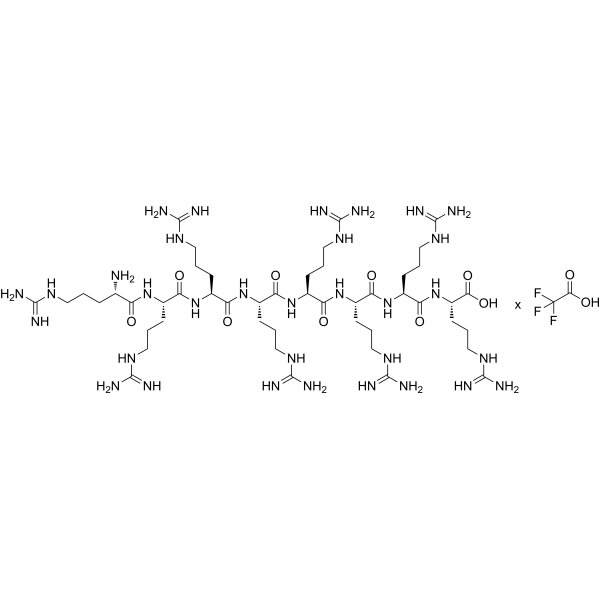
Octaarginine TFA is a cell-penetrating peptide and proteasome inhibitor. Octaarginine TFA exhibits mixed-type inhibition against 20S proteasome chymotrypsin-like, caspase-like, and trypsin-like activities, and inhibits 26S proteasome activity with decreased efficiency. Octaarginine TFA induces ubiquitin-conjugated protein accumulation, mediates HSPG-dependent cellular internalization via macropinocytosis, enhances liposomal cargo uptake and gene delivery. Octaarginine TFA can be used for the research of cervix carcinoma, collagen antibody-induced arthritis, and bacterial infections .
loading...
    loading...
Referencia número: HY-P992552
Synonyms: F8-IL10、PF-06687234
Target:  

Interleukin Related

Áreas de investigación:  

Inflammation/Immunology

Dekavil (F8-IL10, PF-06687234) is an agent targeting the IL10 receptor (IL10 receptor) that mediates anti-inflammatory cytokine signaling. Dekavil can induce cytokine-dependent mast cell proliferation. Dekavil can inhibit the progression of established collagen-induced arthritis, reduce plasma levels of pro-inflammatory IL-6 and IL-1 beta, and decrease the infiltration of leukocytes, natural killer cells, macrophages, and T cells into the arthritic paws. Dekavil can be used in research on rheumatoid arthritis .
loading...
    loading...
Referencia número: HY-W009156R
No. CAS: 6100-05-6
Synonyms: Potassium citrate monohydrate (Standard)
Citric acid tripotassium hydrate (Standard) (Potassium citrate monohydrate (Standard)) is the analytical standard of Citric acid tripotassium hydrate (HY-W009156). This product is intended for research and analytical applications. Citric acid tripotassium hydrate is a natural preservative and food tartness enhancer. Citric acid tripotassium hydrate induces apoptosis and cell cycle arrest at G2/M phase and S phase in HaCaT cells. Citric acid tripotassium hydrate cause oxidative damage of the liver by means of the decrease of antioxidative enzyme activities. Citric acid tripotassium hydrate is also an acidulant, emulsifier, sequestrant and buffering agent widely used across many industries .
loading...
    loading...
Referencia número: HY-W014223R
No. CAS: 131-56-6
Synonyms: Ultraviolet absorber UV-0 (Standard)
2,4′-Dihydroxybenzophenone (Standard) is the analytical standard of 2,4′-Dihydroxybenzophenone. This product is intended for research and analytical applications. 2,4′-Dihydroxybenzophenone (Ultraviolet absorber UV-0) occupies the hydrophobic pocket of MD2 and blocks the dimerization of TLR4. 2,4′-Dihydroxybenzophenone inhibits the LPS induced mtROS production, and LPS induced inflammatory response by downregulating pro-inflammatory mediators and decreasing the expression of MyD88, p-IRAK4, and NF-κB. 2,4′-Dihydroxybenzophenone is also a UV absorber .
loading...
    loading...
Referencia número: HY-W099504
No. CAS: 111-70-6
Synonyms: n-Heptyl alcohol
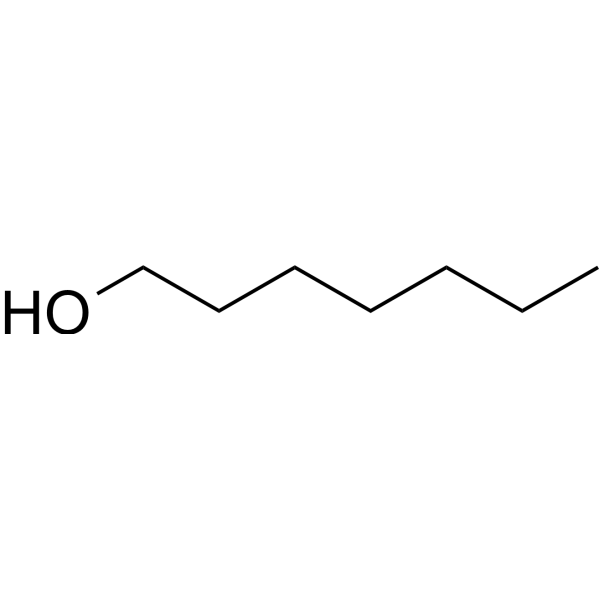
1-Heptanol (n-Heptyl alcohol) is a linear primary fatty alcohol. 1-Heptanol selectively inhibits the activating phosphorylation of SAPK/JNK and reduces the phosphorylation level of IκB-α. 1-Heptanol increases plasma membrane fluidity, decreases membrane thermal stability, alters the coupling kinetics of STIM1-ORAI1, inhibits the production of ROS and LTC4, and induces the expression of HSP70. 1-Heptanol is used in the fragrance industry due to its pleasant odor .
loading...
    loading...
Referencia número: HY-W724319
No. CAS: 2704-20-3
Synonyms: Sodium citrate-d4; Trisodium citrate anhydrous-d4
Citric acid-d4 trisodium (Sodium citrate-d4) is the deuterium labeled Citric acid trisodium (HY-B2201). Citric acid trisodium (Sodium citrate) is a natural preservative and food tartness enhancer. Citric acid trisodium induces apoptosis and cell cycle arrest at G2/M phase and S phase in HaCaT cells. Citric acid trisodium cause oxidative damage of the liver by means of the decrease of antioxidative enzyme activities. Citric acid trisodium is also an acidulant, emulsifier, sequestrant and buffering agent widely used across many industries .
loading...
    loading...
Referencia número: HY-Y0682R
No. CAS: 60-00-4
Synonyms: EDTA (Standard)
Ethylenediaminetetraacetic acid (Standard) is the analytical standard of Ethylenediaminetetraacetic acid. This product is intended for research and analytical applications. Ethylenediaminetetraacetic acid (EDTA) is a kind of metal chelating agent (binds to bivalent and trivalent metal cations, including calcium). Ethylenediaminetetraacetic acid has antibacterial, anti-inflammatory, antioxidant, anti-hypercalcemia and anticoagulant activities. Ethylenediaminetetraacetic acid decreases the metal ion-catalyzed oxidative damage to proteins, and allows maintenance of reducing environment during protein purification. Ethylenediaminetetraacetic acid can alleviate the liver fibrosis. Ethylenediaminetetraacetic acid can be used for coronary artery disease and neural system disease research [4] .
loading...
    loading...
Referencia número: HY-P5522AS
Synonyms: L-Ala-γ-D-Glu-meso-diaminopimelic acid-13C3,15N dihydrochloride
TriDAP- 13C3, 15N (L-Ala-γ-D-Glu-meso-diaminopimelic acid- 13C3, 15N) dihydrochloride is the 13C, 15N-labeled TriDAP dihydrochloride (HY-P5522A). TriDAP dihydrochloride (L-Ala-γ-D-Glu-meso-diaminopimelic acid dihydrochloride) is a NOD1 agonist with a Kd value of 34.5 μM. TriDAP dihydrochloride enhances the binding of NOD1-RICK, promotes RICK phosphorylation, and activates the NF-κB, TAK1, MEK/ERK, p38 and interferon response pathways. TriDAP dihydrochloride downregulates Runx2 via increasing ubiquitination and reduces trabecular bone parameters. TriDAP dihydrochloride decreases IκBα levels and increases p65 levels. TriDAP dihydrochloride induces the secretion of proinflammatory mediators IL-8 and prostaglandins, triggers tissue inflammation and innate immune activation, and inhibits SARS-CoV-2 replication in lung epithelial cells. TriDAP dihydrochloride increases the RANKL/OPG ratio in mice, reduces bone mass and enhances osteoclast activity, and inhibits new bone formation by decreasing the mineralization deposition rate in mice. TriDAP dihydrochloride can be used in research related to pulpitis, chronic ulcerative colitis, Crohn's disease and SARS-CoV-2 infection .
loading...
    loading...
Referencia número: HY-101986R
No. CAS: 246146-55-4
Synonyms: AR-H 053591 (Standard)
BIIE-0246 (Standard) is the analytical standard of BIIE-0246 (HY-101986). This product is intended for research and analytical applications. BIIE-0246 (AR-H 053591) is a potent and selective NPY2R (neuropeptide Y receptor 2) antagonist with an IC50 value of 15 nM for rat [125I]PYY3-36. BIIE-0246 decreases the expression of p-AKT S473, P-p44/42 MAPK under the NPY-stimulated. BIIE-0246 reduces albuminuria in ADR nephropathy .
loading...
    loading...
Referencia número: HY-107551
No. CAS: 599150-20-6
Pureza:  ≥95%
Target:  

Hedgehog Gli

Áreas de investigación:  

Cancer

Hh Pathway-IN-1, a Hedgehog (Hh) pathway inhibitor, is a potent Gli antagonist. Hh Pathway-IN-1 inhibits Hh pathway functional with an IC50 value of 1.1 µM in C3H10T1/2 cells. Hh Pathway-IN-1 does not inhibit Wnt signaling. Hh Pathway-IN-1 shows anti-proliferative activity. Hh Pathway-IN-1 decreases the GLI1 mRNA expression. Hh Pathway-IN-1 inhibits colony formation in a dose-dependent manner .
loading...
    loading...
Referencia número: HY-110107A
No. CAS: 469861-48-1
Áreas de investigación:  

Neurological Disease Metabolic Disease

GW438014A free base is a selective NPY-Y5 receptor competitive antagonist capable of crossing the blood-brain barrier, with IC50 values of 197 nM and 211 nM against human receptors. GW438014A free base reverses PYY-mediated inhibition of Forskolin (HY-15371)-induced cAMP production, reduces NPY-induced food intake and nocturnal food intake in rodents, decreases body weight gain and fat mass in Zucker rats, and inhibits centrally mediated feeding behavior. GW438014A free base can be used in research related to obesity and epilepsy .
loading...
    loading...
Referencia número: HY-111431AR
No. CAS: 91978-69-7
Synonyms: p-Tolyl sulfate potassium (Standard)
p-Cresyl sulfate (potassium) (Standard) is the analytical standard of p-Cresyl sulfate (potassium). This product is intended for research and analytical applications. p-Cresyl sulfate (p-Tolyl sulfate) potassium is a uremic toxin, that can cause renal damage and dysfunction. p-Cresyl sulfate potassium shows antiproliferation activity. p-Cresyl sulfate potassium increases the protein expression of HIF-1α and VHL, decreases the protein expression of HIF-2α. p-Cresyl sulfate potassium induces epithelial-mesenchymal transition (EMT). p-Cresyl sulfate potassium activates the JNK and p38 MAPK signaling pathways .
loading...
    loading...

