2438 Results for "

decrease

" in MedChemExpress (MCE) Product Catalog:
Products (2438)

2438 Results for "decrease" in MCE Product Catalog:

Referencia número: HY-188400
No. CAS: 3138013-03-0
Áreas de investigación:  

Cancer

P-SiaFNEtoc is a Sialyltransferase inhibitor that blocks sialic acid capping of glycans. P-SiaFNEtoc forms CMP-SiaFNEtoc, reduces endogenous CMP-Neu5Ac, feedback-inhibits GNE, and depletes sialylation on N-glycans and O-GalNAc glycans. P-SiaFNEtoc decreases cell surface sialoglycan levels, VEGF and DKK-1 secretion, Tn antigen levels, and cell cycle checkpoint/E2F target gene expression, while inducing p27/Kip1 and fucosylation. P-SiaFNEtoc can be used in research on prostate cancer, and melanoma .
loading...
    loading...
Referencia número: HY-189128
No. CAS: 774546-16-6
Target:  

METTL3

Áreas de investigación:  

Infection

AN-465 is a METTL3 inhibitor with an IC50 of 1.782 μM and a Kd of 8.75 μM against human METTL3. AN-465 reduces m6A modification of RNA, including EV71 2C region RNA, and disrupts the interaction between METTL3 and EV71 2C RNA. AN-465 decreases EV71-induced proinflammatory cytokine production, modulates immune cell phenotypes, alleviates EV71-induced apoptosis, restores autophagic flux, and reduces viral particle formation. AN-465 is used in the study of hand, foot and mouth disease .
loading...
    loading...
Referencia número: HY-189933
No. CAS: 920836-30-2
ICB-7 is an orally active ILT3/LILRB4 inhibitor with a Kd of 156 nM for hILT3 and a Kd of 262 nM for mouse ILT3. ICB-7 reduces SCG2-induced phosphorylation of SHP1, SHP2, and STAT3. In a co-culture model, ICB-7 restores IFN-γ and IL-2 secretion and decreases cell viability under SCG2 stimulation. In a syngeneic cancer model, ICB-7 inhibits tumor progression and reduces final tumor weight. ICB-7 can be used for research on colorectal cancer and acute myeloid leukemia .
loading...
    loading...
Referencia número: HY-208723
No. CAS: 2345648-39-5
Target:  

MAP3K IKK NF-κB

Áreas de investigación:  

Cancer

MAP3K1-IN-1 is an orally active and selective MAP3K1 kinase inhibitor. MAP3K1-IN-1 blocks TNFα-induced phosphorylation of IKKβ and activation of NF-κB. MAP3K1-IN-1 inhibits the growth of cancer cells. MAP3K1-IN-1 induces a decrease in phosphorylation sites of NPM1. MAP3K1-IN-1 can be used in pancreatic cancer-related research .
loading...
    loading...
Referencia número: HY-A0069
No. CAS: 562-10-7
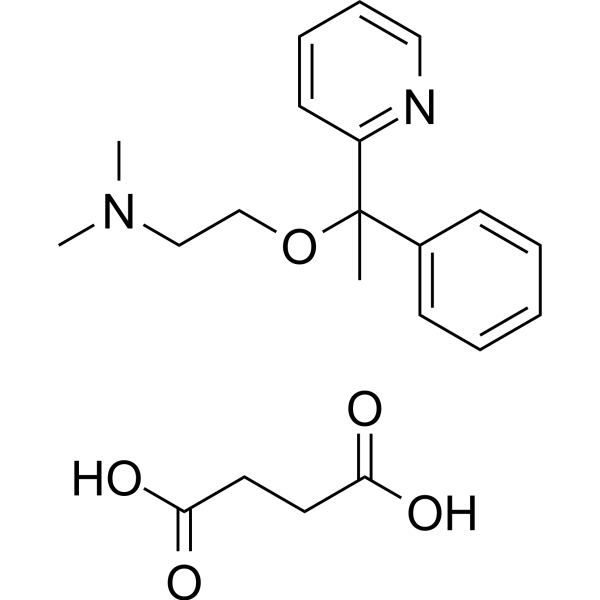
Doxylamine succinate is a first-generation antihistamine and acts as a histamine H1 receptor antagonist. Doxylamine succinate is orally active, possessing analgesic and hypnotic activities. Doxylamine succinate enhances the activities of CYP2B, CYP2A, CYP3A and thyroxine-glucuronosyltransferase via promoting substrate hydroxylation and thyroxine metabolic pathways. Doxylamine succinate decreases serum thyroxine (T4) level and elevates serum thyroid-stimulating hormone (TSH) level. Doxylamine succinate induces liver enlargement and increases the activities of hepatic microsomal cytochrome P450, cytochrome b5 and NADPH-cytochrome c reductase. Doxylamine succinate can be used for the research of nausea, allergy, insomnia .
loading...
    loading...
Referencia número: HY-B0011B
No. CAS: 700367-34-6
Synonyms: RP-56976 hydrate
Áreas de investigación:  

Cancer

Docetaxel hydrate (RP-56976 hydrate) is an orally active tubulin stabilizer with antitumor activity. Docetaxel hydrate is a P-glycoprotein substrate and is metabolized by CYP3A to inactive products. Docetaxel hydrate binds tubulin, promotes tubulin polymerization, and inhibits microtubule depolymerization. Docetaxel hydrate induces aberrant mitosis followed by necrotic-like cell death at low concentrations, and induces G2/M mitotic arrest and drives apoptosis at high concentrations. Docetaxel hydrate induces renal injury/renal alterations, sex-dependent granule toxicity/uptake, low cardiac delivery, and decreased hepatic SOD/increased catalase/hepatotoxicity. Docetaxel hydrate can be used in cancer-related research .
loading...
    loading...
Referencia número: HY-B0579S3
Synonyms: Cyclosporine A-13C2,d4; Ciclosporin A-13C2,d4; CsA-13C2,d4
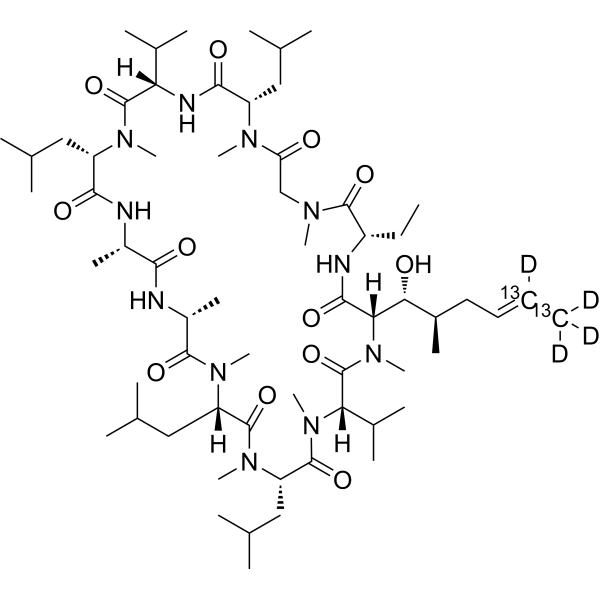
Cyclosporin A- 13C2,d4 (Cyclosporine A- 13C2,d4) is the deuterated, 13C-labeled Cyclosporin A (HY-B0579). Cyclosporin A (Cyclosporine A) is an immunosuppressant which binds to the cyclophilin and inhibits phosphatase activity of protein phosphatase 2B (PP2B/calcineurin) with an IC50 of 5 nM . Cyclosporin A is a molecular glue, binds to cyclophilin and calcineurin, leading to inactivation of nuclear Factor of activated T Cells (NFAT) and a subsequent decrease in the immune response. Cyclosporin A also inhibits CD11a/CD18 adhesion .
loading...
    loading...
Referencia número: HY-B0852R
No. CAS: 107534-96-3
Áreas de investigación:  

Infection

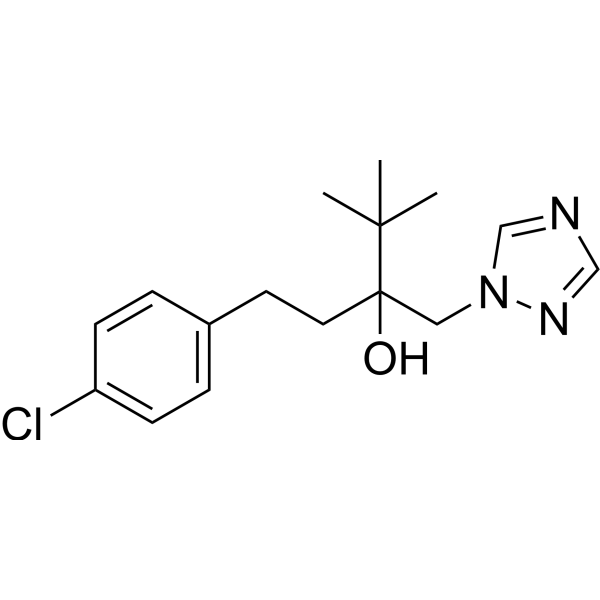
Tebuconazole (Standard) is the analytical standard of Tebuconazole. This product is intended for research and analytical applications. Tebuconazole is an orally active agricultural azole fungicide which can also inhibit CYP51 with IC50s of 0.9 and 1.3 μM for Candida albicans CYP51 (CaCYP51) and truncated Homo sapiens CYP51 (Δ60HsCYP51), respectively. Tebuconazole induces lipid accumulation and oxidative stress in HepG2 Cells. Tebuconazole decreases MAC-T cells viability and proliferation, induces ER-stress-mediated apoptosis and increases oxidative stress levels in MAC-T cells .
loading...
    loading...
Referencia número: HY-B0852S2
Tebuconazole-d6 is a deuterium labeled Tebuconazole (HY-B0852). Tebuconazole is an orally active agricultural azole fungicide which can also inhibit CYP51 with IC50s of 0.9 and 1.3 μM for Candida albicans CYP51 (CaCYP51) and truncated Homo sapiens CYP51 (Δ60HsCYP51), respectively. Tebuconazole induces lipid accumulation and oxidative stress in HepG2 Cells. Tebuconazole decreases MAC-T cells viability and proliferation, induces ER-stress-mediated apoptosis and increases oxidative stress levels in MAC-T cells .
loading...
    loading...
Referencia número: HY-B1455S1
No. CAS: 2140264-63-5
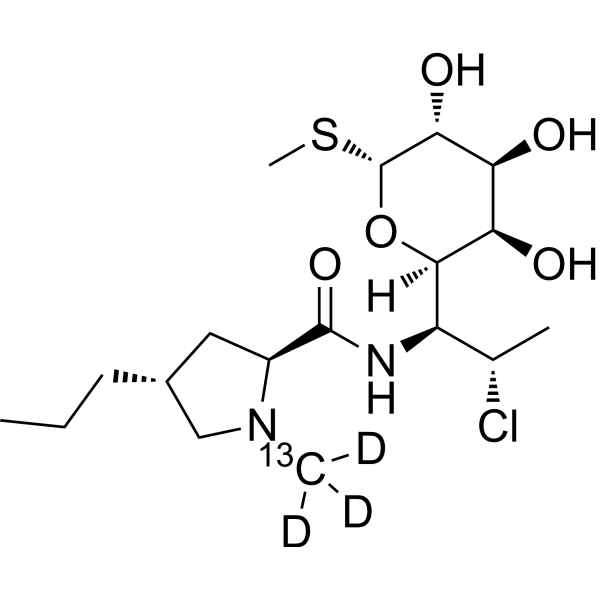
Clindamycin- 13C,d3 is the 13C- and deuterium labeled Clindamycin. Clindamycin is an orally active and broad-spectrum bacteriostatic lincosamide antibiotic. Clindamycin can inhibit bacterial protein synthesis, possessing the ability to suppress the expression of virulence factors in Staphylococcus aureus at sub-inhibitory concentrations (sub-MICs). Clindamycin resistance results from enzymatic methylation of the antibiotic binding site in the 50S ribosomal subunit (23S rRNA). Clindamycin decreases the production of Panton-Valentine leucocidin (PVL), toxic-shock-staphylococcal toxin (TSST-1) or alpha-haemolysin (Hla). Clindamycin also can be used for researching malaria .
loading...
    loading...
Referencia número: HY-B1984R
No. CAS: 72-54-8
Synonyms: 4,4'-DDD (Standard); p,p'-Dichlorodiphenyl dichloroethane (Standard)
p,p'-DDD (Standard) is the analytical standard of p,p'-DDD (HY-B1984) . This product is intended for research and analytical applications. p,p'-DDD (4,4’-DDD) is an organochlorine insecticide, a major metabolite of p,p'-DDT. p,p'-DDD is an agonist at estrogen receptor α(ERα) and ERβ. p,p'-DDD increases DNA damage, apoptosis and necrosis in peripheral blood. p,p'-DDD stimulates cell proliferation in SKBR3 cells. p,p'-DDD activates the AP-1 transcription factor. p,p'-DDD decreases sleep times of barbiturates and steroids in rats.
loading...
    loading...
Referencia número: HY-B1984S
No. CAS: 93952-20-6
Synonyms: 4,4'-DDD-d8; p,p'-Dichlorodiphenyl dichloroethane-d8
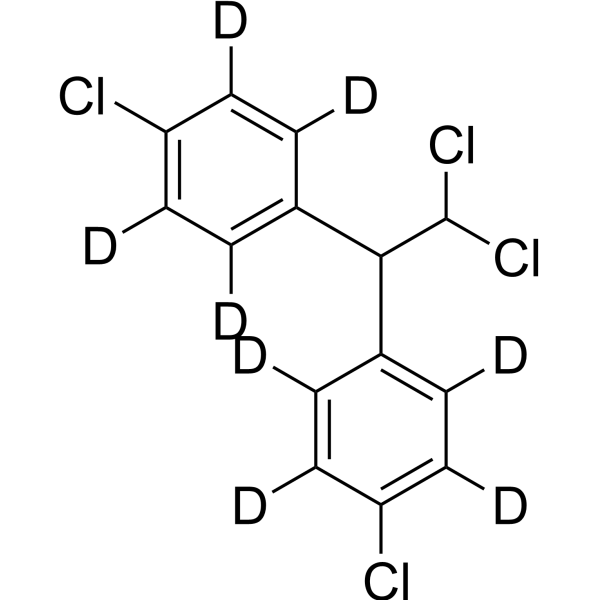
p,p'-DDD-d8 is the deuterium labeled p,p'-DDD[1]. p,p'-DDD (4,4’-DDD) is an organochlorine insecticide, a major metabolite of p,p'-DDT. p,p'-DDD is an agonist at estrogen receptor α(ERα) and ERβ. p,p'-DDD increases DNA damage, apoptosis and necrosis in peripheral blood. p,p'-DDD stimulates cell proliferation in SKBR3 cells. p,p'-DDD activates the AP-1 transcription factor. p,p'-DDD decreases sleep times of barbiturates and steroids in rats .
loading...
    loading...
Referencia número: HY-D0877
No. CAS: 29915-38-6
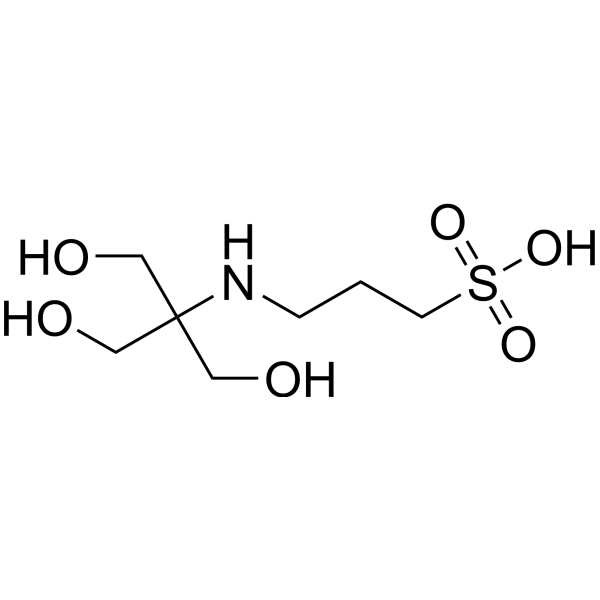
TAPS is an aminosulfonate-based lysozyme stabilizer and connexin channel inhibitor. TAPS maintains the native structure of lysozyme in aqueous solution at pH 7.0 and significantly protects it from heat-induced denaturation. TAPS directly inhibits the activity of heteromeric connexin 32/connexin 26 channels (Cx32/Cx26) via its protonated form, and this inhibitory effect is dependent on the presence of connexin 26. TAPS reduces connexin channel-mediated solute exchange in a recombinant liposome system, resulting in a decreased degree of liposome density shift in transport-specific separation assays. TAPS is a critical compound for investigating the structure and function of connexin channels .
loading...
    loading...
Referencia número: HY-N0046
No. CAS: 88105-29-7
Synonyms: Notoginseng triterpenes; Ginsenoside Mb
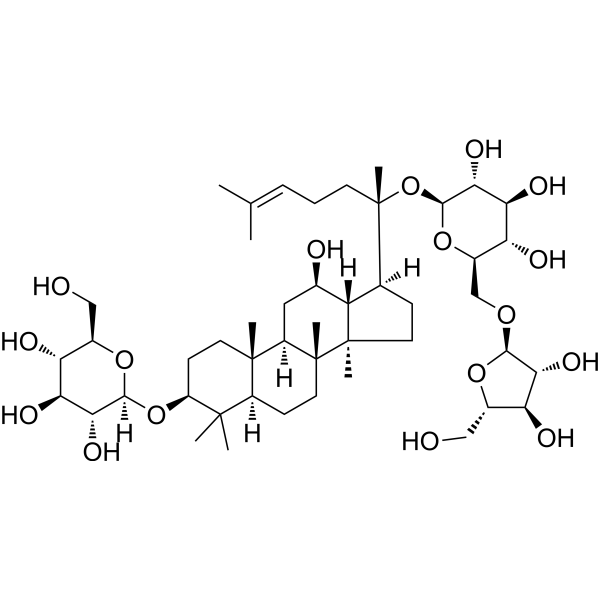
Notoginsenoside Fe (Notoginseng triterpenes; Ginsenoside Mb) is a saponin with anti-obesity and anti-neuroblastoma activities. Notoginsenoside Fe can be isolated from leaves of Panax notoginseng. Notoginsenoside Fe specifically activates paraventricular nucleus neurons in the hypothalamus, effectively reducing body weight, improving fasting blood glucose and protecting liver function by decreasing food intake, increasing resting metabolic rate and enhancing energy expenditure. Notoginsenoside Fe also inhibits the c-Src signaling pathway, blocks the proliferation and viability of human neuroblastoma cells, while improving mitochondrial dysfunction and alleviating apoptosis. Notoginsenoside Fe can be used in studies related to diet-induced obesity and neuroblastoma .
loading...
    loading...
Referencia número: HY-N0433R
No. CAS: 84676-89-1
Synonyms: Astrasieversianin VIII (Standard)
Astragaloside II (Standard) is the analytical standard of Astragaloside II (HY-N0433). This product is intended for research and analytical applications. Astragaloside II is an orally active Cycloartane-type triterpene glycoside. Astragaloside II can be extracted from Astragalus membranaceus. Astragaloside II inhibits Autophagy, decreases pro-inflammatory cytokines (IL-6, IL-1β), HIF-α, p-p65, p-IκB and increases SOD. Astragaloside II regulates immunity and reduces inflammatory responses. Astragaloside II can be used in the research of diseases such as liver cancer, osteoporosis, immunosuppressive diseases, and ulcerative colitis .
loading...
    loading...
Referencia número: HY-N1393R
No. CAS: 579-75-9
Synonyms: NSC 3778 (Standard); O-Methylsalicylic acid (Standard); Salicylic acid methyl ether (Standard)
2-Methoxybenzoic acid (NSC 3778; O-Methylsalicylic acid; Salicylic acid methyl ether) (Standard) is the analytical standard of 2-Methoxybenzoic acid (HY-N1393). 2-Methoxybenzoic acid is a natural compound with potential salicylate-like effect. 2-Methoxybenzoic acid inhibits carbonic anhydrase activity, elevates intraplatelet cyclic guanosine monophosphate level, and suppresses cytosolic phospholipase A2 phosphorylation. 2-Methoxybenzoic acid suppresses platelet reactivity, including decreased spreading, retraction, and aggregation in platelets. 2-Methoxybenzoic acid ameliorates arterial thrombosis in a dose-dependent manner without affecting normal hemostasis in mice. 2-Methoxybenzoic acid can be used for the research of arterial thrombosis .
loading...
    loading...
Referencia número: HY-N14780
No. CAS: 544712-82-5
Synonyms: (+)-Pochonin D
Pochonin D ((+)-Pochonin D) is an inhibitor of heat shock protein 90 (Hsp90) with antiviral and anti-inflammatory activities. Pochonin D inhibits Hsp90, affects the homeostasis, folding and assembly processes of viral proteins, and reduces the replication capacity of viruses. Pochonin D is a copper ion carrier that can induce cuproptosis in triple-negative breast cancer cells by targeting PRDX1. Pochonin D reduces the infiltration of inflammatory cells, decreases the secretion of inflammatory cytokines such as TNF-α and IL-1β, and alleviates inflammatory responses. Pochonin D is a promising candidate for research on human rhinovirus (HRV) infection and cancer .
loading...
    loading...
Referencia número: HY-N17963
No. CAS: 229483-41-4
Cappariloside A is a larvicide that exhibits larvicidal activity against Aedes aegypti larvae and reduces larval glutathione-S-transferase activity. Cappariloside A also possesses antiviral activity, decreases the level of phosphorylated STAT1 in cells, inhibits the replication of influenza viruses H1N1, H3N2, PIV3 and ADV, and downregulates the expression of IL-6, IP-10, MIG, RANTES/CCL-5, IFN-β and IL-29. Cappariloside A suppresses the inflammatory response induced by mouse lung-adapted influenza virus strains. Cappariloside A can be used in studies related to larvicidal applications and influenza virus infection .
loading...
    loading...
Referencia número: HY-N6682R
No. CAS: 22144-77-0
Synonyms: Zygosporin A (Standard); NSC 209835 (Standard)
Cytochalasin D (Standard) is the analytical standard of Cytochalasin D (HY-N6682). This product is intended for research and analytical applications. Cytochalasin D (Zygosporin A) is a potent actin polymerization inhibitor, could be derived from fungus. Cytochalasin D has cell-permeable activity. Cytochalasin D inhibits the G-actin–cofilin interaction by binding to G-actin. Cytochalasin D also inhibits the binding of cofilin to F-actin and decreases the rate of both actin polymerization and depolymerization in living cells. Cytochalasin D can reduce exosome release, in turn reducing the amount of survivin present in the tumour environment. Cytochalasin D induces phosphorylation and cytoplasmic retention of Yap .
loading...
    loading...
Referencia número: HY-N6801S
No. CAS: 911392-40-0
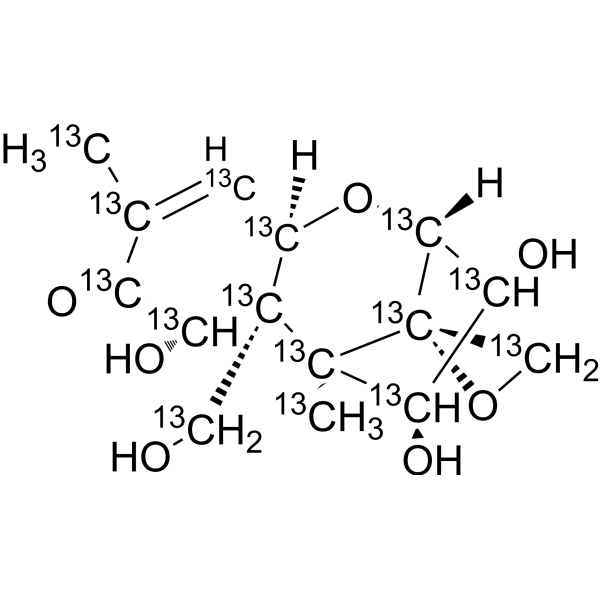
Nivalenol- 13C15 is the 13C labeled Nivalenol (HY-N6801) . Nivalenol, a trichothecene mycotoxin that can be produced by Fusarium graminearum, is a fungal metabolite present in agricultural product. Nivalenol modulates apoptotic pathway, cell cycle regulation, Bax, ERK, caspase-3, and poly-ADP-ribose synthase activity in macrophages. Nivalenol inhibits ribosomal peptidyltransferase site, protein synthesis, DNA synthesis, and cell proliferation. Nivalenol induces late-stage apoptotic morphological changes, reduces cellular metabolism, and decreases cell proliferation in erythroleukemia cells. Nivalenol induces lymphocyte apoptosis in murine thymus, spleen, and Peyer's patches. Nivalenol can be used for the research of erythroleukemia.
loading...
    loading...

