



Lactobionic acid (Standard)
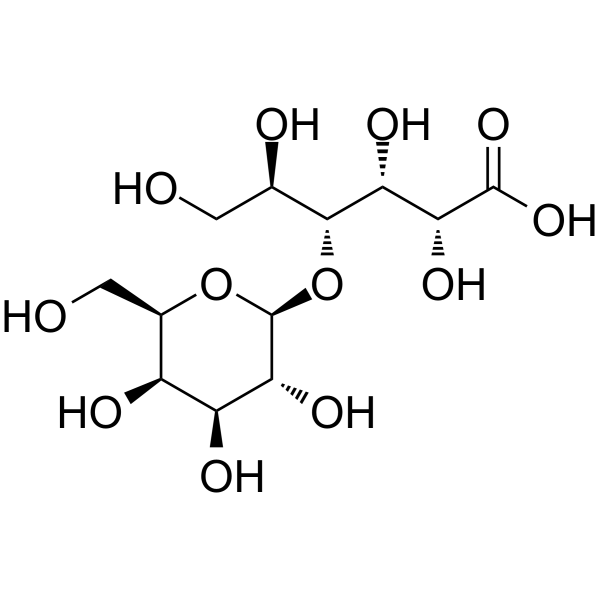
Lactobionic acid (Standard) is an analytical standard for lactobionic acid. This product is intended for use in research and analytical applications. Lactobionic acid is a bionic acid that can be naturally found in the Caspian Sea yogurt and chemically constituted of a gluconic acid bonded to a galactose. Lactobionic acid has antioxidant, antimicrobial, chelating, stabilizer, acidulant, and moisturizing properties. Lactobionic acid can be obtained by electrolytic methods, microbial fermentation or biocatalytic approaches. Lactobionic acid can be used in foodstuffs, to produce new functional products and against food-borne pathogens. Lactobionic acid inhibits DNA repair and protein synthesis, induction of oxidative stress and inhibition of metabolic pathways against MRSA.
For research use only. We do not sell to patients.
- Purity : 95%
- CAS No.: 96-82-2
- Formula: C12H22O12
- Molecular Weight:358.30
-
Storage:
Please store the product under the recommended conditions in the Certificate of Analysis.


To place orders, for customer services and technical support, please contact: MedChemExpress USA
Tel: 609-228-6898 E-mail: [email protected] [email protected]


-
 Product Information
-
Chemical Information
- Purity & Documentation
-
 Help & FAQs


-
HY-N7059
Lactobionic acidBacterial Inhibitor -
HY-B1779
SucroseDisaccharide -
HY-N1132
D-(+)-TrehaloseDisaccharide -
HY-CP001
D-Trehalose, Carrier ProteinCarrier Protein -
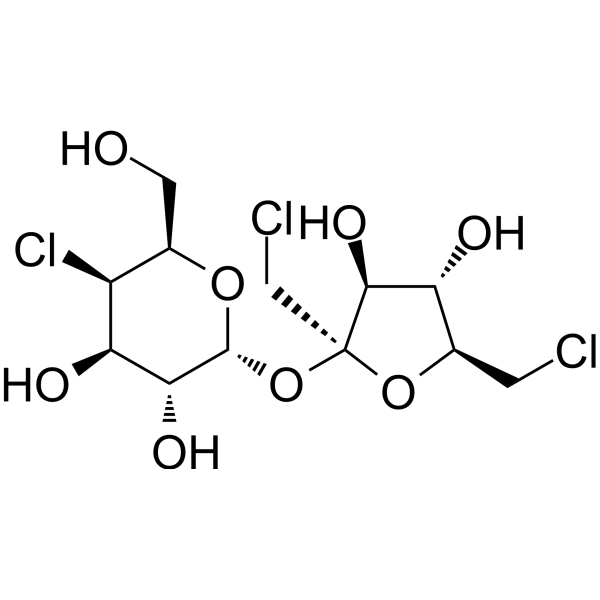
HY-N0614
SucraloseNon-Nutritive Sweetener -
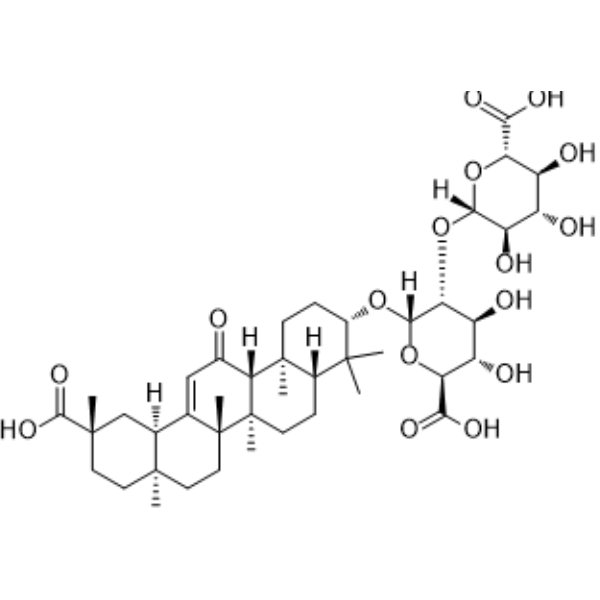
HY-N0184
Glycyrrhizic acidHMGB1 Antagonist -
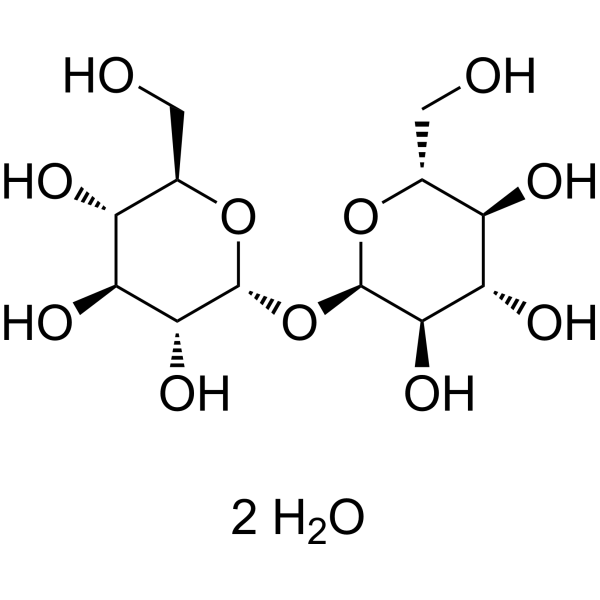
HY-N1132A
D-(+)-Trehalose dihydrateEndogenous Metabolite -

HY-B1779R
Sucrose (Standard)Disaccharide -
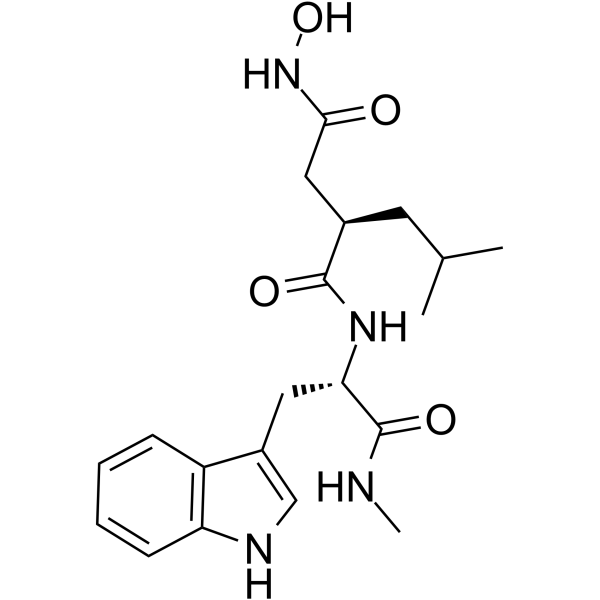
HY-15768
IlomastatMMP Inhibitor -

HY-N1132R
D-(+)-Trehalose (Standard)Disaccharide -
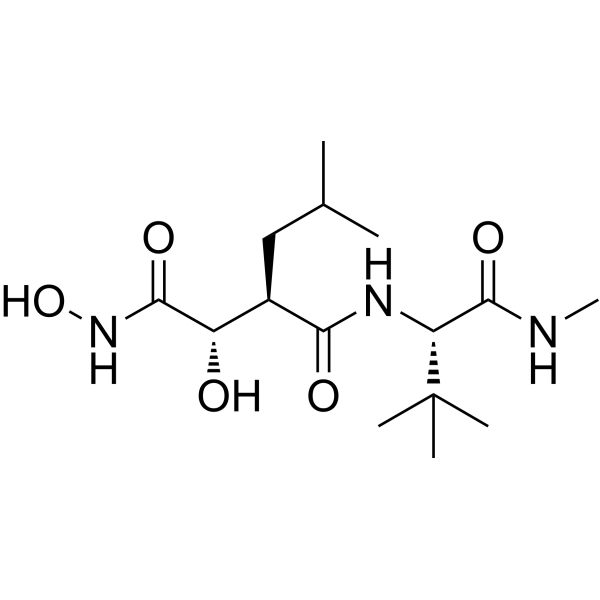
HY-12169
MarimastatMMP Inhibitor -
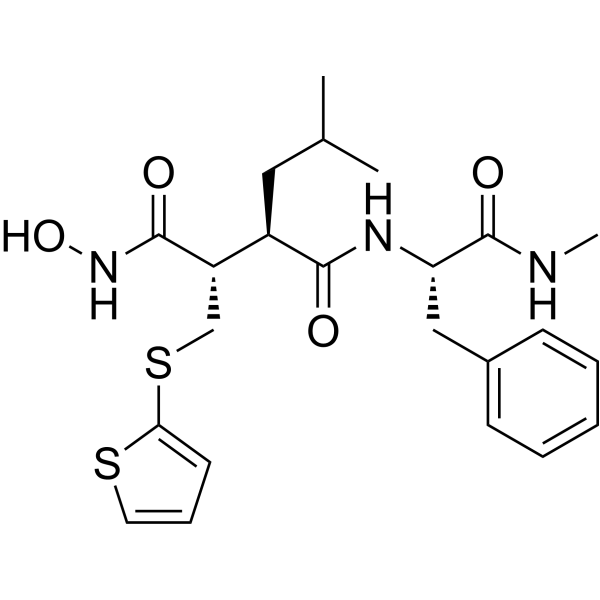
HY-13564
BatimastatMMP Inhibitor


Product Information
Information
Application
The compound is the grade of analytical standard, which is the reference standard supplied assay. It is commonly used in qualitative, quantitative and methodological research experiments in HPLC, GC and MS.


Chemical Information
-
CAS No. 96-82-2
-
Molecular Weight 358.30
-
Formula C12H22O12
-
SMILES
O[C@H]([C@H]([C@@H]([C@@H](CO)O)O[C@H]1[C@@H]([C@H]([C@H]([C@@H](CO)O1)O)O)O)O)C(O)=O
-
Initial Source
-
Shipping
Room temperature in continental US; may vary elsewhere.
-
Storage
Please store the product under the recommended conditions in the Certificate of Analysis.


Purity & Documentation
References
[1]. Cardoso T, et al. Lactobionic Acid as a Potential Food Ingredient: Recent Studies and Applications. J Food Sci. 2019 Jul;84(7):1672-1681. [Content Brief]
[2]. Sáez-Orviz, S., et al., (2022). The antimicrobial and bioactive properties of lactobionic acid. Journal of the science of food and agriculture, 102(9), 3495–3502. [Content Brief]

Calculators
Concentration (start) × Volume (start) = Concentration (final) × Volume (final)


Lactobionic acid (Standard) Related Classifications
HY-N7059R Related Classifications
 Powered by Bioz