



Tauroxicum
Tauroxicum can be used as a nontoxic, non-antimicrobial agent that can replace or supplement the use of antibiotics in the animal husbandry of livestock animals to increase health and general well-being, productivity, feed efficiency and weight gain.
商品は「研究用試薬」です。人や動物の医療用・臨床診断用・食品用の製品ではありません。
研究用途以外に使用した場合、当社は一切の責任を負いかねます。
- CAS 番号: 648922-41-2
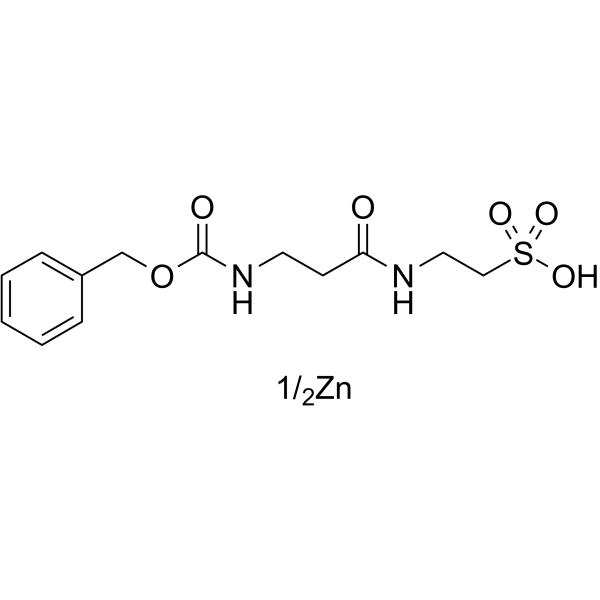
- 分子式: C13H18N2O6S.1/2Zn
- 分子量:362.32
-
保管条件:
Please store the product under the recommended conditions in the Certificate of Analysis.

To place orders, for customer services and technical support, please contact: MedChemExpress USA
Tel: 609-228-6898 E-mail: [email protected] [email protected]


-
 生物活性
生物活性
-
化学情報
- プロトコル
- 純度とドキュメンテーション
- 参考文献
-
 Help & FAQs


Antibiotic アイソフォーム固有の製品をすべて表示
More

生物活性
製品説明
体外実験
Tauroxicum can be used as a nontoxic, non-antimicrobial agent that can replace or supplement the use of antibiotics in the animal husbandry of livestock animals to increase health and general well-being, productivity, feed efficiency and weight gain. Tauroxicum is useful in any animal raised as a pet or for food or to produce a desired product, including milk, wool, caviar, feathers, nails, fur, hooves. Increase products even if not increase efficiency[1].
MedChemExpress (MCE) has not independently confirmed the accuracy of these methods. They are for reference only. Further protocols information, click here.


化学情報
-
CAS 番号 648922-41-2
-
分子量 362.32
-
分子式 C13H18N2O6S.1/2Zn
-
SMILES
O=S(CCNC(CCNC(OCC1=CC=CC=C1)=O)=O)(O)=O.[1/2Zn]
-
輸送条件
Room temperature in continental US; may vary elsewhere.
-
保管条件
Please store the product under the recommended conditions in the Certificate of Analysis.

プロトコル
-
Research Protocol for Infectious Diseases
Infectious-disease experiments test how pathogens interact with host barriers, innate immune receptors, inflammatory signaling, pathogen replication, and tissue injury; pattern-recognition receptors such as TLRs, RIG-I-like receptors, NOD-like receptors, and inflammasomes detect microbial molecules and activate NF-κB, interferon, and cytokine responses. The central hypothesis is that infection severity reflects the balance between pathogen burden and host response: protective inflammation restricts pathogen growth, whereas excessive or mislocalized inflammation contributes to tissue damage and disease phenotype. Unresolved questions include which host pathways are protective versus pathogenic, why some infection models fail to translate to human disease, and which combined readouts best predict clinically relevant infection outcomes.


純度とドキュメンテーション
参考文献

Calculators
濃度 (開始) × 体積 (開始) = 濃度 (終了) × 体積 (終了)


Tauroxicum 関連分類
HY-U00291 関連分類
 Powered by Bioz