



dBET57
Based on 5 publication(s) in Google Scholar
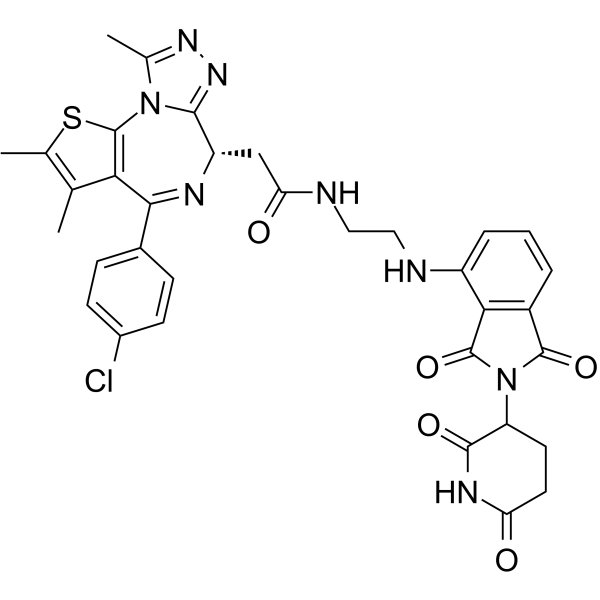
dBET57 is a potent and selective BRD4BD1 PROTAC degrader with a DC50 of approximately 500 nM. dBET57 forms a ternary complex with CRL4CRBN and BRD4BD1, induces the ubiquitination and degradation of BRD4, and indirectly inhibits the transcription of MYCN, c-Myc and PD-L1, ultimately leading to cell cycle arrest and apoptosis. dBET57 can be used in related research on neuroblastoma, non-small cell lung cancer and colorectal cancer.
(Pink: BRD4BD1 ligand (HY-78695); Blue: Cereblon ligand (HY-10984); Black: linker).
연구목적의 판매만을 진행합니다. 환자를 대상으로 한 판매는 하지 않습니다.
- Purity : 99.94%
- CAS No.: 1883863-52-2
- 화학식: C34H31ClN8O5S
- 분자량:699.18
-
보관:
4°C, protect from light
* In solvent : -80°C, 6 months; -20°C, 1 month (protect from light)

To place orders, for customer services and technical support, please contact: MedChemExpress USA
Tel: 609-228-6898 E-mail: [email protected] [email protected]


-
 Biological Activity
-
Chemical Information
-
용액&용해도
- Protocol
- 순도&문서
- References
-
 Help & FAQs


-
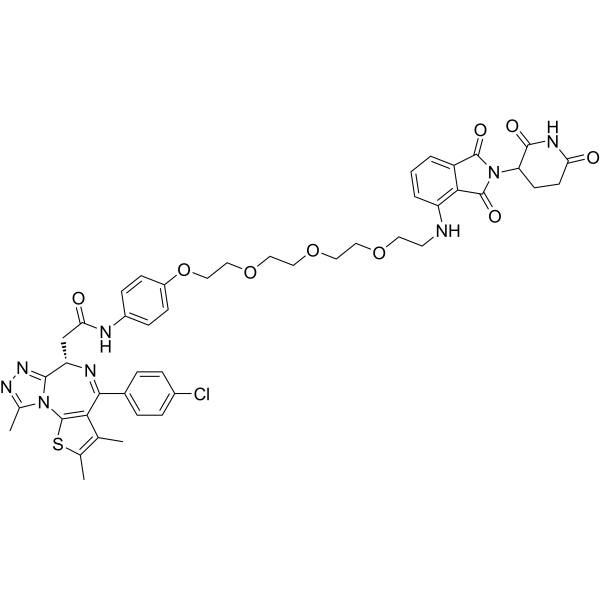
HY-16954
ARV-825PROTAC BRD2/BRD3/BRD4 Degrader -
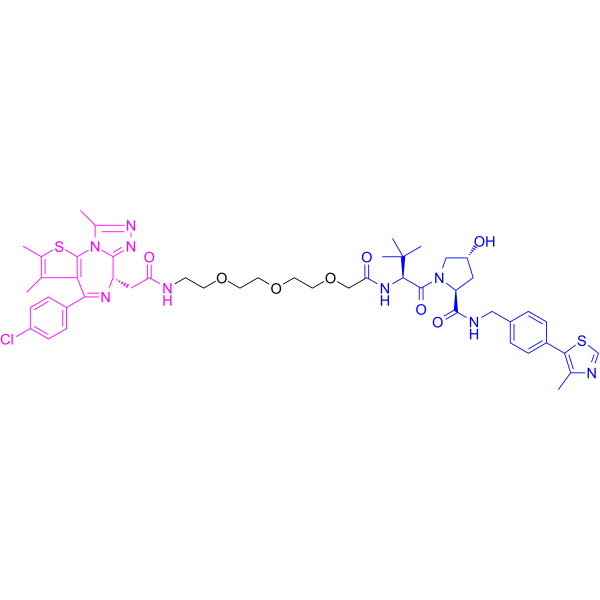
HY-107425
MZ 1PROTAC BRD4 Degrader -
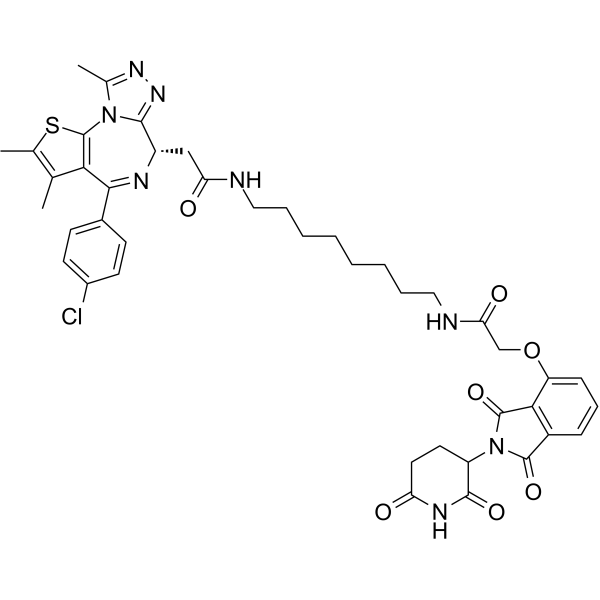
HY-112588
dBET6PROTAC BET Degrader -
HY-101838
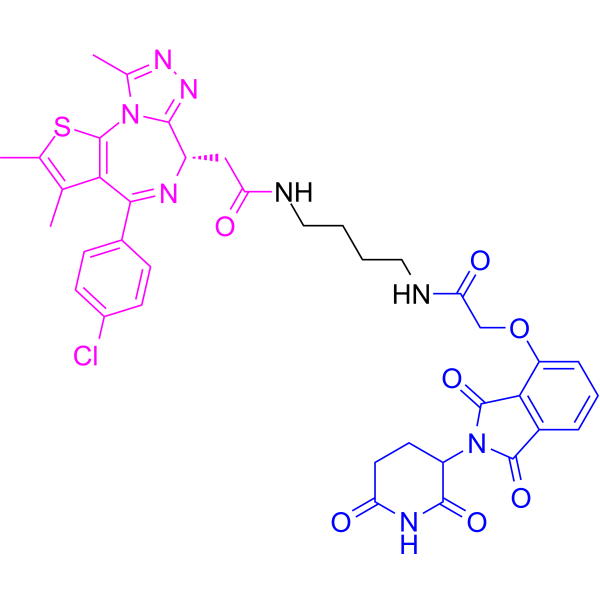
dBET1PROTAC BRD4 Degrader -
HY-100972
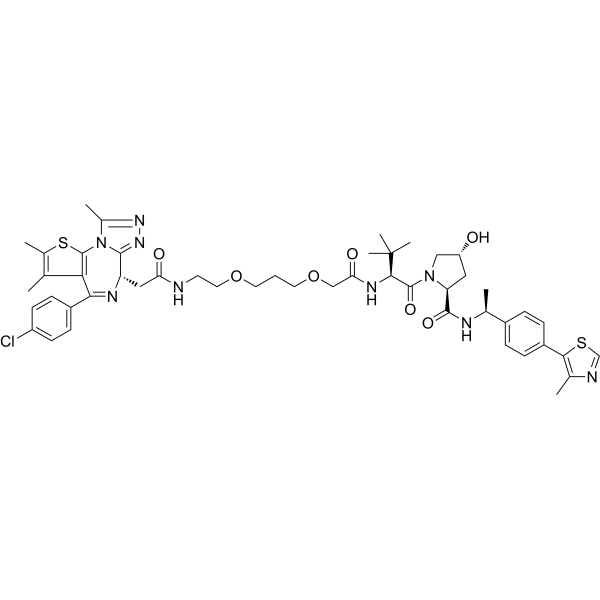
ARV-771BET PROTAC Degrader -
HY-111433
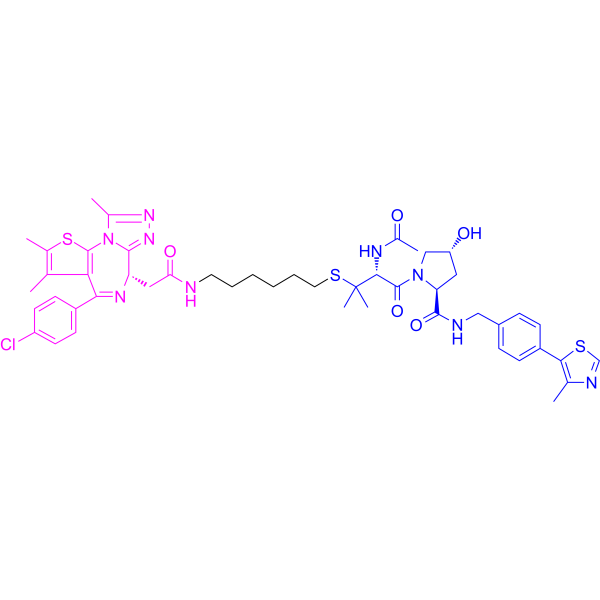
BRD4 degrader AT1BRD4 PROTAC Degrader -
HY-114305
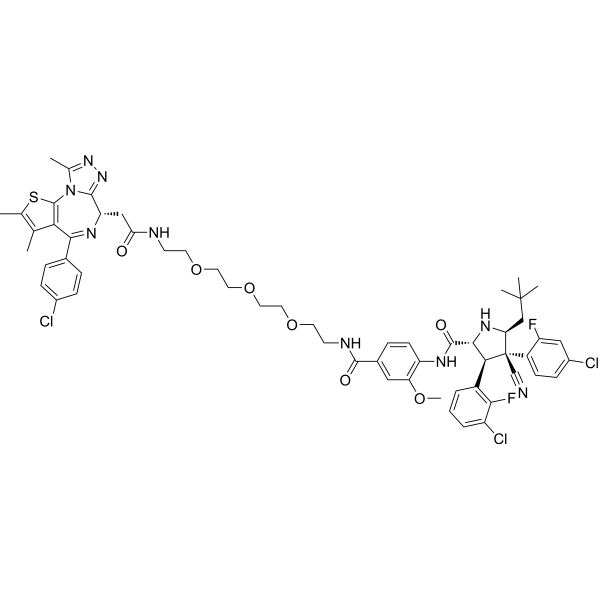
A1874BRD4 PROTAC Degrader -
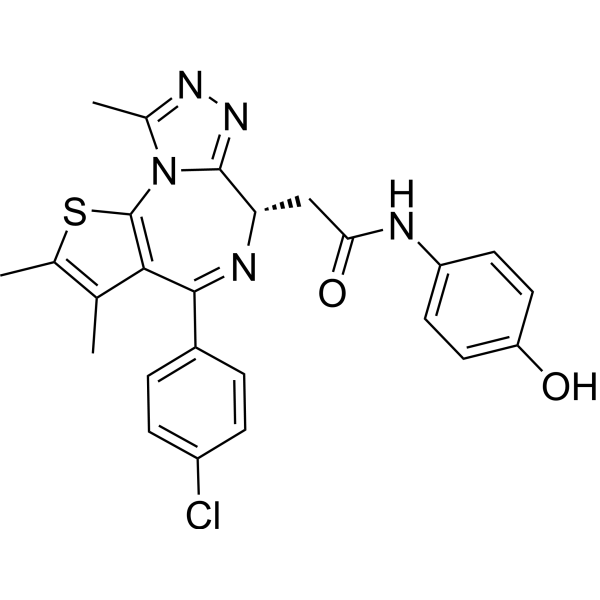
HY-15743
BirabresibBRD2/3/4 Inhibitor -
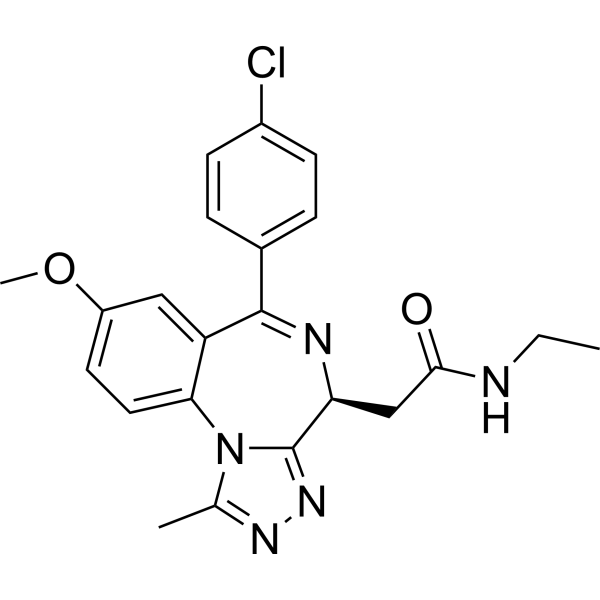
HY-13032
MolibresibBET Inhibitor -
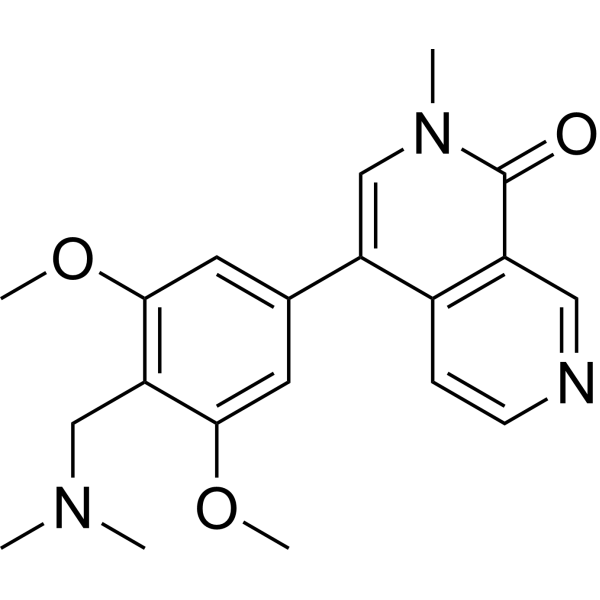
HY-100351
BI-7273BRD9 Inhibitor -

HY-15743R
Birabresib (Standard)BRD2/3/4 Inhibitor -
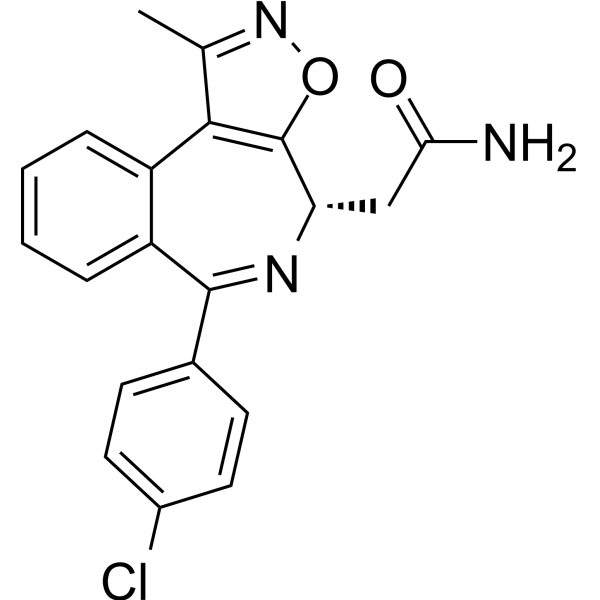
HY-12863
PelabresibBET Inhibitor
Publications Citing Use of MedChemExpress (MCE) dBET57
MoreAll PROTACs Isoforms
More

Biological Activity
제품 설명
IC50 & Target
[1]|
BRD4 BD1 500 nM (DC50) |
Cereblon |
Cellular Effect
|
Cell Line

|
Type | Value | Description | References |
|---|---|---|---|---|
| SK-N-BE(2) | IC50 |
643.4 nM
|
Reduction in cell viability against human neuroblastoma SK-N-BE(2) cells assessed after 72 hrs of incubation by CCK8 assay.
Reduction in cell viability against human neuroblastoma SK-N-BE(2) cells assessed after 72 hrs of incubation by CCK8 assay.
|
29892083 |
| IMR-32 | IC50 |
299 nM
|
Reduction in cell viability against human neuroblastoma IMR-32 cells assessed after 72 hrs of incubation by CCK8 assay.
Reduction in cell viability against human neuroblastoma IMR-32 cells assessed after 72 hrs of incubation by CCK8 assay.
|
29892083 |
| SH-SY5Y | IC50 |
414 nM
|
Reduction in cell viability against human neuroblastoma SH-SY5Y cells assessed after 72 hrs of incubation by CCK8 assay.
Reduction in cell viability against human neuroblastoma SH-SY5Y cells assessed after 72 hrs of incubation by CCK8 assay.
|
29892083 |
| HT-22 | IC50 |
2151 nM
|
Reduction in cell viability against normal HT22 cells assessed after 72 hrs of incubation by CCK8 assay.
Reduction in cell viability against normal HT22 cells assessed after 72 hrs of incubation by CCK8 assay.
|
29892083 |
| HEK-293T | IC50 |
4840 nM
|
Reduction in cell viability against normal 293T cells assessed after 72 hrs of incubation by CCK8 assay.
Reduction in cell viability against normal 293T cells assessed after 72 hrs of incubation by CCK8 assay.
|
29892083 |
In Vitro
dBET57 (1.2-10 mg/L; 12-24 h) inhibits cell viability in H1299 cells, exhibits weak dark toxicity, induces BRD4 protein degradation, downregulates the expression of RAD51 and RAD51AP1, and suppresses DNA damage repair[2].
MedChemExpress (MCE) has not independently confirmed the accuracy of these methods. They are for reference only.
-
Cell Line:H1299 cell line
-
Concentration:0.3, 0.6, 1.2, 2.5, 5, 10 mg/L
-
Incubation Time:24 h
-
Result:Exhibited extremely low dark toxicity with no significant effect on cell viability, but showed synergistic inhibition of cell growth when combined with photodynamic therapy.
-
Cell Line:CT26 cell line
-
Concentration:0.056, 0.28, 1.4, 7, 35 mg/L
-
Incubation Time:24 h
-
Result:Decreased BRD4 protein levels in a concentration-dependent manner and significantly downregulated the protein expression of PD-L1 and c-Myc.
-
Cell Line:CT26 cell line
-
Concentration:7.5 mg/L
-
Incubation Time:12 h
-
Result:Caused the extracellular release of HMGB1.
-
Cell Line:SK-N-BE(2), IMR-32, SH-SY5Y cell lines
-
Concentration:300, 600, 1200 nM
-
Incubation Time:48 h
-
Result:Significantly increased the proportions of early and late apoptotic neuroblastoma cells.
-
Cell Line:SK-N-BE(2), IMR-32, SH-SY5Y cell lines
-
Concentration:300, 600, 1200 nM
-
Incubation Time:48 h
-
Result:Increased the proportion of cells in the G1 phase while reducing the proportion of cells in the G2 and S phases, inducing cell cycle arrest.
-
Cell Line:SK-N-BE(2), IMR-32, SH-SY5Y cell lines
-
Concentration:600, 1200 nM
-
Incubation Time:24 h, 48 h
-
Result:Significantly inhibited cell migration ability.
In Vivo
dBET57 (2 mg/kg; i.v.; once every 2 days for a total of 5 administrations) reduces tumor burden in a BALB/c mouse model of primary and metastatic colorectal cancer established by subcutaneous inoculation of CT26 cells, and significantly inhibits primary tumor growth and lung metastasis when combined with Doxorubicin (HY-15142) [3].
dBET57 (6.5 mg/kg; intravenous injection; once every 2 days for a total of 5 administrations) inhibits tumor growth in a nude mouse xenograft model subcutaneously inoculated with H1299 cells, and exerts a strong synergistic antitumor effect particularly under light irradiation [2].
MedChemExpress (MCE) has not independently confirmed the accuracy of these methods. They are for reference only.
-
Animal Model:Nude mice (3-4 weeks old; subcutaneous xenograft model)[4]
-
Dosage:7.5 mg/kg
-
Administration:i.p.; once daily; 21 days
-
Result:Reduced tumor signals and volume significantly compared to controls.
Reduced BRD4 protein levels in tumors.
Decreased Ki-67-positive cell proportion in tumors.
Increased caspase3-positive cell proportion in tumors.
Showed no significant difference in mouse body weight compared to controls.
Exhibited no obvious organ toxicity in kidney, liver, spleen, and lung via HE staining.
-
Animal Model:nude mice were subcutaneously inoculated of H1299 cells[2]
-
Dosage:6.5 mg/kg
-
Administration:i.v.; once every 2 days; 5 total doses
-
Result:Moderately reduced the tumor volume and decreased the tumor weight in nude mice.
Did not exhibit significant body weight loss or systemic toxicity in animals.
-
Animal Model:BALB/c mice were injected with CT26 cells subcutaneously or via the tail vein[5]
-
Dosage:2 mg/kg
-
Administration:i.v.; once every 2 days; 5 total doses
-
Result:Slightly slowed down CT26 tumor growth and reduced tumor weight.
Showed no obvious histological damage to the heart, liver, spleen, lungs, and kidneys.


Chemical Information
-
CAS No. 1883863-52-2
-
Appearance Solid
-
분자량 699.18
-
화학식 C34H31ClN8O5S
-
Color Light yellow to yellow
-
SMILES
O=C(NCCNC1=CC=CC(C(N2C(CC3)C(NC3=O)=O)=O)=C1C2=O)C[C@H]4C5=NN=C(C)N5C6=C(C(C)=C(C)S6)C(C7=CC=C(Cl)C=C7)=N4
-
선적
Room temperature in continental US; may vary elsewhere.
-
보관
4°C, protect from light
* In solvent : -80°C, 6 months; -20°C, 1 month (protect from light)


Publications (5)
-
Journal Impact Factor
-
Most Recent
-
Nat Chem Biol
2023 Mar;19(3):323-333. PMID: 36329119 -
-
Adv Healthc Mater
Golgi Apparatus-Targeting Immunostimulant for Synergistic Activation of Antitumor Immunity via Pyroptosis Induction and PD-L1 Degradation. [Abstract]2026 Feb 17:e04895. PMID: 41700108 -
Structure
PROTAC-mediated activation, rather than degradation, of a nuclear receptor reveals complex ligand-receptor interaction network. [Abstract]2024 Dec 5;32(12):2352-2363.e8. PMID: 39389062 -
Biochem Biophys Res Commun
Accelerating PROTAC drug discovery: Establishing a relationship between ubiquitination and target protein degradation. [Abstract]2022 Nov 5:628:68-75. PMID: 36084553


용액&용해도
In Vitro:
DMSO : 250 mg/mL (357.56 mM; Need ultrasonic; Hygroscopic DMSO has a significant impact on the solubility of product, please use newly opened DMSO)
Please refer to the solubility information to select the appropriate solvent. Once prepared, please aliquot and store the solution to prevent product inactivation from repeated freeze-thaw cycles.
Storage method and period of stock solution: -80°C, 6 months; -20°C, 1 month (protect from light). When stored at -80°C, please use it within 6 months. When stored at -20°C, please use it within 1 month.
Please refer to the solubility information to select the appropriate solvent. Once prepared, please aliquot and store the solution to prevent product inactivation from repeated freeze-thaw cycles.
Storage method and period of stock solution: -80°C, 6 months; -20°C, 1 month (protect from light). When stored at -80°C, please use it within 6 months. When stored at -20°C, please use it within 1 month.
Concentration (start) × Volume (start) = Concentration (final) × Volume (final)
In Vivo:
Select the appropriate dissolution method based on your experimental animal and administration route.
- For the following dissolution methods, please ensure to first prepare a clear stock solution using an In Vitro approach and then sequentially add co-solvents:
- To ensure reliable experimental results, the clarified stock solution can be appropriately stored based on storage conditions. As for the working solution for In Vivo experiments, it is recommended to prepare freshly and use it on the same day.
- The percentages shown for the solvents indicate their volumetric ratio in the final prepared solution. If precipitation or phase separation occurs during preparation, heat and/or sonication can be used to aid dissolution.
Add each solvent one by one: 10% DMSO 40% PEG300 5% Tween-80 45% Saline
Solubility: ≥ 2.08 mg/mL (2.97 mM); Clear solution
This protocol yields a clear solution of ≥ 2.08 mg/mL (saturation unknown).
Taking 1 mL working solution as an example, add 100 μL DMSO stock solution (20.8 mg/mL) to 400 μL PEG300, and mix evenly; then add 50 μL Tween-80 and mix evenly; then add 450 μL Saline to adjust the volume to 1 mL.
Preparation of Saline: Dissolve 0.9 g sodium chloride in ddH₂O and dilute to 100 mL to obtain a clear Saline solution.
In Vivo Dissolution Calculator
Please enter the basic information of animal experiments:
-
-
-
-
Recommended: Prepare an additional quantity of animals to account for potential losses during experiments.
Please enter your animal formula composition:
-
%DMSO +
Recommended: Keep the proportion of DMSO in working solution below 2% if your animal is weak.
-
%+
-
+%Tween-80 + +
-
%Saline +
The co-solvents required include: DMSO, . All of co-solvents are available by MedChemExpress (MCE). , Tween 80. All of co-solvents are available by MedChemExpress (MCE).
Working solution concentration: 0.22 mg/mL
Method for preparing stock solution: mg drug dissolved in μL DMSO. Stock solution concentration: mg/mL. * In solvent : -80°C, 6 months; -20°C, 1 month (protect from light)
1. Take μL DMSO stock solution;
2. Add μL .
μL , mix evenly;
3. Then add μL Tween 80, mix evenly;
4. Then add μL
Please ensure that the stock solution in the first step is dissolved to a clear state, and add co-solvents in sequence. You can use ultrasonic heating (ultrasonic cleaner, recommended frequency 20-40 kHz), vortexing, etc. to assist dissolution.


순도&문서
-
Data Sheet (299 KB)
-
SDS (396 KB)
- English - EN (396 KB)
- Français - FR (396 KB)
- Deutsch - DE (396 KB)
- Norwegian - NO (396 KB)
- Español - ES (396 KB)
- Swedish - SV (396 KB)
- Italian - IT (396 KB)
- Korean - KR (396 KB)
- Portuguese - PT (396 KB)
-
Handling Instructions (2659 KB)
References
[1]. Nowak RP, et al. Plasticity in binding confers selectivity in ligand-induced protein degradation. Nature chemical biology. 2018 Jul;14(7):706-714. [Content Brief]
[4]. Jia SQ, et al. The BRD4 Inhibitor dBET57 Exerts Anticancer Effects by Targeting Superenhancer-Related Genes in Neuroblastoma. Journal of immunology research. 2022;2022:7945884. [Content Brief]


Complete Stock Solution Preparation Table
Please refer to the solubility information to select the appropriate solvent. Once prepared, please aliquot and store the solution to prevent product inactivation from repeated freeze-thaw cycles.
Storage method and period of stock solution: -80°C, 6 months; -20°C, 1 month (protect from light). When stored at -80°C, please use it within 6 months. When stored at -20°C, please use it within 1 month.
| Optional Solvent | Concentration Solvent Mass | 1 mg | 5 mg | 10 mg | 25 mg |
|---|---|---|---|---|---|
| DMSO | 1 mM | 1.4302 mL | 7.1512 mL | 14.3025 mL | 35.7562 mL |
| 5 mM | 0.2860 mL | 1.4302 mL | 2.8605 mL | 7.1512 mL | |
| 10 mM | 0.1430 mL | 0.7151 mL | 1.4302 mL | 3.5756 mL | |
| 15 mM | 0.0953 mL | 0.4767 mL | 0.9535 mL | 2.3837 mL | |
| 20 mM | 0.0715 mL | 0.3576 mL | 0.7151 mL | 1.7878 mL | |
| 25 mM | 0.0572 mL | 0.2860 mL | 0.5721 mL | 1.4302 mL | |
| 30 mM | 0.0477 mL | 0.2384 mL | 0.4767 mL | 1.1919 mL | |
| 40 mM | 0.0358 mL | 0.1788 mL | 0.3576 mL | 0.8939 mL | |
| 50 mM | 0.0286 mL | 0.1430 mL | 0.2860 mL | 0.7151 mL | |
| 60 mM | 0.0238 mL | 0.1192 mL | 0.2384 mL | 0.5959 mL | |
| 80 mM | 0.0179 mL | 0.0894 mL | 0.1788 mL | 0.4470 mL | |
| 100 mM | 0.0143 mL | 0.0715 mL | 0.1430 mL | 0.3576 mL |


dBET57 Related Classifications
HY-123844 Related Classifications
 Powered by Bioz