



L-Norvaline

Based on 1 Customer Validation
L-Norvaline is the inhibitor for arginase, that promotes the production of NO, reduces oxidative stress, improves insulin resistance, and exhibits antioxidant and anti-hyperglycemic effects. L-Norvaline can be used in research of Alzheimer’s disease.
For research use only. We do not sell to patients.
- Purity : 98.0%
- CAS No.: 6600-40-4
- Formula: C5H11NO2
- Molecular Weight:117.15
-
Storage:
Store at room temperature 3 years.
In solvent -80°C, 2 years , -20°C, 1 year

To place orders, for customer services and technical support, please contact: MedChemExpress USA
Tel: 609-228-6898 E-mail: [email protected] [email protected]


-
 Biological Activity
-
Chemical Information
-
Solvent & Solubility
- Protocols
- Purity & Documentation
- References
-
 Help & FAQs


-
HY-Y0017
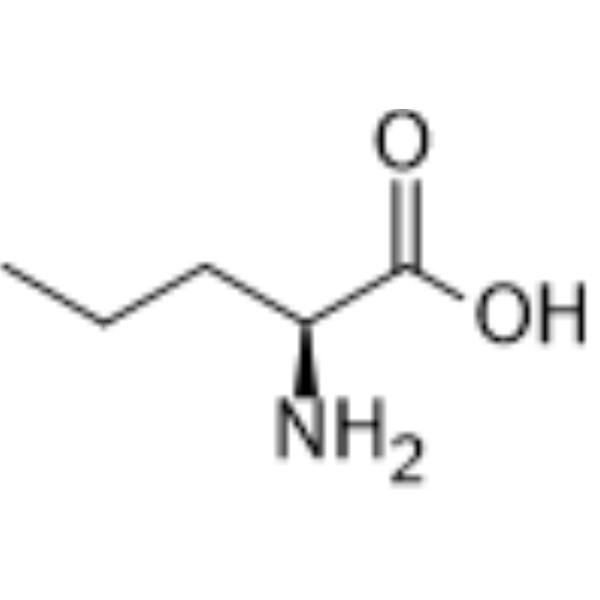
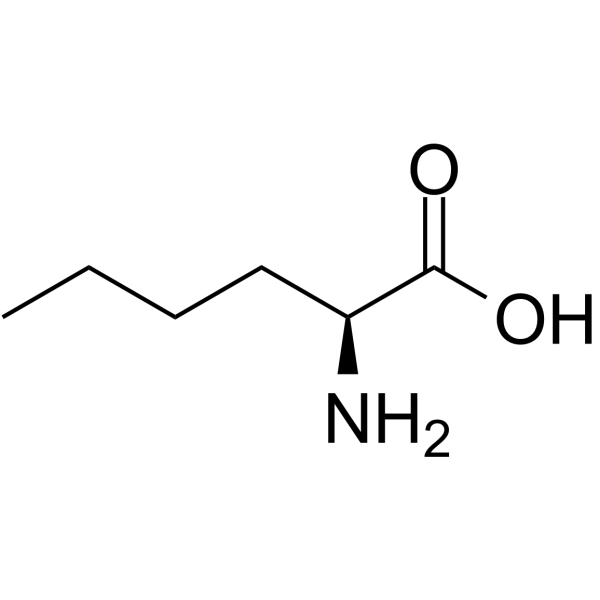
L-Norleucine -

HY-40135R
L-Hydroxyproline (Standard)Endogenous Metabolite -
HY-D0261
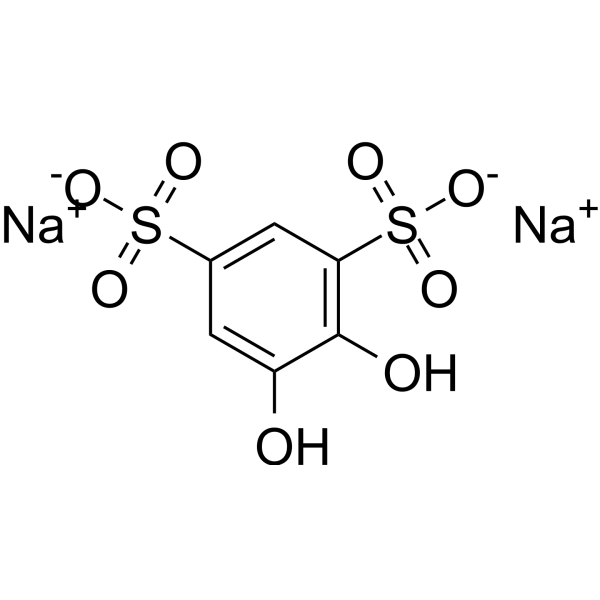
TironMetal Chelator -
HY-I1060
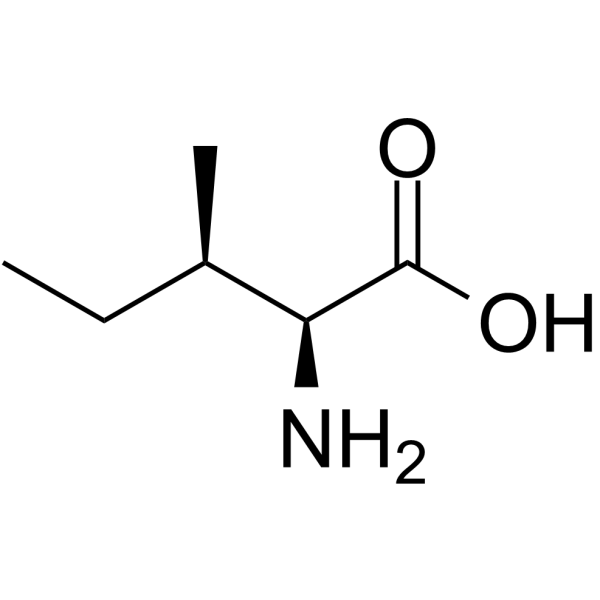
L-AlloisoleucineL-Isoleucine Isomer -
HY-112885B
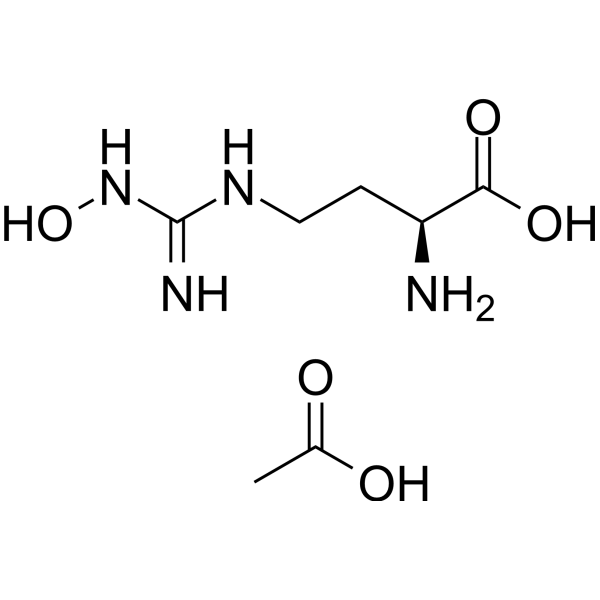
nor-NOHA monoacetateArginase Inhibitor -
HY-19548A
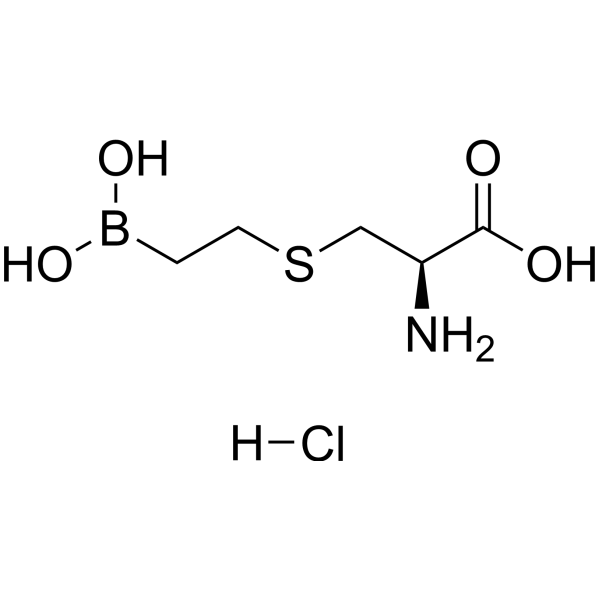
BEC hydrochlorideArginaseII Inhibitor -

HY-Y0399R
L-Norvaline (Standard)Arginase Inhibitor -
HY-W010510
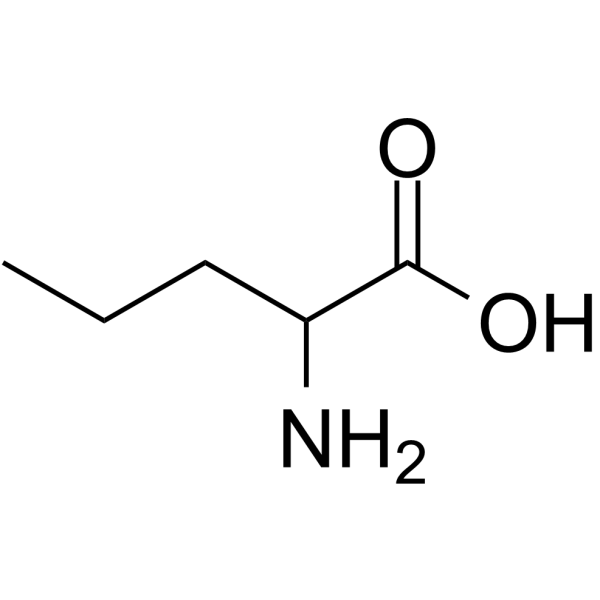
DL-Norvaline -
HY-15775
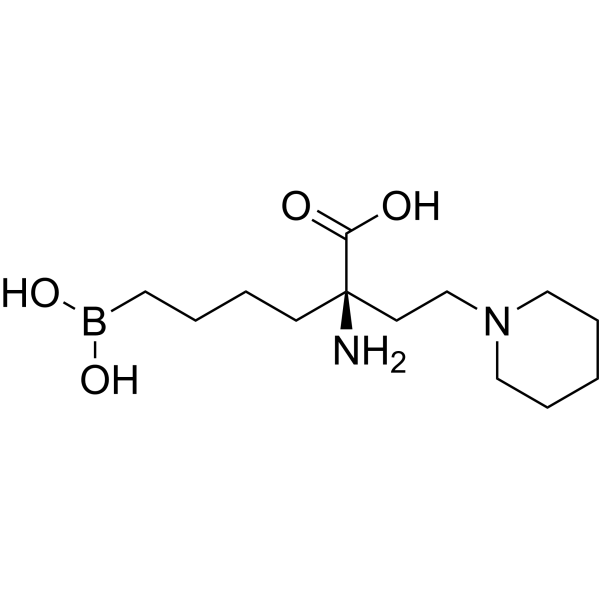
Arginase inhibitor 1Arginases I/II Inhibitor -
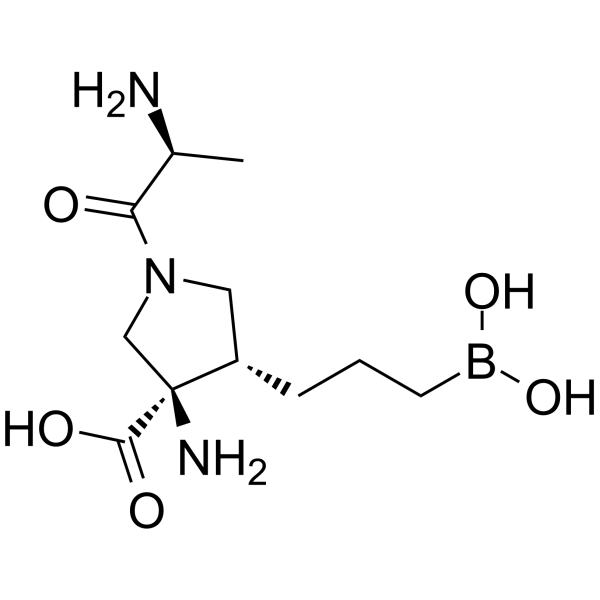
HY-101979
NumidargistatArginase Inhibitor -
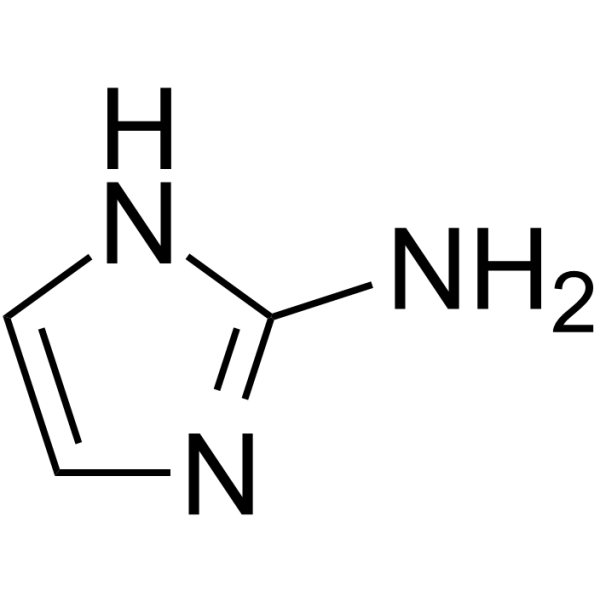
HY-W062216
2-AminoimidazoleAntibiofilm Agent -

HY-W010510R
DL-Norvaline (Standard)


Biological Activity
Description
In Vivo
L-Norvaline (20 mg/kg, every 3 days for 8 weeks, ip) exhibits antioxidant and anti-hyperglycemic effects in rats HFD and STZ (HY-13753) induced hyperglycemia models[2].
MedChemExpress (MCE) has not independently confirmed the accuracy of these methods. They are for reference only.
-
Animal Model:3 Tg-AD mouse models[1]
-
Dosage:250 mg/L
-
Administration:drinking water for 2.5 months
-
Result:Increased freezing time in the fear conditioning test.
-
Animal Model:HFD and STZ (HY-13753) induced hyperglycemia rat models[2]
-
Dosage:20 mg/kg
-
Administration:every 3 days for 8 weeks, ip
-
Result:Decreased the level of blood glucose, lipids and malondialdehyde (MDA).


Chemical Information
-
CAS No. 6600-40-4
-
Appearance Solid
-
Molecular Weight 117.15
-
Formula C5H11NO2
-
Color White to off-white
-
SMILES
N[C@@H](CCC)C(O)=O
-
Synonyms
Norvaline
-
Structure Classification
-
Initial Source
-
Shipping
Room temperature in continental US; may vary elsewhere.
-
Storage
Store at room temperature 3 years
In solvent -80°C 2 years -20°C 1 year


Solvent & Solubility
In Vitro:
H2O : 50 mg/mL (426.80 mM; Need ultrasonic)
DMSO : < 1 mg/mL (insoluble or slightly soluble)
Please refer to the solubility information to select the appropriate solvent. Once prepared, please aliquot and store the solution to prevent product inactivation from repeated freeze-thaw cycles.
Storage method and period of stock solution: -80°C, 2 years; -20°C, 1 year. When stored at -80°C, please use it within 2 years. When stored at -20°C, please use it within 1 year.
* Note: If you choose water as the stock solution, please dilute it to the working solution, then filter and sterilize it with a 0.22 μm filter before use.
Please refer to the solubility information to select the appropriate solvent. Once prepared, please aliquot and store the solution to prevent product inactivation from repeated freeze-thaw cycles.
Storage method and period of stock solution: -80°C, 2 years; -20°C, 1 year. When stored at -80°C, please use it within 2 years. When stored at -20°C, please use it within 1 year.
* Note: If you choose water as the stock solution, please dilute it to the working solution, then filter and sterilize it with a 0.22 μm filter before use.
Concentration (start) × Volume (start) = Concentration (final) × Volume (final)
In Vivo:
For the following dissolution methods, please prepare the working solution directly:
It is recommended to prepare fresh solutions and use them promptly within a short period of time.
The percentages shown for the solvents indicate their volumetric ratio in the final prepared solution. If precipitation or phase separation occurs during preparation, heat and/or sonication can be used to aid dissolution.
Add each solvent one by one: PBS
Solubility: 50 mg/mL (426.80 mM); Clear solution; Need ultrasonic

Protocols
-
ROS/oxidative-stress fluorescent staining
ROS/oxidative-stress fluorescent staining uses cell-permeant fluorogenic probes that become fluorescent after oxidation inside cells or tissues; commonly used examples include DCFH-DA/DCFDA for broad cellular oxidant detection, DHE for superoxide-related signal detection, MitoSOX for mitochondrial superoxide-related signal detection, and CellROX probes for oxidative-stress-associated fluorescence readouts. The assay detects probe oxidation rather than a single ROS species unless the probe and analysis method have been chemically validated for that species. DCFH-DA enters cells, is deacetylated by intracellular esterases to DCFH, and produces fluorescent DCF after oxidation, so the readout is used as an operational measure of total cellular oxidative stress rather than a species-specific ROS measurement. DHE and MitoSOX can report superoxide-related oxidation, but red fluorescence alone can include non-specific ethidium-like oxidation products; HPLC or optimized spectral approaches are
-
Research Protocol for Endocrine Diseases
Endocrine diseases often arise from disrupted hormone production, hormone signaling, or target-tissue responsiveness; for diabetes-focused endocrine disease models, insulin signaling regulates glucose uptake, hepatic glucose output, lipid metabolism, and β-cell compensation. Type 2 diabetes develops through interacting defects in insulin resistance, β-cell dysfunction, adipose inflammation, hepatic glucose overproduction, altered incretin signaling, and ectopic lipid metabolism. A major unresolved question is whether endocrine dysfunction is driven primarily by target-tissue insulin resistance, intrinsic β-cell failure, immune/inflammatory stress, or combined multi-organ failure that differs by disease stage.
-
Research Protocol for Metabolic Diseases
AMP-activated protein kinase, AMPK, is a conserved cellular energy sensor that responds to reduced cellular energy status and coordinates metabolism by increasing ATP-generating catabolic pathways while suppressing ATP-consuming anabolic processes. In metabolic disease research, the AMPK pathway is experimentally relevant because it regulates hepatic lipid synthesis, fatty acid oxidation, glucose production, skeletal-muscle glucose disposal, mTORC1-linked biosynthesis, autophagy, mitochondrial homeostasis, and whole-body energy balance. The central pathway logic is that energy stress, metformin, exercise-like stimulation, or direct AMPK activators increase AMPKα Thr172 phosphorylation and downstream substrate phosphorylation, including ACC and RAPTOR. Phosphorylation of ACC suppresses lipogenesis and supports fatty acid oxidation, whereas phosphorylation of RAPTOR suppresses mTORC1 signaling and links cellular energy status to growth and protein synthesis control. The pathway is linked


Purity & Documentation
-
Data Sheet (279 KB)
-
SDS (396 KB)
- English - EN (396 KB)
- Français - FR (396 KB)
- Deutsch - DE (396 KB)
- Norwegian - NO (396 KB)
- Español - ES (396 KB)
- Swedish - SV (396 KB)
- Italian - IT (396 KB)
- Korean - KR (396 KB)
- Portuguese - PT (396 KB)
-
Handling Instructions (2659 KB)
References
[1]. Polis B, et al., L-Norvaline, a new therapeutic agent against Alzheimer's disease. Neural Regen Res. 2019 Sep;14(9):1562-1572. [Content Brief]
[2]. Javrushyan H, et al., Antihyperglycemic activity of L-norvaline and L-arginine in high-fat diet and streptozotocin-treated male rats. Exp Mol Pathol. 2022 Jun;126:104763. [Content Brief]


Complete Stock Solution Preparation Table
Please refer to the solubility information to select the appropriate solvent. Once prepared, please aliquot and store the solution to prevent product inactivation from repeated freeze-thaw cycles.
Storage method and period of stock solution: -80°C, 2 years; -20°C, 1 year. When stored at -80°C, please use it within 2 years. When stored at -20°C, please use it within 1 year.
| Optional Solvent | Concentration Solvent Mass | 1 mg | 5 mg | 10 mg | 25 mg |
|---|---|---|---|---|---|
| H2O | 1 mM | 8.5361 mL | 42.6803 mL | 85.3606 mL | 213.4016 mL |
| 5 mM | 1.7072 mL | 8.5361 mL | 17.0721 mL | 42.6803 mL | |
| 10 mM | 0.8536 mL | 4.2680 mL | 8.5361 mL | 21.3402 mL | |
| 15 mM | 0.5691 mL | 2.8454 mL | 5.6907 mL | 14.2268 mL | |
| 20 mM | 0.4268 mL | 2.1340 mL | 4.2680 mL | 10.6701 mL | |
| 25 mM | 0.3414 mL | 1.7072 mL | 3.4144 mL | 8.5361 mL | |
| 30 mM | 0.2845 mL | 1.4227 mL | 2.8454 mL | 7.1134 mL | |
| 40 mM | 0.2134 mL | 1.0670 mL | 2.1340 mL | 5.3350 mL | |
| 50 mM | 0.1707 mL | 0.8536 mL | 1.7072 mL | 4.2680 mL | |
| 60 mM | 0.1423 mL | 0.7113 mL | 1.4227 mL | 3.5567 mL | |
| 80 mM | 0.1067 mL | 0.5335 mL | 1.0670 mL | 2.6675 mL | |
| 100 mM | 0.0854 mL | 0.4268 mL | 0.8536 mL | 2.1340 mL |
* Note: If you choose water as the stock solution, please dilute it to the working solution, then filter and sterilize it with a 0.22 μm filter before use.


L-Norvaline Related Classifications
HY-Y0399 Related Classifications
 Powered by Bioz