



Licochalcone D
Based on 5 publication(s) in Google Scholar
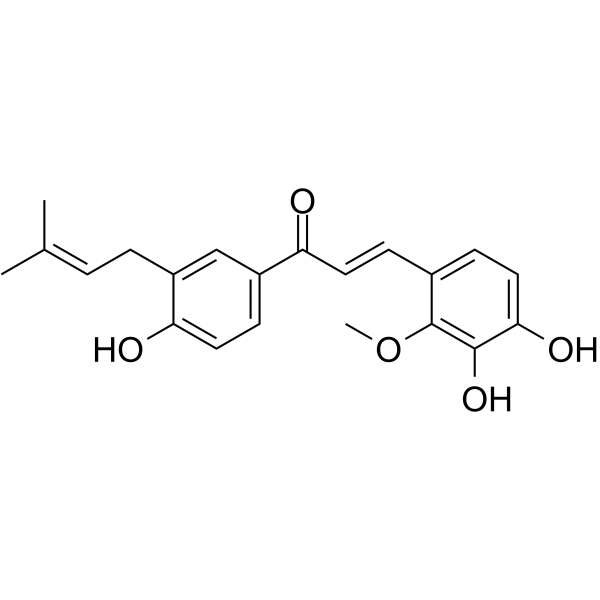
Licochalcone D, a flavonoid compound mainly existing in the root of Glycyrrhiza uralensis, is a potent and orally active inhibitor of NF-kappaB (NF-κB) p65. Licochalcone D possesses antioxidant, anti-inflammatory, anti-cancer properties.
For research use only. We do not sell to patients.
- Purity : 99.80%
- CAS No.: 144506-15-0
- Formula: C21H22O5
- Molecular Weight:354.40
-
Storage:
4°C, protect from light
* In solvent : -80°C, 6 months; -20°C, 1 month (protect from light)

To place orders, for customer services and technical support, please contact: MedChemExpress USA
Tel: 609-228-6898 E-mail: [email protected] [email protected]


-
 Biological Activity
-
Chemical Information
-
Solvent & Solubility
- Protocols
- Purity & Documentation
- References
-
 Help & FAQs


-
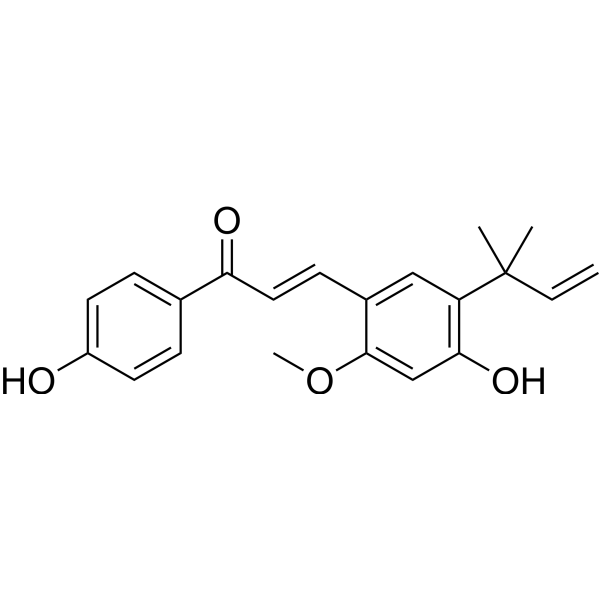
HY-N0372
Licochalcone AUGTs inhibitor -
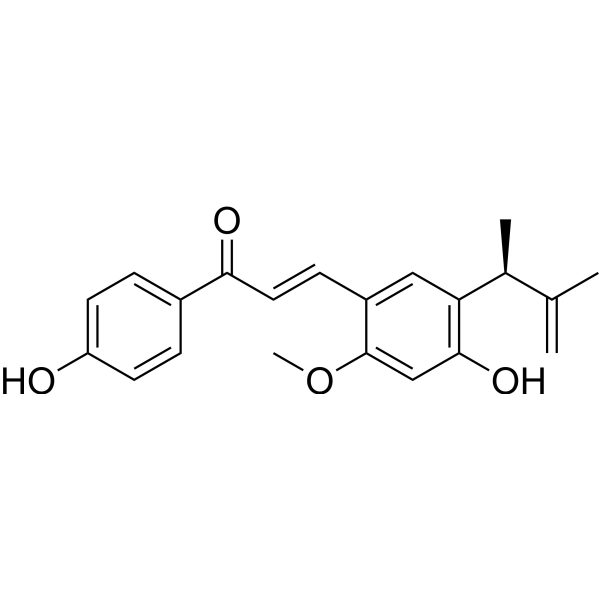
HY-N4182
Licochalcone Ep38 MAPK Inhibitor -
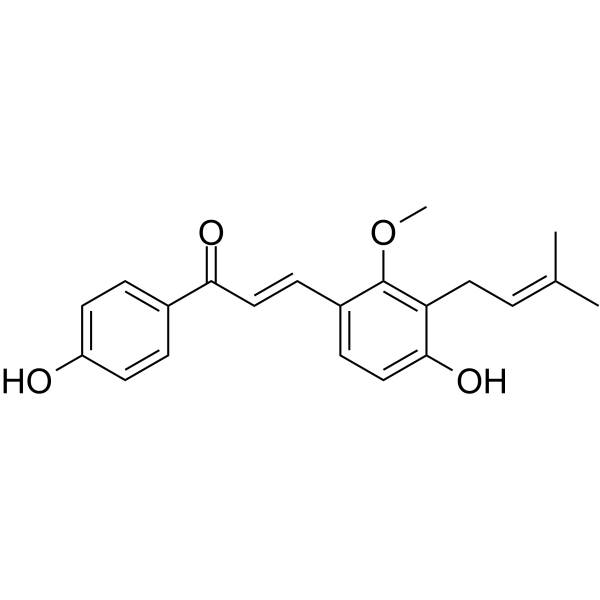
HY-N0374
Licochalcone Cα-Glucosidase Inhibitor -
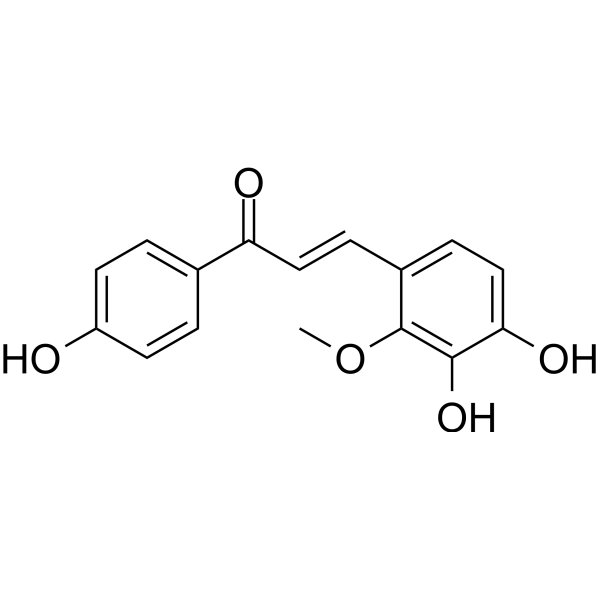
HY-N0373
Licochalcone BApoptosis Inducer -
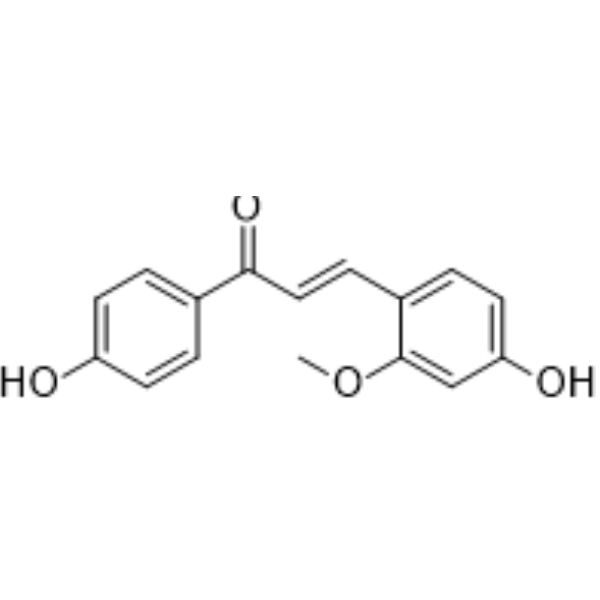
HY-N0269
EchinatinAnti-Inflammatory Agent -
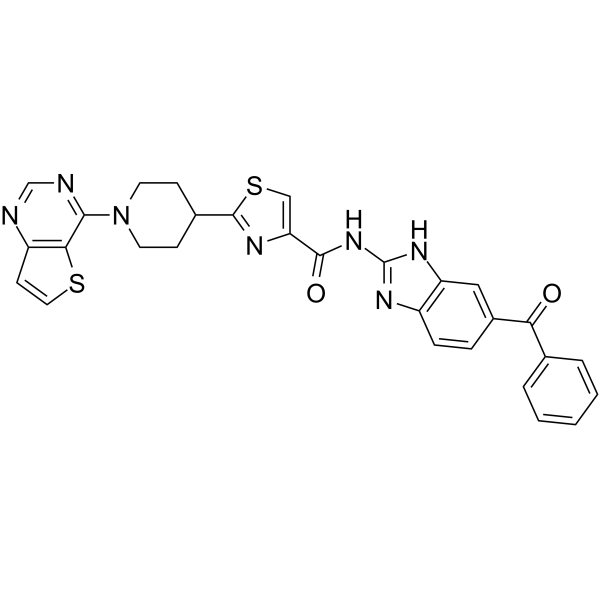
HY-10496
SC75741NF-κB Inhibitor -
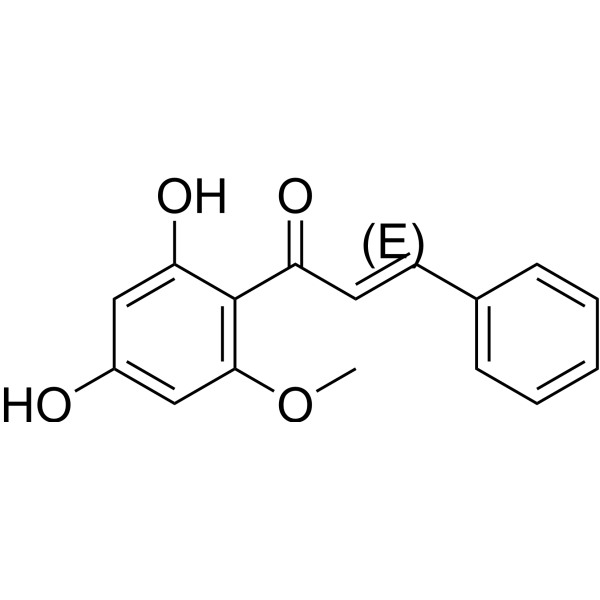
HY-N1378
(E)-CardamoninhTRPA1 Antagonist -
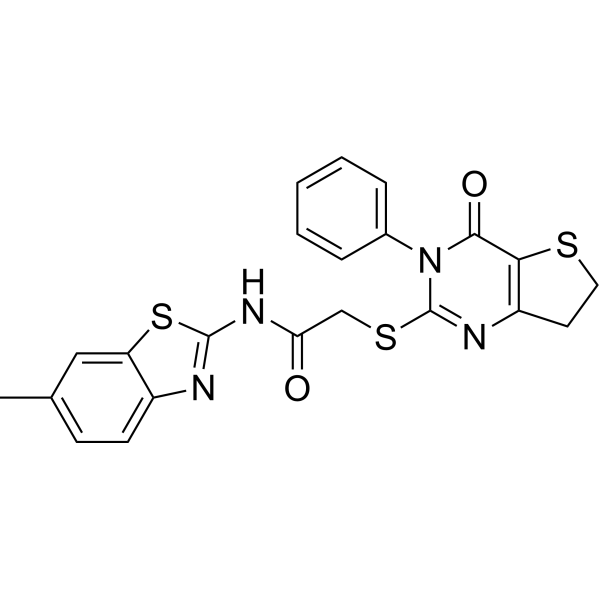
HY-13912
IWP-2Wnt Production Inhibitor -
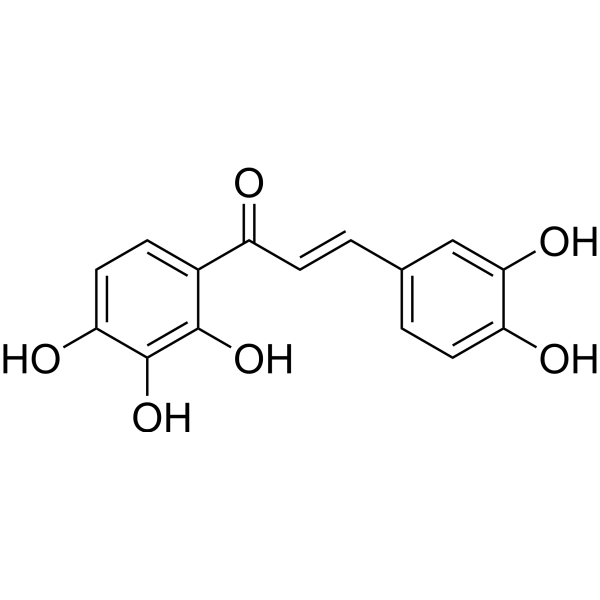
HY-N6673
OkaninToll-like Receptor (TLR) Inhibitor -
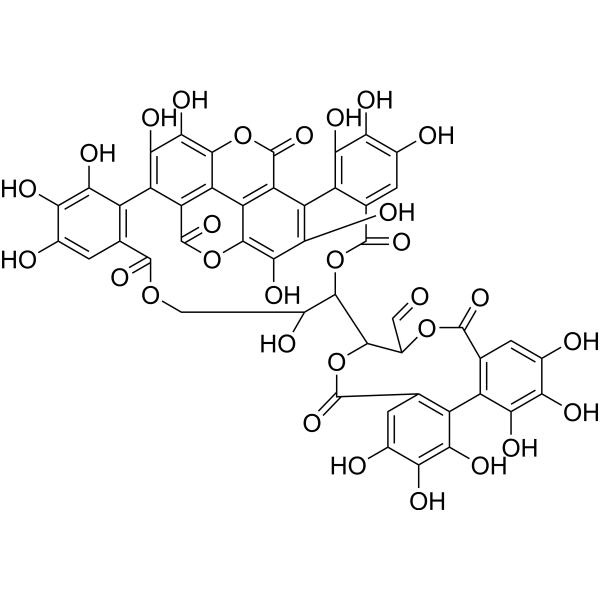
HY-N0063
Punicalagin3CLpro Inhibitor -
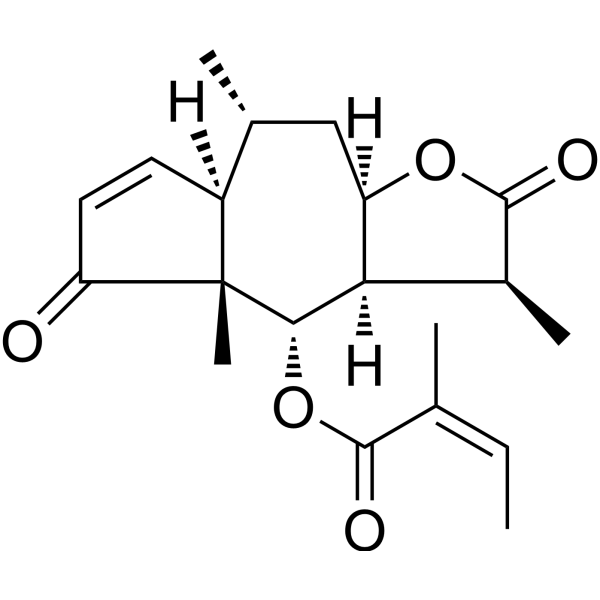
HY-N2959
Brevilin ASTAT3/JAK Inhibitor -
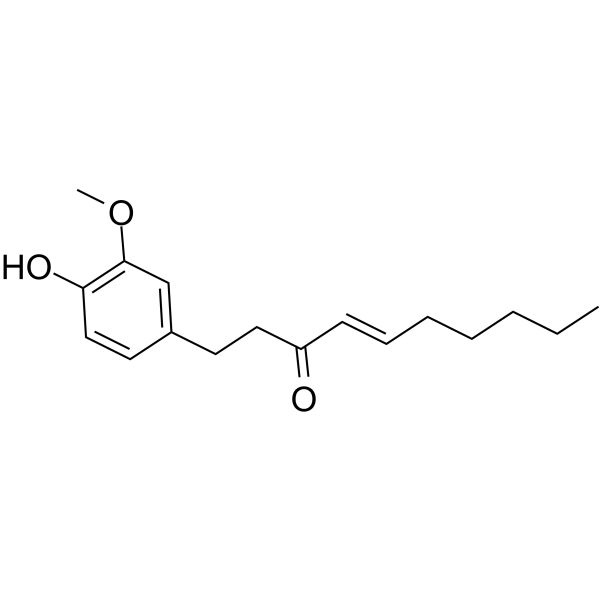
HY-14616
ShogaolAutophagy Inducer
Publications Citing Use of MedChemExpress (MCE) Licochalcone D
More Customer Validation & Images

-
Cell Imaging/Staining
-
Histological Imaging/Staining
-
Cell Proliferation/Viability Assay

-
WB
-
RT-PCR


Biological Activity
Description
IC50 & Target
[1]|
p65 |
Cellular Effect
|
Cell Line

|
Type | Value | Description | References |
|---|---|---|---|---|
| RAW264.7 | IC50 |
4.85 μM
Compound: 4, LicoD
|
Antiinflammatory activity in mouse RAW264.7 cells assessed as inhibition of LPS-stimulated nitric oxide production after 18 hrs by Griess assay
Antiinflammatory activity in mouse RAW264.7 cells assessed as inhibition of LPS-stimulated nitric oxide production after 18 hrs by Griess assay
|
[PMID: 24316124] |
| RBL-2H3 | IC50 |
21 μM
Compound: 4, LicoD
|
Antiinflammatory activity in RBL2H3 cells assessed as inhibition of degranulation
Antiinflammatory activity in RBL2H3 cells assessed as inhibition of degranulation
|
[PMID: 24316124] |
In Vitro
Licochalcone D (10 μM; 1 h) negatively regulates Lipopolysaccharides (LPS) (HY-D1056)-induced NF-κB activation by inhibiting the phosphorylation and transactivation of NF-κB p65, inhibits the LPS-induced activation of protein kinase A (PKA), and significantly inhibits the LPS-induced expression of TNFα and MCP-1[1].
?
Licochalcone D (10 μM; 24 h) significantly inhibits LPS-induced iNOS expression and NO production[1].
?
Licochalcone D (0-90 μM; 24 h) inhibits the proliferation of human melanoma cells, induces the apoptosis of A375 cells, decreases the mitochondrial membrane potential and increases ROS production in A375 cells[2].
?
Licochalcone D (0-25 μM; 24 h) decreases the migration and invasion ability of the A375 cells, decreased the protein levels of MMP-2 and MMP-9[2].
MedChemExpress (MCE) has not independently confirmed the accuracy of these methods. They are for reference only.
-
Cell Line:RAW264.7 cells
-
Concentration:10 μM
-
Incubation Time:1 h or 24 h (iNOS), following LPS stimulation (1 μg/mL) for 30 min
-
Result:Inhibited the phosphorylation of NF-κB at serine 276 but not at serine 536.
Inhibited the LPS-induced expression of TNFα mRNA and MCP-1 mRNA.
Strongly inhibited the expression of iNOS.
-
Cell Line:A375 cells or SK-MEL-5
-
Concentration:0, 1, 2.5, 5, 15, 30, 45, 60, 75 and 90 μM (A375) or 0, 20, 40, 60 and 80 μM (SK-MEL-5)
-
Incubation Time:24 h
-
Result:Inhibited the proliferation of A375 and SK-MEL-5 in a concentration dependent manner.
-
Cell Line:A375
-
Concentration:0, 30, 60 and 90 μM
-
Incubation Time:24 h
-
Result:Cells exhibited obvious apoptotic characteristics after the treatment.
-
Cell Line:A375
-
Concentration:0, 30, 60 and 90 μM
-
Incubation Time:24 h
-
Result:Downregulated the mRNA level of Bcl-2 and upregulated the mRNA levels of caspase-3, caspase-9 and Bax.
-
Cell Line:A375
-
Concentration:25 μM
-
Incubation Time:24 h
-
Result:Significantly suppressed cell invasion.
-
Cell Line:A375
-
Concentration:25 μM
-
Incubation Time:24 h
-
Result:Significantly suppressed cell migration in the A375 cells.
In Vivo
MedChemExpress (MCE) has not independently confirmed the accuracy of these methods. They are for reference only.
-
Animal Model:C57BL/6 mice, B16F0 tumor model[2]
-
Dosage:25 and 50 mg/kg
-
Administration:Intragastric administration, daily for a week
-
Result:Obviously lowered the tumor growth rates, the tumor growth inhibition rates were calculated to be 32.0 and 54.1% at 25 and 50 mg/kg, respectively.


Chemical Information
-
CAS No. 144506-15-0
-
Appearance Solid
-
Molecular Weight 354.40
-
Formula C21H22O5
-
Color Light yellow to yellow
-
SMILES
O=C(C1=CC=C(O)C(C/C=C(C)\C)=C1)/C=C/C2=CC=C(O)C(O)=C2OC
-
Structure Classification
-
Shipping
Room temperature in continental US; may vary elsewhere.
-
Storage
4°C, protect from light
* In solvent : -80°C, 6 months; -20°C, 1 month (protect from light)


Publications (5)
-
Journal Impact Factor
-
Most Recent
-
Sci China Life Sci
Targeting STING oligomerization with licochalcone D ameliorates STING-driven inflammatory diseases. [Abstract]2024 Dec;67(12):2664-2677. PMID: 39190126 -
Int Immunopharmacol
Licochalcone D modulates macrophage ferroptosis via suppression of VPS4A-mediated lipophagy to alleviate MRSA pneumonia. [Abstract]2026 Jan 1;168(Pt 2):115918. PMID: 41275832 -
Int J Mol Sci
Licochalcone D from Glycyrrhiza uralensis Improves High-Glucose-Induced Insulin Resistance in Hepatocytes. [Abstract]2024 Sep 19;25(18):10066. PMID: 39337550
Licochalcone D purchased from MedChemExpress. Usage Cited in: Int J Mol Sci. 2024 Sep 19;25(18):10066. [Abstract]
The cell viability under Licochalcone D (LicoD) (0.1, 0.5, 1, 2, 5, 10 μM) treatment was measured using a water-soluble tetrazolium salt-1 kit,
Licochalcone D purchased from MedChemExpress. Usage Cited in: Int J Mol Sci. 2024 Sep 19;25(18):10066. [Abstract]
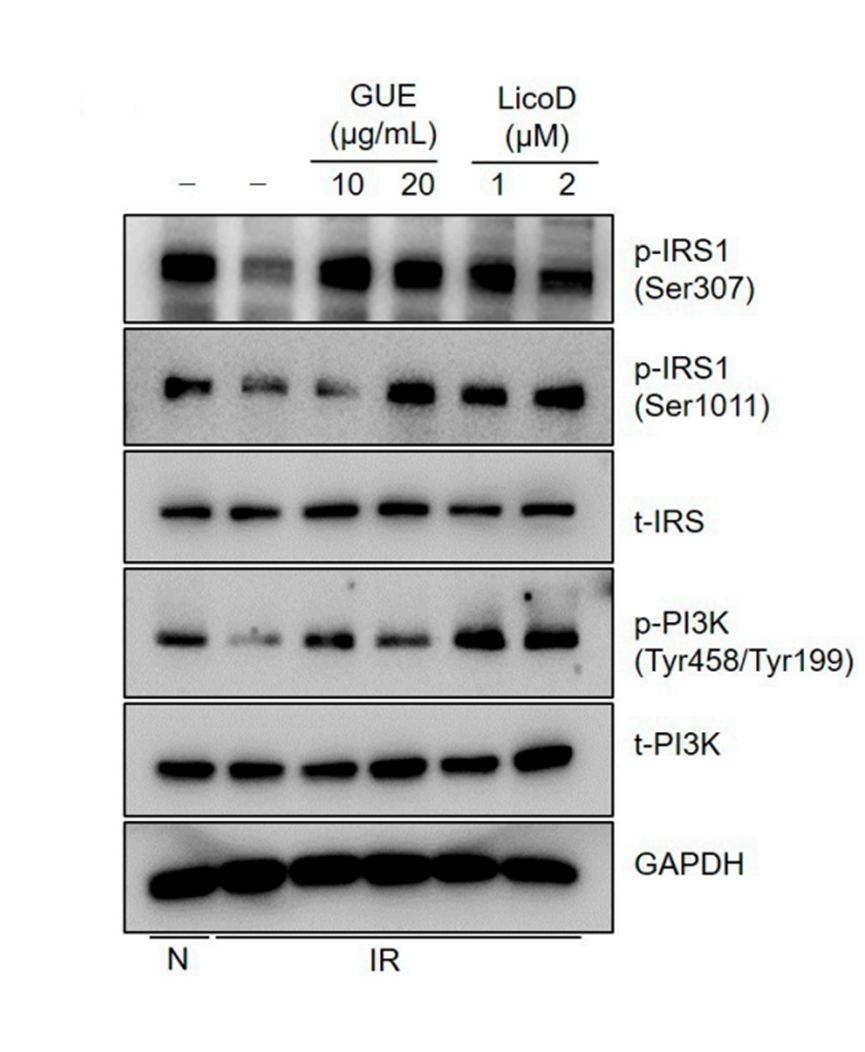
Expression levels of p-IRS1 (Ser307), p-IRS1 (Ser1011), t-IRS1, p-PI3K (Tyr458/Tyr199), t-PI3K, and GAPDH were analyzed using Western blot assay treated with Licochalcone D (LicoD) (2 μM).
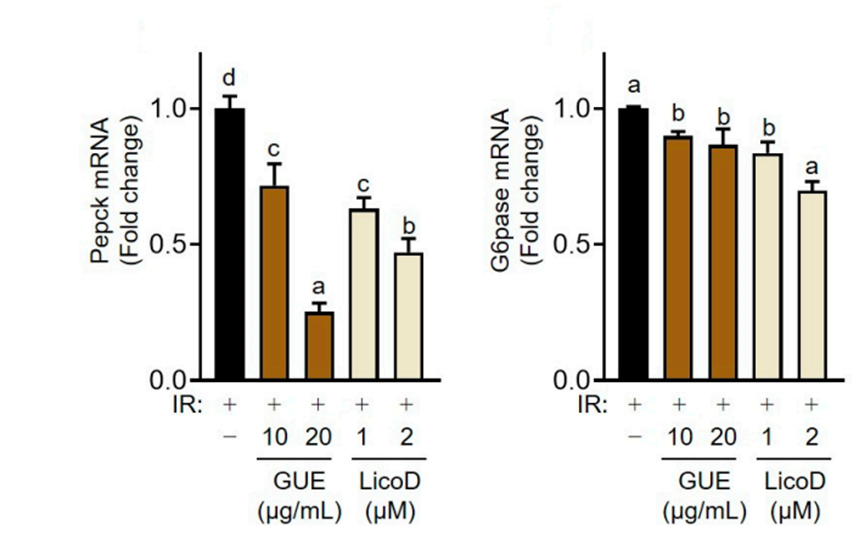
Licochalcone D purchased from MedChemExpress. Usage Cited in: Int J Mol Sci. 2024 Sep 19;25(18):10066. [Abstract]
mRNA expression of Pepck and G6pase treated with Licochalcone D (LicoD) (2 μM).
-
Biomolecules
Licochalcone E, a β-Amyloid Aggregation Inhibitor, Regulates Microglial M1/M2 Polarization via Inhibition of CTL1-Mediated Choline Uptake. [Abstract]2023 Jan 17;13(2):191. PMID: 36830561 -
J Orthop Surg Res
Licochalcone D inhibits osteoclast differentiation and postmenopausal osteoporosis by inactivating the NF-κB signaling pathway. [Abstract]2025 Jul 28;20(1):713. PMID: 40722101
Licochalcone D purchased from MedChemExpress. Usage Cited in: J Orthop Surg Res. 2025 Jul 28;20(1):713. [Abstract]
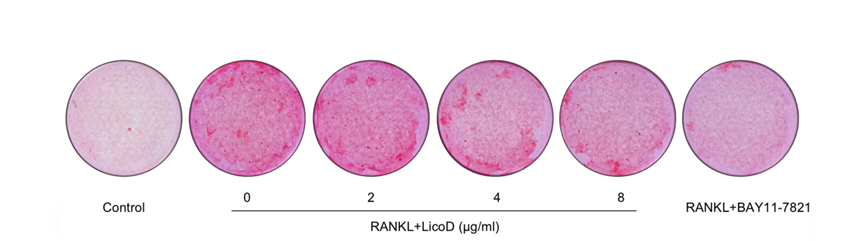
TRAP staining was performed to measure the number of osteoclasts in control, RANKL + Licochalcone D (Lico D) (2, 4, 8 μg/L), and RANKL + BAY 11-7821 groups.
Licochalcone D purchased from MedChemExpress. Usage Cited in: J Orthop Surg Res. 2025 Jul 28;20(1):713. [Abstract]
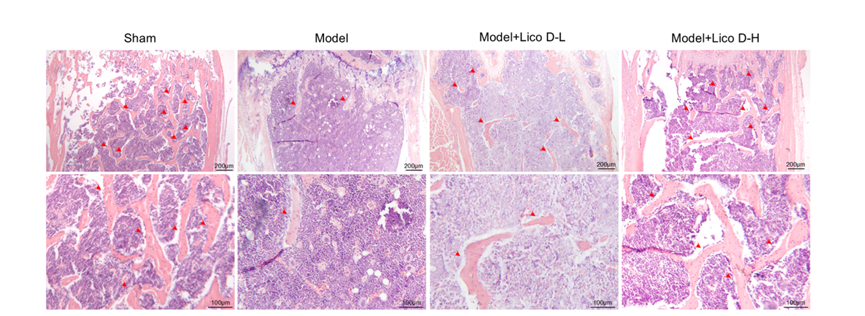
H&E staining was performed to evaluate bone loss in the sham, model, model + Licochalcone D (Lico D-L) (10 mg/kg, s.c.), and model + Lico D-H (50 mg/kg, s.c.) groups.


Solvent & Solubility
In Vitro:
DMSO : 100 mg/mL (282.17 mM; Need ultrasonic; Hygroscopic DMSO has a significant impact on the solubility of product, please use newly opened DMSO)
Please refer to the solubility information to select the appropriate solvent. Once prepared, please aliquot and store the solution to prevent product inactivation from repeated freeze-thaw cycles.
Storage method and period of stock solution: -80°C, 6 months; -20°C, 1 month (protect from light). When stored at -80°C, please use it within 6 months. When stored at -20°C, please use it within 1 month.
Please refer to the solubility information to select the appropriate solvent. Once prepared, please aliquot and store the solution to prevent product inactivation from repeated freeze-thaw cycles.
Storage method and period of stock solution: -80°C, 6 months; -20°C, 1 month (protect from light). When stored at -80°C, please use it within 6 months. When stored at -20°C, please use it within 1 month.
Concentration (start) × Volume (start) = Concentration (final) × Volume (final)
In Vivo:
Select the appropriate dissolution method based on your experimental animal and administration route.
- For the following dissolution methods, please ensure to first prepare a clear stock solution using an In Vitro approach and then sequentially add co-solvents:
- To ensure reliable experimental results, the clarified stock solution can be appropriately stored based on storage conditions. As for the working solution for In Vivo experiments, it is recommended to prepare freshly and use it on the same day.
- The percentages shown for the solvents indicate their volumetric ratio in the final prepared solution. If precipitation or phase separation occurs during preparation, heat and/or sonication can be used to aid dissolution.
Add each solvent one by one: 10% DMSO 40% PEG300 5% Tween-80 45% Saline
Solubility: ≥ 2.08 mg/mL (5.87 mM); Clear solution
This protocol yields a clear solution of ≥ 2.08 mg/mL (saturation unknown).
Taking 1 mL working solution as an example, add 100 μL DMSO stock solution (20.8 mg/mL) to 400 μL PEG300, and mix evenly; then add 50 μL Tween-80 and mix evenly; then add 450 μL Saline to adjust the volume to 1 mL.
Preparation of Saline: Dissolve 0.9 g sodium chloride in ddH₂O and dilute to 100 mL to obtain a clear Saline solution.
Add each solvent one by one: 10% DMSO 90% (20% SBE-β-CD in Saline)
Solubility: ≥ 2.08 mg/mL (5.87 mM); Clear solution
This protocol yields a clear solution of ≥ 2.08 mg/mL (saturation unknown).
Taking 1 mL working solution as an example, add 100 μL DMSO stock solution (20.8 mg/mL) to 900 μL 20% SBE-β-CD in Saline, and mix evenly.
Preparation of 20% SBE-β-CD in Saline (4°C, storage for one week): 2 g SBE-β-CD powder is dissolved in 10 mL Saline, completely dissolve until clear.
In Vivo Dissolution Calculator
Please enter the basic information of animal experiments:
-
-
-
-
Recommended: Prepare an additional quantity of animals to account for potential losses during experiments.
Please enter your animal formula composition:
-
%DMSO +
Recommended: Keep the proportion of DMSO in working solution below 2% if your animal is weak.
-
%+
-
+%Tween-80 + +
-
%Saline +
The co-solvents required include: DMSO, . All of co-solvents are available by MedChemExpress (MCE). , Tween 80. All of co-solvents are available by MedChemExpress (MCE).
Working solution concentration: 0.22 mg/mL
Method for preparing stock solution: mg drug dissolved in μL DMSO. Stock solution concentration: mg/mL. * In solvent : -80°C, 6 months; -20°C, 1 month (protect from light)
1. Take μL DMSO stock solution;
2. Add μL .
μL , mix evenly;
3. Then add μL Tween 80, mix evenly;
4. Then add μL
Please ensure that the stock solution in the first step is dissolved to a clear state, and add co-solvents in sequence. You can use ultrasonic heating (ultrasonic cleaner, recommended frequency 20-40 kHz), vortexing, etc. to assist dissolution.


Purity & Documentation
-
Data Sheet (279 KB)
-
SDS (252 KB)
- English - EN (252 KB)
- Français - FR (252 KB)
- Deutsch - DE (252 KB)
- Norwegian - NO (252 KB)
- Español - ES (252 KB)
- Swedish - SV (252 KB)
- Italian - IT (252 KB)
- Korean - KR (252 KB)
- Portuguese - PT (252 KB)
-
Handling Instructions (2659 KB)
References
[1]. Furusawa J, et al. Glycyrrhiza inflata-derived chalcones, Licochalcone A, Licochalcone B and Licochalcone D, inhibit phosphorylation of NF-kappaB p65 in LPS signaling pathway. Int Immunopharmacol. 2009 Apr;9(4):499-507. [Content Brief]
[2]. Si L, et al. Licochalcone D induces apoptosis and inhibits migration and invasion in human melanoma A375 cells. Oncol Rep. 2018 May;39(5):2160-2170. [Content Brief]


Complete Stock Solution Preparation Table
Please refer to the solubility information to select the appropriate solvent. Once prepared, please aliquot and store the solution to prevent product inactivation from repeated freeze-thaw cycles.
Storage method and period of stock solution: -80°C, 6 months; -20°C, 1 month (protect from light). When stored at -80°C, please use it within 6 months. When stored at -20°C, please use it within 1 month.
| Optional Solvent | Concentration Solvent Mass | 1 mg | 5 mg | 10 mg | 25 mg |
|---|---|---|---|---|---|
| DMSO | 1 mM | 2.8217 mL | 14.1084 mL | 28.2167 mL | 70.5418 mL |
| 5 mM | 0.5643 mL | 2.8217 mL | 5.6433 mL | 14.1084 mL | |
| 10 mM | 0.2822 mL | 1.4108 mL | 2.8217 mL | 7.0542 mL | |
| 15 mM | 0.1881 mL | 0.9406 mL | 1.8811 mL | 4.7028 mL | |
| 20 mM | 0.1411 mL | 0.7054 mL | 1.4108 mL | 3.5271 mL | |
| 25 mM | 0.1129 mL | 0.5643 mL | 1.1287 mL | 2.8217 mL | |
| 30 mM | 0.0941 mL | 0.4703 mL | 0.9406 mL | 2.3514 mL | |
| 40 mM | 0.0705 mL | 0.3527 mL | 0.7054 mL | 1.7635 mL | |
| 50 mM | 0.0564 mL | 0.2822 mL | 0.5643 mL | 1.4108 mL | |
| 60 mM | 0.0470 mL | 0.2351 mL | 0.4703 mL | 1.1757 mL | |
| 80 mM | 0.0353 mL | 0.1764 mL | 0.3527 mL | 0.8818 mL | |
| 100 mM | 0.0282 mL | 0.1411 mL | 0.2822 mL | 0.7054 mL |


Licochalcone D Related Classifications
HY-N4187 Related Classifications
 Powered by Bioz