



Fatty Acyl Carnitines
- 1
- 2
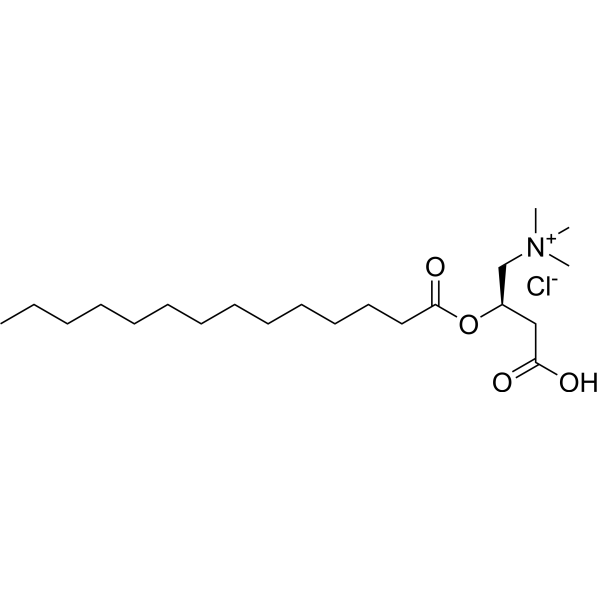
- Formula: C21H42ClNO4
- Molecular Weight: 408.02
Myristoyl-L-Carnitine Chloride is a natural long-chain glycoline, amino acid derivative.
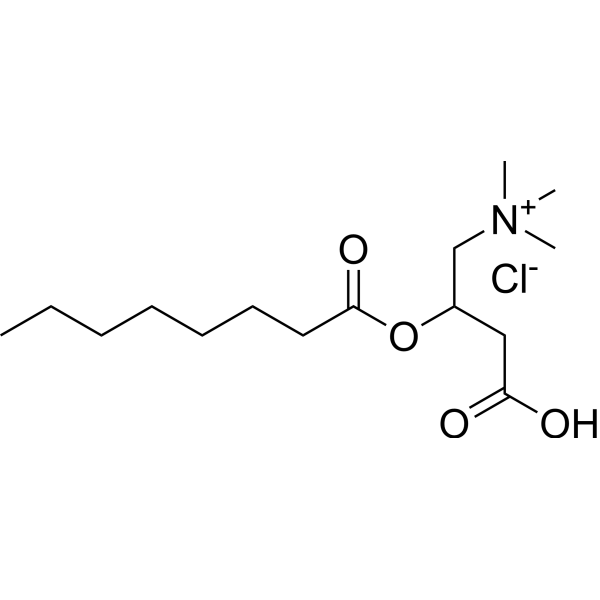
- Formula: C15H30ClNO4
- Molecular Weight: 323.86
Octanoylcarnitine chloride is a homolog of acetylcarnitine chloride. Octanoylcarnitine chloride can enhance absorption of drugs from gastrointestinal tract.
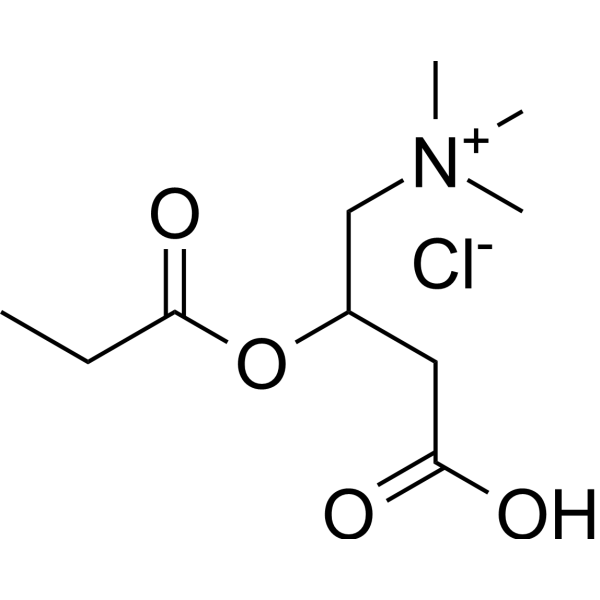
- Formula: C10H20ClNO4
- Molecular Weight: 253.72
Propionyl-DL-carnitine chloride is a carnitine derivative. Propionyl-DL-carnitine chloride can be used for the research of inflammation.
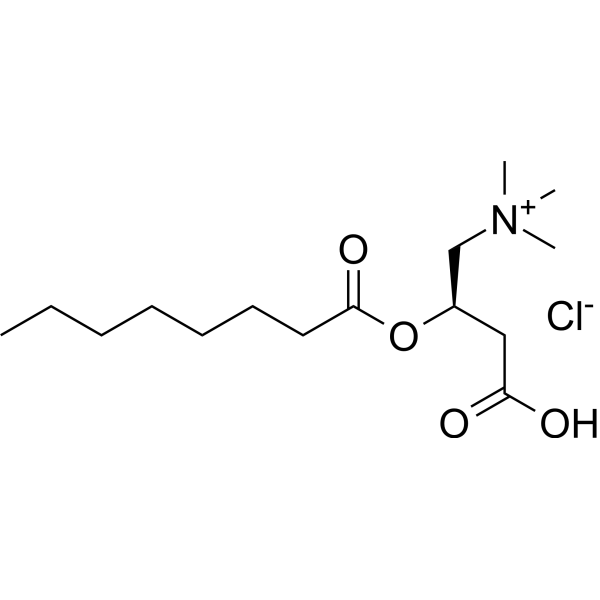
- Formula: C15H30ClNO4
- Molecular Weight: 323.86
L-Octanoylcarnitine hydrochloride is a plasma metabolite and a physiologically active form of octanoylcarnitine. L-Octanoylcarnitine hydrochloride can be used for the research of breast cancer.
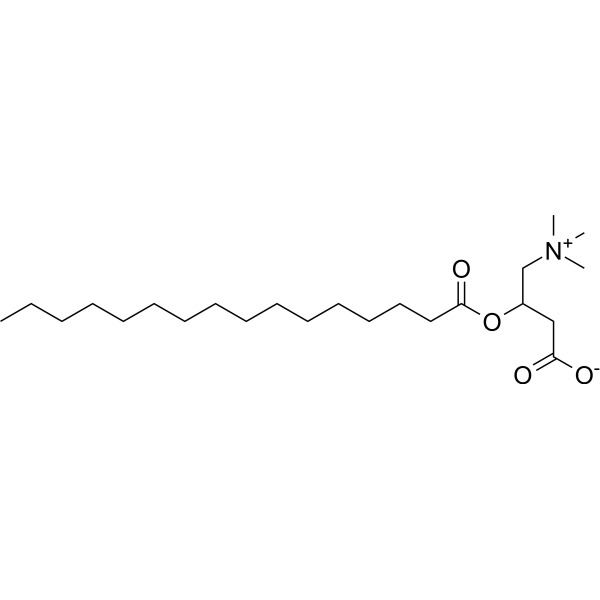
- Formula: C23H45NO4
- Molecular Weight: 399.61
Palmitoylcarnitine is a C16:0 long-chain acylcarnitine and an intermediate product of fatty acid oxidation. The level of Palmitoylcarnitine in human prostate cancer tissues is higher than that in non-cancerous tissues. Palmitoylcarnitine can be used in studies related to lipid metabolism associated with prostate cancer.
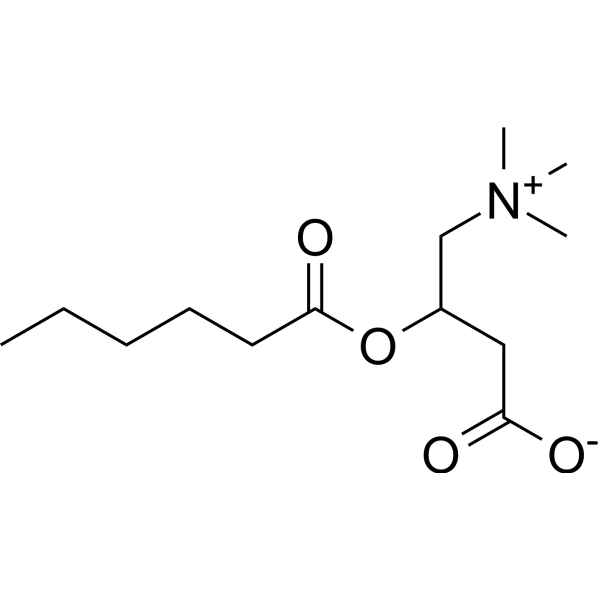
- Formula: C13H25NO4
- Molecular Weight: 259.34
(±)-Hexanoylcarnitine exists in human urine and plasma. (±)-Hexanoylcarnitine can be used as a plasma detection indicator in patients with methylmalonic aciduria, propionic acidemia, and medium-chain acyl-CoA dehydrogenase deficiency.
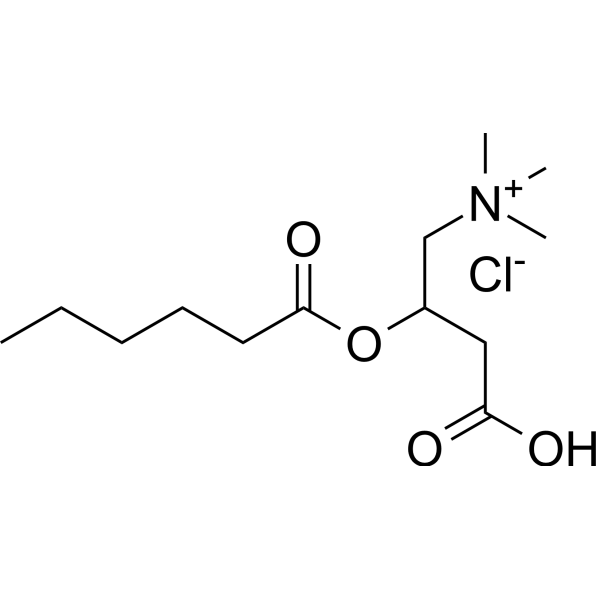
- Formula: C13H26ClNO4
- Molecular Weight: 295.80
(±)-Hexanoylcarnitine chloride is a fatty acid metabolite that breaks down fatty acids into energy that can be used by the body. (±)-Hexanoylcarnitine chloride also serves as a specific and easily detectable biomarker for rat skeletal muscle toxicity. Cerivastatin (HY-129458) and TMPD (HY-W012145) induce an increase in Hexanoylcarnitine in rats in a metabolomic analysis of the rectus femoris muscle. In type 2 diabetes, Hexanoylcarnitine is also significantly associated with and improves prediction of all-cause mortality. Hexanoylcarnitine is a biomarker for the identification of novel pathogenic pathways.

- Formula: C10H16LiNO6
- Molecular Weight: 253.18
cis-Malonylcarnitine lithium is an ester compound and a metabolite of Malonyl CoA (HY-115899). The level of cis-Malonylcarnitine lithium is closely related to some diseases, such as malonic aciduria, non-syndromic cleft lip with or without cleft palate, etc.
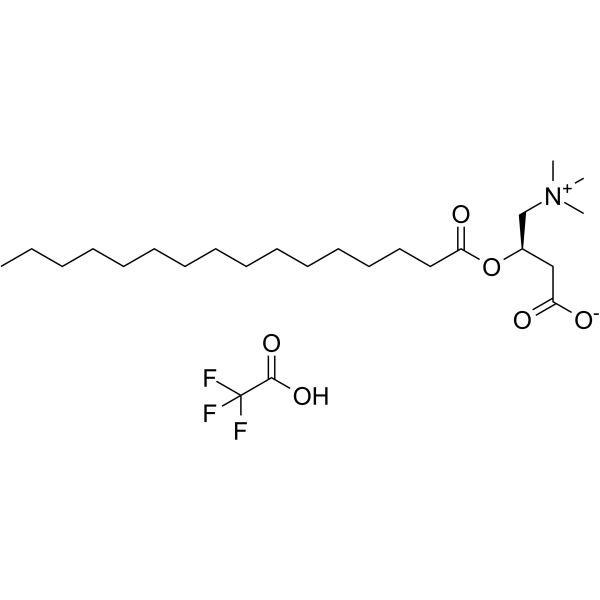
- Formula: C25H46F3NO6
- Molecular Weight: 513.63
L-Palmitoylcarnitine TFA, a long-chain acylcarnitine and a fatty acid metabolite, accumulates in the sarcolemma and deranges the membrane lipid environment during ischaemia. L-Palmitoylcarnitine TFA inhibits KATP channel activity, without affecting the single channel conductance, through interaction with Kir6.2.

- Formula: C33H65NO4
- Molecular Weight: 539.87
Hexacosanoyl-L-carnitine (hydrochloride) is an ester product.
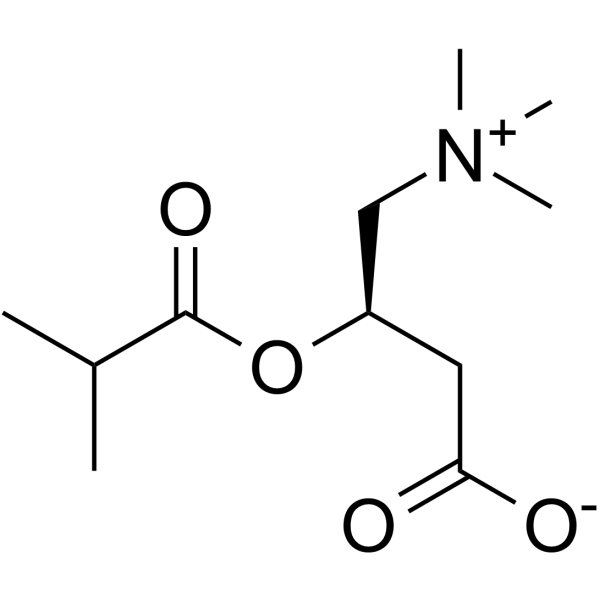
- Formula: C11H21NO4
- Molecular Weight: 231.29
Isobutyryl-L-carnitine is a biomarker. Isobutyryl-L-carnitine is a product of acyl-CoA dehydrogenases involved in fatty acid β-oxidation, and it buffers the mitochondrial acyl-CoA/CoA ratio, oxidizes branched-chain amino acids, and supports the endogenous antioxidant defense system. Isobutyryl-L-carnitine is a plasma biomarker of hepatic OCT1 transporter inhibition. Isobutyryl-L-carnitine is a urinary biomarker of renal cell carcinoma, and its levels are elevated one year after nephrectomy compared with before nephrectomy. Isobutyryl-L-carnitine can be used in research on renal cell carcinoma.

- Formula: C23H43NO6
- Molecular Weight: 429.59
Hexadecanedioic Acid Mono-L-carnitine Ester Chloride is an O-acyl-L-carnitine in which the acyl group is specified as hexadecanedioyl.

- Formula: C21H40ClNO4
- Molecular Weight: 406.00
C14:1 L-Carnitine chloride is an acyl carnitine lipid.

- Formula: C19H36ClNO4
- Molecular Weight: 377.95
C12:1 L-Carnitine chloride is an acyl carnitine lipid.

- Formula: C17H33NO4
- Molecular Weight: 315.45
(+)-Decanoylcarnitine is an (S)-acylcarnitine derivative and a potent inhibitor of carnitine-acylcarnitine translocase, with an IC50 of 5 μM. (+)-Decanoylcarnitine acts as a competitive inhibitor of long-chain acylcarnitine transferase and (-)-carnitine palmityltransferase. (+)-Decanoylcarnitine blocks hepatic fatty acid oxidation, ketogenesis, oleate-induced activation of gluconeogenesis, as well as associated changes in acetyl-CoA, citrate, redox pair ratios, flavins and pyridine nucleotides. (+)-Decanoylcarnitine reverses ketosis in vivo, enhances insulin-mediated hypoglycemic effects in anesthetized animals, and reduces plasma ketone body levels when used in combination with insulin. (+)-Decanoylcarnitine can be used in studies related to diabetic ketoacidosis.

- Formula: C25H47NO4
- Molecular Weight: 425.64

- Formula: C13H23NO6
- Molecular Weight: 289.32
Adipoyl-L-carnitine is an acyl carnitine lipid.

- Formula: C15H29NO4
- Molecular Weight: 287.40
Octanoylcarnitine is an orally active medium-chain acylcarnitine transport intermediate in fatty acid β-oxidation. Octanoylcarnitine is converted to octanoyl-CoA by carnitine acetyltransferase (CrAT), which then generates energy via β-oxidation in mitochondria of the heart and skeletal muscle. Octanoylcarnitine enhances grip strength and treadmill endurance, alleviates lactic acidosis, distributes in muscle and heart tissues, increases free carnitine levels, and mitigates mitochondrial stress. Octanoylcarnitine is associated with long-chain fatty acid metabolism, shows a positive correlation with subcutaneous fat area in patients with metastatic pancreatic ductal adenocarcinoma, and is closely related to central retinal artery occlusion (CRAO).

- Formula: C25H49NO4
- Molecular Weight: 427.66
DL-Stearoylcarnitine is the racemate of Stearoylcarnitine (HY-113202).
- 1
- 2



