



Masitinib mesylate
Based on 5 publication(s) in Google Scholar
Masitinib mesylate (AB-1010 mesylate) is a potent, orally bioavailable, and selective inhibitor of c-Kit (IC50=200 nM for human recombinant c-Kit). It also inhibits PDGFRα/β (IC50s=540/800 nM), Lyn (IC50= 510 nM for LynB), Lck, and, to a lesser extent, FGFR3 and FAK. Masitinib mesylate (AB-1010 mesylate) has anti-proliferative, pro-apoptotic activity and low toxicity.
For research use only. We do not sell to patients.
- Purity : 99.98%
- CAS No.: 1048007-93-7
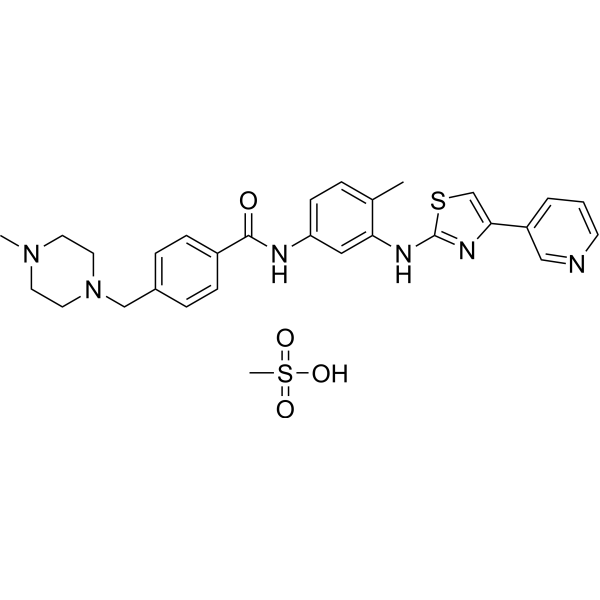
- Formula: C29H34N6O4S2
- Molecular Weight:594.75
-
Storage:
4°C, sealed storage, away from moisture
* In solvent : -80°C, 6 months; -20°C, 1 month (sealed storage, away from moisture)

To place orders, for customer services and technical support, please contact: MedChemExpress USA
Tel: 609-228-6898 E-mail: [email protected] [email protected]


-
 Biological Activity
-
Chemical Information
-
Solvent & Solubility
- Protocols
- Purity & Documentation
- References
-
 Help & FAQs


-
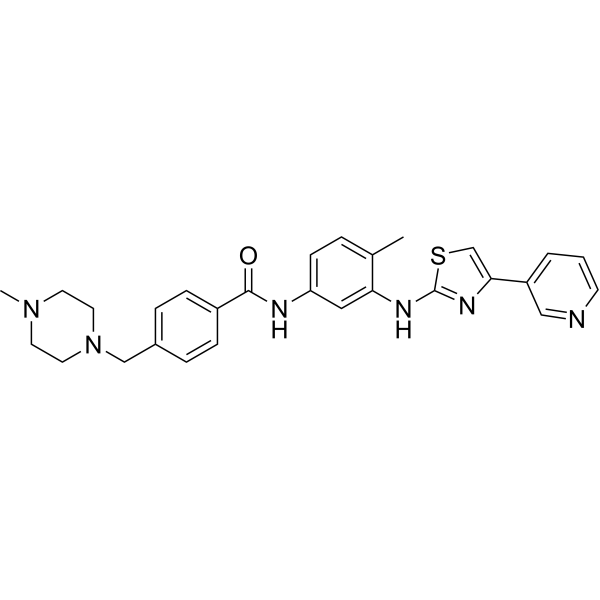
HY-10209
Masitinibc-Kit Inhibitor -
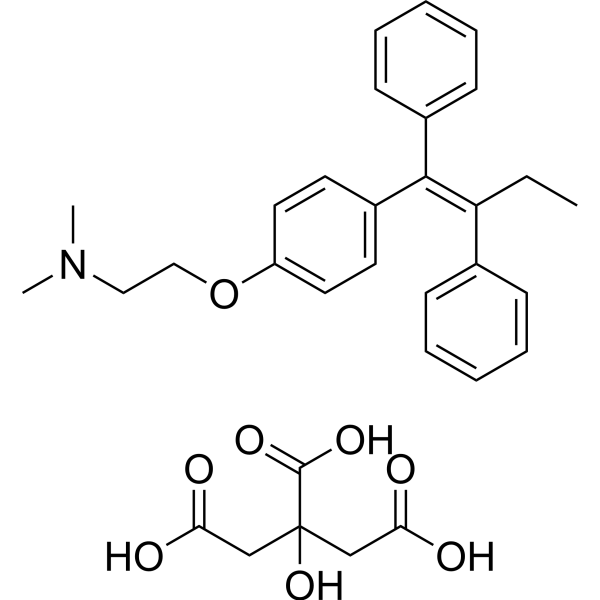
HY-13757
Tamoxifen CitrateEstrogen Receptor Modulator -
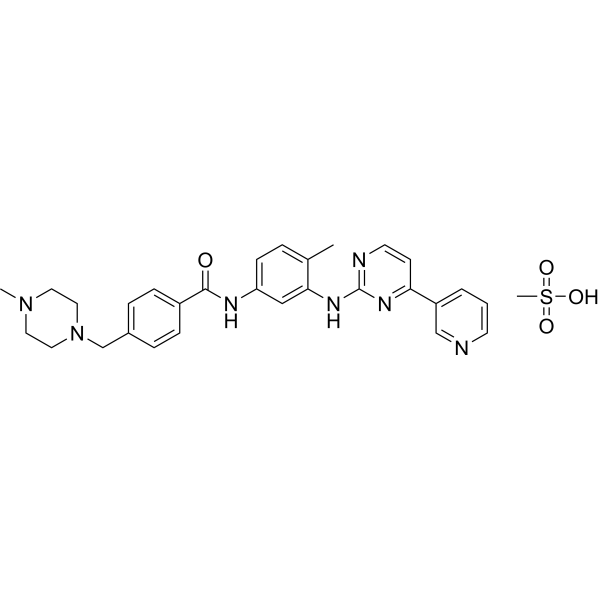
HY-50946
Imatinib Mesylatec-Kit Inhibitor -
HY-B0015
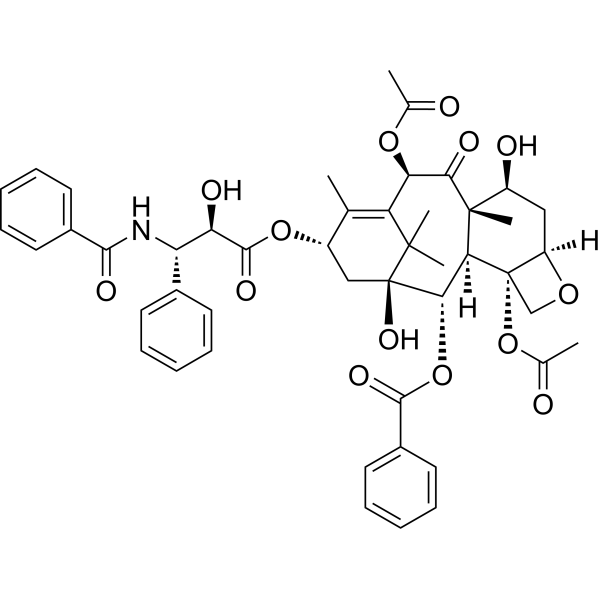
PaclitaxelAntitumor Agent -
HY-10162
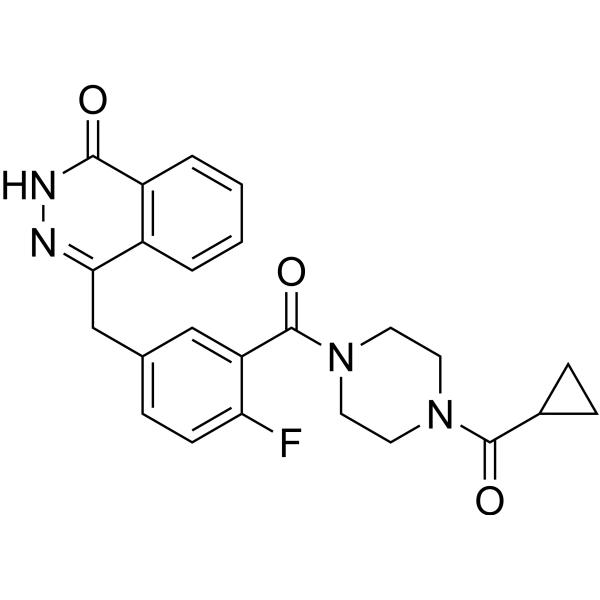
OlaparibPARP Inhibitor -
HY-A0003
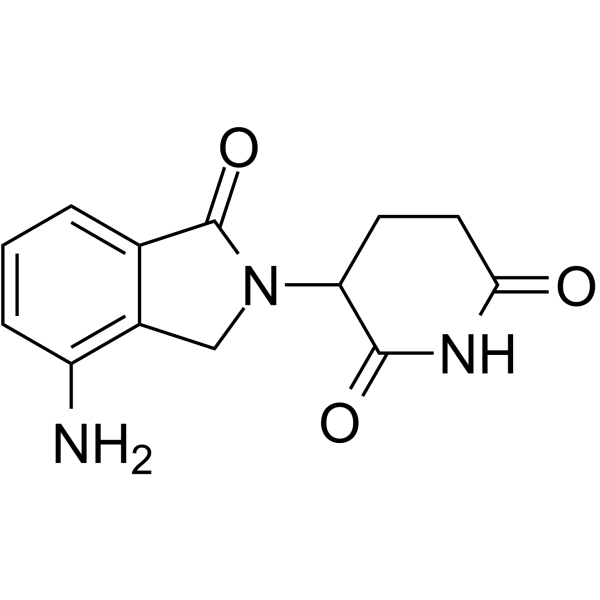
LenalidomideImmunomodulator -
HY-13803
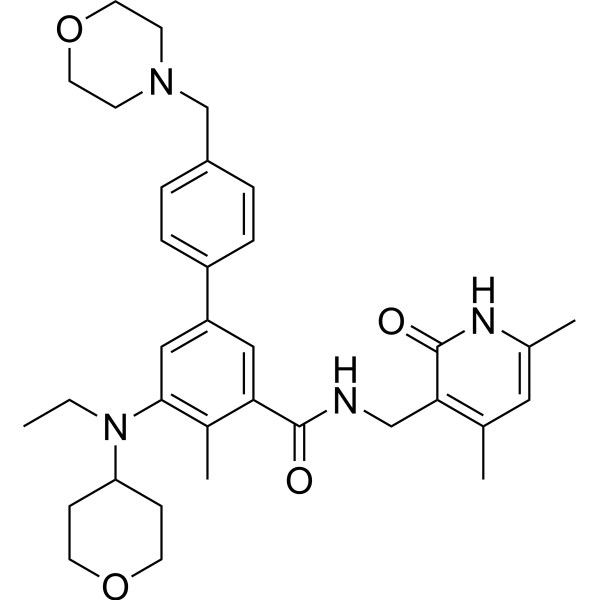
TazemetostatEZH2 Inhibitor -
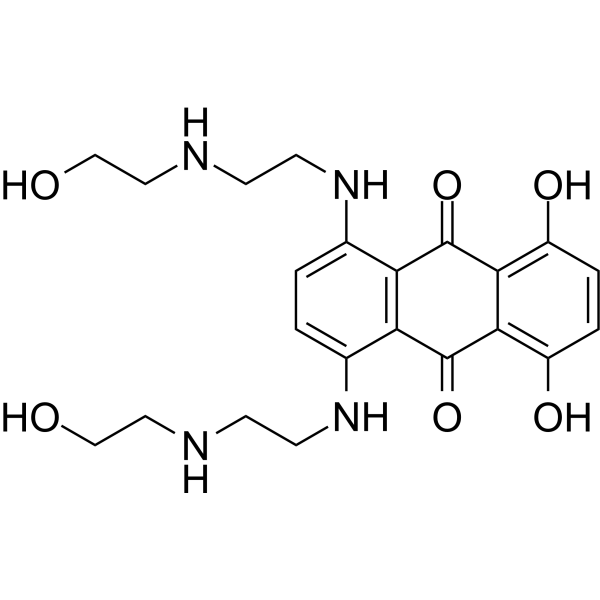
HY-13502
MitoxantroneTop II/PKC Inhibitor -
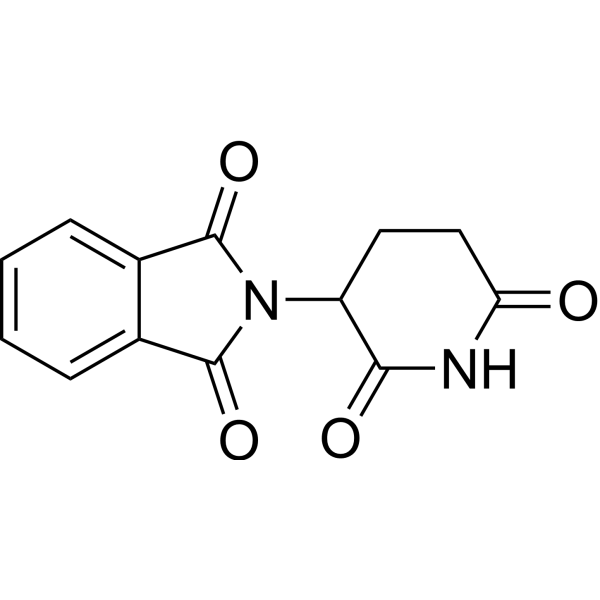
HY-14658
ThalidomideCereblon Inhibitor -
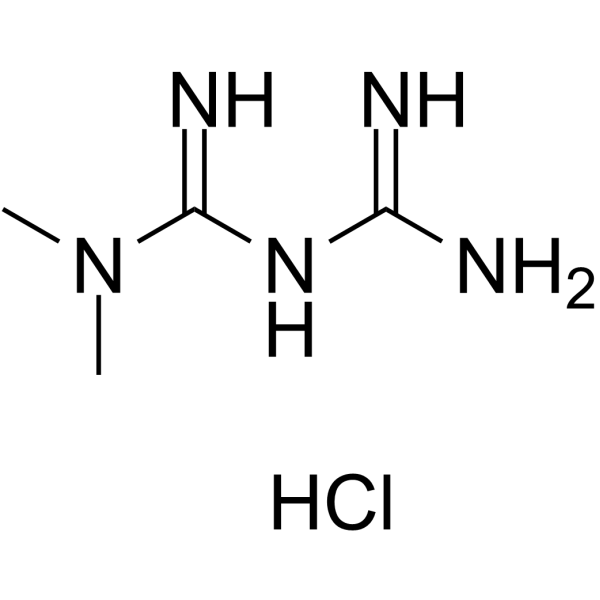
HY-17471A
Metformin hydrochlorideAntihyperglycemic Agent -
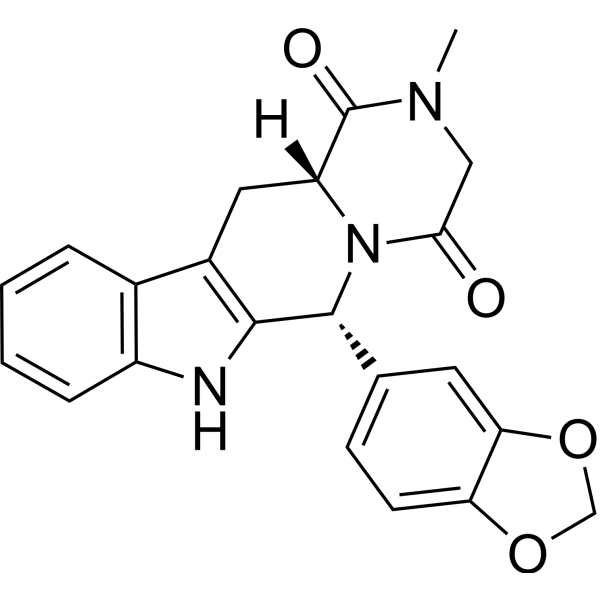
HY-90009A
TadalafilPDE5 Inhibitor -
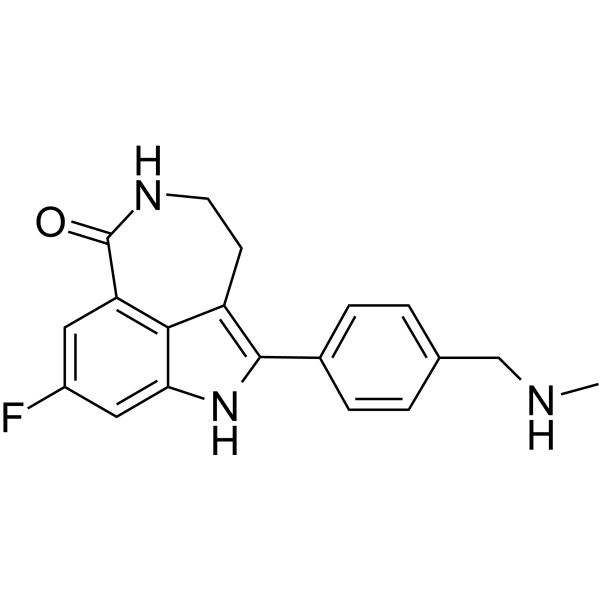
HY-10617A
RucaparibPARP Inhibitor
Publications Citing Use of MedChemExpress (MCE) Masitinib mesylate
More Customer Validation & Images

-
In Vivo Efficacy Study

-
IF

-
WB

-
Histological Imaging/Staining


Biological Activity
Description
IC50 & Target
IC50: 200 nM (Kit), 540 nM (PDGFRα), 800 nM (PDGFRβ), 510 nM (LynB)[1]
In Vitro
Masitinib is a competitive inhibitor against ATP at concentrations ≤500 nM. Masitinib also potently inhibits recombinant PDGFR and the intracellular kinase Lyn, and to a lesser extent, fibroblast growth factor receptor 3. Masitinib demonstrates weak inhibition of Abl and c-Fms. Masitinib more strongly inhibits degranulation, cytokine production, and bone marrow mast cell migration than imatinib. In Ba/F3 cells expressing human wild-type Kit, masitinib inhibits SCF (stem cell factor)-induced cell proliferation with an IC50 of 150 nM, while the IC50 for inhibition of IL-3-stimulated proliferation is at approximately >10 μM. In Ba/F3 cells expressing PDGFRα, masitinib inhibits PDGF-BB-stimulated proliferation and PDGFRα tyrosine phosphorylation with IC50 of 300 nM. Masitinib also causes inhibition of SCF-stimulated tyrosine phosphorylation of human Kit in mastocytoma cell-lines and BMMC. Masitinib inhibits Kit gain-of-function mutants, including V559D mutant and Δ27 mouse mutant with IC50 of 3 and 5 nM in Ba/F3 cells. Masitinib inhibits the cell proliferation of mastocytoma cell lines including HMC-1α155 and FMA3 with IC50 of 10 and 30 nM, respectively[1].
Masitinib inhibits cell growth and PDGFR phosphorylation in two novel ISS cell lines, which suggest that Masitinib displays activity against both primary and metastatic ISS cell line and may aid in the clinical management of ISS[2].
MedChemExpress (MCE) has not independently confirmed the accuracy of these methods. They are for reference only. Further protocols information, click here.
In Vivo
Masitinib (12.5 mg/kg/d, p.o.) increases overall TTP (time-to-tumor progression) compared with placebo in dogs[3].
MedChemExpress (MCE) has not independently confirmed the accuracy of these methods. They are for reference only.
Clinical Trial
| NCT Number | Sponsor | Condition | Start Date |
Phase

|
|---|---|---|---|---|
| NCT01329991 | Plexxikon| | 2011-05 | PHASE1 |


Chemical Information
-
CAS No. 1048007-93-7
-
Appearance Solid
-
Molecular Weight 594.75
-
Formula C29H34N6O4S2
-
Color White to yellow
-
SMILES
O=C(NC1=CC=C(C(NC2=NC(C3=CC=CN=C3)=CS2)=C1)C)C4=CC=C(CN5CCN(CC5)C)C=C4.CS(=O)(O)=O
-
Synonyms
AB-1010 mesylate
-
Shipping
Room temperature in continental US; may vary elsewhere.
-
Storage
4°C, sealed storage, away from moisture
* In solvent : -80°C, 6 months; -20°C, 1 month (sealed storage, away from moisture)


Publications (5)
-
Journal Impact Factor
-
Most Recent
-
Science
2021 Nov 26;374(6571):1099-1106. PMID: 34648371 -
Sci Transl Med
PP2A inhibition is a druggable MEK inhibitor resistance mechanism in KRAS-mutant lung cancer cells. [Abstract]2018 Jul 18;10(450):eaaq1093. PMID: 30021885 -
Ecotoxicol Environ Saf
Dibutyl phthalate promotes central precocious puberty through primordial follicle activation by downregulating BMP15. [Abstract]2025 Jul 15:300:118460. PMID: 40472697 -
Eur J Pharmacol
Therapeutic effects of masitinib on abnormal mechanoreception in a mouse model of tourniquet-induced extremity ischemia-reperfusion. [Abstract]2021 Nov 15:911:174549. PMID: 34619116
Masitinib mesylate purchased from MedChemExpress. Usage Cited in: Eur J Pharmacol. 2021 Nov 15:911:174549. [Abstract]
Protective effects of Mas (Masitinib; 28 mg/kg/day; i.p.; once daily) on mechanoreception during tourniquet/IR were evaluated by paw withdraw threshold at different reperfusion periods in mice. Mas significantly improved paw mechanoreception in the early stages of reperfusion and decreased allodynia at days 14 through 28.
Masitinib mesylate purchased from MedChemExpress. Usage Cited in: Eur J Pharmacol. 2021 Nov 15:911:174549. [Abstract]
Nerve fibers and sensory nerve terminals in the skin of mouse paw pads were stained with PGP9.5 and DAPI after Mas (Masitinib; 28 mg/kg/day; i.p.; once daily) treatment in a hind paw tourniquet/IR model. Treatment with Mas significantly mitigated the sensory nerve damage.
Masitinib mesylate purchased from MedChemExpress. Usage Cited in: Eur J Pharmacol. 2021 Nov 15:911:174549. [Abstract]
IL-1β and TNFα protein expression in the skin of mouse paw pads was measured by Western blot after Mas treatment (Masitinib; 28 mg/kg/day; i.p.; once daily) in a hind paw tourniquet/IR model. Treatment with Mas markedly reduced the expression of IL-1β and TNFα protein in the skin of paw pads at 7, 14, and 28 days.
Masitinib mesylate purchased from MedChemExpress. Usage Cited in: Eur J Pharmacol. 2021 Nov 15:911:174549. [Abstract]
ROS in the dermal papillae of mouse paw pad skin was stained with H2DCFDA and DAPI at days 1 and 3 of reperfusion after Mas treatment (Masitinib; 28 mg/kg/day; i.p.; once daily) in a hind paw tourniquet/IR model. Treatment with Mas significantly reduced the ROS production at 1 and 3 days.
-


Solvent & Solubility
In Vitro:
1M HCl : 100 mg/mL (168.14 mM; ultrasonic and adjust pH to 1 with HCl)
DMSO : ≥ 30 mg/mL (50.44 mM; Hygroscopic DMSO has a significant impact on the solubility of product, please use newly opened DMSO)
* "≥" means soluble, but saturation unknown.
Please refer to the solubility information to select the appropriate solvent. Once prepared, please aliquot and store the solution to prevent product inactivation from repeated freeze-thaw cycles.
Storage method and period of stock solution: -80°C, 6 months; -20°C, 1 month (sealed storage, away from moisture). When stored at -80°C, please use it within 6 months. When stored at -20°C, please use it within 1 month.
Please refer to the solubility information to select the appropriate solvent. Once prepared, please aliquot and store the solution to prevent product inactivation from repeated freeze-thaw cycles.
Storage method and period of stock solution: -80°C, 6 months; -20°C, 1 month (sealed storage, away from moisture). When stored at -80°C, please use it within 6 months. When stored at -20°C, please use it within 1 month.
Concentration (start) × Volume (start) = Concentration (final) × Volume (final)

Protocols
-
Apoptosis
Apoptosis, also called programmed cell death, is generally characterized by distinct morphological characteristics.
-
Cell Cytotoxicity Assay
Cytotoxicity assays are usually based on the assessment of cell membrane damage, which can also be indirectly detected by measuring cell viability. Detection methods include MTT assay, CKK-8 assay, LDH assay and ATP assay, etc.
-
Apoptosis Solutions
Apoptosis is a regulated, generally non-lytic cell-death pathway that removes unwanted, damaged, infected, or abnormal cells through coordinated morphological changes, caspase activation, DNA fragmentation, and membrane remodeling. The intrinsic apoptosis pathway is controlled mainly by mitochondrial outer membrane permeabilization, BCL-2 family proteins, cytochrome c release, apoptosome formation, caspase-9 activation, and downstream executioner caspase-3/7 activation. The extrinsic apoptosis pathway is initiated by death receptors such as Fas, TNFR, and TRAIL receptors, which recruit adaptor proteins and activate caspase-8 before engaging executioner caspases or mitochondrial amplification through BID cleavage. Apoptosis is linked to many phenotypes, including cancer cell killing, tissue homeostasis, immune regulation, neurodegeneration, infection response, and treatment-induced cytotoxicity; unresolved questions include how apoptosis interacts with necroptosis, pyroptosis, ferroptos
-
Cell Viability Determination by MTT Colorimetric Assay
The following protocol uses the MTT colorimetric assay as a classic literature-established method for assessing cell viability/metabolic activity in cultured mammalian cells. MTT[3-(4,5-dimethylthiazol-2-yl)-2,5-diphenyltetrazolium bromide] is reduced by metabolically active cells to a colored formazan product; the amount of formazan is quantified spectrophotometrically and provides an indirect measure of metabolically active viable cells. Importantly, MTT reduction reflects cellular oxidoreductase/metabolic activity rather than an absolute direct count of living cells, so changes in cellular metabolism can alter the signal independently of cell number.


Purity & Documentation
-
Data Sheet (280 KB)
-
SDS (393 KB)
- English - EN (393 KB)
- Français - FR (393 KB)
- Deutsch - DE (393 KB)
- Norwegian - NO (393 KB)
- Español - ES (393 KB)
- Swedish - SV (393 KB)
- Italian - IT (393 KB)
- Korean - KR (393 KB)
- Portuguese - PT (393 KB)
-
Handling Instructions (2659 KB)
References
[2]. Lawrence J, et al. Masitinib demonstrates anti-proliferative and pro-apoptotic activity in primary and metastatic feline injection-site sarcoma cells. Vet Comp Oncol, 2011, doi: 10.1111/j.1476-5829.2011.00291.x. [Content Brief]
[3]. Hahn KA, et al. Masitinib is safe and effective for the treatment of canine mast cell tumors. J Vet Intern Med, 2008, 22(6), 1301-1309. [Content Brief]
[4]. Marech I, et al. Masitinib (AB1010), from canine tumor model to human clinical development: where we are? Crit Rev Oncol Hematol. 2014 Jul;91(1):98-111. [Content Brief]


Complete Stock Solution Preparation Table
Please refer to the solubility information to select the appropriate solvent. Once prepared, please aliquot and store the solution to prevent product inactivation from repeated freeze-thaw cycles.
Storage method and period of stock solution: -80°C, 6 months; -20°C, 1 month (sealed storage, away from moisture). When stored at -80°C, please use it within 6 months. When stored at -20°C, please use it within 1 month.
| Optional Solvent | Concentration Solvent Mass | 1 mg | 5 mg | 10 mg | 25 mg |
|---|---|---|---|---|---|
| DMSO / 1M HCl | 1 mM | 1.6814 mL | 8.4069 mL | 16.8138 mL | 42.0345 mL |
| 5 mM | 0.3363 mL | 1.6814 mL | 3.3628 mL | 8.4069 mL | |
| 10 mM | 0.1681 mL | 0.8407 mL | 1.6814 mL | 4.2034 mL | |
| 15 mM | 0.1121 mL | 0.5605 mL | 1.1209 mL | 2.8023 mL | |
| 20 mM | 0.0841 mL | 0.4203 mL | 0.8407 mL | 2.1017 mL | |
| 25 mM | 0.0673 mL | 0.3363 mL | 0.6726 mL | 1.6814 mL | |
| 30 mM | 0.0560 mL | 0.2802 mL | 0.5605 mL | 1.4011 mL | |
| 40 mM | 0.0420 mL | 0.2102 mL | 0.4203 mL | 1.0509 mL | |
| 50 mM | 0.0336 mL | 0.1681 mL | 0.3363 mL | 0.8407 mL | |
| 1M HCl | 60 mM | 0.0280 mL | 0.1401 mL | 0.2802 mL | 0.7006 mL |
| 80 mM | 0.0210 mL | 0.1051 mL | 0.2102 mL | 0.5254 mL | |
| 100 mM | 0.0168 mL | 0.0841 mL | 0.1681 mL | 0.4203 mL |


Masitinib mesylate Related Classifications
HY-10209A Related Classifications
 Powered by Bioz