



MD2-TLR4-IN-1
Based on 1 publication(s) in Google Scholar
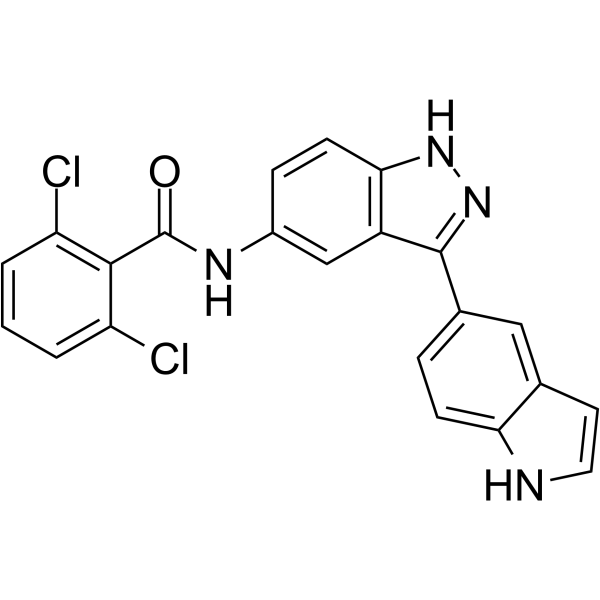
MD2-TLR4-IN-1 is a myeloid differentiation protein 2/toll-like receptor 4 (MD2-TLR4) complex antagonist. MD2-TLR4-IN-1 inhibits Lipopolysaccharides (HY-D1056) (LPS)-induced expression of TNF-α and IL-6 in macrophages with IC50 values of 0.89 μM and 0.53 μM, respectively. MD2-TLR4-IN-1 can be used for the study of acute lung injury (ALI).
For research use only. We do not sell to patients.
- Purity : 98.16%
- CAS No.: 2249801-12-3
- Formula: C22H14Cl2N4O
- Molecular Weight:421.28
-
Storage:Powder -20°C, 3 years , 4°C, 2 years ; In solvent -80°C, 2 years , -20°C, 1 year

To place orders, for customer services and technical support, please contact: MedChemExpress USA
Tel: 609-228-6898 E-mail: [email protected] [email protected]


-
 Biological Activity
-
Chemical Information
-
Solvent & Solubility
- Protocols
- Purity & Documentation
- References
-
 Help & FAQs


-
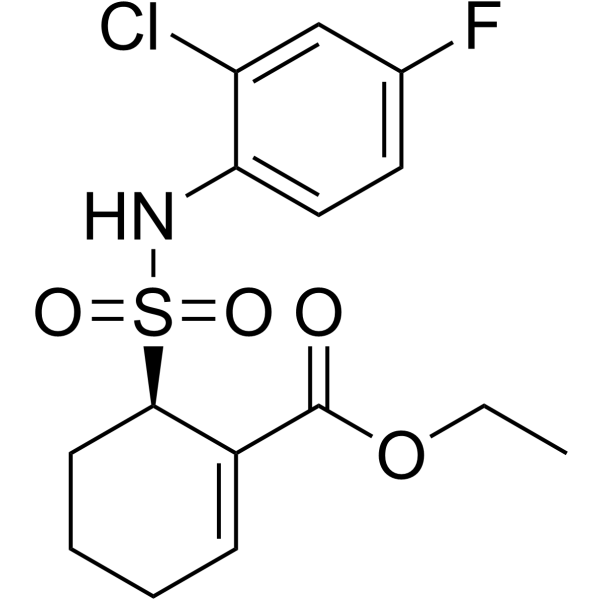
HY-11109
ResatorvidTLR4 Inhibitor -
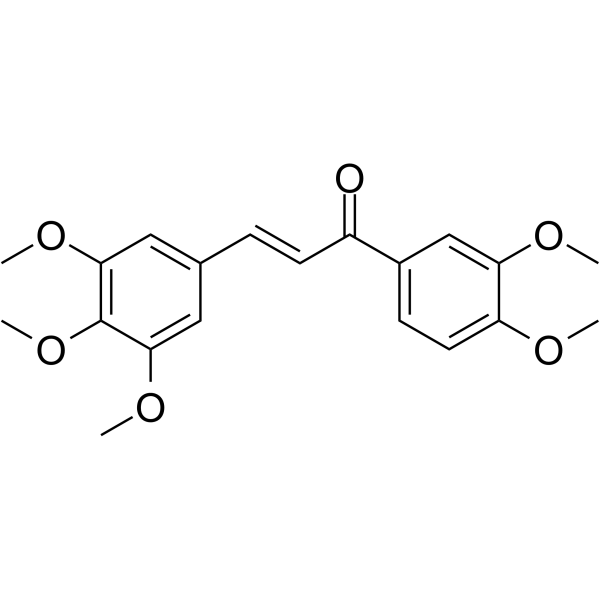
HY-103483
MD2-IN-1MD2 Inhibitor -
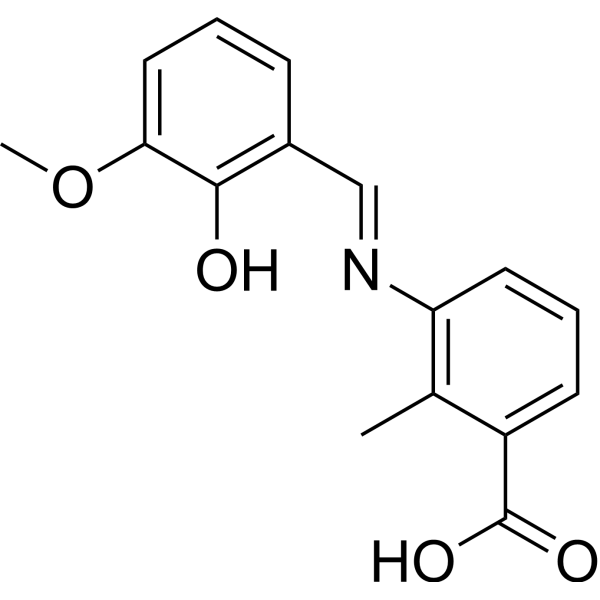
HY-100461
C29TLR2 Inhibitor -
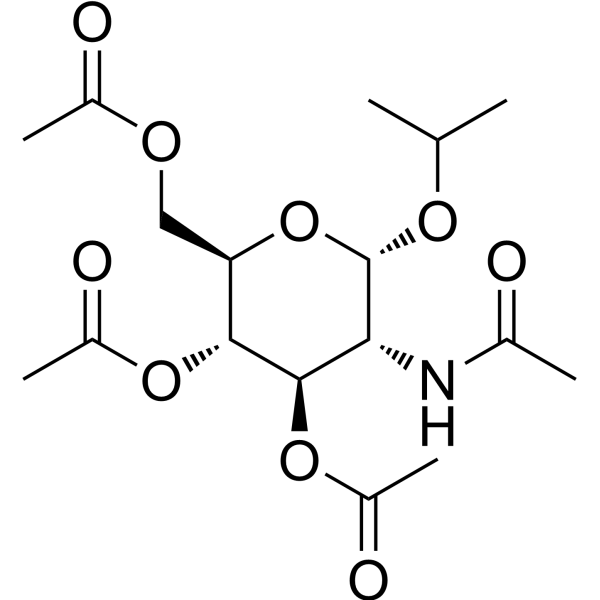
HY-107575
TLR4-IN-C34TLR4 Inhibitor -
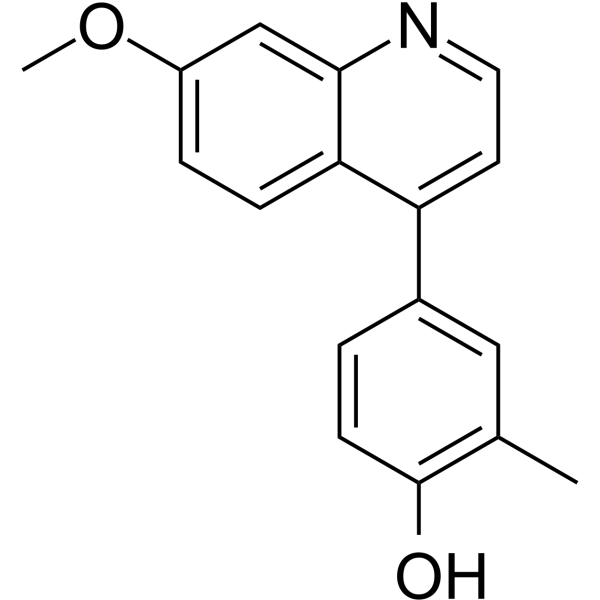
HY-112667
CU-CPT-9aToll-like Receptor (TLR) Antagonist -
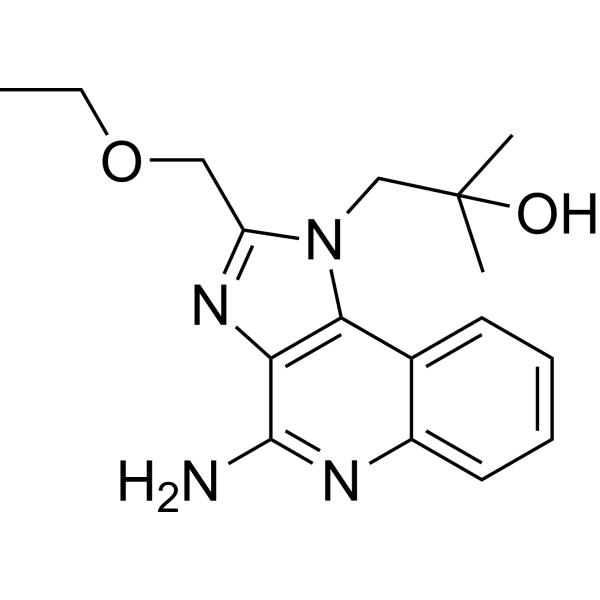
HY-13740
ResiquimodTLR7/8 Agonist -
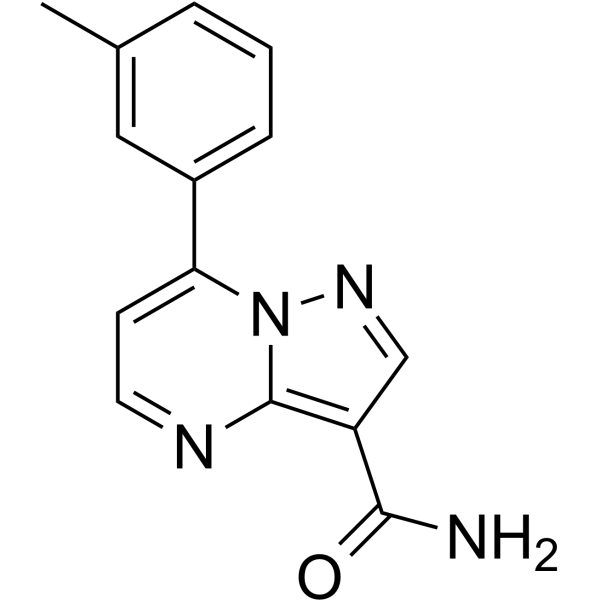
HY-112050
CU-CPT-8mTLR8 Antagonist -
HY-13773
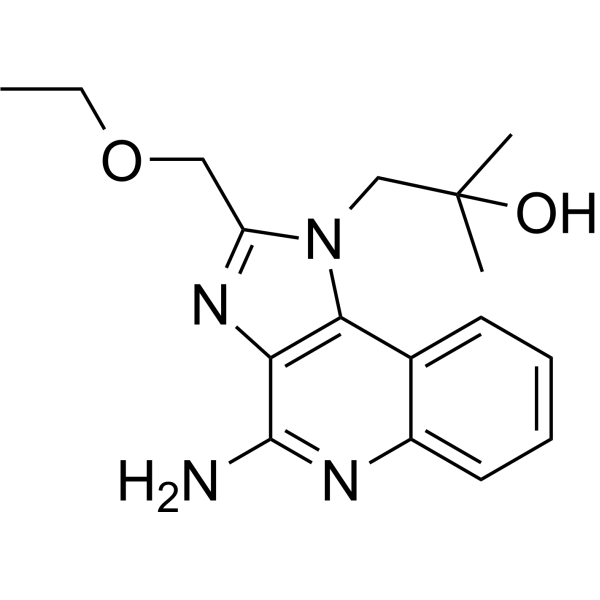
MotolimodTLR8 Agonist -
HY-13740G
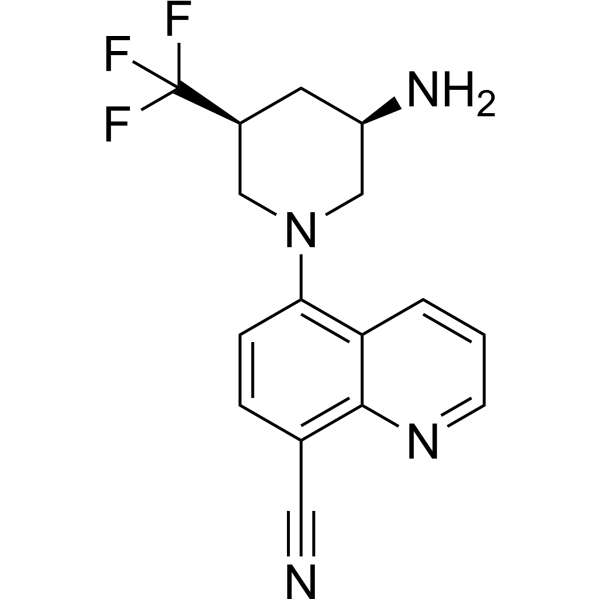
Resiquimod (GMP)TLR7/TLR8 Agonist (GMP) -
HY-134581
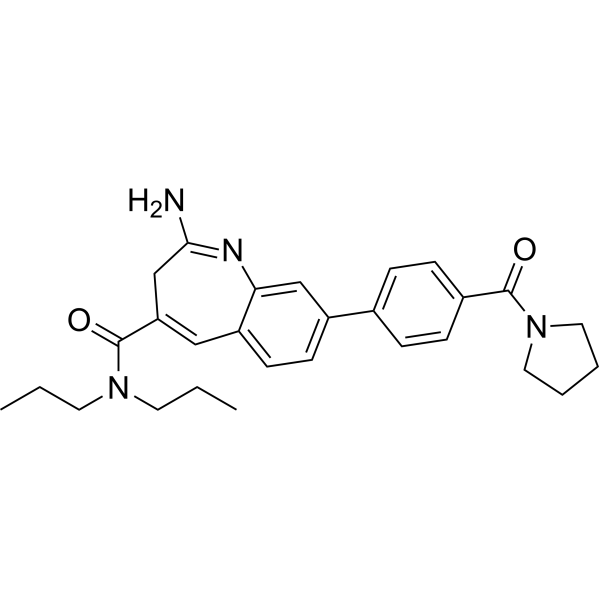
EnpatoranTLR7/8 Antagonist -
HY-103698A
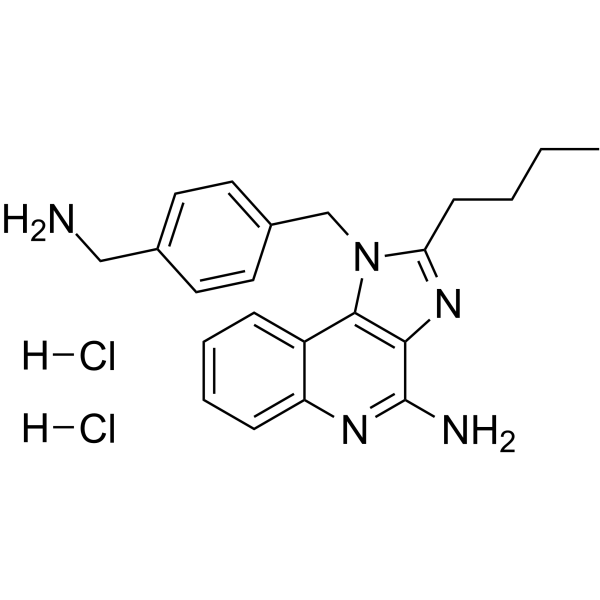
TLR7/8 agonist 1 dihydrochlorideTLR7/8 Agonist -
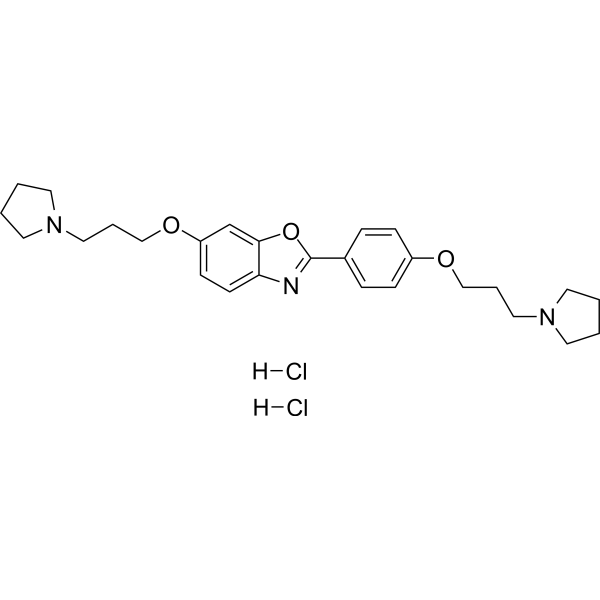
HY-12756A
E6446 dihydrochlorideTLR/SCD1 Inhibitor
Publications Citing Use of MedChemExpress (MCE) MD2-TLR4-IN-1
More

Biological Activity
Description
IC50 & Target
|
TLR4 |
In Vitro
MD2-TLR4-IN-1 (compound 22m) exerts its anti-inflammatory activity by inhibiting NF-κB in RAW264.7 macrophages[1].
MD2-TLR4-IN-1 is directly bound to the MD2-TLR4 complex and disrupted MD2-TLR4 activation[1].
MD2-TLR4-IN-1 suppresses the NF-κB p65 subunit nuclear levels in LPS-induced macrophages[1].
MD2-TLR4-IN-1 binds to recombinant MD2 and TLR4 proteins with Kd values of 185 and 146 μM, respectively, while it does not interact with the intracellular adaptor protein MyD88[1].
MD2-TLR4-IN-1 significantly inhibits dimerization of the MD2-TLR4
complex in LPS-activated mouse primary macrophages (MPMs)[1].
MedChemExpress (MCE) has not independently confirmed the accuracy of these methods. They are for reference only. Further protocols information, click here.
In Vivo
MedChemExpress (MCE) has not independently confirmed the accuracy of these methods. They are for reference only.
-
Animal Model:Male C57BL/6 mice (18-22 g) injectied intraperitoneally with LPS (20 mg/kg)[1].
-
Dosage:5 mg/kg, 10 mg/kg
-
Administration:Tail vein injection; once; 15 min before LPS injection
-
Result:Effectively reduced airspace inflammation and amended the tissue structure of pulmonary lobules.
Significantly decreases LPS-induced myeloperoxidase (MPO) activity. Reduced LPS-induced serum TNF-α levels.
Decreased the mRNA levels of TNF-α, IL-6, IL-1β, IL-12, and IL-33 in lung tissues. In addition, COX-2 mRNA levels were also reduced.


Chemical Information
-
CAS No. 2249801-12-3
-
Appearance Solid
-
Molecular Weight 421.28
-
Formula C22H14Cl2N4O
-
Color White to off-white
-
SMILES
ClC1=C(C(NC2=CC(C(C3=CC=C(NC=C4)C4=C3)=NN5)=C5C=C2)=O)C(Cl)=CC=C1
-
Shipping
Room temperature in continental US; may vary elsewhere.
-
Storage
Powder -20°C 3 years 4°C 2 years In solvent -80°C 2 years -20°C 1 year


Publications (1)
-
Journal Impact Factor
-
Most Recent


Solvent & Solubility
In Vitro:
DMSO : 83.33 mg/mL (197.80 mM; Need ultrasonic; Hygroscopic DMSO has a significant impact on the solubility of product, please use newly opened DMSO)
Please refer to the solubility information to select the appropriate solvent. Once prepared, please aliquot and store the solution to prevent product inactivation from repeated freeze-thaw cycles.
Storage method and period of stock solution: -80°C, 2 years; -20°C, 1 year. When stored at -80°C, please use it within 2 years. When stored at -20°C, please use it within 1 year.
Please refer to the solubility information to select the appropriate solvent. Once prepared, please aliquot and store the solution to prevent product inactivation from repeated freeze-thaw cycles.
Storage method and period of stock solution: -80°C, 2 years; -20°C, 1 year. When stored at -80°C, please use it within 2 years. When stored at -20°C, please use it within 1 year.
Concentration (start) × Volume (start) = Concentration (final) × Volume (final)
In Vivo:
Select the appropriate dissolution method based on your experimental animal and administration route.
- For the following dissolution methods, please ensure to first prepare a clear stock solution using an In Vitro approach and then sequentially add co-solvents:
- To ensure reliable experimental results, the clarified stock solution can be appropriately stored based on storage conditions. As for the working solution for In Vivo experiments, it is recommended to prepare freshly and use it on the same day.
- The percentages shown for the solvents indicate their volumetric ratio in the final prepared solution. If precipitation or phase separation occurs during preparation, heat and/or sonication can be used to aid dissolution.
Add each solvent one by one: 10% DMSO 40% PEG300 5% Tween-80 45% Saline
Solubility: ≥ 2.08 mg/mL (4.94 mM); Clear solution
This protocol yields a clear solution of ≥ 2.08 mg/mL (saturation unknown).
Taking 1 mL working solution as an example, add 100 μL DMSO stock solution (20.8 mg/mL) to 400 μL PEG300, and mix evenly; then add 50 μL Tween-80 and mix evenly; then add 450 μL Saline to adjust the volume to 1 mL.
Preparation of Saline: Dissolve 0.9 g sodium chloride in ddH₂O and dilute to 100 mL to obtain a clear Saline solution.
In Vivo Dissolution Calculator
Please enter the basic information of animal experiments:
-
-
-
-
Recommended: Prepare an additional quantity of animals to account for potential losses during experiments.
Please enter your animal formula composition:
-
%DMSO +
Recommended: Keep the proportion of DMSO in working solution below 2% if your animal is weak.
-
%+
-
+%Tween-80 + +
-
%Saline +
The co-solvents required include: DMSO, . All of co-solvents are available by MedChemExpress (MCE). , Tween 80. All of co-solvents are available by MedChemExpress (MCE).
Working solution concentration: 0.22 mg/mL
Method for preparing stock solution: mg drug dissolved in μL DMSO. Stock solution concentration: mg/mL.
1. Take μL DMSO stock solution;
2. Add μL .
μL , mix evenly;
3. Then add μL Tween 80, mix evenly;
4. Then add μL
Please ensure that the stock solution in the first step is dissolved to a clear state, and add co-solvents in sequence. You can use ultrasonic heating (ultrasonic cleaner, recommended frequency 20-40 kHz), vortexing, etc. to assist dissolution.

Protocols
-
HL-60 granulocytic/neutrophil-like differentiation
HL-60 cells are a human promyelocytic leukemia cell model that can be induced toward granulocytic/neutrophil-like differentiation by DMSO, ATRA, or combined ATRA+DMSO treatment; differentiation is evaluated by morphology, reduced proliferation, CD11b gain, CD71 loss, phagocytosis, oxidative burst/NBT reduction, ROS formation, and, where relevant, NET-related assays. A literature-supported default protocol is 5 days of combined 1 µM ATRA plus 1% DMSO, because this condition produced neutrophil-like morphology, cell-cycle arrest, high CD11b positivity, low CD71 positivity, and increased phagocytic capacity compared with ATRA or DMSO alone in the cited study.
-
RNA extraction experimental
By lysing cells, releasing RNA, and removing impurities such as proteins and DNA, high-purity RNA products are finally obtained. The commonly used traditional method is the guanidine isothiocyanate/phenol/chloroform method (Trizol), which is suitable for a variety of animal materials including animal tissues, microorganisms, cultured cells, etc., and most plant materials.
-
Cell Cytotoxicity Assay
Cytotoxicity assays are usually based on the assessment of cell membrane damage, which can also be indirectly detected by measuring cell viability. Detection methods include MTT assay, CKK-8 assay, LDH assay and ATP assay, etc.
-
Inhalation Toxicity Study
Inhalation toxicity studies expose rodents to a controlled aerosol, vapor, gas, or smoke atmosphere and assess respiratory and systemic toxicity using exposure-atmosphere characterization, clinical observations, body and organ weights, bronchoalveolar lavage fluid, histopathology, blood chemistry, hematology, and, when included, molecular endpoints such as transcriptomics, proteomics, lipidomics, or tissue burden analysis. The primary biological readouts are airway irritation, pulmonary inflammation, cytotoxicity, altered surfactant or lipid homeostasis, impaired particle clearance, and tissue remodeling, reflected by BALF cell differentials, BALF protein, LDH, phosphatase activities, cytokines, lung weight, microscopic respiratory-tract lesions, and retained lung burden.


Purity & Documentation
-
Data Sheet (278 KB)
-
SDS (393 KB)
- English - EN (393 KB)
- Français - FR (393 KB)
- Deutsch - DE (393 KB)
- Norwegian - NO (393 KB)
- Español - ES (393 KB)
- Swedish - SV (393 KB)
- Italian - IT (393 KB)
- Korean - KR (393 KB)
- Portuguese - PT (393 KB)
-
Handling Instructions (2659 KB)
References


Complete Stock Solution Preparation Table
Please refer to the solubility information to select the appropriate solvent. Once prepared, please aliquot and store the solution to prevent product inactivation from repeated freeze-thaw cycles.
Storage method and period of stock solution: -80°C, 2 years; -20°C, 1 year. When stored at -80°C, please use it within 2 years. When stored at -20°C, please use it within 1 year.
| Optional Solvent | Concentration Solvent Mass | 1 mg | 5 mg | 10 mg | 25 mg |
|---|---|---|---|---|---|
| DMSO | 1 mM | 2.3737 mL | 11.8686 mL | 23.7372 mL | 59.3430 mL |
| 5 mM | 0.4747 mL | 2.3737 mL | 4.7474 mL | 11.8686 mL | |
| 10 mM | 0.2374 mL | 1.1869 mL | 2.3737 mL | 5.9343 mL | |
| 15 mM | 0.1582 mL | 0.7912 mL | 1.5825 mL | 3.9562 mL | |
| 20 mM | 0.1187 mL | 0.5934 mL | 1.1869 mL | 2.9671 mL | |
| 25 mM | 0.0949 mL | 0.4747 mL | 0.9495 mL | 2.3737 mL | |
| 30 mM | 0.0791 mL | 0.3956 mL | 0.7912 mL | 1.9781 mL | |
| 40 mM | 0.0593 mL | 0.2967 mL | 0.5934 mL | 1.4836 mL | |
| 50 mM | 0.0475 mL | 0.2374 mL | 0.4747 mL | 1.1869 mL | |
| 60 mM | 0.0396 mL | 0.1978 mL | 0.3956 mL | 0.9890 mL | |
| 80 mM | 0.0297 mL | 0.1484 mL | 0.2967 mL | 0.7418 mL | |
| 100 mM | 0.0237 mL | 0.1187 mL | 0.2374 mL | 0.5934 mL |


MD2-TLR4-IN-1 Related Classifications
HY-128598 Related Classifications
 Powered by Bioz