



MFZ 10-7

Based on 1 Customer Validation
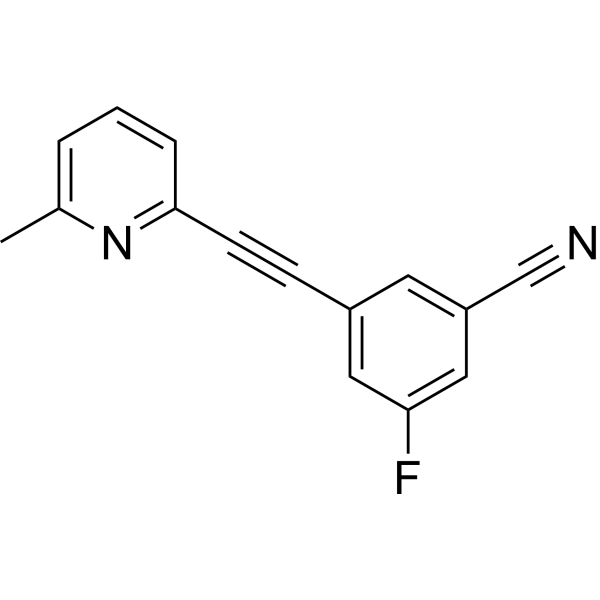
MFZ 10-7 is a highly potent and selective mGluR5 NAM (negative allosteric modulator), with a Ki of 0.67 nM for rat mGluR5. MFZ 10-7 is a click chemistry reagent, it contains an Alkyne group and can undergo copper-catalyzed azide-alkyne cycloaddition (CuAAc) with molecules containing Azide groups.
For research use only. We do not sell to patients.
- Purity : 99.70%
- CAS No.: 1224431-15-5
- Formula: C15H9FN2
- Molecular Weight:236.24
-
Storage:Powder -20°C, 3 years , 4°C, 2 years ; In solvent -80°C, 6 months , -20°C, 1 month

To place orders, for customer services and technical support, please contact: MedChemExpress USA
Tel: 609-228-6898 E-mail: [email protected] [email protected]


-
 Biological Activity
-
Chemical Information
-
Solvent & Solubility
- Protocols
- Purity & Documentation
- References
-
 Help & FAQs


-
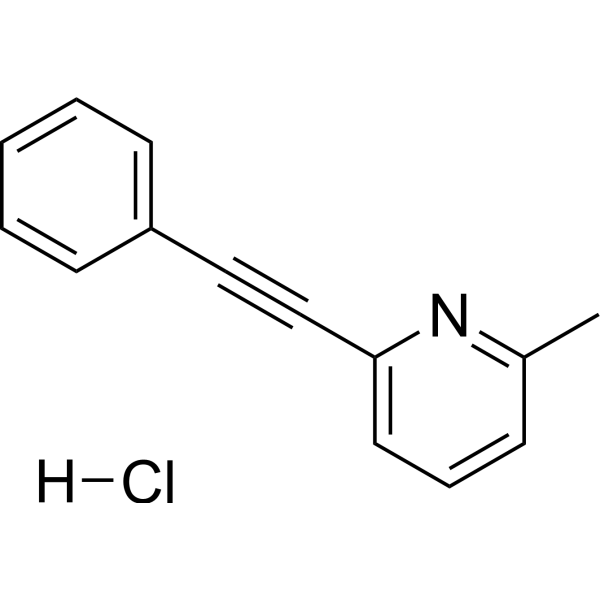
HY-14609
MPEP HydrochloridemGlu5 Receptor Antagonist -

HY-103575R
MFZ 10-7 (Standard)Reference Standard -
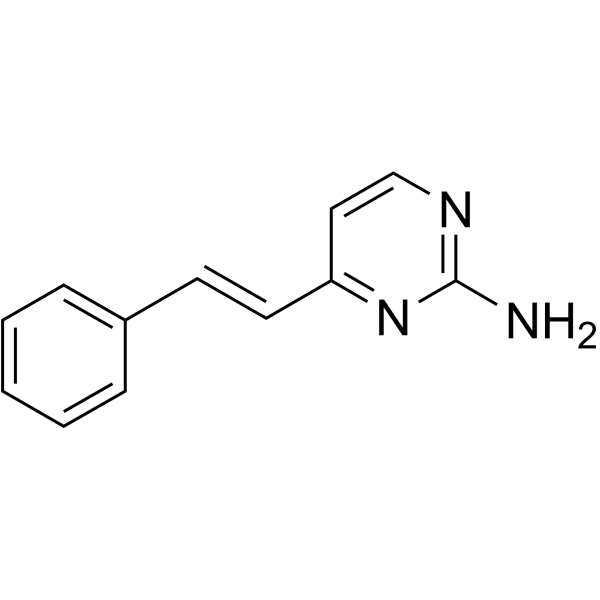
HY-14419
TCN238mGlu4 Receptor PAM -
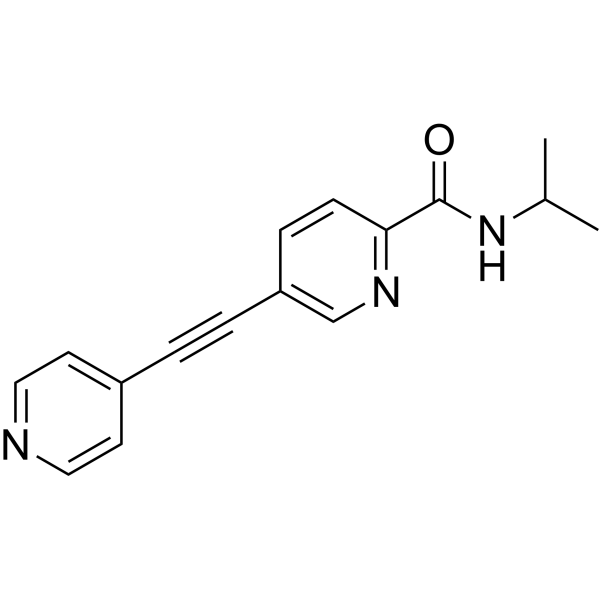
HY-110152
LSN2463359mGlu5 Modulator -
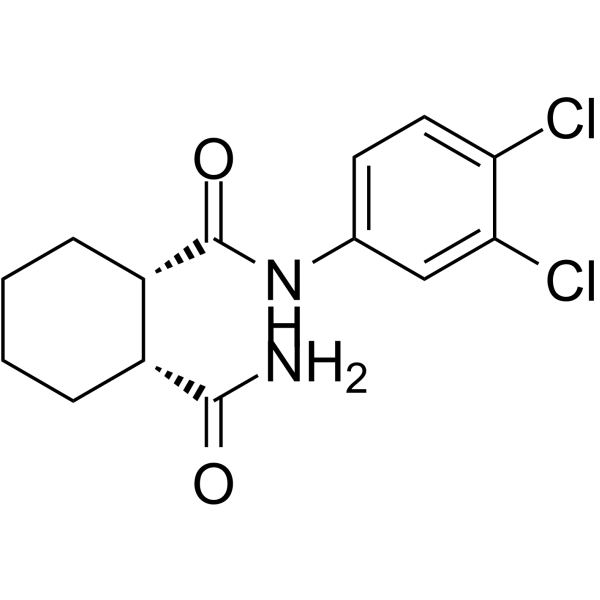
HY-100366
Lu AF21934mGlu4 Receptor PAM -
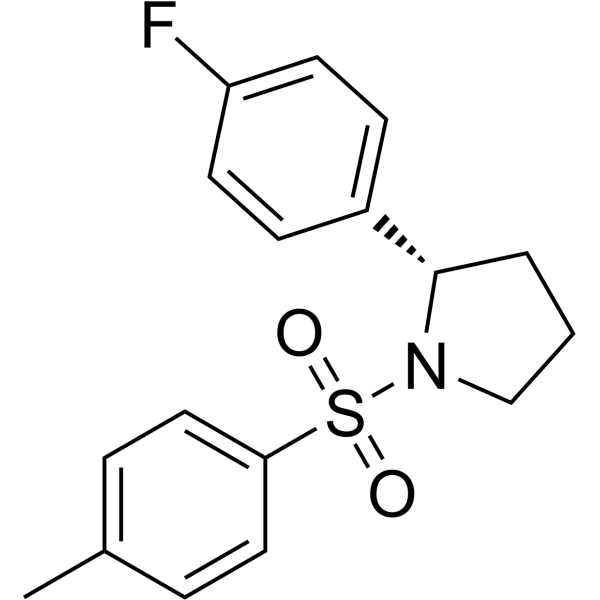
HY-100403
Ro 67-7476mGluR1 PAM -
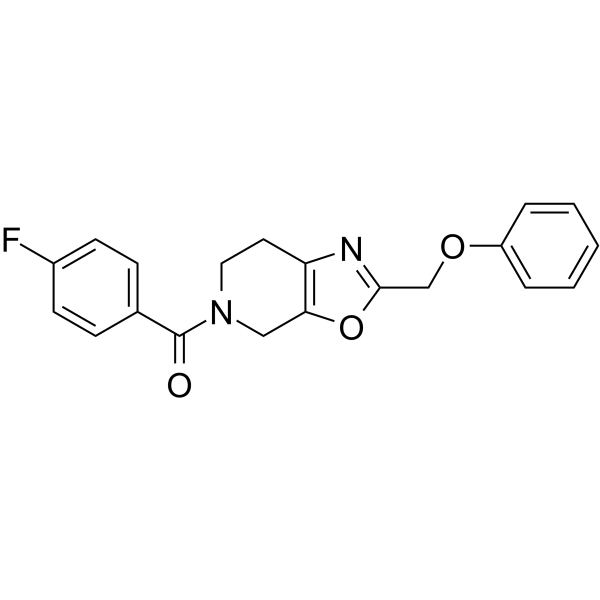
HY-19559
JNJ-46778212mGlu5 Positive Allosteric Modulator -
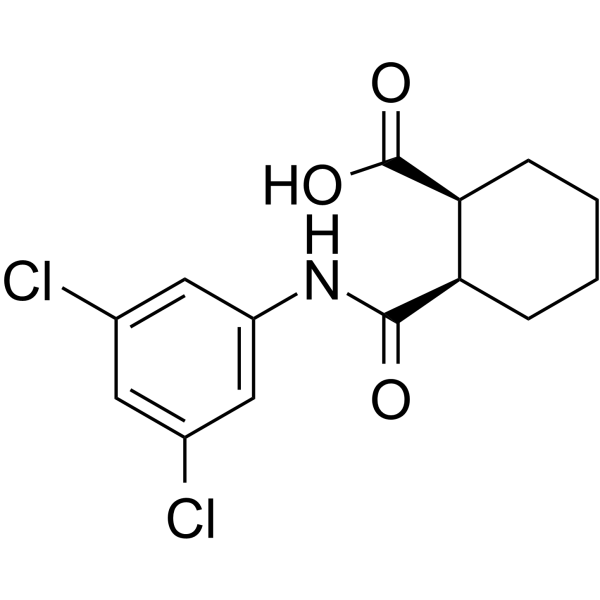
HY-14417
VU0155041mGluR4 Allosteric Agonist -
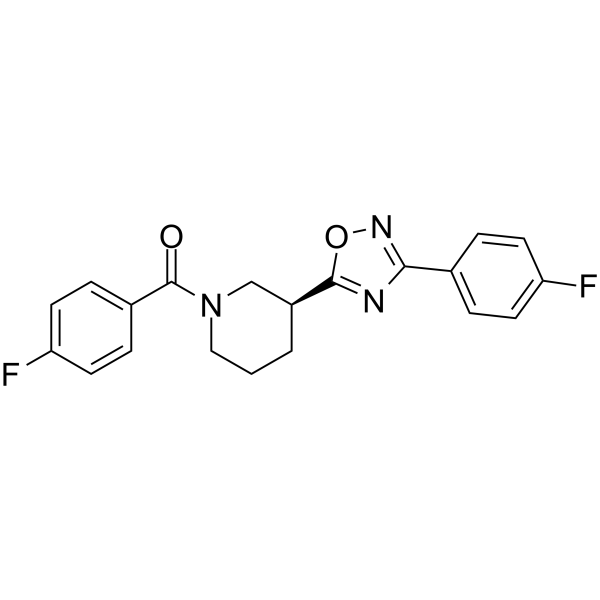
HY-13058
ADX-47273mGluR5 PAM -
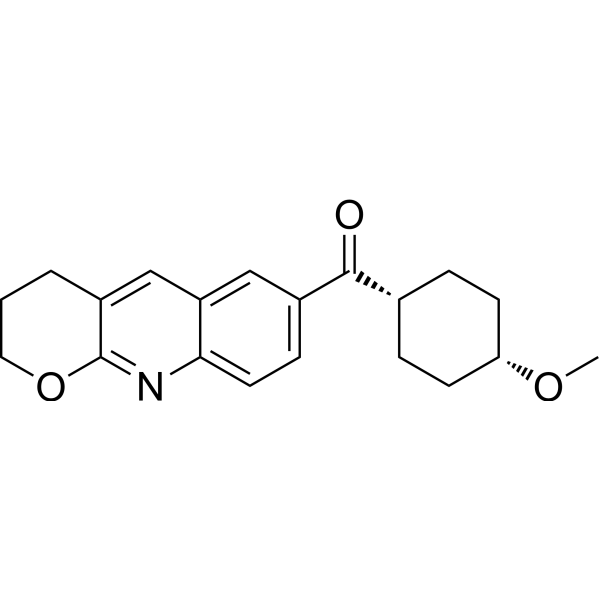
HY-100407
JNJ16259685mGlu1 Receptor Antagonist -
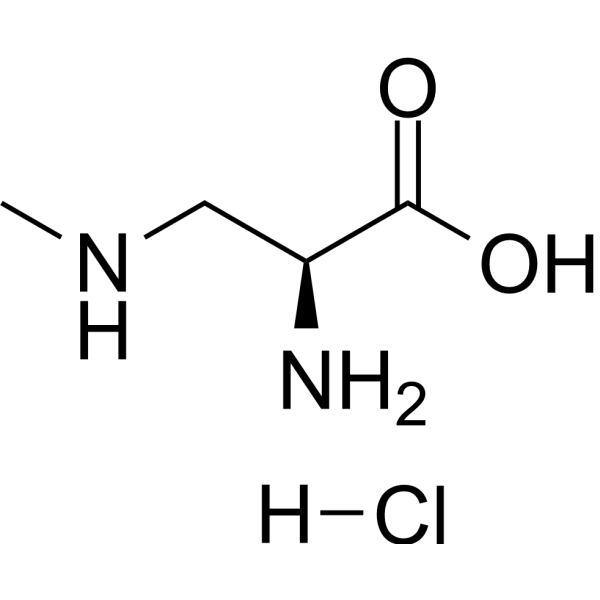
HY-W015546
β-N-methylamino-L-alanine hydrochlorideNeurotoxin -
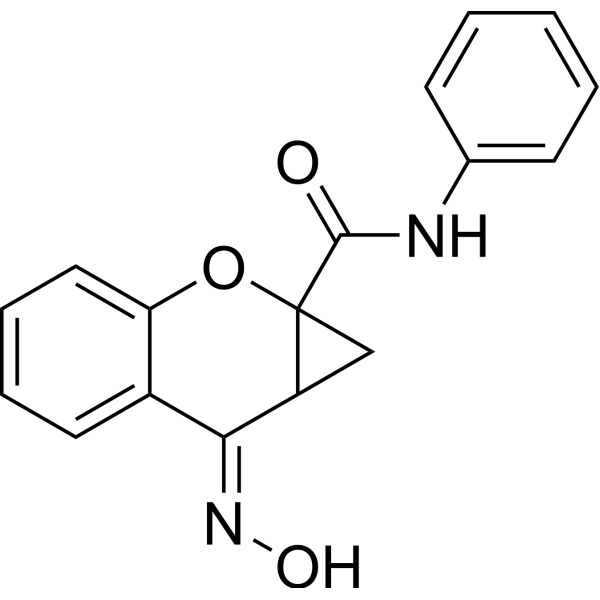
HY-100409
PHCCCGroup I mGluR Antagonist


Biological Activity
Description
IC50 & Target
[1]|
rat mGluR5 0.67 nM (Ki) |
Cellular Effect
|
Cell Line

|
Type | Value | Description | References |
|---|---|---|---|---|
| HEK293 | IC50 |
1.22 nM
Compound: 2d
|
Antagonist activity at rat mGluR5 expressed in human HEK-293 cells assessed as inhibition of glutamate-induced intracellular calcium mobilization
Antagonist activity at rat mGluR5 expressed in human HEK-293 cells assessed as inhibition of glutamate-induced intracellular calcium mobilization
|
[PMID: 21546249] |
| HEK293-A | IC50 |
2.4 nM
Compound: 7i, MFZ 10-7
|
Inverse agonist activity at rat mGluR5 expressed in HEK293A cells coexpressing Gqalpha assessed as inhibition of quisqualic-induced D-myo-inositol 1 production by ELISA
Inverse agonist activity at rat mGluR5 expressed in HEK293A cells coexpressing Gqalpha assessed as inhibition of quisqualic-induced D-myo-inositol 1 production by ELISA
|
[PMID: 22924094] |
In Vitro
MFZ 10-7 has approximately 1150- and 3000-fold lower affinity for MAO-B (monoamine oxidase-B enzyme) and TXA2 (thromboxane A2 receptor), respectively, compared to mGluR5[1].
MedChemExpress (MCE) has not independently confirmed the accuracy of these methods. They are for reference only. Further protocols information, click here.
In Vivo
MedChemExpress (MCE) has not independently confirmed the accuracy of these methods. They are for reference only.


Chemical Information
-
CAS No. 1224431-15-5
-
Appearance Solid
-
Molecular Weight 236.24
-
Formula C15H9FN2
-
Color Light yellow to yellow
-
SMILES
N#CC1=CC(C#CC2=NC(C)=CC=C2)=CC(F)=C1
-
Shipping
Room temperature in continental US; may vary elsewhere.
-
Storage
Powder -20°C 3 years 4°C 2 years In solvent -80°C 6 months -20°C 1 month


Solvent & Solubility
In Vitro:
DMSO : 17.86 mg/mL (75.60 mM; ultrasonic and warming and heat to 60°C; Hygroscopic DMSO has a significant impact on the solubility of product, please use newly opened DMSO)
Please refer to the solubility information to select the appropriate solvent. Once prepared, please aliquot and store the solution to prevent product inactivation from repeated freeze-thaw cycles.
Storage method and period of stock solution: -80°C, 6 months; -20°C, 1 month. When stored at -80°C, please use it within 6 months. When stored at -20°C, please use it within 1 month.
Please refer to the solubility information to select the appropriate solvent. Once prepared, please aliquot and store the solution to prevent product inactivation from repeated freeze-thaw cycles.
Storage method and period of stock solution: -80°C, 6 months; -20°C, 1 month. When stored at -80°C, please use it within 6 months. When stored at -20°C, please use it within 1 month.
Concentration (start) × Volume (start) = Concentration (final) × Volume (final)

Protocols
-
EdU Incorporation Assay (Click Chemistry-Based DNA Synthesis Measurement)
The EdU incorporation assay measures DNA synthesis by adding the thymidine analog 5-ethynyl-2′-deoxyuridine to cells or tissues, where it is incorporated into newly synthesized DNA during S phase. Incorporated EdU is detected by copper-catalyzed azide-alkyne cycloaddition, in which a fluorescent azide covalently reacts with the ethynyl group on EdU, allowing S-phase cells to be detected by fluorescence microscopy, flow cytometry, or high-content imaging. EdU detection does not require DNA denaturation or anti-BrdU antibody access, which preserves sample structure and improves compatibility with immunostaining and multiparameter cytometry compared with BrdU-based detection. EdU can be cytotoxic in a cell-type- and exposure-dependent manner, so pulse duration, concentration, and continuous-labeling designs should be validated for each cell type.


Purity & Documentation
-
Data Sheet (269 KB)
-
SDS (251 KB)
- English - EN (251 KB)
- Français - FR (251 KB)
- Deutsch - DE (251 KB)
- Norwegian - NO (251 KB)
- Español - ES (251 KB)
- Swedish - SV (251 KB)
- Italian - IT (251 KB)
- Korean - KR (251 KB)
- Portuguese - PT (251 KB)
-
Handling Instructions (2659 KB)
References


Complete Stock Solution Preparation Table
Please refer to the solubility information to select the appropriate solvent. Once prepared, please aliquot and store the solution to prevent product inactivation from repeated freeze-thaw cycles.
Storage method and period of stock solution: -80°C, 6 months; -20°C, 1 month. When stored at -80°C, please use it within 6 months. When stored at -20°C, please use it within 1 month.
| Optional Solvent | Concentration Solvent Mass | 1 mg | 5 mg | 10 mg | 25 mg |
|---|---|---|---|---|---|
| DMSO | 1 mM | 4.2330 mL | 21.1649 mL | 42.3298 mL | 105.8246 mL |
| 5 mM | 0.8466 mL | 4.2330 mL | 8.4660 mL | 21.1649 mL | |
| 10 mM | 0.4233 mL | 2.1165 mL | 4.2330 mL | 10.5825 mL | |
| 15 mM | 0.2822 mL | 1.4110 mL | 2.8220 mL | 7.0550 mL | |
| 20 mM | 0.2116 mL | 1.0582 mL | 2.1165 mL | 5.2912 mL | |
| 25 mM | 0.1693 mL | 0.8466 mL | 1.6932 mL | 4.2330 mL | |
| 30 mM | 0.1411 mL | 0.7055 mL | 1.4110 mL | 3.5275 mL | |
| 40 mM | 0.1058 mL | 0.5291 mL | 1.0582 mL | 2.6456 mL | |
| 50 mM | 0.0847 mL | 0.4233 mL | 0.8466 mL | 2.1165 mL | |
| 60 mM | 0.0705 mL | 0.3527 mL | 0.7055 mL | 1.7637 mL |


MFZ 10-7 Related Classifications
HY-103575 Related Classifications
 Powered by Bioz