



Azemiglitazone potassium
Based on 1 publication(s) in Google Scholar
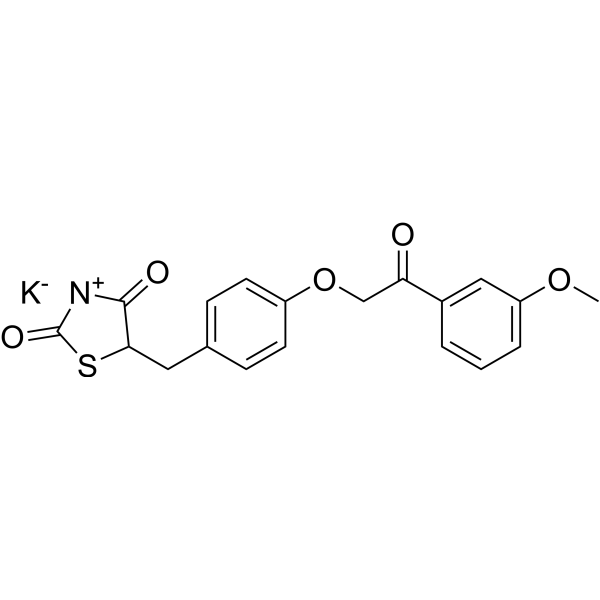
Azemiglitazone potassium (MSDC-0602K), a PPARγ-sparing thiazolidinedione (Ps-TZD), binds to PPARγ with the IC50 of 18.25 μM. Azemiglitazone potassium modulates the mitochondrial pyruvate carrier (MPC). Azemiglitazone potassium can be used for the research of fatty liver including dysfunctional lipid metabolism, inflammation, and insulin resistance. Azemiglitazone potassium, an insulin sensitizer, improves insulinemia and fatty liver disease in mice, alone and in combination with Liraglutide.
For research use only. We do not sell to patients.
- Purity : 98.94%
- CAS No.: 1314533-27-1
- Formula: C19H16KNO5S
- Molecular Weight:409.50
-
Storage:
4°C, sealed storage, away from moisture
* In solvent : -80°C, 6 months; -20°C, 1 month (sealed storage, away from moisture)

To place orders, for customer services and technical support, please contact: MedChemExpress USA
Tel: 609-228-6898 E-mail: [email protected] [email protected]


-
 Biological Activity
-
Chemical Information
-
Solvent & Solubility
- Protocols
- Purity & Documentation
- References
-
 Help & FAQs


-
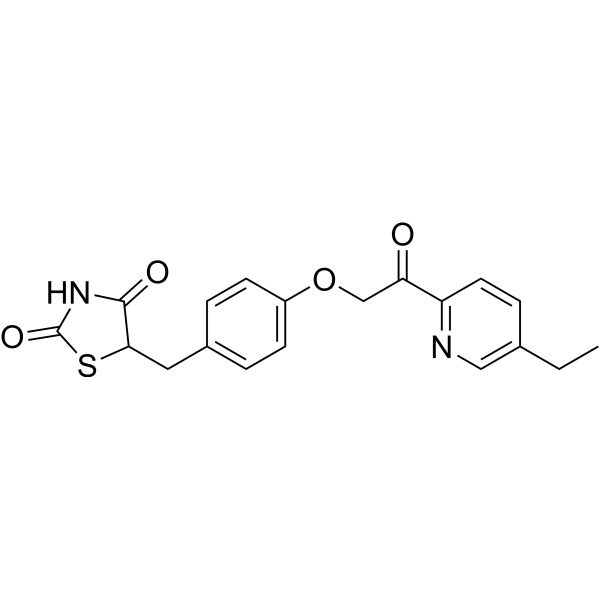
HY-100550
MSDC 0160Insulin Sensitizer -

HY-P0035
Insulin (human)Recombinant Human Insulin -

HY-P0035A
Insulin solution (human)Polypeptide Hormone -
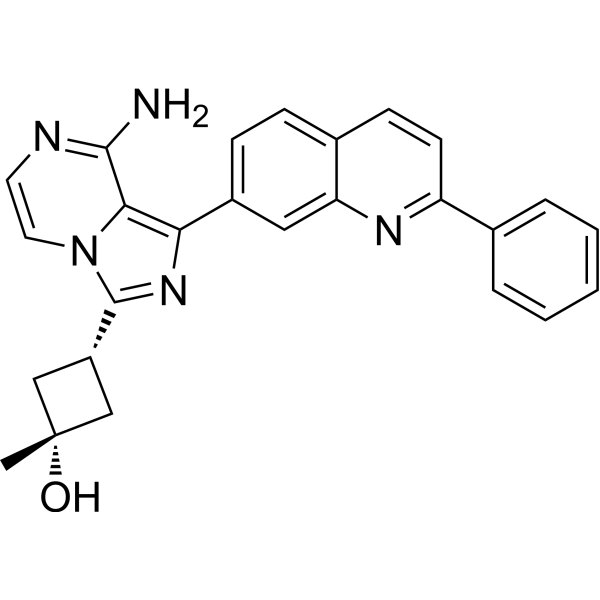
HY-10191
LinsitinibIGF-1R/Insulin Receptor Inhibitor -

HY-108743
Insulin degludecInsulin Analogue -

HY-109555
Insulin glulisineInsulin Analog -
HY-P99665
Insulin efsitora alfaInsulin Receptor Agonist -
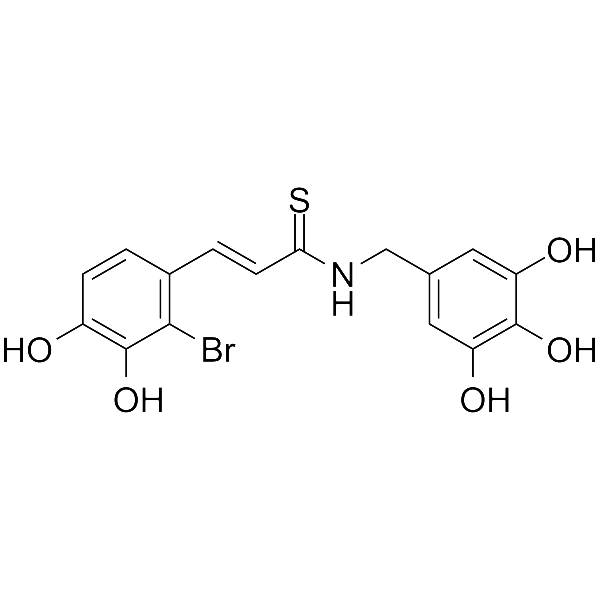
HY-145935
NT219IRS1/2/STAT3 Inhibitor -
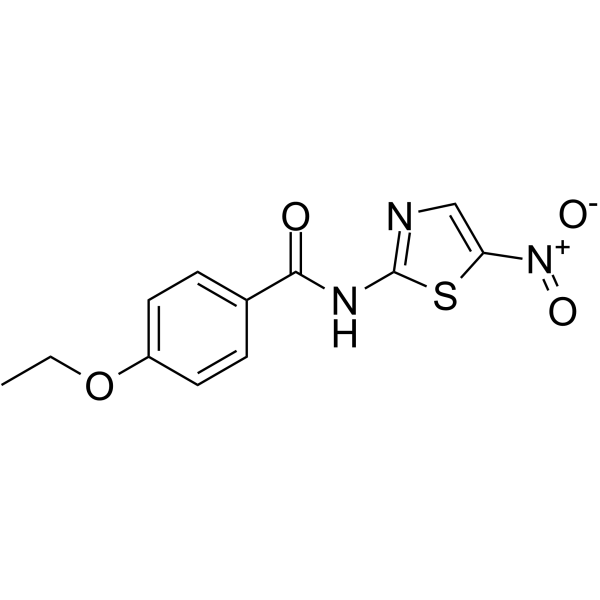
HY-115461
MID-1MG53-IRS-1 Interaction Disruptor -
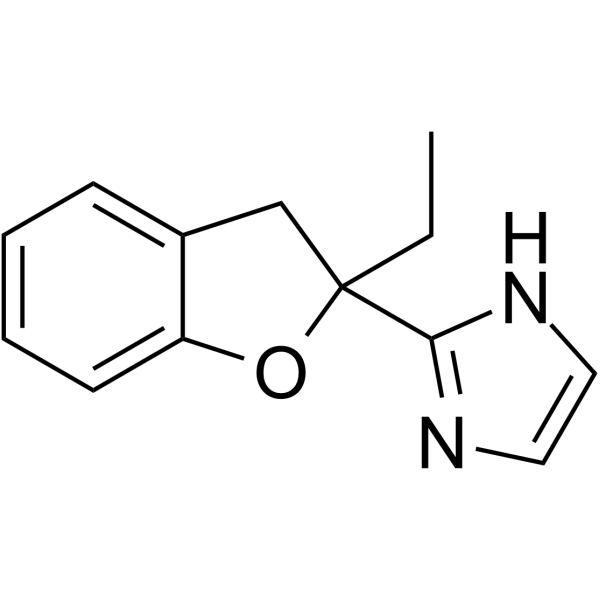
HY-15481
KU14RKATP Channel Inhibitor -
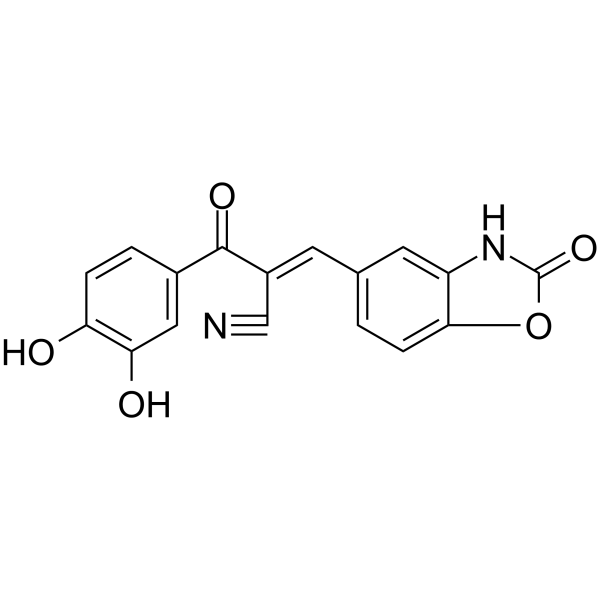
HY-112720
AGL-2263Insulin Receptor Inhibitor -
HY-P3255
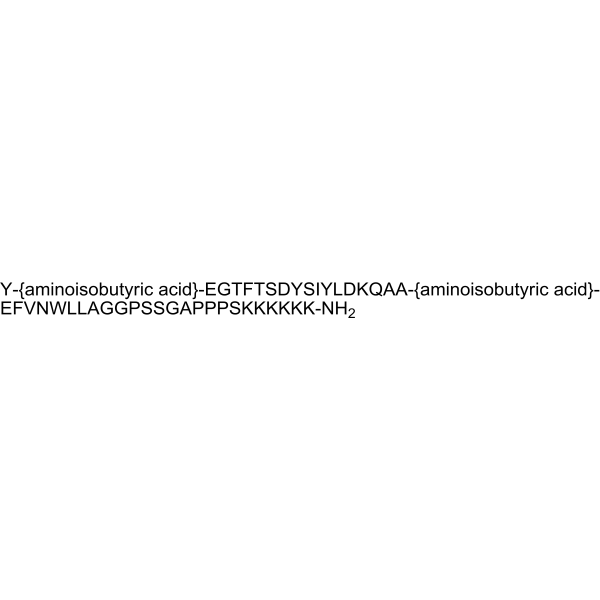
DA-JC4GLP-1/GIP Receptor Agonist
Publications Citing Use of MedChemExpress (MCE) Azemiglitazone potassium
More

Biological Activity
Description
IC50 & Target
[1]|
PPAR-γ 18.25 μM (IC50) |
In Vivo
MedChemExpress (MCE) has not independently confirmed the accuracy of these methods. They are for reference only.
-
Animal Model:Five-week-old male db/db mice on C57BL/6J background and age/sex-matched db/+ control mice[1]
-
Dosage:30 mg/kg MSDC-0602K; 0.2 mg/kg Liraglutide (obtained from MedChemExpress; HY-P0014)
-
Administration:MSDC-0602K gavage daily, Liraglutide s.c. injection every other day, or combined MSDC-0602K+ Liraglutide
-
Result:MSDC-0602K corrected glycemia and reduced insulinemia when given alone, or in combination with Liraglutide. However, MSDC-0602K + Liraglutide combination more significantly improved glucose tolerance and liver histology.
Clinical Trial
| NCT Number | Sponsor | Condition | Start Date |
Phase

|
|---|---|---|---|---|
| NCT01329991 | 2011-05 | PHASE1 |


Chemical Information
-
CAS No. 1314533-27-1
-
Appearance Solid
-
Molecular Weight 409.50
-
Formula C19H16KNO5S
-
Color White to off-white
-
SMILES
O=C1SC(CC2=CC=C(C=C2)OCC(C3=CC(OC)=CC=C3)=O)C([N+]1)=O.[K-]
-
Synonyms
MSDC-0602K
-
Shipping
Room temperature in continental US; may vary elsewhere.
-
Storage
4°C, sealed storage, away from moisture
* In solvent : -80°C, 6 months; -20°C, 1 month (sealed storage, away from moisture)


Publications (1)
-
Journal Impact Factor
-
Most Recent
-
Nat Commun
TIGIT deficiency promotes autoreactive CD4+ T-cell responses through a metabolic‒epigenetic mechanism in autoimmune myositis. [Abstract]2025 May 15;16(1):4502. PMID: 40374622


Solvent & Solubility
In Vitro:
DMSO : 250 mg/mL (610.50 mM; Need ultrasonic; Hygroscopic DMSO has a significant impact on the solubility of product, please use newly opened DMSO)
Please refer to the solubility information to select the appropriate solvent. Once prepared, please aliquot and store the solution to prevent product inactivation from repeated freeze-thaw cycles.
Storage method and period of stock solution: -80°C, 6 months; -20°C, 1 month (sealed storage, away from moisture). When stored at -80°C, please use it within 6 months. When stored at -20°C, please use it within 1 month.
Please refer to the solubility information to select the appropriate solvent. Once prepared, please aliquot and store the solution to prevent product inactivation from repeated freeze-thaw cycles.
Storage method and period of stock solution: -80°C, 6 months; -20°C, 1 month (sealed storage, away from moisture). When stored at -80°C, please use it within 6 months. When stored at -20°C, please use it within 1 month.
Concentration (start) × Volume (start) = Concentration (final) × Volume (final)


Purity & Documentation
-
Data Sheet (272 KB)
-
SDS (252 KB)
- English - EN (252 KB)
- Français - FR (252 KB)
- Deutsch - DE (252 KB)
- Norwegian - NO (252 KB)
- Español - ES (252 KB)
- Swedish - SV (252 KB)
- Italian - IT (252 KB)
- Korean - KR (252 KB)
- Portuguese - PT (252 KB)
-
Handling Instructions (2659 KB)
References
[1]. Zhouji Chen, et al. Insulin resistance and metabolic derangements in obese mice are ameliorated by a novel peroxisome proliferator-activated receptor γ-sparing thiazolidinedione. J Biol Chem. 2012 Jul 6;287(28):23537-48. [Content Brief]
[2]. Jerry R Colca, et al. MSDC-0602K, a metabolic modulator directed at the core pathology of non-alcoholic steatohepatitis. Expert Opin Investig Drugs. 2018 Jul;27(7):631-636. [Content Brief]
[3]. Dakota R Kamm, et al. Novel insulin sensitizer MSDC-0602K improves insulinemia and fatty liver disease in mice, alone and in combination with liraglutide. J Biol Chem. Jan-Jun 2021;296:100807. [Content Brief]


Complete Stock Solution Preparation Table
Please refer to the solubility information to select the appropriate solvent. Once prepared, please aliquot and store the solution to prevent product inactivation from repeated freeze-thaw cycles.
Storage method and period of stock solution: -80°C, 6 months; -20°C, 1 month (sealed storage, away from moisture). When stored at -80°C, please use it within 6 months. When stored at -20°C, please use it within 1 month.
| Optional Solvent | Concentration Solvent Mass | 1 mg | 5 mg | 10 mg | 25 mg |
|---|---|---|---|---|---|
| DMSO | 1 mM | 2.4420 mL | 12.2100 mL | 24.4200 mL | 61.0501 mL |
| 5 mM | 0.4884 mL | 2.4420 mL | 4.8840 mL | 12.2100 mL | |
| 10 mM | 0.2442 mL | 1.2210 mL | 2.4420 mL | 6.1050 mL | |
| 15 mM | 0.1628 mL | 0.8140 mL | 1.6280 mL | 4.0700 mL | |
| 20 mM | 0.1221 mL | 0.6105 mL | 1.2210 mL | 3.0525 mL | |
| 25 mM | 0.0977 mL | 0.4884 mL | 0.9768 mL | 2.4420 mL | |
| 30 mM | 0.0814 mL | 0.4070 mL | 0.8140 mL | 2.0350 mL | |
| 40 mM | 0.0611 mL | 0.3053 mL | 0.6105 mL | 1.5263 mL | |
| 50 mM | 0.0488 mL | 0.2442 mL | 0.4884 mL | 1.2210 mL | |
| 60 mM | 0.0407 mL | 0.2035 mL | 0.4070 mL | 1.0175 mL | |
| 80 mM | 0.0305 mL | 0.1526 mL | 0.3053 mL | 0.7631 mL | |
| 100 mM | 0.0244 mL | 0.1221 mL | 0.2442 mL | 0.6105 mL |


Azemiglitazone potassium Related Classifications
HY-108022A Related Classifications
 Powered by Bioz