



Azemiglitazone
Based on 1 publication(s) in Google Scholar
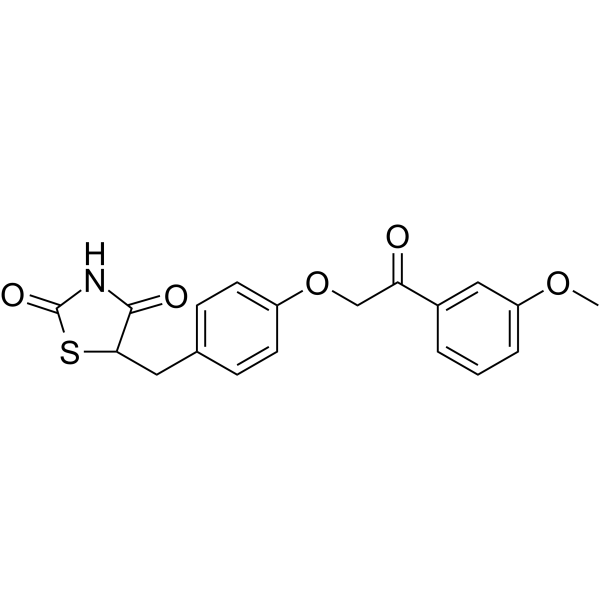
Azemiglitazone (MSDC-0602) is an orally active thiazolidinedione (TZD) -like molecule, which binds to PPARγ with low binding and activating affinity. Azemiglitazone inhibits mitochondrial pyruvate carrier (MPC), which inhibits Alzheimer’s disease and diminishes nonalcoholic steatohepatitis (NASH) caused liver injury.
For research use only. We do not sell to patients.
- Purity : 98.90%
- CAS No.: 1133819-87-0
- Formula: C19H17NO5S
- Molecular Weight:371.41
-
Storage:Powder -20°C, 3 years , 4°C, 2 years ; In solvent -80°C, 2 years , -20°C, 1 year

To place orders, for customer services and technical support, please contact: MedChemExpress USA
Tel: 609-228-6898 E-mail: [email protected] [email protected]


-
 Biological Activity
-
Chemical Information
-
Solvent & Solubility
- Purity & Documentation
- References
-
 Help & FAQs


-
HY-13956
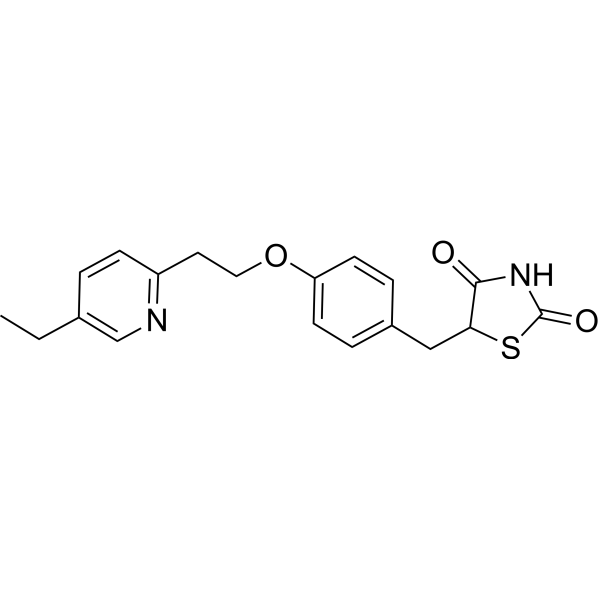
PioglitazonePPARγ Agonist -
HY-100550
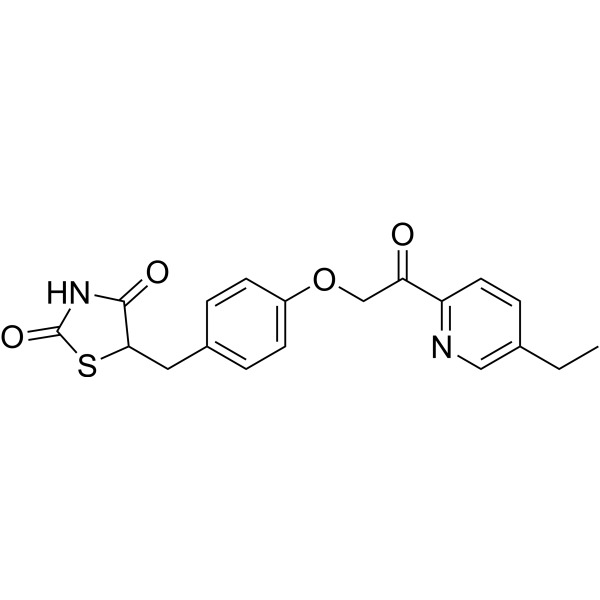
MSDC 0160Insulin Sensitizer -
HY-16086
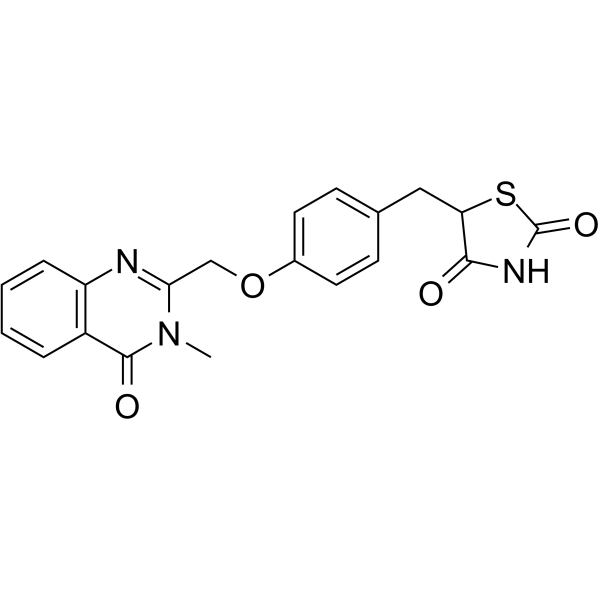
Balaglitazone -
HY-12483
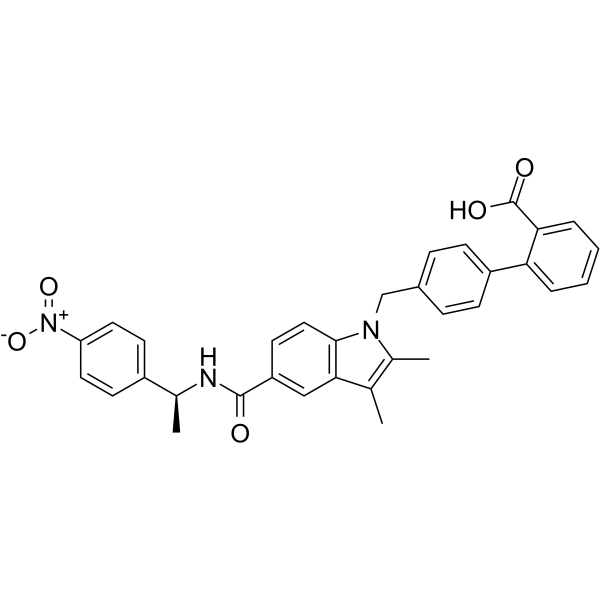
SR1664PPARγ Antagonist -
HY-117103
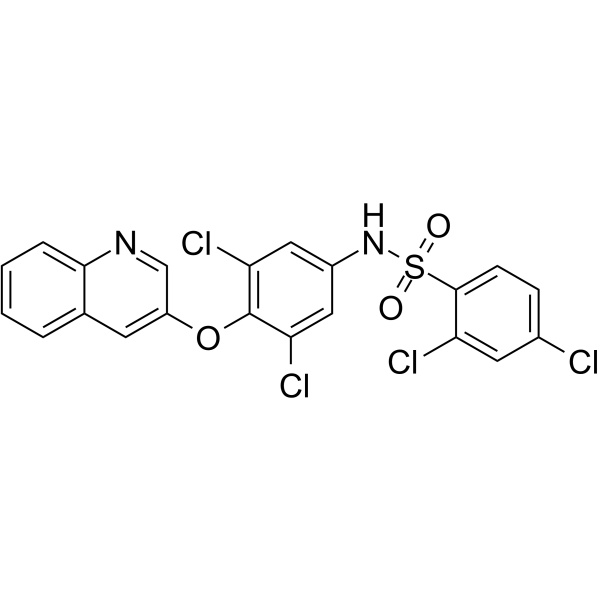
AMG131PPARγ Agonist -
HY-17386
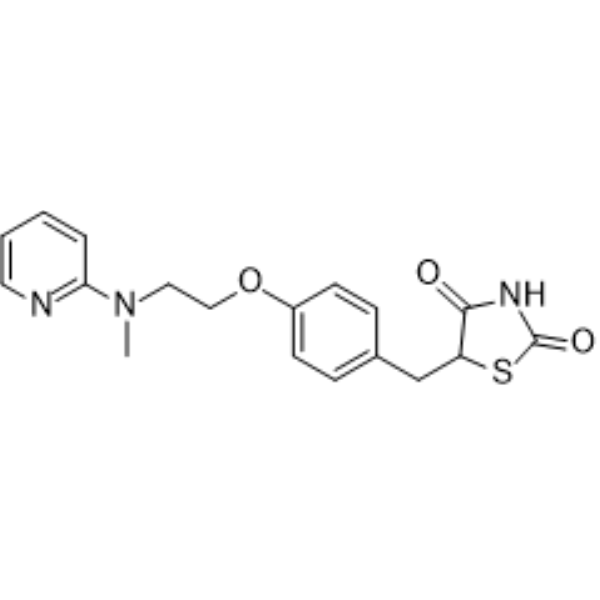
RosiglitazonePPARγ Agonist -
HY-15475
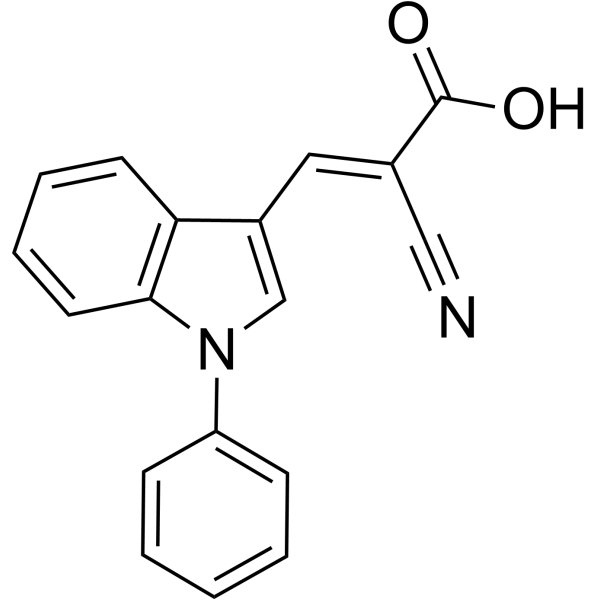
UK-5099Mitochondrial Pyruvate Carrier Inhibitor -
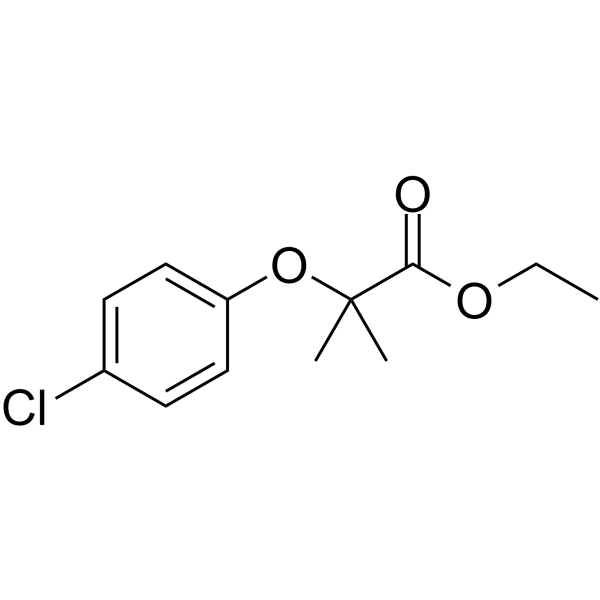
HY-B0287
ClofibratePPAR Agonist -
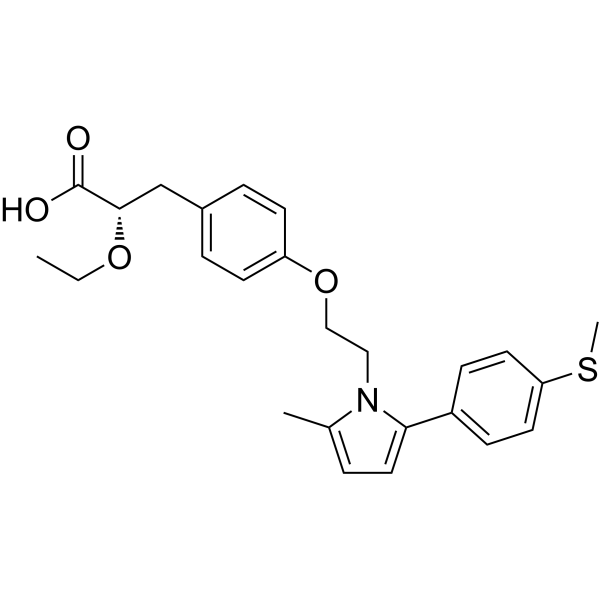
HY-19937
SaroglitazarPPAR Agonist -
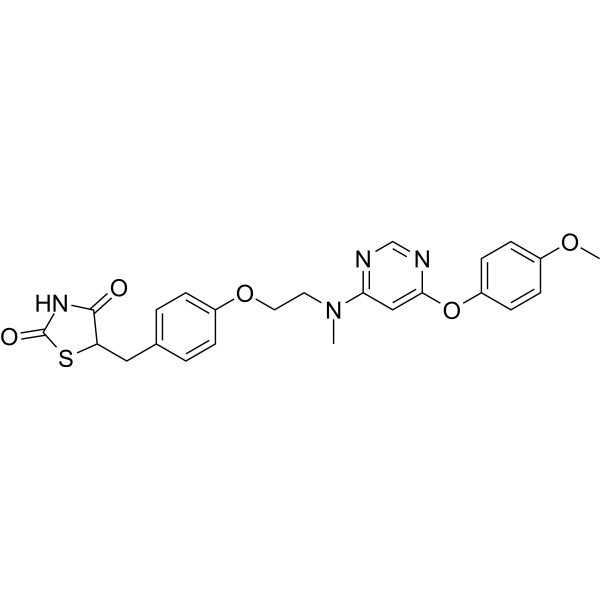
HY-14928
LobeglitazonePPAR Agonist -
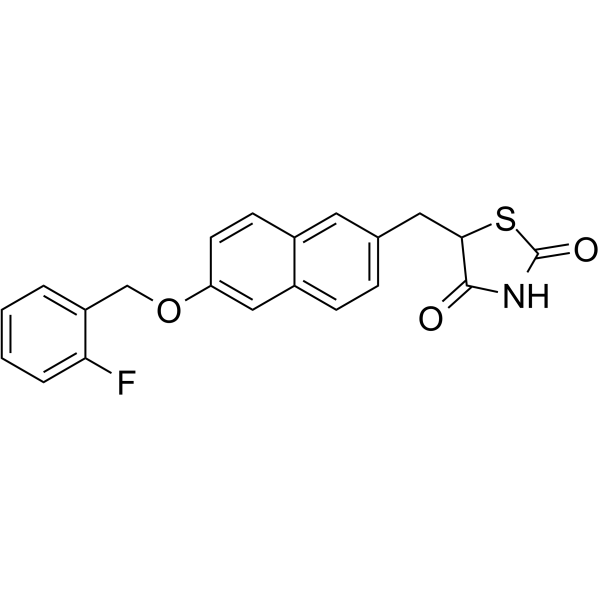
HY-100428
NetoglitazonePPARγ Ligand -
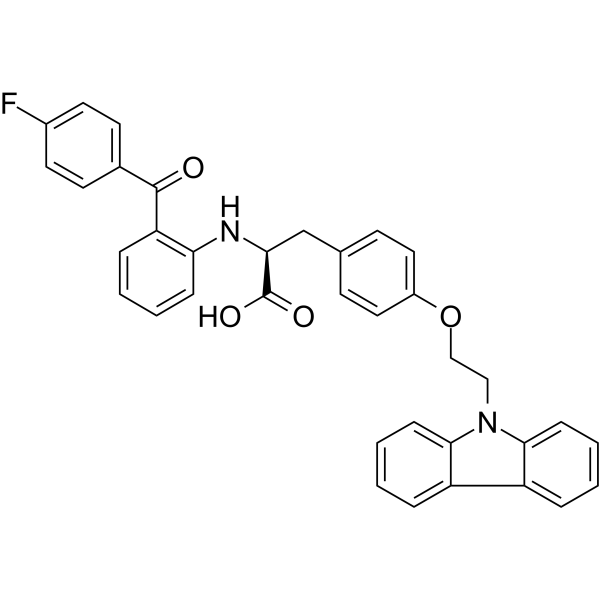
HY-106266
ChiglitazarPPARα/γ Dual Agonist
Publications Citing Use of MedChemExpress (MCE) Azemiglitazone
More

Biological Activity
Description
In Vitro
Azemiglitazone (15 μM, 4 h) crosslinks specifically to MPC, inhibits pyruvate oxidation and glucose production in liver mitochondria with interaction with MPC2[3].
Azemiglitazone has low binding and activating affinity for PPARγ with IC50 of 18.25 μM[6].
MedChemExpress (MCE) has not independently confirmed the accuracy of these methods. They are for reference only.
In Vivo
Azemiglitazone (2-5 μM in blood, p.o for 2-4 weeks) improves mitochondrial respiratory rate in DIO C57BL/6 mice[6]. Azemiglitazone reduces NASH caused liver injury, prevents (2-5 μM in blood, p.o. for 12 weeks) and reverses (2-5 μM in blood, p.o. for 3 weeks) stellate cells activation and fibrosis in HTF-C diet feeding C57BL6/J mice[4].
Azemiglitazone (2-5 μM in blood, p.o.) causes weight loss and suppresses stellate cell activation with or without MPC function in HTF-C diet feeding LS-Mpc2-/-C57BL6/J mice[4].
MedChemExpress (MCE) has not independently confirmed the accuracy of these methods. They are for reference only.
-
Animal Model:HTF-C diet feeding C57BL6/J mice [4]
-
Dosage:331 ppm MSDC-0602 potassium salt (2-5 μM Azemiglitazone in blood)
-
Administration:oral administration for 12 weeks (after 4 weeks of HTF-C diet) or 3 weeks (16 weeks after HTF-C diet)
-
Result:Induced weight loss, decreased concentrations of plasma ALT and AST and stellate cell activation.
-
Animal Model:HTF-C diet feeding LS-Mpc2-/-C57BL6/J mice [4]
-
Dosage:331 ppm MSDC-0602 potassium salt (2-5 μM Azemiglitazone in blood)
-
Administration:oral administration for 12 weeks (after 4 weeks of HTF-C diet)
-
Result:Induced weight loss, suppressed stellate cell activation.
-
Animal Model:diet induced obesity C57BL/6 mice[6]
-
Dosage:300 ppm MSDC-0602 (2-5 μM Azemiglitazone in blood)
-
Administration:oral administration for 2-4 weeks
-
Result:Reduced insulin concentration in plasma, increased glucose infusion rate and glucose uptake into gastrocnemius, adipose tissue, and heart. Improved mitochondrial oxygen consumption.


Chemical Information
-
CAS No. 1133819-87-0
-
Appearance Solid
-
Molecular Weight 371.41
-
Formula C19H17NO5S
-
Color White to off-white
-
SMILES
O=C1C(SC(N1)=O)CC2=CC=C(OCC(C3=CC(OC)=CC=C3)=O)C=C2
-
Synonyms
MSDC-0602
-
Shipping
Room temperature in continental US; may vary elsewhere.
-
Storage
Powder -20°C 3 years 4°C 2 years In solvent -80°C 2 years -20°C 1 year


Publications (1)
-
Journal Impact Factor
-
Most Recent
-
Nat Commun
TIGIT deficiency promotes autoreactive CD4+ T-cell responses through a metabolic‒epigenetic mechanism in autoimmune myositis. [Abstract]2025 May 15;16(1):4502. PMID: 40374622


Solvent & Solubility
In Vitro:
DMSO : 125 mg/mL (336.56 mM; Need ultrasonic; Hygroscopic DMSO has a significant impact on the solubility of product, please use newly opened DMSO)
H2O : < 0.1 mg/mL (insoluble)
Please refer to the solubility information to select the appropriate solvent. Once prepared, please aliquot and store the solution to prevent product inactivation from repeated freeze-thaw cycles.
Storage method and period of stock solution: -80°C, 2 years; -20°C, 1 year. When stored at -80°C, please use it within 2 years. When stored at -20°C, please use it within 1 year.
Please refer to the solubility information to select the appropriate solvent. Once prepared, please aliquot and store the solution to prevent product inactivation from repeated freeze-thaw cycles.
Storage method and period of stock solution: -80°C, 2 years; -20°C, 1 year. When stored at -80°C, please use it within 2 years. When stored at -20°C, please use it within 1 year.
Concentration (start) × Volume (start) = Concentration (final) × Volume (final)
In Vivo:
Select the appropriate dissolution method based on your experimental animal and administration route.
- For the following dissolution methods, please ensure to first prepare a clear stock solution using an In Vitro approach and then sequentially add co-solvents:
- To ensure reliable experimental results, the clarified stock solution can be appropriately stored based on storage conditions. As for the working solution for In Vivo experiments, it is recommended to prepare freshly and use it on the same day.
- The percentages shown for the solvents indicate their volumetric ratio in the final prepared solution. If precipitation or phase separation occurs during preparation, heat and/or sonication can be used to aid dissolution.
Add each solvent one by one: 10% DMSO 40% PEG300 5% Tween-80 45% Saline
Solubility: ≥ 2.08 mg/mL (5.60 mM); Clear solution
This protocol yields a clear solution of ≥ 2.08 mg/mL (saturation unknown).
Taking 1 mL working solution as an example, add 100 μL DMSO stock solution (20.8 mg/mL) to 400 μL PEG300, and mix evenly; then add 50 μL Tween-80 and mix evenly; then add 450 μL Saline to adjust the volume to 1 mL.
Preparation of Saline: Dissolve 0.9 g sodium chloride in ddH₂O and dilute to 100 mL to obtain a clear Saline solution.
Add each solvent one by one: 10% DMSO 90% (20% SBE-β-CD in Saline)
Solubility: ≥ 2.08 mg/mL (5.60 mM); Clear solution
This protocol yields a clear solution of ≥ 2.08 mg/mL (saturation unknown).
Taking 1 mL working solution as an example, add 100 μL DMSO stock solution (20.8 mg/mL) to 900 μL 20% SBE-β-CD in Saline, and mix evenly.
Preparation of 20% SBE-β-CD in Saline (4°C, storage for one week): 2 g SBE-β-CD powder is dissolved in 10 mL Saline, completely dissolve until clear.
In Vivo Dissolution Calculator
Please enter the basic information of animal experiments:
-
-
-
-
Recommended: Prepare an additional quantity of animals to account for potential losses during experiments.
Please enter your animal formula composition:
-
%DMSO +
Recommended: Keep the proportion of DMSO in working solution below 2% if your animal is weak.
-
%+
-
+%Tween-80 + +
-
%Saline +
The co-solvents required include: DMSO, . All of co-solvents are available by MedChemExpress (MCE). , Tween 80. All of co-solvents are available by MedChemExpress (MCE).
Working solution concentration: 0.22 mg/mL
Method for preparing stock solution: mg drug dissolved in μL DMSO. Stock solution concentration: mg/mL.
1. Take μL DMSO stock solution;
2. Add μL .
μL , mix evenly;
3. Then add μL Tween 80, mix evenly;
4. Then add μL
Please ensure that the stock solution in the first step is dissolved to a clear state, and add co-solvents in sequence. You can use ultrasonic heating (ultrasonic cleaner, recommended frequency 20-40 kHz), vortexing, etc. to assist dissolution.


Purity & Documentation
-
Data Sheet (277 KB)
-
SDS (396 KB)
- English - EN (396 KB)
- Français - FR (396 KB)
- Deutsch - DE (396 KB)
- Norwegian - NO (396 KB)
- Español - ES (396 KB)
- Swedish - SV (396 KB)
- Italian - IT (396 KB)
- Korean - KR (396 KB)
- Portuguese - PT (396 KB)
-
Handling Instructions (2659 KB)
References
[1]. Chen Z, et al. Resistance and metabolic derangements in obese mice are ameliorated by a novel peroxisome proliferator-activated receptor γ-sparing thiazolidinedione. J Biol Chem. 2012 Jul 6;287(28):23537-48. [Content Brief]
[2]. Vigueira PA, et al. The beneficial metabolic effects of sensitizers are not attenuated by mitochondrial pyruvate carrier 2 hypomorphism. Exp Physiol. 2017 Aug 1;102(8):985-999. [Content Brief]
[3]. McCommis KS, et al., Loss of Mitochondrial Pyruvate Carrier 2 in the Liver Leads to Defects in Gluconeogenesis and Compensation via Pyruvate-Alanine Cycling. Cell Metab. 2015 Oct 6;22(4):682-94. [Content Brief]
[4]. McCommis KS, et al., Targeting the mitochondrial pyruvate carrier attenuates fibrosis in a mouse model of nonalcoholic steatohepatitis. Hepatology. 2017 May;65(5):1543-1556. [Content Brief]
[6]. Chen Z, et al., Insulin resistance and metabolic derangements in obese mice are ameliorated by a novel peroxisome proliferator-activated receptor γ-sparing thiazolidinedione. J Biol Chem. 2012 Jul 6;287(28):23537-48. [Content Brief]


Complete Stock Solution Preparation Table
Please refer to the solubility information to select the appropriate solvent. Once prepared, please aliquot and store the solution to prevent product inactivation from repeated freeze-thaw cycles.
Storage method and period of stock solution: -80°C, 2 years; -20°C, 1 year. When stored at -80°C, please use it within 2 years. When stored at -20°C, please use it within 1 year.
| Optional Solvent | Concentration Solvent Mass | 1 mg | 5 mg | 10 mg | 25 mg |
|---|---|---|---|---|---|
| DMSO | 1 mM | 2.6924 mL | 13.4622 mL | 26.9244 mL | 67.3111 mL |
| 5 mM | 0.5385 mL | 2.6924 mL | 5.3849 mL | 13.4622 mL | |
| 10 mM | 0.2692 mL | 1.3462 mL | 2.6924 mL | 6.7311 mL | |
| 15 mM | 0.1795 mL | 0.8975 mL | 1.7950 mL | 4.4874 mL | |
| 20 mM | 0.1346 mL | 0.6731 mL | 1.3462 mL | 3.3656 mL | |
| 25 mM | 0.1077 mL | 0.5385 mL | 1.0770 mL | 2.6924 mL | |
| 30 mM | 0.0897 mL | 0.4487 mL | 0.8975 mL | 2.2437 mL | |
| 40 mM | 0.0673 mL | 0.3366 mL | 0.6731 mL | 1.6828 mL | |
| 50 mM | 0.0538 mL | 0.2692 mL | 0.5385 mL | 1.3462 mL | |
| 60 mM | 0.0449 mL | 0.2244 mL | 0.4487 mL | 1.1219 mL | |
| 80 mM | 0.0337 mL | 0.1683 mL | 0.3366 mL | 0.8414 mL | |
| 100 mM | 0.0269 mL | 0.1346 mL | 0.2692 mL | 0.6731 mL |


Azemiglitazone Related Classifications
HY-108022 Related Classifications
 Powered by Bioz