



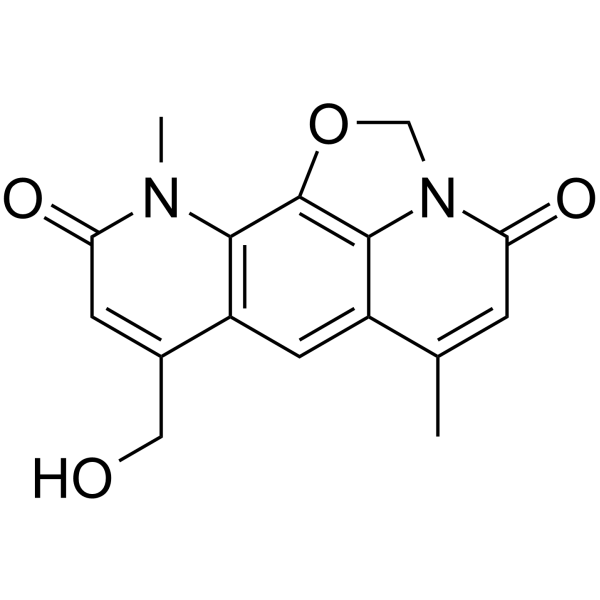
Nybomycin
Nybomycin, an antibiotic, exhibits antiphage and antibacterial properties. Nybomycin binds to DNA and induces a unique morphological change to mycobacterial bacilli leading the bacterial cell death.
For research use only. We do not sell to patients.
- CAS No.: 30408-30-1
- Formula: C16H14N2O4
- Molecular Weight:298.29
-
Storage:
-20°C, sealed storage, away from moisture
* In solvent : -80°C, 6 months; -20°C, 1 month (sealed storage, away from moisture)

To place orders, for customer services and technical support, please contact: MedChemExpress USA
Tel: 609-228-6898 E-mail: [email protected] [email protected]


-
 Biological Activity
-
Chemical Information
-
Solvent & Solubility
- Protocols
- Purity & Documentation
- References
-
 Help & FAQs


-
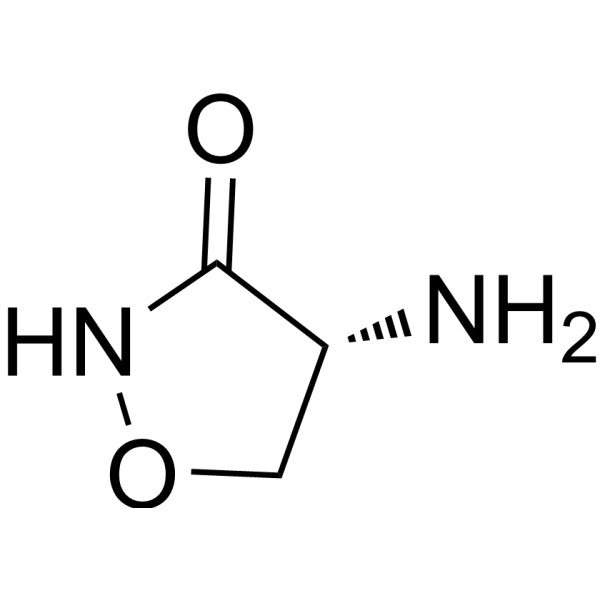
HY-B0030
D-CycloserineBacterial Inhibitor -
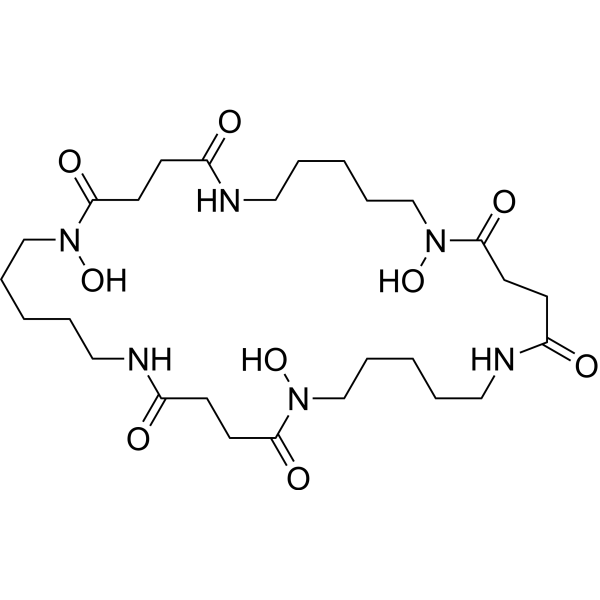
HY-124452
NocardamineSiderophore -

HY-N12228
Phenelfamycin EAntibiotic -
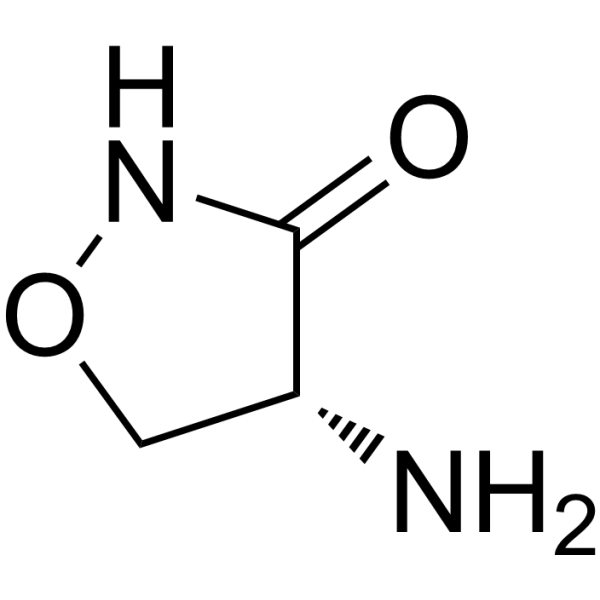
HY-B0030R
D-Cycloserine (Standard) -

HY-N7536
VoacangineTRPM8 Antagonist -
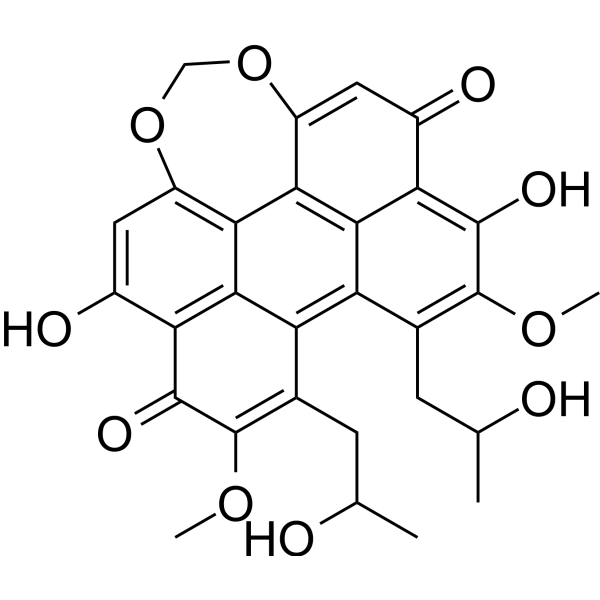
HY-N6743
CercosporinPKC Inhibitor -
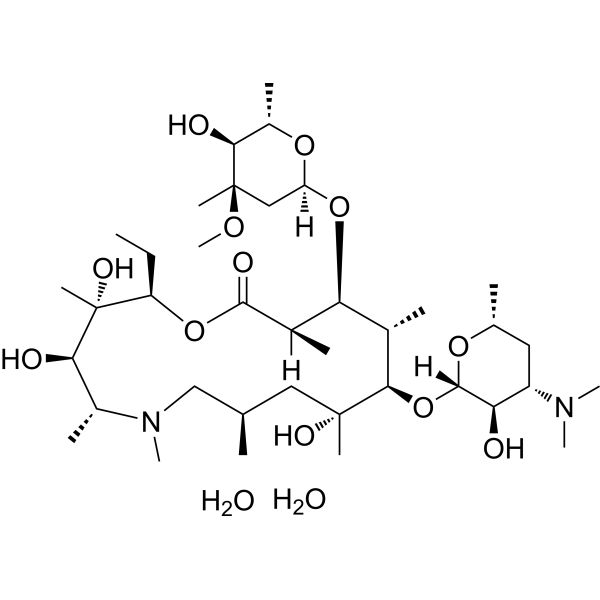
HY-17506A
Azithromycin hydrateAntibiotic -

HY-113784
ThiocarlideAntibacterial Agent -

HY-17506AR
Azithromycin hydrate (Standard)Antibiotic -

HY-Z8143
3-Keto fusidic acidFusidic Acid Metabolites -
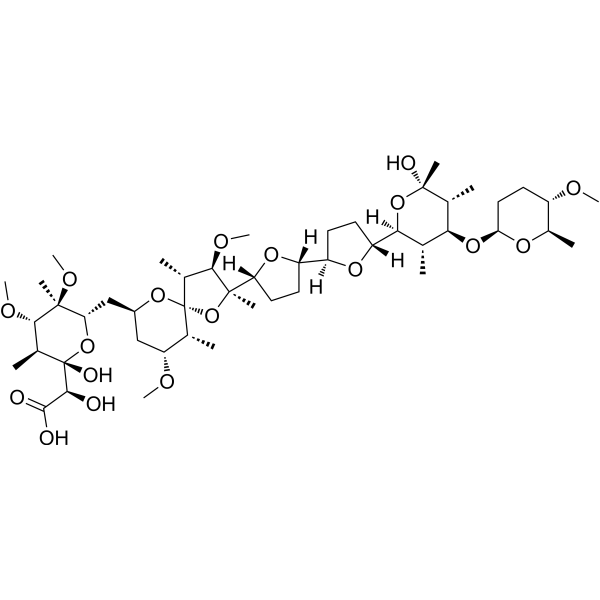
HY-136943
K-41Antimalarial/Antibacterial Agent -

HY-B1892S1
Cefazolin-13C2,15NStable Isotope
All Antibiotic Isoforms
More

Biological Activity
Description
Cellular Effect
|
Cell Line

|
Type | Value | Description | References |
|---|---|---|---|---|
| A549 | EC50 |
>100 μM
Compound: 4
|
Antiproliferative activity against human A549 cells assessed as reduction in cell viability after 72 hrs by alamar blue assay
Antiproliferative activity against human A549 cells assessed as reduction in cell viability after 72 hrs by alamar blue assay
|
[PMID: 31833370] |
| PC-3 | EC50 |
>100 μM
Compound: 4
|
Antiproliferative activity against human PC3 cells assessed as reduction in cell viability after 72 hrs by alamar blue assay
Antiproliferative activity against human PC3 cells assessed as reduction in cell viability after 72 hrs by alamar blue assay
|
[PMID: 31833370] |


Chemical Information
-
CAS No. 30408-30-1
-
Appearance Solid
-
Molecular Weight 298.29
-
Formula C16H14N2O4
-
Color Off-white to light brown
-
SMILES
O=C1N2C3=C(C4=C(C=C3C(C)=C1)C(CO)=CC(N4C)=O)OC2
-
Structure Classification
-
Initial Source
Streptomyces sp.
-
Shipping
Room temperature in continental US; may vary elsewhere.
-
Storage
-20°C, sealed storage, away from moisture
* In solvent : -80°C, 6 months; -20°C, 1 month (sealed storage, away from moisture)


Solvent & Solubility
In Vitro:
Acetic acid : 15 mg/mL (50.29 mM; Need ultrasonic and warming)
Please refer to the solubility information to select the appropriate solvent. Once prepared, please aliquot and store the solution to prevent product inactivation from repeated freeze-thaw cycles.
Storage method and period of stock solution: -80°C, 6 months; -20°C, 1 month (sealed storage, away from moisture). When stored at -80°C, please use it within 6 months. When stored at -20°C, please use it within 1 month.
Please refer to the solubility information to select the appropriate solvent. Once prepared, please aliquot and store the solution to prevent product inactivation from repeated freeze-thaw cycles.
Storage method and period of stock solution: -80°C, 6 months; -20°C, 1 month (sealed storage, away from moisture). When stored at -80°C, please use it within 6 months. When stored at -20°C, please use it within 1 month.
Concentration (start) × Volume (start) = Concentration (final) × Volume (final)

Protocols
-
Research Protocol for Infectious Diseases
Infectious-disease experiments test how pathogens interact with host barriers, innate immune receptors, inflammatory signaling, pathogen replication, and tissue injury; pattern-recognition receptors such as TLRs, RIG-I-like receptors, NOD-like receptors, and inflammasomes detect microbial molecules and activate NF-κB, interferon, and cytokine responses. The central hypothesis is that infection severity reflects the balance between pathogen burden and host response: protective inflammation restricts pathogen growth, whereas excessive or mislocalized inflammation contributes to tissue damage and disease phenotype. Unresolved questions include which host pathways are protective versus pathogenic, why some infection models fail to translate to human disease, and which combined readouts best predict clinically relevant infection outcomes.
-
Cell Cytotoxicity Assay
Cytotoxicity assays are usually based on the assessment of cell membrane damage, which can also be indirectly detected by measuring cell viability. Detection methods include MTT assay, CKK-8 assay, LDH assay and ATP assay, etc.
-
Mammalian live/dead viability and cytotoxicity staining
Live/dead viability and cytotoxicity staining assays are based on the simultaneous detection of intracellular esterase activity in metabolically active (viable) cells and membrane integrity loss in non-viable cells. In commonly used dual-staining approaches, membrane-permeant fluorogenic substrates are converted by intracellular esterases into fluorescent products in live cells, while impermeant DNA-binding dyes selectively enter cells with compromised plasma membranes and label nucleic acids in dead or dying cells, enabling discrimination between viable and non-viable populations by fluorescence microscopy or flow cytometry.
-
Apoptosis Solutions
Apoptosis is a regulated, generally non-lytic cell-death pathway that removes unwanted, damaged, infected, or abnormal cells through coordinated morphological changes, caspase activation, DNA fragmentation, and membrane remodeling. The intrinsic apoptosis pathway is controlled mainly by mitochondrial outer membrane permeabilization, BCL-2 family proteins, cytochrome c release, apoptosome formation, caspase-9 activation, and downstream executioner caspase-3/7 activation. The extrinsic apoptosis pathway is initiated by death receptors such as Fas, TNFR, and TRAIL receptors, which recruit adaptor proteins and activate caspase-8 before engaging executioner caspases or mitochondrial amplification through BID cleavage. Apoptosis is linked to many phenotypes, including cancer cell killing, tissue homeostasis, immune regulation, neurodegeneration, infection response, and treatment-induced cytotoxicity; unresolved questions include how apoptosis interacts with necroptosis, pyroptosis, ferroptos


Purity & Documentation
-
Data Sheet (272 KB)
-
SDS (252 KB)
- English - EN (252 KB)
- Français - FR (252 KB)
- Deutsch - DE (252 KB)
- Norwegian - NO (252 KB)
- Español - ES (252 KB)
- Swedish - SV (252 KB)
- Italian - IT (252 KB)
- Korean - KR (252 KB)
- Portuguese - PT (252 KB)
-
Handling Instructions (2659 KB)
References
[1]. Strelitz F, et, al. NYBOMYCIN, A NEW ANTIBIOTIC WITH ANTIPHAGE AND ANTIBACTERIAL PROPERTIES. Proc Natl Acad Sci U S A. 1955 Sep 15;41(9):620-4. [Content Brief]
[2]. Arai M, et, al. Anti-dormant mycobacterial activity and target analysis of nybomycin produced by a marine-derived Streptomyces sp. Bioorg Med Chem. 2015 Jul 1;23(13):3534-41. [Content Brief]


Complete Stock Solution Preparation Table
Please refer to the solubility information to select the appropriate solvent. Once prepared, please aliquot and store the solution to prevent product inactivation from repeated freeze-thaw cycles.
Storage method and period of stock solution: -80°C, 6 months; -20°C, 1 month (sealed storage, away from moisture). When stored at -80°C, please use it within 6 months. When stored at -20°C, please use it within 1 month.
| Optional Solvent | Concentration Solvent Mass | 1 mg | 5 mg | 10 mg | 25 mg |
|---|---|---|---|---|---|
| Acetic acid | 1 mM | 3.3524 mL | 16.7622 mL | 33.5244 mL | 83.8111 mL |
| 5 mM | 0.6705 mL | 3.3524 mL | 6.7049 mL | 16.7622 mL | |
| 10 mM | 0.3352 mL | 1.6762 mL | 3.3524 mL | 8.3811 mL | |
| 15 mM | 0.2235 mL | 1.1175 mL | 2.2350 mL | 5.5874 mL | |
| 20 mM | 0.1676 mL | 0.8381 mL | 1.6762 mL | 4.1906 mL | |
| 25 mM | 0.1341 mL | 0.6705 mL | 1.3410 mL | 3.3524 mL | |
| 30 mM | 0.1117 mL | 0.5587 mL | 1.1175 mL | 2.7937 mL | |
| 40 mM | 0.0838 mL | 0.4191 mL | 0.8381 mL | 2.0953 mL | |
| 50 mM | 0.0670 mL | 0.3352 mL | 0.6705 mL | 1.6762 mL |


Nybomycin Related Classifications
HY-123635 Related Classifications
 Powered by Bioz