



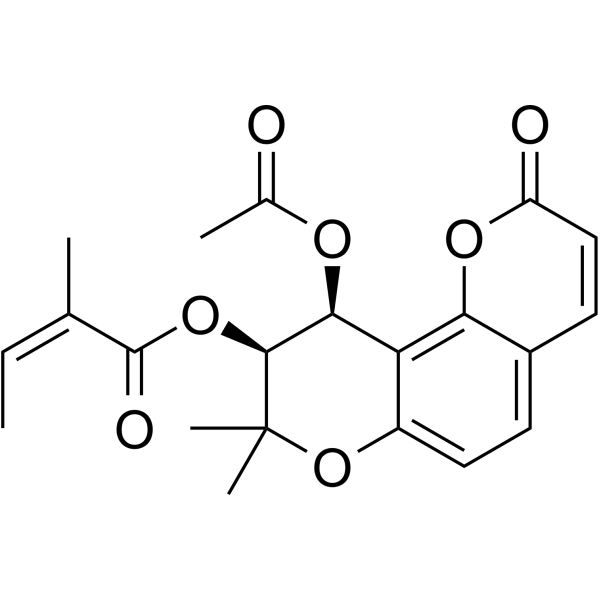
(±)-Praeruptorin A

Based on 1 Customer Validation
(±)-Praeruptorin A, a coumarin compound, is the main bioactive component in Peucedani Radix. As a calcium channel blocker, (±)-Praeruptorin A exhibits great antihypertensive effects. In addition, (±)-Praeruptorin A also has the effects of relaxing vascular smooth muscle, inhibiting airway inflammation and airway hyperresponsiveness. (±)-Praeruptorin A can be used for the research of allergic asthma, hypertension and other diseases.
For research use only. We do not sell to patients.
- Purity : 99.94%
- CAS No.: 73069-25-7
- Formula: C21H22O7
- Molecular Weight:386.40
-
Storage:
4°C, protect from light
* In solvent : -80°C, 6 months; -20°C, 1 month (protect from light)

To place orders, for customer services and technical support, please contact: MedChemExpress USA
Tel: 609-228-6898 E-mail: [email protected] [email protected]


-
 Biological Activity
-
Chemical Information
-
Solvent & Solubility
- Protocols
- Purity & Documentation
- References
-
 Help & FAQs


-
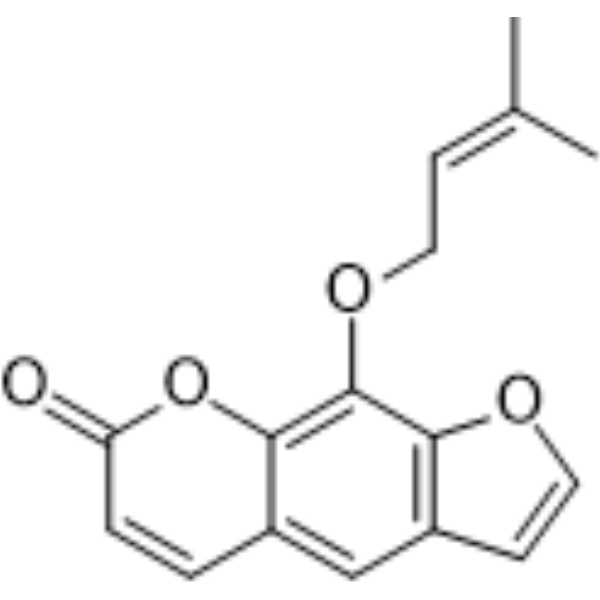
HY-N0285
ImperatorinCholinesterase (ChE) Inhibitor -

HY-N0081R
(±)-Praeruptorin A (Standard)Standard of (±)-Praeruptorin A -

HY-N0285R
Imperatorin (Standard)Cholinesterase (ChE) Inhibitor -
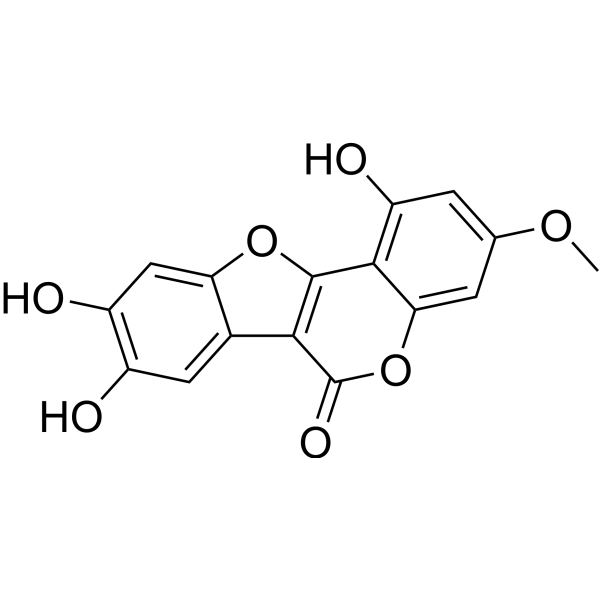
HY-N0551
WedelolactoneCaspase-11 And 5-Lox Inhibitor -
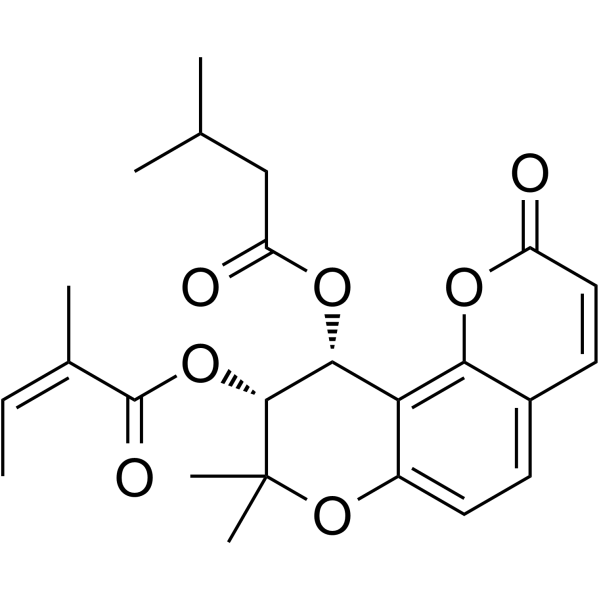
HY-N0079
Praeruptorin CCalcium Channel Antagonist -

HY-N0551R
Wedelolactone (Standard)Caspase-11 And 5-Lox Inhibitor
All Calcium Channel Isoforms
More

Biological Activity
Description
|
IL-4 |
IL-5 |
IL-13 |
In Vivo
MedChemExpress (MCE) has not independently confirmed the accuracy of these methods. They are for reference only.
-
Animal Model:SPF female BALB/c mice aged 5-7 weeks old treated Ovalbumins (HY-W250978)[3]
-
Dosage:30, 60 and 120 mg/kg
-
Administration:Oral gavage; 5 days
-
Result:Significantly reduced airway hyperresponsiveness, alleviated airway eosinophilic inflammation, improved lung pathological lesions.
Decreased levels of IL-4, IL-5, IL-13, LTC4 in bronchoalveolar lavage fluid and IgE in serum.
Inhibited eotaxin protein/mRNA expression, IκBα degradation, NF-κB nuclear translocation, NF-κB DNA-binding activity, and RelA/p65 phosphorylation in lung tissue.


Chemical Information
-
CAS No. 73069-25-7
-
Appearance Solid
-
Molecular Weight 386.40
-
Formula C21H22O7
-
Color White to off-white
-
SMILES
C/C=C(C)\C(O[C@H]1[C@@H](OC(C)=O)C2=C3C(C=CC(O3)=O)=CC=C2OC1(C)C)=O
-
Structure Classification
-
Shipping
Room temperature in continental US; may vary elsewhere.
-
Storage
4°C, protect from light
* In solvent : -80°C, 6 months; -20°C, 1 month (protect from light)


Solvent & Solubility
In Vitro:
DMSO : 100 mg/mL (258.80 mM; Need ultrasonic; Hygroscopic DMSO has a significant impact on the solubility of product, please use newly opened DMSO)
Please refer to the solubility information to select the appropriate solvent. Once prepared, please aliquot and store the solution to prevent product inactivation from repeated freeze-thaw cycles.
Storage method and period of stock solution: -80°C, 6 months; -20°C, 1 month (protect from light). When stored at -80°C, please use it within 6 months. When stored at -20°C, please use it within 1 month.
Please refer to the solubility information to select the appropriate solvent. Once prepared, please aliquot and store the solution to prevent product inactivation from repeated freeze-thaw cycles.
Storage method and period of stock solution: -80°C, 6 months; -20°C, 1 month (protect from light). When stored at -80°C, please use it within 6 months. When stored at -20°C, please use it within 1 month.
Concentration (start) × Volume (start) = Concentration (final) × Volume (final)
In Vivo:
Select the appropriate dissolution method based on your experimental animal and administration route.
- For the following dissolution methods, please ensure to first prepare a clear stock solution using an In Vitro approach and then sequentially add co-solvents:
- To ensure reliable experimental results, the clarified stock solution can be appropriately stored based on storage conditions. As for the working solution for In Vivo experiments, it is recommended to prepare freshly and use it on the same day.
- The percentages shown for the solvents indicate their volumetric ratio in the final prepared solution. If precipitation or phase separation occurs during preparation, heat and/or sonication can be used to aid dissolution.
Add each solvent one by one: 10% DMSO 40% PEG300 5% Tween-80 45% Saline
Solubility: ≥ 2.5 mg/mL (6.47 mM); Clear solution
This protocol yields a clear solution of ≥ 2.5 mg/mL (saturation unknown).
Taking 1 mL working solution as an example, add 100 μL DMSO stock solution (25.0 mg/mL) to 400 μL PEG300, and mix evenly; then add 50 μL Tween-80 and mix evenly; then add 450 μL Saline to adjust the volume to 1 mL.
Preparation of Saline: Dissolve 0.9 g sodium chloride in ddH₂O and dilute to 100 mL to obtain a clear Saline solution.
Add each solvent one by one: 10% DMSO 90% (20% SBE-β-CD in Saline)
Solubility: 2.5 mg/mL (6.47 mM); Suspended solution; Need ultrasonic
This protocol yields a suspended solution of 2.5 mg/mL. Suspended solution can be used for oral and intraperitoneal injection.
Taking 1 mL working solution as an example, add 100 μL DMSO stock solution (25.0 mg/mL) to 900 μL 20% SBE-β-CD in Saline, and mix evenly.
Preparation of 20% SBE-β-CD in Saline (4°C, storage for one week): 2 g SBE-β-CD powder is dissolved in 10 mL Saline, completely dissolve until clear.
In Vivo Dissolution Calculator
Please enter the basic information of animal experiments:
-
-
-
-
Recommended: Prepare an additional quantity of animals to account for potential losses during experiments.
Please enter your animal formula composition:
-
%DMSO +
Recommended: Keep the proportion of DMSO in working solution below 2% if your animal is weak.
-
%+
-
+%Tween-80 + +
-
%Saline +
The co-solvents required include: DMSO, . All of co-solvents are available by MedChemExpress (MCE). , Tween 80. All of co-solvents are available by MedChemExpress (MCE).
Working solution concentration: 0.22 mg/mL
Method for preparing stock solution: mg drug dissolved in μL DMSO. Stock solution concentration: mg/mL. * In solvent : -80°C, 6 months; -20°C, 1 month (protect from light)
1. Take μL DMSO stock solution;
2. Add μL .
μL , mix evenly;
3. Then add μL Tween 80, mix evenly;
4. Then add μL
Please ensure that the stock solution in the first step is dissolved to a clear state, and add co-solvents in sequence. You can use ultrasonic heating (ultrasonic cleaner, recommended frequency 20-40 kHz), vortexing, etc. to assist dissolution.

Protocols
-
Ovalbumin-Induced Allergic Airway Inflammation
Ovalbumin-induced allergic airway inflammation is a mouse model in which systemic sensitization to ovalbumin, usually with aluminum hydroxide adjuvant, is followed by airway ovalbumin challenge to induce allergic airway inflammation, eosinophil recruitment, mucus production, serum antigen-specific IgE, Th2 cytokine responses, and airway hyperresponsiveness to methacholine. The model is used to study allergen-driven airway inflammation and asthma-like immune responses, but it does not reproduce every feature of human asthma. The main readouts are bronchoalveolar lavage fluid cellularity, lung histopathology, airway hyperresponsiveness, serum OVA-specific IgE, and cytokines such as IL-4, IL-5, and IL-13 in bronchoalveolar lavage fluid or lung samples. Eosinophilia and Th2 cytokines reflect allergic type 2 inflammation, while methacholine responsiveness provides a functional airway-reactivity endpoint.
-
Research Protocol for Cardiovascular Diseases
Cardiovascular disease can be modeled as maladaptive cardiac remodeling, where ischemic injury or pressure overload activates inflammatory signaling, fibroblast activation, extracellular-matrix deposition, cardiomyocyte hypertrophy, vascular remodeling, and progressive ventricular dysfunction. The TGF-β/SMAD axis is a central profibrotic pathway after myocardial injury and pressure overload, while innate immune and cytokine pathways regulate leukocyte recruitment, scar formation, and adverse remodeling. Key unresolved questions include which inflammatory signals are reparative versus harmful, when fibrosis is protective versus maladaptive, and whether pathway inhibition improves function without weakening necessary infarct healing or compensatory remodeling.
-
Research Protocol for Inflammation-related Diseases
The NLRP3 inflammasome is a cytosolic innate immune signaling platform that integrates priming signals and danger-signal activation to promote caspase-1 activation, maturation of IL-1β and IL-18, and gasdermin D-mediated pyroptotic cell death. The core experimental logic is to determine whether inflammatory disease phenotypes are driven by increased NLRP3 expression, ASC-containing inflammasome assembly, caspase-1 cleavage, GSDMD cleavage, and extracellular release of IL-1β/IL-18 rather than by nonspecific cell injury alone. The pathway is strongly linked to inflammation-related disease phenotypes because monosodium urate crystals activate NALP3/NLRP3 inflammasome signaling in gout-like crystal inflammation, cholesterol crystals activate NLRP3 inflammasomes in atherogenesis models, and DSS-induced intestinal inflammation has been reported to involve NLRP3 inflammasome activity. However, experimental colitis studies also show context-dependent protective effects of NLRP3 inflammasome co


Purity & Documentation
-
Data Sheet (279 KB)
-
SDS (252 KB)
- English - EN (252 KB)
- Français - FR (252 KB)
- Deutsch - DE (252 KB)
- Norwegian - NO (252 KB)
- Español - ES (252 KB)
- Swedish - SV (252 KB)
- Italian - IT (252 KB)
- Korean - KR (252 KB)
- Portuguese - PT (252 KB)
-
Handling Instructions (2659 KB)
References
[1]. Song YL, et al. Metabolic characterization of (±)-praeruptorin A in vitro and in vivo by high performance liquidchromatography coupled with hybrid triple quadrupole-linear ion trap mass spectrometry and time-of-flight mass spectrometry. J Pharm Biomed Anal. 2014 Mar;90:98-110. [Content Brief]
[2]. Xu Z, et al. (+/-)-Praeruptorin A enantiomers exert distinct relaxant effects on isolated rat aorta rings dependent on endothelium and nitric oxide synthesis. Chem Biol Interact. 2010 Jul 30;186(2):239-46. [Content Brief]
[3]. Xiong Y, et al. Effects of (±)-praeruptorin A on airway inflammation, airway hyperresponsiveness and NF-κB signaling pathway in a mouse model of allergic airway disease. Eur J Pharmacol. 2012 May 15;683(1-3):316-24. [Content Brief]


Complete Stock Solution Preparation Table
Please refer to the solubility information to select the appropriate solvent. Once prepared, please aliquot and store the solution to prevent product inactivation from repeated freeze-thaw cycles.
Storage method and period of stock solution: -80°C, 6 months; -20°C, 1 month (protect from light). When stored at -80°C, please use it within 6 months. When stored at -20°C, please use it within 1 month.
| Optional Solvent | Concentration Solvent Mass | 1 mg | 5 mg | 10 mg | 25 mg |
|---|---|---|---|---|---|
| DMSO | 1 mM | 2.5880 mL | 12.9400 mL | 25.8799 mL | 64.6998 mL |
| 5 mM | 0.5176 mL | 2.5880 mL | 5.1760 mL | 12.9400 mL | |
| 10 mM | 0.2588 mL | 1.2940 mL | 2.5880 mL | 6.4700 mL | |
| 15 mM | 0.1725 mL | 0.8627 mL | 1.7253 mL | 4.3133 mL | |
| 20 mM | 0.1294 mL | 0.6470 mL | 1.2940 mL | 3.2350 mL | |
| 25 mM | 0.1035 mL | 0.5176 mL | 1.0352 mL | 2.5880 mL | |
| 30 mM | 0.0863 mL | 0.4313 mL | 0.8627 mL | 2.1567 mL | |
| 40 mM | 0.0647 mL | 0.3235 mL | 0.6470 mL | 1.6175 mL | |
| 50 mM | 0.0518 mL | 0.2588 mL | 0.5176 mL | 1.2940 mL | |
| 60 mM | 0.0431 mL | 0.2157 mL | 0.4313 mL | 1.0783 mL | |
| 80 mM | 0.0323 mL | 0.1617 mL | 0.3235 mL | 0.8087 mL | |
| 100 mM | 0.0259 mL | 0.1294 mL | 0.2588 mL | 0.6470 mL |


(±)-Praeruptorin A Related Classifications
HY-N0081 Related Classifications
 Powered by Bioz