213 Results for "

STEP

" in MedChemExpress (MCE) Product Catalog:
Products (213)

213 Results for "STEP" in MCE Product Catalog:

Cat. No.: HY-184266
CAS No.: 2926699-71-8
Synonyms: ONO-6428513
Target:  

Ferroptosis

Research Areas:  

Cancer

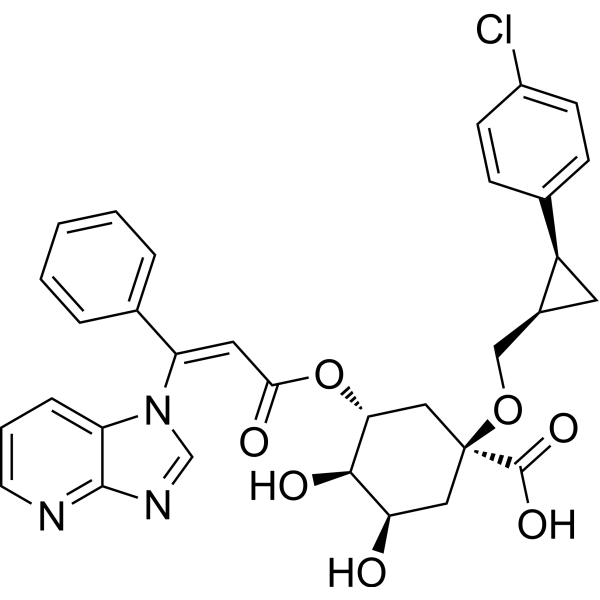
GCLCi0 (ONO-6428513) is a glutamate-cysteine ligase catalytic subunit (GCLC) inhibitor and ferroptosis inducer that blocks the rate-limiting step of glutathione synthesis and exerts anti-tumor activity. GCLCi0 specifically targets SMARCB1-deficient cancer cells, induces reactive oxygen species production and lipid peroxidation. In addition, GCLCi0 shows a significant synergistic effect with SLC7A11 inhibitors and Telaglenastat (HY-12248). GCLCi0 can be used in the research of smarcb1-deficient malignant rhabdoid tumors and smarcb1-deficient epithelioid sarcomas .
loading...
    loading...
Cat. No.: HY-184267
CAS No.: 2926699-78-5
Synonyms: ONO-7068506
Research Areas:  

Cancer

GCLCi1 is an orally active glutamate-cysteine ligase catalytic subunit (GCLC) inhibitor and ferroptosis inducer. GCLCi1 blocks the rate-limiting step of glutathione synthesis, leading to GSH depletion, elevated reactive oxygen species and lipid peroxidation. GCLCi1 exhibits high selectivity for SMARCB1 -deficient cancer cells and possesses anti-tumor activity. In addition, the combination of GCLCi1 with SLC7A11 inhibitors and Telaglenastat (HY-12248) produces a synergistic effect, which can be used for the research of smarcb1-deficient malignant rhabdoid tumors and smarcb1-deficient epithelioid sarcomas .
loading...
    loading...
Cat. No.: HY-E70976
Target:  

Endogenous Metabolite

Research Areas:  

Metabolic Disease

3-Phosphoglyceric Phosphokinase, Baker's yeast (S. cerevisiae) (EC 2.7.2.3) is an enzyme that catalyzes the reversible transfer of a phosphate group from 1,3-bisphosphoglyceRate (1,3-BPG) to ADP producing 3-phosphoglyceRate (3-PG) and ATP. 3-Phosphoglyceric Phosphokinase, Baker's yeast (S. cerevisiae) (EC 2.7.2.3) is a transferase. 3-Phosphoglyceric Phosphokinase is a major enzyme used in glycolysis, in the first ATP-geneRating step of the glycolytic pathway. In gluconeogenesis, the reaction catalyzed by 3-Phosphoglyceric Phosphokinase proceeds in the opposite direction, geneRating ADP and 1,3-BPG.
loading...
    loading...
Cat. No.: HY-P2832B
Research Areas:  

Others

Acyl-coenzyme A Synthetase, Pseudomonas sp. (EC 6.2.1.3) belongs to the ligase family and can activate the breakdown of complex fatty acids. Acyl-coenzyme A Synthetase, Pseudomonas sp. (EC 6.2.1.3) catalyzes the production of fatty acyl-CoA in a two-step process via an adenylate intermediate. Acyl-coenzyme A Synthetase, Pseudomonas sp. (EC 6.2.1.3) catalyzes the pre-reaction of fatty acid β-oxidation and can also be incorporated into phospholipids. Acyl-coenzyme A Synthetase, Pseudomonas sp. (EC 6.2.1.3) protein is involved in regulating and promoting the transport of long-chain fatty acids in mammalian cells.
loading...
    loading...
Cat. No.: HY-P2996B
CAS No.: 9029-27-0
Target:  

Others

Research Areas:  

Others

Nitrate Reductase (NAD[P]H), Pichia pastoris (recombinant) is a simplified version of nitrate reductase S-NaR1 expressed and purified by Pichia pastoris. Nitrate Reductase (NAD[P]H), Pichia Pastoris (recombinant) contains sites binding molybdenum-molybdenopyridine (Mo-MPT) and nitrate reduction active sites and only contains two domains instead of the five domains of the complete NaR. This simplified form of nitrate reductase was expressed in high density in P. pastoris and purified to homogeneity in one step by fixed metal affinity chromatography (IMAC). Nitrate Reductase (NAD[P]H), Pichia Pastoris (recombinant) can be used in the development of biosensors and environmental monitoring .
loading...
    loading...
Cat. No.: HY-W747491
CAS No.: 1365620-36-5
Triclosan- 13C12 is 13C labeled Triclosan (HY-B1119). Triclosan is a broad-spectrum antibacterial agent that inhibits bacterial fatty acid synthesis at the enoyl-acyl carrier protein reductase (FabI) step. Triclosan inhibits E. coli enoyl-acyl carrier protein reductase (FabI) and FabI containing a glycine-to-valine substitution at position 93 (FabIG93V) with IC50s of 2 μM and 10 μM, respectively. Triclosan causes apoptotic effect in cultured rat neural stem cells (NSC). Triclosan exacerbates colitis and colitis-associated colorectal tumorigenesis in animal models .
loading...
    loading...
Cat. No.: HY-131030
CAS No.: 2127150-20-1
Synonyms: JF669, SE; JF669, NHS
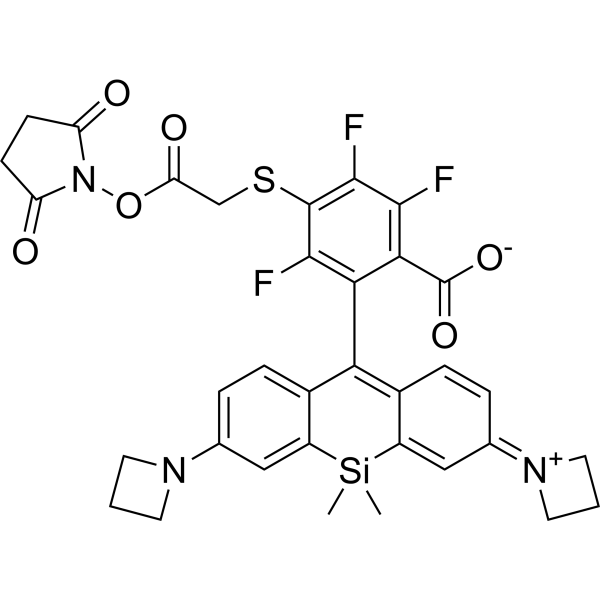
Janelia Fluor 669, SE (JF669, SE), a red fluorescent dye, can be directly reacted with the available thiol-containing HaloTag ligand under mild conditions (DIEA, DMF) to afford a JF669HaloTag ligand in a single step (Ex = 669 nm; Em = 682 nm) . Janelia Fluor fluorescent dyes can be chemically conjugated to the specific HaloTag substrate (a chloroalkane ligand) to form a fluorescent ligand, rather than binding directly to the HaloTag protein itself. Janelia Fluor products are licensed under U.S. Pat. Nos. 9,933,417, 10,018,624 and 10,161,932 and other patents from Howard Hughes Medical Institute.
loading...
    loading...
Cat. No.: HY-182514
CAS No.: 748785-70-8
Target:  

HIV hnRNP

Research Areas:  

Infection Cancer

BMMP is an anti-HIV-1 agent and hnRNP M modulator. BMMP modulates hnRNP M function to suppress CD44 mRNA expression. BMMP induces abnormal uncoating of the HIV viral core at the post-entry step. BMMP suppresses migration of TGF-β-stimulated lung carcinoma cells. BMMP suppresses HIV-1 reverse transcription and replication without inhibiting virion release. BMMP exerts anti-HIV-1 activity via a mechanism distinct from CA protein-binding heterocyclic compounds. BMMP can be used for the research of human immunodeficiency virus infection and non-small cell lung cancer .
loading...
    loading...
Cat. No.: HY-P0112
CAS No.: 1027141-02-1
Target:  

Deubiquitinase

Research Areas:  

Neurological Disease Cancer

Z-VAE (OMe)-FMK is a selective inhibitor of UCHL1, with better selectivity over UCHL3 and UCHL5. Z-VAE (OMe)-FMK binds to the active site cleft, covalently modifies the active site cysteine C90 to form a thioether bond, binds to inactive UCHL1 with a misaligned catalytic triad, and acts via a two-step addition-folding/migration/displacement mechanism. Z-VAE (OMe)-FMK stabilizes interactions through hydrogen bonding with oxyanion hole residues and van der Waals interactions with surrounding residues. Z-VAE (OMe)-FMK can be used in research related to colorectal cancer, lung cancer, pancreatic cancer, and Alzheimer's disease .
loading...
    loading...
Cat. No.: HY-100573S
CAS No.: 1795144-22-7
Purity:  99.26%
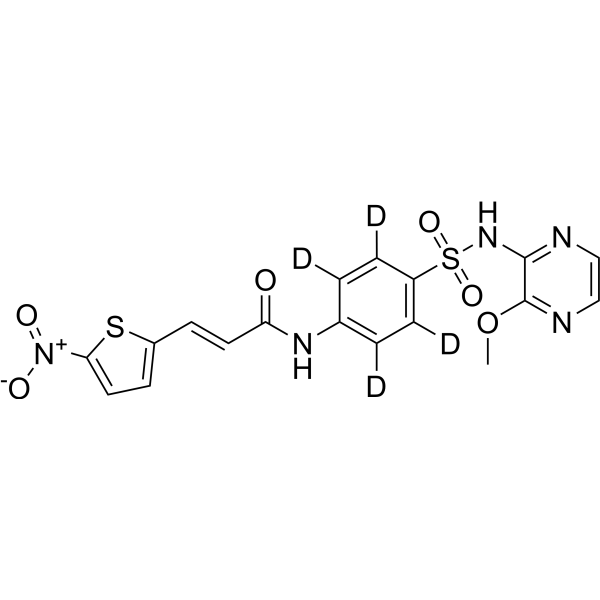
Necrosulfonamide-d4 is the deuterium labeled Necrosulfonamide (HY-100573). Necrosulfonamide is a MLKL and Gasdermin D (GSDMD) inhibitor, capable of separately inhibiting necroptosis and pyroptosis of cells. Necrosulfonamide does not affect the activation of upstream signals, but specifically inhibits the downstream executor oligomerization step. Necrosulfonamide reduces the expression of the key kinases NLRP3 and caspase-1 involved in necroptosis and pyroptosis, activate the Nrf2 pathway and the downstream antioxidant enzymes, and also downregulates a variety of inflammatory factors. Necrosulfonamide plays significant roles in various diseases such as neurodegenerative diseases (such as Parkinson’s disease), tissue damage and ischemia-reperfusion injury, inflammatory bowel disease, osteoarthritis and fracture repair, and hair loss by regulating two important programmed necrosis pathways.
loading...
    loading...
Cat. No.: HY-155156
Purity:  99.46%
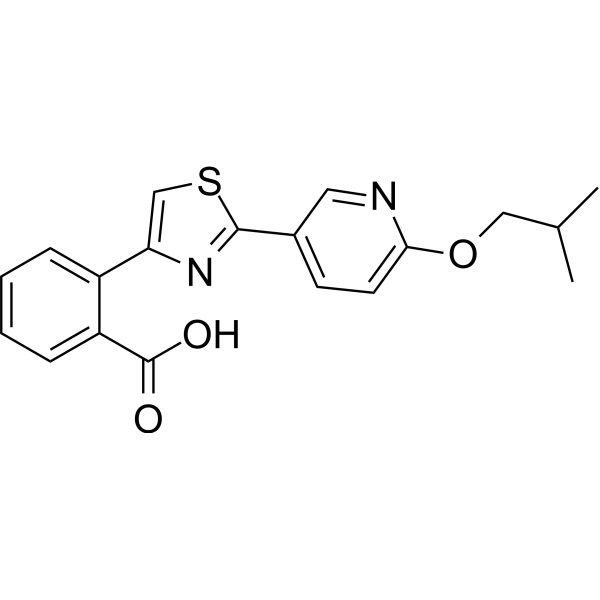
PF-07238025 is a BCKDC kinase (BDK) inhibitor (EC50=19 nM). PF-07238025 stabilizes the interaction between BDK and BCKDH core subunit E2 and prevents phosphorylation of E1. While BDK mediates branched-chain ketoacid dehydrogenase (BCKDH) phosphorylation, and inhibition of BCKDH is involved in controlling the rate-limiting step of branched-chain amino acid (BCAA) degradation. Impaired BCAA catabolism has been associated with several diseases, particularly cardiometabolic diseases, including heart failure (HF), type 2 diabetes mellitus (T2DM), non-alcoholic fatty liver disease (NAFLD), and obesity. PF-07238025 improved cardiometabolic endpoints and improves glucose tolerance in mice .
loading...
    loading...
Cat. No.: HY-155157
Purity:  98.66%
Target:  

Endogenous Metabolite

Research Areas:  

Cardiovascular Disease

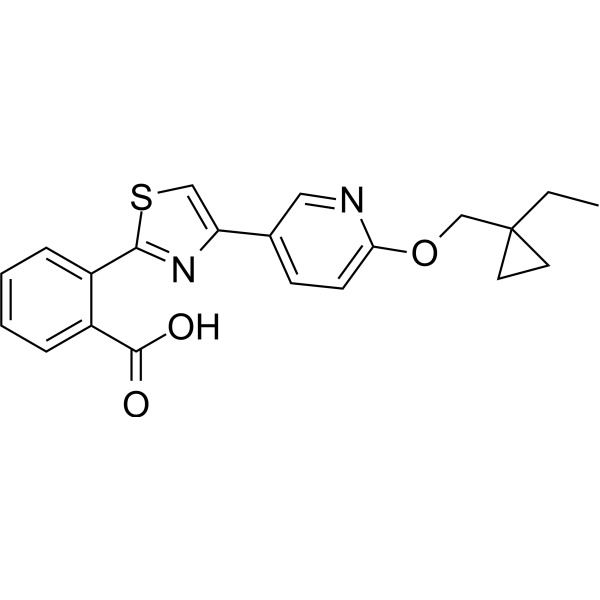
PF-07247685 is a BCKDC kinase (BDK) inhibitor (EC50=2.2 nM). PF-07247685 stabilizes the interaction between BDK and BCKDH core subunit E2 and prevents phosphorylation of E1. While BDK mediates branched-chain ketoacid dehydrogenase (BCKDH) phosphorylation, and inhibition of BCKDH is involved in controlling the rate-limiting step of branched-chain amino acid (BCAA) degradation. Impaired BCAA catabolism has been associated with several diseases, particularly cardiometabolic diseases, including heart failure (HF), type 2 diabetes mellitus (T2DM), non-alcoholic fatty liver disease (NAFLD), and obesity. PF-07247685 improved cardiometabolic endpoints and improves glucose tolerance in mice .
loading...
    loading...
Cat. No.: HY-W016628R
CAS No.: 1128-23-0
Synonyms: L-Gulonolactone (Standard)
L-Gulono-1,4-lactone (L-Gulonolactone) (Standard) is the analytical standard of L-Gulono-1,4-lactone. This product is intended for research and analytical applications. L-Gulono-1,4-lactone is a biosynthetic precursor of L-Ascorbic acid (Vitamin C) (HY-B0166). L-Gulono-1,4-lactone can be enzymatically converted to L-Ascorbic acid via the animal uronic acid pathway, while species such as humans lack the key oxidase that catalyzes this step, resulting in the disruption of this pathway and the necessity to obtain Vitamin C from diet. L-Gulono-1,4-lactone is a putative intermediate in an alternative biosynthetic pathway of L-Ascorbic acid in Arabidopsis thaliana.
loading...
    loading...
Cat. No.: HY-W018324
CAS No.: 1123-95-1
Synonyms: 5hmC
5-Hydroxymethylcytosine (5hmC) is an oxidized forms of 5-methylcytosine (5mC) in mammalian DNA. 5-Hydroxymethylcytosine is produced from 5mC in an enzymatic pathway involving three 5mC oxidases, Ten-eleven translocation (TET)1, TET2, and TET3. The conversion of 5mC into 5hmC can be the first step in a pathway leading towards DNA demethylation. 5-Hydroxymethylcytosine is associated with gene transcription and frequently used as a mark to investigate dynamic DNA methylation conversion during mammalian development. 5-Hydroxymethylcytosine can be used for the study of non-small cell lung cancer (NSCLC), neurodegenerative diseases (Alzheimer’s, Parkinson’s) and hematological malignancies (acute myeloid leukemia, myelodysplastic syndromes) .
loading...
    loading...
Cat. No.: HY-K0360

MCE Mouse CD4+ CD25+ Regulatory T Cell Positive Selection Kit is designed for the isolation of CD4+ CD25+ regulatory T cells (Tregs) from mouse splenic single-cell suspensions. The kit utilizes a two-step isolation strategy. First, CD4 Enrichment Beads are used to deplete non-target cells and enrich CD4+ T cells. Subsequently, CD25 Capture Antibody specifically binds to CD25+ cells, which are then captured by Releasable Magnetic Beads. Following isolation, the magnetic beads are gently detached from the cell surface using Magnetic Beads Release Buffer, yielding label-free CD4+ CD25+ regulatory T cells with no residual magnetic beads.

loading...
    loading...
Cat. No.: HY-100573R
CAS No.: 1360614-48-7
Necrosulfonamide (Standard) is the analytical standard of Necrosulfonamide (HY-100573). This product is intended for research and analytical applications. Necrosulfonamide is a MLKL and Gasdermin D (GSDMD) inhibitor, capable of separately inhibiting necroptosis and pyroptosis of cells. Necrosulfonamide does not affect the activation of upstream signals, but specifically inhibits the downstream executor oligomerization step. Necrosulfonamide reduces the expression of the key kinases NLRP3 and caspase-1 involved in necroptosis and pyroptosis, activate the Nrf2 pathway and the downstream antioxidant enzymes, and also downregulates a variety of inflammatory factors. Necrosulfonamide plays significant roles in various diseases such as neurodegenerative diseases (such as Parkinson’s disease), tissue damage and ischemia-reperfusion injury, inflammatory bowel disease, osteoarthritis and fracture repair, and hair loss by regulating two important programmed necrosis pathways .
loading...
    loading...
Cat. No.: HY-16443
CAS No.: 173534-37-7
Target:  

OAT

Research Areas:  

Metabolic Disease

S-4048 is a glucose-6-phosphate translocase modulator and hypoglycemic agent. S-4048 is taken up by hepatocytes via OATP-1 and is rapidly eliminated via the hepatobiliary system in rats. S-4048 blocks glucose-6-phosphate translocase, prevents glucose-6-phosphate from entering the endoplasmic reticulum, and thereby interferes with the glucose-6-phosphatase system (i.e., the final step of hepatic gluconeogenesis and glycogenolysis) to regulate hepatic glucose production. S-4048 completely inhibits glucose production from pyruvate in GLUT2-deficient hepatocytes without affecting the release of cytoplasmic glucose. S-4048 effectively reduces blood glucose levels in rats and has been used in studies related to type 2 diabetes .
loading...
    loading...
Cat. No.: HY-175164
Target:  

Apoptosis c-Myc

Research Areas:  

Cancer

SVC112 is a translation elongation inhibitor that prevents the cyclic dissociation of EF2 from the ribosome, thereby inhibiting the elongation step of translation. SVC112 shows activity in growth inhibition among cancer cell lines of various origins (acute myeloid leukemia (AML), multiple myeloma (Myeloma), colorectal cancer (CRC), and head and neck squamous cell carcinoma (HNSCC)). SVC112 preferentially impedes ribosomal processing of mRNAs, and decreaseds CSC-related proteins including Myc and Sox2. SVC112 induces apoptosis in hematologic cancer cell lines, while phosphorylation of c-Myc correlates with sensitivity to SVC112 in colorectal cancer cell lines. SVC112 inactivates HNSCC stem cells in vitro and prevents the regrowth of HNSCC tumor xenografts in mice. SVC112 can be used for the study of HNSCC .
loading...
    loading...
Cat. No.: HY-42771
CAS No.: 1950635-36-5
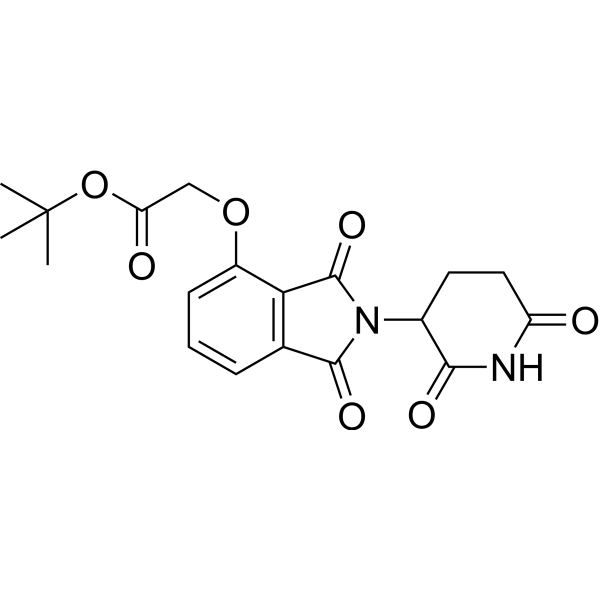
Thalidomide-4-O-CH2-COO(t-Bu) is t-Bu modified Thalidomide (HY-14658), which is the final step intermediate in the synthesis of Thalidomide-4-OH (HY-123096). Thalidomide-4-O-CH2-COO(t-Bu) acts as a Cereblon ligand to recruit CRBN proteins. The t-Bu protecting group at the end of Thalidomide-4-O-CH2-COO(t-Bu) can be removed under acidic conditions to participate in the synthesis of PROTAC molecules. Thalidomide-4-O-CH2-COO(t-Bu) is a key intermediate in the synthesis of CRBN-based designed PROTAC molecules.
loading...
    loading...
Cat. No.: HY-N14094
CAS No.: 2632-29-3
Tubulosine is an alkaloid. Tubulosine can be isolated from Pogonopus tubulosus (DC.) Schumann. Tubulosine is an ATP-competitive, selective JAK3 inhibitor with an IC50 value of 9.9 nM. Tubulosine also inhibits the kinase activities of other JAK family members, the extent of inhibition is less than that of JAK3, with IC50 values of 69.5, 84.9 and 76.3 nM for JAK1, JAK2 and TYK2, respectively. Tubulosine selectively inhibits JAK3 signalling by binding to the ATP-binding site of the kinase of JAK3. Tubulosine induces apoptotic and necrotic/autophagic cell death. Tubulosine inhibits the process of peptide chain elongation by eukaryotic polysomes by, specifically preventing the elongation-factor-2-dependent step of translocation. Tubulosine exhibits anticancer activity in breast cancer cells .
loading...
    loading...