
237 Results for "

Ionizing

" in MedChemExpress (MCE) Product Catalog:
Products (237)

237 Results for "Ionizing" in MCE Product Catalog:

Cat. No.: HY-171984
CAS No.: 2863553-06-2
Target:  

Liposome

514O6,10 is an ionizable lipidoid containing a branched-tail. 514O6,10 can be used to synthesize lipid nanoparticles (LNPs) for delivering mRNA to natural killer and dendritic cells within the lung. 514O6,10 can be used for the RNA therapies for lung diseases associated with immune cell dysregulation, including cancer, viral infections, and autoimmune disorders research .
loading...
    loading...
Cat. No.: HY-D0202
CAS No.: 1668-00-4
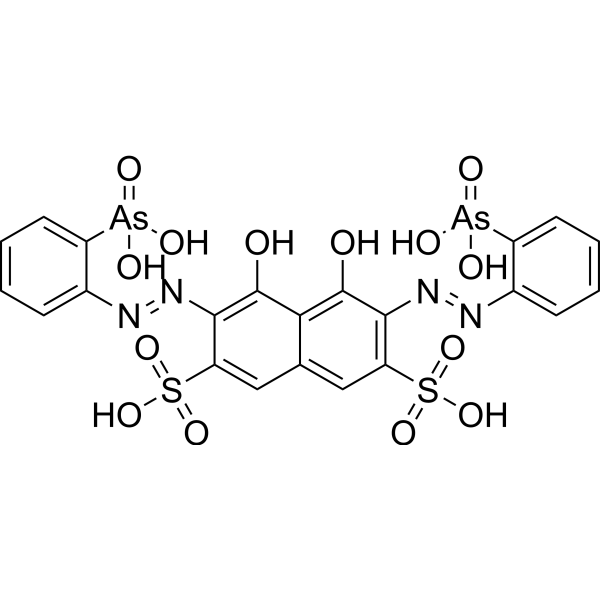
Arsenazo III is an azo derivative of chromotropic acid, a metal chrome dye, a chelating agent, and a cation complexing agent. Arsenazo III forms stable 1:1 complexes with Ca 2+, Mg 2+, Sr 2+, Ba 2+, K +, and Na +, and its binding affinity for Ca 2+ depends on pH, alkali metal cation concentration, and buffer parameters. Arsenazo III serves as a colorimetric indicator for micromolar ionized Ca 2+ in cells .
loading...
    loading...
Cat. No.: HY-153879
CAS No.: 3067466-15-0
Purity:  ≥99.0%
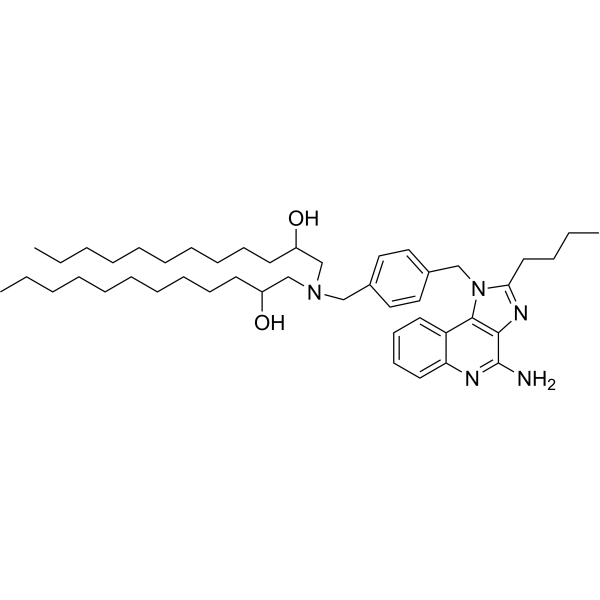
C12-TLRa is an ionized adjuvant lipid. C12-TLRa targets TLR7/8 receptors in endosomes. C12-TLRa enhances mRNA delivery as a structural component of LNPs. C12-TLRa enhances innate immune responses. C12-TLRa can be used for the research of SARS-CoV-2 mRNA vaccine .
loading...
    loading...
Cat. No.: HY-172328
Target:  

Liposome

Research Areas:  

Cancer

O12-D3-I3 is an ionizable cationic lipid. O12-D3-I3 can be used in the generation of lipid nanoparticles (LNPs) for siRNA delivery in vitro and in vivo. LNPs containing O12-D3-I3 enhances LNP endosomal escape for ferroptosis RNAi therapy of cancer .
loading...
    loading...
Cat. No.: HY-184755
CAS No.: 25087-26-7
Synonyms: PMAA
Research Areas:  

Others

Poly(methacrylic acid) (PMAA) is a pH/ionic strength-responsive swelling agent and polycation complexing agent. Poly(methacrylic acid) undergoes reversible swelling and size changes through carboxylic acid ionization and sodium ion charge shielding. As a weak polyacid, Poly(methacrylic acid) forms cross-linked hydrogels and hollow capsules for the entrapment and storage of macromolecules. Poly(methacrylic acid) forms electrostatic complexes with polycations to reduce capsule permeability, and high-salt conditions disrupt such complexes to enable macromolecule release .
loading...
    loading...
Cat. No.: HY-184820
CAS No.: 54193-36-1
Synonyms: PMAA sodium
Research Areas:  

Others

Poly(methacrylic acid) sodium is a pH/ionic strength-responsive swelling agent and polycation complexing agent. Poly(methacrylic acid) sodium undergoes reversible swelling and size changes through carboxylic acid ionization and sodium ion charge shielding. As a weak polyacid, Poly(methacrylic acid) sodium forms cross-linked hydrogels and hollow capsules for the entrapment and storage of macromolecules. Poly(methacrylic acid) sodium forms electrostatic complexes with polycations to reduce capsule permeability, and high-salt conditions disrupt such complexes to enable macromolecule release .
loading...
    loading...
Cat. No.: HY-P1698
CAS No.: 1447799-33-8
Synonyms: AB-103
Target:  

Bacterial CD28

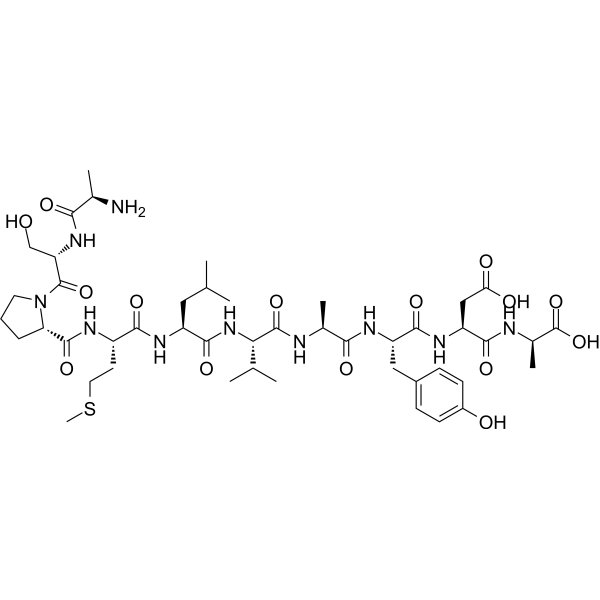
Reltecimod (AB-103) is a T-cell-specific surface glycoprotein CD28 (TP44) antagonist. Reltecimod has beneficial effects against different bacterial infections, their exotoxins and endotoxins, and ionizing radiation. Reltecimod modulates the inflammatory response by targeting and attenuating the critical CD28/B7-2 co-stimulatory pathway, without inhibiting it. Reltecimod can be used to research necrotizing soft-tissue infections (NSTIs) .
loading...
    loading...
Cat. No.: HY-P1698A
CAS No.: 1943755-99-4
Synonyms: AB-103 sodium
Target:  

Bacterial CD28

Reltecimod sodium (AB-103 sodium) is a T-cell-specific surface glycoprotein CD28 (TP44) antagonist. Reltecimod sodium has beneficial effects against different bacterial infections, their exotoxins and endotoxins, and ionizing radiation. Reltecimod sodium modulates the inflammatory response by targeting and attenuating the critical CD28/B7-2 co-stimulatory pathway, without inhibiting it. Reltecimod sodium can be used to research necrotizing soft-tissue infections (NSTIs) .
loading...
    loading...
Cat. No.: HY-159700
CAS No.: 3027565-91-6
Research Areas:  

Infection Cancer

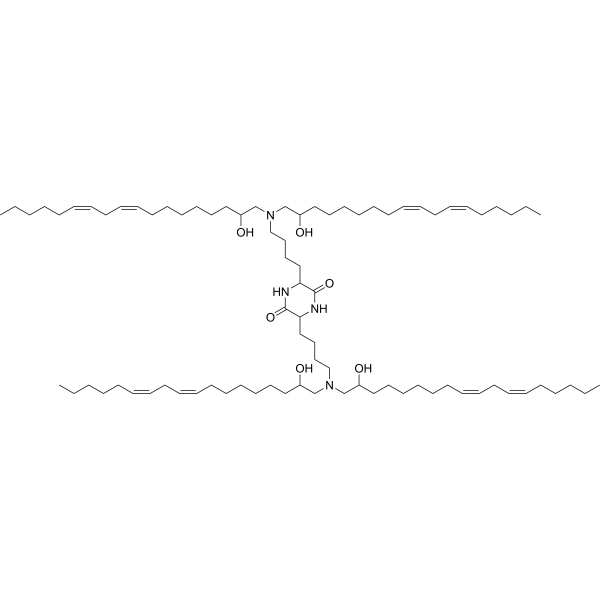
AA3-DLin is a biodegradable ionizable cationic lipid (pKa = 5.8). AA3-DLin is used to combine mRNA with lipid nanoparticles (LNPs) for delivery, thereby achieving endosomal escape and cytoplasmic release. AA3-DLin can be used in research on type 2 diabetes, steroid-resistant asthma, lung cancer, ischemic stroke, breast cancer, melanoma, and COVID-19 .
loading...
    loading...
Cat. No.: HY-162472
CAS No.: 2595308-10-2
Target:  

ATM/ATR DNA-PK

Research Areas:  

Cancer

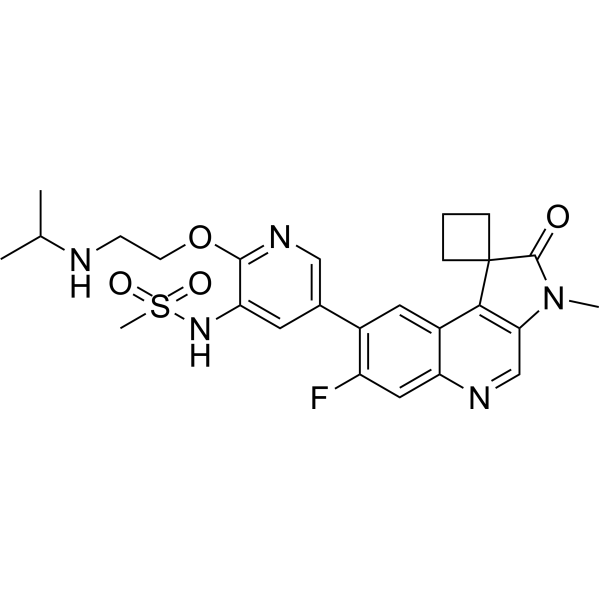
XRD-0394 is a potent and orally active dual ATM and DNA-PKcs inhibitor with IC50s of 0.39 nM and 0.89 nM, respectively. XRD-0394 shows selectivity over other PIKK and PI3K family members. XRD-0394 significantly enhances tumor cell killing in vitro and in vivo under therapeutic ionizing radiation conditions. XRD-0394 can potentiate the effects of PARP and topoisomerase I inhibitors in vitro .
loading...
    loading...
Cat. No.: HY-172328A
CAS No.: 3041009-08-6
Target:  

Liposome

Research Areas:  

Cancer

(S)-O12-D3-I3 is an ionizable cationic lipid (pKa = 6.39). (S)-O12-D3-I3 can be used to prepare lipid nanoparticles (LNPs) for in vitro and in vivo siRNA delivery. (S)-O12-D3-I3 can also be used in research on cancers such as liver cancer and breast cancer .
loading...
    loading...
Cat. No.: HY-172332
CAS No.: 3097638-09-7
Target:  

Liposome NF-κB

Research Areas:  

Inflammation/Immunology Cancer

H1L1A1B3 is an ionizable cationic lipid used in the formation of lipid nanoparticles (LNPs) for the delivery of circular RNA (circRNA). H1L1A1B3-LNPs demonstrates a fourfold increase in circRNA transfection efficiency in lung cancer cells over ALC-0315 (HY-138170). H1L1A1B3 can activate the NF-κB/IRF immune pathways .
loading...
    loading...
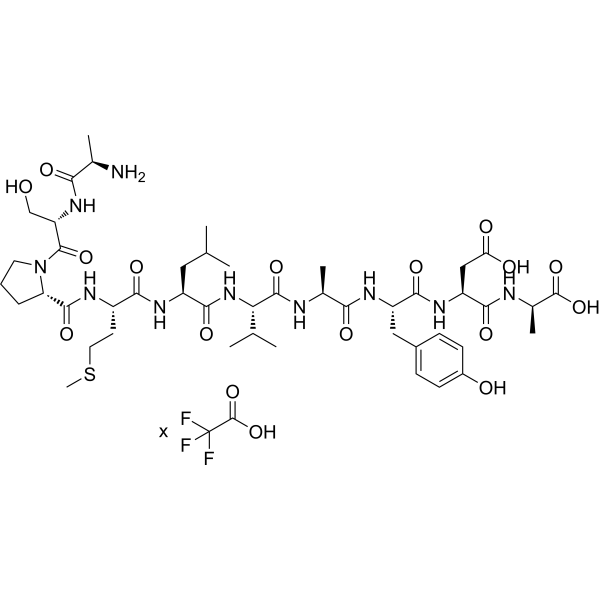
Cat. No.: HY-P1698B
Synonyms: AB-103 TFA
Target:  

Bacterial CD28

Reltecimod (AB-103) TFA is a T-cell-specific surface glycoprotein CD28 (TP44) antagonist. Reltecimod TFA has beneficial effects against different bacterial infections, their exotoxins and endotoxins, and ionizing radiation. Reltecimod TFA modulates the inflammatory response by targeting and attenuating the critical CD28/B7-2 co-stimulatory pathway, without inhibiting it. Reltecimod TFA can be used to research necrotizing soft-tissue infections (NSTIs) .
loading...
    loading...
Cat. No.: HY-W1130459
CAS No.: 1226777-45-2
Target:  

Liposome

Research Areas:  

Cancer

(R)-C12-200 is the (R)-isomer of C12-200 (HY-145405), an ionizable cationic lipid and helper lipid. (R)-C12-200 enables functional mRNA delivery to head and neck squamous cell carcinoma xenograft tumor cells in NU/J immunocompromised mice, with minimal off-target delivery to liver or spleen. (R)-C12-200 can be utilized in the formation of lipid nanoparticles and mRNA delivery .
loading...
    loading...
Cat. No.: HY-Y0030A
CAS No.: 874-24-8
Synonyms: 3-HPA
3-Hydroxypicolinic acid, matrix substance for MALDI-MS is a matrix. 3-Hydroxypicolinic acid, matrix substance for MALDI-MS coordinates with metal ions such as copper to form complexes with cytotoxic and antimycobacterial activity. 3-Hydroxypicolinic acid, matrix substance for MALDI-MS is used for the analysis of oligodeoxynucleotides in matrix-assisted laser desorption ionization time-of-flight mass spectrometry (MALDI-TOF MS). 3-Hydroxypicolinic acid, matrix substance for MALDI-MS is useful for nucleic acid analysis and anti-tuberculosis compound development .
loading...
    loading...
Cat. No.: HY-145795
CAS No.: 1883431-67-1
Purity:  ≥98.0%
Target:  

Liposome

Research Areas:  

Others

OF-02 is an ionizable lipid for mRNA delivery and a key component of lipid nanoparticles (LNPs). OF-02 is protonated in the acidic endosomal environment to promote endosomal escape of mRNA and efficiently induce protein expression in target cells. OF-02 relies on the pH-responsive membrane fusion properties to form a complex with mRNA and destroy the endosomal membrane structure to achieve mRNA release in the cytoplasm. OF-02 is mainly used in the development of mRNA vaccines, gene editing, and protein replacement therapy[1][2][3].
loading...
    loading...
Cat. No.: HY-183334
CAS No.: 3115524-78-9
TDP1-IN-5 is a tyrosyl-DNA phosphodiesterase 1 (TDP1) inhibitor with an IC50 of 2.2 μM. By targeting TDP1 both intracellularly and extracellularly, TDP1-IN-5 inhibits the NHEJ repair pathway, arrests the cell cycle at the G2/M phase, upregulates PIG3 to enhance ROS, and ultimately significantly potentiates ionizing radiation (IR)-induced DNA damage and apoptosis. TDP1-IN-5 can be used in the research of colorectal cancer .
loading...
    loading...
Cat. No.: HY-P11614
Target:  

Liposome

Research Areas:  

Cancer

LCA-H10 is a lithocholic acid-histidine decapeptide conjugate, a biocompatible lipid nanoparticle (LNP) additive that reduces ionizable lipid proportions, functions as an endosomal escape inducer, and enhances siRNA encapsulation. LCA-H10 increases hepatic accumulation of LNPs in mice after intravenous injection when incorporated into LiLNP-LH and reduces proinflammatory cytokines (IL-6, TNF, IL-1β) in mouse serum. LCA-H10 can be used for the research of prostate cancer .
loading...
    loading...
Cat. No.: HY-165604
CAS No.: 2639634-82-3
Target:  

Liposome

Research Areas:  

Others

C14-490 is an ionizable cationic lipid used for the formulation of lipid nanoparticles (LNPs) for mRNA delivery. C14-490 LNPs can be surface-functionalized with CD45 antibodies to enable targeted delivery to hematopoietic stem cells (HSCs), mediate efficient mRNA delivery and CRISPR-Cas9 gene editing in fetal HSCs in utero, with potent and durable genome modulation in HSCs and their progeny. C14-490 is a key component of the Systematically optimized Targeted Editing Machinery (STEM) LNPs for in vivo HSC gene editing applications .
loading...
    loading...
Cat. No.: HY-180573
Target:  

Arf Family GTPase

Research Areas:  

Cancer

ART5537 is a selective EXO1 inhibitor with a IC50 of 3.4 nM and a Kd of 6.8 nM. ART5537 exerts cellular homologous recombination (HR) inhibition with EC50 of 7.2 nM in HAP1 parental cells. ART5537 shows >200-fold selectivity over a panel of the wider nuclease superfamily. ART5537 exerts biological effects that are exclusively driven by EXO1 inhibition. ART5537 demonstrates sensitization to ionizing radiation and synergy with Olaparib (HY-10162). ART5537 can be used for research in breast cancer and colorectal adenocarcinoma .
loading...
    loading...

